
Healthy aging tips can help seniors maintain independence, protect their well-being, strengthen relationships, and enjoy a more fulfilling life as they grow older. Aging is a natural part of life, but it does not mean giving up happiness, curiosity, personal freedom, or the opportunity to learn something new.
Japanese psychiatrist Hideki Wada wrote 80歳の壁 (The 80-Year-Old Wall), a book that explores perspectives on aging and living well in later life. Inspired by the broader themes of healthy living, this article presents 44 healthy aging tips on aging gracefully, maintaining mental well-being, enjoying everyday experiences, and making thoughtful lifestyle choices.
These 44 healthy aging tips are an independently organized collection of healthy-aging ideas, not a verified list of direct quotations from the book. Some are practical lifestyle suggestions, while others are philosophical perspectives. Medical decisions should always be based on reliable health information and advice from qualified healthcare professionals.
Let’s explore these 44 healthy aging tips and discover how small changes in everyday life can contribute to a happier and more meaningful later life.
Why Healthy Aging Tips Matter
Healthy aging is about more than living longer. It also involves maintaining physical abilities, protecting mental health, enjoying relationships, and continuing to participate in activities that make life meaningful.
As people grow older, they may experience changes in mobility, memory, sleep, energy levels, and social connections. These changes can create challenges, but they do not mean that personal growth and happiness must come to an end.
Practical healthy aging tips can help older adults develop habits that support their independence and quality of life. Regular physical activity, balanced nutrition, adequate sleep, social engagement, and appropriate medical care are important elements of healthy aging.
These 44 healthy aging tips offer practical ideas that seniors can adapt to their health, interests, and everyday routines.
44 Healthy Aging Tips for a Happier Life
1. Make Walking a Daily Habit
Walking is one of the simplest healthy aging tips because it can support cardiovascular health, mobility, mood, and everyday independence. Older adults can start with a comfortable walking routine and gradually increase the duration according to their fitness levels and medical needs.
Even a short daily walk can be a positive step toward a more active lifestyle. Read our guide on the benefits of a 20-minute walk to learn more about how regular walking can support your well-being.
Start at a comfortable pace, wear suitable footwear, and choose a safe walking route. If you have balance problems or a medical condition that affects exercise, consult your healthcare professional before making significant changes to your routine.
2. Take a Deep Breath When You Feel Angry
Anger and frustration can become difficult to manage when someone is dealing with pain, fatigue, loneliness, or changes in independence. Pausing and taking a few slow, comfortable breaths can create an opportunity to think before responding.
Instead of immediately reacting to an upsetting remark, consider whether the situation deserves an argument. A calm response may protect relationships and reduce unnecessary emotional stress.
For instance, if a family member disagrees with you, listening patiently may be more productive than trying to prove that you are right. Taking a short break can also help when a conversation becomes heated.
3. Exercise to Keep Your Body Flexible
Regular exercise is one of the most important healthy aging tips for maintaining strength, flexibility, balance, and independence. Older adults can choose suitable activities such as gentle stretching, chair exercises, light resistance training, and balance exercises according to their abilities.
Regular physical activity helps older adults maintain mobility, strength, and overall well-being. The World Health Organization’s physical activity recommendations provide further guidance on staying active as you age. Choose activities that suit your abilities and health needs, and consult a healthcare professional if you are unsure where to begin.
You do not need to follow a strenuous workout routine to stay active. Start with manageable activities and gradually build consistency. For more practical guidance, explore our guide to exercises for seniors, which complements these healthy aging recommendations.
Choose exercises that suit your fitness level, wear comfortable footwear, and prioritize safety. If you have a chronic health condition, mobility difficulties, or a history of falls, consult a healthcare professional before starting a new exercise programme.
4. Stay Hydrated During Hot Weather
Older adults may not always recognize thirst as easily as younger people. Hot weather, physical activity, and certain medications can also affect hydration.
Drink water regularly throughout the day, particularly during hot weather, unless a healthcare professional has advised you to restrict fluids.
Keeping a glass or bottle of water nearby can make drinking regularly easier. People with heart or kidney conditions may need individualized fluid guidance, so they should follow their clinician’s recommendations.
5. Use Mobility Aids Without Feeling Embarrassed
Walking sticks, walkers, wheelchairs, and other mobility aids can help older adults move around more safely and independently when these aids suit their needs.
There is no shame in using assistance. The purpose is to make everyday activities easier, preserve independence, and reduce the risk of falls.
Similarly, incontinence products may help some people remain comfortable and participate in social activities with greater confidence. These products are practical aids rather than signs of personal failure. Persistent incontinence should be discussed with a healthcare professional because treatable causes may exist.
6. Chew Food Thoroughly and Eat Mindfully
Eating slowly and chewing food thoroughly can make meals more comfortable and encourage mindful eating. Mealtimes can also become opportunities to enjoy flavors, appreciate food, and connect with family members.
Good oral health is particularly important for seniors. Missing teeth, poorly fitting dentures, or swallowing difficulties may affect nutrition and make eating challenging.
Choose foods that suit your dental and swallowing needs. If chewing or swallowing becomes difficult, consult a dentist or healthcare professional rather than simply accepting the problem as part of aging.
7. Keep Your Brain Active
Memory changes can have several causes, including normal aging, medication effects, sleep problems, and medical conditions. A lack of mental activity is not the only explanation for memory difficulties.
Nevertheless, learning new things and engaging in mentally stimulating activities can support cognitive well-being. Reading, solving puzzles, learning a language, gardening, playing music, or discussing interesting topics can provide mental engagement.
For example, a senior who enjoys reading might join a book club or write short reflections about each book. Persistent or worsening memory problems should be discussed with a healthcare professional rather than dismissed as an inevitable part of aging.
8. Avoid Unnecessary Medication
Taking more medication does not automatically mean receiving better care. Some older adults use several medicines, which can increase the risk of side effects and interactions.
Review your medicines regularly with your doctor or pharmacist. Ask whether each medicine is still necessary, whether the dosage is appropriate, and whether any side effects require attention.
However, never stop prescribed medication or change its dosage on your own. The objective is to use appropriate treatment safely, not to avoid necessary medical care.
For additional guidance, read the National Institute on Aging’s advice on taking medicines safely as you age
9. Manage Blood Pressure and Blood Sugar Carefully
Blood pressure and blood sugar targets may differ according to a person’s age, overall health, medications, and other medical conditions. For some older adults, overly aggressive treatment can increase the risk of dizziness, falls, or dangerously low blood sugar.
This does not mean that high blood pressure or diabetes should be ignored. Uncontrolled conditions can cause serious complications.
Work with your healthcare professional to establish individualized targets. Good management balances long-term health benefits with safety, comfort, and quality of life.
10. Learn to Enjoy Time Alone
Spending time alone is not necessarily the same as feeling lonely. Some older adults enjoy quiet mornings, reading, listening to music, gardening, or simply sitting peacefully.
Solitude can provide an opportunity to reflect and enjoy personal interests without pressure from others.
However, unwanted isolation can affect emotional well-being. Maintain contact with friends, relatives, or community groups if you feel lonely. Healthy independence includes both enjoying your own company and having supportive relationships when you need them.
11. Do Not Feel Guilty About Resting
Older adults sometimes feel they must remain busy to prove that they are still useful. In reality, rest is a normal part of a balanced life.
You do not need to fill every hour with household responsibilities, social obligations, or productive activities. Reading a novel, listening to music, enjoying a leisurely breakfast, or sitting in the garden can be worthwhile ways to spend time.
Resting becomes a concern when persistent fatigue, low mood, or reduced activity interferes with daily life. In such cases, seek medical advice instead of assuming that the symptoms are simply due to age.
12. Reconsider Driving When Safety Becomes a Concern
Driving can provide independence, convenience, and access to social activities. However, changes in vision, hearing, reaction time, mobility, or cognitive function may affect driving safety.
The important question is not simply how old someone is, but whether they can drive safely.
If driving becomes difficult, consider a professional assessment and explore alternatives such as public transport, family assistance, community transport, or taxis. Decisions about driving should reflect individual safety and applicable local rules.
13. Spend More Time Doing What You Enjoy
Retirement and later life can provide opportunities to rediscover interests that were neglected during busy working years. Gardening, cooking, reading, painting, music, and spending time with grandchildren can bring enjoyment and meaning to everyday life.
Gardening is particularly appealing because it can combine gentle physical activity, time outdoors, and the satisfaction of caring for plants. Older adults can grow flowers, herbs, or vegetables in a garden, on a balcony, or in containers, depending on their mobility and available space.
If you enjoy spending time with plants, explore our guide to gardening for seniors for ideas on making gardening an enjoyable and manageable activity in later life.
Choose activities that fit your interests, physical abilities, and financial circumstances. You do not have to become an expert or earn money from a hobby to enjoy its benefits.
14. Accept Natural Human Desires in Old Age
Growing older does not eliminate the desire for affection, companionship, intimacy, recognition, or emotional connection.
Older adults deserve dignity and respect when expressing their feelings and personal preferences. They should not be made to feel embarrassed simply because they want friendship, romance, or closeness.
Healthy relationships remain important throughout life. Communication, mutual consent, personal boundaries, and respect are essential at every age.
15. Avoid Staying Indoors All the Time
Spending time outdoors can provide movement, daylight, fresh air, and opportunities for social interaction. These experiences may also help improve mood and establish a healthy daily routine.
Healthy aging tips for seniors include following a consistent healthy morning routine to encourage daily movement, support overall well-being, and establish healthy habits.
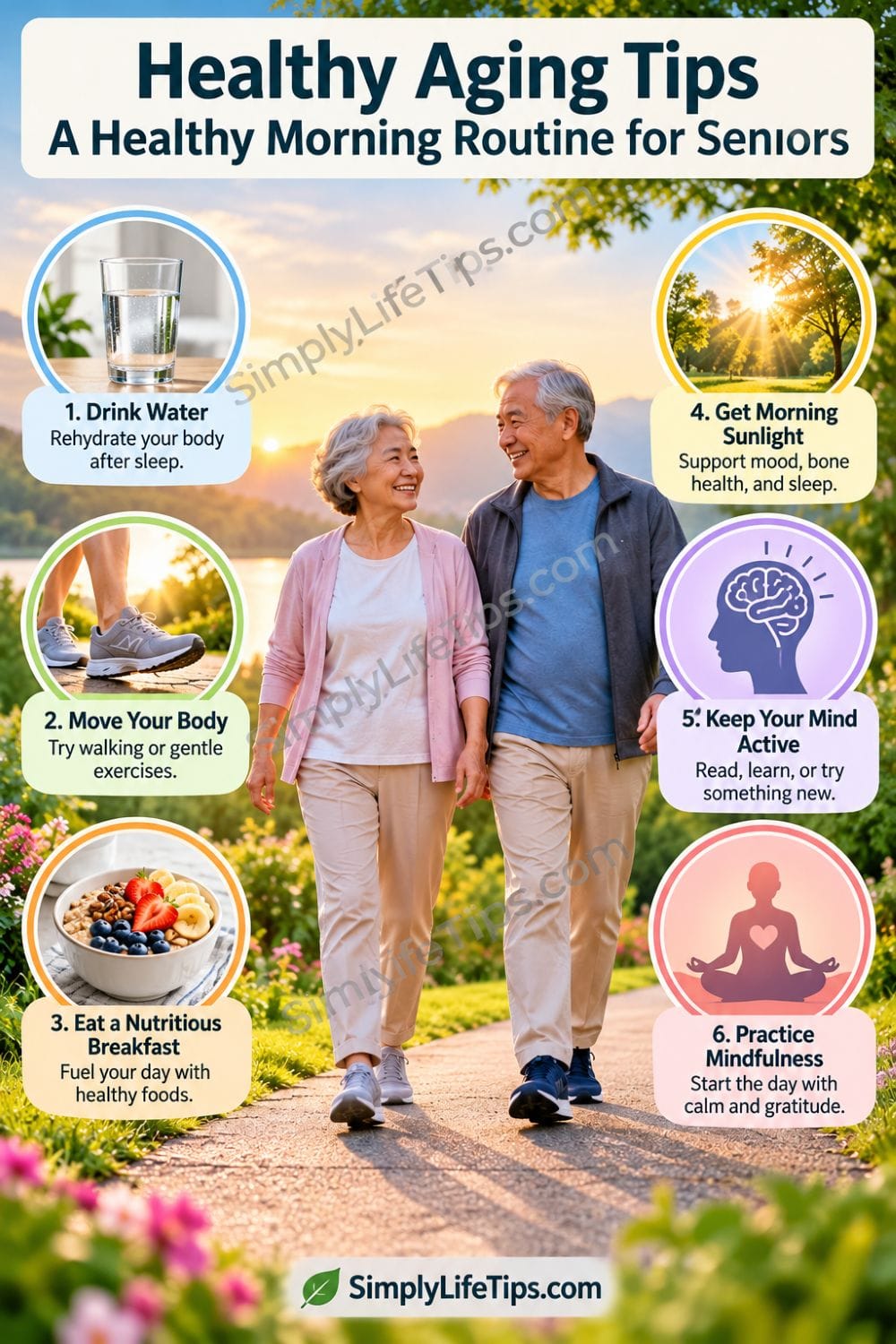
Consider taking a morning walk, visiting a nearby park, sitting in a garden, or meeting a friend for tea.
Outdoor activities should be adapted to the weather, mobility, and personal health. During extreme heat, poor air quality, or unsafe conditions, choose a comfortable indoor alternative.
16. Enjoy Food While Maintaining Balanced Nutrition
Eating well is one of the most practical healthy aging tips for supporting energy, strength, and overall well-being. Older adults can enjoy their favorite foods while including vegetables, fruits, whole grains, protein-rich foods, and healthy fats in their daily meals.
A balanced diet does not mean giving up the pleasure of eating. Instead, focus on variety, appropriate portions, and foods that meet your individual nutritional needs. For more ideas, explore our guide to anti-aging foods that help keep you young and healthy, which offers a related perspective on nutrition and healthy living.
Remember that no single food can stop aging. A varied diet, regular physical activity, adequate sleep, and appropriate healthcare work together to support healthy aging.
17. Pay Attention to Everyday Activities
Mindfulness means paying attention to what you are doing instead of constantly worrying about the past or future.
You can practise it while preparing a meal, watering plants, walking, or talking with a friend. Notice the details of the activity and allow yourself to enjoy the moment.
For example, rather than rushing through breakfast while worrying about the day’s problems, take time to enjoy the taste of your food and the quiet of the morning.
Small moments of attention can make ordinary experiences feel more meaningful.
18. Set Healthy Boundaries in Relationships
Not every relationship provides encouragement, understanding, or mutual respect. As people grow older, they may become more aware of how their social environment affects their peace of mind.
It is reasonable to establish boundaries with people who repeatedly criticize, manipulate, or disrespect you.
However, avoiding everyone who disagrees with you can lead to isolation. Healthy relationships allow differences of opinion while maintaining kindness and respect. Focus on connections that provide genuine companionship rather than unnecessary conflict.
19. Balance Television With Other Activities
Television can provide entertainment, information, and companionship, but watching it for most of the day may reduce opportunities for movement and social interaction.
Try combining television with other interests. Watch a favorite programme, then take a short walk, call a friend, read, or work on a hobby.
For example, a senior who enjoys news programmes could set aside a particular time to watch them instead of leaving the television on continuously.
The aim is not to eliminate television but to create a balanced daily routine.
20. Learn to Live Well While Managing Illness
Living with a chronic condition can be challenging, but a diagnosis does not have to define an entire life.
Following appropriate treatment, maintaining suitable activity levels, seeking emotional support, and adapting daily routines can help people continue doing meaningful things.
For example, someone with arthritis may benefit from appropriate exercises, assistive devices, and activity adjustments recommended by healthcare professionals.
Accepting an illness does not mean giving up treatment. It means acknowledging the situation while focusing on the choices that can improve comfort, function, and quality of life.
21. Remember That Solutions May Emerge Over Time
The expression “When the car reaches the mountain, the road appears” conveys the idea that a solution may become clear when the time comes.
Older adults may face uncertainty about finances, family matters, health, or future living arrangements. Constantly worrying about every possible problem can make daily life more stressful.
Instead, identify what you can do now and address the rest step by step. Planning is useful, but so is recognizing that not every question needs an immediate answer.
This mindset encourages patience without replacing practical preparation.
22. Include Fruits and Vegetables in Your Meals
Fruits and vegetables provide vitamins, minerals, fiber, and other nutrients that support overall health.
Try including a variety of colorful produce in your meals. Seasonal fruits, leafy greens, carrots, beans, and other vegetables can make everyday meals more nutritious and enjoyable.
For example, add fruit to breakfast, include vegetables in lunch, and serve a vegetable side dish with dinner.
Fresh produce is not the only option. Frozen or appropriately stored vegetables can also be useful. People with specific medical or dietary restrictions should follow individualized nutritional advice.
23. Bathe Safely and Avoid Overly Hot Water
Bathing can be relaxing, but older adults may need to pay attention to water temperature, balance, skin sensitivity, and the risk of slipping.
Very hot water and long baths can contribute to discomfort, dizziness, or dry skin in some people. Use comfortably warm water, install grab bars when needed, and consider a shower seat if standing is difficult.
There is no universal rule that every bath must last less than ten minutes. The appropriate duration depends on individual comfort and health.
If you experience dizziness during bathing, stop safely and discuss the problem with a healthcare professional.
24. Do Not Become Anxious About Occasional Sleeplessness
Sleep patterns can change with age, but persistent sleep difficulties deserve attention.
If you cannot fall asleep, try keeping the environment quiet and comfortable. A relaxing routine, regular waking time, daytime physical activity, and reduced caffeine late in the day may help improve sleep.
Avoid repeatedly checking the clock or worrying about how little sleep you are getting, as this can increase frustration.
If sleeplessness continues, affects daytime functioning, or occurs alongside other symptoms, consult a healthcare professional. Do not start sleeping medicines without appropriate advice.
25. Choose Activities That Make You Happy
Enjoyable activities can encourage movement, social engagement, curiosity, and emotional well-being.
You might enjoy singing, cooking, dancing, gardening, painting, playing a musical instrument, or spending time with loved ones.
For example, joining a local singing group may provide both enjoyment and opportunities to make friends. A person who prefers quiet activities might find similar satisfaction in reading or caring for plants.
There is no single hobby that suits everyone. Choose activities that match your interests and abilities, and allow yourself to enjoy them without unnecessary pressure.
26. Express Your Feelings Honestly and Respectfully
Keeping every worry or disappointment to yourself can make relationships more difficult. Honest communication helps others understand what you need and how you feel.
If you feel overlooked by family members, explain your feelings calmly rather than expecting them to guess what is wrong.
For example, you could say, “I enjoy spending time with you, and I would appreciate a regular phone call each week.”
Expressing your thoughts does not mean saying everything impulsively. Consideration, timing, and respectful language can help make difficult conversations more productive.
27. Build a Relationship With a Trusted Doctor
Having a regular healthcare professional can make it easier to discuss health concerns, review medications, and coordinate preventive care.
A doctor who understands your medical history may be better positioned to recognize changes and recommend appropriate treatment.
Keep a list of your medications, allergies, important diagnoses, and recent symptoms. Bring questions to appointments and ask for clarification when something is unclear.
A trusted doctor should help you understand the benefits, risks, and alternatives associated with treatment.
28. Be Courageous Without Being Stubborn
Confidence can help older adults maintain independence and express their preferences. However, refusing all advice or assistance may create unnecessary difficulties.
It is possible to be assertive while remaining open to new information.
For instance, you may prefer living independently, but accepting a walking aid or occasional help with shopping can support that goal rather than undermine it.
Strength does not mean refusing assistance. Sometimes, making a sensible adjustment is a sign of courage and self-awareness.
29. Allow Yourself to Change Your Mind
People sometimes continue with old decisions simply because they have already invested time, money, or effort in them.
However, new information and changing circumstances may justify a different choice.
You might decide to reduce your commitments, try a new hobby, change your daily routine, or seek help with a task that has become difficult.
Changing your mind after careful consideration is not a sign of weakness. It demonstrates the ability to adapt to life’s changing needs.
30. Approach Dementia With Compassion and Dignity
Dementia can affect memory, communication, judgment, and independence. It can also create emotional and practical challenges for individuals and their families. People living with dementia deserve patience, dignity, appropriate medical care, and understanding.
Family members and caregivers can offer support by maintaining familiar routines, communicating calmly, creating a safer environment, and helping the person participate in meaningful activities whenever possible.
If you notice persistent memory problems or changes in thinking that interfere with everyday activities, seek medical assessment. Early evaluation may identify treatable causes or help families plan appropriate care.
Memory changes that interfere with everyday activities deserve medical attention rather than being dismissed as a normal part of aging. The National Institute on Aging’s guide to dementia symptoms, types, and diagnosis explains why proper assessment is important and provides further information for individuals and families.
For additional guidance, read our article on dementia care, which complements these healthy aging tips and highlights the importance of understanding and supporting people affected by dementia.
31. Never Stop Learning
Healthy aging tips include lifelong learning and discovering new interests at any age. You could learn to use a smartphone, explore a new subject, practise a language, attend a community class, or learn a traditional craft.
For example, an older adult who learns video calling may find it easier to stay connected with relatives living far away. Learning new skills can also provide a sense of achievement, encourage curiosity, and make everyday life more engaging.
As the saying goes, learning is a lifelong journey. Read our guide on how to never stop learning and update your knowledge for more ideas on developing a habit of continuous learning.
You do not need to study formally or achieve a particular qualification. Curiosity itself can provide enjoyment, confidence, and a sense of progress.
32. Appreciate What You Already Have
Constantly comparing yourself with others can make it difficult to appreciate your own life.
Instead of measuring success by money, possessions, status, or recognition, consider what already brings you comfort and meaning.
Perhaps you have supportive friends, a comfortable home, favorite books, cherished memories, or the freedom to organize your own day.
Gratitude does not mean ignoring financial difficulties or real problems. It means recognizing positive aspects of life while continuing to address the challenges that matter.
33. Keep Your Sense of Wonder
Curiosity, playfulness, and openness are not reserved for children. Older adults can continue discovering new places, ideas, hobbies, and experiences.
Try asking questions, learning from younger generations, exploring unfamiliar music, or visiting a place you have never seen before.
For instance, a grandparent might learn a new mobile app from a grandchild, while the grandchild learns a traditional recipe in return.
These exchanges can strengthen relationships and remind everyone that learning goes both ways.
34. Find Satisfaction in Meaningful Challenges
A difficult activity can sometimes provide a rewarding sense of achievement. Learning a skill, solving a problem, or completing a creative project may build confidence and maintain interest.
However, difficulty alone does not guarantee enjoyment, and unnecessary risks should be avoided.
Choose challenges that are realistic and personally meaningful. Someone who enjoys gardening might try growing a new plant, while another person might learn to prepare a different recipe.
The goal is to experience progress and satisfaction, not to prove that you can do everything without help.
35. Enjoy Daylight Safely
Spending time outdoors during daylight can support daily routines, mood, and the body’s natural sleep-wake cycle.
A morning walk, sitting in a sunny garden, or spending time on a shaded balcony may be pleasant ways to enjoy the outdoors.
However, prolonged sun exposure can damage the skin and increase the risk of overheating. Use shade, protective clothing, sunscreen, and other appropriate precautions.
Sunlight exposure should be balanced with local weather conditions and individual medical needs.
36. Do Something Helpful for Others
Helping other people can create a sense of purpose and strengthen social connections.
Older adults may share knowledge, support family members, volunteer, mentor younger people, or participate in community activities.
For example, a retired teacher could help children with reading, while someone who enjoys cooking might share recipes with neighbors.
Helping others does not require money or strenuous effort. Even listening patiently to a friend can make a difference.
Remember that your own health and needs matter, too. Choose activities that are manageable and rewarding rather than exhausting.
37. Make Time for a Peaceful Day
A meaningful day does not always have to be busy or productive.
Some days are best spent resting, enjoying a hobby, talking with a loved one, or appreciating familiar surroundings.
Try creating a simple daily routine that includes time for meals, movement, personal interests, rest, and social contact.
For example, you might begin with breakfast, spend some time gardening, enjoy lunch, read in the afternoon, and call a friend in the evening.
A peaceful day can be satisfying without being completely unstructured.
38. Keep Something to Look Forward To
Having something to anticipate can give everyday life a sense of direction and excitement.
Your plans do not need to be ambitious. You might look forward to meeting a friend, growing a plant, finishing a book, attending a family celebration, or learning a new recipe.
For example, arranging a weekly tea meeting with a neighbor can provide both social contact and a pleasant event to anticipate.
Purpose and motivation may change throughout life, but small goals can continue to bring meaning and enjoyment.
39. Make Happiness Part of Everyday Life
Happiness does not require a perfect life or the absence of problems. It can come from ordinary experiences, supportive relationships, personal interests, and appreciation of small pleasures.
You might enjoy a favorite song, a good meal, a phone call with a friend, or a quiet evening at home.
When difficulties arise, acknowledge your feelings rather than forcing yourself to appear cheerful all the time.
A balanced approach allows room for both positive experiences and difficult emotions. Seeking help when you need it is compatible with living a happy life.
40. Breathe Slowly and Make Space for Calm
When you feel stressed, pausing to breathe slowly and comfortably may help you settle your attention.
Find a quiet place, relax your shoulders, and breathe at a natural, unforced pace. You can combine this with gentle stretching or a few minutes of quiet reflection.
For example, before a difficult conversation, take a moment to relax instead of responding immediately.
Breathing exercises are not a substitute for medical treatment. If you experience unexplained shortness of breath, chest pain, or severe breathing difficulty, seek urgent medical attention.
41. Take Responsibility for the Choices You Can Control
Aging can bring circumstances that are beyond personal control, including physical changes, family difficulties, and unexpected events.
Nevertheless, many everyday choices remain within your influence. You can decide how to spend your time, which activities to pursue, when to ask for help, and how to communicate your preferences.
For example, if you feel disconnected from friends, you might arrange a regular phone call or join a local group.
Taking responsibility does not mean blaming yourself for every difficulty. It means recognizing the choices available to you and using them thoughtfully.
42. Practise Acceptance Without Giving Up
Acceptance means recognizing reality instead of exhausting yourself by wishing every circumstance were different.
You may need to adjust activities, accept support, or change plans as your needs evolve. These adjustments can help you focus on what remains possible.
For example, if long walks become uncomfortable, a shorter route or suitable seated exercise may allow you to remain active.
Acceptance should not mean tolerating neglect, untreated illness, abuse, or preventable suffering. Seek help when a problem can be addressed, and adapt when circumstances genuinely require a different approach.
43. Treat Others With Kindness and Respect
Kindness can strengthen relationships and make everyday interactions more pleasant.
Listening carefully, appreciating other people’s efforts, expressing gratitude, and offering encouragement are simple ways to show respect.
For example, thanking a family member who helps with shopping can make both people feel appreciated.
However, being kind does not mean that everyone must like you or that you should tolerate disrespect. Healthy relationships require mutual consideration, personal boundaries, and honest communication.
44. Smile and Appreciate Small Joys
A genuine smile can make interactions warmer and help communicate friendliness. Appreciating small positive moments can also encourage a more balanced outlook.
You might smile when greeting a neighbor, enjoy a funny story, or share a pleasant memory with a friend.
A smile cannot guarantee good fortune, and nobody needs to appear happy at all times. It is simply one small way to express warmth and enjoy connection with others.
Allow yourself to experience the full range of human emotions while remaining open to moments of joy.
How to Apply These Healthy Aging Tips in Daily Life
Reading advice is useful, but turning it into manageable habits can make it more meaningful. You do not need to follow all 44 lessons at once. Start with small, realistic changes that fit your lifestyle and gradually build a healthier daily routine.
Consistency matters more than perfection. Explore our guide to small habits that support healthy aging for more practical ideas to incorporate into your everyday life. Simple actions, such as taking regular walks, eating balanced meals, maintaining social connections, and getting sufficient sleep, can help support your overall well-being.
Start With Small Changes
Choose two or three habits that fit your current needs. For example, begin taking short walks, reading for ten minutes a day, or calling a friend regularly.
Once these habits become comfortable, introduce another change. Gradual progress is often easier to maintain than attempting a complete lifestyle transformation.
Maintain Social Connections
Regular contact with friends, relatives, neighbors, or community groups can provide emotional support and reduce unwanted isolation.
Arrange a weekly conversation, attend a local event, or take part in an activity that interests you. If mobility is a challenge, phone calls and video conversations can help maintain contact.
Protect Your Physical and Mental Health
Eat a varied diet, remain appropriately active, get sufficient sleep, and attend recommended medical appointments.
Follow individualized medical advice, especially if you have a chronic condition or take prescription medication. Seek help for persistent sadness, significant memory changes, repeated falls, unexplained weight loss, or ongoing sleep problems.
Make Room for Pleasure and Purpose
Reserve time for activities that give your day meaning. Hobbies, creative work, family connections, learning, and helping others can all provide a sense of purpose.
Your interests may change with age, and that is perfectly acceptable. Experiment with different activities until you discover what feels rewarding and manageable.
Accept Support When You Need It
Independence does not require doing everything alone. Family members, healthcare professionals, community services, and assistive devices can help older adults remain safe and engaged.
Asking for help is a practical decision, not a personal failure. The aim is to preserve as much independence, dignity, and enjoyment as possible.
Conclusion
Healthy aging tips remind us that growing older is not simply about counting the years. It is about maintaining independence where possible, nurturing relationships, continuing to learn, enjoying meaningful activities, and adapting to life’s changes. These healthy aging tips offer practical ways to protect well-being and enjoy everyday life.
Although this article discusses themes associated with healthy aging and refers to Hideki Wada’s The 80-Year-Old Wall as background, the 44 points are not presented as verified quotations from that book. Medical decisions about medication, blood pressure, diabetes, dementia, exercise, and other health concerns should be guided by qualified healthcare professionals. By combining a positive outlook with appropriate healthcare, balanced nutrition, suitable physical activity, and supportive relationships, seniors can work toward a more comfortable and fulfilling later life.
Which of these healthy aging tips would you like to put into practice first?
FAQs About Healthy Aging Tips
1. What are the best healthy aging tips for seniors?
Some useful habits include staying physically active, eating a balanced diet, maintaining social connections, getting adequate sleep, keeping the mind engaged, and attending regular medical checkups. The most appropriate routine depends on each person’s health, abilities, and preferences.
2. How can older adults maintain good mental health?
Older adults can support mental well-being by staying connected with others, pursuing enjoyable activities, learning new skills, maintaining a routine, and seeking help when emotional difficulties persist. Professional support may be useful for ongoing anxiety, depression, or other concerns.
3. Is walking good for healthy aging?
Walking can support cardiovascular fitness, mobility, mood, and everyday functioning. Older adults should choose a comfortable pace and distance suited to their abilities. Those with balance problems, significant health conditions, or a high risk of falls may need professional guidance.
4. How can seniors keep their brains active?
Reading, puzzles, learning new skills, playing music, creative activities, and meaningful conversations can provide mental stimulation. These activities are valuable, but they cannot guarantee the prevention of dementia. New or worsening memory difficulties should be medically assessed.
5. What is the most important lesson for living happily after 80?
There is no single rule that works for everyone. Staying connected, preserving personal dignity, enjoying meaningful activities, adapting to change, and seeking appropriate healthcare can all contribute to a fulfilling later life. A person’s priorities and needs should guide their choices.
Health Disclaimer: This article provides general information about healthy aging and is not a substitute for professional medical advice, diagnosis, or treatment. Individual needs vary, particularly when managing chronic conditions or taking prescription medicines. Consult a qualified healthcare professional before making significant changes to your diet, exercise routine, or medication.

Mathukutty P V is a Blogger, YouTuber, and Content Writer and the founder of Simply Life Tips. After taking voluntary retirement in 2017, he embraced a free lifestyle focused on learning, personal growth, and sharing practical wisdom to help others live with more purpose and positivity.