

How to heal yourself emotionally is a question many people ask when painful memories continue to affect their lives long after the actual events have passed.
The person who betrayed your trust may have forgotten what happened. Someone who humiliated you years ago may be living happily without giving that incident another thought. But why does your mind still return to those painful moments?
An insulting remark, a broken relationship, a painful betrayal, rejection, or the loss of someone you loved can leave emotional wounds that are difficult to forget.
Perhaps you still remember someone’s hurtful words from ten years ago. Maybe an old betrayal makes it difficult to trust people, or a painful experience continues to disturb your sleep and peace of mind. Even when life seems to be moving forward, certain memories can suddenly bring back sadness, anger, disappointment, or fear.
The incident may belong to the past, but why does the emotional pain sometimes feel as though it is happening all over again?
There is an interesting scientific explanation behind this experience. The brain plays an important role in how emotional memories are formed, stored, and reactivated. Understanding these processes can help us recognise why painful experiences remain with us and how we can gradually reduce their emotional impact.
The good news is that you do not have to forget the past, excuse someone else’s behaviour, or pretend that nothing happened to move forward.
With healthier thinking patterns, emotional awareness, supportive relationships, and practical strategies, you can learn to heal yourself emotionally and regain control over your present life.
Let’s explore why painful memories stay with us, how emotional pain affects the brain, and seven practical ways to let go of past hurt and find inner peace.
Why Do Painful Memories Stay With Us?
Not every experience is remembered with the same intensity. Emotionally significant experiences can become particularly memorable because the brain gives priority to events associated with strong feelings.
Two important brain structures involved in emotional memory are the amygdala and the hippocampus.
The amygdala helps identify emotionally important information, including potential threats. It plays a significant role in processing fear and other emotional responses.
The hippocampus helps form and organise memories, including information about where and when an event occurred.
These structures interact during emotionally intense experiences. When something frightening, humiliating, or deeply upsetting happens, the emotional significance of the experience can influence how strongly it is remembered.
For example, imagine that someone publicly humiliates you during an important meeting. Years later, you may still remember the person’s words, the expressions on other people’s faces, and even the room where it happened.
Some emotional wounds begin much earlier in life. Experiences of childhood emotional neglect can influence how people develop trust, self-esteem, and emotional connections in adulthood.
The memory may return whenever you face a similar situation, such as speaking in front of colleagues or receiving criticism.
This does not mean that every painful memory is permanently stored or that the brain cannot change. Emotional memories can evolve, and their influence can change over time.
It is also important to understand that a vivid memory is not necessarily a perfectly accurate recording of the original event.
How Emotional Pain Affects Your Brain and Mental Health
Emotional pain is not simply an unpleasant feeling. When distressing thoughts repeatedly occupy your attention, they can contribute to ongoing psychological stress.
The body’s stress response involves several systems, including the hypothalamic-pituitary-adrenal (HPA) axis, which regulates the release of cortisol and other stress-related hormones.
The amygdala, hippocampus, and prefrontal cortex also participate in the brain’s response to emotionally significant experiences.
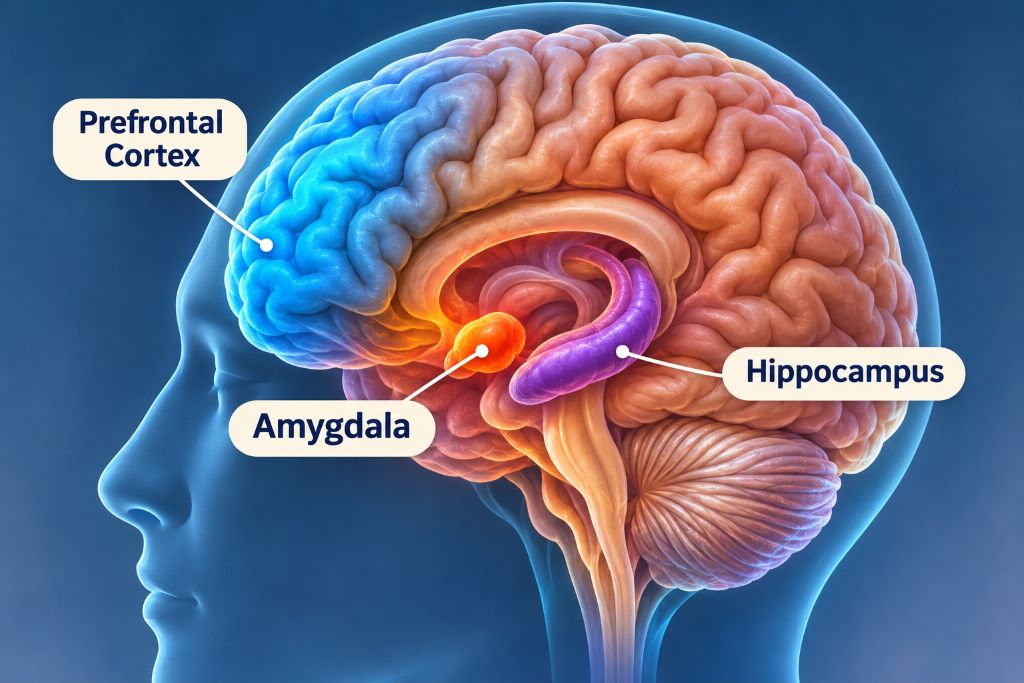
Note: This is an educational illustration, not a clinical anatomical scan.
The prefrontal cortex is involved in decision-making, attention, emotional regulation, and evaluating situations.
Under prolonged or intense stress, these processes can become more difficult to manage.
Consider someone who experienced a painful relationship breakup. Even after starting a new relationship, they may constantly worry about being abandoned again.
A delayed message may trigger anxiety. A minor disagreement may feel like evidence that the new relationship is about to end.
The present situation may be relatively harmless, but memories of the earlier experience can influence how the person interprets it.
Repeated rumination, or continuously thinking about distressing experiences, can also interfere with sleep, concentration, and everyday activities.
Understanding why painful memories stay with us is an important step in learning to heal emotionally.
Some possible effects include:
Sleep difficulties: Replaying painful conversations at bedtime can make it difficult to relax and fall asleep.
Poor concentration: Constantly thinking about past experiences can divert attention from work, studies, and daily responsibilities.
Emotional exhaustion: Repeatedly revisiting resentment, disappointment, or rejection can leave you feeling mentally drained.
Relationship difficulties: Previous betrayals may make it harder to trust people, even when they have given you no reason for suspicion.
Increased stress: Reminders of painful experiences can trigger emotional and physical stress responses.
These effects do not mean that everyone who remembers a painful experience has a mental health disorder. However, persistent distress deserves attention, especially when it interferes with daily life.
How to Heal Yourself Emotionally Without Forgetting the Past?
One of the biggest misconceptions about emotional healing is that you must forget everything that happened.
You do not have to erase a painful memory to recover from its emotional effects.
Healing means reaching a point where remembering an experience no longer controls your decisions, relationships, confidence, or happiness.
Imagine that a close friend betrayed your trust several years ago. You may never forget what happened, and you may decide that rebuilding the friendship is not appropriate.
However, you can gradually stop allowing that experience to determine how you view every new friendship.
You can learn to recognise warning signs, establish healthier boundaries, and build relationships with people who demonstrate honesty and respect.
This is an important distinction: remembering what happened can help you protect yourself, while repeatedly reliving the emotional pain may prevent you from moving forward.
Psychological approaches such as cognitive behavioural therapy (CBT) can help people recognise unhelpful thinking patterns and develop healthier responses.
For additional guidance, explore the GRACE method for emotional healing, which offers another perspective on developing emotional awareness and moving towards inner peace.
Some trauma-focused therapies can also help people process distressing memories when clinically appropriate.
Does Forgiveness Help You Heal Emotionally?
Forgiveness is often presented as the ultimate solution to emotional pain. However, healing is not the same as excusing someone else’s behaviour.
Understanding the common misconceptions about forgiveness can help you distinguish genuine emotional healing from accepting or tolerating harmful behaviour.
When somebody hurts you, forgiving them does not mean that what they did was acceptable.
It does not mean you must trust them again, restore the relationship, or allow them to repeat the same behaviour.
Forgiveness, when it is meaningful and freely chosen, can involve gradually releasing the desire for revenge and reducing the emotional hold of resentment.
For example, suppose a relative repeatedly criticises and humiliates you. You may decide that maintaining some distance is necessary for your emotional well-being.
You can work towards releasing your anger without allowing that person to continue treating you disrespectfully.
Similarly, someone who has experienced abuse or manipulation should never be pressured to forgive the person responsible.
Personal safety, accountability, and healthy boundaries must come first.
You can heal without reconciliation. You can move forward without approving of what happened. And you can choose peace without giving someone another opportunity to hurt you.
Although emotional recovery takes time, several practical approaches can help you heal yourself emotionally and regain confidence.
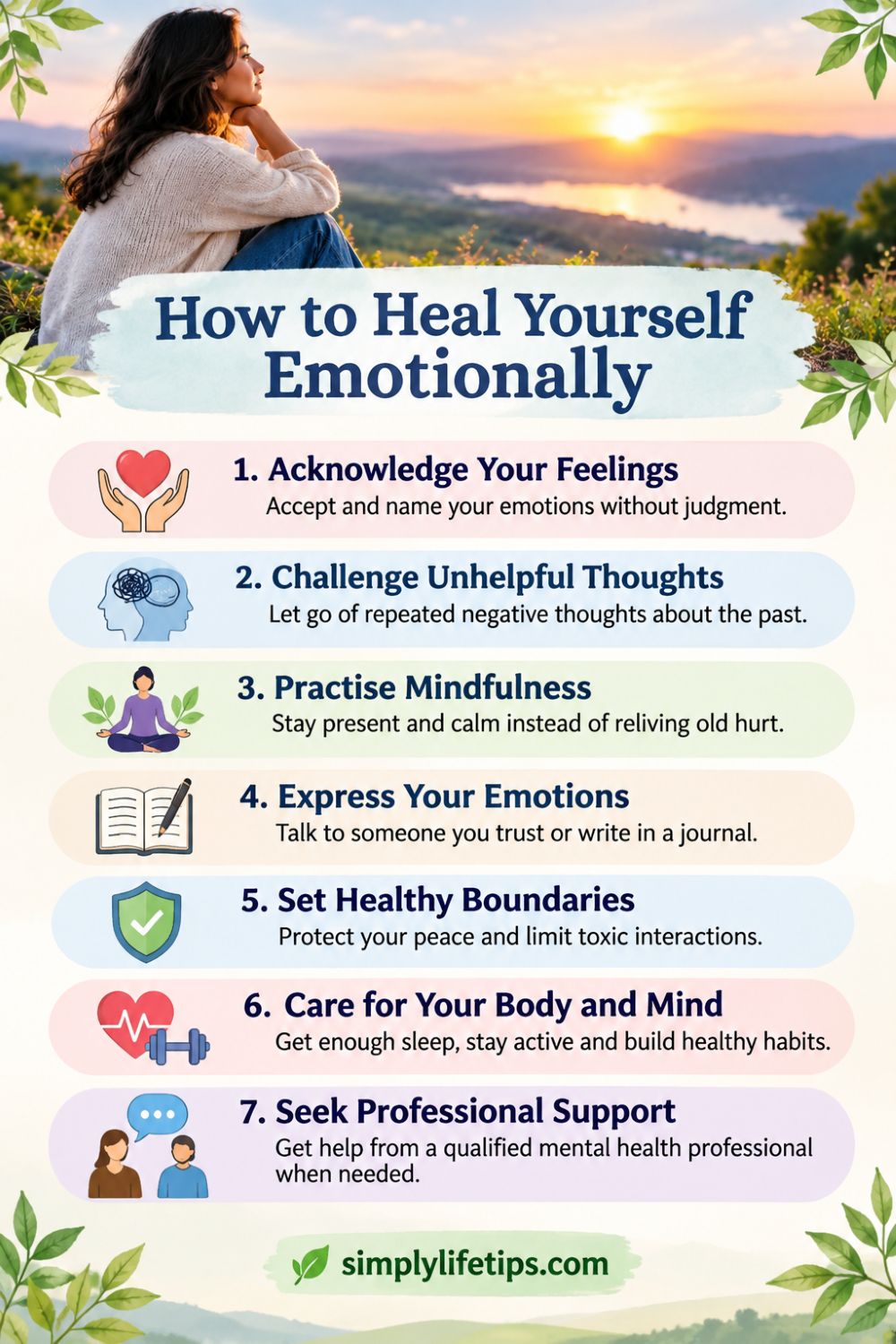
7 Practical Ways to Heal Yourself Emotionally
Emotional healing is rarely an overnight process. It involves understanding your feelings, changing unhelpful thinking patterns, developing healthier habits, and sometimes receiving professional support.
The following strategies can help you gradually overcome past hurt and regain emotional balance.
1. Acknowledge Your Feelings Instead of Suppressing Them
The first step towards emotional healing is recognising what you are experiencing.
Many people try to hide their sadness, anger, disappointment, or fear because they believe expressing these feelings makes them weak.
However, ignoring difficult emotions does not necessarily make them disappear.
If someone has betrayed your trust, acknowledge that you feel hurt. If you experienced rejection, allow yourself to recognise the disappointment instead of pretending that it meant nothing.
Try identifying your feelings more specifically.
Instead of saying, “I feel terrible,” ask yourself whether you are experiencing anger, embarrassment, loneliness, fear, grief, or disappointment.
Naming emotions can help you understand what you need.
For example, if an old argument makes you angry, you may discover that the deeper feeling is actually disappointment because someone you trusted failed to respect you.
Understanding the underlying emotion can make it easier to decide how to respond.
Practical solution: Spend a few minutes writing down what you feel, what triggered the emotion, and what might help you feel safer or more comfortable. Do not judge yourself for having those feelings.
Practising self-compassion is equally important during recovery. Discover how forgiveness and kindness can support self-healing and help you develop a healthier relationship with yourself.
2. Stop Replaying the Past and Challenge Unhelpful Thoughts
Do you repeatedly remember an unpleasant conversation and imagine different ways you could have responded?
This is a common form of rumination.
You may keep asking yourself why someone behaved badly, why you did not defend yourself, or what you could have done differently.
Although reflecting on an experience can help you learn, repeatedly analysing something you cannot change may increase distress.
One useful approach is cognitive reappraisal, which involves examining a situation from a different and more balanced perspective.
For example, suppose a colleague once criticised your work in front of others.
Your immediate thought might be, “I am not good enough. Everyone thinks I am incompetent.”
Instead, examine the available evidence.
Was the criticism about one particular mistake? Have you completed successful projects before? Did the colleague express an opinion rather than an objective assessment of your abilities?
A more balanced thought might be:
“That experience was embarrassing, but one person’s criticism does not define my professional abilities. I can learn from any useful feedback without accepting personal humiliation.”
This does not mean pretending that the experience was harmless. It means refusing to let one painful incident determine your entire self-image.
Practical solution: Whenever an upsetting memory returns, identify the thought associated with it. Ask yourself whether it is completely accurate, whether you are making assumptions, and what a more balanced interpretation might look like.
3. Practise Mindfulness and Bring Your Attention to the Present
Painful memories often pull your attention away from what is happening now.

You may be physically present at home, at work, or with your family while your mind remains occupied with something that happened years ago.
Mindfulness helps you practise paying attention to the present moment without immediately judging every thought or feeling.
A simple breathing exercise can be a useful starting point.
Sit comfortably and gently notice your breathing. Pay attention to the sensation of air entering and leaving your body. When your mind wanders towards an upsetting memory, acknowledge the thought and gently return your attention to your breathing.
You do not need to force unwanted thoughts away.
For example, if you suddenly remember a painful argument while preparing dinner, notice that the memory has appeared. Remind yourself that you are currently in your kitchen, preparing a meal, and that the argument is not happening now.
You can also try mindful walking, gentle stretching, meditation, or other activities that help you reconnect with the present.
Practical solution: Begin with five minutes of mindful breathing each day. Increase the duration gradually if you find it helpful. If focusing on breathing makes you uncomfortable, try noticing your surroundings or the physical sensations of your feet touching the ground instead.
4. Express Your Feelings Instead of Keeping Everything Inside
Unexpressed emotions can become difficult to manage, particularly when you feel isolated.
Talking to someone you trust can help you understand your feelings and gain a different perspective.
You do not necessarily need someone to solve your problems. Sometimes, being heard without criticism or judgment is valuable.
Imagine that you have been carrying resentment towards a close friend for years. You may have avoided discussing the incident because you feared another argument.
Writing about your feelings or speaking with a trusted person may help you understand what remains unresolved.
Journaling is another useful option.
Write about what happened, how it affected you, what you learned, and what you would like to change in your life.
You could also write a letter to the person who hurt you without sending it. Express everything you wanted to say, including your disappointment and anger.
The purpose is to organise your thoughts and understand your emotions, not to provoke another confrontation.
Practical solution: Set aside ten minutes to write freely about your feelings. If the experience is overwhelming, stop and return to the exercise later or discuss it with a qualified mental health professional.
5. Establish Healthy Boundaries with People Who Hurt You
Emotional healing does not require you to maintain close relationships with everyone.
Sometimes, the healthiest decision is to create distance from people who repeatedly disrespect, manipulate, exploit, or emotionally harm you.
For example, imagine that a family member regularly makes insulting comments about your personal decisions.
You may have tried explaining how their words affect you, but the behaviour continues.
In such situations, you can establish clear boundaries.
You might say, “I am willing to discuss this, but I will not continue the conversation if you insult me.”
You can also limit contact, avoid certain discussions, or leave situations that become disrespectful.
Boundaries are not punishments. They are guidelines that help protect your emotional well-being.
Remember that you cannot control another person’s behaviour, but you can decide how much access they have to your time, attention, and personal life.
Practical solution: Identify relationships or situations that repeatedly leave you emotionally exhausted. Decide what behaviour you will no longer accept and communicate your boundaries clearly when it is safe to do so.
6. Give Your Brain and Body Time to Recover
Emotional well-being is closely connected to physical health.
Poor sleep, physical inactivity, and prolonged stress can make it more difficult to manage emotions and concentrate.
Developing healthy daily habits can support your overall recovery.
Start by establishing a regular sleep schedule. Reduce stimulating activities before bedtime and create a comfortable sleeping environment.
Include physical activity in your routine. Walking, cycling, swimming, yoga, or other enjoyable activities can support physical health and help manage stress.
Maintain a balanced diet and avoid relying on alcohol or other substances to escape difficult emotions.
For example, if you spend evenings replaying painful memories, consider replacing some of that time with a relaxing walk, a hobby, reading, or meaningful conversations with people you enjoy spending time with.
These activities will not automatically erase emotional pain, but they can help create a healthier environment for recovery.
Practical solution: Start with a manageable routine: consistent sleep times, a daily walk, regular meals, and a relaxing activity that gives you a sense of enjoyment.
7. Seek Professional Help When Emotional Pain Becomes Overwhelming
Sometimes, painful experiences have a deeper psychological impact that is difficult to manage alone.
If memories repeatedly disturb your sleep, affect your relationships, interfere with your work, or cause persistent anxiety, consider speaking with a qualified mental health professional.
A psychologist or other appropriately qualified professional can help you understand your emotional responses and identify suitable treatment options.
When painful experiences are rooted in childhood, understanding different approaches to healing childhood emotional trauma may provide additional insights into the recovery process.
Cognitive behavioural therapy (CBT) can help people identify and change unhelpful thinking patterns and behaviours.
For people experiencing trauma-related symptoms, trauma-focused treatments such as trauma-focused CBT or EMDR may be appropriate following professional assessment.
For example, someone who experienced a frightening event may continue experiencing intrusive memories, nightmares, avoidance, or heightened alertness.
Such symptoms deserve proper assessment rather than simply being dismissed as overthinking.
Seeking help is not a sign of weakness. It is a constructive step towards understanding your difficulties and receiving appropriate care.
When Should You Seek Help for Persistent Emotional Pain?
Occasional sadness, anger, or disappointment is a normal part of human life. However, persistent emotional distress should not be ignored.

Consider seeking professional support if you regularly experience intrusive memories, disturbing nightmares, intense emotional reactions to reminders of past events, persistent anxiety, or difficulty trusting others.
You should also seek help if emotional distress affects your sleep, work, education, relationships, or ability to enjoy everyday activities.
If you experience thoughts of self-harm or suicide, seek immediate support from a qualified professional or emergency service.
Remember that you do not need to wait until your situation becomes unbearable before asking for help.
How to Let Go of Past Hurt and Move Forward
The people who hurt you may remain part of your personal history, but they do not have to determine the direction of your future.
You cannot change what happened yesterday. You cannot rewrite every conversation, undo every betrayal, or recover every lost relationship.
But you can gradually change how you respond to those memories.
You can learn from painful experiences without allowing them to destroy your confidence.
Remember that emotional healing also involves treating yourself with compassion. Understanding the importance of self-forgiveness and personal growth can help you release unnecessary guilt and rebuild your confidence.
You can forgive someone if that feels right, or maintain distance if that is necessary for your safety and well-being.
You can build healthier relationships, rediscover your interests, and make room for new experiences.
Most importantly, you can stop measuring your present happiness by the actions of people who hurt you in the past.
Healing does not mean that you will never remember what happened. It means that the memory gradually loses its power to control your life.
Remember, the past cannot be changed, but it does not have to dictate your future.
The most meaningful response to someone who tried to break your confidence is not revenge. It is rebuilding your self-respect, protecting your peace, and creating a life that reflects your values.
Your happiest days do not have to be behind you. There is still room for meaningful relationships, new opportunities, personal growth, and genuine happiness.
Do not sacrifice the possibilities of tomorrow because of the pain of yesterday.
Ultimately, learning how to heal yourself emotionally means accepting your past without allowing it to control your present.
You deserve a future that is not controlled by the people who hurt you.
Frequently Asked Questions (FAQs)
1. How can I heal myself emotionally?
Start by acknowledging your feelings, identifying unhelpful thinking patterns, practising mindfulness, expressing your emotions, and establishing healthy boundaries. Maintaining good sleep and exercise habits can also support emotional well-being. If distress persists or affects everyday life, consider professional help.
2. Why do painful memories stay with us for years?
Emotionally significant experiences can be strongly encoded through interactions between brain structures such as the amygdala and hippocampus. Reminders may reactivate these memories and their associated emotions. However, the intensity and impact of emotional memories can change over time.
3. How do I stop thinking about someone who hurt me?
Recognise when you are repeatedly replaying past experiences. Redirect your attention towards meaningful activities, challenge unhelpful thoughts, practise mindfulness, and establish appropriate boundaries. If intrusive thoughts persist, a mental health professional can help.
4. Does forgiveness help with emotional healing?
Forgiveness may help some people reduce resentment and move forward. However, it is a personal choice, not a requirement for recovery. Forgiving someone does not mean excusing their behaviour, restoring trust, or continuing an unhealthy relationship.
5. How long does emotional healing take?
There is no fixed recovery period. It depends on the nature of the experience, its emotional impact, available support, and individual circumstances. Healing may involve gradual progress, occasional setbacks, and learning new ways to manage difficult emotions. Professional treatment can help when distress is persistent or severe.
References and Further Reading
- National Institute of Mental Health – Coping with Traumatic Events
- American Psychological Association – Healing from Trauma
- HelpGuide – Coping with Emotional and Psychological Trauma
- Psychology Today – 10 Tips for Emotional Healing
Medical disclaimer: This article is intended for general educational purposes and does not replace professional medical or psychological advice.

Mathukutty P. V. is the founder of Simply Life Tips. He shares practical advice and useful insights on personal growth, health, well-being, technology, and everyday living. His goal is to help readers build positive habits and make informed decisions. He believes in continuous learning and sharing knowledge to help people live healthier, happier, and more meaningful lives.
Discover more from Simply Life Tips
Subscribe to get the latest posts sent to your email.