
The benefits of forgiveness go far beyond repairing relationships. Forgiveness can help us release resentment, reduce emotional burdens, develop empathy, and find greater peace in life. When someone hurts, disappoints, or betrays us, feelings of anger and bitterness can remain for a long time. Although these emotions are natural, holding on to them may affect our happiness, relationships, and emotional well-being.
Forgiveness does not mean pretending that nothing happened or allowing someone to hurt us again. Instead, it means gradually letting go of resentment and choosing not to let a painful experience control our present. It is a personal decision that can help us move forward with greater emotional freedom.
In this article, we explore the benefits of forgiveness, common misconceptions, practical ways to forgive, and how forgiveness can improve our relationships and everyday lives.
What Is Forgiveness?
Forgiveness is the conscious decision to reduce feelings of anger, resentment, and hostility toward someone who has hurt or wronged us.
It does not mean forgetting the incident, approving the person’s behaviour, or denying the pain we experienced. Instead, forgiveness involves accepting what happened and choosing not to let resentment dominate our thoughts and emotions.
For example, imagine that a close friend shares something private that you trusted them to keep confidential. You may feel betrayed and decide to maintain some distance. Forgiveness does not require you to trust that friend immediately or restore the friendship. You can release your resentment while maintaining boundaries.
Forgiveness is often a gradual process. Some experiences take longer to heal than others, and nobody should feel pressured to forgive before they are ready.
The American Psychological Association describes forgiveness as voluntarily moving away from resentment toward someone who has caused harm. Importantly, forgiveness is not the same as reconciliation or excusing another person’s behaviour. Read the APA’s explanation of forgiveness
6 Key Benefits of Forgiveness for a Happier Life
Forgiveness can positively influence emotional well-being, relationships, and personal growth. Here are six important benefits.
1. Improves Emotional Well-Being
Holding on to anger and resentment can create emotional tension. Repeatedly thinking about an unpleasant experience may make it difficult to concentrate, relax, or enjoy everyday activities.
Forgiveness can help reduce this emotional burden and create space for more positive thoughts.
Example: Suppose a colleague makes an unfair comment about you during a meeting. You may continue thinking about it long after the incident. Choosing to process the hurt and gradually let go of resentment can help you regain emotional balance.
2. Reduces Stress and Resentment
Unresolved anger can contribute to ongoing stress. Constantly revisiting painful memories may affect sleep, concentration, and your ability to enjoy daily life.
Forgiveness can help you stop repeatedly dwelling on the incident. It does not erase the memory, but it may change how strongly that memory affects you.
Example: If a relative repeatedly criticises your decisions, you may spend hours thinking about their remarks. Learning to release resentment while setting appropriate boundaries can help you respond more calmly.
3. Strengthens Relationships
Healthy relationships depend on understanding, communication, respect, and the ability to work through disagreements.
Forgiveness can help people move beyond minor conflicts and misunderstandings. When both people accept responsibility and make an effort to change, forgiveness may create an opportunity to rebuild a relationship.
Example: A husband forgets an important anniversary, leaving his wife disappointed. Instead of allowing the disagreement to become a lasting source of resentment, they discuss their feelings, understand each other’s expectations, and make an effort to improve their communication.
However, forgiveness does not always mean reconciliation. A relationship should be restored only when it is safe, and both people are willing to build trust.
4. Encourages Personal Growth
Forgiveness can teach us patience, emotional maturity, empathy, and self-awareness.
When we learn to manage difficult emotions, we become better equipped to handle disagreements and disappointments in the future.
Example: After a disagreement with a friend, you may realise that both of you misunderstood each other’s intentions. Reflecting on the experience can help you communicate more clearly and avoid similar conflicts.
5. Develops Empathy and Understanding
Forgiveness can help us recognise that people make mistakes and that their behaviour may be influenced by their own struggles, fears, or misunderstandings.
Understanding another person’s circumstances does not justify harmful behaviour. It simply allows us to respond with greater perspective rather than reacting only through anger.
Example: A friend who has been unusually distant may be dealing with family difficulties or personal stress. Understanding this possibility may help you approach the situation with patience instead of immediately assuming that the friendship has lost its importance.
6. Helps You Find Inner Peace
One of the most meaningful benefits of forgiveness is the opportunity to move forward without carrying unnecessary emotional pain.
You cannot always change what another person has done, but you can work toward changing how much power that experience has over your present life.
Example: Someone who has experienced a painful friendship breakup may initially feel angry and disappointed. With time, reflection, and emotional healing, they may accept the situation and focus on building healthier relationships.
Research and clinical guidance suggest that forgiveness may support emotional and physical well-being. According to the Mayo Clinic, letting go of grudges and bitterness may contribute to healthier relationships, improved mental health, reduced anxiety and stress, and greater peace of mind. Read the Mayo Clinic’s guide to forgiveness and its potential benefits.

10 Common Misconceptions About Forgiveness
Many people hesitate to forgive because they misunderstand what forgiveness involves. Let’s examine ten common misconceptions.
1. Forgiveness Means Forgetting
Forgiveness does not require you to erase the memory of what happened. Remembering an experience can help you recognise warning signs and make wiser decisions.
You can remember the incident without allowing it to control your emotions.
2. Forgiveness Means Excusing Wrongdoing
Forgiving someone does not mean accepting their behaviour as right. You can acknowledge that a person acted unfairly while choosing not to remain consumed by resentment.
3. Forgiveness Is a Sign of Weakness
Forgiveness is not weakness. It can require considerable emotional strength to process hurt, manage anger, and choose a healthier response.
Sometimes, walking away from a harmful relationship is also an act of strength.
4. The Other Person Must Apologise First
A sincere apology can make forgiveness easier, but it is not always possible. The person who hurt you may never accept responsibility or understand the damage they caused.
You can still work toward emotional healing without waiting for an apology.
5. Forgiveness Always Means Reconciliation
Forgiveness and reconciliation are different. Forgiveness is an internal process, while reconciliation involves rebuilding a relationship.
You may forgive someone and still decide that maintaining distance is best.
6. You Must Forgive Immediately
Forgiveness cannot always happen instantly. Serious betrayal, loss, or emotional abuse may require considerable time to process.
Allow yourself to heal at your own pace.
7. Forgiveness Means Allowing Someone to Hurt You Again
Forgiveness does not require you to tolerate repeated mistreatment. You can forgive someone while establishing firm boundaries or ending contact.
8. Only the Person Who Is Forgiven Benefits
Forgiveness can benefit the person who chooses to forgive by helping them release resentment and regain emotional balance. It may also improve relationships when both people are willing to change.
9. Forgiveness Means Trusting Someone Again
Trust must be rebuilt through consistent and responsible behaviour. Forgiving someone does not automatically restore the trust that was lost.
10. Everyone Must Forgive in the Same Way
People respond differently to emotional pain. Some need time alone, while others benefit from talking with a trusted person or counsellor.
There is no single timetable or method that works for everyone.

How to Practise Forgiveness: 7 Practical Steps
Forgiveness is a personal journey. The following steps can help you begin the process.
1. Acknowledge Your Feelings
Start by recognising what happened and how it affected you. Do not pretend that you are not hurt.
You may feel angry, disappointed, embarrassed, betrayed, or sad. These emotions are valid and deserve attention.
Example: If a friend breaks an important promise, acknowledge your disappointment instead of immediately dismissing your feelings.
2. Understand What Happened
Try to understand the situation without justifying the other person’s behaviour.
Consider whether the incident resulted from a misunderstanding, poor judgement, carelessness, or deliberate harm. Understanding the circumstances may help you decide how to respond.
3. Express Your Feelings in a Healthy Way
Talking to someone you trust, writing in a journal, or discussing the issue calmly with the person involved can help you process difficult emotions.
Avoid actions that may increase conflict or cause further harm.
Example: Instead of responding angrily to an offensive message, write down your feelings first. Review them later and decide whether a calm conversation is appropriate.
4. Try to Develop Empathy
Consider the possibility that the other person may have acted out of fear, stress, ignorance, or personal difficulties.
This does not excuse the behaviour. It simply helps you consider the situation from a wider perspective.
5. Decide What Boundaries You Need
Before restoring a relationship, consider what would make you feel safe and respected.
You may need an apology, changed behaviour, greater honesty, or some distance. Clear boundaries protect your well-being.
6. Choose to Release Resentment Gradually
Forgiveness is not about forcing yourself to feel positive toward someone. It is about making a conscious effort to stop allowing resentment to dominate your life.
You may need to revisit your feelings several times. That does not mean you have failed.
7. Focus on Moving Forward
Spend time on activities, relationships, and goals that bring meaning to your life.
Reconnect with supportive people, develop healthy routines, and give yourself opportunities to experience happiness again.
If the emotional pain feels overwhelming or continues to interfere with daily life, speaking with a qualified mental health professional may help.
A 2024 multisite randomised controlled trial published in BMJ Public Health examined a self-directed forgiveness workbook involving 4,598 participants from five countries. The researchers found improvements in forgiveness and reductions in reported depression and anxiety symptoms after two weeks. These findings suggest that structured forgiveness exercises may be helpful, although they should not be considered a replacement for professional mental health care. Read the International REACH forgiveness intervention study.
A Story About the Power of Forgiveness
Consider the story of two friends, Haru and Kaito.
Haru and Kaito had been close friends for many years. They shared their dreams, supported each other during difficult times, and enjoyed many memorable experiences together.
One day, a misunderstanding created a serious disagreement between them. Hurtful words were exchanged, and both friends stopped communicating.
As time passed, each began to regret how the disagreement had affected their friendship. They remembered the good times but struggled to overcome their pride and resentment.
Eventually, one of them decided to take the first step. They met, discussed what had happened, acknowledged their mistakes, and listened to each other’s feelings.
Their friendship did not become perfect overnight. However, their willingness to forgive helped them understand one another and begin rebuilding their relationship.
The story illustrates an important lesson: forgiveness can create an opportunity for healing, understanding, and personal growth. It does not guarantee that every relationship will be restored, but it can help people move beyond unnecessary resentment.
The Importance of Forgiveness in Married Life
Forgiveness plays an important role in maintaining a healthy marriage. Two people with different personalities, experiences, and expectations will inevitably disagree at times.
Small misunderstandings can become major problems when couples allow resentment to accumulate.
Consider a situation in which one partner makes a careless remark that hurts the other. A sincere conversation, acknowledgement of the hurt, and a willingness to change can help the couple move forward.
However, forgiveness should not be used to excuse domestic abuse, intimidation, manipulation, or repeated disrespect. Safety and well-being must always come first.
A healthy marriage requires more than forgiveness. It also needs mutual respect, accountability, appreciation, and honest communication.
Forgiveness and Self-Forgiveness
Sometimes, the person we find hardest to forgive is ourselves.
We may continue feeling guilty about a poor decision, a missed opportunity, or something hurtful we said or did. Although taking responsibility is important, repeatedly punishing ourselves does not undo the past.
Self-forgiveness involves acknowledging mistakes, accepting responsibility, learning from the experience, and making an effort to do better.
Example: Imagine that you made a poor financial decision that affected your family. Instead of allowing guilt to prevent you from moving forward, acknowledge the mistake, understand what went wrong, and develop a more responsible financial plan.
Self-forgiveness does not mean avoiding accountability. It means using past mistakes as opportunities to grow rather than allowing them to define your entire life.
For more guidance, read our article on self-forgiveness and letting go of guilt and regret.
Forgiveness Across Cultures and Traditions
Forgiveness is a value recognised in many cultures and philosophical traditions. Although different communities may express it in different ways, compassion, kindness, understanding, and respect are widely appreciated human qualities.
Forgiveness can help people look beyond anger and consider the possibility of healing and positive change.
It is also important to understand that forgiveness is a personal choice. Nobody should be pressured to forgive someone who has caused serious harm. People deserve time, safety, and support as they work through painful experiences.
Ultimately, forgiveness is not about following a particular religious belief. It is about finding a healthier way to respond to hurt and move forward with dignity.
How Forgiveness Helps You Move Beyond the Past
The past cannot be changed, but the way we respond to it can change over time.
Holding on to resentment may keep painful experiences at the centre of our thoughts. Forgiveness can help us redirect our attention toward the present and the future.
Here are a few practical ways to move forward:
- Focus on the present: Spend less time repeatedly analysing what happened and more time engaging in meaningful activities.
- Build supportive relationships: Spend time with people who respect and encourage you.
- Learn from difficult experiences: Identify what the experience taught you about trust, boundaries, and communication.
- Practise self-care: Make time for rest, exercise, hobbies, and activities that support your well-being.
- Seek support when necessary: A trusted friend, counsellor, or mental health professional can help you process difficult emotions.
Forgiveness is not a quick solution to every emotional problem. It is one possible part of a longer journey toward healing and personal growth.
Conclusion
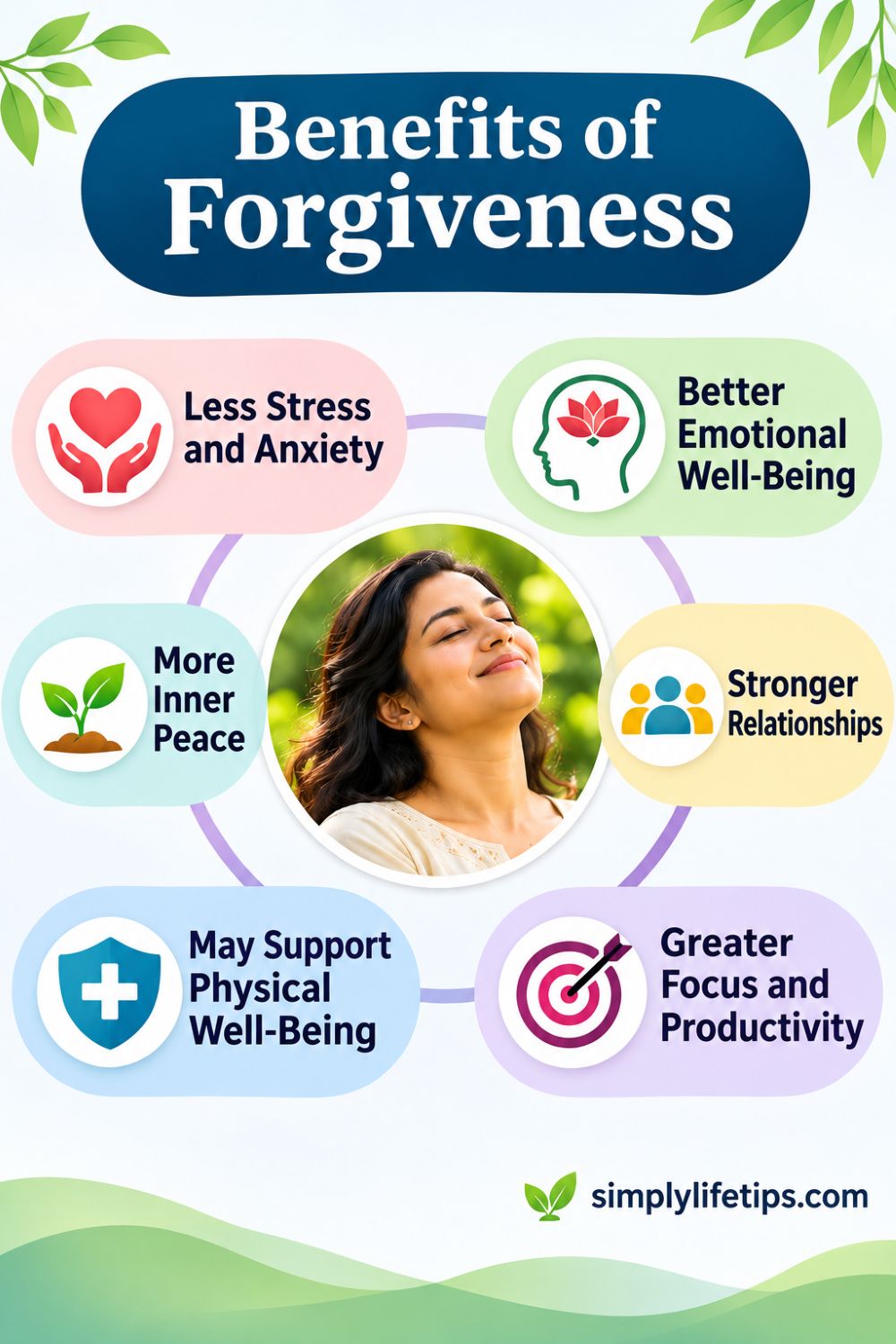
The benefits of forgiveness extend beyond repairing relationships. Forgiveness can help us reduce resentment, improve emotional well-being, develop empathy, and find greater peace in everyday life.
However, forgiveness does not mean forgetting, excusing harmful behaviour, restoring trust automatically, or remaining in an unsafe relationship. It is a personal decision that should happen at a pace that feels appropriate.
We cannot always control how others treat us, but we can learn healthier ways to respond to painful experiences. By acknowledging our feelings, establishing boundaries, and gradually releasing resentment, we can make room for a more peaceful and meaningful future.
What does forgiveness mean to you, and has forgiving someone helped you find peace in your life? Share your thoughts in the comments.
Frequently Asked Questions About Benefits of Forgiveness
1. What are the main benefits of forgiveness?
Forgiveness may help reduce resentment, improve emotional well-being, lower stress, strengthen healthy relationships, develop empathy, and support personal growth.
2. Does forgiveness mean forgetting what someone did?
No. Forgiveness does not require forgetting an incident or pretending that it never happened. You can remember what happened, learn from it, and still choose to release resentment.
3. Can you forgive someone without trusting them again?
Yes. Forgiveness and trust are different. You may forgive someone while maintaining boundaries. Trust should be rebuilt through consistent and responsible behaviour.
4. How long does it take to forgive someone?
There is no fixed timeline. Minor misunderstandings may be easier to resolve, while betrayal, abuse, or serious emotional hurt may take much longer. Forgiveness should not be forced.
5. Why is self-forgiveness important?
Self-forgiveness helps people accept past mistakes, take responsibility, learn from their experiences, and move forward without being controlled by excessive guilt or regret.
Reference links
- American Psychological Association – Forgiveness
- Mayo Clinic – Forgiveness: Letting go of grudges and bitterness
- BMJ Public Health – Research on a forgiveness intervention

Mathukutty P. V. is the founder of Simply Life Tips. He shares practical advice and useful insights on personal growth, health, well-being, technology, and everyday living. His goal is to help readers build positive habits and make informed decisions. He believes in continuous learning and sharing knowledge to help people live healthier, happier, and more meaningful lives.