

Habits to avoid in old age can affect our relationships, happiness, and overall well-being. Growing older brings wisdom, freedom, and a deeper appreciation for life, but certain behaviors, such as constant complaining, refusing help, or holding on to past grudges, can make everyday life less fulfilling. These habits may develop gradually through grief, fear, loneliness, or a desire to remain independent. The good news is that recognizing them gives us an opportunity to change, strengthen our relationships, preserve our dignity, and enjoy a more peaceful and meaningful life as we age.
Growing older with confidence and dignity also means learning to adapt to life’s changes, as explained in these practical tips for navigating old age with grace and dignity.
Why Change Habits to Avoid in Old Age?
Aging changes many aspects of life. Retirement may alter daily routines, health concerns may limit activities, and the loss of friends or loved ones may leave an emotional gap. These experiences can influence how we communicate, think, and interact with others.
However, growing older does not mean we must stop learning or improving ourselves. Small changes in our daily behavior can help us maintain meaningful relationships and a stronger sense of purpose.
The following are 12 habits to avoid in old age if you want to enjoy better relationships, greater emotional well-being, and a more satisfying life.
12 Habits to Avoid in Old Age
Growing older brings wisdom and valuable life experiences, but some everyday habits can affect our happiness and relationships. These habits to avoid in old age highlight common behaviors that may lead to misunderstandings, loneliness, and unnecessary stress. Recognizing these habits is the first step toward building stronger connections and enjoying a more peaceful, meaningful life.
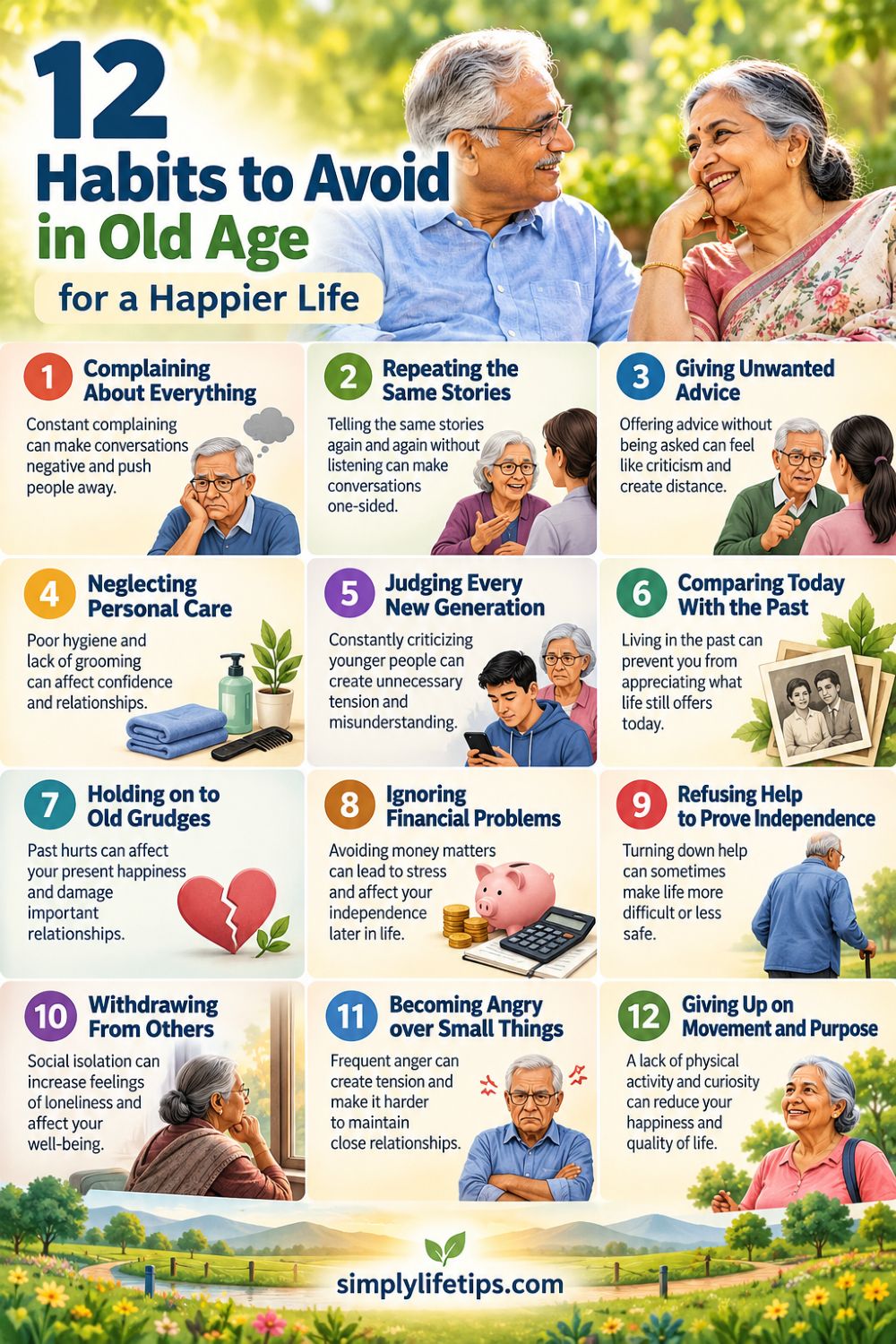
Remember, these habits do not make anyone a bad person. They can develop through loneliness, grief, fear, or changing life circumstances. The goal is not to judge ourselves or others, but to recognize what we can improve. Start with one small change, whether it means listening more patiently, reaching out to a friend, accepting help, or discovering a new interest. Every positive step can help you age with greater confidence, dignity, and purpose.
1. Complaining About Everything
Everyone experiences difficulties, and aging can introduce challenges such as physical discomfort, financial worries, and the loss of loved ones. It is natural to express frustration or seek support when life becomes difficult.
The problem begins when every conversation revolves around what is wrong. Constant complaints can make conversations exhausting and leave family members or friends unsure how to respond.
For example, imagine a friend visiting you after a busy day. If the conversation immediately focuses on rising prices, poor health, family disagreements, and everything that has gone wrong, the visit may become emotionally draining.
This does not mean you should hide your pain or pretend to be happy. Your feelings deserve attention. Instead, try balancing your concerns with something positive or meaningful.
What you can do instead:
- Express your concerns honestly without allowing them to dominate every conversation.
- Notice small things you appreciate, such as a friendly phone call or a pleasant morning.
- Ask others about their lives and listen to their experiences.
- Seek appropriate medical or emotional support when problems feel overwhelming.
Gratitude does not eliminate life’s difficulties, but recognizing what remains good can help you maintain a healthier perspective.
2. Repeating the Same Stories Without Listening
Memories are precious. They connect us with our childhood, family traditions, friendships, achievements, and important moments from the past. Sharing these experiences can bring generations closer together.
However, repeatedly telling the same stories without allowing others to participate may make conversations feel one-sided.
Imagine visiting your grandchildren and spending the entire time describing your school days or your first job. They may enjoy hearing these memories, but they also want opportunities to share their own experiences.
The solution is not to stop talking about the past. It is to make room for the present.
What you can do instead:
- Share memories when they are relevant to the conversation.
- Ask younger family members about their interests and experiences.
- Invite others to share their opinions rather than assuming they feel the same way.
- Create new memories through hobbies, outings, learning, and family activities.
If repetition becomes frequent or noticeably increases, remember that it is not always a behavioral choice. Hearing difficulties, stress, medication effects, or changes in memory can contribute. Seek medical advice if you notice persistent or concerning changes.
Your memories matter, but there are still new conversations waiting to happen.
3. Giving Unwanted Advice
Experience can provide valuable wisdom. After navigating family responsibilities, work, relationships, and personal challenges, older adults often have useful lessons to share.
However, advice can feel like criticism or control when it is offered without being requested.
For example, an adult daughter may tell her parent about a disagreement at work. Before she finishes explaining, the parent begins telling her exactly what she should do. Although the intention may be loving, she may simply want someone to listen.
Advice is often more helpful when the other person feels understood first.
What you can do instead:
- Ask, “Would you like my advice, or would you prefer that I listen?”
- Let the other person finish speaking before responding.
- Share your experiences without insisting that everyone follow your approach.
- Respect the decisions of adult children, even when you would choose differently.
Wisdom becomes more meaningful when it is offered with patience and respect. You do not have to solve every problem to be a supportive parent, grandparent, or friend.
4. Neglecting Personal Care
Personal care is not about looking young or following every fashion trend. It is about maintaining comfort, hygiene, confidence, and self-respect.
Some older adults gradually pay less attention to clean clothing, grooming, oral hygiene, or regular bathing. This may happen because of physical limitations, low mood, illness, or a feeling that personal appearance no longer matters.
For instance, someone who once enjoyed dressing neatly may begin staying in the same clothes all day because going outside seems less important than before.
Instead of judging yourself, consider what might be making personal care difficult.
What you can do instead:
- Wear clean, comfortable clothes that make you feel good.
- Maintain regular bathing, grooming, and oral hygiene as your health allows.
- Choose simple routines that are easy to manage.
- Ask for assistance if pain, reduced mobility, or other difficulties make daily care challenging.
You do not need expensive products or a complicated routine. Small acts of self-care can help you feel more comfortable and confident.
If you experience a sudden or persistent loss of interest in personal care, consider discussing it with a healthcare professional.
5. Judging Every New Generation
Every generation grows up in a different social, cultural, and technological environment. The language, clothing, entertainment, and values of younger people may sometimes seem unfamiliar to older adults.
Problems arise when unfamiliarity turns into constant criticism.
Comments such as “Young people have no respect” or “Everything was better in our time” can discourage younger family members from sharing their thoughts and experiences.
For example, a grandparent may dislike the amount of time a grandchild spends using a smartphone. Instead of immediately criticizing the behavior, the grandparent could ask what the child enjoys doing online and then discuss reasonable boundaries around screen time.
What you can do instead:
- Ask questions before forming an opinion.
- Be willing to learn about new technologies and changing social habits.
- Express concerns respectfully instead of using insulting generalizations.
- Remember that younger people can teach older adults, just as older adults can share valuable life experience.
You do not need to agree with every modern trend. You simply need to make room for respectful conversation.
Curiosity can keep relationships alive long after generations begin to see the world differently.
6. Comparing Today Constantly With the Past
Looking back can be comforting. Old photographs, familiar songs, and memories of family gatherings may remind us of happier times.
However, constantly comparing the present with the past can make it difficult to appreciate what life still offers.
You might remember when you were physically stronger, had a busy working life, or spent every weekend with friends. Those memories are meaningful, but they do not define your entire worth today.
Your abilities and responsibilities may have changed, yet you still have opportunities to contribute, connect, and grow.
What you can do instead:
- Appreciate your memories without expecting the present to look exactly like the past.
- Focus on activities you can enjoy with your current abilities.
- Recognize the patience, knowledge, and perspective you have gained.
- Set small goals that give your days direction.
Instead of asking, “Why can’t I do everything I did years ago?” ask, “What can I still do that makes today worthwhile?”
You may not be able to recreate every experience from your youth, but you can continue building meaningful moments.
7. Holding on to Old Grudges
Family disagreements, broken friendships, and painful experiences can leave lasting emotional wounds. Sometimes, even after many years, a single memory can bring back feelings of anger or disappointment.
Revisiting the same hurt repeatedly can make it harder to enjoy the present. It may also affect relationships with people who were not involved in the original conflict.
Imagine two siblings who stopped speaking after a disagreement many years ago. Both may miss their relationship, yet neither wants to make the first move because of pride or resentment.
Forgiveness may help, but it does not require pretending that the harm never happened.
What you can do instead:
- Acknowledge your feelings instead of suppressing them.
- Consider whether a calm conversation could resolve the disagreement.
- Set boundaries when contact with someone remains harmful.
- Seek support from a trusted person or counselor if resentment continues to affect your well-being.
Forgiveness does not mean accepting abuse, excusing wrongdoing, or automatically restoring trust. Sometimes, moving forward means accepting that a relationship will remain distant.
The goal is to prevent an old wound from controlling every new day.
8. Ignoring Financial Problems
Financial security can become especially important after retirement or when income becomes limited. Yet discussing money may feel uncomfortable, particularly for people who have always taken pride in supporting their families.
Some older adults continue spending as they did when they earned more. Others give financial assistance to adult children despite struggling to meet their own basic needs.
For example, a parent may repeatedly pay a child’s bills while postponing necessary medical care or worrying about monthly expenses.
Helping family members can be generous, but generosity should not put your own essential needs at risk.
What you can do instead:
- Understand your monthly income, expenses, savings, and debts.
- Prioritize housing, food, healthcare, utilities, and other essential costs.
- Review subscriptions and purchases that no longer provide value.
- Set clear limits on financial help you can afford to give.
- Seek trustworthy financial guidance when major decisions are involved.
Simplifying your lifestyle is not a personal failure. It can be a practical way to protect your independence and reduce unnecessary stress.
A realistic financial plan can make the later years more secure and peaceful.
9. Refusing Help to Prove Independence
Independence is important at every age. Older adults should have opportunities to make their own decisions and maintain control over their daily lives.
However, refusing every offer of assistance can sometimes make life more difficult or less safe.
A person may refuse to use a walking aid because they worry about appearing weak. Another may avoid asking for a ride, even when driving has become difficult or unsafe.
The important distinction is between accepting support and giving up control.
What you can do instead:
- Accept practical assistance when it makes daily activities safer or easier.
- Discuss mobility, hearing, or vision concerns with a healthcare professional.
- Use suitable aids when recommended.
- Ask family members to support your choices rather than make every decision for you.
- Continue doing the tasks you can manage safely and comfortably.
For example, accepting help with grocery shopping does not mean you must stop cooking your favorite meals. A suitable mobility aid may help you remain active rather than restrict your independence.
Asking for help is not weakness. It can be a sensible way to preserve autonomy and quality of life.
For more practical guidance on maintaining independence and preparing for later life, read this article on essential advice for aged parents.
10. Withdrawing From Others and Assuming Everyone Has Forgotten You
Losing a spouse, relatives, or longtime friends can change the way social life feels. After a painful loss, staying home may seem easier than accepting invitations or meeting new people.
Over time, however, fewer interactions can lead to a stronger feeling of isolation.
Sometimes, both sides misunderstand the situation. An older adult stops calling because they do not want to bother family members. The family calls less often because they assume the older person prefers quiet.
The result is distance that neither side intended.
Social isolation and loneliness are associated with poorer health and well-being in older adults, according to the National Institute on Aging.
What you can do instead:
- Call a friend or relative instead of waiting for them to contact you.
- Send a short message to someone you have not spoken to recently.
- Participate in community activities, local clubs, or social gatherings when possible.
- Reconnect with people who share your interests.
- Explain honestly when you feel lonely rather than assuming others know how you feel.
If mobility, hearing difficulties, or health concerns make social contact harder, explore phone calls, video chats, accessible events, or visits at home.
You do not need dozens of friends. A few supportive relationships and regular opportunities to connect can make a meaningful difference.
11. Becoming Angry Over Small Things
Pain, fatigue, grief, stress, and feeling misunderstood can make anyone less patient. As people grow older, changes in health or daily routines may also affect their emotional well-being.
However, repeatedly responding with anger to minor frustrations can create tension in close relationships.
A delayed appointment, a noisy household, or difficulty using a smartphone may trigger harsh words. Family members may eventually become reluctant to raise concerns or spend time together if ordinary conversations regularly turn into arguments.
Anger itself is not wrong. What matters is how we express it.
What you can do instead:
- Pause for a few seconds before responding.
- Take a slow breath and give yourself time to think.
- Ask whether the issue is important enough to justify an argument.
- Explain what is bothering you without insulting or blaming others.
- Notice whether poor sleep, pain, or another unmet need is contributing to irritability.
If anger is new, persistent, or unusually intense, speak with a healthcare professional to explore possible causes.
You do not have to win every disagreement. Sometimes, a calm response protects a relationship more effectively than the perfect argument.
12. Giving Up on Movement, Curiosity, and Purpose
One of the most limiting habits to avoid in old age is believing that personal growth must end after retirement or a certain birthday.
When daily routines become smaller, it can be tempting to stop exploring interests, learning new skills, or making plans. Yet a meaningful life does not depend on having a demanding career or a grand mission.
Purpose can come from ordinary activities: caring for plants, preparing a meal, helping a neighbor, reading a book, or spending time with grandchildren.
Physical activity can also support mobility, balance, sleep, and emotional well-being. The National Institute on Aging explains that physical activity can be beneficial at any stage of life.
What you can do instead:
- Walk or move in ways that suit your abilities and health.
- Try a hobby, recipe, book, or skill that interests you.
- Spend time outdoors when it is safe and comfortable.
- Share your knowledge or experiences with younger people.
- Choose one small activity to look forward to each day.
For instance, tending a few plants can provide a daily routine, while learning to use a new phone feature can keep your mind engaged. Calling a friend can give both of you something positive to anticipate.
If you have health or mobility limitations, choose activities appropriate for your condition and seek professional advice when necessary.
You do not need to accomplish something extraordinary. A sense of purpose can grow from small actions that make life meaningful.
How to Change Habits in Old Age
Changing habits to avoid in old age begins with small, realistic steps. Lasting improvement usually comes from small, realistic changes rather than trying to transform everything at once.
Here are five practical ways to get started.
1. Choose One Habit at a Time
Trying to change all 12 habits immediately can feel overwhelming. Choose one behavior that affects your life most and focus on it for a week or two.
For example, if you tend to interrupt others with advice, practice listening fully before responding.
2. Replace a Habit Instead of Simply Stopping It
It is often easier to build a positive alternative than to rely on willpower alone.
Instead of repeatedly criticizing younger generations, ask a question about their interests. Instead of dwelling on an old disagreement, spend time on a meaningful activity.
3. Ask for Honest Feedback
A trusted friend or family member may notice patterns that you overlook. Invite a respectful conversation and listen without becoming defensive.
Feedback is not always correct, but it can help you understand how your behavior affects others.
4. Make Room for Your Own Needs
Not every difficulty is caused by a bad habit. Persistent loneliness, pain, fatigue, low mood, memory changes, or difficulty managing daily activities may require practical support or professional attention.
Treating yourself with compassion is just as important as improving your behavior.
5. Measure Progress, Not Perfection
You may still complain occasionally, become impatient, or remember an old hurt. That does not erase your progress.
Notice the times you listen more carefully, accept reasonable help, or reach out to someone instead of withdrawing. Small improvements can gradually become part of everyday life.
Conclusion
The most important lesson about habits to avoid in old age is that growing older does not require giving up on personal growth. Some habits develop through grief, fear, loneliness, or changing circumstances, but recognizing them creates an opportunity to make life better.
You can complain less, listen more, care for yourself, accept appropriate help, manage disagreements calmly, and remain curious about the world. You do not have to change everything today. Begin with one small step and build from there.
Your age does not determine your ability to learn, connect, or contribute. Your later years can still include friendship, discovery, laughter, and meaningful experiences.
Choose one habit you would like to change, and start today. What is one small change you can make to enjoy a happier, more fulfilling life as you grow older?
Frequently Asked Questions
1. What habits should older adults avoid?
Older adults may benefit from avoiding constant complaining, one-sided conversations, unwanted advice, neglecting personal care, harsh judgments, holding grudges, ignoring financial concerns, refusing necessary help, social withdrawal, frequent angry reactions, and giving up on movement or purposeful activities.
These behaviors are not inevitable consequences of aging. Many can be improved with awareness, practical support, and patience.
2. How can I stay happy in old age?
Maintain meaningful relationships, engage in activities you enjoy, look after your physical health, pursue interests, and set realistic goals. A sense of purpose does not have to come from work; it can develop through hobbies, friendships, family connections, volunteering, or everyday responsibilities.
3. How can seniors avoid loneliness?
Make regular contact with friends and relatives, accept suitable invitations, participate in community activities, and explore interests that involve other people. If transportation, mobility, or hearing difficulties create barriers, consider phone calls, video chats, or accessible social activities.
4. Is it normal to become more irritable with age?
Occasional irritability is common at any age, but persistent or sudden changes should not automatically be attributed to aging. Pain, poor sleep, stress, medication effects, and health conditions may contribute. Consult a healthcare professional if irritability is new, severe, or affecting daily life and relationships.
5. How can I maintain independence as I get older?
Stay active within your abilities, manage finances realistically, maintain social connections, attend recommended health appointments, and accept assistance when it improves safety. Using appropriate support can help you continue making decisions and performing activities that matter to you.
Further reading:
- Healthy Aging Tips
- Life After 60
- National Institute on Aging: Tips for Staying Connected
- National Institute on Aging: Benefits of Physical Activity

Mathukutty P. V. is the founder of Simply Life Tips. He shares practical advice and useful insights on personal growth, health, well-being, technology, and everyday living. His goal is to help readers build positive habits and make informed decisions. He believes in continuous learning and sharing knowledge to help people live healthier, happier, and more meaningful lives.