

The effects of sleep deprivation go far beyond feeling tired the next morning. Insufficient sleep can affect your brain, heart, memory, metabolism, immune system and emotional well-being. Although you may manage a busy schedule by sacrificing sleep occasionally, making it a regular habit can take a toll on your health.
Sleep is not simply a period of rest. It is an essential biological process during which your brain and body perform important functions to maintain physical and mental health. From strengthening memories to regulating hormones and supporting the immune system, quality sleep prepares you for the challenges of the next day.
Recognising the effects of sleep deprivation can help you identify unhealthy sleep patterns and protect your long-term health.
What Is Sleep Deprivation?
Sleep deprivation occurs when you regularly get less sleep than your body needs. It can also involve insufficient or disrupted sleep that prevents you from feeling refreshed and functioning effectively during the day.
Occasional sleep loss may cause temporary tiredness, irritability and difficulty concentrating. However, repeated sleep deprivation can affect several important functions of the body.
Common causes include:
- Working late or maintaining irregular schedules.
- Excessive use of smartphones and other electronic devices before bedtime.
- Stress, anxiety and emotional difficulties.
- Excessive consumption of caffeine, particularly later in the day.
- Medical conditions and sleep disorders.
- Shift work and irregular sleeping patterns.
- Lifestyle habits that leave insufficient time for sleep.
The effects of sleep deprivation can occur even when sleep is disrupted by an underlying medical condition rather than staying up late.
For more information, read our article on sleep disorders and their effects on mental health.
How Much Sleep Do Adults Need?
The amount of sleep required varies with age, health and individual circumstances. Most adults aged 18–60 need at least seven hours of sleep every night. Older adults may have slightly different sleep recommendations depending on their age.
General sleep recommendations include:
- Adults: At least 7 hours, generally 7–9 hours.
- Teenagers (13–17 years): 8–10 hours.
- School-age children (6–12 years): 9–12 hours.
- Preschool children (3–5 years): 10–13 hours, including naps.
These recommendations are general guidelines rather than identical requirements for everyone.
Getting enough sleep is important, but sleep quality also matters. Spending eight hours in bed does not necessarily mean you have had eight hours of restorative sleep.
Reference: CDC – About Sleep
Major Effects of Sleep Deprivation on Your Brain
The effects of sleep deprivation on your brain become apparent when inadequate sleep interferes with essential neurological functions. Sleep supports memory processing, learning, attention and emotional regulation. When you consistently get insufficient sleep, these functions can suffer.
1. Memory and Learning Problems
Sleep plays an important role in strengthening and organising memories. During sleep, the brain processes information gathered throughout the day and helps consolidate newly learned knowledge.
Insufficient sleep can interfere with this process, making it harder to remember information, learn new skills and recall important details.
For example, students who regularly stay awake late to prepare for examinations may find it difficult to concentrate and remember what they have studied.
2. Reduced Concentration and Productivity
One of the common effects of sleep deprivation is difficulty maintaining attention.
People who do not get enough sleep may experience:
- Difficulty concentrating on tasks.
- Slower thinking and reaction times.
- Poor decision-making.
- Increased mistakes at work or school.
- Reduced productivity.
Even routine activities can become challenging when the brain does not receive adequate rest.
3. Mood Changes and Emotional Problems
Sleep and emotional health are closely connected. Insufficient sleep can make it harder to regulate emotions and cope with everyday stress.
Sleep-deprived individuals may experience irritability, frustration, mood swings and reduced emotional control.
Persistent sleep problems are also associated with an increased risk of depression and anxiety. Sleep deprivation does not necessarily cause these conditions on its own, but it can contribute to a cycle in which poor sleep and emotional difficulties reinforce each other.
Effects of Sleep Deprivation on Physical Health
The effects of sleep deprivation extend beyond the brain and can interfere with several essential physical functions.
4. Increased Risk of Heart Problems
During normal sleep, blood pressure generally decreases, allowing the cardiovascular system to recover.
Repeated sleep deprivation may interfere with blood pressure regulation and is associated with an increased risk of hypertension and cardiovascular problems.
Adequate sleep supports the health of the heart and blood vessels. Therefore, maintaining a regular sleep schedule is an important part of a heart-healthy lifestyle.
For more information, see our article on good sleep and overall health.
5. Blood Sugar Regulation and Diabetes Risk
Sleep influences the way your body responds to insulin, the hormone responsible for regulating blood glucose levels.
Insufficient sleep can reduce insulin sensitivity and interfere with normal glucose regulation. Over time, chronic sleep deprivation is associated with an increased risk of developing type 2 diabetes.
People living with diabetes should also pay attention to their sleeping habits as part of their overall health management.
Read more about the relationship between proper sleep and diabetes.
6. Weight Gain and Metabolic Changes
Sleep deprivation can affect hormones involved in appetite regulation.
Insufficient sleep may increase hunger signals and alter the balance of hormones that help you recognise fullness. It can also influence food choices, energy levels and physical activity.
Consequently, people who regularly sleep too little may find it harder to maintain a healthy weight.
However, sleep alone does not determine body weight. Diet, exercise, genetics, medications and other health factors also play important roles.
7. Weakened Immune Function
Your immune system needs adequate sleep to function effectively.
During sleep, the body supports several processes involved in immune regulation and recovery. Chronic sleep deficiency can affect immune responses and may make it harder for the body to respond to infections.
Maintaining healthy sleeping habits is therefore one part of supporting your body’s natural defence system.
8. Increased Stress and Mental Fatigue
Insufficient sleep can affect the body’s stress-response systems and make everyday challenges feel more difficult.
You may experience:
- Persistent tiredness.
- Reduced motivation.
- Difficulty managing emotions.
- Mental exhaustion.
- Increased sensitivity to stressful situations.
If you regularly experience sleep problems alongside emotional difficulties, consider discussing them with a healthcare professional.
How Do You Know If You Are Getting Quality Sleep?
Poor sleep quality can contribute to the effects of sleep deprivation, even when you spend sufficient time in bed.
Some general signs of healthy sleep include:
- Falling asleep without prolonged difficulty.
- Experiencing relatively uninterrupted sleep, apart from normal brief awakenings.
- Waking up feeling reasonably refreshed.
- Remaining alert during most daytime activities.
- Maintaining a reasonably consistent sleep schedule.
- Being able to concentrate and perform everyday tasks effectively.
One important point to remember is that spending eight hours in bed does not guarantee eight hours of actual sleep.
If you regularly wake up tired despite allowing sufficient time for sleep, an underlying sleep disorder may be responsible.
For practical guidance, read our article on how to get better-quality sleep at night.
Understanding the effects of sleep deprivation and adopting healthy sleeping habits can help protect your brain, heart and overall health.
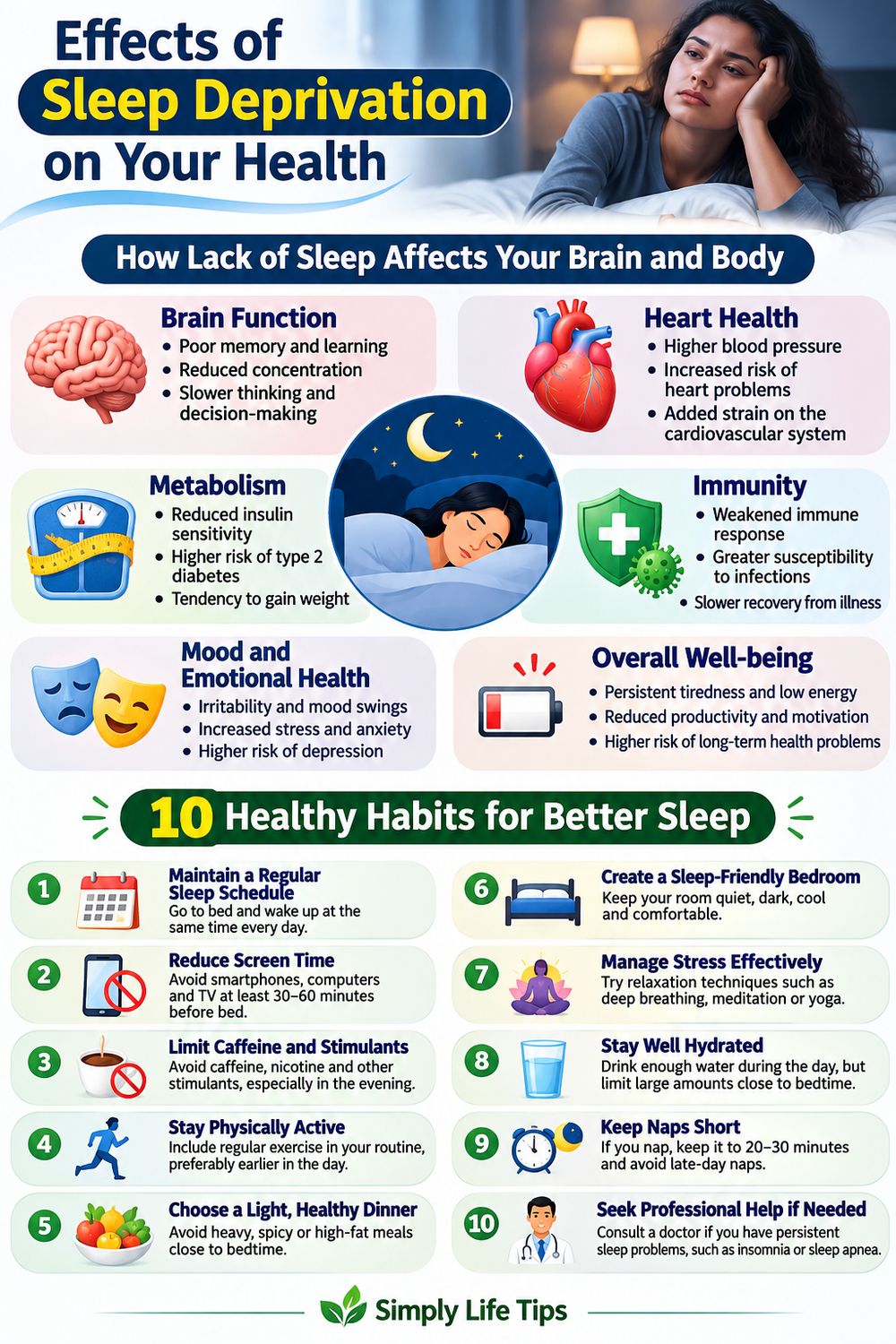
10 Healthy Habits to Prevent Sleep Deprivation
Improving your sleep habits does not always require major lifestyle changes. Small, consistent adjustments can make a meaningful difference.
1. Maintain a Regular Sleep Schedule
Go to bed and wake up at approximately the same time every day, including weekends. A consistent schedule helps regulate your body’s internal clock.
2. Reduce Screen Time Before Bed
Smartphones, computers and televisions can interfere with your bedtime routine. Try switching off electronic devices at least 30 minutes before going to bed.
3. Create a Comfortable Sleeping Environment
Keep your bedroom dark, quiet and comfortably cool. Use suitable curtains and reduce unnecessary noise and light.
4. Limit Caffeine in the Afternoon and Evening
Coffee, tea, energy drinks and other caffeinated beverages can interfere with sleep. Avoid consuming caffeine late in the day, particularly if you are sensitive to its effects.
5. Exercise Regularly
Regular physical activity supports overall health and can improve sleep quality. However, avoid strenuous exercise immediately before bedtime if it makes it difficult for you to relax.
6. Avoid Heavy Meals Before Bedtime
Large or heavy meals close to bedtime may cause discomfort and interfere with sleep. Try to finish your evening meal a few hours before going to bed.
7. Get Natural Daylight
Exposure to natural light during the day helps regulate your body’s sleep-wake cycle. Spending time outdoors, particularly in the morning, can support a healthy daily rhythm.
8. Avoid Long Daytime Naps
Long or late-afternoon naps may make it harder to fall asleep at night. If you need a nap, keep it short and preferably earlier in the afternoon.
9. Practise Relaxation Techniques
Reading, gentle stretching, meditation and slow breathing exercises can help calm your mind before bedtime.
10. Avoid Alcohol and Smoking
Alcohol may make you feel sleepy initially, but it can disrupt sleep later in the night. Nicotine is a stimulant that can also interfere with sleep. Avoid relying on either to manage sleeping difficulties.
If you need additional guidance, explore our article on healthy sleep routines.
When Should You See a Doctor About Sleep Problems?
Occasional sleep disturbances are common. However, persistent problems should not be ignored, particularly when they affect your daily activities.
Consult a healthcare professional if you experience:
- Difficulty falling asleep or staying asleep on a regular basis.
- Excessive daytime sleepiness despite allowing enough time for sleep.
- Loud, persistent snoring accompanied by breathing interruptions.
- Waking up suddenly gasping or choking during sleep.
- Difficulty concentrating or remembering information because of poor sleep.
- Uncomfortable sensations in your legs that create an urge to move them, particularly at night.
These symptoms may indicate conditions such as insomnia, obstructive sleep apnea or restless legs syndrome.
Loud snoring does not always indicate a serious problem. However, snoring accompanied by pauses in breathing, gasping or excessive daytime sleepiness deserves medical evaluation.
Read our detailed guide on snoring and sleep apnea.
A doctor may recommend a sleep assessment or an overnight sleep study (polysomnography) when clinically appropriate. Do not start taking sleeping pills without medical advice.
Conclusion
The effects of sleep deprivation can seriously influence your brain, heart, metabolism, memory and emotional well-being.
Sleep is not wasted time. It is an essential investment in your physical and mental health.
Sacrificing sleep regularly in the name of productivity may eventually affect your ability to work, learn and enjoy everyday life. Instead of treating sleep as an optional part of your schedule, make it a priority.
Start with simple changes: maintain a regular bedtime, reduce screen exposure before sleep, stay physically active and create a comfortable sleeping environment.
Remember, a healthy life is not built on how little you sleep while working hard. It also depends on how well you allow your body and brain to recover.
Are you giving your body and brain the quality sleep they need to stay healthy?
Frequently Asked Questions About Sleep Deprivation
1. What are the main effects of sleep deprivation?
The main effects include daytime tiredness, poor concentration, memory problems, irritability, slower reaction times and reduced productivity. Long-term insufficient sleep is also associated with an increased risk of conditions such as high blood pressure, type 2 diabetes, obesity and heart disease.
2. How many hours of sleep do adults need?
Most adults need at least seven hours of sleep every night. Many adults benefit from approximately seven to nine hours, although individual sleep requirements can vary.
3. Can sleep deprivation affect brain function?
Yes. Insufficient sleep can interfere with memory, learning, attention, decision-making and emotional regulation. It can also slow reaction times and increase the likelihood of mistakes.
4. Can the effects of sleep deprivation be reversed?
Many short-term effects, such as tiredness, poor concentration and irritability, can improve when you return to a healthy and consistent sleep schedule. However, recovery varies, and chronic sleep problems may require medical evaluation and treatment.
5. What is the best way to prevent sleep deprivation?
Maintain a regular bedtime, allow sufficient time for sleep, limit evening caffeine and screen exposure, exercise regularly and create a comfortable sleeping environment. If sleep difficulties persist, consult a healthcare professional.
Recommended references:
- CDC – About Sleep
- National Heart, Lung, and Blood Institute – Why Is Sleep Important?
- CDC – Sleep and Your Heart Health
Medical information disclaimer: This article is intended for general educational purposes and should not replace professional medical advice, diagnosis or treatment.
Inspired by health awareness insights shared by Dr Arun Oommen, Neurosurgeon.

Mathukutty P. V. is the founder of Simply Life Tips. He shares practical advice and useful insights on personal growth, health, well-being, technology, and everyday living. His goal is to help readers build positive habits and make informed decisions. He believes in continuous learning and sharing knowledge to help people live healthier, happier, and more meaningful lives.