

Silent suffering is often hidden behind kindness, a cheerful smile, and a willingness to help others. Some people are always available to listen to everyone’s problems, offer comfort during difficult times, and encourage others when they feel discouraged. They ask everyone, “Are you okay?” but rarely talk about their own pain. Why do people who support everyone else find it difficult to express their own struggles?
We all know someone like this. They are the first to arrive when someone needs help, the patient listener who never gets tired of hearing other people’s problems, and the person who tries to make everyone smile even when life is difficult for them. Behind their kindness and willingness to help others, many people carry hidden emotional pain that they rarely share with anyone.
But what happens when these people themselves feel emotionally exhausted? Who listens to them? Who notices their sadness? And why do they often hide their pain instead of asking for help?
This behaviour is not simply a matter of personality. Psychology and neuroscience offer interesting explanations involving empathy, emotional regulation, stress, and compassion fatigue.
What Is Silent Suffering?
Silent suffering refers to experiencing emotional pain, personal difficulties, or psychological distress without openly expressing those feelings or seeking support.
People experiencing silent suffering may appear happy, confident, helpful, and emotionally strong. They continue fulfilling their responsibilities even when they are struggling internally.
Consider someone who regularly listens to friends discussing their family problems, relationship difficulties, or financial worries. They patiently offer advice and encouragement. However, when they face personal difficulties, they simply say, “I’m fine.”
Why do they behave this way?
Some people do not want to burden others with their problems. Others believe they must remain strong because their families or friends depend on them. Some have become so accustomed to helping others that they find it uncomfortable to ask for help themselves.
Their silence does not necessarily mean they have no problems. Sometimes, it means they do not know how to express them or believe nobody will understand.
Why Do People Who Help Everyone Hide Their Pain?
There are several psychological reasons why people who regularly support others may hide their own emotional struggles.
They Don’t Want to Burden Others
Some people believe everyone around them already has enough problems. They do not want to add another responsibility by sharing their own difficulties.
Their thoughts may include, “I don’t want to make anyone worry about me,” “Everyone has their own problems. Why should I add mine?” or “I should be able to handle this myself.”
As a result, they become comfortable listening to others but uncomfortable talking about themselves.
For example, a person may spend hours comforting a friend who is going through a difficult relationship. Yet, when that same person experiences disappointment or loneliness, they keep everything to themselves.
They Feel Responsible for Everyone
Some individuals naturally take responsibility for the happiness and wellbeing of their families and friends.
They may be the first person everyone contacts during a crisis. Family members depend on them, friends seek their advice, and colleagues expect them to find solutions.
Over time, they may develop the belief that they must always remain strong.
For example, someone managing household responsibilities, supporting children, caring for elderly parents, and helping relatives may feel that expressing personal difficulties will create additional problems for everyone.
They continue supporting others while ignoring their own emotional needs.
They Fear Being Misunderstood
Not everyone receives understanding when they share personal struggles.
Some people have experienced dismissive comments such as “You are overthinking,” “Others have bigger problems,” or “You should be stronger.”
After repeated experiences like these, they may decide that remaining silent is easier than explaining their feelings.
They may still listen patiently to others because they understand how important emotional support can be. However, they hesitate to expect the same understanding from others.
They Are Used to Being the Strong One
When someone consistently supports others, people may gradually assume that the person never needs help.
Their dependability becomes part of their identity. They may also feel uncomfortable showing vulnerability because they believe others expect them to remain strong.
But being strong does not mean never feeling hurt, disappointed, lonely, or exhausted.
Even people who appear emotionally strong need someone who will listen without judging them.
What Happens in the Brain When We Feel Other People’s Pain?
Empathy is the ability to understand and respond to another person’s feelings. It helps us recognise emotional distress and motivates us to offer comfort or assistance.
Several interconnected brain networks participate in empathy and emotional processing. Two important regions are the anterior insula and the anterior cingulate cortex.
The Role of the Anterior Insula
The anterior insula contributes to emotional awareness and the processing of feelings associated with bodily experiences. It helps us recognise emotional states and understand aspects of another person’s distress.
For example, when a close friend tells you about a painful experience, you may feel emotionally affected even though you are not experiencing the same situation.
The Role of the Anterior Cingulate Cortex
The anterior cingulate cortex participates in emotional processing, attention, and responses to pain and distress. It works with other brain networks to help us recognise and respond to emotional situations.
When someone repeatedly listens to other people’s problems and becomes deeply involved in their struggles, they may experience emotional stress, particularly when they have insufficient time to recover.
However, empathy itself is not harmful. It is an important human ability that supports relationships, cooperation, and social connection.
The challenge arises when caring for others becomes an overwhelming responsibility without adequate attention to personal well-being.
How Emotional Suppression Contributes to Silent Suffering
Many people who hide their pain believe that keeping their emotions to themselves is the best way to protect others.
They may think, “If I share my problems, my family will become worried,” “I cannot afford to become weak,” or “I will manage everything myself.”
However, repeatedly suppressing emotions may contribute to psychological distress.
It is important to distinguish emotional regulation from emotional suppression. Emotional regulation means recognising feelings and responding to them healthily and appropriately. Emotional suppression involves trying to hide or push away emotional expressions rather than acknowledging and processing feelings.
People who constantly hide their feelings may not realise how emotional suppression affects their wellbeing and relationships. Read our guide to the painful signs of suppressing emotions to understand this behaviour better.
The prefrontal cortex plays an important role in emotional regulation, decision-making, and controlling responses. Research suggests that habitual emotional suppression can be associated with less favourable psychological outcomes.
Prolonged stress may also affect sleep, concentration, attention, and emotional wellbeing. Some people may experience persistent worry, irritability, difficulty sleeping, reduced concentration, emotional exhaustion, and loneliness even when surrounded by others.
Not everyone who keeps personal problems private experiences these difficulties. However, emotional struggles should not be ignored indefinitely.
Research on emotion regulation and emotional suppression helps explain why the way we manage our emotions can influence psychological well-being.
Can Helping Others Lead to Compassion Fatigue?
Yes. People who regularly support others through difficult experiences may sometimes develop compassion fatigue.
Compassion fatigue refers to emotional distress associated with repeated or prolonged exposure to other people’s suffering. It is particularly relevant to people who spend considerable time providing emotional or practical care.
Healthcare professionals dealing with illness and suffering, family caregivers looking after chronically ill relatives, counsellors supporting people through difficult experiences, and individuals who constantly help family members and friends may all experience emotional exhaustion.
Imagine someone who regularly listens to friends discussing their relationship problems, financial difficulties, and family conflicts. Initially, helping may bring happiness and satisfaction. However, when emotional demands continue without sufficient rest or support, the person may begin feeling overwhelmed.
Possible signs include emotional exhaustion, irritability, helplessness, reduced patience, and feeling disconnected from others.
Compassion fatigue is related to burnout and secondary traumatic stress, but these are not identical concepts.
It is also important to remember that helping others does not automatically lead to compassion fatigue. The intensity and frequency of emotional demands, available support, and opportunities for recovery all matter.
According to Psychology Today’s explanation of compassion fatigue, repeated exposure to other people’s suffering can create emotional strain.
Further research published in the National Library of Medicine also explores compassion fatigue and its effects.
Why Helping Others Can Also Make People Happy
There is another side to this discussion.
Helping others is not necessarily a sign of emotional difficulty. Many people genuinely enjoy supporting others and find meaning in acts of kindness.
Helping someone can provide a sense of purpose, strengthen social connections, improve relationship satisfaction, and create feelings of belonging and emotional fulfilment.
Consider someone who regularly visits an elderly neighbour, helps a struggling colleague, or supports a friend during a difficult period. These activities can create meaningful human connections.
This is why some people continue helping others even after experiencing disappointment or emotional exhaustion. They may feel genuine satisfaction when someone they care about becomes happy or overcomes a difficult situation.
However, there is an important distinction between helping. We genuinely want to help, and we feel unable to say no.
Healthy empathy allows us to care about others without completely neglecting ourselves.
People who experience emotional difficulties can also benefit from recognising the positive things in their lives and developing gratitude. Read our article on how to light up your inner self to deal with emotional pain for more insights.
Signs That Someone Is Experiencing Silent Suffering
People who hide their pain do not always show obvious signs of emotional distress. However, certain behaviours may indicate that someone needs support.
A person experiencing silent suffering may always listen to others but rarely share personal difficulties. When someone asks how they are doing, they quickly change the subject or simply say, “Everything is fine.”
They may also find it difficult to say no. Even when they are tired, busy, or emotionally overwhelmed, they agree to help others because refusing makes them feel guilty.
Another possible sign is feeling guilty about resting. Even when they have an opportunity to relax, they keep thinking about people who need their help. They may feel that taking time for themselves is selfish.
Some people hide their sadness behind a smile. They try to make others laugh and maintain a cheerful appearance even when they are dealing with personal difficulties. Their outward behaviour may not reflect their inner emotional state.
They may also feel unsupported. They are always available for others but struggle to identify someone who will listen to them without judging. Over time, they may begin feeling that their own problems are less important to everyone else.
These signs do not establish a mental health diagnosis. However, noticing persistent changes in someone’s behaviour can help us offer timely support.
People who experience silent suffering may not openly express their emotional struggles. They may continue helping others, smiling, and fulfilling their responsibilities while hiding their own pain. Understanding why they behave this way, recognising the warning signs, and knowing how to protect their emotional wellbeing are important steps towards supporting them.
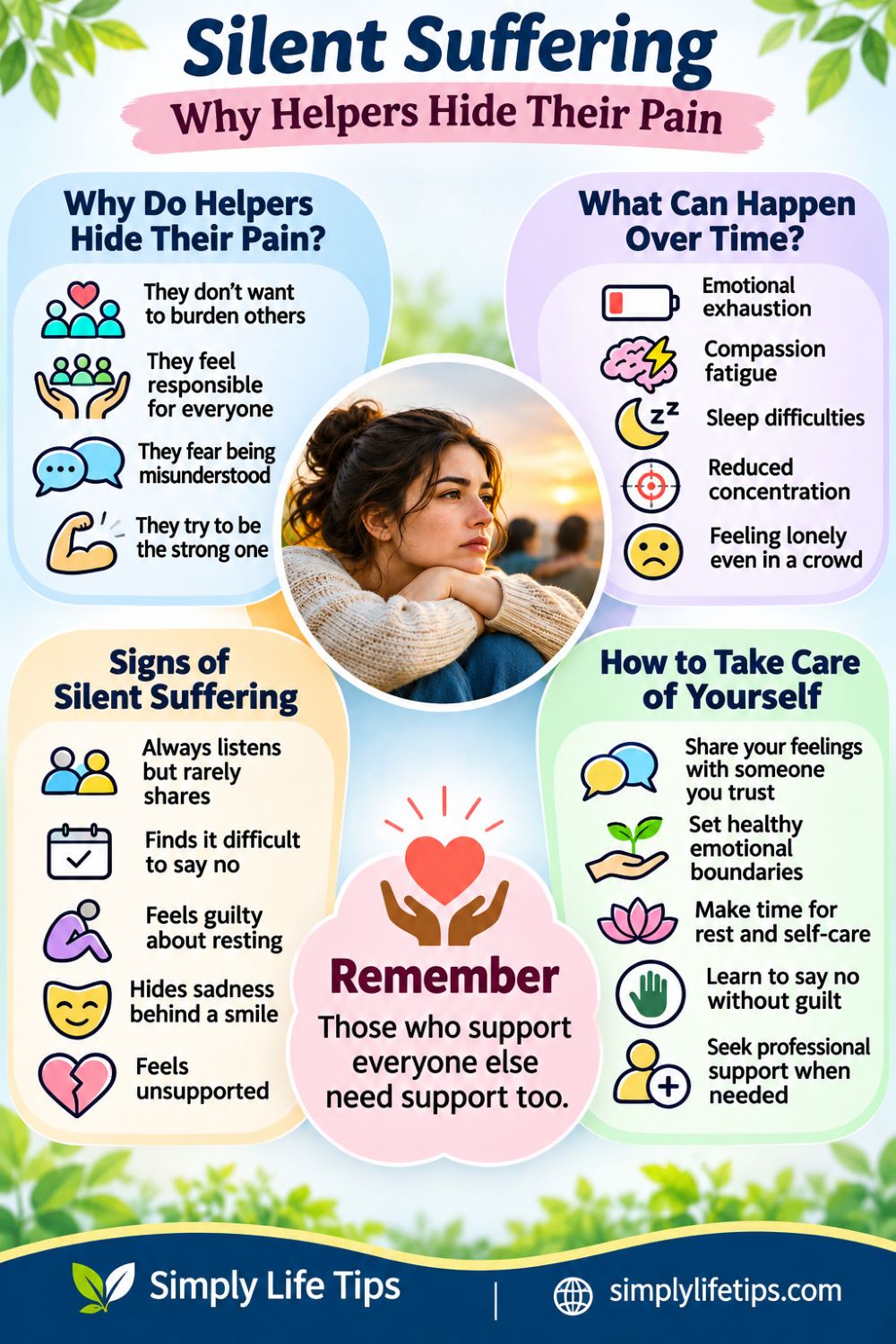
Understanding silent suffering is only the beginning. People who constantly support others also need time to rest, express their feelings, and receive emotional support. So, how can people who are always there for everyone else take better care of themselves?
How Can People Who Help Everyone Take Care of Themselves?
Helping others should not mean neglecting personal happiness and emotional wellbeing. People who regularly support others also need time, understanding, and opportunities to express their feelings.
Remember that experiencing sadness, disappointment, and emotional pain is a normal part of life. Learn how to heal your emotional pain and develop healthier ways to express your feelings.
Share Your Feelings With Someone You Trust
You do not always have to be the person who listens. Find someone you trust and talk openly about your worries. You do not need to wait until your problems become overwhelming before seeking support.
Sometimes, simply having someone listen without judging can make a meaningful difference.
Set Healthy Emotional Boundaries
You can care about someone without accepting responsibility for every problem in their life.
For example, if a friend repeatedly calls when you are busy or emotionally exhausted, you can say, “I care about you, but I am not in a position to talk right now. Can we discuss this tomorrow?”
Setting boundaries does not mean rejecting people. It means recognising your own limitations.
Make Time for Rest and Self-Care
Sleep, relaxation, physical activity, hobbies, and meaningful relationships are important for emotional wellbeing.
Do not treat rest as something you deserve only after completing everyone else’s responsibilities. Your wellbeing matters even when nobody needs your help.
Learn to Say No Without Feeling Guilty
You cannot solve every problem, meet every expectation, or be available every minute.
Sometimes, saying no is a healthy decision. You can remain a kind and supportive person without sacrificing your peace of mind.
Seek Professional Support When Necessary
If persistent sadness, anxiety, emotional exhaustion, or sleep difficulties interfere with everyday life, consider speaking with a qualified mental health professional.
Seeking help is not a sign of weakness. It is a responsible way to care for yourself.
Silent Suffering: Who Takes Care of Those Who Care for Everyone?
Think about someone in your family, workplace, or circle of friends who is always ready to help.
They remember your difficulties, listen patiently to your worries, and encourage you when life becomes challenging.
But have you ever wondered who listens to them?
Perhaps they rarely complain because they do not want to worry others. Perhaps they have become so accustomed to supporting everyone that they have forgotten how to ask for support themselves.
Do not assume that someone is doing well simply because they never talk about their problems.
Instead of always saying, “I need your help,” try asking:
“How are you really doing? Is there anything troubling you?”
When they answer, give them the same patience and attention they have always given you.
Sometimes, a sincere question can open the door to an important conversation. It may help someone realise that their feelings matter and that they do not have to face every difficulty alone.
Conclusion
Silent suffering is not always visible. Some people continue smiling, working, caring, and supporting others while privately dealing with emotional difficulties.
People who help everyone are not necessarily unhappy or emotionally damaged. Many genuinely find happiness and meaning in caring for others.
However, kindness should not require constant self-sacrifice.
Empathy is valuable, but it needs healthy boundaries. Listening to others is important, but expressing our own feelings is equally important. Supporting people is meaningful, but accepting support is also part of healthy relationships.
Those who wipe away everyone’s tears have the right to cry, too. Those who give everyone strength are allowed to feel weak. And those who support others deserve someone who supports them, too.
The next time you meet someone who is always there for everyone, take a moment to ask:
“Are you really doing okay?”
Sometimes, that one question can make someone feel seen, valued, and less alone.
Have you ever hidden your pain because you did not want to burden someone else, or do you know someone who always supports others but rarely receives support themselves?
Frequently Asked Questions
1. Why do people who help everyone hide their pain?
Some people hide their pain because they do not want to burden others, fear being judged, or feel responsible for keeping their families and friends happy. Others believe they must always remain strong.
2. What is silent suffering in psychology?
Silent suffering describes experiencing emotional distress without openly expressing it or seeking support. It may involve emotional suppression, fear of vulnerability, or difficulty communicating personal needs.
3. Can empathy cause emotional exhaustion?
Empathy itself is not harmful. However, repeatedly dealing with other people’s distress without sufficient rest, boundaries, or emotional support may contribute to emotional exhaustion and compassion fatigue.
4. What is compassion fatigue?
Compassion fatigue is emotional distress associated with repeated or prolonged exposure to other people’s suffering. It can affect healthcare professionals, caregivers, counsellors, and others who regularly support people in difficult situations.
5. How can people stop hiding their emotional pain?
They can begin by sharing their feelings with someone they trust, setting healthy boundaries, making time for rest, and seeking professional support when emotional difficulties become overwhelming.
References and Further Reading
- Emotion Regulation: Current Status and Future Prospects – Psychological Inquiry
- Compassion Fatigue – Psychology Today
- Compassion Fatigue – National Library of Medicine

Mathukutty P. V. is the founder of Simply Life Tips. He shares practical advice and useful insights on personal growth, health, well-being, technology, and everyday living. His goal is to help readers build positive habits and make informed decisions. He believes in continuous learning and sharing knowledge to help people live healthier, happier, and more meaningful lives.