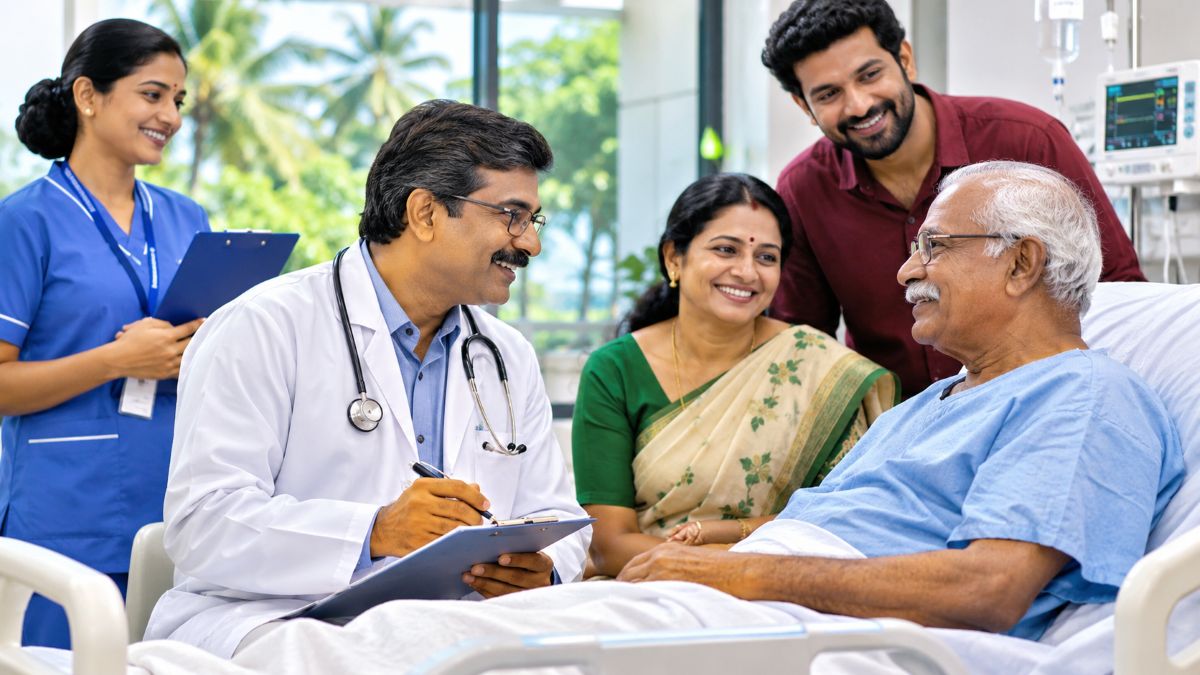
The Kerala healthcare system has earned recognition for its achievements in public health, medical education, primary healthcare and specialised treatment. With experienced doctors, modern hospitals and growing medical facilities, the state has many advantages. Yet an important question remains: Can ordinary families afford the best available medical treatment when a serious illness strikes?
A single major health emergency can consume years of family savings. Even when advanced treatment is available, its cost can become a serious financial burden. The availability of quality healthcare and the ability to afford it are two different things.
Preventing this situation requires more than building hospitals. We need better financial protection, accessible government healthcare, responsible medical practices, safe working conditions for doctors and greater public awareness.
The future of the Kerala healthcare system should be about making quality treatment accessible to everyone, regardless of their financial background.
These are my observations and thoughts as an ordinary citizen, inspired by a healthcare-related discussion shared by Dr Arun Oommen, Neurosurgeon. They are not medical advice or an expert assessment of healthcare policy. However, healthcare affects every family, and the challenges deserve serious attention.
Kerala Healthcare System: Strengths and Challenges
Kerala has several strengths that support the Kerala healthcare system. The state has a well-established network of government hospitals, medical colleges, primary healthcare institutions and private hospitals.
Experienced medical professionals, public awareness, community participation and relatively strong healthcare infrastructure have contributed to Kerala’s achievements. Improving the Kerala healthcare system requires attention to affordability and accessibility.
However, important challenges remain.
Rising treatment costs
The cost of hospitalisation, surgery, diagnostic tests, medicines and specialised treatment continues to challenge the affordability of the Kerala healthcare system.
A family may manage routine medical expenses but struggle when someone needs intensive care, cancer treatment, heart surgery or prolonged hospitalisation.
Unequal access to quality treatment
Not everyone has equal access to advanced medical facilities.
People living in remote areas may need to travel to larger towns or cities for specialised treatment. Financial limitations, transport difficulties and waiting times can create additional problems.
Increasing lifestyle diseases
Diabetes, hypertension, heart disease, stroke and other non-communicable diseases require long-term attention.
Early diagnosis, regular monitoring and lifestyle changes are essential to prevent complications.
An ageing population
Older people often need continuing medical attention, rehabilitation, assistance with daily activities and long-term care.
Kerala needs to strengthen healthcare services that address the needs of senior citizens and their families.
Shortage and migration of healthcare professionals
The availability of experienced doctors, nurses and other healthcare professionals is essential for maintaining treatment quality.
Workplace difficulties, heavy workloads and limited professional opportunities can encourage skilled professionals to seek opportunities elsewhere.
Kerala must protect its healthcare workforce while ensuring that patients receive timely and appropriate treatment.
For a broader understanding of the challenges affecting the country, read our article on Healthcare Problems in India.
Health Insurance in Kerala: Protect Your Family from Medical Expenses
The first step towards financial protection against medical emergencies is adequate health insurance. Health insurance plays an important role in protecting families within the Kerala healthcare system.
Many families think about health insurance only after someone develops a serious illness. Unfortunately, purchasing a policy at that stage may involve restrictions, waiting periods or higher premiums.
It is better to consider suitable health insurance while family members are relatively young and healthy.
How much health insurance coverage is enough?
A cover of ₹10 lakh or more can be a starting point for some families, but there is no single amount suitable for everyone.
The appropriate coverage depends on:
- Family size and age.
- Existing medical conditions.
- Medical expenses in the area.
- Preferred hospitals.
- Financial capacity.
- Availability of employer or government health coverage.
Families may also consider a super top-up policy to increase their overall financial protection.
What should you check before purchasing health insurance?
Do not select a policy based only on its premium or advertised coverage.
Understand the following details:
- Pre-existing diseases: Check the waiting period for existing illnesses.
- Room rent limits: Understand whether hospital room restrictions can affect other claim expenses.
- Co-payment: Find out whether you must pay a percentage of eligible expenses.
- Exclusions: Read the list of treatments and conditions not covered.
- Network hospitals: Check whether suitable hospitals in Kerala provide cashless treatment.
- Waiting periods: Understand the waiting periods for specified diseases and procedures.
- Renewal conditions: Check lifelong renewability and other policy conditions.
Why is early health insurance important?
Consider a family that purchases adequate health insurance before a major medical emergency occurs.
If a member later requires hospitalisation, the policy may cover eligible expenses according to its terms. Without insurance, the family might have to use savings, borrow money or sell assets to arrange treatment expenses.
Health insurance does not guarantee that every medical expense will be covered. However, a suitable policy can reduce the financial shock of unexpected hospitalisation.
Health insurance is not a luxury. It is an important part of responsible family financial planning.
Government Health Schemes Available in Kerala
Health insurance is important, but families should also understand the government healthcare schemes available in Kerala. Government health schemes are an important part of the Kerala healthcare system.
The state and central governments operate several programmes to support eligible patients who need medical treatment. These schemes can reduce the financial burden, particularly for economically vulnerable families.
Karunya Arogya Suraksha Padhathi (KASP – PM-JAY)
The Karunya Arogya Suraksha Padhathi is an important health protection programme implemented in Kerala in coordination with Ayushman Bharat – Pradhan Mantri Jan Arogya Yojana.
Eligible families receive cashless hospitalisation coverage of up to ₹5 lakh per family per year for covered secondary and tertiary care treatments at empanelled hospitals.
The coverage can help eligible patients access treatments such as surgery, cancer care and other specialised hospital services.
Official information: Kerala State Health Agency.
Karunya Benevolent Fund (KBF)
The Karunya Benevolent Fund provides financial assistance to eligible families who need expensive medical treatment but are not covered under KASP.
The programme is intended to support financially vulnerable patients facing serious medical expenses.
Eligibility, assistance amounts and applicable conditions should be checked with the Kerala State Health Agency or the relevant government hospital before applying.
MEDISEP – Medical Insurance for State Employees and Pensioners
MEDISEP is a health insurance scheme for eligible Kerala government employees, pensioners and their dependants.
It helps beneficiaries access covered medical treatments through participating hospitals.
Government employees and pensioners should understand the current coverage, exclusions, hospital network and claim procedures.
Official website: MEDISEP Kerala.
Employees’ State Insurance (ESI)
The Employees’ State Insurance Scheme provides medical and social security benefits to eligible employees working in establishments covered under the ESI Act.
Eligible insured employees and their qualifying family members can access medical services through the ESI healthcare network.
Official website: Employees’ State Insurance Corporation.
Arogyakiranam
Arogyakiranam is a Kerala government programme supporting eligible children through government healthcare institutions.
It provides eligible children with access to outpatient and inpatient treatment, medicines and diagnostic services under the programme’s provisions.
Families should check the latest eligibility conditions and applicable exclusions with the relevant government hospital.
Thalolam and Cancer Suraksha
Kerala has also introduced targeted healthcare assistance programmes for children with serious illnesses.
Thalolam and Cancer Suraksha are associated with support for eligible children requiring treatment for specified serious medical conditions and cancer.
Families should confirm the current availability, eligibility requirements and assistance arrangements with the Kerala Health Department or State Health Agency before depending on these programmes.
Ayushman Vay Vandana for Senior Citizens
Healthcare expenses can become particularly challenging during old age.
Under Ayushman Vay Vandana, all eligible senior citizens aged 70 years and above can access health coverage of up to ₹5 lakh per year, irrespective of income, under the applicable scheme provisions.
For senior citizens in families already covered by AB-PMJAY, additional coverage arrangements apply to eligible older members separately from the coverage available to younger family members.
This initiative provides an important financial safety net for India’s ageing population.
Official information: National Health Authority.
How can families benefit from these schemes?
Not every scheme is available to everyone. Eligibility, covered treatments, financial limits and participating hospitals differ.
Families should:
- Check their eligibility before a medical emergency.
- Keep identification and beneficiary documents ready.
- Find out which nearby hospitals are empanelled.
- Understand which treatments are covered.
- Ask hospital help desks about cashless admission procedures.
- Verify the latest scheme conditions before treatment.
For updated information about Kerala government health schemes, visit the Kerala State Health Agency.
Government schemes provide valuable support, but they may not cover every treatment or expense. Families who can afford it should also consider suitable private health insurance.
Reduce Healthcare Costs Without Compromising Quality
Reducing treatment costs is important, but affordability should never come at the expense of patient safety.
A person’s financial background should not determine the quality of treatment they receive within the Kerala healthcare system.
Modern equipment, qualified specialists, advanced diagnostic facilities and quality medicines require adequate investment. At the same time, healthcare institutions must make every reasonable effort to keep treatment affordable.
Ensure the quality of generic medicines
Generic medicines can help reduce treatment expenses.
However, affordable medicines must also meet appropriate manufacturing and quality standards. Proper testing, regulatory oversight, storage and distribution are essential.
Patients should not change prescribed medicines simply because another option is cheaper. They should discuss suitable alternatives with their doctors or qualified pharmacists.
Strengthen government hospitals
Government hospitals play a vital role in making the Kerala healthcare system affordable.
They should receive continuous improvements in:
- Diagnostic equipment and laboratory facilities.
- Operation theatres and intensive care units.
- Emergency and trauma care.
- Availability of essential medicines.
- Qualified doctors, nurses and technicians.
- Hospital cleanliness and patient safety.
- Digital health records and patient management.
Improving government hospitals can reduce the pressure on families who otherwise depend on expensive private treatment.
Increase public investment in healthcare
Healthcare should be considered a long-term investment in human development.
Adequate public funding is necessary to improve infrastructure, employ qualified professionals, strengthen primary healthcare and expand essential medical services.
However, increasing expenditure alone is not enough. The government should also ensure transparent fund utilisation, accountability, regular quality assessments and measurable improvements in patient care.
Healthcare funding must reach the people and institutions that need it most.
Free treatment for economically weaker families is an important welfare measure. Ensuring that they receive safe, dignified and quality treatment is equally important.
Every rupee spent on healthcare is an investment in human life and the future of society.
Protect Doctors and Healthcare Workers
Who will save our lives tomorrow if the people working to save lives are not safe today?
Doctors, nurses and other healthcare workers perform demanding responsibilities. They often work under pressure, manage emergencies and make difficult decisions that directly affect human lives.
Unfortunately, violence, threats, harassment and intimidation against healthcare professionals remain serious concerns.
Hospitals must be places of healing, not places where medical professionals fear for their safety.
Not every unsuccessful treatment is medical negligence
Medical treatment does not always produce the expected result.
Some diseases are difficult to manage, and complications can occur even when doctors follow appropriate medical procedures.
However, this does not mean genuine medical negligence should be ignored.
Patients and their families have every right to seek explanations, raise complaints and pursue legal remedies when they believe medical negligence has occurred.
There is an important difference between an unfortunate treatment outcome and proven professional negligence.
Complaints should be investigated fairly and independently. Patients deserve justice, and healthcare professionals deserve protection from violence and intimidation.
Understand the risks of defensive medicine
Defensive medicine refers to medical decisions influenced primarily by the fear of legal action or professional liability rather than clinical necessity.
For example, a doctor might recommend additional investigations mainly to protect against possible future allegations rather than because those tests are medically necessary.
This can increase treatment expenses and expose patients to unnecessary procedures.
A fair healthcare system should encourage evidence-based decisions, professional accountability and trust between doctors and patients.
Provide safe working conditions
Kerala should ensure effective implementation of laws protecting healthcare professionals and medical institutions.
The Kerala Healthcare Service Persons and Healthcare Service Institutions (Prevention of Violence and Damage to Property) Act, 2012, provides a legal framework for addressing violence against healthcare workers and damage to healthcare institutions.
Hospitals should also provide:
- Adequate security arrangements.
- Emergency response systems.
- Appropriate CCTV monitoring in common areas.
- Clear procedures for handling patient complaints.
- Protection against workplace harassment.
- Reasonable working hours and staff support.
Retain talented doctors in Kerala
Kerala has a strong pool of medical talent. However, heavy workloads, workplace insecurity, inadequate infrastructure and limited professional opportunities can encourage experienced doctors to seek opportunities elsewhere.
The state should create an environment where young doctors want to study, practise, conduct research and build their careers.
Better working conditions, professional development, research opportunities and fair remuneration can help retain qualified healthcare professionals.
If we cannot retain our best doctors, people may eventually have to travel outside Kerala to obtain specialised treatment.
Patient rights and doctor safety are not opposing interests. Both are essential for a trustworthy Kerala healthcare system.
Can Kerala Become a Global Healthcare Destination?
Kerala’s healthcare system has considerable potential to support the state as an international healthcare destination. The state has experienced doctors, established hospitals, specialised medical facilities and a skilled healthcare workforce.
Its natural beauty, hospitality and reputation for wellness services also provide opportunities to attract international patients.
However, becoming a global healthcare destination requires more than modern hospitals and advanced medical equipment.
Invest in specialised medical facilities
Kerala should encourage investment in specialised treatment centres for:
- Cardiac care and cardiovascular surgery.
- Neurology and neurosurgery.
- Cancer diagnosis and treatment.
- Organ transplantation.
- Advanced orthopaedics.
- Rehabilitation and recovery.
- Geriatric and palliative care.
These facilities should maintain high standards of medical quality and patient safety.
Strengthen medical research and innovation
Medical research is essential for improving treatment outcomes and developing new healthcare solutions.
Kerala should encourage collaboration between medical colleges, universities, hospitals, research institutions and healthcare technology companies.
Greater investment in clinical research, biotechnology, pharmaceutical development and medical technology could create valuable opportunities.
Improve international patient services
Patients travelling from other countries need more than good medical treatment.
They may require assistance with medical appointments, travel arrangements, accommodation, language support, treatment estimates, billing and follow-up care.
Hospitals should develop dedicated international patient services while maintaining transparent pricing and ethical medical practices.
Balance medical tourism with local healthcare needs
Medical tourism can contribute to employment, investment and economic development. Strengthening the Kerala healthcare system could also support its medical tourism potential.
However, attracting international patients should not come at the expense of residents who need affordable treatment.
Kerala must balance international healthcare opportunities with its responsibility to provide accessible medical services to its own population.
Our greatest strength is our human resources. Without protecting and developing this workforce, it will be difficult to establish a sustainable international healthcare reputation.
The Future of Healthcare in Kerala: Opportunities and Concerns
Medical science is developing rapidly. New technologies, changing lifestyles and increasing healthcare needs will influence how diseases are prevented, diagnosed and treated.
Kerala should prepare for these changes while ensuring that ordinary people continue to receive affordable and accessible treatment.
Artificial intelligence in healthcare
Artificial intelligence (AI) could improve several aspects of medical care.
AI-assisted systems may help doctors analyse medical images, identify disease patterns, organise medical records and support clinical decisions.
For example, AI-assisted diagnostic tools may help identify suspicious findings in medical scans that require further examination.
However, AI should support doctors rather than replace their professional judgement.
Patient privacy, data security, accuracy and human supervision must remain essential.
Robotic surgery and advanced medical technology
Robotic-assisted surgery is already being used for selected medical procedures.
Advances in robotics, imaging and surgical technology may improve precision and provide new treatment options.
However, robotic surgery is not automatically better for every patient. The choice should depend on medical evidence, the surgeon’s expertise and the patient’s condition.
Genetic medicine and personalised treatment
Advances in genetic testing and molecular diagnostics are creating opportunities for more personalised medical treatment.
For example, certain cancer treatments can be selected based on specific molecular characteristics of a tumour.
Kerala should encourage investment in specialised diagnostic facilities, medical research and professional training to make these developments more accessible.
Mental health and neurological care
Mental health deserves the same attention as physical health.
Anxiety, depression, addiction, dementia and other neurological and psychological conditions can affect individuals and families.
Greater access to counselling, qualified mental health professionals, early diagnosis and rehabilitation services is necessary.
Digital healthcare and telemedicine
Telemedicine and digital health services can connect patients in remote areas with medical professionals.
Electronic health records, online consultations and digital diagnostic systems may improve access to healthcare.
However, digital healthcare should complement physical medical examinations when necessary. Patient consent, privacy and cybersecurity must also be protected.
Strengthen Primary Healthcare and Disease Prevention
One of the most important priorities for Kerala should be preventing diseases before they become serious.
The Kerala healthcare system should not depend entirely on large hospitals and expensive medical equipment.
Primary healthcare centres should be equipped to identify health problems early, manage common illnesses and monitor patients with chronic diseases.
Kerala’s Aardram Mission has focused on transforming public healthcare institutions into more patient-friendly facilities and strengthening primary healthcare.
This approach deserves continued attention.
What should receive greater attention?
- Family Health Centres and primary healthcare facilities.
- Community-based health screening.
- Early detection of cancer.
- Diabetes and blood pressure management.
- Mental health support.
- Maternal and child healthcare.
- Preventive health education.
- Rehabilitation and home-based care for elderly people.
The public should also understand that maintaining good health is a shared responsibility.
Regular exercise, balanced food habits, adequate sleep, avoiding tobacco and following appropriate medical advice can help prevent several health problems.
Preventive healthcare is not simply about avoiding diseases. It is about improving quality of life and reducing the need for expensive treatment.
Read our detailed article on Preventive Healthcare to understand the importance of early detection, healthy habits and disease prevention.
Lifestyle Diseases: Are Our Changing Food Habits Putting Our Health at Risk?
One of the growing concerns for Kerala’s healthcare system is the increasing burden of lifestyle-related diseases. Diabetes, hypertension, obesity, heart disease and stroke are important health challenges that require greater attention.
Our changing food habits and daily routines deserve serious consideration. Traditional home-cooked meals are increasingly being replaced in some households by restaurant food, online food deliveries, packaged snacks and fast-food options.
Changing food habits and the popularity of fast food
Shawarma, burgers, pizzas, fried chicken, French fries and other international food choices have become popular, particularly among younger generations.
There is nothing wrong with occasionally enjoying different cuisines. The problem begins when these foods become a regular replacement for balanced home-cooked meals.
Frequent consumption of foods high in salt, unhealthy fats, refined carbohydrates and excess calories can contribute to poor dietary habits and increased health risks.
Sugary drinks, packaged snacks and highly processed foods can add to the problem.
Traditional Kerala meals can offer a balanced combination of rice, vegetables, pulses, fish and other nutritious ingredients when prepared with appropriate portions and cooking methods.
We should not abandon our traditional food habits simply because fast food appears fashionable or convenient.
Why are lifestyle diseases increasing?
Several factors can contribute to lifestyle-related health problems:
- Frequent consumption of fast food and highly processed foods.
- Excessive intake of sugary drinks and sweets.
- Large food portions and irregular eating habits.
- Lack of physical activity.
- Long hours of sitting at work.
- Excessive screen time.
- Inadequate sleep and chronic stress.
- Tobacco use and harmful alcohol consumption.
These factors can interact and increase the risk of diabetes, hypertension, cardiovascular diseases and other health conditions.
Physical activity should become part of everyday life
Healthy eating alone is not enough. Regular physical activity is equally important.
Many people spend long hours sitting at offices, working on computers, watching television or using smartphones. Even children and teenagers are spending increasing amounts of time in front of screens.
We need to make movement a natural part of everyday life.
Some simple habits can make a significant difference:
- Walking regularly: Make walking a daily habit. Even a short walk is better than remaining inactive.
- Regular exercise: Include suitable physical activities such as cycling, swimming, jogging or fitness exercises.
- Outdoor activities for children: Encourage children to play outdoors instead of spending most of their free time with mobile phones and video games.
- Reduce sitting time: Take short movement breaks during long working hours.
- Choose active transportation: Walk or cycle for short distances whenever practical and safe.
- Practise yoga and stretching: These activities can support flexibility, balance and general well-being.
The World Health Organisation recommends that adults undertake at least 150–300 minutes of moderate-intensity aerobic physical activity per week, or an equivalent amount of vigorous activity, along with muscle-strengthening activities on two or more days.
People with existing medical conditions or physical limitations should choose activities appropriate to their health and seek medical guidance when necessary.
Parents have an important responsibility
Children develop many of their food and lifestyle habits at home.
Parents should encourage balanced meals, regular physical activity and healthy daily routines from an early age.
Instead of making fast food a regular reward or routine meal, families can prepare nutritious and enjoyable alternatives at home.
Schools also have an important role in promoting physical education, outdoor games and healthy food awareness.
Prevention is better than treatment
We often spend considerable money treating diseases that may be partly preventable through healthier lifestyle choices.
Regular health check-ups, maintaining a healthy weight, balanced nutrition, adequate sleep and physical activity can help reduce the risk of several chronic diseases.
The government should strengthen public awareness programmes and make parks, walking paths, playgrounds and community exercise facilities more accessible.
A healthier Kerala cannot be built through hospitals alone. It must begin in our homes, kitchens, schools, workplaces and everyday habits.
For a detailed discussion of the causes, effects and prevention of lifestyle diseases, read our article on Lifestyle Diseases in Young Indians.
What Should the Government Do to Improve Healthcare in Kerala?
Improving the Kerala healthcare system requires cooperation between the government, hospitals, medical professionals, insurance providers and the public.
The following areas deserve greater attention.
Increase investment in public hospitals
Government hospitals need adequate funding for infrastructure, equipment, essential medicines and qualified healthcare professionals.
Make treatment costs more transparent
Patients should receive clear information about treatment expenses, medical procedures and available alternatives.
Improve medical education and research
Medical colleges should receive greater support for specialist training, research and innovation.
Strengthen emergency medical services
Ambulance networks, emergency departments, stroke centres, trauma care and cardiac emergency services should be improved.
Protect healthcare professionals
Doctors, nurses and other healthcare workers must have safe working environments, reasonable workloads and professional support.
Expand health insurance coverage
More families should understand the importance of health insurance and make use of eligible government healthcare schemes.
Improve rehabilitation and palliative care
Healthcare should not end when a patient leaves the hospital. Long-term rehabilitation, pain management and palliative care are equally important.
Use technology responsibly
Artificial intelligence, telemedicine and digital medical records should improve healthcare delivery while protecting patient privacy and safety.
Kerala’s healthcare system has several strengths, but affordability, access to specialised treatment and healthcare worker safety remain important concerns. The following infographic summarises the key issues and possible improvements.
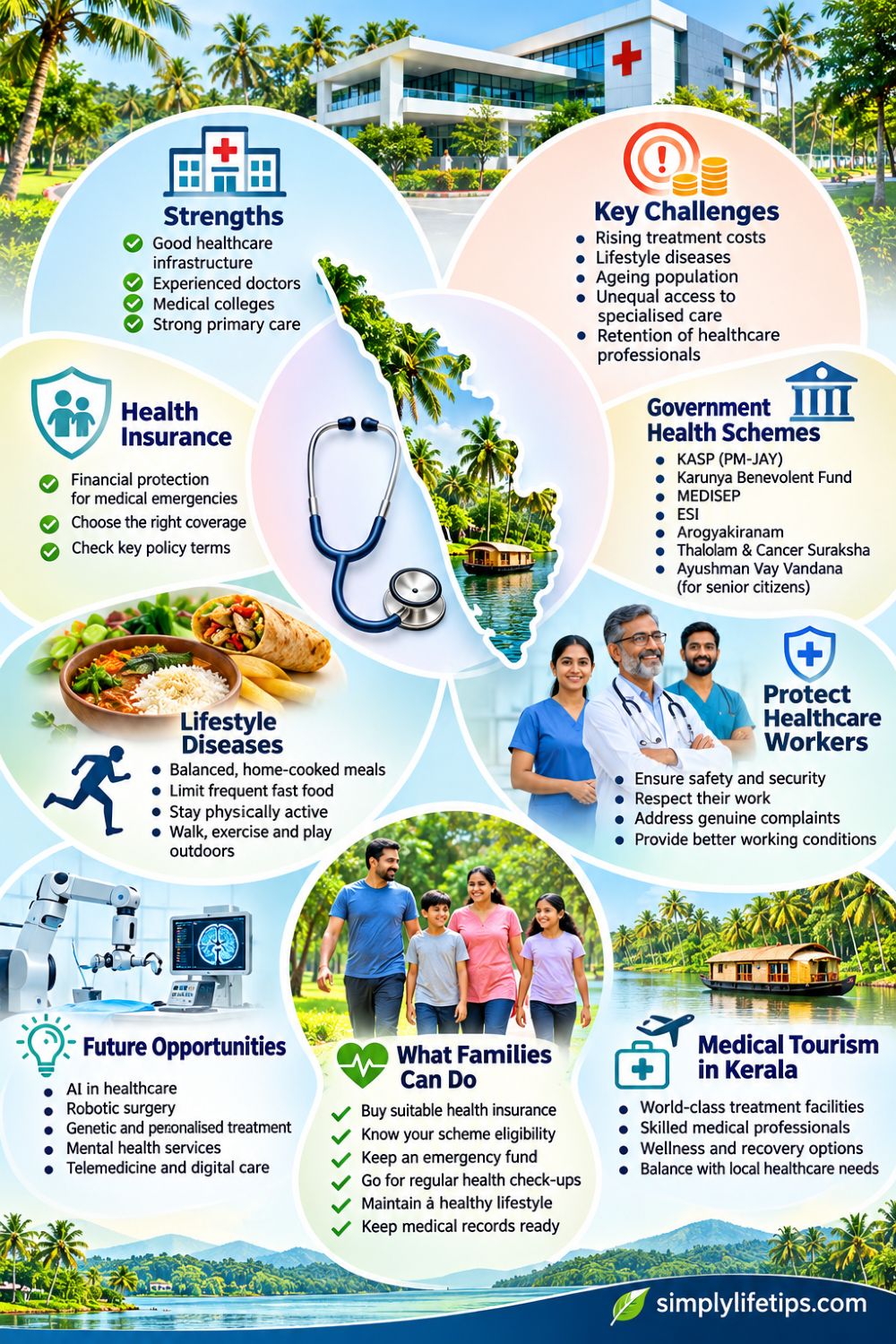
Improving healthcare in Kerala requires efforts from the government, healthcare professionals and the public. Better access to affordable treatment, awareness of government health schemes, suitable health insurance and preventive healthcare can help families manage medical expenses and protect their health. Individuals can also contribute by maintaining balanced food habits, staying physically active and attending regular health check-ups.
What Can Every Family Do to Prepare for Medical Emergencies?
Government reforms are important, but individuals and families also have responsibilities.
We cannot predict every illness or medical emergency. However, we can prepare ourselves financially and practically.
Here are some useful steps every family should consider.
- Purchase suitable health insurance: Do not wait until a serious illness develops.
- Check government scheme eligibility: Find out whether your family qualifies for KASP, MEDISEP or other applicable programmes.
- Maintain an emergency fund: Keep separate savings for unexpected medical and other essential expenses.
- Schedule appropriate health check-ups: Follow screening recommendations based on age and individual health risks.
- Maintain a healthy lifestyle: Exercise regularly, eat balanced meals and get adequate sleep.
- Organise medical records: Keep prescriptions, investigation reports, insurance details and emergency contacts accessible.
- Know nearby emergency facilities: Identify hospitals capable of handling serious medical emergencies.
- Learn basic emergency response: Knowing when and how to seek emergency assistance can save lives.
For example, a family with adequate insurance, emergency savings and organised medical records may be better prepared for unexpected hospitalisation than a family that starts arranging money only after an emergency occurs.
Planning for healthcare in Kerala should become a regular part of family financial planning.
Conclusion
The Kerala healthcare system has many strengths, but several challenges require attention. Rising treatment costs, lifestyle diseases, an ageing population, unequal access to specialised care and the safety of healthcare professionals are important concerns.
Kerala has the doctors, medical institutions and human resources needed to strengthen the Kerala healthcare system further. However, the real measure of success for the Kerala healthcare system should not be the number of hospitals or the sophistication of medical equipment.
It should be whether an ordinary person can receive timely, safe and quality treatment without destroying the family’s financial future.
A serious illness should not force a family to sell its home, exhaust its savings or borrow beyond its capacity to obtain medical care.
Health insurance should become an important part of family financial planning. Government healthcare schemes must reach eligible families effectively. Public hospitals should continuously improve, and private hospitals should maintain high standards of quality and transparency.
Doctors and healthcare workers must feel safe and respected. Patients must receive fair treatment and have access to justice. Research, technology and medical tourism should contribute to the development of the entire healthcare system.
These are not predictions or expert conclusions. They are thoughts about the kind of healthcare system we should work towards.
Our goal should be a Kerala where no person is denied quality medical treatment because of a lack of money, doctors can practise without fear, and every family can face a medical emergency with greater confidence.
The best investment we can make today is in a healthier, safer and financially secure tomorrow.
What changes would you like to see in Kerala’s healthcare system?
Frequently Asked Questions About the Kerala Healthcare System
1. Is the Kerala healthcare system good?
The Kerala healthcare system has several strengths, including established primary healthcare facilities, experienced medical professionals, government medical colleges and advanced private hospitals.
2. Which government health schemes are available in Kerala?
Major programmes include Karunya Arogya Suraksha Padhathi (KASP), Karunya Benevolent Fund (KBF), MEDISEP, ESI and Arogyakiranam. Ayushman Vay Vandana also provides coverage to eligible senior citizens aged 70 and above. Eligibility and benefits differ between schemes.
3. How much health insurance should a family have in Kerala?
The appropriate coverage depends on family size, age, medical history, financial capacity and the cost of treatment at preferred hospitals. A ₹10 lakh policy may be a starting point for some families, while others may need higher coverage or a super top-up policy.
4. Can Kerala become an international medical tourism destination?
Kerala has potential because of its experienced doctors, established hospitals, specialised treatment facilities and wellness tourism sector. Better infrastructure, medical research, patient safety and transparent treatment costs can strengthen this opportunity.
5. What are the major healthcare challenges in Kerala?
Major challenges include rising treatment costs, lifestyle diseases, population ageing, unequal access to specialised treatment, mental health concerns and the need to retain skilled healthcare professionals.
References and Further Reading
The following official and research sources provide additional information about healthcare policies, government schemes and public health in India and Kerala.
- Kerala Health Department – State healthcare services and government initiatives.
- Kerala State Health Agency – KASP and other healthcare assistance programmes.
- Kerala Department of Health Services – Government health services.
- MEDISEP Kerala – Health insurance for eligible government employees and pensioners.
- National Health Authority – Ayushman Bharat and national health protection schemes.
- Ministry of Health and Family Welfare – National health policies and programmes.
- World Health Organization – India – Public health information and initiatives.
- PubMed Central – Research relevant to Kerala’s healthcare system.
Editorial acknowledgement: This article was inspired by a healthcare-related Facebook discussion shared by Dr Arun Oommen, a neurosurgeon. It presents my own observations and perspectives on Kerala’s healthcare system and its challenges.

Mathukutty P. V. is the founder of Simply Life Tips. He shares practical advice and useful insights on personal growth, health, well-being, technology, and everyday living. His goal is to help readers build positive habits and make informed decisions. He believes in continuous learning and sharing knowledge to help people live healthier, happier, and more meaningful lives.