Arachnophobia is one of the most common specific phobias, causing an intense and persistent fear of spiders that goes far beyond ordinary dislike. While many people feel uncomfortable around spiders, individuals with arachnophobia may experience overwhelming anxiety, panic attacks, or avoid places where spiders might be present. This fear can interfere with daily life, outdoor activities, travel, work, and even simple household tasks.
Spiders play an important role in the environment by controlling insect populations, and most species are harmless to humans. However, for someone living with arachnophobia, even seeing a tiny spider, a photograph, or a web can trigger intense emotional and physical reactions. The fear often develops from childhood experiences, learned behavior, or traumatic events, although some people cannot identify a specific cause.
Arachnophobia is one of many specific phobias that can cause intense fear and avoidance of certain objects or situations.
The good news is that arachnophobia is highly treatable. Modern psychological therapies, especially Cognitive Behavioral Therapy (CBT) and exposure therapy, have helped many people gradually reduce their fear and regain confidence. Understanding why this phobia develops is the first step toward overcoming it.
In this comprehensive guide, you’ll learn what arachnophobia is, its symptoms, causes, risk factors, diagnosis, treatment options, self-help strategies, and practical tips to help you or a loved one manage the fear of spiders.
What Is Arachnophobia?
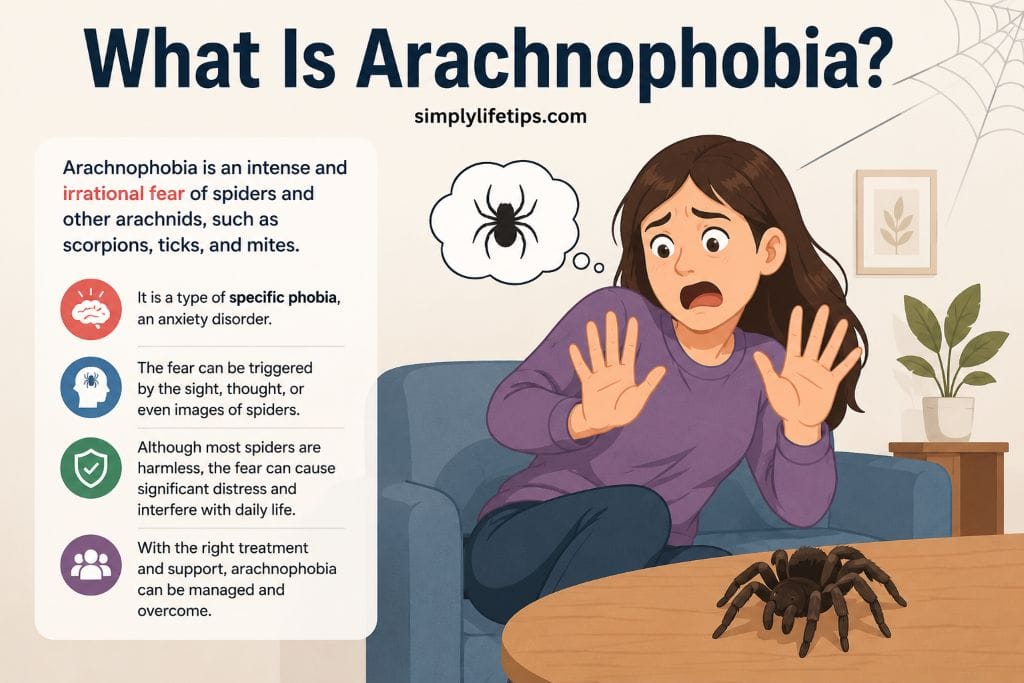
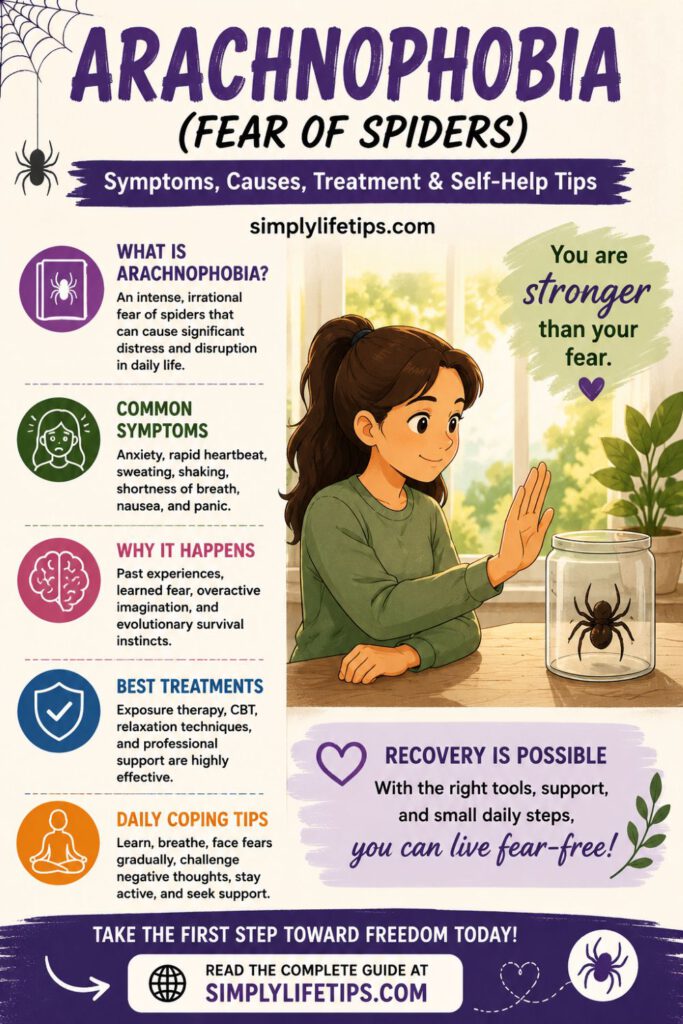
Arachnophobia is a specific phobia characterized by an intense and persistent fear of spiders that can interfere with everyday life.
Arachnophobia is an anxiety disorder classified as a Specific Phobia in the Diagnostic and Statistical Manual of Mental Disorders (DSM-5). It involves an excessive, irrational, and persistent fear of spiders or other arachnids that is disproportionate to the actual danger they present.
Unlike a normal fear, arachnophobia causes intense distress that can affect everyday life. Someone with this condition may avoid garages, basements, gardens, forests, sheds, or even certain rooms in their home because they fear encountering a spider. Some individuals repeatedly inspect their surroundings before entering a room or become anxious after noticing a spider web.
The severity of arachnophobia varies from person to person. Some people feel anxious only when they see a live spider, while others react strongly to photographs, videos, toy spiders, or even hearing someone talk about spiders.
Normal Fear vs. Arachnophobia
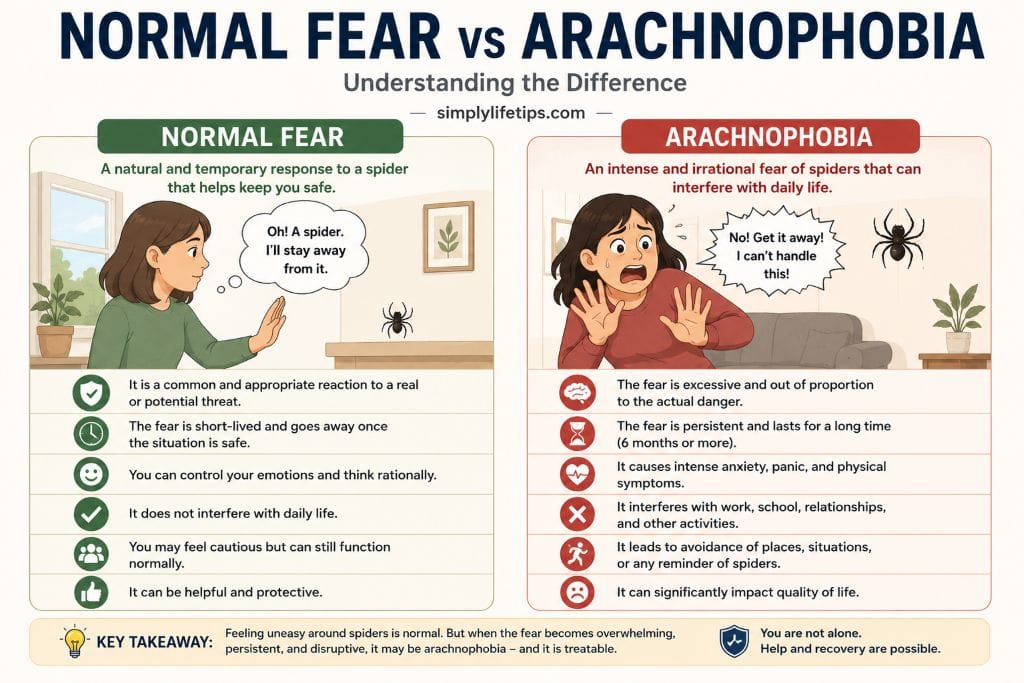
Feeling startled by a spider is a natural human response. Most people may briefly move away or remove the spider without significant emotional distress.
A comparison of normal fear and arachnophobia, highlighting how a specific phobia differs from a typical fear response.
Arachnophobia, however, is characterized by:
Immediate and intense fear when exposed to spiders.
Anxiety that is far greater than the actual level of danger.
Persistent avoidance of situations where spiders may be present.
Difficulty controlling fear despite knowing it is excessive.
Significant impact on work, school, relationships, or daily routines.
For example, someone with arachnophobia might refuse to enter a storage room after spotting a small spider days earlier, cancel outdoor activities because spiders may be present, or experience a panic attack after unexpectedly encountering a spider indoors.
How Common Is Arachnophobia?
Arachnophobia is among the most frequently reported animal-related phobias worldwide. Research suggests that women are diagnosed more often than men, although people of all ages can develop the condition.
Many children experience some fear of spiders, but this usually decreases with age. When fear becomes persistent and intense, and begins to interfere with everyday activities, it may indicate arachnophobia rather than a temporary childhood fear.
The condition often begins during childhood or adolescence, but it can also develop in adulthood following a frightening encounter or other stressful experience.
Early recognition and appropriate treatment can significantly improve quality of life, helping individuals participate in activities they previously avoided and reducing the anxiety associated with spiders.
Symptoms of Arachnophobia
The symptoms of arachnophobia can range from mild uneasiness to overwhelming fear. While some people become anxious only when they encounter a live spider, others may react to spider webs, photographs, videos, or even conversations about spiders. In severe cases, the fear becomes so intense that it interferes with daily activities, leading individuals to avoid certain places or situations where spiders might be present.
Symptoms generally fall into four categories: physical, emotional, cognitive, and behavioral.
Physical Symptoms
When a person with arachnophobia sees a spider or believes one is nearby, the body’s natural fight-or-flight response is activated. Although the spider may pose little or no actual threat, the brain reacts as though the person is in immediate danger. This causes a surge of adrenaline and a range of physical symptoms.
Common physical symptoms include:
Rapid heartbeat or heart palpitations
Chest tightness or discomfort
Excessive sweating
Trembling or shaking
Shortness of breath
Dry mouth
Dizziness or light-headedness
Nausea or stomach upset
Muscle tension
Feeling faint or weak
For example, someone cleaning a garage may suddenly notice a spider on a wall and immediately experience a racing heart, sweaty palms, and an overwhelming urge to leave the area.
Emotional Symptoms
Arachnophobia often triggers intense emotional reactions that are difficult to control. These feelings can occur instantly and may persist even after the spider is no longer present.
Common emotional symptoms include:
Extreme fear or terror
Panic or overwhelming anxiety
Feeling helpless or trapped
Loss of control
Irritability
Embarrassment about the intensity of the fear
Persistent worry before entering places where spiders might be found
Many people with arachnophobia understand that their fear is excessive or irrational, yet they still cannot prevent the emotional response. This inability to control fear is a defining feature of a specific phobia.
Cognitive Symptoms
Arachnophobia affects not only emotions but also thought patterns. The brain tends to overestimate the danger posed by spiders, leading to catastrophic thinking and heightened anxiety.
People may experience thoughts such as:
“The spider is going to attack me.”
“I won’t be able to escape.”
“It might be poisonous.”
“Something terrible is about to happen.”
These automatic thoughts increase fear and make it difficult to assess the situation realistically. As anxiety rises, logical thinking often gives way to panic.
Behavioral Symptoms
To reduce anxiety, individuals with arachnophobia frequently avoid situations where they believe spiders might be present. Although avoidance provides temporary relief, it prevents the brain from learning that most encounters with spiders are harmless, allowing the fear to persist or even worsen over time.
Behavioral symptoms may include:
Avoiding gardens, parks, garages, basements, attics, or sheds
Refusing to participate in camping, hiking, or other outdoor activities
Carefully inspecting rooms before entering
Frequently checking ceilings, corners, furniture, or clothing for spiders
Asking someone else to remove spiders instead of dealing with them personally
Leaving a room immediately after spotting a spider
Avoiding movies, documentaries, books, or images featuring spiders
As arachnophobia becomes more severe, these avoidance behaviors can interfere with work, travel, hobbies, and everyday responsibilities, significantly affecting a person’s quality of life.
Causes of Arachnophobia
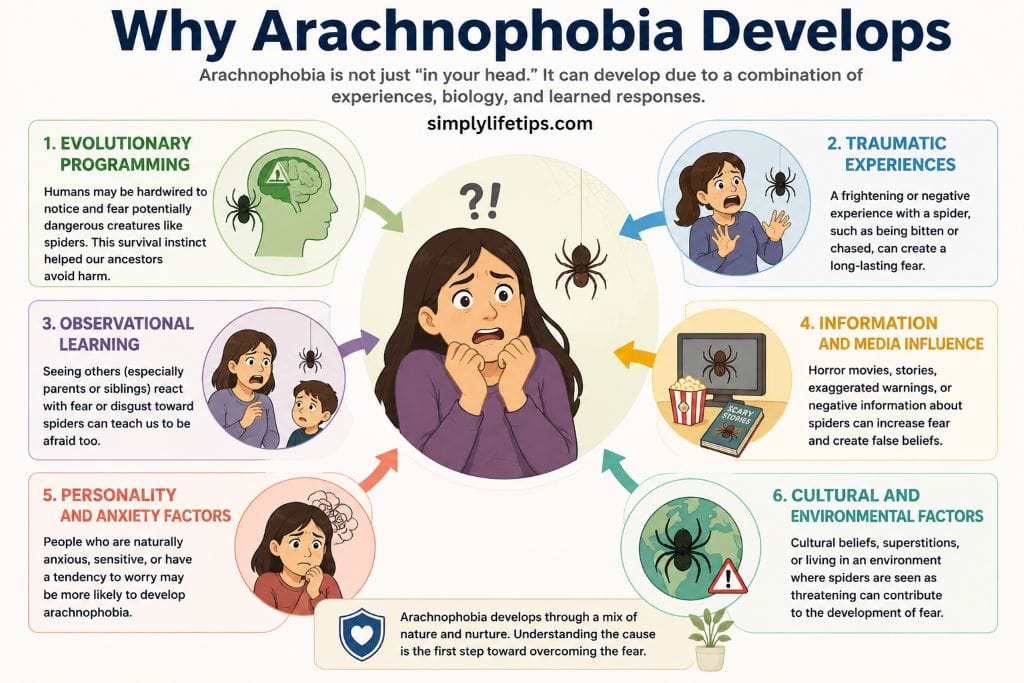
Arachnophobia often develops through a combination of traumatic experiences, learned behavior, anxiety, genetics, and environmental influences.
Arachnophobia usually develops through a combination of psychological, environmental, and biological factors rather than a single cause. While the exact reason varies from person to person, several factors are known to increase the likelihood of developing this specific phobia.
Traumatic Experiences
A frightening encounter with a spider, particularly during childhood, can leave a lasting emotional impact. For example, unexpectedly finding a spider in bed, inside clothing, or while playing outdoors may create a strong association between spiders and danger. Even a single distressing incident can contribute to the development of a long-term fear.
Learned Behavior
Children often learn by observing the reactions of parents, siblings, or other caregivers. If a child repeatedly sees an adult panic or react with extreme fear when encountering a spider, they may begin to believe that spiders are dangerous, even if they have never had a negative experience themselves.
Evolutionary Influences
Some researchers suggest that humans are naturally more alert to animals that could potentially be harmful. Although the vast majority of spiders are harmless, this evolutionary tendency to notice possible threats may make some individuals more susceptible to developing an intense fear.
Media and Negative Information
Television shows, horror movies, social media, and sensational news stories often portray spiders as aggressive or deadly. Continuous exposure to exaggerated or frightening depictions can reinforce negative beliefs and increase anxiety, especially in children or individuals who are already prone to fear.
Anxiety-Prone Personality
People who naturally experience higher levels of anxiety or worry may be more likely to develop arachnophobia. They often perceive uncertain situations as more threatening than they actually are, making it easier for fears to develop and persist.
Family History
Research indicates that genetics may influence a person’s susceptibility to anxiety disorders and specific phobias. Having a close family member with arachnophobia or another anxiety disorder does not mean someone will develop the condition, but it may increase the risk when combined with environmental factors.
The Cycle of Avoidance
Avoidance plays a major role in maintaining arachnophobia. Each time a person avoids a spider or escapes a situation where one might be present, they experience temporary relief. While this feels reassuring, it teaches the brain that avoidance is necessary for safety. Over time, this reinforces the fear, making future encounters seem even more threatening.
Breaking this cycle is an important step in recovery. With gradual exposure, effective coping strategies, and appropriate treatment, many people learn to manage their fear and respond to spiders with greater confidence.
Risk Factors for Arachnophobia
Although anyone can develop arachnophobia, certain factors make some people more susceptible than others. Having one or more of these risk factors does not guarantee that a person will develop the condition, but it may increase the likelihood of experiencing an intense fear of spiders.
Childhood Experiences
Arachnophobia often begins during childhood. Young children are more impressionable and may develop lasting fears after a frightening encounter with a spider or by observing fearful reactions from adults. Because children are still learning to distinguish between real and perceived dangers, a single negative experience can have a significant impact.
Family History
People with a family history of anxiety disorders or specific phobias may have a higher risk of developing arachnophobia. While genetics can influence how a person responds to fear, environmental factors such as growing up in a household where spiders are viewed as dangerous also play an important role.
Personality Traits
Individuals who are naturally cautious, highly sensitive, or prone to anxiety may be more vulnerable to developing phobias. Those who frequently anticipate worst-case scenarios or have difficulty coping with uncertainty often experience stronger fear responses when confronted with situations they perceive as threatening.
Previous Traumatic Events
A distressing encounter involving a spider can contribute to the development of arachnophobia. Even if the event occurred many years earlier, the emotional memory may continue to influence how the person reacts to spiders in the future.
Other Anxiety Disorders
People living with generalized anxiety disorder, panic disorder, obsessive-compulsive disorder (OCD), or other specific phobias may be at greater risk of developing arachnophobia. These conditions can make the brain more sensitive to perceived threats and increase the likelihood of developing additional fears.
Cultural and Social Influences
Cultural beliefs, family traditions, and media portrayals can shape how people view spiders. In some communities, spiders are frequently associated with danger or bad luck, which may reinforce fear from an early age. Repeated exposure to frightening stories, horror films, or sensationalized media can also contribute to the development of arachnophobia.
How Arachnophobia Is Diagnosed?
Arachnophobia is diagnosed by a qualified mental health professional, such as a psychologist or psychiatrist. There is no blood test, brain scan, or laboratory investigation that can confirm the condition. Instead, diagnosis is based on a detailed assessment of the person’s symptoms, medical history, and how the fear affects daily life.
During the evaluation, the healthcare professional may ask questions such as:
When did the fear of spiders begin?
What situations trigger the fear?
How intense is the anxiety?
Do you avoid places where spiders might be present?
Does the fear interfere with work, school, travel, or relationships?
Have you experienced panic attacks when encountering spiders?
The goal is to determine whether the fear is temporary or whether it meets the criteria for a specific phobia.
Diagnostic Criteria
A diagnosis of arachnophobia is generally considered when:
The fear is intense and persistent.
The reaction is far greater than the actual danger posed by spiders.
Exposure to spiders almost always causes immediate anxiety or panic.
The person actively avoids spiders or situations where they may be found.
The fear has lasted for at least six months.
The condition significantly affects daily life, education, work, or social activities.
Another mental health condition cannot better explain the symptoms.
An accurate diagnosis is important because it helps healthcare professionals recommend the most appropriate treatment plan based on the individual’s needs.
Treatment Options for Arachnophobia
The good news is that arachnophobia is highly treatable. Many people experience significant improvement through evidence-based therapies and self-help techniques. The most effective treatment plan depends on the severity of the phobia, the individual’s overall mental health, and how much the fear affects daily life.
Early treatment often leads to better outcomes, helping people regain confidence and reduce avoidance behaviors.
Cognitive Behavioral Therapy (CBT)
Cognitive Behavioral Therapy (CBT) is considered one of the most effective treatments for arachnophobia. It helps people identify and change negative thought patterns that contribute to excessive fear.
During therapy, individuals learn to:
Recognize unrealistic beliefs about spiders.
Challenge catastrophic thinking.
Replace fearful thoughts with balanced and realistic perspectives.
Develop practical coping strategies for managing anxiety.
Over time, CBT helps reduce emotional distress and improves confidence when facing situations that previously triggered fear.
Exposure Therapy
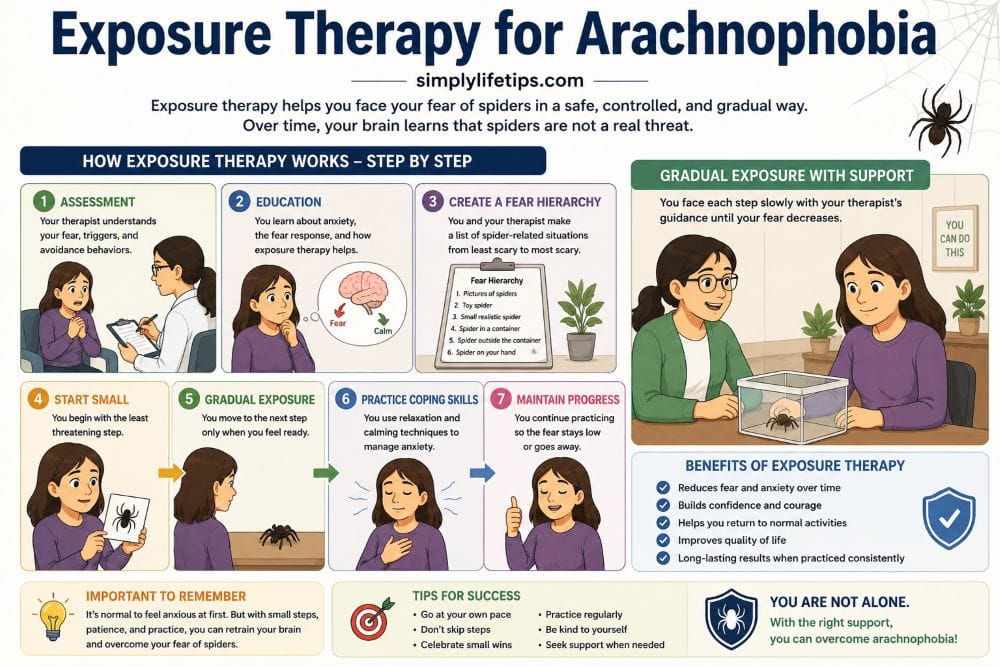
Exposure therapy is regarded as the gold standard treatment for specific phobias. Instead of avoiding spiders, individuals gradually and safely face their fear in carefully planned stages under the guidance of a trained therapist.
Exposure therapy helps people gradually face their fear of spiders in a safe and controlled environment, reducing anxiety over time.
Treatment usually progresses from the least frightening situations to more challenging ones. For example, a person may begin by talking about spiders, then looking at illustrations or photographs, watching videos, observing a spider from a distance, and eventually learning to remain calm in the presence of a live spider.
The pace is adjusted to the individual’s comfort level, allowing confidence to build gradually without causing unnecessary distress.
Relaxation Techniques
Learning relaxation techniques can help reduce the physical symptoms of anxiety before, during, and after exposure to feared situations.
Helpful techniques include:
Deep breathing exercises
Progressive muscle relaxation
Mindfulness meditation
Guided imagery
Grounding techniques
Although these methods do not eliminate the phobia, they help people manage anxiety more effectively and improve their ability to cope with challenging situations.
Medication
Medication is not usually the first treatment choice for arachnophobia. However, a healthcare provider may prescribe medication when symptoms are severe or when the phobia occurs alongside other anxiety disorders.
Depending on individual circumstances, treatment may include:
Anti-anxiety medications for short-term use
Antidepressants that help manage anxiety symptoms
Beta-blockers to reduce physical symptoms such as rapid heartbeat during particularly stressful situations
Medication should always be taken under medical supervision and is generally most effective when combined with psychological therapy.
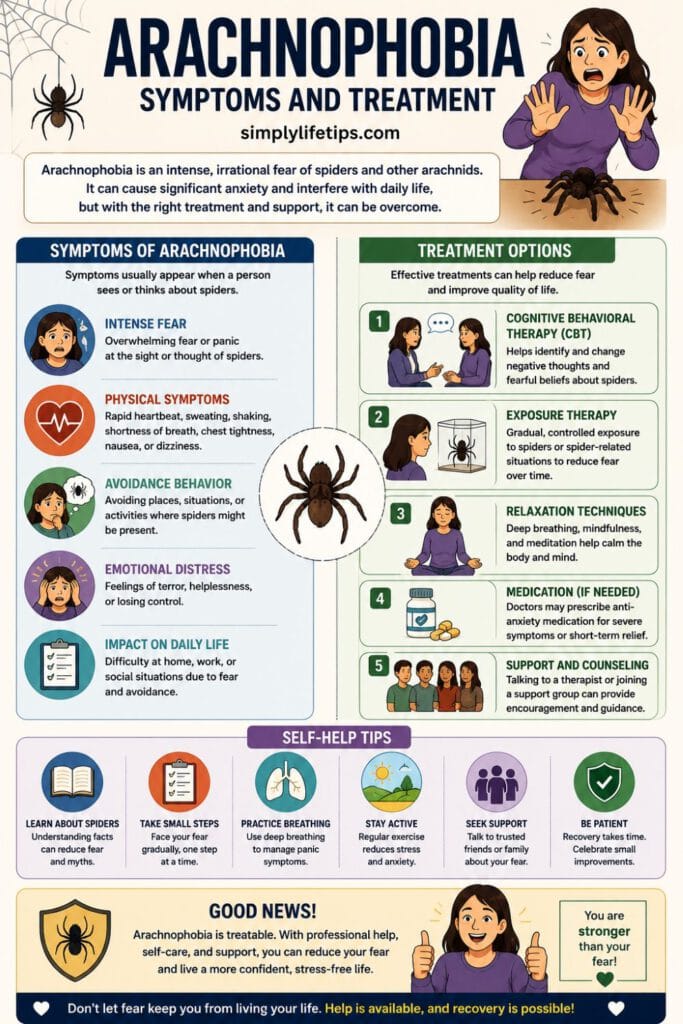
An infographic summarizing the common symptoms, effective treatments, and practical self-help strategies for managing arachnophobia.
Self-Help Tips for Managing Arachnophobia
Small, consistent daily habits can help reduce the fear of spiders and build confidence over time.
While professional treatment is often the most effective way to overcome arachnophobia, many people can reduce their fear by practicing healthy coping strategies. These techniques are not intended to replace therapy, but they can complement professional treatment and help build confidence over time.
Learn About Spiders
Fear often grows stronger when it is rooted in misconceptions or limited knowledge. Learning about spiders, their behavior, and the important role they play in controlling insect populations can help replace exaggerated fears with accurate information. Understanding that most spiders are harmless may reduce anxiety and make them seem less threatening.
Challenge Negative Thoughts
When fear arises, pay attention to the thoughts running through your mind. Ask yourself whether the danger is real or whether your anxiety is exaggerating the situation. Replacing catastrophic thoughts with more balanced and realistic ones can gradually reduce the intensity of your fear.
For example, instead of thinking, “The spider will attack me,” remind yourself, “Most spiders avoid humans and pose little or no danger.”
Practice Relaxation Techniques
Relaxation techniques help calm the body’s stress response and make it easier to manage anxiety.
Helpful practices include:
Deep breathing exercises
Progressive muscle relaxation
Mindfulness meditation
Guided imagery
Gentle stretching or yoga
Practicing these techniques regularly—not just during stressful situations—can improve your ability to remain calm when you encounter a spider.
Gradually Face Your Fear
Avoiding spiders may provide temporary relief, but it often strengthens the phobia over time. Gradual exposure, starting with situations that cause only mild anxiety, can help retrain the brain to respond more calmly.
For example, you might begin by reading about spiders, then look at illustrations, watch short videos, observe a spider from a safe distance, and eventually become comfortable being in the same room as one. Progress should always be gradual and at a pace that feels manageable.
Avoid Reinforcing the Fear
Repeatedly asking others to remove spiders, constantly checking rooms for spiders, or refusing to enter certain places can unintentionally reinforce the belief that spiders are dangerous. Reducing these avoidance behaviors, little by little, helps build confidence and resilience.
Maintain a Healthy Lifestyle
A healthy body supports a healthier mind. Managing overall stress can reduce anxiety and improve emotional well-being.
Simple habits that may help include:
Getting enough sleep
Exercising regularly
Eating a balanced diet
Limiting excessive caffeine
Practicing stress-management techniques
Spending time with supportive family and friends
Although these habits do not cure arachnophobia, they can make anxiety easier to manage.
When to Seek Professional Help
Occasional discomfort around spiders is common, but professional help may be beneficial when the fear becomes intense, persistent, or begins to interfere with everyday life.
Consider seeking help if:
You avoid normal activities because of your fear.
Panic attacks occur when you see or think about spiders.
The fear affects your work, education, travel, or relationships.
You spend excessive time checking for spiders or avoiding places where they might be present.
Self-help strategies have not improved your symptoms.
A psychologist or other qualified mental health professional can assess your symptoms and recommend evidence-based treatments tailored to your needs. Seeking help early often leads to better outcomes and prevents the fear from becoming more deeply established.
Can Arachnophobia Be Prevented?
There is no guaranteed way to prevent arachnophobia, but certain strategies may reduce the likelihood of developing an intense fear of spiders.
Parents and caregivers can play an important role by responding calmly when children encounter spiders. Avoiding exaggerated reactions and providing age-appropriate information can help children develop a more balanced understanding of these animals.
Building healthy coping skills, managing general anxiety, and addressing fears before they become severe may also reduce the risk of developing a specific phobia. If a fear begins to interfere with daily life, early intervention can prevent it from becoming more persistent.
Living Successfully with Arachnophobia
Living with arachnophobia can be challenging, but it does not have to control your life. Many people successfully overcome their fear through gradual practice, professional support, and consistent coping strategies.
Recovery is rarely immediate. Progress often happens in small steps, such as feeling comfortable looking at a picture of a spider, entering a room where a spider was previously seen, or remaining calm during an unexpected encounter. Each achievement builds confidence and helps retrain the brain to respond differently.
It is also important to celebrate progress rather than expecting perfection. Occasional anxiety does not mean treatment has failed. With patience and persistence, most people find that their fear becomes less intense and easier to manage over time.
Remember that arachnophobia is a recognized and treatable mental health condition. Seeking support is a positive step toward improving your quality of life and regaining the confidence to participate in activities you may have previously avoided.
Learn about arachnophobia, the fear of spiders, including its symptoms, causes, effective treatments, and practical self-help tips to build confidence and overcome fear.
Conclusion
Arachnophobia is more than simply disliking spiders. It is a specific phobia that can cause intense fear, anxiety, and avoidance behaviors that affect daily life. Although the fear may feel overwhelming, effective treatments such as Cognitive Behavioral Therapy, exposure therapy, relaxation techniques, and practical self-help strategies have helped many people regain control over their lives.
Understanding the causes and symptoms of arachnophobia is the first step toward recovery. Whether the fear developed during childhood, after a frightening experience, or gradually over time, it is possible to reduce its impact with the right support and consistent effort.
If your fear of spiders is preventing you from enjoying everyday activities or affecting your well-being, consider speaking with a qualified mental health professional. With appropriate treatment and a willingness to face the fear gradually, lasting improvement is achievable, allowing you to live with greater confidence and peace of mind.
Another related condition is Hemophobia (Fear of Blood), which can cause intense physical and emotional reactions.
“Fear of spiders may feel real, but so is your strength. With courage, patience, and the right support, you can overcome anything.”
Recovery from arachnophobia is possible with patience, gradual progress, and the right support.
Frequently Asked Questions
Is arachnophobia a mental illness?
Arachnophobia is classified as a specific phobia, which is a type of anxiety disorder. It is a recognized mental health condition when the fear is persistent, excessive, and interferes with daily life.
What causes arachnophobia?
Arachnophobia can result from a combination of traumatic experiences, learned behavior, genetic influences, anxiety-prone personality traits, and repeated exposure to frightening information about spiders.
Can arachnophobia be cured?
Many people experience significant improvement through treatments such as Cognitive Behavioral Therapy (CBT), exposure therapy, and self-help strategies. While recovery varies from person to person, the condition is highly treatable.
Are all spiders dangerous?
No. The vast majority of spider species are harmless to humans and prefer to avoid contact with people. Only a small number of species possess venom that can cause medically significant bites.
When should I seek professional help for arachnophobia?
You should consider professional help if your fear causes panic attacks, leads to persistent avoidance, interferes with work or daily activities, or continues despite trying self-help techniques.
References
American Psychiatric Association. Diagnostic and Statistical Manual of Mental Disorders (DSM-5-TR). 5th ed., Text Revision. American Psychiatric Association Publishing, 2022.
Mathukutty P V is a Blogger, YouTuber, and Content Writer and the founder of Simply Life Tips. After taking voluntary retirement in 2017, he embraced a free lifestyle focused on learning, personal growth, and sharing practical wisdom to help others live with more purpose and positivity.