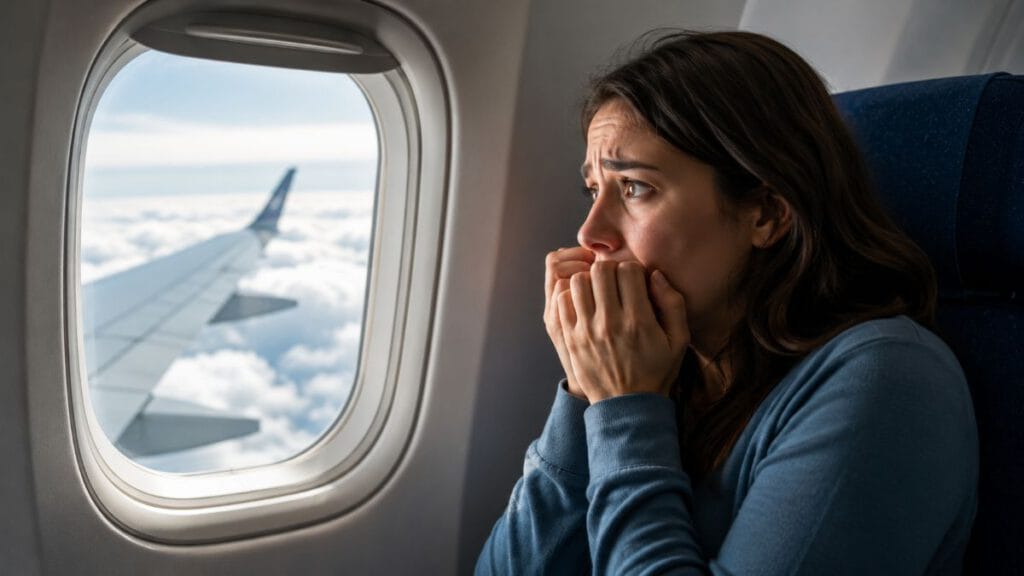
Aerophobia is more than just feeling nervous before boarding a plane. For some people, the fear becomes so overwhelming that they avoid air travel altogether, limiting career opportunities, vacations, and even family visits. Understanding aerophobia, its causes, symptoms, and treatment options can help individuals regain confidence and enjoy flying again.
Although air travel is statistically one of the safest modes of transportation, people with aerophobia often experience intense anxiety long before a flight begins. Fortunately, with the right strategies and professional support, this fear can be managed successfully.
Aerophobia is one of many phobias that can significantly affect a person’s daily life.
What Is Aerophobia?
Aerophobia, also known as the fear of flying, is a specific phobia characterized by an intense and persistent fear of traveling by airplane. Unlike ordinary nervousness before takeoff, aerophobia causes severe anxiety that may begin days or even weeks before a scheduled flight.
The symptoms and triggers of aerophobia can vary from person to person. The illustration below provides a simple overview of what aerophobia is, the common fears associated with it, and how it can affect everyday life.
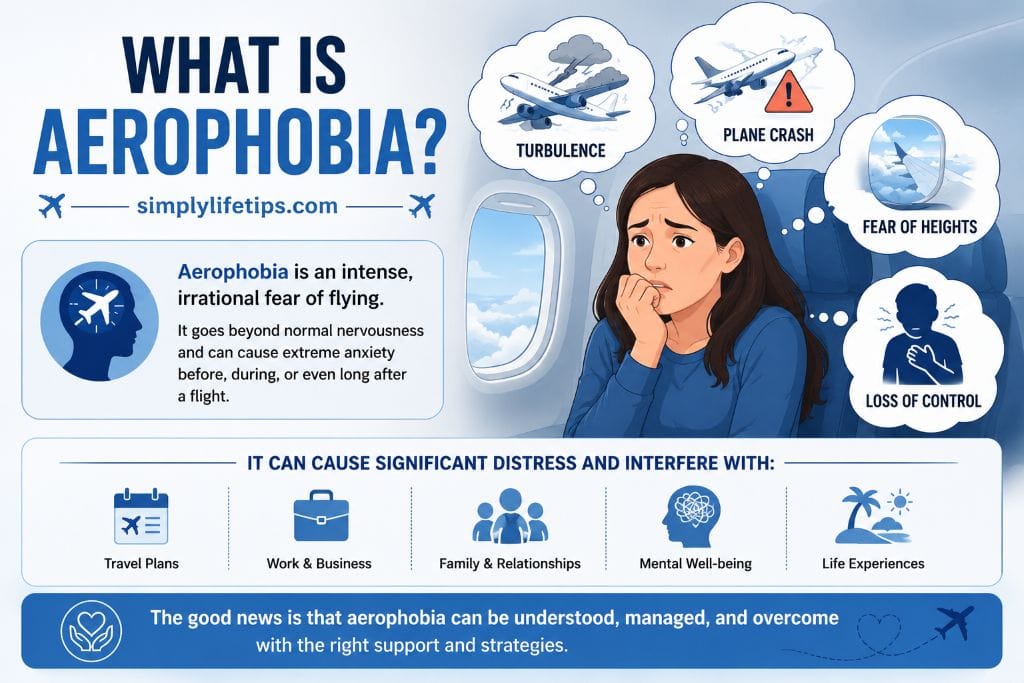
As shown above, aerophobia involves much more than ordinary nervousness about flying. Understanding these common fears can help individuals recognize the condition and take the first steps toward managing it through education, coping strategies, or professional support.
People with aerophobia often recognize that their fear is greater than the actual risk, yet they find it extremely difficult to control. In many cases, the fear becomes so intense that they avoid flying completely.
Aerophobia may involve fear of:
- Plane crashes
- Turbulence
- Takeoff or landing
- Heights
- Being trapped inside the aircraft
- Loss of control
- Mechanical failure
- Terrorist attacks or emergencies
- Medical emergencies during a flight
The fear may stem from one specific concern or a combination of several anxieties.
How Common Is Aerophobia?
Fear of flying is surprisingly common. Many passengers feel uneasy during turbulence or takeoff, but only a smaller percentage develop aerophobia severe enough to interfere with daily life.
People with aerophobia may:
- Decline job opportunities requiring travel
- Avoid family vacations
- Miss important celebrations
- Choose long road or train journeys instead of flying
- Experience panic attacks before or during flights
Because air travel has become an essential part of modern life, untreated aerophobia can significantly affect both personal and professional opportunities.
What Causes Aerophobia?
There is rarely a single cause of aerophobia. Instead, it often develops through a combination of experiences, personality traits, and learned behaviors.
Some people with claustrophobia also experience anxiety when flying because they feel trapped inside the aircraft.
Previous Traumatic Flight Experience
A frightening experience during a flight, such as severe turbulence, an emergency landing, or witnessing panic among passengers, can leave a lasting emotional impact.
Even if no actual danger occurred, the brain may associate flying with fear.
Fear Learned from Others
Children sometimes develop aerophobia after observing anxious parents or hearing frightening stories about flying.
Repeated exposure to negative news coverage of aviation accidents may also reinforce these fears.
Fear of Heights
Some individuals primarily fear being thousands of feet above the ground.
For them, the aircraft itself is not the problem—the height is.
Claustrophobia
Passengers who dislike confined spaces may struggle with being seated inside an aircraft for several hours.
This overlap makes aerophobia common among people with claustrophobia.
Fear of Losing Control
Many people feel comfortable driving because they control the vehicle.
Inside an airplane, passengers must trust the pilots and crew, which can create anxiety for those who struggle with uncertainty.
General Anxiety Disorders
People living with generalized anxiety disorder or panic disorder have a higher likelihood of developing aerophobia because their brains naturally anticipate worst-case scenarios.
Media Influence
Movies, documentaries, and sensational news reports often focus on rare aviation disasters.
Constant exposure to such content can make flying appear much riskier than it actually is, even though commercial aviation remains extremely safe.
Symptoms of Aerophobia
Aerophobia affects people differently. Some experience mild discomfort before boarding, while others develop intense physical and emotional reactions that make flying feel impossible.
Symptoms may begin weeks before a scheduled trip, intensify at the airport, or peak during takeoff, turbulence, or landing. In severe cases, simply thinking about flying or seeing an airplane can trigger anxiety.
Like hemophobia, aerophobia can trigger an intense fight-or-flight response, even when there is no immediate danger.
Physical Symptoms
Aerophobia affects more than just thoughts and emotions. When the brain perceives flying as a threat, it activates the body’s fight-or-flight response, producing a range of physical symptoms. The illustration below highlights some of the most common reactions people may experience before or during a flight.
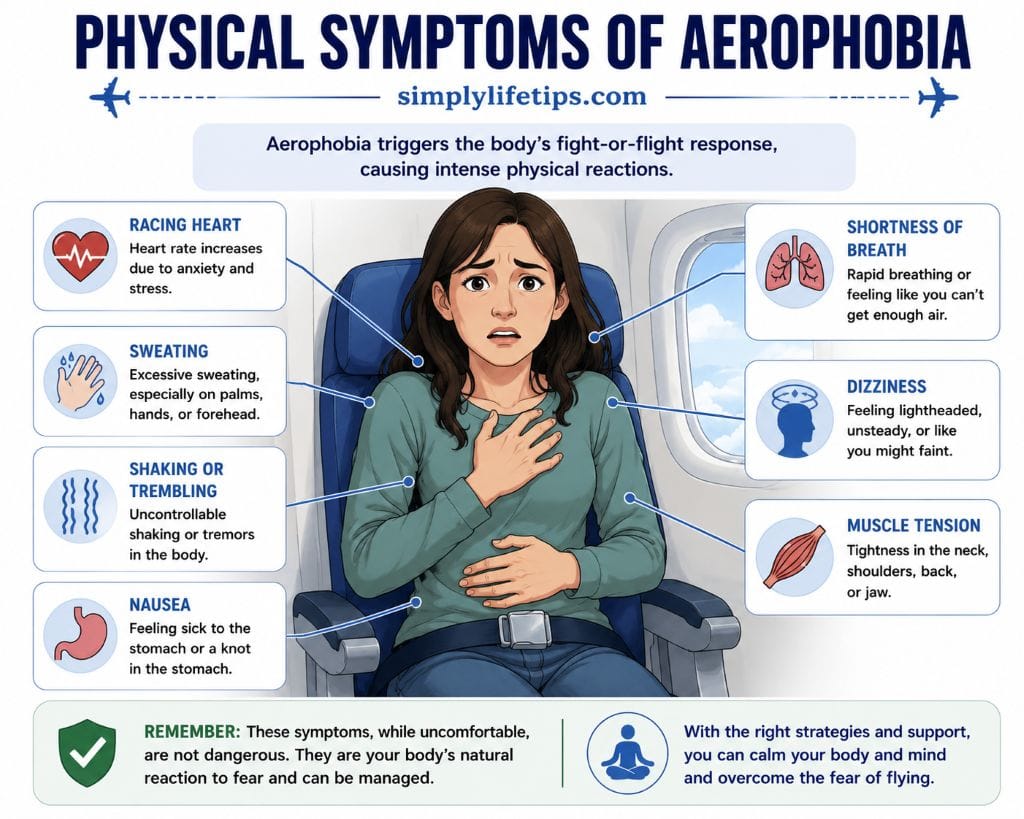
Although these symptoms can feel frightening, they are generally a result of anxiety rather than actual danger. Recognizing them as part of the body’s natural stress response can make them less overwhelming and help individuals use coping strategies more effectively during air travel.
The body’s natural “fight-or-flight” response becomes activated, producing symptoms such as:
- Rapid heartbeat or heart palpitations
- Shortness of breath
- Chest tightness or discomfort
- Sweating
- Trembling or shaking
- Dry mouth
- Dizziness or light-headedness
- Nausea or upset stomach
- Muscle tension
- Chills or hot flashes
- Tingling sensations in the hands or feet
- Feeling faint
These physical sensations can be frightening and sometimes lead people to believe they are experiencing a medical emergency when the symptoms are actually caused by anxiety.
Emotional Symptoms
Aerophobia also affects thoughts and emotions. Common emotional symptoms include:
- Intense fear before a flight
- Feeling helpless or trapped
- Constant worry about an upcoming journey
- Irritability before travel
- Difficulty relaxing
- Feeling overwhelmed by airport procedures
- Panic during turbulence
- Fear that something terrible will happen
- Difficulty concentrating
The anticipation of flying often causes more distress than the flight itself.
Behavioral Symptoms
People with aerophobia frequently change their behavior to avoid situations that involve flying.
Examples include:
- Cancelling vacations
- Declining promotions that require travel
- Refusing invitations to weddings or family events overseas
- Choosing lengthy road or train trips instead of short flights
- Constantly checking airline safety records
- Watching weather forecasts obsessively before a flight
- Seeking repeated reassurance from family members
Avoidance provides temporary relief but usually strengthens the phobia over time, making future flights feel even more intimidating.
How Does Aerophobia Affect Daily Life?
Although aerophobia is often dismissed as “just being afraid of flying,” its effects can extend far beyond the airport.
Career Limitations
Many professions require occasional or frequent air travel. Someone with severe aerophobia may:
- Turn down promotions
- Avoid business conferences
- Miss networking opportunities
- Restrict career growth
For professionals working in international companies, the fear can become a significant obstacle.
Missed Family Moments
Aerophobia may prevent people from attending:
- Weddings
- Funerals
- Birthdays
- Family reunions
- Religious celebrations
Over time, this can create feelings of isolation and regret.
Reduced Travel Opportunities
Many dream destinations are difficult or impractical to reach without flying.
People with aerophobia may avoid:
- International vacations
- Island destinations
- Long-distance adventures
- Cultural experiences abroad
As a result, they may feel limited compared to friends and family who travel freely.
Financial Costs
Avoiding flights can become expensive. Individuals may spend considerably more on:
- Long-distance train tickets
- Multi-day road trips
- Fuel
- Hotel stays during overland travel
- Additional vacation days
Ironically, avoiding a short flight often costs more than taking one.
Emotional Impact
Living with aerophobia can affect self-confidence and emotional well-being.
Many people experience:
- Embarrassment about their fear
- Frustration over missed opportunities
- Guilt for disappointing loved ones
- Increased overall anxiety
- Reduced quality of life
Some even begin worrying about future trips months in advance, creating a cycle of chronic stress.
Aerophobia vs Normal Fear of Flying
Feeling a little nervous before flying is completely normal, especially for first-time passengers or during rough weather. Aerophobia, however, is much more intense and persistent.
Many people feel a little anxious before boarding a flight, especially if they are inexperienced travelers or dislike turbulence. However, aerophobia is much more than temporary nervousness. The comparison below highlights the key differences between normal flight anxiety and a clinically significant fear of flying.
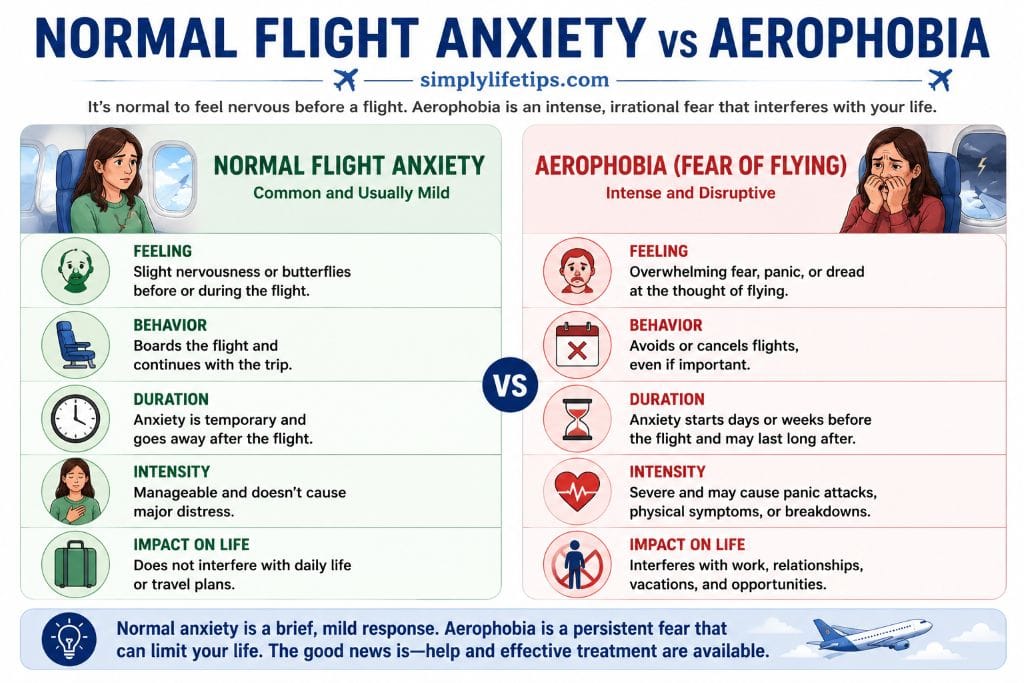
The most important distinction is how much the fear affects your daily life. While normal flight anxiety usually fades during or after the journey, aerophobia can lead to persistent avoidance, intense distress, and missed personal or professional opportunities. Recognizing these differences can help determine when it’s time to seek professional support.
| Normal Nervousness | Aerophobia |
|---|---|
| Mild anxiety before takeoff | Extreme anxiety days or weeks before the flight |
| Able to board despite nervousness | May cancel or avoid flights entirely |
| Anxiety decreases after takeoff | Anxiety remains high throughout the journey |
| Temporary discomfort | Persistent fear that affects daily life |
| Doesn’t interfere with travel plans | Significantly limits work, relationships, or vacations |
The key difference is how much the fear interferes with everyday life. When fear consistently prevents someone from flying despite knowing it is generally safe, it may indicate aerophobia.
How is Aerophobia Diagnosed?
There is no blood test, brain scan, or medical examination that specifically diagnoses aerophobia. Instead, a mental health professional evaluates the person’s symptoms, their impact on daily life, and whether the fear meets the criteria for a specific phobia.
A psychologist or psychiatrist may ask questions such as:
- When did your fear of flying begin?
- What happens when you think about boarding a plane?
- Do you avoid flights whenever possible?
- Have you experienced panic attacks while flying?
- Does this fear interfere with your work, education, or personal life?
- Have you had a traumatic flight or another event that may have triggered the fear?
To diagnose aerophobia, the fear generally:
- Is excessive compared to the actual risk.
- Persists for six months or longer.
- Causes significant distress or disrupts daily activities.
- Leads to avoidance of flying or extreme anxiety during flights.
- Cannot be better explained by another mental health condition.
Sometimes, a healthcare professional will also assess for related conditions such as panic disorder, generalized anxiety disorder, claustrophobia, or post-traumatic stress disorder (PTSD), as these can occur alongside aerophobia.
Treatment Options for Aerophobia
The good news is that aerophobia is highly treatable. Many people who once avoided flying completely can travel comfortably after receiving appropriate treatment. The most effective approach depends on the severity of the phobia and the individual’s needs.
Understanding different types of thinking can help identify irrational thought patterns that fuel the fear of flying.
Cognitive Behavioral Therapy (CBT)
Cognitive Behavioral Therapy (CBT) is considered one of the most effective treatments for specific phobias, including aerophobia.
CBT helps people:
- Identify irrational beliefs about flying.
- Challenge catastrophic thoughts.
- Replace negative thinking with realistic perspectives.
- Learn practical coping strategies for anxiety.
For example, someone who believes, “The plane will crash because of turbulence,” learns to recognize that turbulence is a normal part of flying and that commercial aircraft are designed to withstand it safely.
Exposure Therapy
Exposure therapy is one of the most effective treatments for aerophobia because it allows individuals to confront their fear gradually rather than avoiding it. Instead of taking one overwhelming leap, the process is divided into manageable steps that build confidence over time.
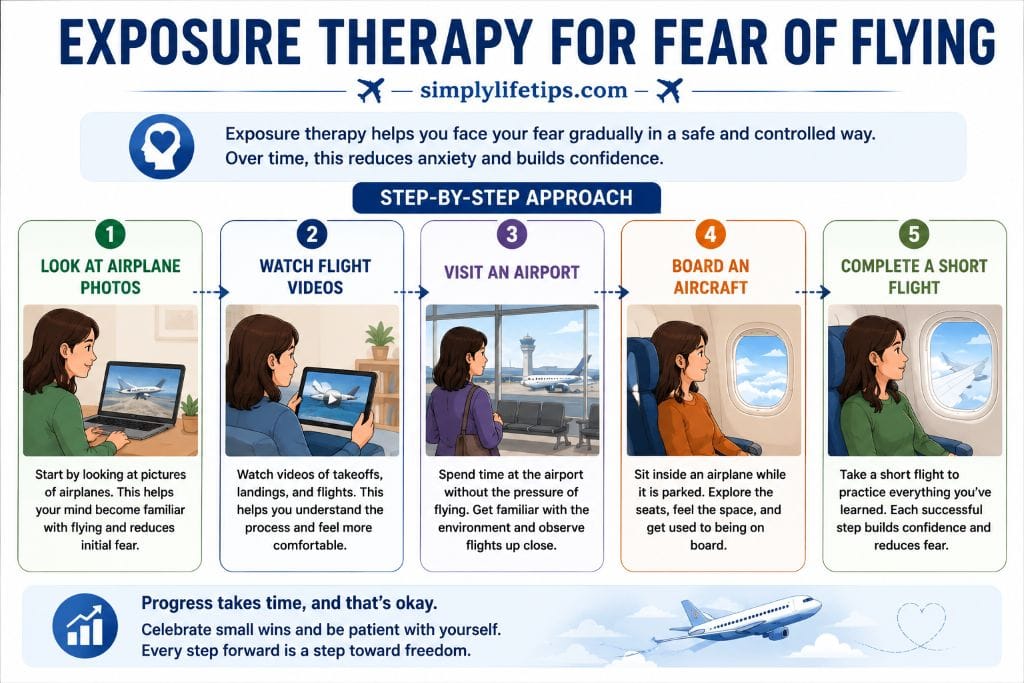
The pace of exposure therapy varies from person to person, and there is no need to rush through the process. Each successful step teaches the brain that flying is less threatening than previously believed. When guided by a qualified mental health professional, gradual exposure can significantly reduce fear and make future air travel more manageable.
Exposure therapy gradually helps individuals face their fear in a controlled and supportive environment.
The process may include:
- Looking at pictures of airplanes.
- Watching videos of flights.
- Visiting an airport.
- Sitting inside a stationary aircraft, if possible.
- Taking a short flight.
- Progressing to longer flights as confidence improves.
Repeated, gradual exposure teaches the brain that flying is not as dangerous as it once believed.
Relaxation Techniques
Learning to calm the body’s stress response can reduce anxiety before and during a flight.
Helpful techniques include:
- Deep diaphragmatic breathing
- Progressive muscle relaxation
- Guided imagery
- Mindfulness meditation
- Grounding exercises using the five senses
These methods are most effective when practiced regularly rather than only during a flight.
Virtual Reality Therapy
Some mental health clinics now use virtual reality (VR) to simulate the experience of flying.
Virtual environments may include:
- Airport check-in
- Boarding the aircraft
- Taxiing on the runway
- Takeoff
- Turbulence
- Landing
VR allows people to practice coping skills in a realistic setting without leaving the ground.
Medication
Medication does not cure aerophobia, but it may help some individuals manage severe anxiety during specific situations.
A healthcare provider may occasionally prescribe:
- Anti-anxiety medications for short-term use.
- Beta-blockers to reduce physical symptoms such as a racing heartbeat.
- Antidepressants if aerophobia occurs alongside an anxiety disorder.
Medication should only be taken under the guidance of a qualified healthcare professional and is generally most effective when combined with therapy.
Self-Help Tips to Overcome Fear of Flying
While professional treatment is often the best option for severe aerophobia, many people with mild to moderate symptoms can reduce anxiety by developing healthy coping habits.
Learning to manage decision fatigue before travel can reduce stress and make planning a flight feel less overwhelming.
Learn How Airplanes Work
Understanding basic aviation principles can replace fear with knowledge.
For example:
- Turbulence is similar to driving over bumps in a road and rarely poses a danger to modern aircraft.
- Commercial airplanes undergo rigorous inspections and maintenance.
- Pilots receive extensive training and regular evaluations.
Learning these facts can make the unknown feel more predictable.
Choose Flights That Reduce Stress
Simple planning can make the experience more comfortable.
Consider:
- Booking nonstop flights when possible.
- Choosing morning flights if the weather tends to be calmer.
- Selecting seats over the wings, where turbulence is often felt less.
- Arriving at the airport early to avoid rushing.
Reducing travel-related stress can prevent anxiety from escalating before boarding.
Limit Exposure to Scary Stories
Watching documentaries about aviation disasters or repeatedly reading accident reports before a flight can increase anxiety unnecessarily.
Instead, focus on balanced, factual information from reliable aviation sources.
Practice Relaxation Before Travel
Don’t wait until you’re on the plane.
Begin practicing breathing exercises, meditation, or progressive muscle relaxation several days before your flight so these techniques feel familiar when you need them.
Travel with a Trusted Companion
If possible, fly with someone who remains calm during flights.
A supportive companion can:
- Offer reassurance.
- Help distract you during takeoff.
- Encourage healthy coping strategies instead of avoidance.
Over time, positive flying experiences can gradually replace fearful expectations.
Tips Before and During a Flight
If you have aerophobia, preparing in advance can make the journey feel more manageable. While these tips may not eliminate fear, they can help reduce anxiety and improve your overall flying experience.
Before Your Flight
Preparing both mentally and practically can lower stress levels before you even reach the airport.
Consider these strategies:
- Book flights at a time of day when you usually feel relaxed.
- Choose your preferred seat in advance to avoid unnecessary worry.
- Pack the day before to reduce last-minute stress.
- Check in online if available.
- Eat a light meal and stay hydrated.
- Get a good night’s sleep before traveling.
- Arrive at the airport early to avoid rushing.
Avoid excessive caffeine, energy drinks, or alcohol before flying, as these can increase anxiety or make physical symptoms more noticeable.
During the Flight
Once you’re on board, focus on techniques that help keep your mind grounded in the present rather than imagining worst-case scenarios.
Helpful strategies include:
- Practice slow, deep breathing.
- Listen to calming music or a favorite podcast.
- Watch a movie or read a book to distract yourself.
- Talk to your travel companion.
- Remind yourself that turbulence is a normal part of flying.
- Keep your seatbelt fastened while seated for added comfort and safety.
- Focus on reaching your destination rather than every stage of the flight.
Some people also find it helpful to tell a flight attendant about their fear. Cabin crew are trained to assist anxious passengers and can offer reassurance when appropriate.
After the Flight
Once you land, take a moment to acknowledge your achievement.
Even if you felt anxious throughout the journey, completing the flight is a positive step. Each successful experience helps your brain learn that flying is manageable, making future trips easier over time.
Keeping a journal of successful flights can also be encouraging. Record what worked well, which coping strategies helped, and how your anxiety changed during the journey.
When to Seek Professional Help?
Feeling nervous before a flight is common, but persistent and overwhelming fear should not be ignored.
Consider seeking help from a mental health professional if:
- You avoid flying altogether.
- Anxiety begins weeks or months before a trip.
- You experience panic attacks related to flying.
- Fear interferes with your career, education, or family life.
- Self-help techniques have not improved your symptoms.
- You rely on alcohol or medication without medical advice to cope with flights.
Early treatment often leads to better outcomes. Many people who receive therapy report significant improvements and can travel comfortably again.
Can Aerophobia Be Prevented?
There is no guaranteed way to prevent aerophobia, but certain habits may reduce the likelihood of developing a severe fear of flying.
These include:
- Addressing anxiety early instead of avoiding flights.
- Learning accurate information about aviation safety.
- Managing general stress through regular exercise, adequate sleep, and relaxation techniques.
- Avoiding excessive exposure to sensationalized media coverage of aviation accidents.
- Seeking professional support after a traumatic flight experience.
Building confidence gradually through positive flying experiences can also help prevent mild anxiety from developing into a long-term phobia.
After learning about the causes, symptoms, treatment options, and coping strategies for aerophobia, it helps to have a quick visual summary. The infographic below highlights the essential points in an easy-to-read format, making it useful for reviewing later or sharing with someone who struggles with the fear of flying.
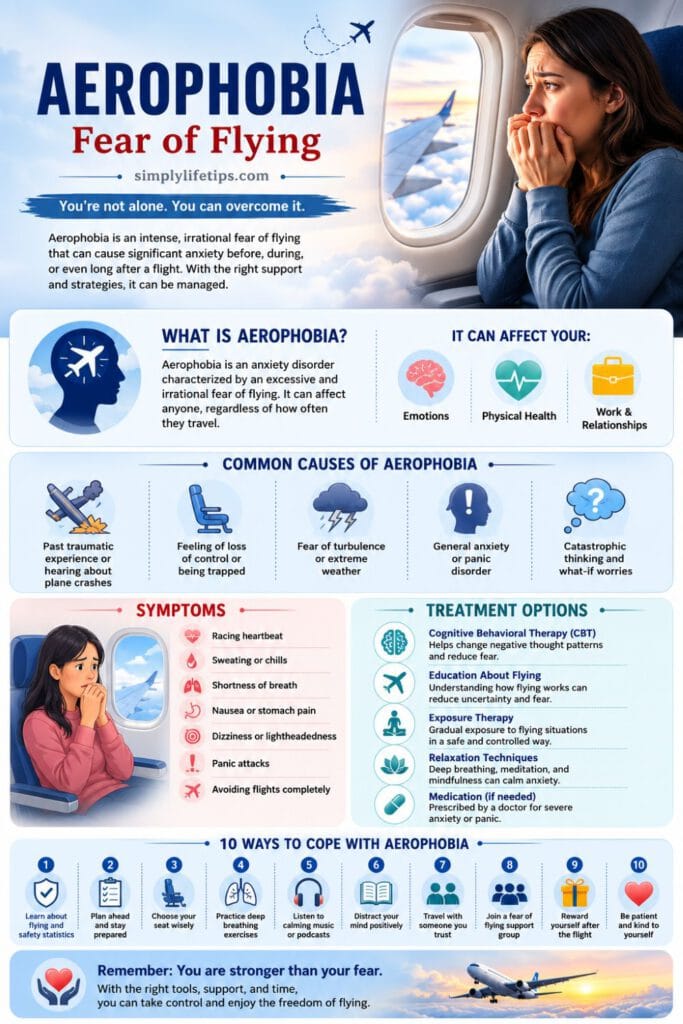
Managing aerophobia takes patience, practice, and the right support. While the fear may not disappear overnight, each positive step—whether it’s learning about aviation, practicing relaxation techniques, or completing a short flight—can build confidence. Let’s summarize the key takeaways before answering some frequently asked questions about aerophobia.
Conclusion
Aerophobia is more than a dislike of flying—it is a specific phobia that can affect careers, relationships, and personal freedom. While the fear may feel overwhelming, it is also highly treatable. Understanding what triggers the fear, recognizing the symptoms, and using evidence-based treatments such as Cognitive Behavioral Therapy, exposure therapy, and relaxation techniques can make a significant difference.
Remember that progress does not happen overnight. For some people, success means taking a short domestic flight without panic, while for others it may begin with simply visiting an airport. Every small step builds confidence and reduces fear over time.
Persistent anxiety, including burnout in young adults, may increase vulnerability to different anxiety-related conditions such as aerophobia. Seeking support early can improve long-term well-being.
If aerophobia is preventing you from living the life you want, consider speaking with a qualified mental health professional. With the right support and consistent practice, many people overcome their fear of flying and regain the freedom to travel with confidence.
Aerophobia Inspirational Quote
Courage isn’t the absence of fear, it’s the decision to fly anyway.
Overcoming aerophobia is a journey rather than a single achievement. Every step forward—no matter how small—helps build confidence and brings you closer to enjoying the freedom of air travel. Let this quote serve as a reminder that courage grows through action.

Whether your goal is taking your first flight or simply feeling less anxious during air travel, remember that progress happens one step at a time. With patience, practice, and the right support, fear does not have to define your future journeys.
Frequently Asked Questions
Is aerophobia the same as fear of flying?
Yes. Aerophobia is the medical term for an intense and persistent fear of flying. Unlike normal pre-flight nervousness, it causes significant anxiety and often leads people to avoid air travel.
Can aerophobia go away on its own?
Mild fear may improve with positive flying experiences, but severe aerophobia often persists without treatment. Therapy and gradual exposure usually provide the best long-term results.
Does turbulence mean a plane is unsafe?
No. Turbulence is a normal part of flying, and commercial aircraft are designed to handle it safely. Although it can feel uncomfortable, turbulence rarely poses a serious safety risk.
Can children develop aerophobia?
Yes. Children may develop a fear of flying after a frightening experience, by observing anxious adults, or through repeated exposure to alarming stories about aviation.
What is the best treatment for aerophobia?
Cognitive Behavioral Therapy (CBT), often combined with exposure therapy, is considered one of the most effective treatments for aerophobia. A mental health professional can recommend the most appropriate approach based on individual needs.
Disclaimer: This article is intended for educational purposes only and should not be considered a substitute for professional medical advice, diagnosis, or treatment. If you experience severe anxiety or symptoms that interfere with your daily life, consult a qualified healthcare or mental health professional.
References
- National Health Service (NHS) – Phobias
Covers symptoms, causes, diagnosis, and treatment of phobias. - American Psychiatric Association – Anxiety Disorders
Information on anxiety disorders and evidence-based treatments. - National Institute of Mental Health (NIMH) – Anxiety Disorders
Research-based information on anxiety symptoms and treatment options. - Mayo Clinic – Specific Phobias
Comprehensive overview of symptoms, causes, risk factors, and therapies. - Cleveland Clinic – Aerophobia (Fear of Flying)
Detailed information specifically about aerophobia, including symptoms, causes, diagnosis, and treatment.

Mathukutty P. V. is the founder of Simply Life Tips. He shares practical advice and useful insights on personal growth, health, well-being, technology, and everyday living. His goal is to help readers build positive habits and make informed decisions. He believes in continuous learning and sharing knowledge to help people live healthier, happier, and more meaningful lives.