Have you ever felt your heart race, your hands shake, or your mind go blank before speaking in front of others? If so, you may have experienced glossophobia, commonly known as the fear of public speaking. While occasional nervousness before a presentation is normal, glossophobia is much more intense. It can make even simple speaking situations feel overwhelming and may prevent people from expressing their ideas, advancing their careers, or enjoying social opportunities.
The good news is that glossophobia is highly manageable. With the right understanding, preparation, and practice, most people can significantly reduce their fear and become confident speakers. Whether you are a student, professional, business owner, or someone who wants to communicate better, learning about glossophobia is the first step toward overcoming it.
In this guide, you’ll learn what glossophobia is, its symptoms, causes, treatment options, and practical strategies to help you speak with greater confidence.
Glossophobia is one of many specific fears discussed in our comprehensive guide to phobias, where you can learn about other common fears, their symptoms, and treatment options.
What Is Glossophobia?
Glossophobia is the persistent fear of speaking in front of an audience. The term comes from the Greek words glossa, meaning “tongue,” and phobos, meaning “fear.” It is one of the most common specific phobias and affects millions of people worldwide.
People with glossophobia often experience intense anxiety before or during situations such as:
- Delivering presentations
- Speaking in meetings
- Giving speeches
- Participating in classroom discussions
- Attending interviews
- Hosting events
- Recording videos or podcasts
- Speaking during social gatherings
Unlike normal pre-presentation nerves, glossophobia can interfere with daily life. Some people avoid speaking opportunities altogether because they fear embarrassment, criticism, or making mistakes.
Understanding that glossophobia is a recognized anxiety condition—not a personal weakness—can help reduce self-blame and encourage people to seek effective solutions.
How Common Is Glossophobia?
Glossophobia is one of the most common fears worldwide. Many people experience some degree of nervousness before speaking in front of others, but for those with glossophobia, the fear is much stronger and can interfere with work, education, and everyday social interactions. Students may avoid classroom presentations, professionals may decline leadership opportunities, and others may hesitate to express their ideas because they fear criticism or embarrassment. The encouraging news is that public speaking confidence can improve with practice, preparation, and the right coping strategies.
Glossophobia Symptoms
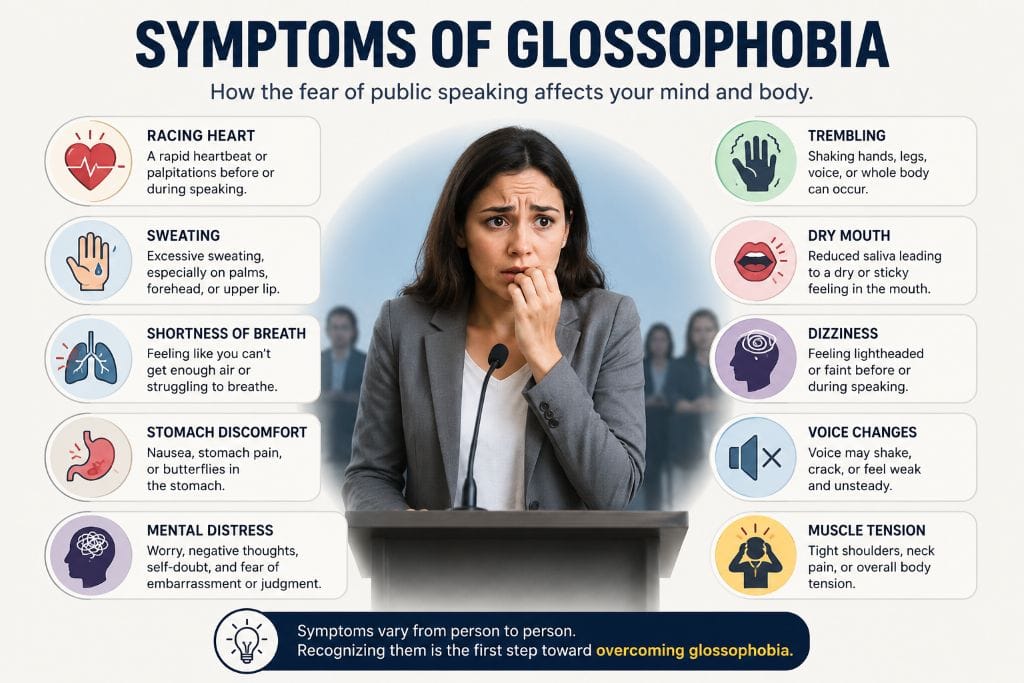
The symptoms of glossophobia vary from person to person and may appear before, during, or even after speaking in public. They can affect the body, emotions, thoughts, and behaviour.
Physical Symptoms
- Rapid heartbeat
- Sweaty palms
- Trembling hands or legs
- Dry mouth
- Shortness of breath
- Tightness in the chest
- Nausea or stomach discomfort
- Dizziness
- Muscle tension
Emotional and Mental Symptoms
- Intense fear before speaking
- Fear of being judged or embarrassed
- Worry about forgetting important points
- Negative self-talk
- Feeling overwhelmed or panicked
- Difficulty concentrating
Behavioural Symptoms
- Avoiding presentations or meetings
- Declining opportunities to speak publicly
- Reading directly from notes without making eye contact
- Speaking too quickly or too softly
- Leaving speaking situations whenever possible
Recognising these symptoms is the first step towards managing glossophobia effectively. Many people experience a combination of physical and emotional reactions, but with consistent practice and appropriate techniques, these responses often become less intense over time.
What Causes Glossophobia?
Glossophobia does not have a single cause. Instead, it usually develops through a combination of psychological, social, and biological factors.
Fear of Being Judged
Many people worry that the audience will criticise their appearance, voice, or performance. This fear of negative evaluation is one of the most common causes of glossophobia.
If anxious thoughts keep repeating before a presentation, try writing them down to organise your feelings and reduce mental stress. Learn more in our guide on writing down worries.
Past Negative Experiences
A previous embarrassing presentation, being laughed at while speaking, or receiving harsh criticism can create lasting anxiety about public speaking.
Lack of Preparation
Feeling unprepared often increases nervousness. When people lack confidence in their knowledge or presentation skills, their anxiety tends to increase.
Perfectionism
Some individuals believe they must deliver a flawless presentation. Even small mistakes may feel like major failures, increasing stress and self-doubt.
Social Anxiety
Glossophobia may occur on its own or alongside social anxiety disorder, where people experience fear in a variety of social situations rather than only during public speaking.
The Body’s Fight-or-Flight Response
When the brain perceives public speaking as a threat, it releases stress hormones such as adrenaline. This natural response prepares the body to react quickly but also causes many of the physical symptoms associated with glossophobia, including a racing heart, sweating, and trembling.
Risk Factors for Glossophobia
Although anyone can develop glossophobia, certain factors may increase the likelihood of experiencing an intense fear of public speaking.
- Previous negative public speaking experiences
- Low self-confidence
- Social anxiety disorder
- Perfectionism
- Fear of criticism or rejection
- Limited public speaking experience
- High-pressure academic or professional environments
Having one or more of these risk factors does not necessarily mean you will develop glossophobia. However, recognising them can help you understand your anxiety and take positive steps to manage it.
How Is Glossophobia Diagnosed?
Glossophobia is usually diagnosed by a healthcare professional or mental health specialist based on your symptoms, medical history, and how your fear affects your daily life. There is no laboratory test or scan that can confirm glossophobia. Instead, the diagnosis focuses on whether the fear is persistent, excessive, and causes significant distress or avoidance.
Your healthcare provider may ask questions such as:
- How long have you experienced fear of public speaking?
- Do you avoid presentations or speaking situations?
- What physical symptoms do you experience?
- Does the fear affect your education, work, or relationships?
- Do you experience anxiety in other social situations as well?
In some cases, glossophobia may occur alongside conditions such as social anxiety disorder, generalized anxiety disorder, or panic disorder. Identifying any underlying condition helps determine the most appropriate treatment plan.
Most people with glossophobia do not require extensive medical testing. A thorough clinical assessment is usually sufficient to understand the severity of the condition and recommend suitable coping strategies or treatment.
Treatment Options for Glossophobia
Although glossophobia can feel overwhelming, it is one of the most treatable anxiety-related conditions. Many people notice significant improvement through self-help strategies, while others benefit from professional support.
Cognitive Behavioural Therapy (CBT)
Cognitive Behavioural Therapy helps people identify and replace negative thought patterns that contribute to fear of public speaking. It also teaches practical coping techniques that gradually build confidence in speaking situations.
Exposure Therapy
Exposure therapy involves gradually facing public speaking situations in a safe and controlled manner. Starting with small groups or informal conversations and progressing to larger audiences helps reduce fear over time.
Relaxation and Breathing Techniques
Deep breathing, progressive muscle relaxation, and mindfulness exercises help calm the body’s fight-or-flight response before and during presentations. These techniques can reduce physical symptoms such as a racing heart, trembling, and rapid breathing.
Public Speaking Training
Joining organisations, workshops, or communication courses provides a supportive environment to practise speaking skills. Regular practice improves confidence and reduces anxiety through repeated positive experiences.
Medication
Medication is not usually the first choice for treating glossophobia. However, a healthcare professional may prescribe medication in certain situations, particularly when severe anxiety significantly affects daily functioning. Medicines should only be taken under medical supervision.
Professional Counselling
If glossophobia continues to interfere with your career, education, or personal life despite self-help efforts, consulting a psychologist or counsellor can provide personalised strategies and ongoing support.
10 Practical Ways to Overcome Glossophobia
Overcoming glossophobia takes time, patience, and regular practice. While there is no instant cure, these practical strategies can help reduce anxiety and improve your confidence whenever you need to speak in front of an audience.
1. Control the Adrenaline Rush
Feeling your heart race or your palms sweat before speaking is completely normal. These physical reactions occur because your body releases adrenaline as part of its natural fight-or-flight response. Instead of trying to eliminate these feelings, accept them as temporary. Take several slow, deep breaths to calm your nervous system and allow your mind to focus on your message rather than your fear.
2. Prepare Thoroughly
Confidence comes from preparation. Learn your topic well, organise your ideas logically, and practise until you feel comfortable with the flow of your presentation. Knowing your material reduces uncertainty and allows you to speak more naturally, even if you briefly lose your train of thought.
3. Practise Regularly
The more often you speak, the more comfortable you become. Practise in front of a mirror, record yourself on your phone, or rehearse in front of family members or trusted friends. Constructive feedback helps you improve your delivery, body language, and confidence before facing a larger audience.
Strong speaking skills develop through consistent practice and clear communication. These effective communication skills can help you connect better with any audience.
4. Learn the Power of Pausing
Many nervous speakers rush through their presentations. Pausing briefly between important points gives you time to gather your thoughts and allows your audience to absorb the information. A well-timed pause also makes your speech sound more confident and engaging.
5. Focus on Your Message, Not Yourself
Instead of worrying about how you look or whether you might make mistakes, concentrate on delivering useful information to your audience. Shifting your attention from yourself to helping others often reduces self-consciousness and makes speaking feel more natural.
6. Visualise Success
Spend a few minutes imagining yourself speaking calmly and confidently. Visualising a successful presentation can help reduce anxiety and create a more positive mindset before stepping onto the stage or joining a meeting.
7. Start with Small Speaking Opportunities
If large audiences feel intimidating, begin by speaking in smaller groups. Participate in team discussions, volunteer to introduce a meeting, or share your opinions during family gatherings. Gradually increasing the size of your audience helps build confidence over time.
8. Accept That Perfection Is Unnecessary
Even experienced speakers occasionally forget a point, mispronounce a word, or lose their place. Small mistakes rarely matter as much as people imagine. Most audiences focus on the overall message rather than minor imperfections.
9. Improve Your Body Language
Stand upright, maintain comfortable eye contact, smile naturally, and use purposeful hand gestures. Positive body language not only creates a better impression but can also make you feel more confident while speaking.
Good posture, eye contact, and confident gestures can make a significant difference. Explore these body language secrets to improve your communication skills.
10. Keep Speaking Despite the Fear
Confidence develops through repeated experience rather than waiting for fear to disappear completely. Every presentation, meeting, or conversation becomes an opportunity to strengthen your communication skills. With consistent practice, situations that once seemed frightening gradually become much easier to manage.
Speaking confidently is a skill that improves with experience. By combining good preparation with regular practice and healthy coping techniques, most people can significantly reduce glossophobia and become more effective communicators.
The following infographic summarises the most effective strategies for overcoming glossophobia. Save it as a quick reference or revisit it before your next presentation to remind yourself of the key techniques for managing public speaking anxiety and building confidence.
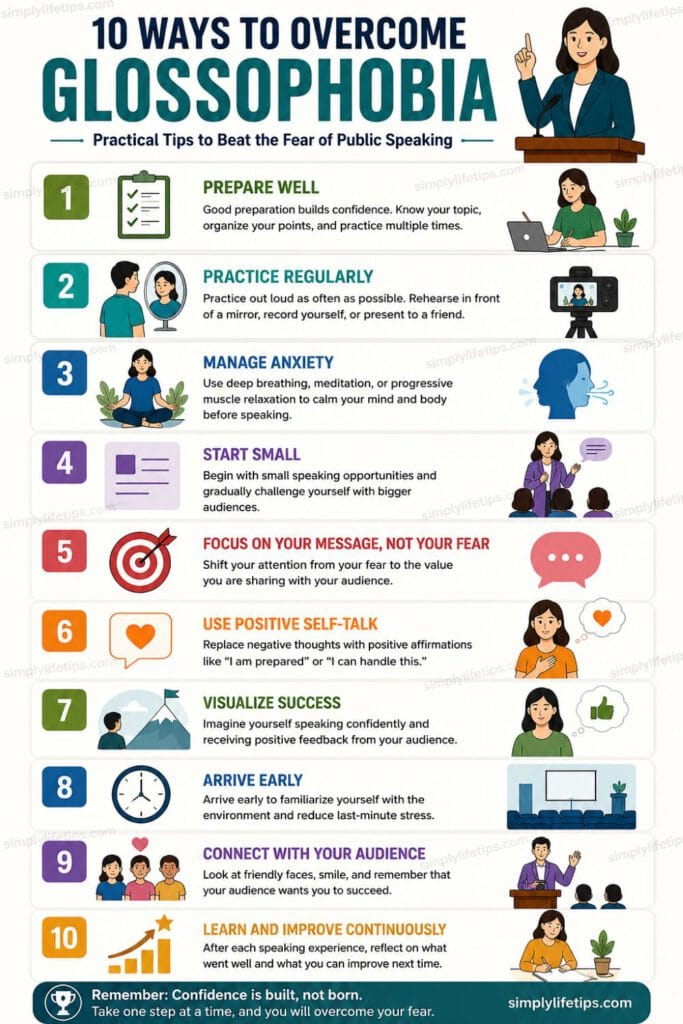
Overcoming glossophobia is a gradual process rather than an overnight transformation. Applying these strategies consistently and taking advantage of every opportunity to practise speaking in front of others will help reduce anxiety and improve your confidence over time. Even small improvements can make a significant difference in your ability to communicate effectively in both personal and professional situations.
Glossophobia vs Stage Fright
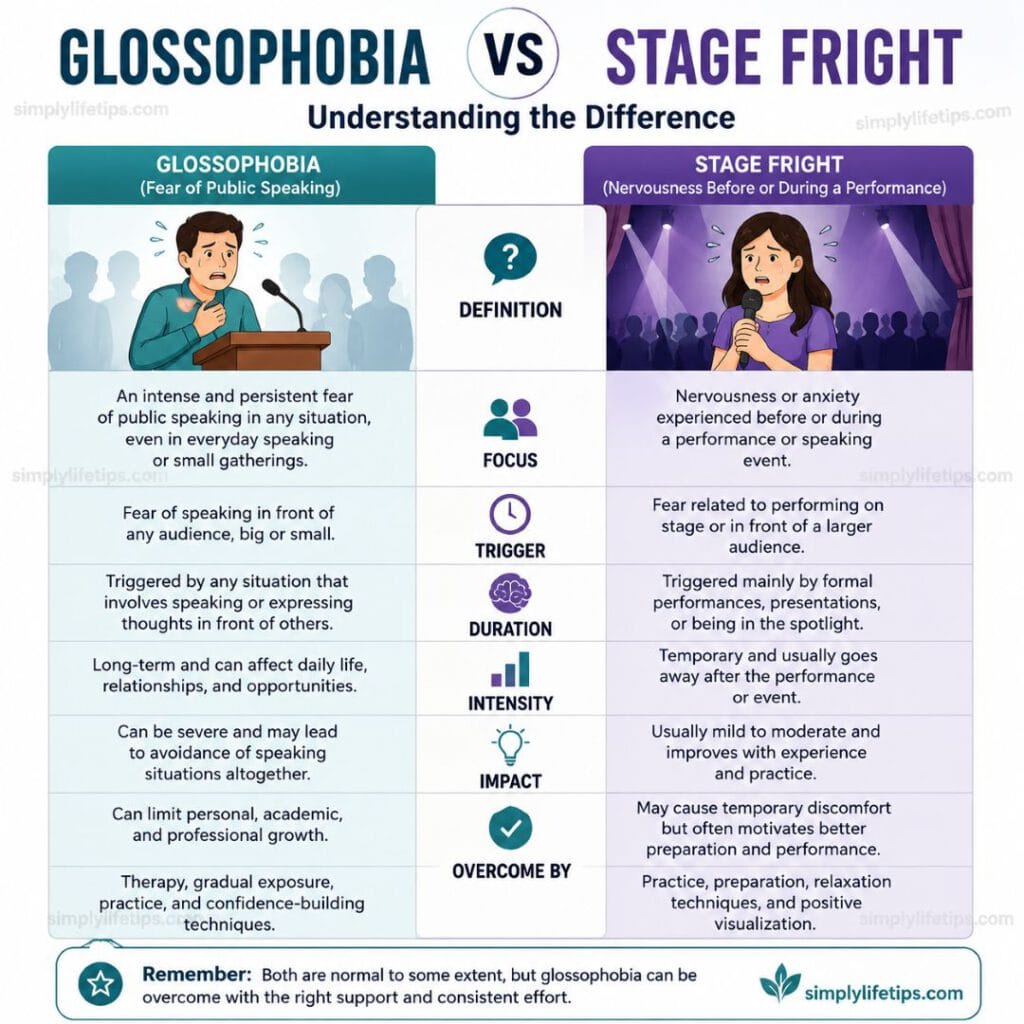
Although the terms are often used interchangeably, glossophobia and stage fright are not the same. Understanding the difference can help you identify your experience more accurately.
| Glossophobia | Stage Fright |
|---|---|
| A specific fear of speaking in front of an audience. | Anxiety before any live performance, including acting, singing, dancing, or speaking. |
| Mainly affects public speaking situations. | Can occur in many types of performances. |
| May lead to avoiding presentations and meetings. | Usually improves once the performance begins. |
| Can be persistent and interfere with daily life. | Often temporary and situation-specific. |
Both conditions can cause symptoms such as a racing heart, trembling, sweating, and dry mouth. However, glossophobia specifically relates to speaking in public, while stage fright has a broader scope.
When Should You Seek Professional Help?
Occasional nervousness before speaking is normal. However, professional support may be beneficial if glossophobia begins to interfere with your personal, academic, or professional life.
Consider seeking help if you:
- Frequently avoid presentations, meetings, or interviews.
- Experience panic attacks before speaking.
- Feel intense anxiety weeks before an event.
- Miss career or educational opportunities because of your fear.
- Continue experiencing severe symptoms despite practising self-help techniques.
A psychologist, counsellor, or other qualified mental health professional can assess your symptoms and recommend evidence-based treatments such as cognitive behavioural therapy or exposure therapy. Seeking help is a positive step toward building confidence and improving your quality of life.
Can Glossophobia Be Prevented?
While it may not always be possible to prevent glossophobia completely, developing good communication habits early can reduce the likelihood of severe public speaking anxiety. Regular practice, positive self-talk, realistic expectations, and gradual exposure to speaking opportunities help build confidence over time. Seeking support when anxiety first develops can also prevent the fear from becoming more intense.
Replacing negative thoughts with encouraging ones is one of the best ways to overcome self-doubt and build confidence before speaking.
Conclusion
Glossophobia is one of the most common fears, but it does not have to control your life. Whether your anxiety appears during classroom presentations, workplace meetings, interviews, or social events, understanding its causes and symptoms is the first step towards overcoming it.
With consistent preparation, regular practice, relaxation techniques, and a willingness to gradually face your fears, you can become a more confident and effective speaker. Progress takes time, but every speaking opportunity helps strengthen your communication skills and reduce anxiety.
Remember that confidence is not the absence of fear—it’s the ability to speak despite it. By taking small, consistent steps and believing in your ability to improve, you can gradually transform public speaking from a source of stress into an opportunity for personal and professional growth.
Frequently Asked Questions
Is glossophobia a mental illness?
Glossophobia itself is classified as a specific phobia rather than a mental illness. However, it can occur alongside conditions such as social anxiety disorder in some individuals.
Can glossophobia be cured?
Many people significantly reduce or overcome glossophobia through regular practice, cognitive behavioural therapy, exposure therapy, and relaxation techniques. Improvement is usually gradual rather than immediate.
What causes glossophobia?
Common causes include fear of negative judgment, previous embarrassing speaking experiences, lack of preparation, perfectionism, and the body’s natural fight-or-flight response.
Is stage fright the same as glossophobia?
No. Glossophobia specifically refers to the fear of public speaking, whereas stage fright can affect performers in many situations, including acting, singing, dancing, and public speaking.
How can I become more confident when speaking in public?
Prepare thoroughly, practise regularly, focus on your message instead of your fears, use deep breathing techniques, and gradually increase your exposure to speaking situations. Confidence develops through repeated practice and experience.
References
- American Psychiatric Association. Anxiety Disorders.
- National Institute of Mental Health. Anxiety Disorders.
- Mayo Clinic. Specific Phobias.
- Cleveland Clinic. Glossophobia (Fear of Public Speaking).
Disclaimer: This article is intended for educational purposes only and should not replace professional medical advice, diagnosis, or treatment. If your fear of public speaking causes significant distress or interferes with your daily life, consult a qualified healthcare or mental health professional.

Mathukutty P V is a Blogger, YouTuber, and Content Writer and the founder of Simply Life Tips. After taking voluntary retirement in 2017, he embraced a free lifestyle focused on learning, personal growth, and sharing practical wisdom to help others live with more purpose and positivity.