
People often feel nervous before getting an injection or having blood drawn, but trypanophobia goes far beyond ordinary anxiety. This intense fear of needles can cause overwhelming distress, panic attacks, and even avoidance of essential medical care. Whether it’s a routine vaccination, a blood test, or an IV drip, the mere thought of a needle can trigger a powerful physical and emotional response.
Although many people dismiss needle fear as something to “just get over,” trypanophobia is a recognized specific phobia that can significantly affect health and quality of life. Some individuals postpone important vaccinations, skip diagnostic tests, or refuse life-saving treatments because their fear feels impossible to control.
The good news is that trypanophobia is treatable. With the right coping techniques, professional support, and gradual exposure, many people learn to manage their fear and receive medical care with greater confidence.
Trypanophobia is one of many specific phobias. If you’d like to understand how phobias develop, why they persist, and the treatments available, read our comprehensive guide to Phobias.
In this guide, you’ll learn what trypanophobia is, why it develops, its symptoms, causes, treatment options, and practical strategies to overcome the fear of needles.
What Is Trypanophobia?
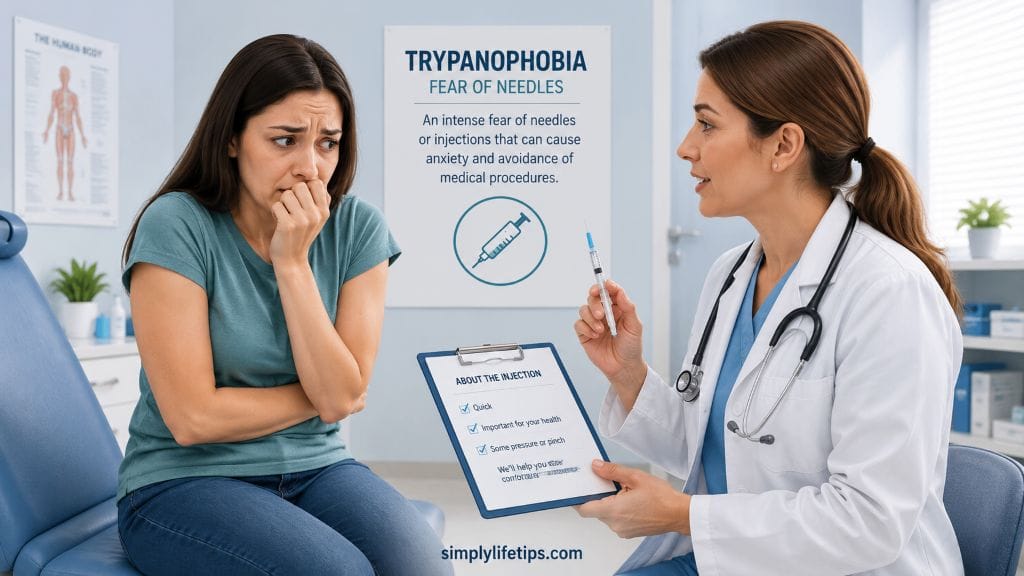
Trypanophobia is an intense and persistent fear of needles or medical injections. It belongs to the category of specific phobias, which are anxiety disorders involving excessive fear of a particular object or situation.
People with trypanophobia don’t simply dislike injections. They may experience overwhelming anxiety before medical appointments, panic upon seeing a syringe, or avoid healthcare altogether. In severe cases, even watching someone receive an injection or seeing a needle in a television program can provoke distress.
Needles are used in many common medical procedures, including:
- Vaccinations
- Blood tests
- Intravenous (IV) treatments
- Insulin injections
- Dental anesthesia
- Blood donation
Because these procedures are often necessary, untreated trypanophobia can interfere with preventive healthcare and medical treatment.
If you’re exploring different types of anxiety-related fears, our guide on Phobias Explained provides a comprehensive overview of how specific phobias develop, why they persist, and the treatments available for overcoming them.
How Common Is Fear of Needles?
Needle anxiety is surprisingly common. Many children and adults feel uneasy before an injection. However, only a smaller percentage develop trypanophobia, where fear becomes so intense that it disrupts daily life or medical care.
Research suggests that needle fear often begins during childhood and may continue into adulthood if left unaddressed. Painful medical experiences, frightening stories, or observing someone else’s distress can reinforce the fear over time.
Adults with trypanophobia frequently postpone:
- Annual health checkups
- Vaccinations
- Blood tests
- Chronic disease monitoring
- Hospital treatments
Avoiding these procedures can delay diagnosis and increase health risks.
Signs and Symptoms of Trypanophobia
Understanding the symptoms of trypanophobia can help you recognize when a normal dislike of needles has developed into a specific phobia. While some people experience only mild anxiety, others may have intense emotional distress, physical reactions, or avoid important medical care altogether. The infographic below summarizes the most common symptoms of needle phobia.
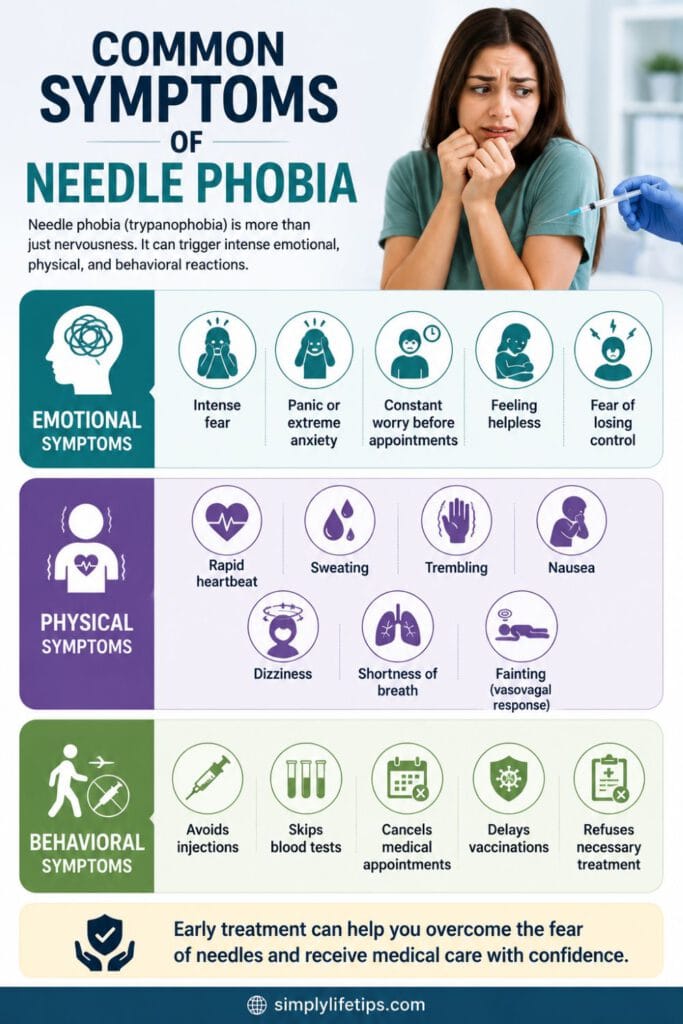
Experiencing one or two of these symptoms occasionally does not necessarily mean you have trypanophobia. However, if your fear is persistent, overwhelming, and causes you to avoid injections, blood tests, or other medical procedures, it may be time to speak with a healthcare professional. Early diagnosis and appropriate treatment can help you manage the fear and receive medical care with greater confidence.
Trypanophobia affects people differently. Some experience mild anxiety days before a medical appointment, while others develop intense panic as soon as they see a needle or enter a clinic. The symptoms can be emotional, physical, and behavioral, often making routine healthcare extremely challenging.
Emotional Symptoms
People with trypanophobia may experience:
- Intense fear or dread before an injection
- Excessive worry leading up to a medical appointment
- Feeling helpless or unable to control their fear
- Irritability or emotional distress when discussing needles
- Fear of pain, injury, or losing control during the procedure
These emotions are often much stronger than the actual risk posed by the injection.
Physical Symptoms
The body’s natural “fight, flight, or freeze” response can produce noticeable physical reactions, including:
- Rapid heartbeat
- Sweating
- Shaking or trembling
- Shortness of breath
- Nausea or stomach discomfort
- Dizziness or lightheadedness
- Dry mouth
- Muscle tension
- Feeling faint or actually fainting
One distinctive feature of trypanophobia is that some people experience a vasovagal response. Instead of the heart rate staying elevated, blood pressure suddenly drops, reducing blood flow to the brain. This can lead to dizziness, blurred vision, and fainting. Because of this response, healthcare professionals may ask patients with severe needle fear to lie down during injections or blood tests.
Behavioral Symptoms
Behavioral changes often have the greatest impact on daily life. A person with trypanophobia may:
- Cancel or postpone medical appointments
- Avoid vaccinations or booster shots
- Refuse blood tests, even when medically necessary
- Delay treatment for illnesses
- Leave a clinic before the procedure begins
- Require another person to accompany them for reassurance
- Spend hours worrying before an appointment
In severe cases, people may avoid healthcare facilities altogether, increasing the risk of untreated medical conditions.
How Symptoms Can Affect Everyday Life?
The fear of needles doesn’t only appear during medical procedures. It can influence important health decisions and create unnecessary stress.
For example:
- A parent may struggle to take their child for routine immunizations because of their own needle fear.
- Someone with diabetes may find insulin injections emotionally exhausting.
- A patient may avoid blood tests that are essential for monitoring cholesterol, thyroid function, or other health conditions.
- An individual may decline recommended vaccinations before international travel.
Over time, these decisions can affect both physical health and emotional well-being.
When Symptoms Become a Phobia?
Feeling nervous before an injection is completely normal. Trypanophobia is different because the fear is persistent, overwhelming, and interferes with normal life.
A healthcare professional may suspect trypanophobia when the fear:
- Is much greater than the actual danger
- Continues for six months or longer
- Causes significant distress
- Leads to avoidance of necessary medical care
- Interferes with work, school, or daily activities
Understanding these symptoms is the first step toward finding effective treatment. With appropriate support, many people learn to manage their fear and undergo medical procedures with much greater confidence.
As with Hemophobia: Fear of Blood, trypanophobia can sometimes trigger dizziness or fainting due to a vasovagal response rather than panic alone. Understanding this difference can help explain why some people faint during injections while others experience typical anxiety symptoms.
Causes of Trypanophobia
Not everyone develops trypanophobia for the same reason. For some, the fear begins after a painful childhood injection, while others develop it following a traumatic medical experience or by observing someone else’s fear. The illustration below highlights some of the most common factors that can contribute to the development of needle phobia.

Understanding what caused your fear can make it easier to choose the most effective treatment. Whether the trigger is an experience, a tendency to faint, or learned anxiety from childhood, recognizing the underlying cause is often the first step toward overcoming trypanophobia and building confidence during medical procedures.
There is no single cause of trypanophobia. Instead, it usually develops through a combination of personal experiences, learned behaviors, biological factors, and psychological influences. While one person may develop a fear after a painful injection, another may become fearful simply by watching someone else have a distressing experience.
Understanding what contributes to trypanophobia can help individuals recognize that their fear has an explanation—and, more importantly, that it can be treated.
Painful or Traumatic Medical Experiences
One of the most common causes of trypanophobia is a previous negative experience involving needles.
Examples include:
- A painful childhood vaccination
- Multiple unsuccessful attempts to draw blood
- A difficult hospital stay involving frequent injections
- An IV insertion that caused significant discomfort
- A frightening emergency medical procedure
When a person associates needles with pain or fear, the brain may begin to treat every future needle-related situation as a threat.
Fear Learned During Childhood
Children often learn by observing the reactions of adults and siblings. If a child repeatedly sees a parent expressing fear of injections or hears stories about painful medical procedures, they may develop similar fears.
Common influences include:
- Watching another child cry during vaccination
- Parents expressing extreme anxiety about injections
- Family members sharing frightening medical stories
- Negative portrayals of needles in movies or television
These early experiences can create lasting impressions that continue into adulthood.
Fear of Pain
Many people with trypanophobia are primarily afraid of the pain they expect a needle to cause. Interestingly, the anticipation is often much worse than the injection itself.
The brain may exaggerate:
- How painful the injection will be
- How long the discomfort will last
- The likelihood of complications
This anticipation increases anxiety, making even a quick injection feel overwhelming before it happens.
Fear of Losing Control
Some individuals fear not the needle itself but the feeling of being unable to escape the situation.
They may worry about:
- Being restrained
- Having a panic attack in front of others
- Embarrassing themselves
- Feeling trapped during the procedure
This loss of control can become a major trigger for anxiety.
Vasovagal Response
Unlike many other phobias, trypanophobia is often linked to a physical reflex known as the vasovagal response.
In some people, the sight of a needle, blood, or medical procedure causes:
- A sudden drop in heart rate
- A decrease in blood pressure
- Reduced blood flow to the brain
This may result in:
- Dizziness
- Pale skin
- Blurred vision
- Sweating
- Fainting
The fear of fainting during future injections can make the phobia even stronger, creating a cycle that becomes difficult to break.
Genetic and Biological Factors
Research suggests that anxiety disorders and specific phobias may run in families.
A person may be more likely to develop trypanophobia if they have:
- A close family member with an anxiety disorder
- A parent with a specific phobia
- A naturally sensitive or anxious temperament
Genetics alone do not cause the condition, but they can increase vulnerability when combined with environmental factors.
Anxiety Disorders
Trypanophobia may occur alongside other mental health conditions, such as:
- Generalized anxiety disorder (GAD)
- Panic disorder
- Social anxiety disorder
- Health anxiety
- Obsessive-compulsive disorder (OCD)
In these cases, the fear of needles may be one part of a broader pattern of anxiety that benefits from professional treatment.
Previous Fainting Episodes
Someone who has fainted during an injection or blood test may become more afraid of future procedures—not because of the needle itself, but because they fear fainting again.
This can lead to:
- Avoiding healthcare visits
- Constant worry before appointments
- Increased physical tension, which may worsen anxiety
Breaking this cycle often requires learning techniques that help prevent fainting and reduce fear.
Misconceptions About Needles
False information and exaggerated stories can also contribute to trypanophobia.
For example, some people believe that:
- Every injection is extremely painful.
- Needles frequently cause serious injuries.
- Medical staff often make mistakes during injections.
In reality, healthcare professionals are trained to perform injections safely, and modern needles are designed to minimize discomfort. Understanding the facts can help replace fear with confidence over time.
The causes of trypanophobia vary from person to person, which is why treatment should be tailored to the individual’s experiences and triggers. Identifying the underlying cause is often the first step toward reducing fear and building healthier responses to medical procedures.
Risk Factors
Anyone can develop trypanophobia, but certain factors make some people more likely to experience an intense fear of needles. Having one or more of these risk factors does not guarantee that someone will develop the condition. Instead, they increase the likelihood of the fear becoming persistent or severe.
Recognizing these risk factors can help individuals seek support before the fear begins to interfere with their health and daily life.
Childhood Experiences
Many cases of trypanophobia begin during childhood. Early experiences often shape how a person reacts to medical procedures later in life.
Risk factors include:
- Painful vaccinations or injections
- Difficult blood tests involving multiple needle attempts
- Hospitalization at a young age
- Witnessing another child experience distress during an injection
- Receiving little preparation before medical procedures
Positive experiences and reassurance during childhood can reduce the likelihood of developing a lasting fear.
Family History of Anxiety or Phobias
People with close relatives who have anxiety disorders or specific phobias may have a higher risk of developing trypanophobia.
This increased risk may result from a combination of:
- Genetic susceptibility
- Learned behaviors
- Shared family attitudes toward medical procedures
For example, children who repeatedly observe a parent expressing extreme fear of injections may adopt similar reactions.
Highly Sensitive Personality
Some individuals naturally respond more strongly to stressful or unfamiliar situations. People who are emotionally sensitive or cautious may be more vulnerable to developing specific phobias.
Traits that may increase risk include:
- High levels of general anxiety
- Strong emotional reactions to stressful events
- Difficulty coping with uncertainty
- Increased sensitivity to pain
These personality characteristics do not cause trypanophobia on their own, but they can make fearful experiences more impactful.
Previous Traumatic Medical Procedures
A single negative medical experience can sometimes create a lasting fear.
Examples include:
- An injection that caused severe pain
- Multiple unsuccessful attempts to insert an IV
- Feeling ignored or unsupported during a medical procedure
- Experiencing a medical emergency involving numerous injections
The brain may associate future needle-related situations with that earlier trauma, triggering anxiety even when the procedure is routine.
Existing Anxiety Disorders
People already living with anxiety-related conditions are more likely to develop additional fears or phobias.
These may include:
- Generalized anxiety disorder
- Panic disorder
- Health anxiety
- Obsessive-compulsive disorder (OCD)
- Other specific phobias
Managing the underlying anxiety often helps reduce the intensity of needle-related fears.
Vasovagal Syncope
Individuals who have fainted during injections or blood tests are at greater risk of developing trypanophobia.
The fear may shift from the needle itself to concerns such as:
- Fainting in public
- Losing consciousness
- Feeling embarrassed
- Being unable to control their body’s reaction
Learning techniques such as applied tension, which helps maintain blood pressure during procedures, can be particularly beneficial for people with this risk factor.
Frequent Medical Treatments
People who require regular injections or blood tests may develop trypanophobia if their experiences are consistently stressful or painful.
This can affect individuals with conditions requiring:
- Insulin injections for diabetes
- Allergy shots
- Chemotherapy
- Regular blood monitoring
- Long-term intravenous treatments
Supportive healthcare providers and effective pain-reduction strategies can make repeated procedures less intimidating.
Avoidance That Reinforces Fear
One of the strongest risk factors for worsening trypanophobia is avoiding needles altogether.
While skipping an injection may provide temporary relief, it reinforces the belief that needles are too frightening to face. Over time, the fear often becomes stronger, making future medical procedures even more difficult.
This pattern is common in many anxiety disorders. If you’re interested in understanding how avoidance strengthens fears in general, our article on Claustrophobia: Fear of Confined Spaces explains how escaping feared situations can unintentionally reinforce phobic responses and why gradual exposure is often an effective treatment.
Understanding these risk factors doesn’t mean trypanophobia is inevitable. Many people with several risk factors never develop a phobia, while others overcome their fear with education, coping strategies, and professional treatment.
How Is Trypanophobia Diagnosed?
There is no blood test, brain scan, or medical procedure that can diagnose trypanophobia. Instead, healthcare professionals diagnose the condition by evaluating a person’s symptoms, medical history, and how the fear affects daily life.
The goal is to determine whether the fear is a normal reaction to needles or a specific phobia that requires treatment.
Medical and Psychological Assessment
A doctor, psychologist, or mental health professional will usually begin by asking questions about your experiences with needles.
They may ask:
- When did your fear begin?
- Does your fear occur only with injections or also with blood tests and IVs?
- Have you ever fainted during a medical procedure?
- Do you avoid vaccinations or medical appointments because of your fear?
- How does this fear affect your health or daily life?
Honest answers help identify the severity of the condition and guide the most appropriate treatment.
Diagnostic Criteria
Mental health professionals generally diagnose trypanophobia using criteria for specific phobia outlined in the Diagnostic and Statistical Manual of Mental Disorders (DSM-5-TR).
A diagnosis is more likely when the fear:
- Is intense and out of proportion to the actual danger
- Occurs almost every time needles or injections are involved
- Leads to immediate anxiety or panic
- Causes the person to avoid needle-related situations or endure them with extreme distress
- Persists for at least six months
- Interferes with work, education, healthcare, or daily activities
- Cannot be better explained by another mental health condition
These criteria help distinguish a clinical phobia from ordinary nervousness.
Identifying the Underlying Trigger
Not everyone fears needles for the same reason. During the assessment, a healthcare professional may explore the main source of the fear.
Common triggers include:
- Fear of pain
- Fear of fainting
- Fear of losing control
- Previous traumatic medical experiences
- Anxiety about medical settings
- Fear of seeing blood
Identifying the primary trigger allows treatment to focus on the individual’s specific concerns.
Ruling Out Other Conditions
Some medical or psychological conditions can produce symptoms similar to trypanophobia.
A healthcare provider may consider whether the fear is related to:
- Generalized anxiety disorder
- Panic disorder
- Health anxiety
- Post-traumatic stress disorder (PTSD)
- Another specific phobia
This step ensures that any underlying condition is recognized and treated appropriately.
Why Early Diagnosis Matters?
Many people live with trypanophobia for years without realizing it is a recognized and treatable condition. Instead, they simply avoid medical procedures whenever possible.
Early diagnosis can help prevent:
- Missed vaccinations
- Delayed medical treatment
- Untreated health conditions
- Increased anxiety over time
- Reduced quality of life
The earlier the fear is identified, the easier it is to begin effective treatment and develop healthier coping strategies.
Can You Diagnose Yourself?
While online articles and self-assessment questionnaires can help you recognize the signs of trypanophobia, they cannot replace a professional evaluation.
If your fear of needles is causing you to postpone important medical care or significantly affecting your daily life, it’s best to consult a qualified healthcare or mental health professional. A proper diagnosis not only confirms the condition but also opens the door to treatments that have helped many people successfully overcome their fear.
Difference Between Normal Needle Anxiety and Trypanophobia
Not everyone who feels uneasy about injections has trypanophobia. While mild nervousness before a vaccination or blood test is common, a specific phobia involves much stronger emotional and physical reactions that can interfere with necessary medical care. The comparison below highlights the key differences.
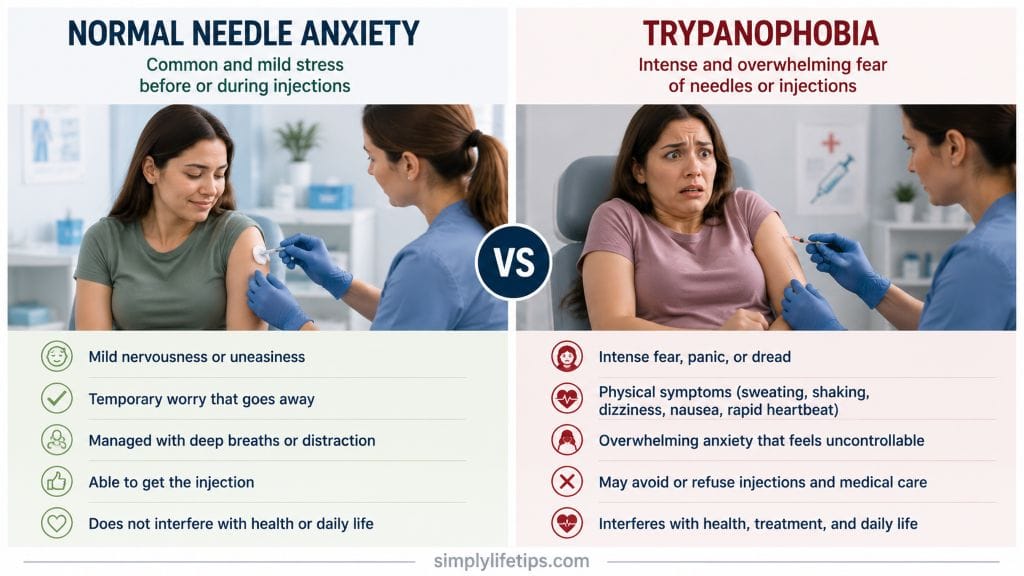
Understanding these differences can help you recognize when needle-related anxiety has become more than a temporary fear. If your anxiety causes you to avoid injections, blood tests, or other medical procedures, seeking professional support can help you overcome the fear and receive healthcare with greater confidence.
Feeling nervous before an injection is extremely common. Many people look away during a vaccination, tense their muscles, or feel a brief moment of discomfort. These reactions are a normal response to an unpleasant medical procedure and usually disappear once it’s over.
Trypanophobia is different. The fear is far more intense, lasts longer, and can prevent a person from receiving necessary medical care. Understanding the difference is important because many people assume their fear is “just nerves” when it may actually be a treatable phobia.
Normal Needle Anxiety
Most people experience some level of anxiety before a needle procedure. This anxiety is usually temporary and does not interfere with their ability to receive medical treatment.
Characteristics of normal needle anxiety include:
- Feeling uneasy before an injection or blood test
- Mild nervousness that improves after the procedure
- Temporary discomfort or fear of pain
- Willingness to proceed despite feeling anxious
- No significant impact on healthcare decisions
For example, someone may dislike getting a flu shot but still attend their vaccination appointment each year without avoiding it.
Trypanophobia
People with trypanophobia experience fear that is much stronger than the actual medical risk. The anxiety often begins well before the appointment and may continue for hours or even days.
Common characteristics include:
- Intense fear whenever needles are anticipated
- Panic attacks before or during medical procedures
- Severe physical symptoms such as shaking, dizziness, or fainting
- Avoiding vaccinations, blood tests, or injections
- Cancelling appointments because of fear
- Significant interference with personal health and daily life
The fear becomes a barrier to receiving essential medical care rather than a temporary feeling of discomfort.
Side-by-Side Comparison
| Normal Needle Anxiety | Trypanophobia |
|---|---|
| Mild or moderate nervousness | Intense, overwhelming fear |
| Anxiety ends soon after the procedure | Fear may begin days in advance and persist afterward |
| Medical procedures are completed despite discomfort | Medical care is often delayed or avoided |
| Little impact on everyday life | Can affect physical health and quality of life |
| Rarely causes panic or fainting | May trigger panic attacks or a vasovagal fainting response |
Why the Difference Matters?
Recognizing the difference helps people understand when professional support may be beneficial.
If fear causes someone to:
- Skip vaccinations
- Avoid blood tests
- Delay medical treatment
- Experience repeated panic attacks
- Faint during routine procedures
- Live with constant anxiety about future injections
then the problem extends beyond normal nervousness and may indicate trypanophobia.
Fortunately, effective treatments such as cognitive behavioral therapy (CBT), gradual exposure therapy, relaxation techniques, and applied tension exercises have helped many people overcome this fear.
Just as Aerophobia: Fear of Flying differs from the common nervousness many passengers feel before takeoff, trypanophobia is distinguished by its intensity, persistence, and impact on daily life. Understanding this distinction is an important first step toward seeking appropriate support and regaining confidence in medical care.
Complications of Untreated Trypanophobia
Many people believe they can simply avoid needles and continue with everyday life. However, untreated trypanophobia can have serious consequences for both physical and mental health. Because needles are an essential part of modern healthcare, avoiding them may lead to delayed diagnoses, missed treatments, and preventable health problems.
The longer the fear continues, the more likely it is to affect important medical decisions.
Delayed or Missed Medical Care
One of the most significant complications is avoiding routine healthcare.
People with trypanophobia may postpone or refuse:
- Vaccinations
- Blood tests
- Routine health screenings
- Intravenous (IV) treatments
- Allergy testing
- Medical procedures requiring injections
Skipping these services can delay the detection of health conditions and make treatment more difficult.
Undiagnosed Medical Conditions
Blood tests are used to diagnose and monitor many common illnesses.
Avoiding them may delay the identification of conditions such as:
- Diabetes
- High cholesterol
- Thyroid disorders
- Vitamin deficiencies
- Kidney disease
- Liver disease
- Certain infections
Early diagnosis often leads to better treatment outcomes, making regular testing an important part of preventive healthcare.
Poor Management of Chronic Diseases
Some chronic medical conditions require regular injections or blood monitoring.
For example:
- People with diabetes may struggle with insulin injections.
- Patients taking blood-thinning medication may avoid regular blood tests.
- Individuals receiving allergy immunotherapy may discontinue treatment.
- Cancer patients may experience additional stress during chemotherapy.
When treatment is delayed or interrupted, the underlying medical condition may worsen.
Increased Anxiety Over Time
Avoidance provides temporary relief but often strengthens the fear.
Each time a person cancels an appointment or postpones an injection, the brain learns that avoiding needles reduces anxiety. This reinforces the phobia, making future medical procedures feel even more frightening.
Over time, the fear may become stronger and harder to overcome without professional help.
Panic Attacks and Fainting
Some individuals develop increasingly severe physical reactions whenever they encounter needles.
Possible complications include:
- Panic attacks
- Hyperventilation
- Rapid heartbeat
- Vasovagal fainting
- Injuries caused by falling after losing consciousness
Although fainting itself is usually temporary, it can increase anxiety about future medical procedures and create a cycle of fear.
Emotional and Social Impact
Living with trypanophobia can also affect emotional well-being.
People may experience:
- Persistent worry before medical appointments
- Feelings of embarrassment about their fear
- Frustration over being unable to control their reactions
- Reduced confidence in handling healthcare situations
Some individuals avoid discussing their fear because they worry others will not understand or will dismiss it as an overreaction.
Public Health Consequences
Needle avoidance can affect not only individuals but also communities.
For example, avoiding recommended vaccinations may increase the risk of preventable infectious diseases. Similarly, delaying diagnostic testing can result in illnesses being discovered at a more advanced stage, when treatment may be more complex.
Reduced Quality of Life
Untreated trypanophobia can gradually limit a person’s ability to care for their health.
Simple medical procedures that most people complete in a few minutes may become major sources of stress. This ongoing anxiety can affect work, family life, travel plans, and overall well-being.
Fortunately, these complications are not inevitable. With appropriate treatment and coping strategies, many people overcome their fear of needles and regain confidence in receiving routine medical care. The next section explores the most effective treatment options available for trypanophobia.
Treatment Options for Trypanophobia
The good news is that trypanophobia is highly treatable. Many people who once avoided injections, blood tests, or vaccinations can receive medical care comfortably after learning effective coping strategies and, when necessary, working with a mental health professional.
Treatment depends on the severity of the phobia, its underlying cause, and whether it occurs alongside other anxiety disorders.
Cognitive Behavioral Therapy (CBT)
Cognitive Behavioral Therapy (CBT) is considered one of the most effective treatments for specific phobias, including trypanophobia.
CBT helps people identify and change unhelpful thoughts that contribute to their fear. For example, someone who believes, “Every injection will be unbearably painful,” learns to replace that thought with a more realistic perspective based on evidence and experience.
During CBT, a therapist may help you:
- Recognize negative thought patterns
- Challenge unrealistic beliefs about needles
- Learn healthier ways to respond to anxiety
- Build confidence through gradual practice
Many people notice significant improvement after several therapy sessions.
Exposure Therapy
Exposure therapy is considered one of the most effective treatments for trypanophobia. Rather than forcing someone to face their greatest fear all at once, it introduces needle-related situations gradually, allowing confidence to grow with each successful step. The illustration below shows how this process typically progresses.
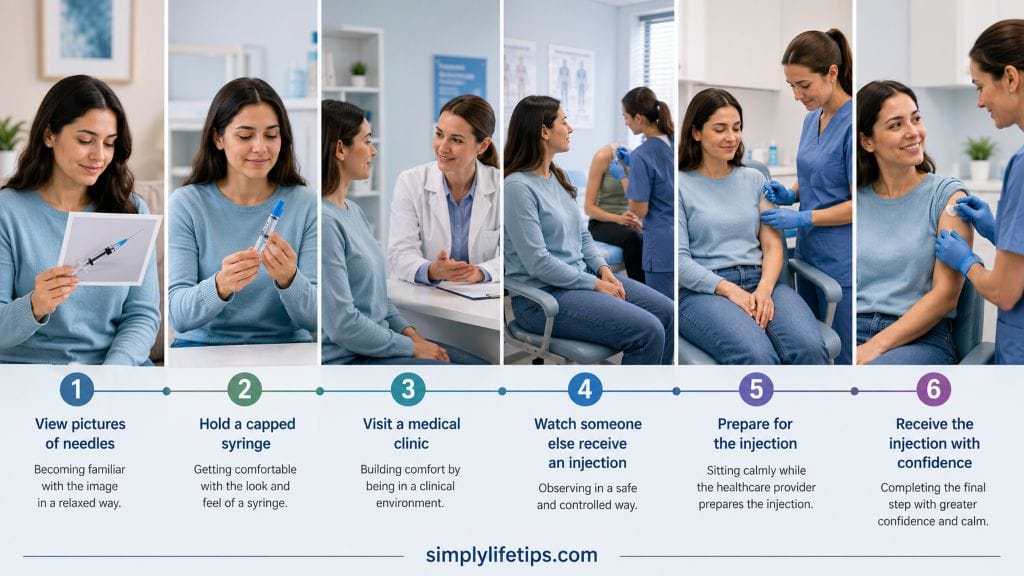
Each stage is completed only when the individual feels comfortable enough to move forward. Over time, repeated positive experiences help the brain recognize that needles are not as dangerous as previously believed, making medical procedures such as vaccinations and blood tests much easier to manage.
Exposure therapy is often used alongside CBT and is one of the most successful treatments for needle phobia.
Instead of forcing someone to face their greatest fear immediately, exposure therapy involves gradual, controlled exposure to needle-related situations.
A typical progression might include:
- Looking at pictures of syringes.
- Watching videos of injections.
- Holding a syringe without a needle.
- Visiting a clinic without having an injection.
- Watching someone else receive an injection.
- Receiving a simple vaccination or blood test.
Each step is completed only when the individual feels comfortable enough to move forward. Over time, the brain learns that needles are not as dangerous as previously believed, reducing the fear response.
Applied Tension Technique
People who experience dizziness or fainting because of a vasovagal response often benefit from the applied tension technique.
This method involves repeatedly tensing the muscles in the arms, legs, and torso for several seconds before relaxing them. The muscle contractions temporarily increase blood pressure, helping prevent fainting during injections or blood tests.
A healthcare professional or therapist can teach this technique and help determine when to use it.
Relaxation Techniques
Relaxation methods cannot eliminate trypanophobia on their own, but they can reduce physical symptoms of anxiety before and during medical procedures.
Helpful techniques include:
- Slow, deep breathing
- Progressive muscle relaxation
- Guided imagery
- Mindfulness meditation
- Listening to calming music while waiting
Practicing these techniques regularly can make them more effective during stressful situations.
Virtual Reality Therapy
Some mental health professionals use virtual reality (VR) exposure therapy to help people gradually face their fear in a safe environment.
Using a VR headset, patients can experience realistic medical settings and needle-related situations without actually receiving an injection. This approach may be particularly helpful for individuals with severe anxiety who are not yet ready for real-world exposure.
Medication
Medication is not usually the first treatment for trypanophobia, but it may be recommended in certain situations.
A healthcare provider may prescribe short-term medication when:
- Anxiety is extremely severe.
- A necessary medical procedure cannot be delayed.
- Panic attacks interfere with treatment.
Examples may include anti-anxiety medications or mild sedatives. These medications should only be taken under medical supervision and are generally used alongside therapy rather than as a long-term solution.
Pain-Reduction Strategies
Reducing discomfort during injections can help make the experience less stressful.
Healthcare providers may recommend:
- Numbing creams applied before the procedure
- Smaller needles when appropriate
- Distraction techniques
- Relaxed body positioning
- Lying down if there is a history of fainting
Even small changes can improve confidence and reduce anxiety during future procedures.
Support From Healthcare Professionals
Many doctors, nurses, and phlebotomists regularly care for patients with needle phobia.
Letting them know about your fear beforehand allows them to:
- Explain each step of the procedure
- Work at a comfortable pace
- Use calming communication
- Position you safely if fainting is a concern
- Provide reassurance throughout the process
Most healthcare professionals understand that trypanophobia is a genuine condition and will do their best to make the experience as comfortable as possible.
Treatment Success
With the right approach, many people experience significant improvement. Some overcome their fear completely, while others learn to manage it well enough to receive vaccinations, blood tests, and other medical care without overwhelming anxiety.
Recovery does not usually happen overnight, but consistent practice and professional support can lead to lasting results. Even individuals who have avoided needles for many years often find that their confidence grows with each successful experience.
Self-Help Strategies to Reduce Fear of Needles
Managing trypanophobia often begins with small, practical techniques that reduce anxiety before and during medical procedures. The infographic below summarizes several simple strategies that can help you stay calm and feel more in control when receiving an injection or having blood drawn.
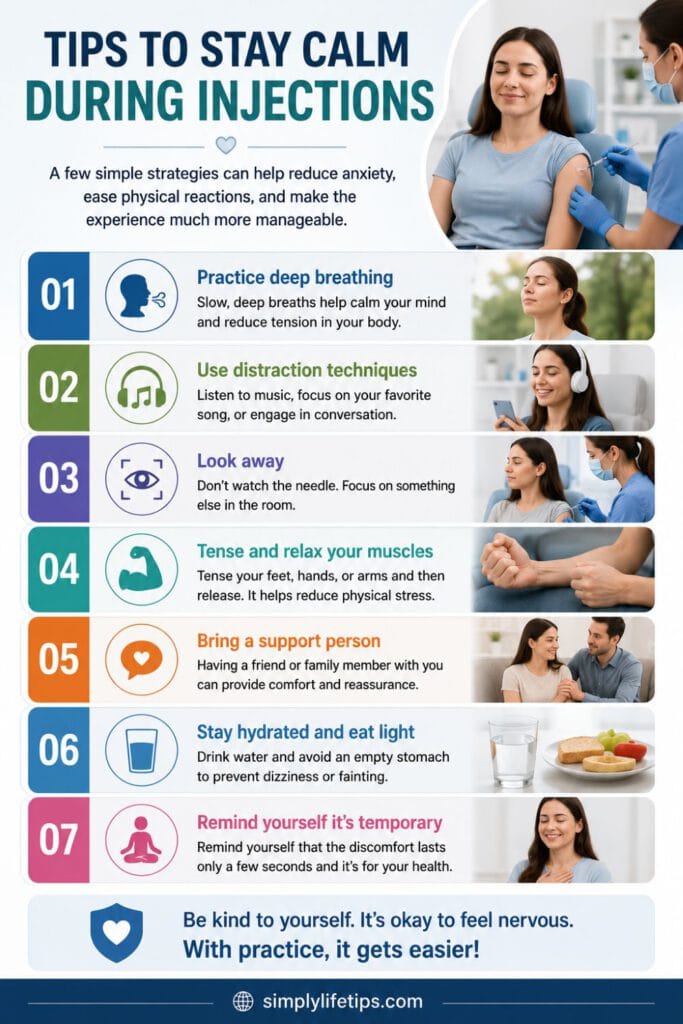
Not every technique works for everyone, so it may take some experimentation to find what helps you most. Combining these self-help strategies with guidance from a healthcare professional or therapist can make injections and other needle-related procedures much less intimidating over time.
Professional treatment is the most effective option for severe trypanophobia, but many people with mild to moderate needle fear can also benefit from practical self-help strategies. These techniques can reduce anxiety, improve confidence, and make medical procedures more manageable.
The key is to practice these strategies regularly rather than waiting until the day of an injection.
Learn About the Procedure
Fear often grows when the unknown feels threatening. Understanding what will happen during a vaccination, blood test, or injection can make the experience feel more predictable.
Consider asking your healthcare provider questions such as:
- Why is this injection necessary?
- How long will the procedure take?
- What will I feel?
- What can I do to stay relaxed?
Knowing what to expect can replace uncertainty with confidence.
Practice Deep Breathing
Slow, controlled breathing helps calm the body’s stress response.
A simple technique is:
- Inhale slowly through your nose for four seconds.
- Hold your breath for two seconds.
- Exhale gently through your mouth for six seconds.
- Repeat for several minutes.
This exercise may help lower anxiety before and during the procedure.
Use the Applied Tension Technique
If you have a history of dizziness or fainting, your healthcare provider may recommend the applied tension technique.
This involves:
- Tensing your leg, arm, and abdominal muscles for about 10 to 15 seconds.
- Relaxing for 20 to 30 seconds.
- Repeating the cycle several times before and during the procedure.
The technique helps maintain blood pressure and may reduce the risk of fainting.
Avoid Watching the Needle
Many people feel less anxious when they do not watch the injection.
Instead, try to:
- Look at a picture on the wall.
- Focus on an object across the room.
- Close your eyes if that feels more comfortable.
Reducing visual exposure can lessen anticipatory anxiety.
Bring a Trusted Companion
Having a family member or friend accompany you can provide emotional reassurance.
They can:
- Keep you engaged in conversation.
- Offer encouragement.
- Help distract you before the procedure.
- Support you if you feel lightheaded afterward.
Even knowing someone is there can make the experience feel less intimidating.
Use Healthy Distraction Techniques
Keeping your mind occupied can reduce your focus on the injection.
Effective distractions include:
- Listening to music or a podcast
- Counting backward from 100
- Solving simple mental puzzles
- Watching a video on your phone
- Talking with the healthcare provider
Distraction works best when it captures your attention before the needle is introduced.
Tell the Healthcare Professional About Your Fear
Many people feel embarrassed to admit they are afraid of needles, but healthcare professionals hear this concern every day.
Letting them know allows them to:
- Explain each step calmly.
- Give you extra time to relax.
- Help you lie down if you tend to faint.
- Use techniques that make the procedure more comfortable.
Open communication often reduces anxiety significantly.
Challenge Negative Thoughts
Trypanophobia is often fueled by catastrophic thinking.
For example, instead of thinking:
“I won’t be able to handle this.”
Replace it with:
“The injection will only last a few seconds, and I’ve prepared for it.”
Or instead of:
“Something terrible will happen.”
Think:
“Millions of people safely receive injections every day.”
Changing these thought patterns takes practice but can gradually reduce fear.
Reward Yourself Afterward
Give yourself something to look forward to after the procedure.
Examples include:
- Visiting your favorite café.
- Watching a movie.
- Reading a favorite book.
- Spending time with friends.
- Buying a small treat.
Positive reinforcement helps create more encouraging memories associated with medical visits.
Practice Gradual Exposure
Rather than avoiding needles completely, slowly increase your comfort level over time.
For example:
- Read about vaccinations.
- Look at pictures of syringes.
- Watch educational videos showing injections.
- Visit a clinic without receiving an injection.
- Schedule routine health checkups.
Gradual exposure allows your brain to learn that these situations are safe, reducing fear with repeated positive experiences.
Be Patient With Yourself
Overcoming trypanophobia is a gradual process. Some people notice improvement within weeks, while others require several months of practice or professional therapy.
Small successes matter. Each completed blood test, vaccination, or injection builds confidence and makes the next experience a little easier. Progress may not always be linear, but persistence and the right support can help most people significantly reduce their fear of needles.
Tips for Parents of Children With Needle Phobia
Many children feel nervous about injections, vaccinations, or blood tests. In most cases, this fear decreases as they grow older. However, some children develop intense anxiety that can make medical appointments stressful for both the child and their parents.
The way parents respond can have a significant impact on how children cope with needle-related procedures. Calm preparation, reassurance, and positive reinforcement often help children build confidence over time.
Be Honest About the Procedure
Avoid telling your child that an injection “won’t hurt at all” if they are likely to feel a brief pinch. If the experience doesn’t match what they were told, they may lose trust in future medical visits.
Instead, say something like:
- “You may feel a quick pinch, but it will be over in a few seconds.”
- “The nurse is helping to keep you healthy.”
Simple, truthful explanations are usually more reassuring than false promises.
Stay Calm Yourself
Children often look to their parents for cues about how to react.
If a parent appears anxious, repeatedly apologizes, or talks about how painful injections are, the child may become even more fearful.
Try to:
- Speak in a calm voice.
- Maintain a relaxed expression.
- Offer encouragement instead of showing worry.
Your confidence can help your child feel more secure.
Prepare Your Child in Advance
For planned vaccinations or blood tests, explain the appointment beforehand rather than surprising your child at the last minute.
You can discuss:
- Why the injection is needed.
- What will happen during the visit.
- How long it will take.
- What your child can expect afterward.
Reading age-appropriate books or watching educational videos about doctor visits can also help reduce uncertainty.
Use Distraction Techniques
Keeping a child’s attention focused elsewhere can make the procedure feel less overwhelming.
Helpful distractions include:
- Talking about a favorite hobby.
- Watching a cartoon on a phone or tablet.
- Listening to music.
- Blowing bubbles.
- Holding a favorite toy or stuffed animal.
- Playing simple counting games.
The goal is not to ignore the procedure but to shift attention away from the needle.
Praise Brave Behavior
Positive reinforcement encourages children to face future medical procedures with greater confidence.
After the appointment, praise their effort rather than focusing only on whether they cried.
For example:
- “You stayed very still.”
- “You were really brave today.”
- “I’m proud of how you handled that.”
Consider rewarding younger children with a sticker, extra playtime, or another small treat to create a positive association with the experience.
Avoid Using Needles as a Threat
Parents should never use injections as a form of discipline.
Statements such as:
- “If you don’t behave, the doctor will give you a shot.”
can increase fear and make future medical visits much more stressful.
Instead, present healthcare professionals as trusted helpers who work to keep people healthy.
Tell the Healthcare Provider About Your Child’s Fear
Doctors and nurses are experienced in helping anxious children.
Inform them if your child:
- Has severe needle anxiety.
- Has fainted before.
- Needs extra reassurance.
- Responds well to certain distraction techniques.
This allows the healthcare team to adapt their approach and provide a more comfortable experience.
Know When Professional Help Is Needed
If your child’s fear becomes severe, professional support may be beneficial.
Consider consulting a mental health professional if your child:
- Refuses essential vaccinations or blood tests.
- Experiences panic attacks before appointments.
- Has persistent nightmares about injections.
- Avoids healthcare because of needle fear.
- Continues to have intense anxiety for many months.
Early intervention can prevent the fear from becoming a long-term phobia that continues into adulthood.
Encourage Healthy Coping Skills
Help your child practice coping techniques such as:
- Slow breathing exercises.
- Positive self-talk.
- Relaxation methods.
- Gradual exposure to medical settings.
These skills can be useful not only for needle-related fears but also for managing anxiety in other situations throughout life.
With patience, understanding, and consistent support, many children gradually become more comfortable with injections and blood tests. Even if progress is slow, each positive medical experience helps build resilience and reduces fear over time.
Seek Professional Help
Feeling nervous before an injection is common and usually doesn’t require treatment. However, if the fear becomes so intense that it interferes with medical care or daily life, it’s important to seek professional help. Trypanophobia is a recognized anxiety disorder, and effective treatments are available.
Reaching out for support is not a sign of weakness. It is a proactive step toward protecting both your physical and mental health.
Signs You Should See a Professional
Consider consulting a healthcare provider or mental health professional if you:
- Avoid vaccinations because of fear.
- Postpone or refuse blood tests.
- Cancel medical appointments involving needles.
- Experience panic attacks before or during injections.
- Faint regularly during blood tests or vaccinations.
- Feel anxious for days or weeks before a medical procedure.
- Find that your fear is affecting your work, education, or family life.
If your fear prevents you from receiving recommended medical care, professional treatment is likely to be beneficial.
Who Can Help?
Several healthcare professionals can assist in treating trypanophobia, depending on the severity of the condition.
These may include:
- Primary care physicians, who can assess your symptoms and recommend appropriate treatment.
- Psychologists, who provide therapies such as cognitive behavioral therapy (CBT) and exposure therapy.
- Psychiatrists, who can diagnose anxiety disorders and prescribe medication when necessary.
- Licensed therapists or counselors, who specialize in anxiety and phobia treatment.
Your healthcare provider can help determine which option is most suitable for your situation.
What to Expect During Treatment?
Many people worry that treatment will involve immediately facing their fear. In reality, therapy is typically gradual and tailored to your comfort level.
Treatment may include:
- Discussing your previous experiences with needles.
- Identifying specific triggers.
- Learning coping and relaxation techniques.
- Gradually building confidence through controlled exposure.
- Practicing strategies to reduce anxiety during medical procedures.
The pace of treatment is adjusted to your individual needs, allowing you to progress step by step.
Don’t Wait Until It Becomes a Health Problem
Delaying treatment for trypanophobia can have serious consequences. Avoiding routine healthcare may lead to missed vaccinations, delayed diagnoses, or untreated medical conditions.
Seeking help early can:
- Improve your confidence during medical procedures.
- Reduce anxiety before appointments.
- Make routine healthcare easier to manage.
- Prevent the fear from becoming more deeply ingrained over time.
Addressing the problem sooner often leads to better outcomes and less disruption to your overall health.
Recovery Is Possible
Many people who once avoided needles entirely are now able to receive vaccinations, blood tests, and other medical treatments with little or no distress. Recovery may involve gradual progress rather than immediate change, but consistent effort and appropriate support can make a significant difference.
If your fear of needles is preventing you from getting the healthcare you need, don’t hesitate to speak with a qualified healthcare professional. Effective treatments are available, and taking the first step today can lead to greater confidence and better health in the future.
By now, you’ve learned what trypanophobia is, why it develops, and the treatments and coping strategies that can help. Before we wrap up, here’s a quick visual summary of the most important steps you can take to overcome a fear of needles and approach future medical procedures with greater confidence.
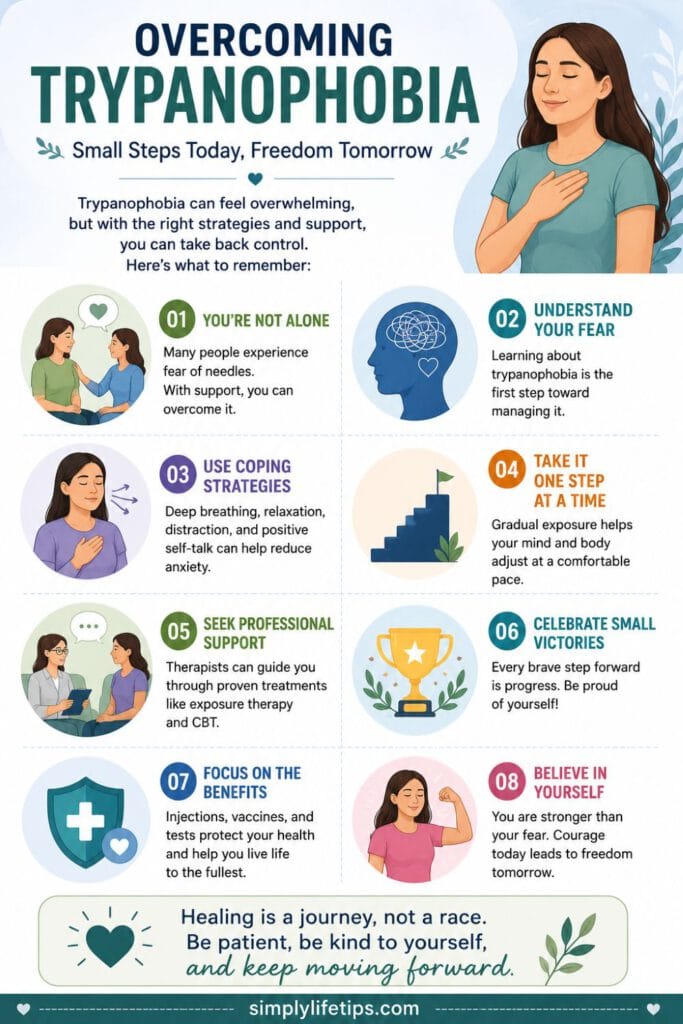
Remember that overcoming trypanophobia is a gradual journey rather than an overnight change. Every successful experience—whether it’s scheduling a vaccination, completing a blood test, or simply feeling less anxious than before—is meaningful progress. With patience, practice, and the right support, most people can significantly reduce their fear and receive the medical care they need.
Conclusion
Trypanophobia is more than simply disliking injections. It is an intense fear of needles that can interfere with routine healthcare, vaccinations, blood tests, and even life-saving medical treatments. While the fear may feel overwhelming, it is a recognized and treatable condition.
Understanding the symptoms, causes, and risk factors is the first step toward overcoming trypanophobia. Whether the fear developed after a painful childhood experience, a traumatic medical procedure, or a vasovagal fainting response, effective treatments such as cognitive behavioral therapy, exposure therapy, applied tension techniques, and relaxation strategies have helped many people regain control.
If you or someone you know avoids medical care because of a fear of needles, remember that help is available. Speaking openly with healthcare professionals and seeking appropriate support can make routine procedures far less stressful. With patience, practice, and the right guidance, it is possible to reduce anxiety, build confidence, and receive the medical care needed for a healthier future.
If you’re interested in learning about other specific phobias and how they affect mental health, explore our comprehensive guide on Phobias Explained, where you’ll find information on their causes, symptoms, and evidence-based treatment approaches.
Trypanophobia Motivational Quote
Overcoming trypanophobia doesn’t happen overnight, but every positive experience is a step toward greater confidence. If you’re working through a fear of needles, remember that progress comes from persistence, patience, and self-compassion.

Whether your next step is scheduling a vaccination, completing a blood test, or simply learning more about your fear, each small success builds resilience. With the right support and coping strategies, many people overcome needle phobia and regain confidence in their healthcare journey.
Frequently Asked Questions
Is trypanophobia a real medical condition?
Yes. Trypanophobia is a recognized specific phobia characterized by an intense and persistent fear of needles or injections. It can significantly affect a person’s willingness to receive medical care.
What causes trypanophobia?
Common causes include painful childhood injections, traumatic medical experiences, fear of pain, a vasovagal fainting response, learned behavior from family members, and underlying anxiety disorders. In many cases, several factors contribute to the development of the phobia.
Can trypanophobia be cured?
Many people successfully overcome or greatly reduce their fear through treatments such as cognitive behavioral therapy (CBT), exposure therapy, applied tension techniques, and relaxation exercises. The success of treatment depends on the individual’s circumstances and commitment to the process.
Why do some people faint when they see a needle?
Some individuals experience a vasovagal response, where blood pressure and heart rate suddenly drop after seeing a needle or blood. This temporary reduction in blood flow to the brain can cause dizziness or fainting.
How can I stay calm during an injection?
Helpful strategies include practicing slow breathing, looking away from the needle, using distraction techniques, informing the healthcare provider about your fear, and using the applied tension technique if you have a history of fainting.
References
- Diagnostic and Statistical Manual of Mental Disorders, Fifth Edition, Text Revision (DSM-5-TR)
- National Institute of Mental Health (NIMH). Anxiety Disorders.
- Mayo Clinic. Specific Phobias.
- Cleveland Clinic. Needle Phobia (Trypanophobia).
- NHS. Phobias.

Mathukutty P. V. is the founder of Simply Life Tips. He shares practical advice and useful insights on personal growth, health, well-being, technology, and everyday living. His goal is to help readers build positive habits and make informed decisions. He believes in continuous learning and sharing knowledge to help people live healthier, happier, and more meaningful lives.