

Mental fatigue symptoms can affect more than your ability to concentrate. They may interfere with memory, decision-making, emotional balance and everyday activities. Have you ever read the same paragraph several times without understanding it, forgotten why you entered a room, or felt mentally exhausted even after a full night’s sleep?
These experiences may be associated with mental fatigue, a state of cognitive tiredness that can develop after prolonged mental effort, stress, inadequate sleep or other health problems.
Some people also experience brain fog, a general term used to describe problems with concentration, memory and clear thinking. Brain fog is not a medical diagnosis, and persistent symptoms deserve proper attention.
Let’s explore 10 common warning signs of mental fatigue, their possible causes and practical ways to improve mental well-being.
What Is Mental Fatigue?
Mental fatigue is a state of mental exhaustion in which thinking, concentrating, remembering information and making decisions become more difficult than usual.
It can develop when the brain has to manage continuous mental demands without sufficient rest.
For example:
- A student preparing for examinations for several hours may struggle to remember what they have studied.
- An employee handling multiple deadlines may find it difficult to concentrate on simple tasks.
- A person dealing with prolonged family or financial stress may feel mentally drained even without doing physically demanding work.
Mental fatigue is not the same as physical tiredness. However, the two can occur together.
10 Common Mental Fatigue Symptoms
Recognising mental fatigue symptoms early can help you identify possible lifestyle problems and seek medical advice when necessary.
1. Frequent Forgetfulness
One of the noticeable signs of mental fatigue is difficulty remembering everyday information.
You may forget where you placed your keys, struggle to recall familiar names or lose track of something you intended to do.
Example: You enter the kitchen to get a glass of water but suddenly cannot remember what you went there for.
Occasional forgetfulness is normal. However, repeated memory problems may be associated with poor sleep, stress, medication effects or other health conditions.
2. Difficulty Concentrating
Do you find it difficult to focus on a book, conversation or work assignment?
Poor concentration is another common experience associated with mental exhaustion.
You may become distracted by small noises, repeatedly check your phone or struggle to finish tasks that previously seemed easy.
Example: You spend 30 minutes reading a two-page article because your attention keeps wandering.
Taking short breaks, reducing distractions and getting sufficient sleep may help improve concentration.
3. Difficulty Making Decisions
Mental fatigue can make even ordinary decisions feel overwhelming.
You may spend too much time deciding what to cook, which task to complete first or how to respond to a simple message.
This may happen because prolonged mental effort and stress make it harder to evaluate information and prioritise choices.
Example: You spend several minutes deciding which household task to start, even though both options are straightforward.
Creating a daily priority list can reduce unnecessary decision-making.
4. Slow Thinking and Mental Processing
Another possible sign is feeling that your thoughts are moving more slowly than usual.
You may need additional time to understand instructions, process information or respond during conversations.
Example: During a meeting, you understand a question only after other people have already started discussing the answer.
Sleep deprivation, stress and certain medical conditions can affect mental processing speed.
If this change is sudden or severe, seek immediate medical attention.
5. Increased Irritability and Emotional Sensitivity
Mental exhaustion can affect emotional regulation.
You may become impatient, frustrated or unusually sensitive to minor problems.
Example: A small mistake made by a family member may cause an unexpectedly strong emotional reaction.
Poor sleep, prolonged stress and anxiety can contribute to irritability. Learning relaxation techniques and maintaining healthy routines may help.
6. Feeling Tired Despite Getting Enough Sleep
Do you wake up feeling exhausted even after spending seven or eight hours in bed?
Persistent tiredness may indicate poor sleep quality rather than simply insufficient sleep.
Possible causes include sleep apnoea, frequent nighttime awakenings, stress and certain medical conditions.
Example: Someone who snores loudly and wakes up repeatedly may feel mentally exhausted throughout the following day.
If you regularly wake up tired, especially with loud snoring or gasping during sleep, discuss it with a healthcare professional.
7. Difficulty Managing Multiple Tasks
Mental fatigue can reduce your ability to switch between tasks efficiently.
Activities that previously seemed manageable may begin to feel overwhelming.
Example: While preparing dinner and answering work messages, you forget an important step in the recipe or lose track of the conversation.
Instead of multitasking continuously, try completing one important task at a time.
8. Difficulty Finding the Right Words
Some people experiencing mental fatigue or brain fog struggle to recall familiar words during conversations.
You may know what you want to say but find it difficult to express the thought immediately.
Example: You are talking about a familiar household object but cannot remember its name for a few seconds.
Occasional word-finding difficulty can happen to anyone. However, new, persistent or worsening language problems should be medically evaluated.
Sudden difficulty speaking or understanding speech is an emergency warning sign of stroke.
9. Feeling Mentally Exhausted After Simple Activities
Mental fatigue may make ordinary thinking activities feel unusually demanding.
Reading, studying, planning or solving simple problems may leave you feeling drained.
Example: After reading a few pages of a book or completing a short online form, you feel as though you have worked for several hours.
Taking regular breaks and gradually managing your workload may help. Persistent or disproportionate fatigue requires medical assessment.
10. Losing Interest in Activities You Previously Enjoyed
Another possible warning sign is a noticeable reduction in motivation and interest.
You may stop enjoying hobbies, avoid social activities or struggle to find enthusiasm for everyday responsibilities.
Example: Someone who previously enjoyed gardening, reading or meeting friends may begin avoiding these activities because everything feels exhausting.
Loss of interest can also be a symptom of depression. If it continues, especially alongside persistent sadness or changes in sleep and appetite, seek professional support.
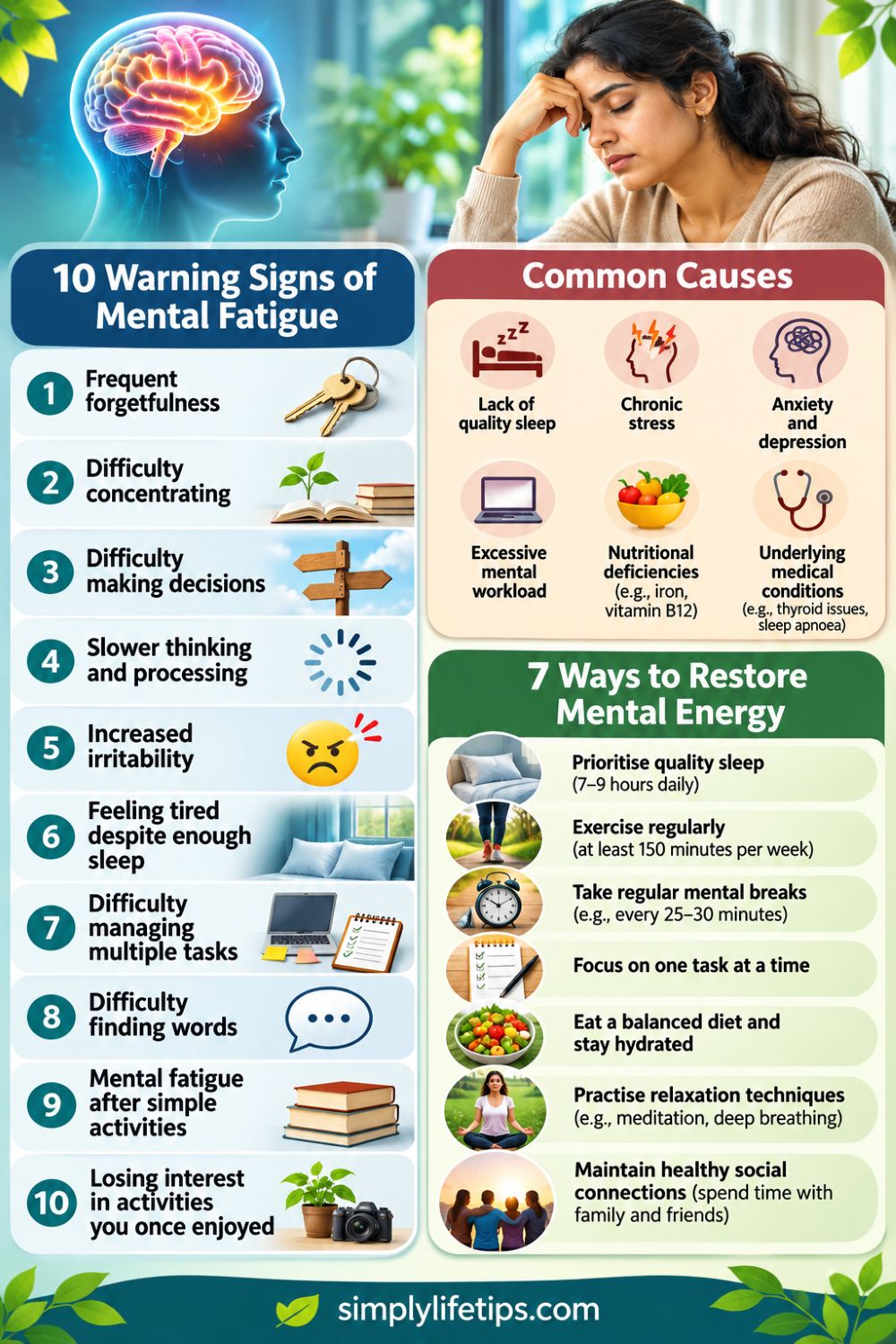
What Causes Mental Fatigue?
Mental fatigue does not have one single cause. It can develop because of lifestyle factors, emotional difficulties, sleep disorders or underlying medical conditions.
Understanding the possible causes is important because the right approach depends on what is contributing to the symptoms.
1. Lack of Quality Sleep
Sleep is essential for memory, attention, learning and emotional regulation. Regularly sleeping too little or experiencing disturbed sleep can affect how effectively you think and concentrate.
For example, someone who stays awake late watching videos or working on a computer may struggle with concentration the following morning.
Most adults need at least seven hours of sleep each night, although individual requirements vary. CDC+1
2. Chronic Stress
Prolonged stress can place considerable demands on your mental and emotional resources.
Work pressure, financial worries, family responsibilities and relationship problems may contribute to poor concentration, irritability and disturbed sleep.
For example, someone constantly worrying about work deadlines may find it difficult to relax even during weekends.
Read our guide on Stress Management: 10 Techniques to Build Resilience for practical ways to manage everyday stress.
3. Anxiety and Depression
Anxiety can make it difficult to concentrate because the mind remains occupied with worries and possible problems.
Depression may also affect motivation, memory, energy levels and interest in everyday activities.
For example, someone experiencing anxiety may repeatedly think about an upcoming meeting instead of concentrating on the task in front of them.
Persistent symptoms deserve professional attention rather than being dismissed as ordinary tiredness.
4. Excessive Mental Workload
Continuous studying, multitasking, long working hours and excessive screen use can contribute to mental exhaustion.
For example, an employee who spends eight hours switching between emails, meetings, reports and phone calls may feel mentally drained by the end of the day.
Regular breaks and realistic workloads can help reduce unnecessary mental strain.
5. Nutritional Deficiencies
Certain nutritional deficiencies can contribute to fatigue and cognitive difficulties.
Examples include:
- Iron deficiency anaemia
- Vitamin B12 deficiency
- Other nutritional deficiencies affecting normal body function
A balanced diet supports general health, but supplements should not be taken unnecessarily. If a deficiency is suspected, a healthcare professional can recommend appropriate testing and treatment.
6. Underlying Medical Conditions
Some medical conditions can cause persistent tiredness, poor concentration and mental fog.
Examples include:
- Thyroid disorders
- Diabetes
- Sleep apnoea
- Chronic fatigue syndrome (ME/CFS)
- Certain infections
- Medication side effects
According to the NHS, persistent fatigue can have several possible causes, and medical assessment may include blood tests to investigate conditions such as anaemia, diabetes and thyroid disorders. NHS+1
7 Practical Ways to Overcome Mental Fatigue
Although mental fatigue cannot always be prevented, healthy lifestyle habits may help reduce its impact and support better cognitive well-being.
Here are seven practical strategies to consider.
1. Prioritise Quality Sleep
Make sleep a regular part of your health routine.
Try these habits:
- Maintain a consistent bedtime and wake-up time.
- Keep your bedroom quiet and comfortable.
- Avoid excessive screen use before bedtime.
- Limit caffeine late in the day.
- Avoid working late into the night whenever possible.
For example, instead of scrolling through social media until midnight, spend the final 30 minutes before bed reading or relaxing.
Aim for at least seven hours of sleep if you are an adult, adjusting according to your individual needs. CDC
2. Exercise Regularly
Physical activity supports cardiovascular health, sleep, mood and overall well-being.
You do not need an expensive gym membership to become more active.
Try:
- Walking for 20–30 minutes.
- Cycling.
- Swimming.
- Yoga.
- Dancing.
- Gardening.
For example, taking a short walk after lunch can provide a refreshing break from prolonged desk work.
WHO recommends that adults aim for 150–300 minutes of moderate-intensity aerobic physical activity each week. NCBI Bookshelf+1
You can also explore our article on How to Improve Brain Health: 9 Simple Habits.
3. Take Regular Mental Breaks
Your brain needs opportunities to recover from prolonged mental effort.
Working continuously without breaks can make it harder to maintain attention and productivity.
Try a simple approach:
- Work with full concentration for 25–30 minutes.
- Take a short break.
- Stretch or walk around.
- Drink some water.
- Return to the task when you feel ready.
For example, a student preparing for an examination can study one topic, take a short break and then move to the next topic.
The goal is to maintain sustainable concentration rather than forcing yourself to work continuously.
4. Focus on One Task at a Time
Constantly switching between activities can increase mental workload.
Instead of checking emails while attending an online meeting and replying to messages, concentrate on one important activity at a time.
For example, create three priority tasks every morning and complete them in order.
This simple habit can reduce unnecessary distractions and make daily responsibilities easier to manage.
5. Eat a Balanced Diet and Stay Hydrated
Your brain needs a regular supply of nutrients and energy to function properly.
Include a variety of nutritious foods in your daily meals.
| Food | Nutritional benefits |
|---|---|
| Green leafy vegetables | Folate and other micronutrients |
| Eggs | Protein and vitamin B12 |
| Fish | Protein and, in oily fish, omega-3 fats |
| Nuts and seeds | Healthy fats and minerals |
| Fruits | Vitamins, minerals and fibre |
| Whole grains | Fibre and energy |
Drink enough water throughout the day, particularly in hot weather or when physically active.
For example, instead of relying on sugary drinks when feeling tired, choose water and a balanced snack.
Remember that no single food can cure mental fatigue. A varied, balanced eating pattern is more important.
6. Practise Relaxation Techniques
Mental relaxation can help you manage everyday stress and improve emotional well-being.
Consider:
- Deep breathing exercises.
- Meditation.
- Yoga.
- Listening to music.
- Spending time outdoors.
- Practising mindfulness.
For example, spend five minutes sitting quietly and concentrating on your breathing after a stressful working day.
These activities are not substitutes for medical treatment when a health condition is responsible for persistent symptoms.
7. Maintain Healthy Social Connections
Meaningful relationships can support emotional well-being and help reduce feelings of isolation.
Make time for family members, friends and people who make you feel comfortable.
For example, having a relaxed conversation with a friend, going for a walk with a family member or participating in a community activity can provide a welcome break from daily pressures.
Social connection is an important part of overall mental wellness.
When Should You See a Doctor?
Occasional forgetfulness or tiredness does not necessarily indicate a serious health problem.
However, consult a healthcare professional if mental fatigue symptoms:
- Continue for several weeks without improvement.
- Gradually become worse.
- Interfere with work, studies or household activities.
- Affect memory or communication significantly.
- Occur alongside persistent mood changes.
- Are accompanied by unexplained physical tiredness or other symptoms.
A doctor may review your sleep habits, medical history, medications and lifestyle. Depending on your symptoms, investigations may include blood tests or an assessment for sleep disorders and other medical conditions.
The important thing is to identify the underlying cause rather than assuming that every memory problem is simply mental fatigue.
Important: Recognise Sudden Stroke Symptoms
Medical emergency
Sudden confusion, difficulty speaking or understanding speech, facial drooping, weakness on one side of the body, sudden vision problems or loss of balance may indicate a stroke.
Remember B.E. F.A.S.T.:
- B – Balance: Sudden loss of balance.
- E – Eyes: Sudden vision changes.
- F – Face: One side of the face droops.
- A – Arms: Sudden weakness in an arm.
- S – Speech: Slurred speech or difficulty speaking.
- T – Time: Seek emergency medical help immediately.
Do not assume these symptoms are ordinary mental fatigue. Do not wait for them to disappear. CDC+1
Read our related article: Brain Stroke Symptoms: Why Every Minute Counts.
Conclusion
Mental fatigue symptoms can affect how you think, remember, concentrate, make decisions and respond emotionally to everyday situations.
However, feeling mentally exhausted does not automatically mean that your brain is damaged or that you have a neurological disease.
Poor sleep, prolonged stress, excessive workload and several medical conditions can contribute to these experiences.
The first step is to recognise the changes and understand what might be causing them.
Prioritise sleep, eat nutritious food, stay physically active, take regular breaks and make time for relaxation. If symptoms persist or interfere with daily life, seek professional medical advice.
Your brain works hard every day. It deserves proper care, not endless pressure.
Are you experiencing any of these mental fatigue symptoms? Which healthy habit could you start today to give your mind more rest?
Frequently Asked Questions About Mental Fatigue
1. What are the most common symptoms of mental fatigue?
Common symptoms include forgetfulness, poor concentration, difficulty making decisions, slow thinking, irritability, mental exhaustion and reduced motivation.
2. What is the difference between mental fatigue and brain fog?
Mental fatigue generally describes cognitive tiredness following prolonged mental effort or other contributing factors. Brain fog describes experiences such as difficulty concentrating, forgetfulness and unclear thinking. The terms overlap, but they are not identical medical diagnoses. Cleveland Clinic
3. Can lack of sleep cause mental fatigue?
Yes. Insufficient or poor-quality sleep can affect attention, memory, mood and thinking. Improving sleep habits may help, but persistent tiredness should be medically assessed.
4. How can I reduce mental fatigue naturally?
Regular sleep, physical activity, balanced nutrition, hydration, relaxation, social interaction and taking breaks can support mental well-being. The best approach depends on the underlying cause.
5. When is mental fatigue a sign of a serious health problem?
Persistent or worsening symptoms, significant memory changes and difficulties with everyday activities require medical evaluation. Sudden speech difficulty, facial drooping or one-sided weakness may indicate a stroke and require immediate emergency care.
References
These three authoritative sources support the medical information in this article.
- Cleveland Clinic: Brain Fog – Symptoms, Causes and Treatment
- NHS: Tiredness and Fatigue – Causes and When to Seek Help
- CDC: Signs and Symptoms of Stroke
Medical disclaimer: This article is for educational purposes only. It does not replace professional medical advice, diagnosis or treatment.
Content Inspiration: This article was inspired by health information shared by Dr. Arun OOmmen, Neurosurgeon in Facebook Post. The content has been independently rewritten, adapted and expanded in English for Simply Life Tips.

Mathukutty P. V. is the founder of Simply Life Tips. He shares practical advice and useful insights on personal growth, health, well-being, technology, and everyday living. His goal is to help readers build positive habits and make informed decisions. He believes in continuous learning and sharing knowledge to help people live healthier, happier, and more meaningful lives.