
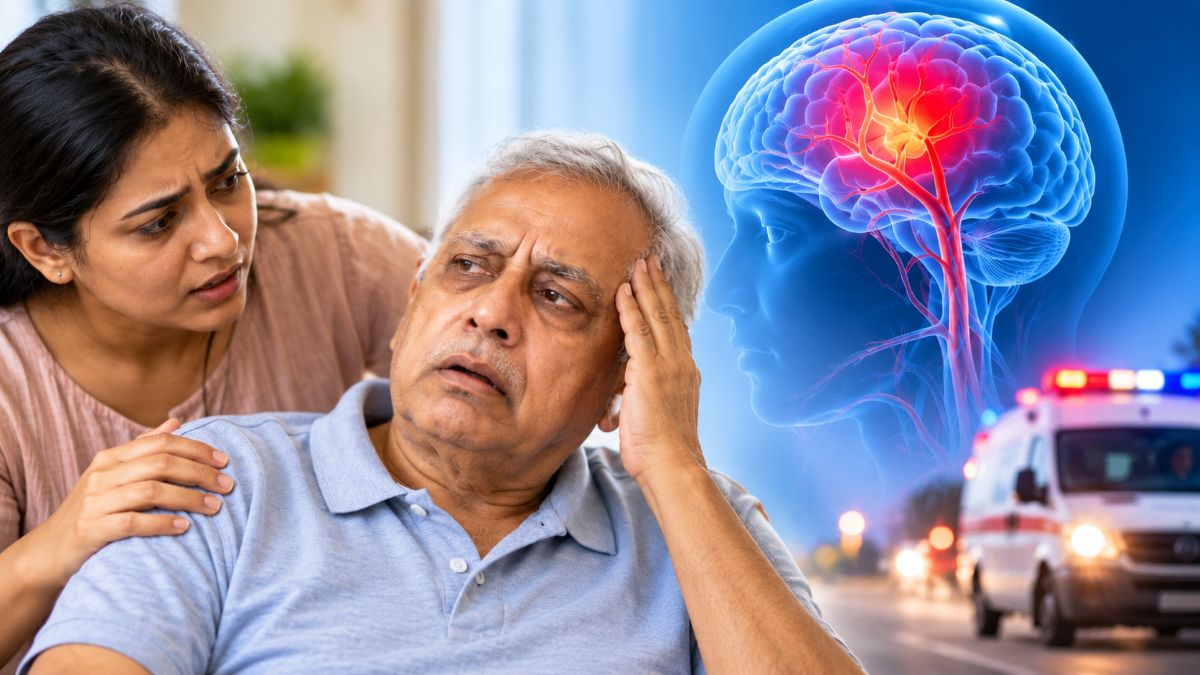
Brain stroke symptoms can appear suddenly, and recognising them early may help save a life. A person who seems perfectly normal in the morning may suddenly struggle to speak, lose balance, or become unable to move one side of the body. What looks like tiredness or temporary weakness could be a medical emergency.
Imagine someone saying, “My father’s speech sounded different this morning, but we thought he was just tired. By evening, he could no longer move his right arm properly.”
Sadly, situations like this can happen when stroke warning signs are missed or medical care is delayed.
A stroke is a medical emergency. The faster a person receives appropriate treatment, the better the chance of limiting brain damage and improving recovery.
Every year, World Stroke Day is observed on October 29 to raise awareness about stroke prevention, recognition, and treatment. The message is simple: every minute matters when someone has a stroke.
For more information about maintaining brain health, read our guide on how to protect your brain.
What Are Brain Stroke Symptoms and Causes?
A stroke happens when the blood supply to part of the brain is interrupted or a blood vessel in the brain bursts. Brain cells need a continuous supply of oxygen and nutrients through the blood. When that supply is interrupted, brain cells can begin to die.
According to the American Stroke Association’s explanation of stroke, there are different types of stroke, and each requires appropriate medical assessment and treatment.
1. Ischaemic stroke
An ischaemic stroke occurs when a blood clot blocks a blood vessel supplying the brain. This is the most common type of stroke.
2. Haemorrhagic stroke
A haemorrhagic stroke occurs when a blood vessel in the brain breaks and causes bleeding. The bleeding can damage nearby brain tissue and increase pressure inside the skull.
Both types require urgent medical assessment. Doctors use brain imaging and other tests to determine the type of stroke and select the appropriate treatment.
Although ischaemic and haemorrhagic strokes have different causes, both can produce brain stroke symptoms that require immediate medical attention.
Why Does Every Minute Count During a Stroke?
The brain controls many essential functions, including speaking, walking, seeing, thinking, and moving our arms and legs.
When blood flow to part of the brain stops, the affected brain cells do not receive enough oxygen. The longer the interruption continues, the greater the risk of permanent damage.
The US Centers for Disease Control and Prevention (CDC) explains why recognising stroke symptoms quickly and getting emergency treatment are essential.
A delay in treatment may affect a person’s ability to:
- Speak clearly and understand others.
- Walk independently and maintain balance.
- Move an arm or leg normally.
- Swallow food and drinks safely.
- Carry out everyday activities without assistance.
Not every stroke causes the same degree of damage. Some people recover well, while others need long-term rehabilitation and support.
The important point is that a suspected stroke must never be treated as a wait-and-see situation.
The most common brain stroke symptoms include sudden weakness, facial drooping, speech difficulties, vision changes, and loss of balance.
Brain Stroke Symptoms: Remember BE FAST
One of the easiest ways to recognise the warning signs of a stroke is to remember BE FAST. Each letter reminds us of a possible symptom that needs urgent attention.
The American Stroke Association’s BE FAST guide provides further information about these warning signs.
B — Balance: Sudden loss of balance
A person may suddenly become unsteady, struggle to walk, feel dizzy, or lose coordination.
For example, someone who was walking normally a moment ago may suddenly stumble or be unable to stand properly.
E — Eyes: Sudden vision problems
Stroke can cause sudden blurred vision, loss of vision in one or both eyes, or double vision.
Do not assume that sudden vision changes are simply due to tiredness or an existing eyesight problem.
F — Face: One side of the face droops
Ask the person to smile. Does one side of the face look uneven? Is one corner of the mouth drooping?
This may be a sign of weakness affecting the facial muscles.
A — Arms: Sudden weakness in an arm
Ask the person to raise both arms. Does one arm drift downward, or is the person unable to lift it?
Sudden weakness or numbness, especially on one side of the body, can be a stroke warning sign.
S — Speech: Trouble speaking or understanding
The person’s speech may suddenly become unclear, slurred, or confusing. They may struggle to find the right words or have difficulty understanding what others say.
A sudden change in speech should never be ignored, even if the person appears otherwise well.
T — Time: Get emergency medical help
If you notice any of these symptoms, call an ambulance immediately. In India, call 112 for emergency assistance or 108 where ambulance services are available.
Do not wait for all the symptoms to appear. Even one sudden warning sign can indicate a stroke.
A sudden, unusually severe headache may also indicate a serious brain emergency, particularly when it occurs with other neurological symptoms.
Recognising the warning signs of a stroke can help you act quickly when every minute matters. Remember BE FAST: Balance, Eyes, Face, Arms, Speech, and Time. Even one sudden warning sign may indicate a stroke and requires urgent medical attention.
The infographic below summarises these warning signs so you can remember them easily and share them with your family.
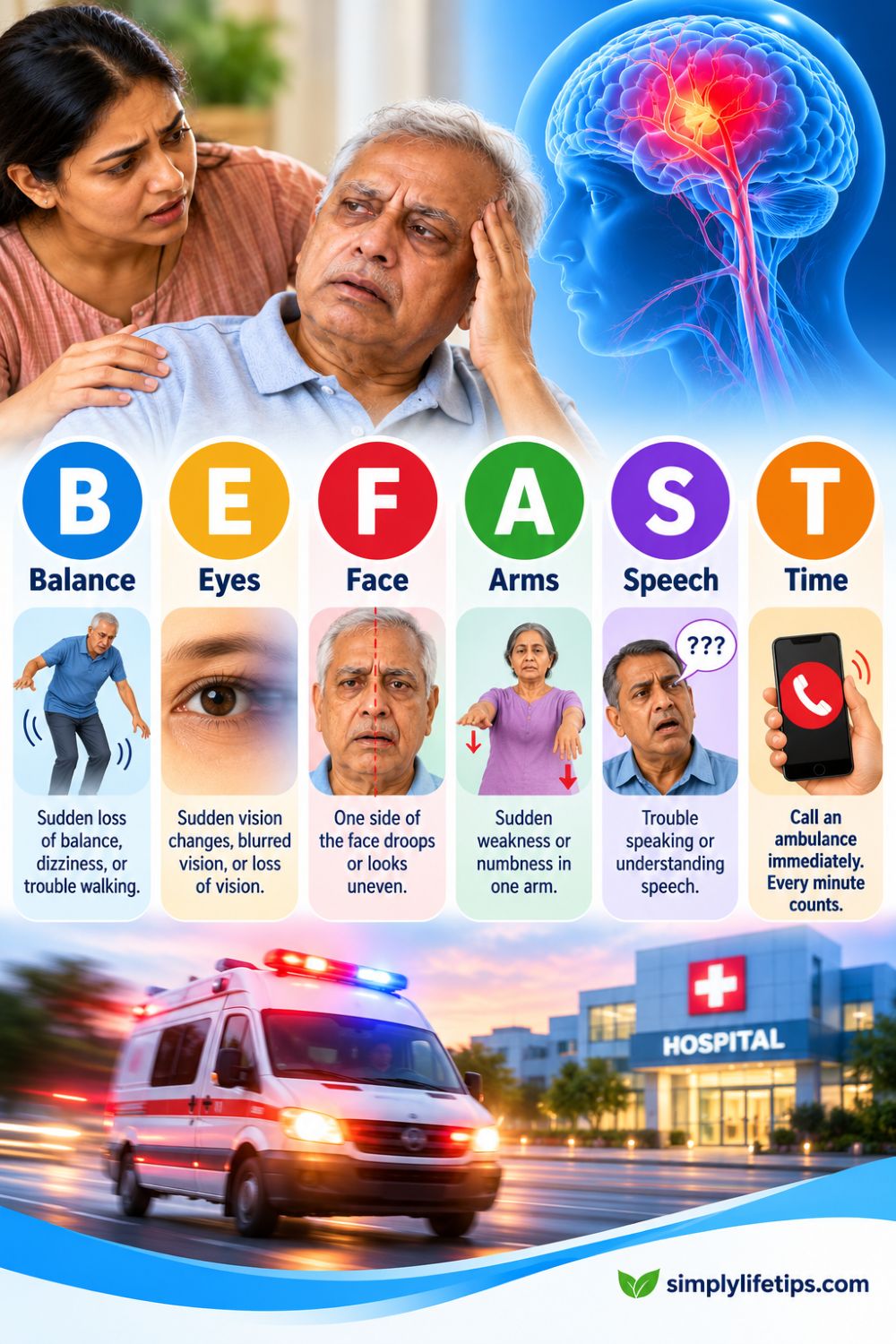
Remember, BE FAST is a simple way to recognise possible stroke symptoms, but it is not a diagnostic test. Do not wait for all six warning signs to appear. If someone suddenly develops any of these symptoms, call an ambulance immediately.
Next, learn what to do—and what to avoid—when someone may be having a stroke.
What Should You Do If Someone Has a Stroke?
Knowing what to do during a stroke emergency can help avoid dangerous delays. If you notice brain stroke symptoms in yourself or another person, call an ambulance immediately rather than waiting for the symptoms to improve.
1. Call an ambulance immediately
Explain the symptoms clearly and tell the emergency service that you suspect a stroke.
Where possible, use an ambulance to reach an appropriate hospital quickly. Emergency personnel can assess the situation and help arrange suitable care.
The CDC’s stroke symptoms and emergency guidance explains why calling emergency services is preferable to relying on private transport.
2. Note when the symptoms began
Record the time the symptoms first appeared.
If the person wakes up with stroke symptoms, note when they were last known to be behaving normally before going to sleep.
This information helps doctors decide which treatments may be suitable.
3. Keep the person safe
Help the person remain in a safe, comfortable position. Prevent falls and follow the ambulance team’s instructions.
If the person becomes unconscious but is breathing normally, follow the emergency dispatcher’s advice about positioning. If they are not breathing normally, follow the dispatcher’s CPR instructions.
4. Do not give food, water, or tablets
A stroke can affect swallowing. Food, water, and tablets may enter the airway and cause choking or other complications.
Do not give anything by mouth unless a qualified medical professional specifically instructs you to do so.
5. Go to a hospital equipped to treat stroke
Stroke care may require urgent brain imaging and specialist treatment. An ambulance team can help determine the most appropriate destination based on local services and the patient’s condition.
Do not delay seeking help while trying to arrange a preferred hospital yourself.
What Should You Never Do During a Stroke?
Some common reactions can waste valuable time or put the patient at risk.
- Do not wait for symptoms to disappear. Even temporary symptoms need urgent medical evaluation.
- Do not let the person sleep it off. Sudden weakness or speech problems should not be dismissed as ordinary tiredness.
- Do not give aspirin on your own. Some strokes involve bleeding, and aspirin can make bleeding worse.
- Do not give food, water, or oral medicines. Swallowing may be affected.
- Do not massage the arms or legs. Massage does not treat the cause of a stroke.
- Do not splash water on the person’s face or shake them forcefully. These actions do not restore blood flow to the brain.
- Do not try to lower blood pressure rapidly at home. Treatment depends on the type of stroke and the person’s condition.
- Do not allow the person to drive themselves to hospital. Their condition may worsen suddenly.
The safest action is to call for emergency medical help without delay.
What If the Stroke Symptoms Disappear?
Suppose someone experiences weakness in one arm or difficulty speaking for five minutes, but then seems completely normal.
Does that mean the danger has passed?
No.
Temporary stroke-like symptoms may be caused by a transient ischaemic attack (TIA). A TIA happens when blood flow to part of the brain is temporarily blocked. The symptoms may disappear, but the episode can warn of a future stroke.
The American Stroke Association’s guide to stroke and TIA warning signs explains why these temporary symptoms should not be ignored.
A TIA requires urgent medical assessment. Do not wait for symptoms to return before seeking help.
Is There Treatment for a Brain Stroke?
Yes. Several treatments are available, but the right treatment depends on the type of stroke, the time symptoms began, brain imaging results, and the person’s overall condition.
1. Clot-busting medicines
For certain patients with an ischaemic stroke, doctors may use medicines that help dissolve the clot blocking blood flow to the brain.
Some eligible patients can receive intravenous thrombolysis within approximately 4.5 hours of symptom onset. In selected cases, doctors may consider treatment beyond this period using additional clinical and imaging criteria.
These medicines are not suitable for every patient and are not used in the same way for bleeding strokes.
For further details, see the American Stroke Association’s information about stroke treatment.
2. Mechanical thrombectomy
For selected patients with an ischaemic stroke caused by a large blood clot, doctors may perform a procedure called mechanical thrombectomy.
A specialist guides a catheter through the blood vessels to remove the clot. In appropriately selected patients, this procedure may be beneficial up to 24 hours after the person was last known to be well.
Not everyone qualifies for this procedure. Brain imaging and specialist assessment are essential.
3. Treatment for bleeding strokes
A haemorrhagic stroke requires a different approach. Depending on the cause and severity, treatment may involve controlling blood pressure, managing medicines that affect clotting, treating raised pressure inside the skull, or performing surgery or another procedure.
Never assume that every stroke should be treated with the same medicine. Doctors must determine whether the stroke is caused by a blocked blood vessel or bleeding.
The most important step for families is to seek emergency care immediately rather than trying to determine the stroke type at home.
Can a Person Recover After a Stroke?
Yes, many people improve after a stroke, although the degree of recovery varies.
Some people regain much of their independence, while others experience lasting difficulties with movement, speech, memory, or everyday activities.
Recovery may involve:
- Physiotherapy to improve movement, strength, and balance.
- Speech and language therapy to improve communication and swallowing.
- Occupational therapy to make daily activities easier and safer.
- Medical follow-up to manage risk factors and prevent another stroke.
- Emotional and family support during rehabilitation.
Early assessment, appropriate treatment, rehabilitation, and continued medical care can all contribute to recovery.
Families should remember that recovery is not always immediate. Progress may take weeks, months, or longer, depending on the extent of the injury and the person’s individual circumstances.
How Can You Reduce the Risk of a Brain Stroke?
Not every stroke can be prevented, but managing important health risks can lower the likelihood of having one.
For a broader overview of everyday habits that support brain health, read Brain Health: Protect Your Most Valuable Asset.
Keep blood pressure under control
High blood pressure is a major risk factor for stroke. Check it regularly and follow your healthcare professional’s treatment advice.
Our guide to hypertension causes, symptoms, and management explains why blood pressure control matters.
Manage diabetes and cholesterol
High blood sugar and unhealthy cholesterol levels can damage blood vessels over time. Regular check-ups, prescribed treatment, and appropriate lifestyle changes can help manage these risks.
Avoid smoking
Smoking damages blood vessels and increases the risk of stroke. Stopping smoking is an important step toward protecting your health.
Stay physically active
Regular physical activity can help improve cardiovascular health. Choose activities that suit your age, fitness level, and medical condition.
Eat a balanced diet
Include vegetables, fruits, whole grains, and other nutritious foods. Limit excess salt and avoid a diet consistently high in unhealthy fats and highly processed foods.
Follow treatment for heart conditions
Some heart conditions, particularly atrial fibrillation, increase the risk of blood clots that can travel to the brain. Follow your doctor’s advice about assessment and treatment.
Prevention is important, but even someone who follows a healthy lifestyle can experience a stroke. That is why everyone should know the warning signs.
World Stroke Day 2026: Every M1nute Counts
October 29, 2026, is World Stroke Day. This year’s official campaign, led by the World Stroke Organization, uses the message “Every M1nute Counts” to emphasise the importance of recognising stroke symptoms and seeking emergency medical care without delay.
The campaign also encourages people to learn the warning signs and #ActFAST. Remember BE FAST: Balance, Eyes, Face, Arms, Speech, and Time.
Share this information with your family and friends. Knowing what to look for may help someone recognise a stroke and get medical help sooner.
Explore the World Stroke Day 2026 campaign resources for official awareness materials.
Conclusion
Brain stroke symptoms should never be ignored, even when they appear mild or disappear after a few minutes. Sudden facial drooping, arm weakness, speech difficulties, vision changes, or loss of balance may indicate a medical emergency.
Do not wait for the person to recover on their own. Do not give food, water, or medicines without medical advice. Call an ambulance immediately and note when the symptoms began.
A stroke can change a person’s life in minutes, but a quick response can help preserve treatment options and may improve the chances of recovery.
Remember: BE FAST. Recognise the warning signs. Call for emergency help. Every minute counts.
If you noticed these symptoms in someone near you today, would you recognise a stroke and know what to do first?
Frequently Asked Questions
1. What are the first warning signs of a brain stroke?
The warning signs include sudden facial drooping, weakness or numbness on one side of the body, difficulty speaking or understanding speech, sudden vision problems, and loss of balance. Remember BE FAST and seek emergency medical help if any warning sign appears. Recognising brain stroke symptoms quickly helps families understand when to seek emergency medical care.
2. Can a person have a stroke without facial drooping?
Yes. Facial drooping is only one possible symptom. A person may experience sudden speech difficulties, vision changes, balance problems, or weakness without obvious facial drooping. Any sudden, unexplained neurological symptom needs urgent medical assessment.
3. How quickly should a stroke patient reach hospital?
Immediately. Call an ambulance as soon as stroke is suspected. Some treatments for a blocked brain artery are time-sensitive, and earlier assessment may preserve more treatment options. Never wait for symptoms to become severe.
4. Can stroke symptoms disappear on their own?
Yes. Temporary symptoms may indicate a transient ischaemic attack, or TIA, which can warn of a future stroke. Even if the symptoms disappear completely, the person needs urgent medical evaluation.
5. Can a brain stroke be cured completely?
Some people recover very well, while others have lasting disabilities. Recovery depends on the type and severity of the stroke, how quickly treatment begins, the brain areas affected, and rehabilitation. Prompt treatment can improve the chances of a better outcome, but complete recovery cannot be guaranteed.
Inspired by: A Malayalam stroke-awareness article by Dr Arun Oommen, Neurosurgeon, shared for World Stroke Day. Adapted into English for general readers, with additional educational references.
References
- Centers for Disease Control and Prevention (CDC): Signs and Symptoms of Stroke
- American Stroke Association: Stroke Symptoms
- American Stroke Association: Types of Stroke
- American Stroke Association: Stroke, TIA and Warning Signs
Medical disclaimer: This article is for general educational purposes and is not a substitute for individual medical advice, diagnosis, or treatment. If you experience sudden or serious neurological symptoms, seek emergency medical care immediately.

Mathukutty P. V. is the founder of Simply Life Tips. He shares practical advice and useful insights on personal growth, health, well-being, technology, and everyday living. His goal is to help readers build positive habits and make informed decisions. He believes in continuous learning and sharing knowledge to help people live healthier, happier, and more meaningful lives.