
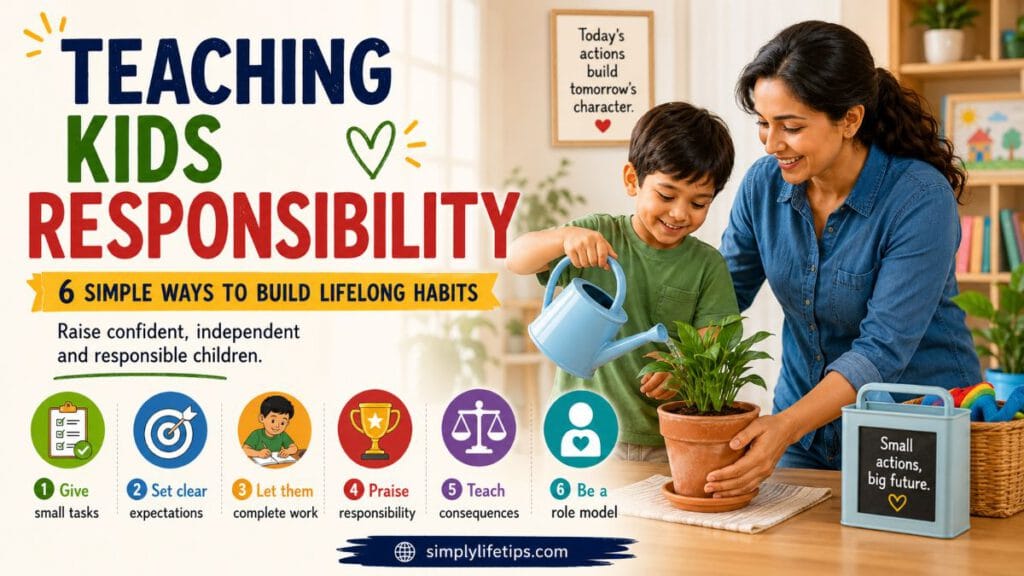
Teaching kids responsibility is one of the greatest investments parents can make in their children’s future. Responsible children grow into dependable adults who can make good decisions, solve problems, and contribute positively to their families and communities. While responsibility isn’t learned overnight, it develops through consistent guidance, everyday practice, and positive encouragement.
Many parents wonder when they should start teaching responsibility. The answer is simple—start early. Even toddlers can learn to put away toys, while older children can take on more meaningful household tasks. The goal isn’t to create perfection but to help children understand that their actions matter and that they play an important role within the family.
This guide explores six practical ways to teach responsibility that are easy to implement and effective for children of all ages.
Importance of Teaching Kids Responsibility
Responsibility is much more than completing chores. It teaches children valuable life skills that prepare them for adulthood.
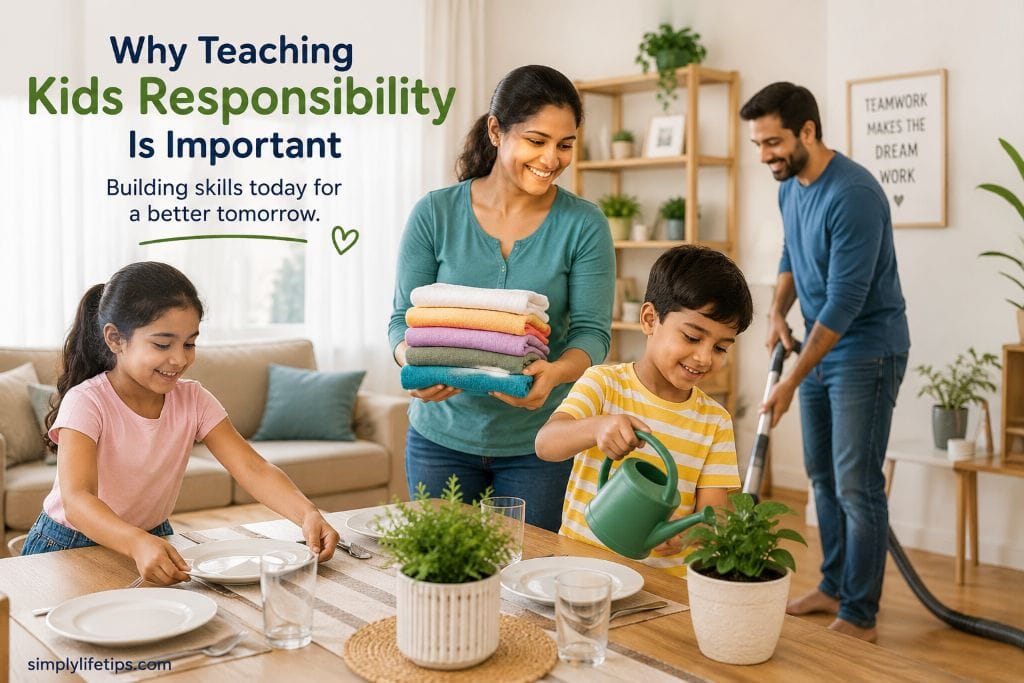
Children who learn responsibility often develop:
- Self-confidence
- Independence
- Better decision-making skills
- Respect for others
- Accountability
- Strong work habits
- Problem-solving abilities
When children understand that their actions have consequences, they become more thoughtful and dependable in everyday situations.
For example, a child who remembers to pack their school bag every evening learns planning skills that will later help with managing work, finances, and family responsibilities.
6 Simple Ways for Teaching Kids Responsibility
1. Give Age-Appropriate Responsibilities
Children learn best when tasks match their abilities. Assigning responsibilities that are too difficult can lead to frustration, while tasks that are too easy may not encourage growth.
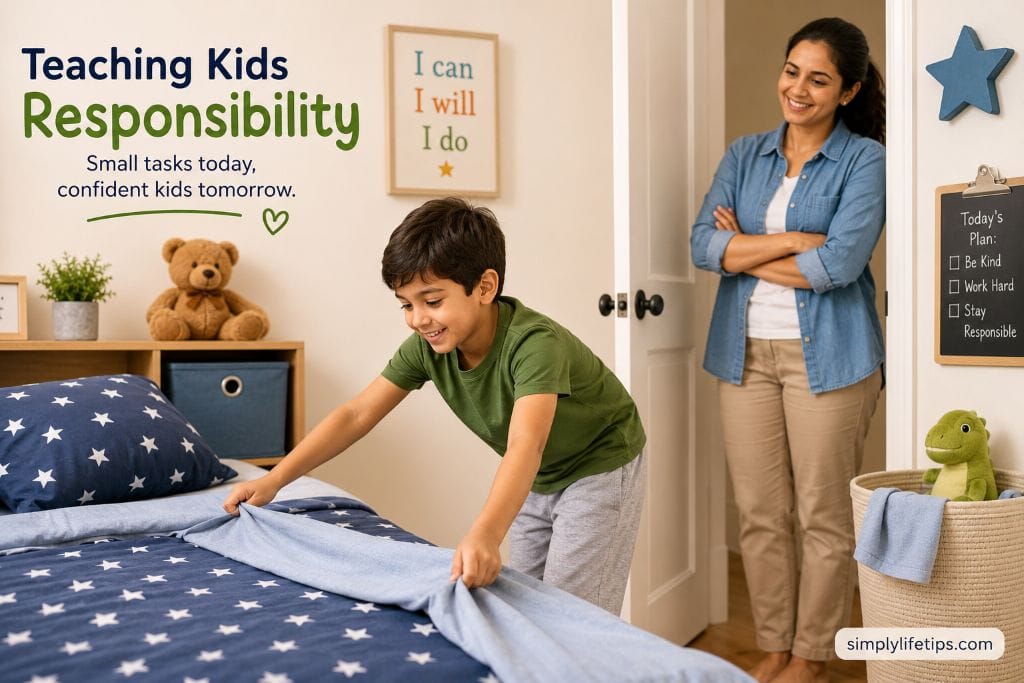
Choose responsibilities that suit your child’s age and maturity.
Ages 3–5
Young children enjoy helping when tasks feel like games.
Examples include:
- Putting toys back on shelves
- Watering plants
- Throwing rubbish into the bin
- Placing dirty clothes in the laundry basket
These simple activities teach children that everyone contributes to the household.
Ages 6–9
As children grow, they can manage more structured responsibilities.
Examples include:
- Making their bed
- Feeding pets
- Setting the dining table
- Organising school supplies
- Folding small towels
Ages 10 and Above
Older children are capable of handling responsibilities that require planning and consistency.
Examples include:
- Washing dishes
- Helping prepare meals
- Vacuuming rooms
- Managing homework schedules
- Taking care of younger siblings for short periods
Gradually increasing responsibility helps children develop confidence without feeling overwhelmed.
2. Set Clear Expectations
Children cannot meet expectations they don’t understand.
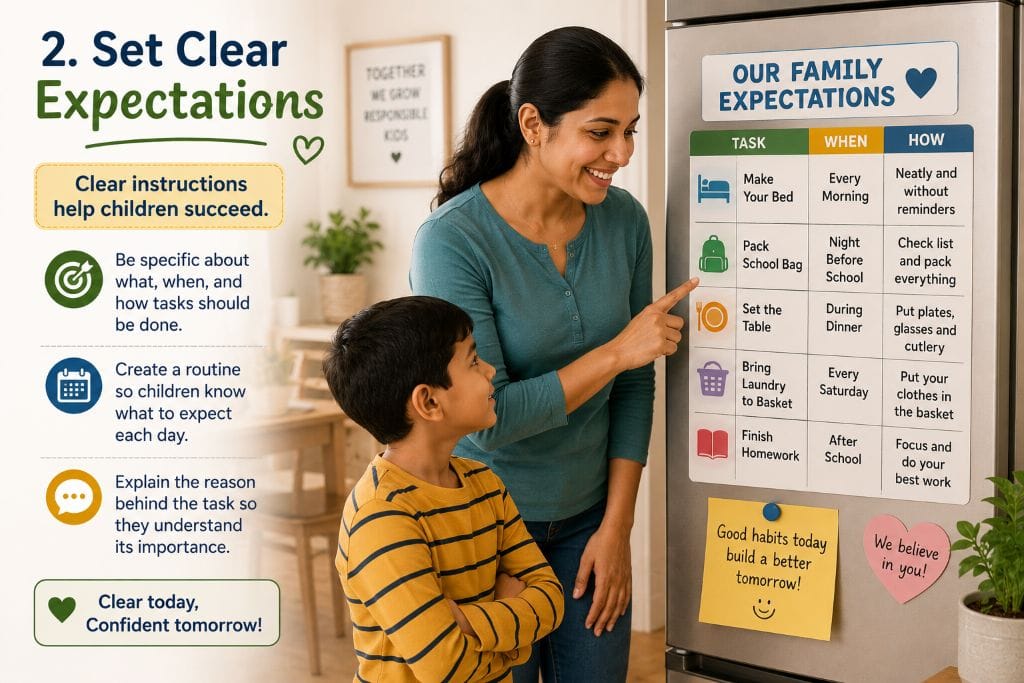
Instead of giving vague instructions like:
“Clean your room.”
Provide clear directions such as:
“Please put your books on the shelf, place your clothes in the laundry basket, and make your bed.”
Breaking tasks into smaller steps makes them easier to complete.
Consistency is equally important.
If children know they are expected to feed the pet every morning or clear the dinner table every evening, these responsibilities eventually become healthy habits.
3. Allow Children to Experience Natural Consequences
Parents naturally want to protect their children from mistakes. However, constantly rescuing them prevents important learning opportunities.
Natural consequences help children understand responsibility.
For example:
- Forgetting homework means explaining the situation to the teacher.
- Leaving a bicycle outside may result in it getting wet during rain.
- Forgetting to charge a tablet means it won’t be available when needed.
These experiences teach accountability without harsh punishment.
The lesson becomes much more meaningful because children experience the direct result of their choices.
4. Praise Responsible Behaviour
Positive reinforcement encourages children to repeat good behaviour.
Instead of saying:
“Good job.”
Be specific.
Examples include:
- “Thank you for feeding the dog without being reminded.”
- “I noticed you organised your school bag before bedtime.”
- “You remembered to water the plants today.”
Specific praise helps children understand exactly which behaviour deserves recognition.
Avoid rewarding every responsibility with money or gifts.
Children should eventually learn that responsibility is part of everyday life rather than something done only for rewards.
5. Be a Good Role Model
Children often imitate what they observe more than what they are told.
If parents consistently:
- Keep promises
- Admit mistakes
- Complete household responsibilities
- Respect others
- Stay organised
Children naturally begin developing the same habits.
For example, if you forget an appointment, saying:
“That was my mistake. I’ll write it down so I remember next time.”
shows children that responsible people acknowledge mistakes and work to improve.
Your everyday behaviour becomes your child’s most powerful lesson.
6. Encourage Independence
Teaching kids responsibility also means allowing them to solve age-appropriate problems on their own.
Parents sometimes complete tasks simply because it’s quicker.
However, allowing children to struggle a little helps build resilience and confidence.
Examples include:
- Packing their own school bag
- Choosing clothes for school
- Organising homework
- Managing pocket money
- Preparing simple snacks
Offer guidance when necessary but avoid taking over.
Children feel proud when they accomplish tasks independently.
Common Mistakes Parents Should Avoid
Even with the best intentions, parents can sometimes make choices that unintentionally prevent children from becoming responsible. Teaching responsibility requires patience, consistency, and allowing children to learn through experience. Recognising these common mistakes can help you guide your child more effectively.
Doing Everything for Your Child
One of the biggest obstacles to teaching responsibility is taking over tasks that children are capable of doing themselves. Parents often step in because they want to save time, avoid messes, or protect their child from frustration.
For example, if a child is old enough to pack their school bag, tying everything together for them every morning prevents them from learning organisation and accountability. While helping occasionally is appropriate, constantly doing everything sends the message that someone else will always solve their problems.
Instead, encourage your child to complete tasks independently, even if it takes longer or isn’t done perfectly.
Expecting Perfection
Children are still learning. Mistakes are a natural part of developing responsibility.
If a child forgets to water a plant or leaves a few toys on the floor, avoid reacting as though they have failed. Unrealistic expectations can make children feel discouraged and afraid of trying.
For instance, a child learning to wash dishes may leave a few spots on a plate. Rather than criticising, thank them for helping and gently show them how to improve next time.
Remember that progress is more important than perfection.
Giving Inconsistent Rules
Children thrive when expectations are clear and consistent.
If making the bed is required one day but ignored the next, children become confused about what is truly expected of them. Inconsistent rules make it difficult for responsibility to become a lasting habit.
Create simple routines that your child can rely on.
For example:
- Make the bed every morning.
- Put dirty clothes in the laundry basket.
- Finish homework before screen time.
- Return toys to their proper place after playing.
Consistency helps responsible behaviour become automatic over time.
Rescuing Children from Every Mistake
Parents naturally want to protect their children from disappointment. However, constantly rescuing them prevents valuable life lessons.
If your child forgets to bring their homework to school, rushing to deliver it every time may stop them from learning to prepare better in the future.
Similarly, if they spend all their pocket money immediately, resist replacing it. Experiencing the natural consequence teaches better decision-making than repeated lectures.
Allow children to experience age-appropriate consequences while offering guidance and support.
Criticising Instead of Teaching
Harsh criticism often damages confidence more than it improves behaviour.
Comments such as:
- “You’re so lazy.”
- “You never do anything right.”
- “Why can’t you be more responsible?”
Can discourage children from trying altogether.
Instead, focus on the behaviour rather than attacking the child.
For example, say:
“The toys still need to be put away. Let’s finish the job together this time, and I know you’ll be able to do it on your own next time.”
Constructive feedback teaches responsibility while preserving self-esteem.
Comparing Siblings or Other Children
Every child develops at their own pace.
Comparing one child to another can create feelings of jealousy, resentment, or inadequacy.
Statements like:
“Your sister always remembers her homework.”
or
“Your friend keeps his room clean. Why can’t you?”
Rarely motivate children. Instead, they may become frustrated or lose confidence.
Celebrate each child’s individual progress and recognise improvements, no matter how small.
Using Rewards for Every Task
Rewards can be useful when introducing new habits, but relying on money, toys, or treats for every responsibility may reduce a child’s internal motivation.
If children begin asking, “What do I get if I clean my room?”, they may start viewing responsibility as something they only do for a reward.
Instead, explain that everyone in the family contributes because they care about one another. Praise, encouragement, and appreciation often have a longer-lasting impact than material rewards.
Not Being a Good Role Model
Children observe their parents closely. If adults avoid responsibilities, make excuses, or fail to keep promises, children are likely to imitate those behaviours.
For example, if a parent regularly leaves household chores unfinished while expecting children to complete theirs, the message becomes confusing.
Model the behaviours you want your children to learn by being organised, keeping commitments, admitting mistakes, and treating others with respect.
Children learn responsibility more from what they see than from what they hear.
Giving Too Many Responsibilities Too Soon
While responsibility is important, overwhelming children with adult-level expectations can lead to stress and frustration.
A young child should not be expected to manage tasks that are beyond their developmental ability.
Start with simple responsibilities and gradually increase them as your child gains confidence and maturity.
Building responsibility step by step creates lasting habits and helps children enjoy the satisfaction of succeeding on their own.
Fun Ways to Make Responsibility Enjoyable
Learning responsibility doesn’t have to feel like work.
Try making everyday tasks more engaging.
Ideas include:
- Create a colourful chore chart.
- Use stickers to track completed tasks.
- Rotate weekly family responsibilities.
- Turn cleaning into a timed challenge.
- Celebrate consistency with family activities instead of expensive rewards.
Children are more motivated when responsibility becomes part of a positive family routine.
Responsibility Changes as Children Grow
Responsibility evolves with age.
A preschool child may show responsibility by tidying up after playtime.
A teenager may demonstrate responsibility by budgeting allowance, helping younger siblings, or balancing schoolwork with extracurricular activities.
Rather than expecting children to behave like adults, focus on steady progress that matches their stage of development.
Quick Visual Guide
If you’re short on time, the infographic below provides a quick summary of the six essential strategies for teaching kids responsibility. Save it for future reference or share it with other parents who want to raise confident, independent, and responsible children.
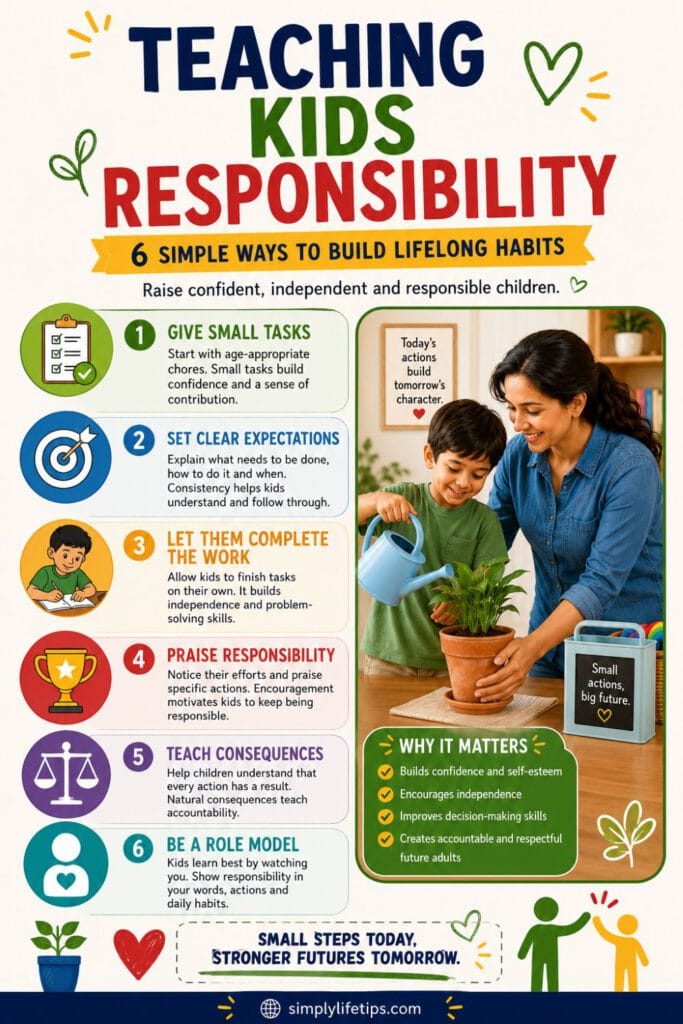
The infographic highlights the key ideas discussed in this article, but lasting responsibility develops through consistent daily practice. Start with one simple habit, be patient, and gradually increase responsibilities as your child grows. Small, positive actions today can help shape a responsible and confident adult tomorrow.
Long-Term Benefits of Teaching Kids Responsibility
Children who grow up learning responsibility often become adults who are dependable, confident, and capable.
They are more likely to:
- Make thoughtful decisions.
- Build healthy relationships.
- Handle challenges calmly.
- Manage finances wisely.
- Perform well at school and work.
- Earn the trust of others.
These qualities contribute to long-term success in every area of life.

Conclusion
Teaching kids responsibility is a gradual journey, not a one-time lesson. Every small task, every meaningful conversation, and every opportunity to learn from mistakes helps shape a child’s character. By assigning age-appropriate responsibilities, setting clear expectations, encouraging independence, and leading by example, parents can raise children who grow into confident, responsible, and compassionate adults.
Remember, responsibility isn’t about raising perfect children—it’s about preparing them for real life. The habits they develop today will become the strengths they rely on tomorrow.
Frequently Asked Questions
At what age should parents start teaching kids responsibility?
Children can begin learning responsibility as early as two or three years old through simple tasks like putting away toys and helping tidy up.
Should children receive rewards for completing chores?
Occasional rewards can motivate younger children, but responsibility should gradually become an expected part of family life rather than something done only for rewards.
How can I encourage a child who refuses responsibilities?
Start with small, achievable tasks, offer encouragement, and praise effort instead of perfection. Consistency is more effective than punishment.
What are good responsibilities for teenagers?
Teenagers can manage homework schedules, prepare simple meals, help with household chores, care for pets, manage pocket money, and assist younger siblings.
Why is responsibility important for a child’s future?
Responsibility helps children develop independence, accountability, confidence, problem-solving skills, and strong work habits that benefit them throughout adulthood.
Related Articles
- Types of Thinking – Learn how different thinking styles help children solve problems and make better decisions.
- Think Before You Speak – Teach children the importance of pausing before speaking and communicating respectfully.
- Emotional Maturity – Discover how emotional maturity helps children become responsible and resilient individuals.
References
The following trusted resources provide additional information on child development, positive parenting, and building responsibility in children.
- HealthyChildren.org (American Academy of Pediatrics) – Evidence-based parenting advice, child development, and positive discipline.
- UNICEF Parenting – Practical guidance on positive parenting and helping children develop life skills.
- Harvard Center on the Developing Child – Research on child development, executive function, and lifelong learning.

Mathukutty P V is a Blogger, YouTuber, and Content Writer and the founder of Simply Life Tips. After taking voluntary retirement in 2017, he embraced a free lifestyle focused on learning, personal growth, and sharing practical wisdom to help others live with more purpose and positivity.



