Teaching kids about emotions is one of the most valuable lessons parents and educators can give them in the early years. Children who learn to recognise their feelings, express emotions appropriately, manage frustration and understand others develop skills that can support their well-being throughout life.
Emotional development is just as important as learning to read, write and count. The preschool years provide an important opportunity to develop emotional awareness, self-control, empathy and healthy relationships. These abilities can influence how children respond to challenges, interact with others and manage their lives as adults.
A long-term study published in 2026 offers encouraging evidence. Researchers found that preschool social-emotional learning was linked to better well-being in young adulthood, highlighting the value of investing in children’s emotional development early on.
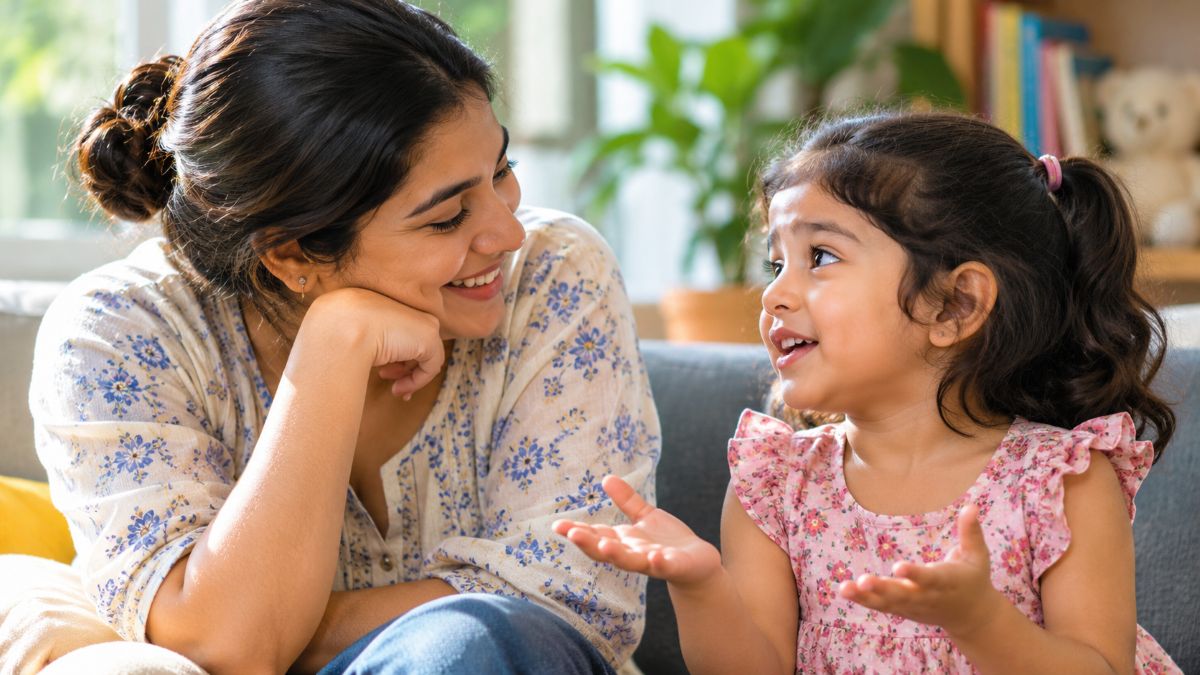
Teaching kids about emotions from an early age helps them develop lifelong emotional skills.
Why Teaching Kids About Emotions Matters
Young children experience many emotions, including happiness, sadness, anger, fear, excitement and disappointment. However, they may not always understand what they are feeling or know how to express it.
A child who cannot explain frustration may cry, shout, throw things or become aggressive. These behaviours are not necessarily signs of bad character. They may indicate that the child needs help understanding and managing difficult emotions.
Teaching children about emotions gives them the language and skills to communicate their feelings more effectively.
For example, when a child becomes upset because another child takes a toy, a parent can gently say, “I can see that you are angry because your friend took your toy. Can you tell me what happened?”
This simple conversation helps the child recognise anger and express it through words rather than hitting or shouting.
Benefits of Teaching Kids About Emotions
Teaching kids about emotions offers benefits that extend beyond childhood. When children learn to recognise their feelings, manage emotional reactions and understand other people, they develop important life skills that support their personal, social and emotional well-being.
Early emotional education gives children valuable tools for understanding themselves, building friendships and facing everyday challenges.
Here are some important benefits of early emotional education.
1. Better Mental and Emotional Well-Being
One of the greatest benefits of teaching kids about emotions is improved emotional well-being. Children who understand their emotions can communicate their feelings more effectively. They may also become more comfortable asking for help when they experience sadness, fear or frustration.
For example, a child who learns to say, “I feel worried because I have a test tomorrow,” can communicate the problem instead of keeping the fear inside.
Understanding emotions is an important part of maintaining mental well-being. Developing healthy ways to manage difficult feelings can also help children and adults learn how to feel better during challenging situations.
2. Stronger Relationships and Friendships
Understanding emotions helps children recognise how their behaviour affects others. They learn to share, cooperate, respect differences, and show kindness.
For example, when a friend feels sad, an emotionally aware child may offer comfort or help rather than ignoring the situation.
3. Improved Self-Control
Emotional education helps children understand that they cannot always control what happens, but they can gradually learn to manage how they respond.
For example, a child who loses a game can learn to accept disappointment without shouting, throwing objects or blaming others.
4. Better Communication Skills
Children who can identify and express their emotions are better equipped to explain their needs, feelings and concerns.
Instead of crying because something is wrong, they may learn to say, “I am upset because I cannot find my favourite toy.”
This ability supports communication at home, in school and in social situations.
5. Greater Confidence and Resilience
Children need to understand that mistakes, failures and disappointments are normal parts of life.
When parents encourage children to recognise their feelings and try again after setbacks, they gradually develop confidence and resilience.
For example, when a child fails to complete a difficult puzzle, encouragement to try another approach can help develop persistence and a positive attitude towards challenges.
6. Improved Learning and Classroom Behaviour
Emotional skills can support children’s participation in classroom activities. Children who learn to manage frustration, listen to others and cooperate may find it easier to participate in group learning.
For example, a child who can wait for a turn, follow instructions and ask for help is better prepared to engage in classroom activities.
7. Healthier Adult Relationships and Well-Being
The emotional skills developed during childhood can provide a foundation for relationships and well-being later in life.
The 2026 longitudinal study discussed in this article offers encouraging evidence that preschool social-emotional learning can be associated with positive outcomes in young adulthood, including empathy, emotional support and life satisfaction.
Key takeaway: Teaching children about emotions is not simply about helping them behave well today. It is about giving them skills they can continue to use throughout their lives.
Teaching children about emotions helps them develop essential skills that support their happiness, relationships and future well-being. The following infographic highlights five important emotional skills every child should learn during their early years.
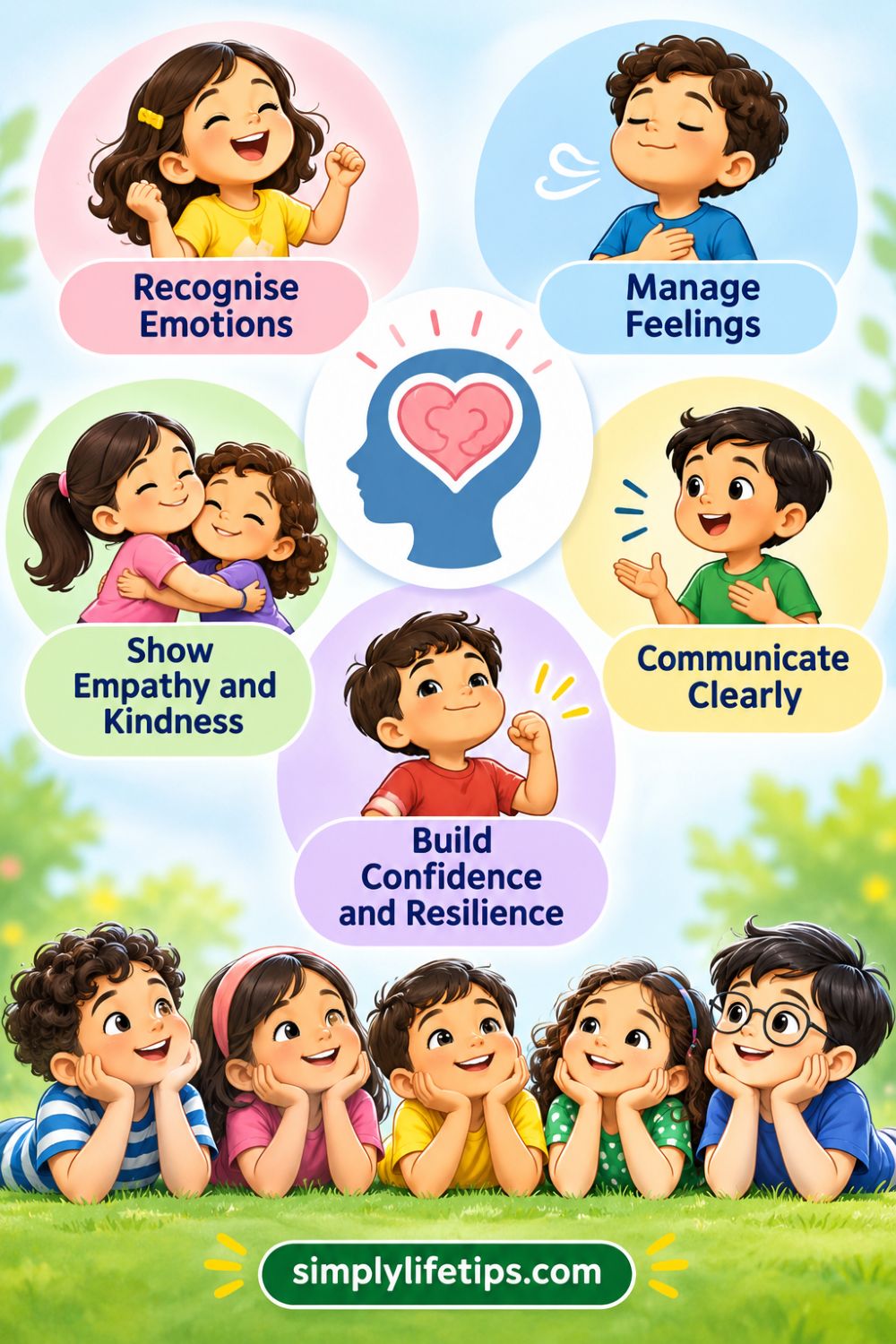
Parents and teachers can help children develop these skills through everyday conversations, storytelling, cooperative play and positive role modelling. Consistent encouragement and patient guidance make emotional learning a natural part of childhood.
What Is Social-Emotional Learning?
Social-emotional learning (SEL) is the process through which children and adults develop the knowledge and skills needed to understand and manage emotions, establish positive relationships, demonstrate empathy and make responsible decisions.
Teaching kids about emotions from an early age is an investment in their ability to build meaningful relationships and manage life’s challenges.
For young children, these skills develop through everyday experiences at home, preschool and other social environments.
Social-emotional learning includes recognising different feelings, understanding how emotions influence behaviour, communicating needs, cooperating with others and resolving disagreements peacefully.
For example, when children learn to share toys, wait for their turn, listen to friends and apologise after hurting someone, they are practising important social-emotional skills.
These experiences may appear simple, but they help build the foundation for emotional intelligence and healthy relationships.
Developing these abilities helps children understand their own feelings and recognise the emotions of others. This is an important part of building emotional intelligence in kids, which supports healthy relationships, responsible behaviour and better decision-making.
Five Important Emotional Skills Children Need to Develop
1. Emotional Awareness
Teaching kids about emotions helps them identify and communicate their feelings. Emotional awareness means recognising and understanding different feelings. Children need to identify what they are experiencing before they can learn to manage their reactions.
Parents and teachers can introduce simple emotional vocabulary such as happy, sad, angry, worried, frightened, excited and disappointed.
For example, if a child cries after losing a game, explain that losing can make someone feel disappointed. Encourage the child to describe the feeling instead of telling them to stop crying.
Picture books, emotion cards and conversations about facial expressions can also help children recognise emotions in themselves and others.
2. Emotional Regulation
Emotional regulation is the ability to manage feelings and respond appropriately to different situations. Teaching kids about emotions also helps them understand how to respond to frustration.
Young children may struggle with frustration, disappointment and excitement because they are still developing self-control. They need patience, encouragement and repeated practice.
Parents can introduce simple techniques such as taking slow breaths, counting to five, talking about the problem or taking a short break when feeling overwhelmed.
For example, if a child becomes frustrated while completing a puzzle, encourage them to pause, breathe and try again rather than throwing the pieces away.
These small experiences gradually help children develop patience and self-control.
Children need regular practice and patient guidance to manage difficult feelings. Parents can explore practical techniques for emotional regulation in kids to help children respond calmly to frustration, disappointment and challenging situations.
3. Empathy and Kindness
Empathy is the ability to understand another person’s feelings and respond with care and consideration.
Children who develop empathy become more aware of how their words and actions affect others. This skill supports kindness, friendship and positive social relationships.
Parents can encourage empathy through everyday conversations.
For example, if a child sees a friend crying, ask, “Why do you think your friend is sad? What could we do to help?”
Encourage the child to offer comfort, share a toy or say something kind. Such experiences help children understand that other people have feelings and needs too.
4. Communication and Social Skills
Children interact with parents, siblings, teachers and friends every day. These interactions provide opportunities to practise communication, cooperation and conflict resolution.
Teaching children to listen, share, take turns, respect others and express their needs helps them develop healthy relationships.
For example, when two children want to play with the same toy, guide them towards taking turns rather than immediately solving the disagreement for them.
This allows children to practise negotiation, patience and problem-solving.
Teaching children to respect others, communicate calmly and understand different perspectives helps them develop healthier relationships. These abilities also provide a foundation for learning how to handle disrespect and respond constructively to difficult interactions.
5. Confidence and Independence
Children who understand their emotions may become more comfortable expressing their needs, making decisions and asking for help.
They also learn that making mistakes, experiencing disappointment and facing difficulties are normal parts of life.
For example, when a child fails to complete a drawing or build a tower with blocks, avoid criticising the result. Encourage the child to try again and appreciate the effort.
This approach helps develop confidence, persistence and a positive attitude towards challenges.
What Does Research Say About the Long-Term Benefits?
A longitudinal study published in American Psychologist in September 2026 provides important evidence about the long-term value of preschool social-emotional learning.
The research, titled Promoting Resilience with Social-Emotional Learning: Young Adult Follow-up of a Preschool Randomized-Controlled Trial, examined 356 children who participated in a preschool intervention programme in the United States.
The children entered the study at an average age of approximately 4.5 years. Researchers followed their development into young adulthood, when participants were aged 21–22.
The intervention enriched Head Start preschool classrooms with evidence-based social-emotional learning activities, language development support and teacher guidance.
Researchers found significant benefits in seven of the eleven measures of young adult well-being.
These included fewer conduct problems, fewer depressive symptoms, reduced loneliness, greater empathy, better emotional support, more healthy days and higher overall life satisfaction.
The study also found that the intervention helped reduce some negative effects associated with adverse childhood experiences.
These findings are encouraging because they suggest that supporting children’s social and emotional development during preschool may have benefits extending well beyond childhood.
However, the results should be interpreted carefully. The programme combined social-emotional learning with language development support and teacher guidance. Therefore, the findings do not establish that emotional education alone caused every observed benefit.
The research nevertheless provides valuable evidence that early childhood education should include emotional and social development alongside academic learning.
Reference: Promoting Resilience with Social-Emotional Learning – American Psychologist (2026).
How Parents Can Teach Kids About Emotions
Parents play an essential role in helping children understand and manage their feelings. Children often learn more by observing adult behaviour than by listening to instructions. Parents can make teaching kids about emotions part of everyday family conversations. Everyday family interactions provide valuable opportunities to develop emotional intelligence.
1. Help Children Name Their Feelings
Talk about different emotions during everyday activities. Use simple words such as happy, sad, angry, worried, excited, disappointed and frightened.
When a child loses a game, for example, explain that it is normal to feel disappointed. Encourage the child to talk about the experience rather than hiding the feeling.
Picture books, emotion cards and conversations about facial expressions can also help children recognise different feelings.
Parents can make emotional learning more engaging by using visual resources that help children recognise different feelings. These emotions and feelings visual cards for kids can help young learners identify emotions through pictures and facial expressions.
2. Listen Without Judging
Allow children to express their feelings without immediately correcting, dismissing or criticising them.
Avoid statements such as “Stop crying”, “There is nothing to be upset about” or “Big children should not be afraid”.
Instead, acknowledge their feelings and listen patiently. You can say, “I understand that you are upset. Would you like to tell me what happened?”
When children feel that their emotions are respected, they may become more comfortable communicating their problems and asking for help.
3. Be a Positive Role Model
Children closely observe how parents respond to stress, anger and disappointment. If adults frequently shout, lose their temper or blame others, children may copy these behaviours.
Parents should demonstrate healthy emotional responses.
For example, instead of shouting when something goes wrong, say, “I am feeling frustrated. I am going to take a few deep breaths before dealing with this.”
This teaches children that experiencing strong emotions is normal, but they can choose how to respond.
4. Use Stories and Play
Stories, role-playing and games provide enjoyable ways to introduce emotional concepts.
Choose children’s stories that explore friendship, kindness, fear, disappointment and courage. After reading, discuss how the characters felt and why they behaved in particular ways.
For example, ask a child, “Why was the character sad? What could the other children do to help?”
Puppet shows and pretend games can also help children practise expressing emotions, understanding others and resolving disagreements.
5. Encourage Problem-Solving
Do not rush to solve every small problem children encounter. Give them opportunities to think about possible solutions.
For example, if two siblings argue over a toy, ask, “What can both of you do so that everyone gets a chance to play?”
Offer guidance when necessary, but allow children to participate in finding solutions. This helps develop independence, patience and decision-making skills.
6. Create a Safe and Supportive Environment
Children need to feel secure before they can openly express their emotions.
Maintain predictable routines, spend quality time together and encourage open communication. Avoid humiliating children or punishing them simply for experiencing difficult emotions.
Accepting a child’s feelings does not mean accepting every behaviour. Parents should explain that anger is a normal emotion, but hitting, kicking or hurting others is unacceptable.
For example, say, “It is okay to feel angry, but it is not okay to hit your brother.”
Responsive conversations and caring relationships help children feel understood and supported. The Harvard University Center on the Developing Child explains how early emotional experiences contribute to brain development and later social and emotional well-being.
The Role of Teachers in Social-Emotional Learning
Parents are not the only people responsible for children’s emotional development. Preschool teachers and early childhood educators also play an important role. Early childhood education should include opportunities for children to develop emotional awareness, social skills and confidence. A supportive preschool environment helps children understand their feelings and interact positively with others.
A supportive classroom provides opportunities for children to practise emotional and social skills through daily activities.
Teachers can begin by introducing simple emotional check-in routines. Asking children how they feel when they arrive at school helps them recognise and communicate their emotions. Emotion charts with different facial expressions can make this activity easier for younger children.
Cooperative activities such as group games, storytelling and shared projects teach teamwork, patience and communication. When disagreements occur, teachers can guide children to listen to one another, explain their feelings and find peaceful solutions.
It is equally important to recognise positive behaviour. Appreciating kindness, sharing, patience and helpfulness encourages children to practise these behaviours.
Some children may need additional support when dealing with fear, frustration or social difficulties. Teachers should work with parents to understand individual needs and provide appropriate guidance.
The CASEL framework for social-emotional learning identifies five important areas of development: self-awareness, self-management, social awareness, relationship skills and responsible decision-making. These competencies can be encouraged through coordinated efforts at home, in classrooms and in communities.
What Happens When Children’s Emotional Needs Are Ignored?
Children experience a wide range of emotions, but they may not have the language or skills to communicate what they feel.
When their emotional needs are repeatedly dismissed, they may struggle to express themselves or seek support. Some children may find it difficult to manage anger and frustration, develop friendships, communicate personal needs or cope with disappointment.
These difficulties are not inevitable. Every child develops differently, and family circumstances, relationships, environment and individual developmental needs can influence emotional well-being.
The important point is that children need opportunities to understand their emotions and receive appropriate guidance.
If a child consistently experiences severe emotional or behavioural difficulties, parents should consider seeking advice from a qualified child development professional.
Social-Emotional Learning Is an Investment in the Future
Education should not focus exclusively on academic achievement. Children also need emotional awareness, empathy, self-control and healthy communication skills to navigate everyday life.
A child who learns to manage disappointment, respect others and express feelings constructively develops abilities that can support relationships, education and future work.
The 2026 longitudinal research provides encouraging evidence that well-designed preschool social-emotional learning programmes can contribute to better well-being in young adulthood. However, these findings should be understood in the context of the particular intervention and study population.
Parents, teachers and educational institutions should therefore treat emotional development as an essential part of childhood education.
Teaching children how to understand their emotions is not about preventing them from feeling sad, angry or frightened. It is about helping them recognise these feelings, respond appropriately and develop the confidence to face life’s challenges.
Conclusion
Teaching kids about emotions is a lifelong investment in their well-being. The preschool years provide valuable opportunities to develop emotional awareness, self-regulation, empathy and social skills.
Parents and teachers can support this development through everyday conversations, positive role modelling, storytelling, cooperative play and patient guidance.
Research following preschool children into young adulthood reinforces the importance of early social-emotional learning. The lessons children learn today can help shape how they understand themselves, build relationships and respond to challenges in the years ahead.
Are we giving children enough opportunities to understand their emotions, or are we focusing too much on academic achievements and too little on emotional development?
Frequently Asked Questions About Teaching Kids About Emotions
1. What does teaching kids about emotions mean?
Teaching kids about emotions means helping them recognise, understand and express their feelings appropriately. It also includes developing empathy, self-control, communication and healthy relationships.
2. Why is emotional development important during preschool years?
The preschool years provide important opportunities to develop emotional awareness, social skills and self-regulation. These abilities can support children’s relationships, learning and well-being as they grow.
3. At what age should parents start teaching emotional skills?
Parents can begin introducing basic emotional skills during infancy and toddlerhood. Naming feelings, responding sensitively and demonstrating calm behaviour are useful ways to encourage emotional development from an early age.
4. How can parents help children manage anger?
Parents can acknowledge the child’s feelings, teach deep breathing, encourage communication and demonstrate calm responses. Children should also understand that feeling angry is normal, but hurting others is unacceptable.
5. Can preschool social-emotional learning improve adult well-being?
A 2026 longitudinal study published in American Psychologist found that children who participated in an enriched preschool programme showed better outcomes in several areas of well-being at ages 21–22. These included empathy, emotional support and life satisfaction.
References:
- American Psychologist – 2026 Longitudinal Study
- CASEL – What Is Social and Emotional Learning?
- Harvard University – Children’s Emotional Development

Mathukutty P. V. is the founder of Simply Life Tips. He shares practical advice and useful insights on personal growth, health, well-being, technology, and everyday living. His goal is to help readers build positive habits and make informed decisions. He believes in continuous learning and sharing knowledge to help people live healthier, happier, and more meaningful lives.