
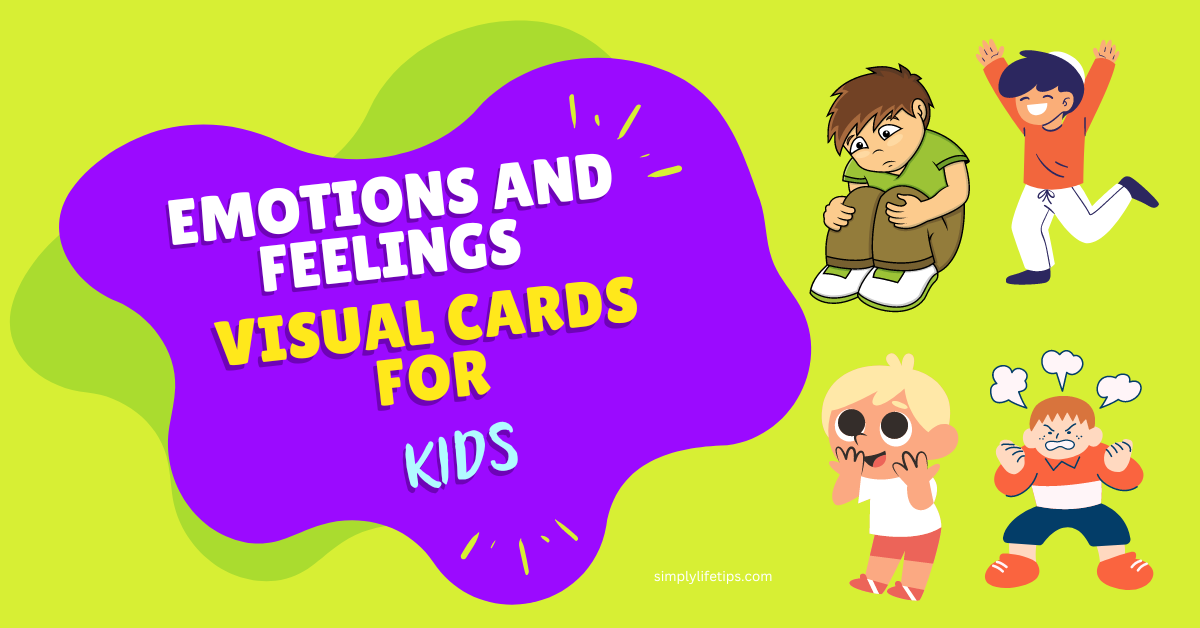
Emotions and feelings visual cards for kids are one of the simplest yet most powerful tools to help children understand what they feel and express it confidently. Many children struggle to name their emotions, which can lead to frustration, anger, or withdrawal. Visual cards make emotions easy to recognize, relatable, and fun to learn. In this guide, you will learn what these cards are, why they matter, and how to use them effectively at home or in classrooms.
Watch and Learn – Emotions and Feelings Visual Cards for Kids
Emotions and feelings visual cards for kids become even more effective when children can see real expressions in action. Watch this short video to understand how these visual cards help kids recognize and express emotions in everyday situations.
Now that you have seen how emotions are expressed visually, let’s understand how to use these emotions and feelings visual cards for kids in a simple and practical way at home or in the classroom.
What Are Emotions and Feelings Visual Cards?
Emotions cards are simple visual tools that show different facial expressions along with emotion words like happy, sad, angry, scared, and excited. These cards help children connect facial cues with emotional vocabulary.
For example:
- A smiling face = Happy
- A frowning face = Sad
- A red, tense face = Angry
These visual associations make it easier for young children to understand abstract emotions.
Why Emotional Learning Is Important for Kids?
Children are not born knowing how to manage emotions. They learn it gradually through experiences and guidance.
Using visual emotion cards helps children:
- Build emotional awareness
- Improve communication skills
- Reduce tantrums and frustration
- Develop empathy toward others
For instance, a child who can say “I feel angry” is less likely to express it through shouting or hitting.
Common Emotions Kids Should Learn
Instead of just showing images, it’s important to explain each emotion in simple terms.
Happy

Happy – Feeling joyful and content (e.g., playing with friends). Children feel happy when they laugh, play, or spend time with loved ones.
Sad

Sad – Feeling upset or disappointed (e.g., losing a toy). Children may feel sad when something they love is gone or when they miss someone.
Angry

Angry – Feeling mad or frustrated (e.g., when something feels unfair). This emotion often appears when things don’t go the way a child expects.
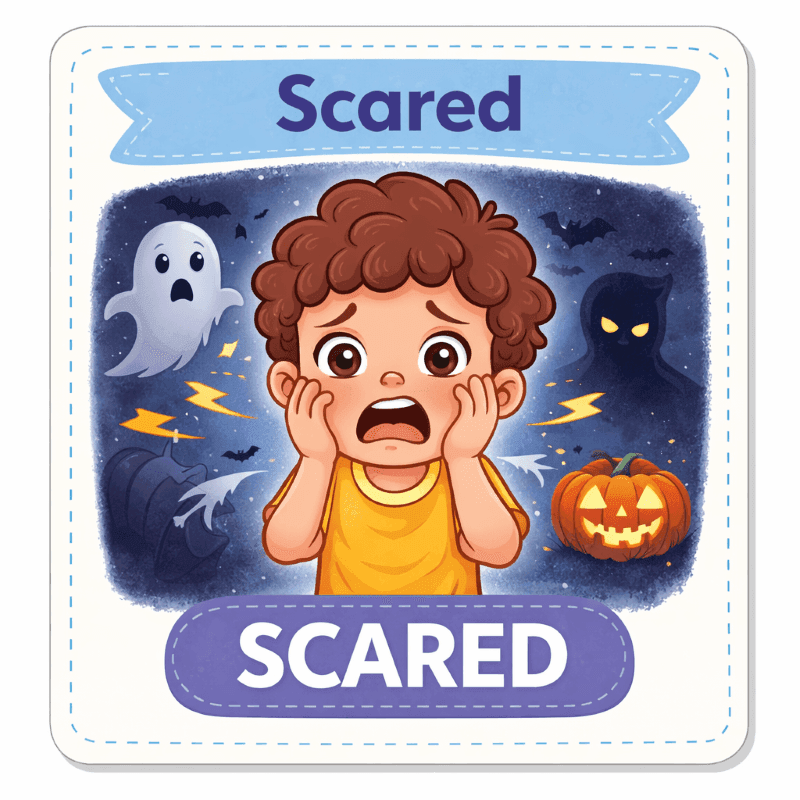
Scared

Scared – Feeling afraid (e.g., darkness or loud noise). Children may feel scared in unfamiliar or uncertain situations.
Excited
Excited – Feeling very happy and energetic (e.g., birthday). This emotion brings enthusiasm and high energy.
Confused
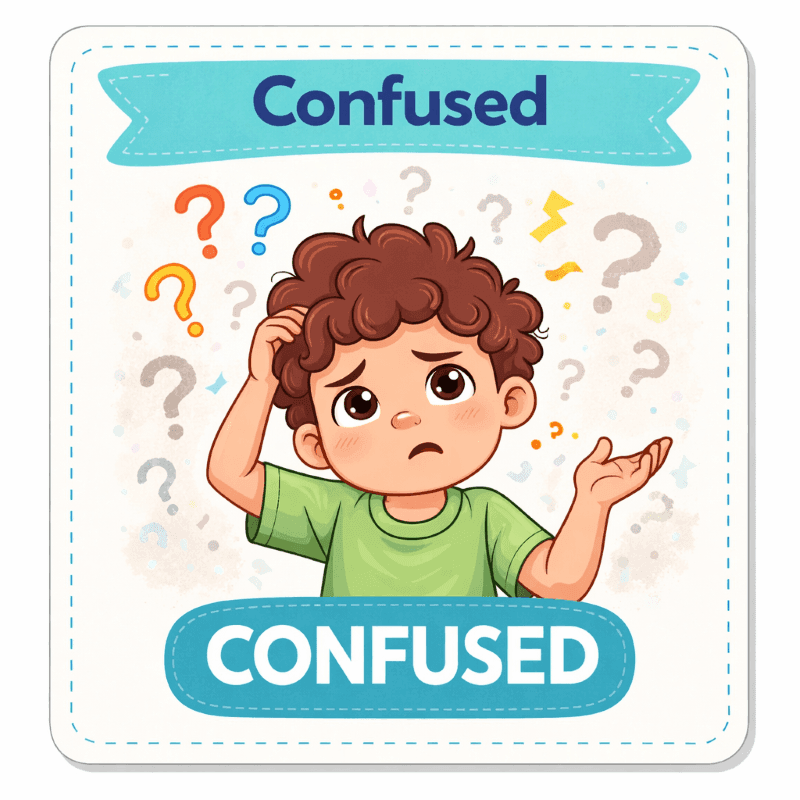
Confused – Not understanding something. Children feel confused when they face something new or unclear.
How to Use Emotions and Feelings Visual Cards at Home?
1. Daily Emotion Check
Ask your child: “Which card shows how you feel today?”
This builds a daily emotional habit.
2. Bedtime Reflection
At night, ask: “What made you happy or sad today?”
Helps kids process their day.
3. During Tantrums
Instead of reacting immediately, show cards and ask them to pick one
This helps shift from reaction → expression.
4. Storytelling Method
Use cards while telling stories: “How do you think this character feels?”
Builds empathy and understanding.
Benefits of Using Visual Emotion Cards
- Improves emotional intelligence early
- Helps children express feelings clearly
- Strengthens parent-child communication
- Supports school readiness and social skills
Children who understand emotions tend to perform better socially and academically.
Tips for Parents and Teachers
- Start with 5 basic emotions only
- Repeat consistently (daily use matters)
- Avoid forcing answers
- Encourage open conversation
Consistency is more important than perfection.
FAQs – Emotions and Feelings Visual Cards
At what age can children start using emotion cards?
Children as young as 2–3 years can begin recognizing basic emotions like happy and sad.
Do emotion cards really help reduce tantrums?
Yes, they help children express feelings verbally instead of reacting physically.
How many emotions should I teach first?
Start with 4–5 basic emotions and gradually expand.
Can these cards be used in schools?
Yes, they are widely used in classrooms to build emotional and social skills.
Are printable emotion cards effective?
Yes, printable cards are simple, accessible, and highly effective when used consistently.
Save this image for later and use these emotion cards with your kids anytime.

Conclusion
Emotions and feelings visual cards for kids are a simple yet powerful tool to help children understand themselves better. While visuals attract attention, it is the guidance and conversations around them that truly build emotional intelligence. By using these cards daily, parents and teachers can help children grow into emotionally strong and confident individuals.
Related Articles
- Vehicle Names And Sounds A To Z – Alphabet For Kids
- Shape Song Nursery Rhymes And Kids Songs
- English Alphabet Flashcards For Toddlers
- ABC Phonics For Kids | How To Spell English Words
PVM

Mathukutty P V is a Blogger, YouTuber, and Content Writer and the founder of Simply Life Tips. After taking voluntary retirement in 2017, he embraced a free lifestyle focused on learning, personal growth, and sharing practical wisdom to help others live with more purpose and positivity.



