Your brain is the most powerful organ in your body. Discovering effective ways to keep your brain healthy is one of the best investments you can make for your future. From remembering important moments to making smart decisions, solving problems, and controlling emotions, your brain works tirelessly every second of the day. Like every other part of your body, it requires proper care, nutrition, exercise, and rest to perform at its best.
Whether you’re a student preparing for exams, a working professional juggling multiple responsibilities, a parent managing a busy household, or a senior aiming to maintain cognitive function, adopting healthy daily habits can help protect your brain and enhance your quality of life.
Learn more about the human brain in the Age of Artificial Intelligence to understand how AI compares with human intelligence and why our brains remain uniquely powerful.
In this guide, you’ll discover 15 proven ways to keep your brain healthy, naturally improve memory, sharpen your focus, and support long-term cognitive health.
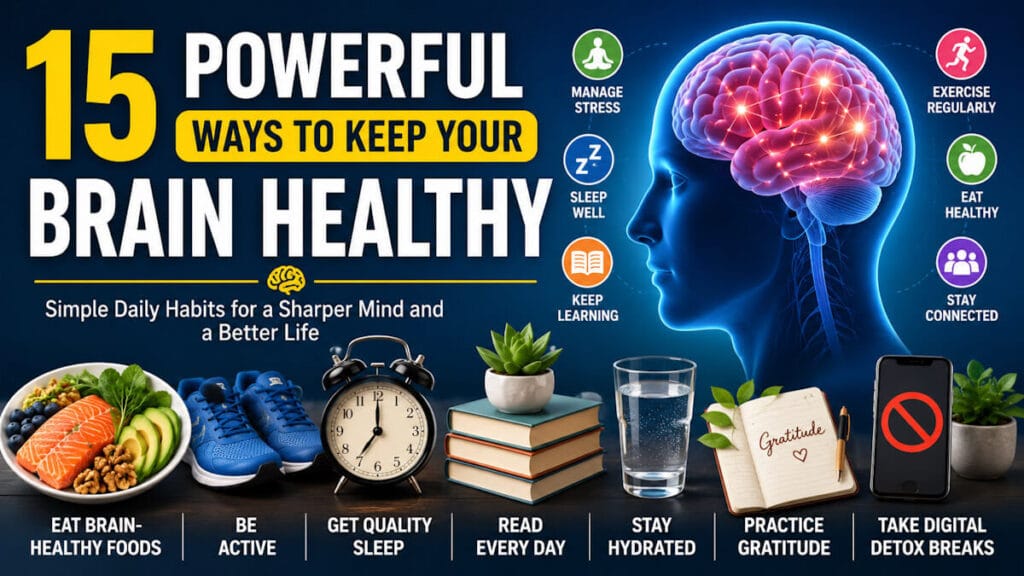
Ways to Keep Your Brain Healthy Infographic
Looking for practical ways to keep your brain healthy? This infographic summarizes the most important daily habits that support better memory, sharper focus, improved concentration, and long-term cognitive health. Save it for future reference and share it with your family and friends to encourage healthy brain habits at every age.

Keeping your brain healthy doesn’t require major lifestyle changes. By consistently following these ways to keep your brain healthy—such as exercising regularly, eating a nutritious diet, getting quality sleep, managing stress, staying socially connected, reading daily, and limiting screen time—you can strengthen your cognitive abilities and support lifelong mental well-being. Start with one or two habits today, and gradually build a routine that helps your brain perform at its best for years to come.
Why Is Brain Health Important?
Your brain is often compared to a supercomputer because it controls nearly every function in your body. It coordinates your thoughts, memories, emotions, movements, breathing, heartbeat, and even your personality. Every decision you make, every conversation you have, and every skill you learn depends on a healthy, well-functioning brain.
Although the brain naturally changes with age, research shows that many aspects of cognitive decline can be slowed by maintaining a healthy lifestyle. The choices you make every day play a significant role in determining how well your brain performs throughout your life.
Maintaining good brain health can help you:
- Improve memory and recall
- Increase concentration and attention span
- Think more clearly and solve problems faster
- Learn new skills more effectively
- Stay emotionally balanced
- Improve creativity and decision-making
- Reduce the risk of cognitive decline
- Support independence as you grow older
- Enhance productivity at work or school
- Improve overall quality of life
The earlier you begin taking care of your brain, the greater the long-term benefits. Fortunately, many of the best ways to keep your brain healthy are simple habits that anyone can incorporate into their daily routine.
A neurosurgeon with 25 years of expertise shares 10 daily habits that make the brain smarter.
How Does Lifestyle Affect Brain Health?
Many people believe that memory loss and slower thinking are unavoidable parts of aging. While aging does influence the brain, lifestyle choices often have a much greater impact than people realize.
For example:
- A nutritious diet supplies the vitamins, minerals, and healthy fats your brain needs to function efficiently.
- Regular physical activity increases blood flow and oxygen delivery to brain cells.
- Quality sleep allows your brain to repair itself, organize memories, and remove waste products.
- Continuous learning strengthens neural connections and improves mental flexibility.
- Managing stress protects areas of the brain responsible for memory and emotional regulation.
On the other hand, unhealthy habits such as smoking, excessive alcohol consumption, chronic sleep deprivation, physical inactivity, prolonged stress, and poor nutrition may gradually reduce cognitive performance over time.
The encouraging part is that the brain has an amazing ability called neuroplasticity. This means it can adapt, reorganize, and create new neural connections throughout life. Every positive habit you practice strengthens this remarkable ability.
What Happens When You Don’t Take Care of Your Brain?
Ignoring brain health can affect much more than memory. Over time, unhealthy habits may lead to physical, emotional, and cognitive challenges that interfere with everyday life.
Some common effects include:
Reduced Memory
You may forget appointments, names, important tasks, or where you placed everyday items.
Poor Concentration
Difficulty focusing can reduce productivity at work, affect academic performance, and make simple tasks feel overwhelming.
Increased Stress and Anxiety
A tired or overworked brain struggles to regulate emotions effectively, making you feel more anxious or irritable.
Slower Decision-Making
Brain fatigue can make it harder to process information quickly and make confident decisions.
Mental Exhaustion
Constant multitasking, excessive screen time, and lack of sleep may leave your mind feeling drained, even after a full day of rest.
Greater Risk of Cognitive Decline
Long-term unhealthy habits may increase the risk of age-related cognitive impairment and certain neurological conditions later in life.
The good news is that many of these issues can be improved or prevented by adopting healthy daily routines. Even small changes can have lasting effects when practiced consistently.
Small Habits Create Big Results
One of the biggest misconceptions about brain health is that you need to make dramatic lifestyle changes overnight. In reality, consistency matters far more than perfection.
Simple habits like taking a daily walk, reading a few pages of a book, eating more fruits and vegetables, staying hydrated, and getting enough sleep gradually strengthen your brain over time.
Think of brain health like saving money. Small deposits made consistently grow into something valuable over the years. Likewise, every healthy choice you make is an investment in your future mental well-being.
In the following sections, you’ll discover practical and science-backed ways to keep your brain healthy that can easily become part of your everyday life. These habits don’t require expensive equipment or special training—just a commitment to taking better care of your mind.
12 Proven Ways to Keep Your Brain Healthy
Modern lifestyles often expose us to chronic stress, poor eating habits, lack of sleep, excessive screen time, and physical inactivity. Over time, these habits can affect concentration, memory, creativity, and overall mental well-being. The encouraging news is that improving brain health doesn’t require expensive treatments or complicated routines. Small, consistent lifestyle changes can make a remarkable difference in how your brain functions today and how well it serves you as you age.
1. Stimulate Your Brain with New Challenges
One of the most effective ways to keep your brain healthy is to challenge it regularly. Just as lifting weights strengthens your muscles, mental stimulation strengthens the connections between brain cells. Every time you solve a problem, learn something unfamiliar, or think creatively, your brain forms and reinforces neural pathways that improve cognitive performance.
When your brain is exposed to new experiences, it becomes more adaptable and resilient. This ability, known as neuroplasticity, allows your brain to continue learning and growing throughout your life.
Simple activities that stimulate your brain include:
- Solving crossword puzzles and Sudoku
- Playing chess or strategy games
- Learning a new language
- Practicing a musical instrument
- Building jigsaw puzzles
- Trying brain-training apps
- Solving math problems
- Learning photography or painting
- Writing stories or keeping a journal
- Taking online courses
You don’t have to spend hours on these activities. Even 15 to 30 minutes of mental exercise each day can help improve concentration, memory, and problem-solving skills.
Why does mental stimulation matter?
Research suggests that people who continuously challenge their minds are more likely to maintain stronger cognitive function as they age. Learning new skills encourages the brain to build alternative neural pathways, making it more efficient at processing information.
For example, learning to play the guitar not only develops musical ability but also improves hand-eye coordination, listening skills, memory, and attention—all at the same time.
Easy Ways to Challenge Your Brain Every Day
If you’re wondering where to begin, start with simple changes to your routine:
- Use your non-dominant hand for everyday tasks.
- Memorize grocery lists instead of relying on your phone.
- Take a different route to work.
- Learn five new vocabulary words each week.
- Read books outside your usual interests.
- Play memory games with family members.
- Practice mental math instead of using a calculator.
These small changes encourage your brain to think differently and create stronger neural connections.
Real-Life Example
Imagine you’ve always relied on GPS for your daily commute. One day, you decide to navigate using memory instead. Your brain begins recalling landmarks, estimating distances, and planning turns. This simple activity engages multiple regions responsible for memory, attention, and spatial awareness.
Likewise, trying a new recipe instead of cooking from memory forces your brain to follow new instructions, improving learning and concentration.
The key is to stay curious. Every new challenge gives your brain another opportunity to grow stronger.
2. Exercise Regularly to Boost Brain Power
Among the most effective ways to keep your brain healthy, regular physical exercise is one of the most powerful. While many people associate exercise with weight management and heart health, it is equally important for maintaining a healthy brain.
Every time you exercise, your heart pumps more oxygen-rich blood throughout your body, including your brain. This increased blood flow nourishes brain cells, supports the growth of new neurons, and strengthens the connections between them. Exercise also stimulates the release of chemicals that improve learning, memory, and mood.
Studies have shown that people who exercise regularly often experience better concentration, faster thinking, and a lower risk of age-related cognitive decline.
Unlock your brainpower by mastering the 7 styles of thinking.
How Does Exercise Benefit Your Brain Health?
Regular physical activity can:
- Improve memory and learning
- Increase concentration and attention span
- Enhance problem-solving skills
- Reduce stress and anxiety
- Improve sleep quality
- Boost creativity
- Support emotional well-being
- Lower the risk of stroke and dementia
- Promote healthy blood circulation to the brain
Exercise also increases the production of Brain-Derived Neurotrophic Factor (BDNF), often called “brain fertilizer.” BDNF helps brain cells grow, communicate, and repair themselves more effectively.
Best Exercises for Brain Health
You don’t need intense workouts to support brain health. The best exercise is one you can enjoy consistently.
Excellent choices include:
- Brisk walking
- Jogging
- Cycling
- Swimming
- Dancing
- Yoga
- Tai Chi
- Strength training
- Hiking
- Aerobic exercises
Experts generally recommend at least 150 minutes of moderate physical activity each week, which equals about 30 minutes on most days.
Add More Movement to Your Day
Even if you have a busy schedule, you can stay active by:
- Taking the stairs instead of the elevator
- Walking during phone calls
- Stretching every hour while working
- Parking farther away from entrances
- Walking after meals
- Doing household chores
- Gardening
- Playing outdoor games with your children
Every movement counts.
Real-Life Example
Instead of spending your lunch break scrolling through social media, take a 20-minute walk outside. You’ll likely return feeling refreshed, more focused, and mentally energized for the rest of your workday.
Exercise is one of the easiest ways to keep your brain healthy, and the benefits often begin within just a few weeks of consistent activity.
3. Eat a Brain-Healthy Diet
Your brain consumes approximately 20% of your body’s daily energy, making proper nutrition essential for optimal cognitive performance. One of the smartest ways to keep your brain healthy is by choosing foods that nourish brain cells and reduce inflammation.
A healthy diet supports memory, concentration, mood, and long-term cognitive function. In contrast, diets high in processed foods, sugar, and unhealthy fats may contribute to brain fog, fatigue, and poor memory.
Nutrients Your Brain Needs
Your brain depends on several key nutrients, including:
- Omega-3 fatty acids
- Antioxidants
- B vitamins
- Vitamin D
- Vitamin E
- Magnesium
- Zinc
- Iron
- Protein
- Healthy fats
Each nutrient plays a role in maintaining healthy brain cells and supporting communication between neurons.
Foods That Support Brain Health
Include plenty of these foods in your meals:
Fatty Fish
Salmon, sardines, and mackerel are rich in omega-3 fatty acids, which support memory and learning.
Leafy Green Vegetables
Spinach, kale, and broccoli provide antioxidants and vitamins that protect brain cells.
Berries
Blueberries, strawberries, and blackberries contain powerful antioxidants that help reduce oxidative stress.
Nuts and Seeds
Walnuts, almonds, flaxseeds, and pumpkin seeds provide healthy fats and essential minerals.
Eggs
Eggs contain choline, an important nutrient involved in memory and brain development.
Whole Grains
Brown rice, oats, and whole wheat bread provide steady energy for the brain.
Olive Oil
Extra virgin olive oil contains healthy fats that support cardiovascular and brain health.
Dark Chocolate
In moderation, dark chocolate provides flavonoids that may improve blood flow to the brain.
Foods to Limit
Reduce your intake of:
- Sugary beverages
- Processed snacks
- Fast food
- Deep-fried foods
- Excessive red meat
- Highly refined carbohydrates
- Artificial trans fats
These foods may contribute to inflammation and negatively affect cognitive performance over time.
Example of a Brain-Healthy Day
Breakfast
Oatmeal topped with blueberries and walnuts.
Lunch
Grilled salmon with brown rice and steamed vegetables.
Snack
Apple slices with almond butter.
Dinner
Grilled chicken, quinoa, spinach salad, and avocado.
Small improvements to your diet can have lasting effects on brain function.
5 Brain Foods For Keeping Mind And Body Healthy
4. Protect Your Brain from Injury
One of the most overlooked ways to keep your brain healthy is by preventing head injuries. Even a mild traumatic brain injury can affect memory, concentration, mood, and decision-making.
Fortunately, many brain injuries are preventable with simple precautions.
Protect Yourself Every Day
Always:
- Wear a helmet while cycling or riding a motorcycle.
- Fasten your seat belt in every vehicle.
- Use protective equipment during sports.
- Prevent falls by keeping walkways clear.
- Install handrails where needed.
- Wear appropriate footwear with good grip.
- Avoid distracted driving.
- Never drive under the influence of alcohol or drugs.
Protect Older Adults
Falls are one of the leading causes of brain injury among older adults.
To reduce the risk:
- Improve lighting inside the home.
- Remove loose rugs.
- Install grab bars in bathrooms.
- Exercise regularly to improve balance.
- Schedule regular eye examinations.
Protecting your brain today helps preserve your cognitive abilities for the future.
5. Prioritize Quality Sleep
Sleep is not simply a time for rest—it’s when your brain performs some of its most important maintenance tasks. Getting enough sleep is one of the easiest ways to keep your brain healthy.
While you sleep, your brain:
- Organizes memories
- Strengthens learning
- Removes waste products
- Repairs damaged cells
- Restores energy
- Balances hormones
- Processes emotions
Without adequate sleep, even simple tasks can become difficult.
Signs You’re Not Getting Enough Sleep
You may notice:
- Brain fog
- Poor concentration
- Irritability
- Forgetfulness
- Low productivity
- Slower reaction times
- Increased stress
Adults should aim for 7–9 hours of quality sleep every night.
Tips for Better Sleep
Improve your sleep by:
- Going to bed at the same time daily.
- Keeping your bedroom cool and dark.
- Limiting caffeine after lunch.
- Avoid heavy meals before bedtime.
- Reducing screen time at least one hour before sleep.
- Reading a book instead of using your phone.
- Practicing relaxation exercises before bed.
Why Sleep Improves Memory
During deep sleep, your brain transfers information from short-term memory into long-term storage. This process makes it easier to recall information later.
For students and professionals alike, quality sleep is just as important as studying or working longer hours.
Good sleep at night is very important for good physical and mental health.
6. Never Stop Learning
Lifelong learning is one of the most rewarding ways to keep your brain healthy. Every time you acquire a new skill, your brain creates new neural pathways that improve adaptability and strengthen memory.
Learning doesn’t stop after school or college. In fact, continuing to learn throughout adulthood helps keep the brain flexible and engaged.
Skills Worth Learning
Consider learning:
- A new language
- Photography
- Public speaking
- Cooking
- Gardening
- Coding
- Painting
- Playing a musical instrument
- Creative writing
- Financial literacy
Learning keeps multiple areas of the brain active simultaneously.
Never Stop Learning: Always Update Your Knowledge
Benefits of Lifelong Learning
Continuous learning can:
- Improve memory
- Increase creativity
- Build confidence
- Enhance problem-solving skills
- Strengthen focus
- Delay cognitive decline
- Improve adaptability to change
Learn in Small Steps
You don’t need hours every day.
Try:
- Reading one chapter of a book.
- Watching educational videos.
- Listening to podcasts.
- Taking online courses.
- Practicing a hobby for 20 minutes.
- Attending workshops or community classes.
Real-Life Example
A retiree who begins learning photography develops new technical skills, explores creative thinking, practices observation, and stays socially engaged by joining photography groups. These combined activities provide excellent mental stimulation.
Keeping your curiosity alive is one of the most enjoyable ways to keep your brain healthy, regardless of your age.
7. Switch Your Daily Routine
One of the simplest yet most effective ways to keep your brain healthy is to break out of your daily routine. While routines make life easier, doing the same activities in the same way every day causes your brain to work on autopilot. Challenging yourself with new experiences forces your brain to create fresh neural pathways, improving mental flexibility and cognitive function.
Your brain thrives on novelty. Every time you encounter something unfamiliar, different parts of your brain become active as they process new information and adapt to change. This process strengthens neuroplasticity—the brain’s remarkable ability to reorganize itself throughout life.
Why does changing your routine help?
Trying new activities encourages your brain to:
- Think creatively
- Solve unfamiliar problems
- Improve memory
- Enhance attention
- Increase adaptability
- Strengthen decision-making skills
Small changes may seem insignificant, but they stimulate your brain in meaningful ways.
Easy Ways to Change Your Routine
You don’t need major life changes to keep your brain engaged. Try these simple ideas:
- Take a different route to work or school.
- Brush your teeth with your non-dominant hand.
- Rearrange your workspace or furniture.
- Cook a recipe you’ve never tried before.
- Visit a new café or park.
- Listen to a different music genre.
- Read books on unfamiliar topics.
- Try a new hobby every few months.
- Shop at a different grocery store.
- Learn a few words in another language each week.
Challenge Your Brain Regularly
Set yourself small weekly challenges such as:
- Memorizing a poem
- Solving a difficult puzzle
- Learning five new facts
- Writing with your opposite hand
- Visiting a museum or historical site
These activities encourage your brain to think in new ways and strengthen mental resilience.
Real-Life Example
Imagine you’ve always started your morning by checking your phone. Instead, spend the first 20 minutes reading a book or going for a short walk. This simple change encourages your brain to begin the day with focus instead of distractions.
Making small changes regularly is one of the easiest ways to keep your brain healthy, and it keeps life interesting at the same time.
8. Stay Socially Connected
Humans are naturally social beings, and meaningful relationships are essential for emotional and cognitive well-being. Spending time with family, friends, and your community is one of the most enjoyable ways to keep your brain healthy.
Social interaction activates multiple parts of the brain simultaneously. During conversations, your brain processes language, emotions, facial expressions, memory, and decision-making—all at once. These mental exercises help keep your brain active and engaged.
Benefits of Social Interaction
Maintaining strong relationships can:
- Improve memory
- Enhance communication skills
- Reduce stress
- Lower the risk of depression
- Increase self-confidence
- Improve emotional resilience
- Stimulate critical thinking
- Support healthy aging
People with active social lives often report better mental well-being and greater life satisfaction.
Ways to Stay Socially Active
Even if you have a busy schedule, there are many opportunities to connect with others.
Consider:
- Meeting friends for coffee
- Calling family members regularly
- Joining hobby clubs
- Volunteering in your community
- Participating in local events
- Attending fitness or yoga classes
- Joining a book club
- Playing board games with family
- Taking group classes
Meaningful conversations are often more beneficial than spending hours scrolling through social media.
Quality Matters More Than Quantity
Having a few close relationships is often more valuable than having hundreds of online acquaintances. Genuine emotional support helps reduce loneliness, which has been linked to poorer cognitive health.
Real-Life Example
A retired individual who joins a gardening club not only learns new skills but also builds friendships, shares experiences, and stays mentally active through regular interaction.
Strong relationships are among the most rewarding ways to keep your brain healthy throughout every stage of life.
9. Manage Stress Effectively
Stress is a normal part of life, but chronic stress can negatively affect your brain over time. Learning how to manage stress is one of the most important ways to keep your brain healthy.
When you’re stressed, your body releases cortisol, commonly known as the stress hormone. While cortisol is useful during emergencies, consistently high levels can interfere with memory, concentration, learning, and emotional regulation.
How Does Chronic Stress Affect the Brain?
Long-term stress may lead to:
- Difficulty concentrating
- Poor memory
- Mental fatigue
- Anxiety
- Depression
- Sleep problems
- Reduced productivity
- Emotional burnout
Managing stress helps protect the areas of the brain responsible for learning and memory.
Healthy Ways to Reduce Stress
You don’t need expensive therapies to reduce daily stress. Simple habits can make a significant difference.
Try:
- Deep breathing exercises
- Meditation
- Yoga
- Walking in nature
- Listening to relaxing music
- Reading
- Journaling
- Spending time with loved ones
- Practicing gratitude
- Engaging in hobbies
Practice Mindfulness
Mindfulness teaches you to focus on the present moment without worrying about the past or future.
Simple mindfulness exercises include:
- Paying attention to your breathing
- Observing your surroundings during a walk
- Eating meals without distractions
- Practicing guided meditation
Just 10 minutes a day can improve focus and emotional well-being.
Real-Life Example
After a stressful workday, instead of spending hours on social media, take a 20-minute walk in a nearby park while listening to calming music. This simple habit can lower stress levels and refresh your mind.
Managing stress consistently is one of the smartest ways to keep your brain healthy because it benefits both your mental and physical health.
10. Read Books Every Day
Reading is one of the easiest and most enjoyable ways to keep your brain healthy. Every page you read exercises multiple parts of your brain responsible for language, memory, imagination, concentration, and critical thinking.
Unlike passive entertainment, reading requires active mental engagement. As you read, your brain creates images, understands ideas, predicts outcomes, and stores information.
Benefits of Reading for Brain Health
Reading regularly can:
- Improve concentration
- Strengthen memory
- Expand vocabulary
- Increase knowledge
- Enhance imagination
- Improve analytical thinking
- Reduce stress
- Improve communication skills
Research suggests that lifelong readers often maintain stronger cognitive abilities as they age.
What Should You Read?
Choose topics that genuinely interest you.
Excellent options include:
- Fiction novels
- Biographies
- Self-improvement books
- History
- Science
- Business
- Travel
- Psychology
- Health and wellness
- Inspirational stories
Reading a variety of subjects exposes your brain to new ideas and perspectives.
Create a Daily Reading Habit
Building a reading routine doesn’t have to be difficult.
Try:
- Reading for 20–30 minutes every morning.
- Keeping a book beside your bed.
- Reading during your commute.
- Replacing some screen time with reading.
- Joining a book club for motivation.
Consistency matters more than the number of pages you finish each day.
Real-Life Example
Instead of spending 30 minutes scrolling through short videos before bed, read a chapter of an inspiring book. You’ll not only learn something valuable but also improve relaxation and sleep quality.
Reading is one of the most accessible ways to keep your brain healthy, requiring nothing more than curiosity and a good book.
Make Reading More Challenging
To maximize the benefits:
- Take notes while reading.
- Summarize each chapter in your own words.
- Discuss books with friends.
- Apply what you learn to real life.
- Explore books outside your comfort zone.
Active reading strengthens memory and deepens understanding, giving your brain an even better workout.
Human Brain in the Age of Artificial Intelligence
11. Avoid Harmful Substances
One of the most important ways to keep your brain healthy is to avoid substances that gradually damage brain cells and interfere with normal brain function. While occasional indulgence may not cause lasting harm for everyone, long-term use of alcohol, tobacco, recreational drugs, and certain harmful chemicals can significantly affect memory, concentration, decision-making, and emotional well-being.
Your brain relies on billions of nerve cells communicating with one another every second. Harmful substances can interrupt these signals, reduce blood flow to the brain, and increase inflammation, making it harder for your brain to perform efficiently.
How Harmful Substances Affect Your Brain?
Regular use of harmful substances may lead to:
- Poor memory
- Reduced concentration
- Slower reaction times
- Difficulty learning new information
- Mood swings
- Anxiety and depression
- Poor decision-making
- Sleep disturbances
- Increased risk of stroke
- Higher risk of dementia later in life
Protecting your brain from these risks is one of the smartest investments you can make in your long-term health.
Smoking and Brain Health
Smoking reduces oxygen delivery to the brain by damaging blood vessels and restricting healthy blood flow. It also increases the risk of stroke, cognitive decline, and several neurological diseases.
Quitting smoking can:
- Improve blood circulation
- Increase oxygen supply to brain cells
- Reduce inflammation
- Improve memory and concentration over time
- Lower the risk of stroke
No matter your age, quitting smoking provides benefits for both your brain and your overall health.
Alcohol and Cognitive Function
Excessive alcohol consumption can affect areas of the brain responsible for:
- Memory
- Judgment
- Coordination
- Learning
- Emotional control
Heavy drinking over many years may contribute to permanent brain damage and increase the risk of cognitive impairment.
If you choose to drink alcohol, moderation is essential.
Recreational Drugs
Many recreational drugs interfere with the brain’s communication system and can cause long-term changes in thinking, behavior, and emotional regulation.
Possible effects include:
- Impaired memory
- Reduced attention span
- Poor impulse control
- Difficulty making decisions
- Increased mental health problems
Seeking professional help is an important step if substance use becomes difficult to control.
Protect Your Brain Naturally
Instead of relying on harmful substances to cope with stress, choose healthier alternatives such as:
- Regular exercise
- Meditation
- Reading
- Spending time with loved ones
- Outdoor activities
- Creative hobbies
- Listening to music
- Practicing gratitude
Replacing unhealthy habits with positive ones is one of the most sustainable ways to keep your brain healthy.
12. Take Regular Digital Detox Breaks
Technology has transformed our lives, but excessive screen time can overwhelm the brain. Taking regular breaks from digital devices is one of the modern ways to keep your brain healthy.
Many people spend hours every day switching between smartphones, computers, tablets, televisions, and social media. Constant notifications and endless streams of information can overload your brain, making it difficult to concentrate or fully relax.
Signs You May Need a Digital Detox
You may benefit from reducing screen time if you often experience:
- Difficulty concentrating
- Mental fatigue
- Poor sleep
- Eye strain
- Constant distraction
- Reduced productivity
- Increased stress
- Feeling anxious without your phone
Taking intentional breaks allows your brain to recover from constant stimulation.
Benefits of a Digital Detox
Reducing screen time can help:
- Improve concentration
- Enhance memory
- Reduce stress
- Improve sleep quality
- Increase productivity
- Encourage creativity
- Strengthen relationships
- Improve emotional well-being
Your brain performs best when it has opportunities to rest without continuous digital interruptions.
Simple Digital Detox Ideas
You don’t have to eliminate technology.
Instead, try these practical habits:
- Keep phones away during meals.
- Turn off unnecessary notifications.
- Create screen-free mornings.
- Avoid screens one hour before bedtime.
- Leave your phone behind during short walks.
- Designate one evening each week as device-free.
- Spend weekends enjoying outdoor activities.
- Read a physical book instead of using an e-reader occasionally.
Create Healthy Technology Boundaries
Healthy boundaries help your brain stay focused.
For example:
- Check emails at scheduled times.
- Avoid multitasking across multiple devices.
- Limit social media usage.
- Use “Do Not Disturb” mode during focused work.
- Keep phones out of the bedroom while sleeping.
Small digital habits can significantly improve mental clarity over time.
Real-Life Example
Instead of scrolling through social media before bed, spend 30 minutes reading a book or practicing relaxation techniques. You’ll likely fall asleep faster and wake up feeling more refreshed.
Reducing unnecessary screen exposure is one of today’s most practical ways to keep your brain healthy. Looking for practical digital detox tips? Learn 10 Digital Detox Tips That Will Help You Reduce Screen Time and Improve Focus
Additional Ways to Keep Your Brain Healthy
The twelve habits discussed above form an excellent foundation for lifelong cognitive wellness. However, several additional lifestyle practices can further strengthen your brain, improve mental clarity, and support healthy aging.
When combined with the previous habits, these extra ways to keep your brain healthy create a comprehensive approach to protecting your most valuable organ.
Stay Hydrated Throughout the Day
One of the simplest yet most overlooked ways to keep your brain healthy is drinking enough water. Since the brain is made up of approximately 75% water, even mild dehydration can reduce concentration, memory, alertness, and mood.
Common signs of dehydration include:
- Brain fog
- Headaches
- Difficulty concentrating
- Fatigue
- Irritability
- Poor short-term memory
Aim to drink water consistently throughout the day rather than waiting until you feel thirsty.
Example: If you experience an afternoon energy slump, drink a glass of water before reaching for another cup of coffee. Proper hydration often restores alertness naturally.
Practice Gratitude Daily
Gratitude is more than a positive emotion—it supports better mental health and reduces chronic stress.
Benefits include:
- Lower stress levels
- Improved sleep
- Better emotional resilience
- Reduced anxiety
- Increased optimism
Simple gratitude habits include:
- Writing down three things you’re thankful for every evening.
- Thanking someone personally.
- Reflecting on positive moments before sleeping.
- Keeping a gratitude journal.
Developing a positive mindset is one of the easiest ways to keep your brain healthy while improving overall happiness.
Spend More Time in Nature
Nature provides a natural environment for mental recovery.
Research suggests that spending time outdoors may:
- Improve attention
- Reduce stress
- Enhance creativity
- Improve mood
- Lower mental fatigue
You don’t need to visit a national park to enjoy these benefits.
Try:
- Walking in a local park
- Gardening
- Hiking
- Sitting under a tree
- Watching birds
- Enjoying your morning tea outdoors
Even 20–30 minutes outside can refresh your mind.
Laugh More Often
Laughter activates multiple regions of the brain while reducing stress hormones.
Regular laughter may:
- Improve mood
- Reduce anxiety
- Strengthen relationships
- Increase creativity
- Improve emotional resilience
Watch a comedy, share funny stories, or spend time with people who make you smile.
A good laugh truly is healthy for your brain.
Limit Multitasking
Many people think multitasking improves productivity, but constantly switching between tasks actually exhausts the brain.
Instead, focus on completing one task before moving to the next.
Benefits include:
- Better concentration
- Improved memory
- Higher-quality work
- Reduced stress
- Increased efficiency
Techniques like the Pomodoro Method can help you stay focused.
Listen to Music
Listening to calming or instrumental music stimulates multiple areas of the brain involved in memory, learning, and emotional processing.
Music may help:
- Improve concentration
- Reduce stress
- Enhance creativity
- Improve mood
- Support relaxation
Classical music, piano pieces, nature sounds, and instrumental playlists are excellent choices for studying or working.
Keep Your Heart Healthy
What’s good for your heart is also good for your brain.
Managing conditions such as:
- High blood pressure
- High cholesterol
- Diabetes
- Obesity
helps protect the blood vessels that supply oxygen and nutrients to your brain.
Eat a balanced diet, exercise regularly, and attend routine medical check-ups.
Continue Building Meaningful Relationships
Strong social connections reduce loneliness and provide constant mental stimulation.
Stay connected by:
- Visiting friends and relatives.
- Joining community groups.
- Volunteering.
- Participating in local events.
- Attending hobby classes.
Meaningful relationships contribute significantly to lifelong brain health.
Practice Deep Breathing and Mindfulness
Mindfulness exercises calm your nervous system and improve focus.
Try:
- Five minutes of deep breathing.
- Guided meditation.
- Gentle yoga.
- Body scan exercises.
- Mindful walking.
These habits reduce cortisol levels and improve emotional balance.
Schedule Regular Health Check-ups
Preventive healthcare is one of the smartest ways to keep your brain healthy.
Regular medical examinations can detect conditions that affect brain function, including:
- Vitamin deficiencies
- Thyroid disorders
- High blood pressure
- Diabetes
- Hearing problems
- Vision changes
Early treatment helps protect cognitive function for years to come.
Simple Ways to Keep Your Brain Healthy Every Day
One of the easiest ways to build lasting habits is by following a simple daily routine. You don’t need to completely change your lifestyle overnight. Small, consistent actions practiced every day can make a significant difference in your cognitive health.
Here’s an example of a brain-friendly routine that combines many of the ways to keep your brain healthy discussed in this guide.
Morning
Start your day by giving your brain the energy it needs.
Upon waking:
- Drink a glass of water to rehydrate.
- Spend five minutes stretching or practicing deep breathing.
- Avoid checking your phone immediately.
Breakfast:
Choose foods that fuel your brain, such as:
- Oatmeal with berries and walnuts
- Whole-grain toast with eggs
- Greek yogurt with fruit and seeds
These foods provide steady energy and nutrients that support memory and concentration.
Morning Exercise:
Aim for 20–30 minutes of activity, such as:
- Brisk walking
- Jogging
- Cycling
- Yoga
Exercise boosts blood flow to the brain and prepares you for a productive day.
During Work or School
Keep your brain active throughout the day.
Healthy habits include:
- Work in focused sessions of 25–50 minutes.
- Take short movement breaks every hour.
- Stay hydrated.
- Eat a balanced lunch.
- Avoid multitasking.
- Learn something new during your break.
These habits improve productivity while reducing mental fatigue.
Afternoon
As energy levels naturally decline, support your brain by:
- Taking a short walk outdoors.
- Eating healthy snacks like fruit or nuts.
- Drinking water.
- Having meaningful conversations with colleagues or friends.
Avoid excessive caffeine and sugary snacks, which may lead to energy crashes later.
Evening
Slow down and allow your brain to recover.
Good evening habits include:
- Spending time with family.
- Reading a book.
- Practicing gratitude.
- Limiting screen time.
- Preparing for the next day.
Replacing social media scrolling with reading or conversation gives your brain valuable mental stimulation.
Before Bed
Quality sleep is essential for memory and learning.
Create a relaxing bedtime routine by:
- Turning off electronic devices one hour before sleep.
- Reading a book.
- Practicing meditation.
- Keeping your bedroom cool and quiet.
- Sleeping at the same time every night.
Consistent sleep schedules are among the most effective ways to keep your brain healthy over the long term.
Habits That Can Harm Brain Health
While healthy habits strengthen your brain, unhealthy habits can gradually reduce cognitive function. Many people unknowingly engage in behaviors that increase their risk of memory problems, poor concentration, and mental fatigue.
Recognizing these habits is the first step toward making positive changes.
1. Not Getting Enough Sleep
Chronic sleep deprivation affects:
- Memory
- Learning
- Attention
- Mood
- Decision-making
Even losing one or two hours of sleep regularly can reduce cognitive performance.
2. Living a Sedentary Lifestyle
Sitting for long periods reduces blood circulation and may increase the risk of cognitive decline.
Break up long periods of sitting by standing, stretching, or walking every hour.
3. Eating Too Much Processed Food
Highly processed foods often contain excessive sugar, unhealthy fats, and sodium that may contribute to inflammation and poor brain health.
Instead, choose whole, nutrient-rich foods whenever possible.
4. Chronic Stress
Uncontrolled stress increases cortisol levels, which can interfere with memory and emotional regulation.
Practice stress-management techniques daily rather than waiting until stress becomes overwhelming.
5. Smoking
Smoking damages blood vessels and reduces oxygen delivery to the brain, increasing the risk of stroke and cognitive decline.
Quitting smoking benefits your brain at any age.
6. Excessive Alcohol Consumption
Heavy drinking can impair learning, memory, judgment, and coordination.
Moderation is important for protecting brain function.
7. Too Much Screen Time
Constant exposure to digital devices can contribute to:
- Poor concentration
- Mental fatigue
- Sleep disruption
- Reduced productivity
Regular digital detox periods help your brain recover.
8. Social Isolation
Humans need meaningful social interaction.
Loneliness has been associated with increased risks of depression, anxiety, and cognitive decline.
Stay connected with friends, family, and your community.
9. Never Challenging Your Brain
Doing the same activities every day without learning new skills may reduce mental flexibility.
Keep your brain active by reading, solving puzzles, learning new hobbies, and exploring new experiences.
10. Ignoring Health Conditions
Conditions such as:
- High blood pressure
- Diabetes
- High cholesterol
- Hearing loss
- Vision problems
All can affect brain health if left untreated.
Regular medical check-ups help detect these issues early.
Avoiding these unhealthy habits is just as important as practicing positive ways to keep your brain healthy.
Benefits of Following These Ways to Keep Your Brain Healthy
When practiced consistently, these healthy habits provide benefits that extend far beyond memory.
Improved Memory
Your brain stores and retrieves information more efficiently, making it easier to remember names, appointments, and important details.
Better Focus and Concentration
Healthy habits help reduce distractions and improve attention span, allowing you to work and study more effectively.
Increased Productivity
A healthy brain processes information faster, helping you complete tasks with greater accuracy and efficiency.
Greater Emotional Well-being
Managing stress, staying active, and maintaining social connections improve mood while reducing anxiety and depression.
Better Decision-Making
Sharper thinking allows you to evaluate situations more clearly and make better choices.
Reduced Risk of Cognitive Decline
Healthy lifestyle habits may lower the risk of age-related memory loss and support long-term cognitive function.
Improved Creativity
A well-rested, healthy brain generates ideas more easily and solves problems more effectively.
Better Quality of Life
When your brain functions well, everyday activities become easier, relationships improve, and you enjoy greater independence throughout life.
Frequently Asked Questions
What are the best ways to keep your brain healthy?
The best ways include exercising regularly, eating a balanced diet, getting 7–9 hours of sleep, staying mentally active, managing stress, reading books, maintaining social connections, staying hydrated, and limiting excessive screen time.
Which foods are best for brain health?
Brain-friendly foods include fatty fish, walnuts, blueberries, leafy green vegetables, eggs, whole grains, olive oil, avocados, seeds, and other antioxidant-rich fruits and vegetables.
Can exercise really improve brain function?
Yes. Regular physical activity improves blood flow to the brain, supports the growth of new brain cells, enhances memory, improves concentration, and may reduce the risk of cognitive decline.
How does sleep affect brain health?
During sleep, the brain consolidates memories, repairs cells, removes waste products, and processes information. Adults should aim for 7–9 hours of quality sleep each night for optimal cognitive function.
Is it ever too late to improve brain health?
No. Thanks to the brain’s ability to adapt through neuroplasticity, adopting healthy habits at any age can improve memory, focus, learning, and overall cognitive well-being.
Conclusion
Your brain works tirelessly every moment of every day, controlling your thoughts, emotions, memories, and decisions. Taking care of it isn’t something to postpone in life—it’s a lifelong commitment that begins with the choices you make today.
The good news is that you don’t need expensive supplements or complicated routines to protect your cognitive health. Simple lifestyle changes such as exercising regularly, eating nutritious foods, sleeping well, staying socially connected, managing stress, reading books, and taking regular breaks from digital devices are some of the most effective ways to keep your brain healthy.
Remember, lasting results come from consistency rather than perfection. Start with one or two healthy habits this week and gradually build on them. Every positive choice strengthens your brain, improves your mental well-being, and prepares you for a healthier, more productive future.
Your brain is your greatest asset. Invest in it every day, and it will continue to serve you well for years to come.
External Resources
For more evidence-based information on brain health, visit:
- World Health Organization (WHO): https://www.who.int
- National Institute on Aging (NIA): https://www.nia.nih.gov
- Alzheimer’s Association: https://www.alz.org
Thanks for reading! Stay healthy, stay active, and keep learning with Simply Life Tips
— PVM

Mathukutty P V is a Blogger, YouTuber, and Content Writer and the founder of Simply Life Tips. After taking voluntary retirement in 2017, he embraced a free lifestyle focused on learning, personal growth, and sharing practical wisdom to help others live with more purpose and positivity.