
Misconceptions about healing often create unrealistic expectations that leave people feeling frustrated, discouraged, or even broken when their recovery journey does not unfold as expected. Society frequently portrays healing as a straight path where pain disappears, wounds close permanently, and life returns to normal. However, genuine healing is far more complex, personal, and transformative.
Understanding these misconceptions about healing can help create healthier expectations and encourage a more compassionate approach toward personal growth and recovery.
The G.R.A.C.E. Method for Emotional Healing provides a gentle and practical approach to managing emotional triggers. Encouraging self-awareness, calming the nervous system, and fostering mindful responses, it helps individuals move from automatic reactions to thoughtful, balanced actions.
10 Misconceptions About Healing
One of the biggest misconceptions about healing is the belief that people should completely “move on” from trauma. The truth is that healing rarely means forgetting. Instead, it involves learning how to move forward while treating yourself with compassion, understanding, and patience. Over time, healing can transform pain into wisdom, resilience, and deeper self-awareness. The difficult experiences may remain part of your story, but they no longer define your entire identity.
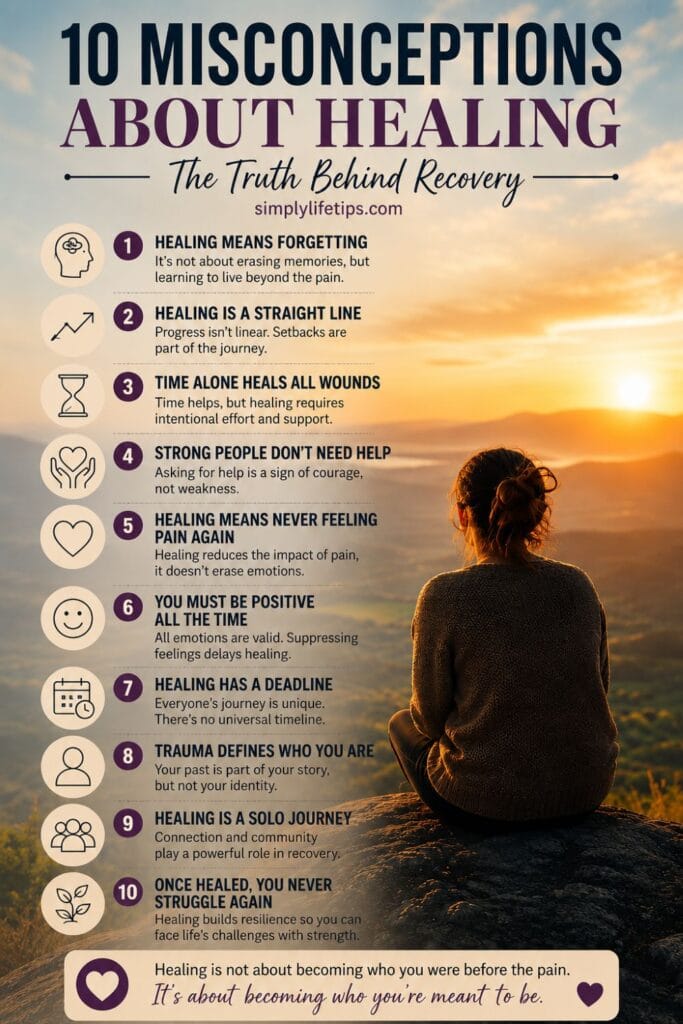
1. Healing Means Forgetting What Happened
Many people assume that healing requires erasing painful memories or pretending traumatic experiences never occurred. This belief often causes individuals to feel like failures when memories continue to surface.
The reality is quite different. Healing does not require forgetting. Human experiences become part of our personal history. The goal is not memory loss but reducing the emotional power those memories hold over daily life.
For example, someone who experienced childhood adversity may still remember those events years later. However, through healing, those memories become less overwhelming and less likely to control decisions, emotions, or relationships.
Healing Childhood Emotional Trauma: Strategies and Benefits
True healing allows you to remember without being consumed by the memory.
2. Healing Is a Straight-Line Process
One of the most damaging misconceptions about healing is the expectation that progress should happen steadily without setbacks.
In reality, healing often involves ups and downs. Some days may feel productive and hopeful, while others may bring unexpected emotions, anxiety, or sadness.
Imagine someone recovering from grief. They may feel strong and positive for weeks before suddenly experiencing intense sadness triggered by a song, photograph, or anniversary. This does not mean healing has failed. It simply reflects the natural complexity of human emotions.
Progress in healing is rarely linear. Growth often includes temporary setbacks.
3. Time Alone Heals All Wounds
People often repeat the phrase, “Time heals everything.” While time can create distance from painful events, time alone does not automatically heal emotional wounds.
Without reflection, support, healthy coping strategies, or self-awareness, unresolved pain can remain active for years.
Consider two individuals who experience similar losses. One actively processes emotions, seeks support, and learns healthy coping methods. The other suppresses feelings and avoids discussing the experience. Years later, their healing outcomes may be dramatically different despite the same amount of time passing.
Healing requires intentional effort, not just the passage of time.
4. Strong People Don’t Need Help
Many individuals believe that seeking help indicates weakness. This misconception prevents countless people from accessing valuable support systems.
In reality, asking for help often demonstrates courage and self-awareness. Whether through trusted friends, family members, support groups, or professional guidance, healing frequently happens through connection.
Humans are social beings. Emotional support can provide perspective, validation, encouragement, and practical tools for navigating difficult experiences.
Strength is not carrying every burden alone. Strength includes knowing when support is needed.
5. Healing Means Never Feeling Pain Again
Another common myth suggests that healed individuals never experience sadness, fear, anger, or emotional discomfort.
The truth is that emotional pain remains part of the human experience. Healing does not eliminate emotions; it changes how we respond to them.
A person who has healed from trauma may still experience difficult feelings when faced with reminders of past events. The difference is that these emotions no longer dominate their entire life or sense of identity.
Healing builds emotional resilience, not emotional numbness.
6. You Must Be Positive All the Time
Positive thinking can be beneficial, but forcing positivity can actually interfere with healing.
Some people feel pressured to stay optimistic at all times, avoiding difficult emotions because they fear negativity indicates weakness or failure.
Healthy healing requires acknowledging reality. Anger, grief, disappointment, fear, and sadness deserve attention rather than suppression.
For example, someone recovering from betrayal may need to process feelings of hurt and anger before reaching acceptance. Pretending everything is fine often delays genuine recovery.
Authentic healing embraces all emotions, not just positive ones.
7. Healing Has a Deadline
Many people compare their recovery timeline with others and wonder why they are not “over it” yet.
The truth is that healing operates on an individual timetable. Factors such as personality, support systems, life circumstances, and the nature of the experience all influence recovery.
Someone may recover from a difficult breakup within months, while another person may require years to rebuild trust and confidence. Neither experience is inherently right or wrong.
Healing is personal, and there is no universal timeline for recovery.
8. Trauma Defines Who You Are
One of the most harmful misconceptions about healing is the belief that painful experiences permanently define identity.
Trauma can certainly influence beliefs, behaviors, and emotional patterns. However, it does not determine a person’s entire future.
People are far more than the worst events they have experienced. Healing helps individuals reconnect with strengths, values, passions, and possibilities that exist beyond their pain.
A survivor may carry the memory of trauma while simultaneously building meaningful relationships, pursuing goals, and discovering new purpose.
Your experiences are part of your story, but they are not the whole story.
9. Healing Is a Solo Journey
Popular culture often portrays healing as a private battle fought entirely alone.
While personal responsibility is important, meaningful healing frequently occurs through relationships and community.
Supportive friendships, family connections, mentors, counselors, and peer groups can provide emotional safety and encouragement. Sharing experiences with people who genuinely understand can reduce feelings of isolation and shame.
Healing may begin within, but it often grows through connection.
10. Once Healed, You Never Struggle Again
Many people imagine healing as a permanent destination where emotional challenges disappear forever.
Life, however, continues to present new obstacles, losses, and transitions. Even after significant healing, difficult emotions may occasionally return.
The difference is that healed individuals possess stronger coping skills, greater self-awareness, and increased confidence in their ability to navigate challenges.
Healing is less about reaching a perfect destination and more about developing the capacity to handle life’s complexities with resilience.
Healing equips you for future challenges rather than making challenges disappear.
What True Healing Actually Looks Like?
Setting healthy boundaries in relationships is essential for respect and emotional balance.
True healing is often quieter than people expect. It may look like:
- Setting healthy boundaries without guilt.
- Recognizing emotional triggers and responding thoughtfully.
- Showing yourself compassion during difficult moments.
- Building healthier relationships.
- Feeling emotions without becoming overwhelmed by them.
- Accepting the past while focusing on the future.
- Developing confidence in your ability to recover from setbacks.
- Finding meaning and growth through adversity.
Healing is not perfection. It is progress.
It is not forgetting. It is understanding.
It is not becoming who you were before the pain. It is becoming a stronger and wiser version of yourself because of what you have learned.
FAQs – Misconceptions About Healing
What is the biggest misconception about healing?
One of the biggest misconceptions about healing is the belief that people must completely forget traumatic experiences. Healing is usually about learning to live beyond the pain rather than erasing the memory.
Does healing from trauma mean the pain disappears completely?
No. Healing often reduces the intensity and impact of emotional pain, but memories and feelings may still exist. The difference is that they no longer control your life.
Why does healing take so long?
Healing involves emotional processing, self-discovery, behavioral changes, and resilience-building. Every person’s journey is unique, making recovery timelines different for everyone.
Can healing happen without professional help?
Some people heal through personal reflection, supportive relationships, and healthy coping strategies. However, professional support can provide valuable tools and guidance, especially for complex trauma.
How do I know if I am healing?
Signs of healing include increased self-awareness, healthier relationships, better emotional regulation, stronger boundaries, and greater confidence in handling life’s challenges.
Conclusion
Understanding the common misconceptions about healing can transform the way we view recovery and personal growth. Healing is not about forgetting painful experiences, eliminating every negative emotion, or reaching a perfect state of happiness. It is about developing the ability to carry your experiences with wisdom rather than being controlled by them.
The most powerful realization is that trauma does not have to define your future. As healing unfolds, pain can gradually become a source of insight, strength, empathy, and resilience. The past remains part of your story, but it no longer determines who you are or who you can become.
Have you ever believed that healing meant completely forgetting the pain you once experienced?
If this resonated with you, share it with someone who needs it.
PVM

Mathukutty P V is a Blogger, YouTuber, and Content Writer and the founder of Simply Life Tips. After taking voluntary retirement in 2017, he embraced a free lifestyle focused on learning, personal growth, and sharing practical wisdom to help others live with more purpose and positivity.