

Setting healthy boundaries in relationships is essential for building trust, maintaining mutual respect, and protecting your emotional well-being. Whether you are dealing with a partner, family member, friend, or colleague, clear boundaries help ensure that your needs, feelings, and personal values are respected.
Many people believe that love means constant sacrifice, always saying yes, or putting others’ needs before their own. However, ignoring your personal limits can lead to emotional exhaustion, frustration, and resentment. A healthy relationship does not require you to lose your identity or tolerate disrespect to keep someone happy.
Learning to establish boundaries is not about controlling others or creating distance. It is about communicating what you consider acceptable, respecting individual differences, and building relationships where everyone feels safe, valued, and understood.
What Does Setting Healthy Boundaries in Relationships Mean?
Setting healthy boundaries in relationships means clearly defining your personal limits and communicating how you expect others to treat you. These boundaries protect your emotional, mental, and physical well-being while allowing you to maintain meaningful connections.
They help you identify behaviours that make you uncomfortable, express your needs, and decide what you will or will not accept. For example, you may expect your partner to respect your privacy, avoid hurtful language during disagreements, or understand your need for personal time.
Boundaries are not restrictions imposed on another person. They are standards you establish for yourself and the way you participate in a relationship.
For instance, instead of demanding that your partner never raise their voice, you could say, “I am willing to discuss disagreements, but I will take a break if our conversation becomes insulting.”
This communicates your expectations while explaining how you will respond if your limits are crossed.
Establishing boundaries encourages mutual understanding, protects self-worth, and creates a healthier balance between togetherness and individuality.
Why Is Setting Healthy Boundaries in Relationships Important?
Healthy boundaries help people maintain their identity, protect their emotional health, and develop respectful relationships. Here are five important reasons to establish them.
1. Protects Self-Worth and Dignity
Your feelings, opinions, and personal values deserve respect. Setting boundaries helps you communicate that you will not accept repeated disrespect, manipulation, or behaviour that damages your self-esteem.
For example, if someone regularly makes hurtful comments about your appearance, you can explain that such remarks are unacceptable. This reinforces your self-respect and establishes expectations for future interactions.
2. Prevents Resentment and Emotional Exhaustion
Constantly agreeing to requests, even when you feel uncomfortable, can create frustration and emotional exhaustion. Over time, you may begin to resent people who repeatedly expect you to sacrifice your own needs.
Healthy boundaries allow you to say no when necessary, manage your responsibilities, and protect your emotional energy.
For example, you can tell a friend that you are unable to help with a particular task because you have other commitments. A genuine friendship should allow room for individual needs.
3. Improves Communication and Understanding
Clear boundaries encourage honest conversations about expectations, feelings, and personal preferences. Instead of expecting others to understand your needs automatically, you learn to express them respectfully.
For example, if you need some quiet time after a stressful day, explain this to your partner rather than becoming irritated when they expect your attention.
Open communication reduces misunderstandings and helps both people understand each other’s needs.
Healthy relationships depend on mutual respect, open communication, and understanding. The American Psychological Association explains the importance of healthy relationships, including constructive communication and resolving disagreements respectfully.
4. Promotes Independence and Personal Growth
A healthy relationship should support individuality rather than demand constant togetherness. Boundaries allow you to maintain friendships, pursue personal interests, and spend time developing your skills.
For example, continuing your hobbies, meeting friends, or setting aside time for personal goals does not mean you love your partner any less.
Maintaining your independence helps prevent unhealthy emotional dependency and makes relationships more balanced.
5. Builds Trust and Emotional Safety
When people respect each other’s boundaries, they develop a greater sense of security and trust. Both individuals know that their feelings, privacy, and personal space will be treated with consideration.
This creates an environment where people can express themselves without constantly worrying about criticism, pressure, or rejection.
Healthy boundaries therefore strengthen relationships by making mutual respect a consistent part of everyday interactions.

What Happens When You Do Not Set Healthy Boundaries?
Failing to establish personal boundaries can create problems in different areas of life. When people repeatedly ignore their own needs or tolerate disrespectful behaviour, relationships can become emotionally exhausting.
Setting healthy boundaries in relationships allows individuals to express their needs while maintaining love, trust, and mutual respect.
Some common consequences include:
1. People May Take You for Granted
When you constantly agree to requests, others may begin to assume that you are always available. Your willingness to help can gradually become an expectation rather than something they appreciate.
For example, a friend may repeatedly ask you to complete personal tasks because you never refuse. Eventually, your own responsibilities may suffer.
2. Emotional Stress and Frustration Increase
Suppressing your feelings to avoid arguments can create hidden resentment. You may appear agreeable on the outside while feeling disappointed or unhappy inside.
Over time, these unresolved emotions can affect your relationship and general well-being.
3. Personal Identity May Suffer
When your life revolves entirely around another person’s expectations, you may lose interest in your own hobbies, friendships, and ambitions.
Healthy relationships should allow both individuals to maintain their identities and pursue personal growth.
4. Workplace Relationships Can Become Unhealthy
Boundaries are equally important in professional relationships. Constantly accepting additional responsibilities, responding to work messages outside working hours, or allowing colleagues to interrupt your personal time can lead to stress and burnout.
For example, you can politely explain that you will address a non-urgent work request during office hours rather than sacrificing your family time.
5. Disrespectful Behaviour May Continue
When you never communicate what makes you uncomfortable, others may not understand where your limits lie. Some may even continue behaviour that hurts you.
Learning to express your expectations helps establish a healthier standard of interaction.
Repeated disrespect, poor communication, and unrealistic expectations can gradually damage even close relationships. Recognising these warning signs early can help you avoid things that silently destroy relationships and take steps towards building healthier connections.
Signs You Need Better Boundaries in Relationships
Sometimes, people do not recognise that their personal boundaries are weak until they experience repeated frustration or emotional exhaustion.
Recognising these warning signs is an important step towards setting healthy boundaries in relationships and protecting your emotional well-being.
The following signs may indicate that you need to establish clearer limits.
1. You Constantly Please Others
You regularly prioritise other people’s happiness over your own needs. You may agree to activities or responsibilities even when you do not have the time or energy.
Remember that maintaining a healthy relationship does not require constant sacrifice.
2. You Feel Guilty About Saying No
If refusing a request makes you feel selfish or uncomfortable, you may struggle with setting personal limits.
Saying no respectfully is a normal part of maintaining a balanced life. You do not need to accept every request to prove that you care about someone.
3. You Feel Emotionally Exhausted
You may feel drained after conversations or interactions because you are constantly managing other people’s expectations and emotions.
Supporting someone is important, but you should not neglect your own emotional needs.
4. You Have No Personal Time
If your daily routine revolves entirely around another person, you may gradually lose your independence.
Personal time allows you to rest, pursue interests, and maintain relationships outside your immediate partnership.
5. You Avoid Difficult Conversations
You may remain silent even when someone behaves disrespectfully because you fear arguments, rejection, or disappointment.
Avoiding every difficult conversation does not solve the underlying problem. Respectful communication is necessary for healthy relationships.
Types of Healthy Boundaries in Relationships
Boundaries differ according to individual needs, personal values, and the nature of a relationship. Understanding the different types can help you identify where clearer limits are necessary.
Understanding these different types makes setting healthy boundaries in relationships easier because you can identify your personal needs in different situations.
1. Emotional Boundaries
Emotional boundaries protect your feelings and mental well-being. They help you understand that you can support another person without taking complete responsibility for their emotions.
For example, you can listen to a friend’s problems while recognising that you cannot solve every difficulty they experience.
You can also refuse to participate in conversations that involve repeated insults, manipulation, or emotional pressure.
Boundaries are important in different areas of life, including personal relationships and the workplace. HelpGuide’s advice on setting healthy boundaries in relationships explains why recognising personal limits and communicating expectations are essential for maintaining respectful connections.
2. Physical Boundaries
Physical boundaries relate to personal space, physical comfort, and touch. Everyone has different preferences regarding physical contact, and these preferences deserve respect.
For example, you may prefer a handshake instead of a hug or need personal space after a tiring day.
Consent and respect are essential in every relationship, including marriage and long-term partnerships.
3. Time Boundaries
Time boundaries help you balance relationships with work, family responsibilities, rest, and personal interests.
For example, you may decide not to answer non-urgent calls during working hours or reserve weekends for family activities.
Respecting each other’s time prevents unnecessary pressure and encourages a healthier routine.
4. Communication Boundaries
Communication boundaries establish how people should speak and interact with each other.
For example, you may expect disagreements to be discussed without shouting, insults, threats, or humiliating remarks.
You can say, “I want to resolve this issue, but I cannot continue the conversation while we are shouting. Let’s discuss it when we are both calm.”
Respectful communication makes it easier to resolve disagreements without damaging emotional trust.
5. Digital Boundaries
Digital boundaries protect privacy and encourage responsible use of technology.
They may include respecting personal phones, avoiding unnecessary monitoring of messages, agreeing on social media privacy, and limiting phone usage during family time.
For example, both partners can agree to keep their phones aside during meals to enjoy meaningful conversations.
6. Financial and Material Boundaries
Financial and material boundaries relate to money, possessions, and personal belongings.
For example, you may decide not to lend money beyond your financial capacity or expect others to ask before using your personal belongings.
These boundaries help prevent financial pressure, misunderstandings, and resentment.

How to Set Healthy Boundaries in Relationships Without Guilt
Understanding the importance of boundaries is only the beginning. You also need to learn how to communicate and maintain them in everyday situations.
Setting healthy boundaries in relationships becomes easier when you communicate your needs clearly and remain consistent with your decisions.
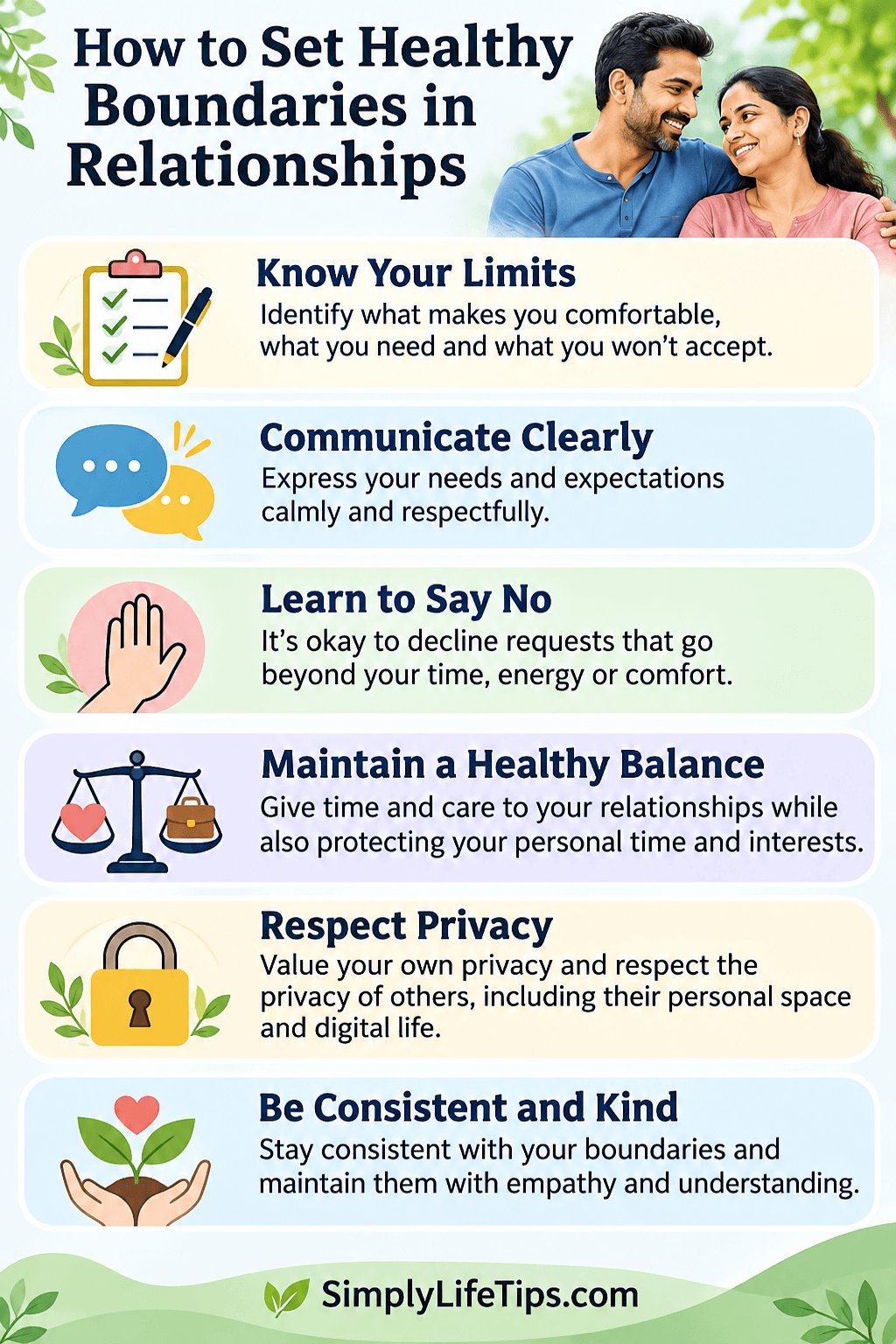
Here are practical steps to help you establish healthy boundaries.
1. Understand Your Personal Limits
Begin by identifying situations that make you uncomfortable, stressed, or emotionally exhausted.
Ask yourself:
- What behaviour makes me feel disrespected?
- When do I feel pressured to agree?
- How much personal time do I need?
- Which values are important to me?
- What situations affect my emotional well-being?
Understanding your feelings helps you recognise where boundaries are necessary.
Recognising your personal limits is the first step towards establishing healthier relationships. According to the Cleveland Clinic’s guide to setting healthy boundaries, understanding your needs and communicating them clearly can help protect your well-being.
2. Communicate Clearly and Respectfully
Once you understand your needs, explain them using simple and direct language.
Avoid expecting others to guess what you want. Clear communication reduces confusion and helps people understand your expectations.
For example, instead of saying, “You never respect my time,” try saying, “I feel frustrated when plans change without informing me. Please let me know in advance.”
Sometimes, finding the right words to express your limits can be difficult. Using polite phrases for setting boundaries can help you communicate your expectations firmly without sounding rude or disrespectful.
3. Learn to Say No
Saying no is an important part of establishing personal boundaries.
You can refuse a request without being rude or disrespectful.
For example:
- “I appreciate your request, but I cannot take on another responsibility right now.”
- “I need some time for myself today.”
- “I am not comfortable discussing this subject.”
- “I cannot lend money at the moment.”
You do not need to provide lengthy explanations every time you decline something.
4. Be Consistent
Boundaries become meaningful when you apply them consistently.
If you repeatedly ignore your own limits, others may become confused about your expectations.
For example, if you have decided not to discuss sensitive issues through angry text messages, follow that decision rather than continuing an argument online.
Consistency helps establish mutual understanding.
Clear and respectful communication is essential when establishing personal limits. Understanding the power of communication in relationships can help couples resolve disagreements, build trust, and understand each other’s expectations.
5. Accept That Some People May Disagree
Not everyone will immediately appreciate your boundaries. People who are accustomed to your constant availability may initially resist changes.
Remain calm and explain your needs. You can listen to their concerns without abandoning your personal limits.
A healthy relationship allows both people to express their needs and work towards mutual understanding.
6. Follow Through When Boundaries Are Crossed
Communicating a boundary is important, but responding appropriately when someone repeatedly ignores it is equally necessary.
For example, if a conversation becomes insulting despite your request for respectful communication, you can end the discussion and return to it later.
A boundary should describe what you will do to protect your well-being, rather than becoming a threat intended to control another person.
7. Do Not Feel Guilty About Protecting Yourself
You may initially feel uncomfortable when you begin prioritising your needs. This is particularly common if you have spent years trying to please everyone.
However, protecting your time, feelings, and dignity is not selfish.
Healthy boundaries allow you to care for others without neglecting yourself.
10 Healthy Boundaries Every Relationship Needs
The following ten boundaries can help create a respectful, balanced, and emotionally supportive relationship.
1. Respect Personal Time
Both partners should have opportunities to enjoy individual interests, hobbies, and relaxation.
For example, spending an evening reading, gardening, exercising, or meeting friends should not automatically become a source of conflict.
2. Communicate Without Insults
Disagreements are natural, but shouting, humiliation, name-calling, and threats should not become normal ways of communicating.
Both individuals should be able to express their opinions respectfully.
3. Take Responsibility for Your Emotions
You can support your partner during difficult times without accepting responsibility for every emotion they experience.
Each person should learn to communicate feelings and manage their reactions constructively.
4. Respect the Right to Say No
Both partners should be free to decline requests without facing intimidation, emotional pressure, or punishment.
A respectful relationship recognises that personal choices and comfort levels matter.
5. Protect Each Other’s Privacy
Trust does not require constant monitoring.
Respect personal messages, phone calls, private conversations, and individual space. Privacy and honesty can exist together.
6. Maintain Financial Understanding
Discuss financial responsibilities, spending expectations, borrowing, and shared expenses openly.
For example, couples can agree on a household budget while allowing each person reasonable financial independence.
7. Handle Conflicts Constructively
Avoid discussing serious problems when emotions are overwhelming.
Take a short break if necessary and return to the issue when both individuals are ready to communicate calmly.
8. Maintain Outside Relationships
Healthy partnerships allow individuals to maintain friendships and family connections.
Spending time with other people should not automatically be interpreted as a lack of love or commitment.
9. Establish Digital Limits
Discuss expectations about social media, online communication, phone usage, and digital privacy.
For example, agree to avoid unnecessary phone interruptions during meals or important family conversations.
10. Never Compromise Your Dignity
Repeated manipulation, humiliation, intimidation, and emotional abuse should never be accepted as normal relationship behaviour.
Self-respect is fundamental to maintaining a healthy connection. If you experience threats, coercion, or violence, prioritise your safety and seek appropriate support.
Common Mistakes When Setting Boundaries
Although boundaries are important, the way you establish them also matters. Avoid these common mistakes.
1. Being Too Aggressive
Boundaries should be firm but respectful. Using threats, insults, or aggressive language can turn a meaningful conversation into an argument.
Explain your expectations calmly without attacking the other person.
2. Being Inconsistent
Frequently changing your expectations without communicating the reasons can create confusion.
Apply your boundaries consistently, while remaining open to reasonable adjustments when circumstances change.
3. Expecting Immediate Change
People may need time to understand and adjust to new expectations, particularly when certain behaviours have existed for years.
Be patient, but do not allow repeated disrespect to continue indefinitely.
4. Expecting Others to Read Your Mind
People cannot always understand your needs without being told.
Communicate your expectations clearly rather than assuming that others should automatically know what makes you uncomfortable.
5. Using Boundaries to Control Others
Boundaries are not tools for controlling another person’s friendships, opinions, choices, or personal freedom.
A healthy boundary explains what you are comfortable with and how you will respond to situations that affect your well-being.
How to Handle Resistance When Setting Boundaries
Sometimes, people may question or resist your boundaries. This can be particularly difficult when dealing with close family members, long-term partners, or friends.
Here are some ways to respond constructively.
Stay Calm and Firm
Avoid getting drawn into unnecessary arguments. Repeat your expectations clearly and respectfully.
For example, “I understand that you disagree, but I still need some personal time.”
Explain Your Reasons When Appropriate
You do not need to justify every decision, but a brief explanation can help others understand your perspective.
For example, “I am reducing my commitments because I need more time for my family and personal responsibilities.”
Avoid Repeatedly Defending Yourself
Some people may continue questioning your decisions even after you have explained them.
You can acknowledge their feelings without changing a reasonable boundary simply to avoid disagreement.
Give Time for Adjustment
If the relationship is otherwise respectful, allow the other person some time to understand the new expectations.
However, patience should not mean accepting repeated threats, coercion, or abuse.
Seek Support When Necessary
If someone repeatedly violates your boundaries or makes you feel unsafe, seek help from trusted people or a qualified professional.
In situations involving abuse or violence, prioritise safety rather than attempting to resolve the problem through ordinary communication alone.

How Healthy Boundaries Strengthen Relationships
Healthy boundaries do not weaken meaningful relationships. They create the conditions in which trust, respect, and emotional security can develop.
Creates Emotional Safety
When people know that their feelings and personal limits will be respected, they feel more comfortable expressing themselves.
This encourages honest conversations and reduces unnecessary emotional tension.
Strengthens Mutual Trust
Respecting boundaries demonstrates that both individuals value each other’s needs and independence.
Trust grows when words and actions consistently reflect mutual respect.
Encourages Personal Growth
Boundaries allow people to pursue individual interests, develop new skills, and maintain their identities.
Personal growth can enrich relationships because both individuals bring their experiences and achievements into the partnership.
Reduces Unnecessary Conflict
Many disagreements arise from unclear expectations, assumptions, and unmet needs.
Communicating boundaries helps prevent misunderstandings and makes it easier to resolve problems constructively.
Promotes Lasting Relationships
Strong relationships are not built on constant sacrifice or complete dependence. They develop through understanding, commitment, honesty, and balanced effort.
When both people respect each other’s boundaries, they create a healthier foundation for long-term happiness.
Building Healthy Boundary Habits for the Long Term
Setting boundaries is not a one-time activity. Personal needs, responsibilities, and relationships change over time. Therefore, it is important to review and adjust your boundaries when necessary.
Healthy boundaries in relationships create a balance between personal freedom, emotional security, and mutual respect.
Practise Regular Self-Reflection
Consider whether your relationships allow you to feel respected, comfortable, and emotionally secure.
Identify situations where you may need to communicate your expectations more clearly.
Keep Communication Open
Discuss changing needs and responsibilities with the people who matter to you.
For example, changes in work schedules, family responsibilities, or personal commitments may require adjustments to existing boundaries.
Respect Other People’s Boundaries
Healthy relationships involve mutual understanding. Just as you expect others to respect your limits, you should respect their preferences and personal space.
Avoid pressuring someone to change a reasonable boundary simply because it does not match your expectations.
Practise Self-Respect Every Day
Make decisions that reflect your values and personal priorities.
You can be kind, supportive, and considerate without constantly sacrificing your own well-being.
References
- American Psychological Association. Happy Couples: How to Keep Your Relationship Healthy.
- Cleveland Clinic. How to Set Healthy Boundaries.
- Reid, S. Setting Healthy Boundaries in Relationships. HelpGuide.
Conclusion
Setting healthy boundaries in relationships is one of the most important steps towards building trust, protecting self-respect, and maintaining emotional well-being.
Boundaries help you communicate your needs, recognise unacceptable behaviour, and maintain a healthy balance between personal independence and togetherness. They also encourage mutual understanding and reduce unnecessary conflict.
Remember that setting boundaries is not about rejecting people or creating distance. It is about developing relationships where both individuals feel valued, respected, and free to express themselves.
Healthy love does not demand constant sacrifice. It grows through honest communication, mutual respect, personal responsibility, and balanced effort.
Start with small changes, communicate your expectations clearly, and remain consistent. You deserve relationships that respect your dignity and support your happiness.
Are you setting healthy boundaries in your relationships to protect your self-respect and build stronger connections?
Frequently Asked Questions (FAQs)
1. What are healthy boundaries in relationships?
Healthy boundaries are personal limits that protect your emotional, mental, and physical well-being. They communicate how you expect others to treat you while allowing both individuals to maintain mutual respect and independence.
2.Why Is Setting Healthy Boundaries in Relationships Important?
Setting boundaries protects self-worth, prevents emotional exhaustion, improves communication, and encourages mutual respect. They also help individuals maintain their identity and develop healthier connections.
3. How do I set boundaries without feeling guilty?
Start by identifying your needs and communicating them calmly. Learn to say no respectfully, avoid lengthy justifications, and remind yourself that protecting your well-being is not selfish.
4. What are the five main types of relationship boundaries?
Five common types are emotional, physical, time, communication, and digital boundaries. Financial and material boundaries are also important, depending on the nature of the relationship.
5. What should I do if someone repeatedly disrespects my boundaries?
Restate your expectations clearly and explain how you will respond if the behaviour continues. Follow through consistently and seek support if necessary. If you experience threats, coercion, or abuse, prioritise your safety and seek professional assistance.

Mathukutty P. V. is the founder of Simply Life Tips. He shares practical advice and useful insights on personal growth, health, well-being, technology, and everyday living. His goal is to help readers build positive habits and make informed decisions. He believes in continuous learning and sharing knowledge to help people live healthier, happier, and more meaningful lives.