

The GRACE method for emotional healing helps explain why emotional reactions often appear suddenly and feel overwhelming. A tone of voice, a delayed reply, a look of disapproval, or a crossed boundary can instantly activate old emotional pain. These reactions are not signs of weakness or oversensitivity. They are signals from the nervous system recalling past experiences that once felt unsafe and are now seeking protection.
When emotions rise quickly, the body reacts before logic has time to respond. This is why healing cannot happen through willpower alone. The GRACE method offers a gentle and structured way to meet these moments with awareness, a sense of safety, and genuine self-compassion. Instead of fighting emotions, it teaches how to work with them.
What Is the GRACE Method for Emotional Healing?
The GRACE method for emotional healing is a simple framework that helps regulate emotional reactions and support inner safety. It stands for Ground, Recognise, Allow, Compassion, and Engage with choice. Each step guides the nervous system away from automatic survival reactions and toward a state of calm awareness.
This method does not ask anyone to suppress emotions or “stay positive.” Instead, it supports honest emotional awareness while encouraging healthier responses. Over time, it helps build emotional maturity, stability, and self-trust.
Why Emotional Triggers Feel So Strong?
Emotional triggers feel intense because they are connected to earlier experiences of rejection, neglect, criticism, or emotional pain. The nervous system stores these experiences as a form of protection. When a present situation feels similar, the body reacts as if the past is happening again.
For example, a delayed message can activate fears of abandonment, while feedback may feel like personal rejection. The reaction often feels stronger than the situation itself because it carries emotional memory from the past. Understanding this helps reduce self-blame and makes it easier to respond with compassion toward your own reactions.
Emotional Awareness in Parenting | From Reacting to Truly Connecting
How Does the GRACE Method Support Emotional Healing?
The GRACE method works by calming the nervous system instead of forcing emotional control. It helps the nervous system move out of survival mode and into a state of safety, balance, and clearer thinking. With repeated practice, the body learns that emotions can be experienced without danger.
This approach supports long-term emotional healing because it focuses on regulation, not suppression. Each step gently builds resilience, awareness, and self-trust.
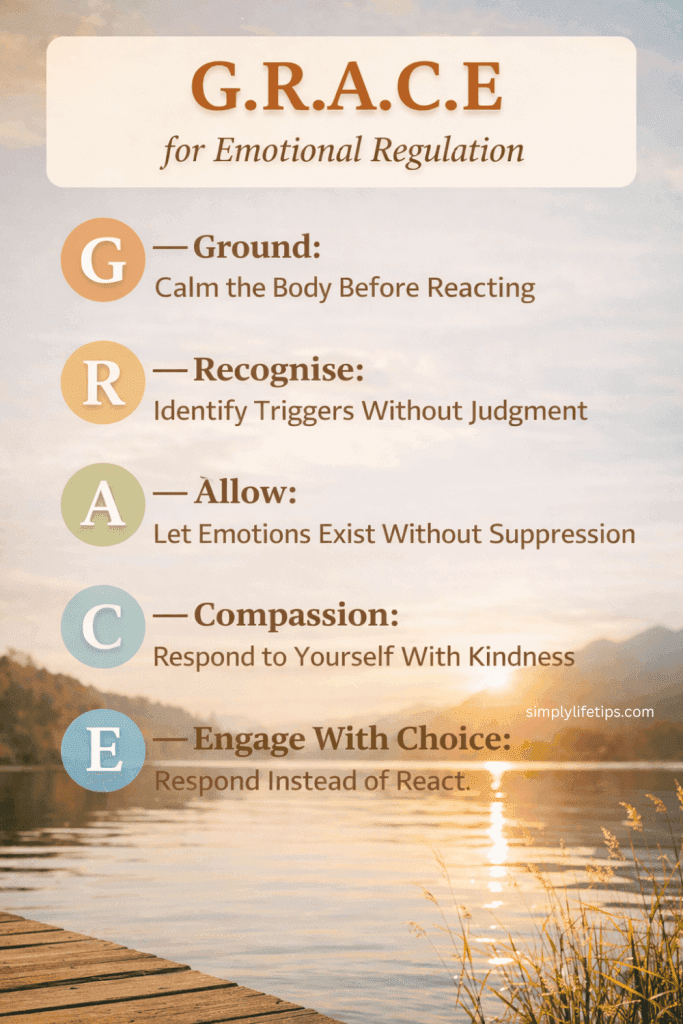
G — Ground: Calm the Body Before Reacting
When to Use Grounding During Emotional Triggers
Grounding is useful when you notice physical signs such as tightness in the chest, shallow breathing, racing thoughts, or sudden emotional intensity. These signals show that the body has entered a stress response.
Simple Grounding Techniques That Work in Daily Life
Grounding can be very simple. Place both feet on the floor and feel their contact. Take slow, deep breaths. Notice five things you can see or feel around you. Touch a solid object nearby. These small actions send a message of safety to the nervous system.
Examples of Grounding During Conflict or Stress
When a message or remark feels triggering, take a short pause before replying. Focus on your breathing and gently notice your physical sensations. This small moment of grounding can reduce emotional intensity and support a calmer, more thoughtful response.
R — Recognise: Identify Triggers Without Judgment
What It Means to Recognise an Emotional Trigger
Recognising a trigger means naming what is happening without blaming yourself. It is the awareness that the reaction may be connected to past experiences rather than the present moment alone.
How Recognition Reduces Self-Blame
When you recognise a trigger, you stop labelling yourself as “too sensitive” or “overreacting.” You begin to understand that your nervous system is responding to stored memories.
Recognising Old Wounds Activated in Present Moments
For example, feeling ignored may connect to earlier experiences of not being heard. Naming this gently helps separate the past from the present and brings emotional clarity.
Maintaining Inner Peace During Criticism, Conflict, and Rejection
A — Allow: Let Emotions Exist Without Suppression
Why Allowing Feelings Supports Emotional Healing
Allowing emotions means letting them exist without pushing them away or rushing to fix them. Suppressed emotions often return stronger later. Allowing creates space for emotions to move through naturally.
Difference Between Allowing and Acting on Emotions
Allowing does not mean acting impulsively. You can feel anger without shouting or sadness without withdrawing. It simply means acknowledging what is present.
How Allowing Prevents Emotional Build-Up
Saying “this hurts right now” or “this feels heavy” helps release internal pressure. When emotions are allowed, they soften and pass more easily.
C — Compassion: Respond to Yourself With Kindness
Why Self-Compassion Is Essential for Healing
Self-compassion reduces shame, which often appears after emotional reactions. Healing becomes easier when judgment is replaced with understanding.
Understanding Reactions as Survival Responses
Many reactions, such as people-pleasing, freezing, or withdrawing, were once protective. They helped maintain safety or connection. Seeing them as survival strategies builds self-respect.
Replacing Shame With Gentle Self-Talk
Speaking kindly to yourself, as you would to someone you care about, calms the nervous system. Compassion creates emotional safety from within.
Maintaining Emotional Well-Being: 5 Easy Tips And Benefits
E — Engage With Choice: Respond Instead of React
What It Means to Pause Before Responding
Engaging with choice means creating a pause before reacting automatically. This pause allows awareness to guide your response.
Choosing What Feels Regulating Instead of Reactive
Ask gently, “What would help me feel steadier right now?” The answer may be taking a break, asking for clarity, delaying a reply, or expressing yourself calmly.
Healthy Response Examples in Daily Situations
Instead of sending an emotional message, you wait. Instead of withdrawing, you may explain your need for space. These choices strengthen emotional balance and communication.
Situations Where the GRACE Method for Emotional Healing Is Helpful
During Conflict With Loved Ones
When conflict arises with people who matter, emotions often escalate quickly because attachment is involved. The GRACE method helps slow this escalation by bringing attention back to the body and breath before words are exchanged. Grounding creates space between feeling and reaction, making it easier to listen instead of defend.
Recognising that a trigger has been activated reduces blame and softens tone. Allowing emotions without suppressing them prevents emotional buildup, while compassion reminds you that reacting strongly does not make you difficult or wrong. Engaging with choice then supports respectful communication, helping conversations move toward understanding rather than conflict.
When Feeling Criticised, Controlled, or Dismissed
Criticism or control can activate deep feelings of inadequacy or powerlessness. The GRACE method prevents emotional shutdown or defensiveness by helping you pause and notice what is happening internally. Recognising the trigger separates present feedback from past experiences of judgment. Allowing the emotional response without pushing it away reduces inner tension. Compassion helps replace harsh self-talk with understanding, especially if criticism echoes earlier experiences of being invalidated. Engaging with choice allows you to respond calmly, ask for clarification, or set boundaries instead of reacting from hurt.
After Emotional Neglect or Silence
Silence or emotional distance can trigger abandonment fears and emotional confusion. The GRACE method supports regulation by grounding the body when anxiety rises. Recognising that silence can activate old wounds helps prevent self-blame. Allowing the feelings of sadness or fear acknowledges their presence without panic.
Compassion reassures the nervous system that these reactions are understandable and rooted in past experiences. Engaging with choice helps you decide whether to seek clarity, express your needs, or focus on self-soothing rather than spiralling into worry.
During Fear of Abandonment or Rejection
Fear of abandonment often brings racing thoughts, tension, and an urgent need for reassurance. The GRACE method helps ground the body so the nervous system can settle. Recognising that the fear may come from earlier attachment wounds creates emotional distance from the present situation. Allowing the fear instead of fighting it prevents escalation. Compassion reminds you that this fear developed to protect the connection. Engaging with choice helps you respond thoughtfully, whether by asking for reassurance calmly or offering yourself first.
When Old Family Patterns Resurface
Family interactions can quickly activate long-standing emotional roles and reactions. The GRACE method brings awareness to these patterns before they take over. Grounding helps interrupt automatic responses learned in childhood. Recognising familiar emotional loops allows you to step out of them consciously. Allowing emotions without judgment prevents inner resistance. Compassion acknowledges that these patterns once helped you adapt. Engaging with choice creates space to respond in new ways rather than repeating old dynamics.
When Guilt Appears for Having Needs
Many people feel guilty for expressing needs, especially if they were taught to prioritise others. The GRACE method helps soften this guilt by grounding the body and easing emotional tension. Recognising that guilt often comes from learned beliefs—not wrongdoing—brings clarity. Allowing the discomfort instead of suppressing it reduces inner conflict. Compassion reminds you that having needs is human and healthy. Engaging with choice supports honest communication, helping you express needs with respect and self-trust rather than apology or shame.
Why Triggers Are Signs of Healing, Not Failure
Triggers are not setbacks. They highlight areas asking for attention and care. Each trigger reveals a place where healing wants to deepen. When met with awareness and compassion, triggers become opportunities for growth rather than obstacles.
How the GRACE Method for Emotional Healing Rebuilds Emotional Safety Over Time?
Training the Nervous System to Feel Safe Again
Repeated use of grounding, recognition, allowing, compassion, and choice teaches the body that emotions can be handled safely.
Building Trust Through Gentle and Consistent Practice
Each regulated response builds trust within yourself. Over time, reactions soften, awareness grows, and emotional balance becomes more natural.
Powerful Affirmations For Mindfulness: Cultivate Present Moment Awareness
Conclusion
The GRACE method for emotional healing offers a gentle and practical way to meet emotional triggers without fear or judgment. By grounding the body, recognising patterns, allowing emotions, practising compassion, and choosing responses consciously, healing becomes a lived experience. Slowly and steadily, the nervous system learns a powerful truth: this time, you are safe, supported, and not alone. And that understanding becomes the foundation for lasting emotional balance and inner peace.
How Can the GRACE Method for Emotional Healing Help You Respond Instead of React?
FAQs – GRACE method for emotional healing
1. What is the GRACE method for emotional healing?
The GRACE method is a simple framework that helps regulate emotional reactions through grounding, awareness, compassion, and conscious choice. It supports the nervous system in moving out of survival mode. Over time, it helps build emotional safety and self-trust.
2. Can the GRACE method help with relationship conflicts?
Yes, it is especially useful during misunderstandings, arguments, or emotional distance. It helps slow reactions and encourages respectful communication instead of impulsive responses. This makes it easier to express needs without escalating conflict.
3. Does using the GRACE method stop emotions from arising?
No, the goal is not to eliminate emotions but to relate to them differently. Emotions are allowed to arise without being suppressed or acted on immediately. This reduces overwhelm and supports healthier responses.
4. How long does it take to see results from practising GRACE?
Small shifts can be felt even with short, regular practice. Over time, the nervous system learns that emotions can be handled safely. This leads to greater calm, clarity, and emotional balance.
5. Is the GRACE method useful for past emotional wounds?
Yes, it gently supports healing by helping the nervous system respond differently to old triggers. While memories may still arise, their emotional intensity often reduces. With consistency, it helps build a deeper sense of inner safety and compassion.
Thank you for taking the time to explore this post. I sincerely hope you found the insights valuable and actionable. If this content resonated with you, please consider sharing it. Your support enables me to share knowledge and inspiration with others in our community.
PVM
References: Jyoti Gupta

Mathukutty P V is a Blogger, YouTuber, and Content Writer and the founder of Simply Life Tips. After taking voluntary retirement in 2017, he embraced a free lifestyle focused on learning, personal growth, and sharing practical wisdom to help others live with more purpose and positivity.



