
The effects of loneliness on health can be surprising. You may have a loving family, good friends, hundreds of contacts on your phone, and thousands of social media connections—and still feel completely alone. Why does this happen, and what happens when that feeling continues for months or years?
“Everyone talks to me, but nobody really understands me.”
Have you ever felt this way? Perhaps you smile during family gatherings, reply to messages, and go about your daily routine. Yet, deep inside, you feel an emptiness that is difficult to explain.
You are not necessarily alone because you lack people around you. Sometimes, you feel lonely because you lack the emotional connection you need.
Loneliness is more than a passing feeling of sadness. Research has linked persistent loneliness and social isolation with mental health difficulties, poor sleep, stress, and several physical health risks.
Understanding how loneliness affects the brain, sleep, memory, and overall well-being can help us recognise its impact and take small but meaningful steps towards healthier relationships.
Understanding the effects of loneliness on health can help us recognise when emotional disconnection begins to affect everyday life.
What Is Loneliness, and Why Do We Feel Lonely?
Loneliness is the distressing feeling that your relationships do not provide the closeness, understanding, or companionship you need.
It is a personal experience. Two people can live in similar circumstances but feel very differently about their relationships.
Consider two examples.
Example 1: A person with many friends
A man regularly meets his friends, attends social gatherings, and exchanges messages throughout the day. However, he feels unable to discuss his fears or personal problems with anyone. He may feel lonely despite having an active social life.
Example 2: A person with a small social circle
A woman has only two close friends. They listen when she needs support, celebrate her achievements, and help her through difficult times. She may feel deeply connected despite having fewer relationships.
The difference is not the number of people they know. It is the quality of their connections.
If you want to recognise the different ways loneliness develops, read our guide to the signs, causes, health consequences, and solutions of loneliness.
How Does Loneliness Affect the Brain?
The human brain responds to social experiences. Supportive relationships can provide reassurance, emotional security, and a sense of belonging. When these connections are missing, some people become more sensitive to rejection or uncertainty in their relationships.
1. Loneliness Can Increase Sensitivity to Rejection
When loneliness persists, a person may begin to interpret ordinary social situations negatively.
Imagine sending a message to a friend and receiving no reply for several hours.
You might assume the friend is busy and continue with your day. However, if you are already feeling lonely, you may start wondering:
- “Have I done something wrong?”
- “Does my friend no longer care about me?”
- “Why does nobody want to talk to me?”
These thoughts may feel convincing, but they do not necessarily reflect reality. Your friend could be working, travelling, or dealing with personal responsibilities.
Repeatedly interpreting uncertain situations as rejection can increase distress and make relationships feel less secure.
2. Loneliness Can Create a Cycle of Withdrawal
Loneliness can sometimes encourage behaviours that unintentionally make it worse.
A person who fears rejection may stop initiating conversations, avoid invitations, or withdraw from activities. As opportunities for connection decrease, loneliness may become stronger.
For example, someone who moves to a new city may want to make friends but feel uncomfortable approaching unfamiliar people. They stay home because they feel they have nobody to meet. After several weeks, reconnecting feels even more difficult.
This is not a personal failure. Fear, low mood, previous disappointments, and uncertainty can all make social interaction challenging.
A small first step—greeting a neighbour, attending a familiar group, or calling an old friend—can help make social contact feel more manageable.
What Are the Effects of Loneliness on Health?
Our bodies have systems that help us respond to stressful situations. The sympathetic nervous system prepares us for action, while hormones such as cortisol help regulate the stress response.
Stress is a normal part of life. However, persistent distress, especially when combined with poor sleep and limited social support, can make it harder to maintain emotional and physical well-being.
The US Centers for Disease Control and Prevention explains that loneliness and social isolation are associated with several health risks, including depression, anxiety, heart disease, stroke, and dementia.
You can explore the evidence in the CDC’s guide to the health effects of loneliness and social isolation.
The effects of loneliness on health can vary depending on a person’s circumstances, existing health conditions, and access to social support.
3. Loneliness May Make Stress Harder to Manage
Imagine that you have a difficult problem at work. If you can discuss it with someone you trust, you may feel reassured and better able to consider possible solutions.
Now imagine facing the same problem while believing that nobody is available to support you.
The problem has not changed, but the emotional burden may feel much heavier.
Supportive relationships can help us cope with stressful experiences. When that support is missing, everyday difficulties may feel harder to manage.
For example, a person dealing with financial worries may become increasingly anxious if they feel unable to discuss their concerns with family members. A supportive conversation may not solve the financial problem, but it can reduce the sense of facing it alone.
Loneliness does not affect everyone in the same way. Its effects depend on many factors, including a person’s circumstances, health, coping strategies, and available support.
4. Can Loneliness Affect Physical Health?
Research has associated persistent loneliness and social isolation with an increased risk of several physical health problems, including cardiovascular disease.
There are several possible explanations. Emotional distress may affect stress regulation, while reduced social support can make it harder to maintain healthy routines, attend medical appointments, or seek help when needed.
For example, a person who feels disconnected may stop exercising regularly, eat irregularly, or neglect a health problem because they lack encouragement or practical support.
These behaviours are not inevitable consequences of loneliness, and loneliness alone does not determine a person’s health. Nevertheless, the relationship between social connection and physical well-being deserves attention.
The important message is not to fear loneliness, but to recognise persistent disconnection as one factor that may affect overall health.
How Does Loneliness Affect Sleep Quality?
Have you ever gone to bed feeling physically exhausted but found that your mind would not settle?
During the day, work, family responsibilities, and other activities may keep you occupied. At night, thoughts about difficult relationships, missed opportunities, disappointments, or future worries may become more noticeable.
For some people, loneliness and sleep problems can reinforce each other.
5. Loneliness May Contribute to Poor Sleep Quality
People experiencing persistent loneliness may struggle with worry, emotional distress, or a sense of insecurity that makes it difficult to relax at bedtime.
Imagine a person who feels misunderstood by their family. After everyone goes to sleep, they replay conversations, wonder why they feel disconnected, and think about what they wish they could say.
These thoughts may delay sleep or contribute to restless nights.
Research has linked loneliness with poorer sleep outcomes, although the relationship varies among individuals. Poor sleep can also affect mood, attention, and the ability to cope with daily stress.
6. Poor Sleep Can Make Loneliness Feel Worse
Sleep supports emotional regulation and mental functioning. When you sleep poorly, minor disappointments may feel more upsetting, and conversations may require more effort.
For example, someone who has slept badly for several nights may become irritable, decline invitations, or have less patience during conversations. Reduced social contact may then deepen their sense of disconnection.
This creates a possible cycle:
- Loneliness contributes to worry or emotional distress.
- Emotional distress makes it harder to get restful sleep.
- Poor sleep affects mood and stress management.
- Negative moods make social interaction more challenging.
- Loneliness may become stronger.
Improving sleep habits and rebuilding supportive relationships may help interrupt this cycle. Persistent insomnia should be assessed by a healthcare professional rather than automatically attributed to loneliness.
These connections show why the effects of loneliness on health should be considered alongside sleep quality and emotional well-being.
For more practical guidance, explore our article on how to deal with loneliness using practical strategies.
Can Loneliness Affect Memory and Brain Health?
Social interaction gives us opportunities to exchange ideas, discuss experiences, learn new things, and participate in activities that challenge our minds.
When social contact becomes limited, some of these opportunities may decrease. If loneliness also coincides with low mood, poor sleep, or reduced physical activity, concentration and memory may suffer.
7. Loneliness May Affect Attention and Concentration
Suppose you are worried about a strained relationship while trying to complete an important task. Your attention may keep returning to the problem, making it hard to concentrate.
You might forget where you placed your keys, struggle to follow a conversation, or need more time to complete familiar work.
These experiences can occur for many reasons, including stress, sleep deprivation, depression, medication effects, and other health conditions. They should not automatically be blamed on loneliness.
If memory difficulties persist, worsen, or interfere with everyday activities, seek medical advice.
8. Is Loneliness Linked to Dementia?
Research suggests that loneliness is associated with an increased risk of dementia.
A large analysis reported by the US National Institute on Aging examined more than 600,000 participants across 21 longitudinal cohorts. The analysis found an association between loneliness and a higher risk of dementia, including Alzheimer’s disease.
Read the National Institute on Aging’s report on loneliness and dementia risk.
However, an association does not prove that loneliness directly causes dementia in every individual. It also does not mean that a person who feels lonely will inevitably develop dementia.
Brain health is influenced by many factors, including age, genetics, cardiovascular health, sleep, physical activity, and other medical conditions.
The practical lesson is to take persistent loneliness seriously while avoiding unnecessary fear about memory loss or dementia.
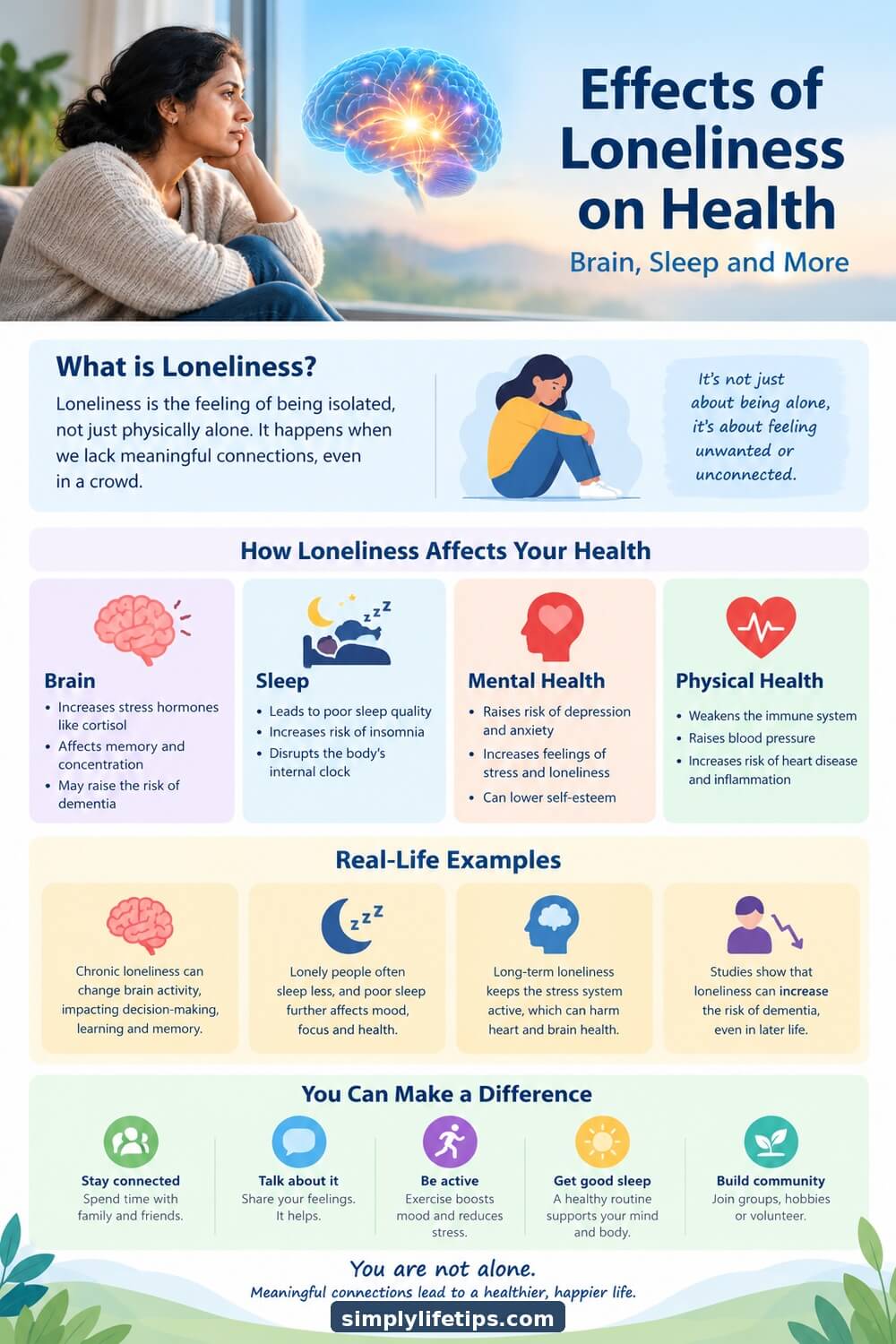
Loneliness can affect more than emotional well-being. It is also associated with sleep difficulties, stress, and several aspects of physical and cognitive health. The infographic below summarises these connections and offers practical ways to build meaningful social relationships.
What Is the Difference Between Loneliness and Social Isolation?
Loneliness and social isolation are related, but they are not the same.
Loneliness is the feeling that your emotional or social needs are not being met.
Social isolation refers to having relatively few social contacts, interactions, or sources of support.
A person can experience one without necessarily experiencing the other.
Examples of Loneliness and Social Isolation
A lonely person in a busy household: A woman lives with her husband and children. The family eats together and discusses everyday matters, but nobody listens when she talks about her worries. She may feel lonely despite rarely being physically alone.
A socially isolated person who feels content: An older adult lives alone and has a small social circle. They enjoy their independence, speak regularly with a close friend, and feel supported by their community. They may not experience loneliness despite limited daily contact.
A person experiencing both: Someone who has recently lost a partner may have few opportunities to socialise and may also miss the emotional closeness they once shared. They may experience both social isolation and loneliness.
Recognising the difference matters because the solutions are not always identical. Some people need more opportunities to meet others, while others need deeper, more supportive relationships.
How Loneliness Affects People at Different Stages of Life
Loneliness can occur at any age, but its causes and experiences may differ.
Loneliness in Teenagers
Teenagers may feel lonely when they struggle to fit in, experience bullying, or believe their friends do not understand them. Social media can provide opportunities for connection, but online activity does not always provide the emotional support a young person needs.
Parents and caregivers can help by listening without immediately criticising or dismissing a teenager’s concerns.
Our guide to teenage loneliness in a connected world explores this challenge in more detail.
Loneliness in the Workplace
A person can spend eight hours a day surrounded by colleagues and still feel disconnected. Workplace loneliness may develop when employees feel excluded, lack meaningful interaction, or believe they cannot speak openly with others.
For example, a new employee may attend meetings and exchange work-related messages but have nobody to approach when they feel uncertain or overwhelmed.
Encouraging respectful conversations, supportive teamwork, and inclusive activities can help employees develop stronger connections.
Read more about the causes, effects, and solutions to workplace loneliness.
Loneliness in Older Adults
Retirement, bereavement, mobility difficulties, hearing problems, and changes in family circumstances can reduce opportunities for social interaction.
An older adult who once enjoyed daily conversations with a partner or colleagues may suddenly find that their days feel unusually quiet.
Regular phone calls, accessible community activities, visits from relatives, and opportunities to participate in meaningful activities can help maintain social connection.
Read our article about loneliness in old age and its silent struggles.
How to Recognise the Hidden Signs of Loneliness
Not everyone who feels lonely will openly ask for help. Some people hide their feelings because they fear being judged, appearing weak, or burdening others.
A person who seems cheerful in public may still be struggling privately.
Possible signs include withdrawing from activities they once enjoyed, repeatedly expressing that nobody understands them, or appearing persistently sad or disconnected. However, these signs are not proof of loneliness, and some people show no obvious signs at all.
Instead of assuming what someone feels, approach them with kindness and curiosity.
You can learn more about the hidden signs of loneliness and actionable ways to respond.
6 Practical Ways to Overcome Loneliness
You do not need a large social circle or an expensive programme to begin improving your social connections. Small, consistent actions can help rebuild a sense of belonging.
1. Talk Honestly With Someone You Trust
Choose someone who listens without judging you. You do not need to explain everything at once.
You might say, “I’ve been feeling disconnected lately, and I would appreciate having someone to talk to.”
Sharing your feelings may help you feel understood and open the door to further support.
If you do not have someone you trust, consider speaking with a counsellor or joining a suitable support group.
2. Take the First Step Towards Reconnection
Do not always wait for someone else to contact you.
Send a short message to an old friend, call a relative, or invite a neighbour for tea.
For example, a simple message such as “It’s been a while since we spoke. How have you been?” can reopen a conversation.
Not every attempt will lead to a close friendship, and that is normal. Focus on making small, genuine efforts rather than expecting immediate results.
3. Make Time for Meaningful Family Conversations
Set aside time to connect with the people closest to you.
You might take an evening walk with your partner, talk with your children before bedtime, or call a family member who lives elsewhere.
Instead of asking a child only whether they completed their homework, ask what made them happy or worried that day.
The aim is not to solve every problem. It is to help people feel heard and respected.
4. Join a Group or Community Activity
Shared activities provide natural opportunities to meet people without the pressure of having to make friends immediately.
Consider joining a walking group, reading club, gardening group, volunteering programme, class, or local community activity.
If you enjoy reading, a book club gives you something specific to discuss. If you enjoy helping others, volunteering can create a sense of purpose while allowing you to meet people with similar interests.
Start with an activity you genuinely enjoy. Consistent participation gives relationships time to develop naturally.
5. Support Your Physical and Emotional Well-Being
Healthy routines cannot replace meaningful relationships, but they can support overall well-being.
Try to maintain a regular sleep schedule, engage in physical activity suited to your abilities, eat balanced meals, and spend time outdoors when possible.
Continue pursuing hobbies that give you enjoyment or purpose.
For example, a daily walk in a familiar park may help you become more active and create opportunities to greet neighbours or meet other walkers.
6. Seek Professional Help When Necessary
If loneliness persists and is accompanied by ongoing sadness, hopelessness, anxiety, loss of interest, or significant sleep problems, consider speaking with a doctor or qualified mental health professional.
A professional can help identify whether depression, anxiety, grief, insomnia, or another condition may be contributing to your experience.
Seeking help is not a sign of weakness. It is a responsible step towards protecting your health.
If you feel unable to cope or have thoughts of harming yourself, seek urgent help from a trusted person, a mental health professional, or local emergency services.
Recognising the effects of loneliness on health is an important first step towards rebuilding meaningful relationships and seeking support when needed.
For additional practical ideas, see our guide to ways to overcome loneliness.
How Can You Help Someone Who Feels Lonely?
Sometimes, the most meaningful support is not a clever solution. It is the willingness to listen.
A friend may continue smiling and attending social gatherings while privately struggling with loneliness. An older relative may say everything is fine because they do not want to burden their family. A teenager may withdraw because they are afraid nobody will understand.
Instead of asking, “What’s wrong with you?” try saying:
“I’m here if you feel like talking. I will listen.”
You can also ask, “Would you like some company?” or “Is there anything I can do to support you?”
Avoid dismissing someone’s feelings with statements such as “You have a family, so you shouldn’t feel lonely” or “Just go out and meet people.”
These comments may unintentionally make a person feel misunderstood.
You do not need to solve every problem. Listening without judgement, making time for a conversation, or offering practical help can be meaningful ways to show care.
Conclusion
We pay attention to physical health. We check blood pressure, monitor blood sugar, and try to maintain a healthy weight. But how often do we consider whether we have meaningful relationships in our lives?
Do our children feel safe sharing their fears with us? Do our partners feel heard? Is there a friend who may be struggling silently and waiting for someone to reach out?
The effects of loneliness on health remind us that emotional connection is an important part of overall well-being. Persistent loneliness is associated with difficulties involving mental health, sleep, stress, and cognitive health, although the effects vary from person to person.
Overcoming loneliness does not always require a dramatic change. Sometimes, it begins with a phone call, a sincere question, a shared meal, or a few minutes of undivided attention.
Remember, the number of people around you does not always determine how connected you feel. What matters is whether you have relationships in which you can speak honestly, feel respected, and receive support when you need it.
And if someone around you seems distant, remember that kindness and patient listening may make a difference.
Have you ever felt lonely even when surrounded by people, and what do you think helps people build meaningful connections?
Frequently Asked Questions About the Effects of Loneliness on Health
1. How does loneliness affect mental health?
Persistent loneliness is associated with a greater risk of depression, anxiety, and emotional distress. It may also make everyday stress harder to manage, particularly when a person lacks emotional support.
2. Can loneliness affect brain health and memory?
Loneliness may be associated with difficulties involving concentration and cognitive health. Research also suggests a link between loneliness and an increased risk of dementia, but loneliness does not mean that a person will develop dementia.
3. Can loneliness cause sleep problems?
Loneliness may contribute to worry, emotional distress, and poor sleep quality. Poor sleep can, in turn, make emotional regulation and social interaction more difficult. Persistent sleep problems should be assessed by a healthcare professional.
4. Why do I feel lonely even when I have family and friends?
You may feel lonely when your relationships do not provide the emotional closeness, understanding, or support you need. Meaningful communication and emotional intimacy can matter more than the number of people in your social circle.
5. What is the best way to overcome loneliness?
Start with small, realistic steps: contact someone you trust, make time for meaningful conversations, join an activity you enjoy, and maintain healthy daily routines. If loneliness persists or affects your daily life, consider professional support.
References
- CDC — Health Effects of Social Isolation and Loneliness
- National Institute on Aging — Loneliness and Dementia Risk
- National Institute on Aging — Loneliness and Social Isolation
Inspiration and Acknowledgement
This article was inspired by a Facebook post shared by Dr Arun Oommen, which prompted further reflection on the effects of loneliness on health and the importance of meaningful human connections. The article has been independently developed and expanded with additional explanations, practical suggestions, and references to relevant health research for readers of Simply Life Tips.
Original Facebook post: Read Dr Arun Oommen’s post on Facebook

Mathukutty P. V. is the founder of Simply Life Tips. He shares practical advice and useful insights on personal growth, health, well-being, technology, and everyday living. His goal is to help readers build positive habits and make informed decisions. He believes in continuous learning and sharing knowledge to help people live healthier, happier, and more meaningful lives.