
Making decisions is something we do every day, often without giving it much thought. From choosing what to wear and what to eat to making important work and family decisions, every choice requires mental energy. But have you ever reached the end of the day and found even the simplest decisions overwhelming? If so, you may be experiencing decision fatigue.
Decision fatigue is a psychological phenomenon that occurs when the brain becomes mentally exhausted after making too many decisions. As mental energy decreases, it becomes harder to think clearly, evaluate options, and make good choices. This can lead to procrastination, impulsive decisions, poor judgment, and increased stress.
Although everyone experiences decision fatigue from time to time, chronic mental overload can affect productivity, relationships, health, and overall well-being. Understanding why it happens and learning practical ways to reduce it can help you make better decisions while protecting your mental energy.
What Is Decision Fatigue?
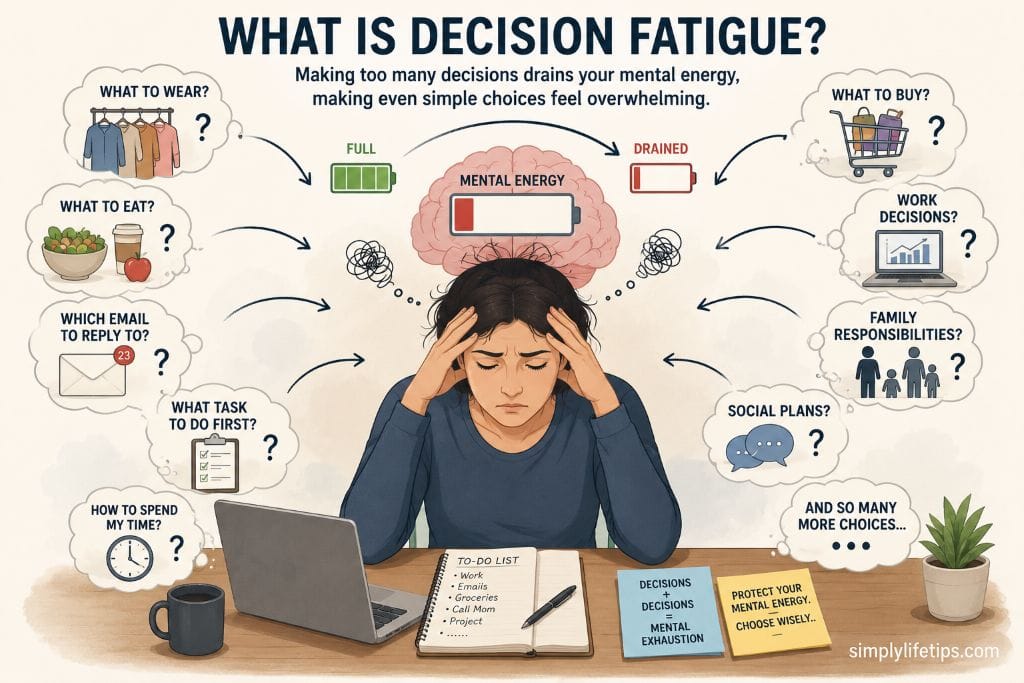
Decision fatigue is the gradual decline in the quality of decisions after making many choices over an extended period. The brain has a limited amount of cognitive energy available each day. Every decision—whether big or small—uses a portion of that energy.
While choosing between two breakfast options may seem insignificant, hundreds of similar decisions throughout the day gradually drain your mental resources. As this mental reserve decreases, your brain begins to look for shortcuts. Instead of carefully evaluating choices, you may delay decisions, make impulsive selections, or simply avoid deciding altogether.
Psychologists describe decision fatigue as a normal response to prolonged cognitive effort rather than a sign of laziness or lack of intelligence. Even highly successful people experience it, which is why many leaders simplify routine choices to conserve mental energy for more important decisions.
Common daily examples include:
- Spending several minutes deciding what to wear despite having a full wardrobe.
- Feeling overwhelmed when choosing what to cook or order for dinner.
- Postponing important work because deciding where to start feels difficult.
- Making unnecessary purchases after comparing too many products online.
- Choosing the easiest option simply to avoid thinking further.
Over time, frequent decision fatigue can increase stress levels, reduce productivity, and make everyday life feel more mentally exhausting than it needs to be.
Why Does Decision Fatigue Happen?
Your brain is constantly processing information, weighing options, and making choices throughout the day. While many of these decisions seem small, they all require mental effort. As the number of decisions increases, your cognitive resources gradually become depleted, making it harder to think clearly and choose wisely.
Several factors contribute to decision fatigue:
Too Many Daily Choices
Modern life presents countless decisions from the moment you wake up. Choosing what to wear, what to eat, which emails to answer first, how to spend your free time, or even what to watch on television may seem insignificant individually. However, together they create a continuous stream of mental demands that can leave you feeling overwhelmed.
Information Overload
Technology has made information more accessible than ever. Every day we are exposed to news updates, social media posts, advertisements, emails, and endless product comparisons. Processing so much information requires constant evaluation, making the brain work harder than it was designed to.
High Levels of Stress
Stress consumes mental energy. When you’re worried about work, finances, health, or relationships, your brain remains in a heightened state of alertness. This leaves fewer cognitive resources available for making thoughtful decisions, increasing the likelihood of poor choices or indecision.
Multitasking
Although many people believe multitasking improves productivity, it often forces the brain to switch rapidly between different tasks. Each switch requires mental effort and increases cognitive load. Over time, this constant shifting can accelerate mental exhaustion and contribute to decision fatigue.
Lack of Sleep
Quality sleep allows the brain to restore itself and prepare for the next day’s mental challenges. Sleep deprivation reduces concentration, memory, emotional regulation, and problem-solving ability. Even simple decisions can feel difficult when your brain hasn’t had enough rest.
Constant Responsibility
Parents, caregivers, managers, teachers, and business owners often make hundreds of decisions that affect other people. Carrying this responsibility day after day can gradually drain mental energy, making even personal decisions feel overwhelming.
10 Signs of Decision Fatigue
Recognising the early signs of decision fatigue can help you take action before it begins affecting your health, work, and relationships. While everyone experiences occasional mental tiredness, persistent symptoms may indicate that your brain needs a break.
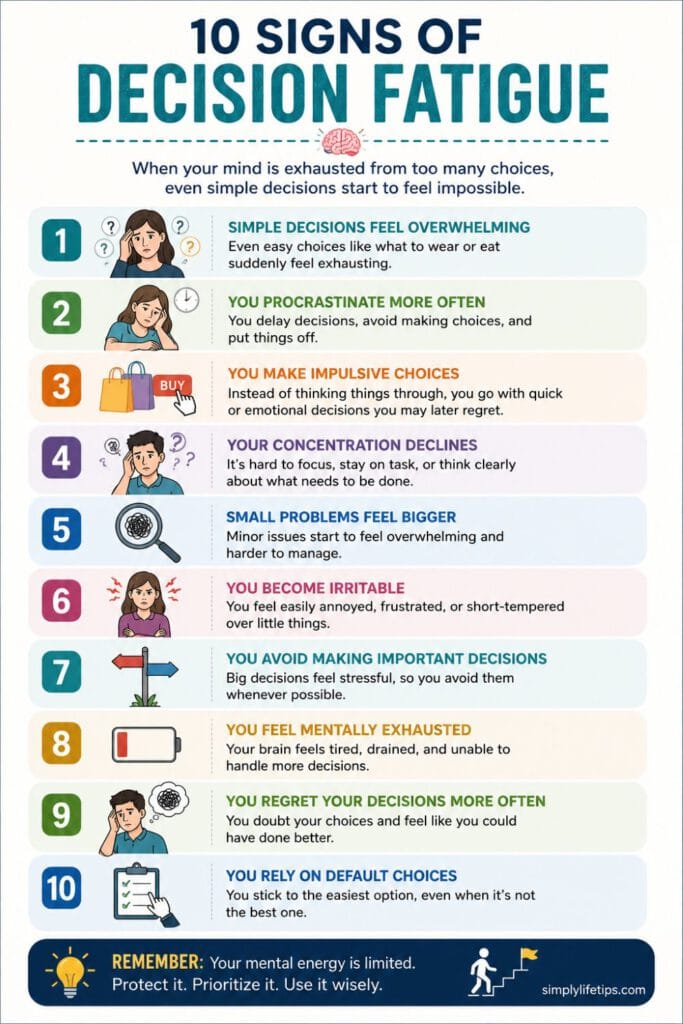
1. Simple Decisions Feel Overwhelming
Choosing what to eat, what clothes to wear, or which task to begin may suddenly feel far more difficult than usual. Instead of making quick decisions, you may spend excessive time weighing options or avoid deciding altogether.
2. You Procrastinate More Often
When your brain is mentally exhausted, delaying decisions becomes easier than making them. Important tasks are repeatedly postponed because deciding where to start feels mentally draining.
3. You Make Impulsive Choices
Decision fatigue doesn’t always lead to indecision. Sometimes it has the opposite effect. Instead of carefully considering your options, you may choose the quickest solution simply to end the decision-making process.
For example, you might make unnecessary online purchases, order unhealthy food without thinking, or agree to commitments you later regret.
4. Your Concentration Declines
A tired brain struggles to maintain focus. You may find yourself reading the same paragraph repeatedly, forgetting details, or becoming easily distracted during conversations or meetings.
5. Small Problems Feel Bigger Than They Really Are
Tasks that once seemed simple may now appear complicated or stressful. Even minor inconveniences can feel overwhelming because your mental energy is already running low.
6. You Become Irritable
Mental exhaustion often affects emotional regulation. You may become impatient with family members, coworkers, or even yourself over small issues that normally wouldn’t bother you.
7. You Avoid Making Important Decisions
Whether it’s responding to an email, planning your finances, or making a career choice, you may keep postponing important decisions because thinking about them feels exhausting.
8. You Feel Mentally Exhausted by the End of the Day
Even if your work isn’t physically demanding, your mind may feel completely drained after a day filled with constant choices and problem-solving.
9. You Regret Your Decisions More Often
Decision fatigue can reduce your ability to evaluate options carefully. As a result, you may later question your choices or feel dissatisfied with decisions that you made quickly.
10. You Rely on Default Choices
When mental energy is low, many people stop exploring options and automatically choose familiar routines. While habits can sometimes be helpful, constantly relying on default choices may prevent thoughtful decision-making when it truly matters.
How Decision Fatigue Affects Daily Life?
Decision fatigue doesn’t just influence major life choices. It can quietly affect your work, relationships, finances, health, and overall quality of life. As mental energy declines, even routine activities become more challenging, often leading to mistakes, frustration, and unnecessary stress.
At Work
Many professionals make dozens or even hundreds of decisions during a typical workday. From responding to emails and prioritising tasks to solving problems and attending meetings, each decision requires mental effort.
When decision fatigue sets in, productivity often declines. You may struggle to concentrate, postpone important work, or make rushed decisions simply to reduce your mental workload. Over time, this can affect job performance and increase workplace stress.
In Personal Relationships
Decision fatigue can also influence how you interact with family and friends. After a mentally demanding day, you may have less patience to listen, communicate, or resolve disagreements calmly.
Simple questions like “What should we have for dinner?” or “Where shall we go this weekend?” may feel surprisingly frustrating. As a result, you might avoid conversations or leave decisions entirely to others.
Managing Money
Mental exhaustion can affect financial decisions as well. People experiencing decision fatigue may make impulsive purchases, subscribe to services they don’t need, or postpone important financial planning because it feels too overwhelming.
On the other hand, some people become so afraid of making the wrong decision that they delay necessary financial choices, such as comparing insurance plans, creating a budget, or making investment decisions.
Looking After Your Health
Healthy living requires many daily decisions—choosing nutritious meals, exercising regularly, drinking enough water, and maintaining good sleep habits.
When your mental energy is depleted, convenience often wins over long-term benefits. You may skip workouts, choose processed foods, stay up late scrolling through your phone, or neglect self-care simply because those options require less mental effort.
Overall Well-being
Over weeks or months, constant decision fatigue can leave you feeling mentally drained and emotionally overwhelmed. If left unmanaged, it may contribute to chronic stress and make everyday responsibilities seem increasingly difficult.
While decision fatigue itself is a normal response to prolonged mental effort, persistent exhaustion combined with emotional detachment or loss of motivation may indicate a broader issue, such as burnout. If you’re experiencing these symptoms, our guide on burnout symptoms and recovery tips can help you understand the warning signs and explore practical recovery strategies.
Decision Fatigue vs Burnout
Although decision fatigue and burnout share some symptoms, they are not the same condition. Understanding the difference can help you choose the most appropriate strategies to improve your mental well-being.
| Decision Fatigue | Burnout |
|---|---|
| Caused by making too many decisions. | Caused by prolonged stress and emotional exhaustion. |
| Primarily affects your ability to make choices. | Affects your emotional, mental, and physical well-being. |
| Usually improves after reducing mental demands or taking a break. | Often requires longer-term lifestyle changes, stress management, and sometimes professional support. |
| May occur even when you enjoy your work. | Often develops after ongoing pressure with insufficient recovery. |
| Mainly impacts judgment, focus, and decision-making. | Also affects motivation, relationships, sleep, and overall health. |
Decision fatigue can be an early warning sign that your brain needs rest and simplification. Burnout, however, is a more serious state of chronic physical and emotional exhaustion that develops over time.
The two conditions can occur together. Someone experiencing burnout may also find even simple decisions exhausting because their mental resources have been significantly depleted.
Decision fatigue can sometimes develop alongside chronic stress or burnout. Learn more in our guide on burnout symptoms and recovery tips.
Understanding the signs of burnout can help you recognise when mental exhaustion extends beyond decision fatigue. – Mayo Clinic
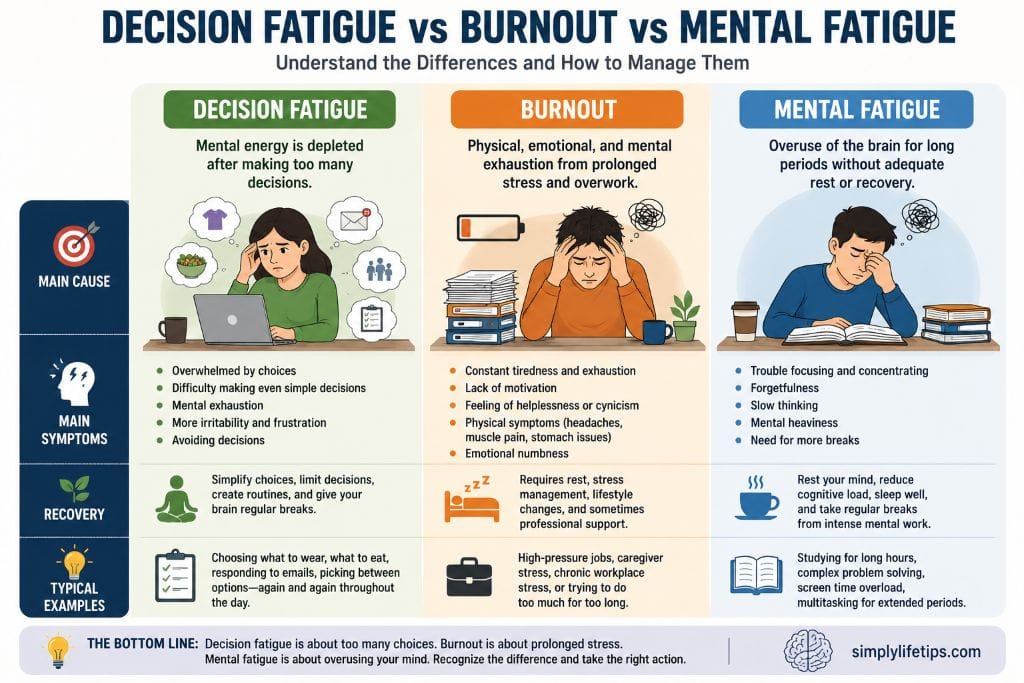
Decision Fatigue vs Mental Fatigue
These terms are often used interchangeably, but they describe different experiences.
Mental fatigue is a general feeling of cognitive tiredness that can develop after prolonged concentration, studying, problem-solving, or emotional stress. It affects memory, attention, and overall thinking ability.
Decision fatigue, on the other hand, specifically refers to the reduced ability to make effective decisions after making many choices throughout the day.
For example, a student preparing for examinations may experience mental fatigue after hours of studying. A manager who spends the day approving budgets, resolving conflicts, and making strategic decisions may experience decision fatigue.
In many cases, the two overlap. Mental fatigue can make decision-making more difficult, while constant decision-making can contribute to overall mental exhaustion.
Recognising these differences can help you identify the root cause of your symptoms and choose strategies that restore both your mental clarity and decision-making ability.
How to Reduce Decision Fatigue?
The good news is that decision fatigue is manageable. By simplifying routine choices and protecting your mental energy, you can make better decisions throughout the day and reduce unnecessary stress.
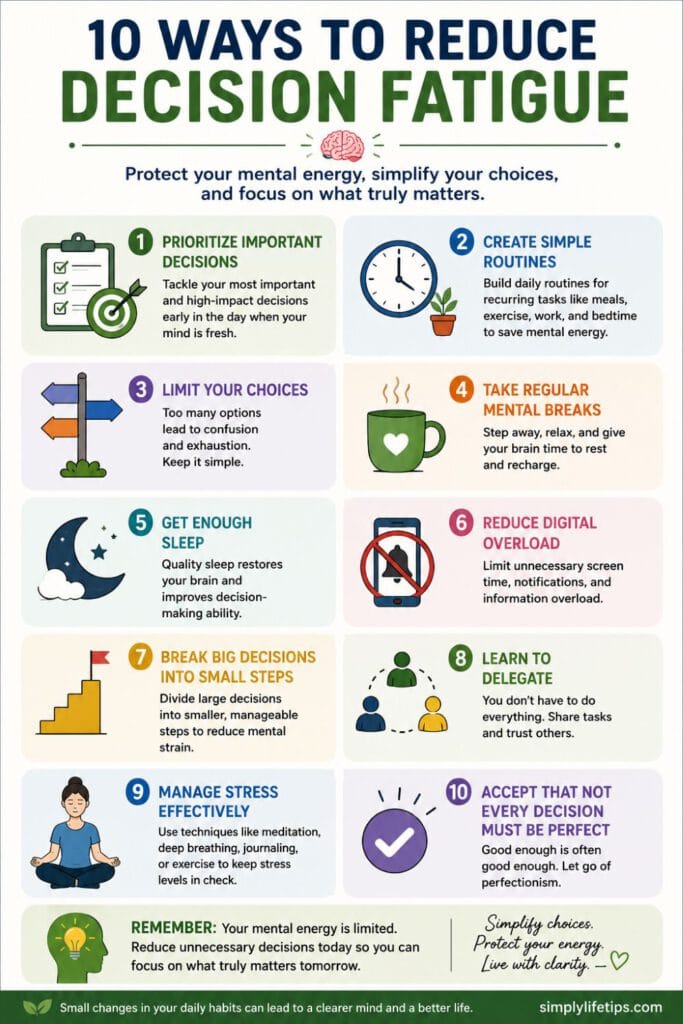
1. Prioritise Important Decisions
Your mental energy is usually highest in the morning or after a good night’s sleep. Schedule important decisions, such as financial planning, job interviews, or strategic work, during these times rather than leaving them until the end of the day.
2. Create Simple Daily Routines
Not every decision needs careful thought. Establishing routines for everyday activities can significantly reduce mental effort.
For example, you can:
- Plan your meals for the week.
- Prepare your clothes the night before.
- Follow a regular morning routine.
- Schedule recurring household tasks.
These habits free your mind to focus on decisions that truly matter.
3. Limit Your Choices
Having too many options often makes decision-making harder. Instead of comparing dozens of products or endlessly scrolling through menus, narrow your options first.
For instance, choose from three restaurants instead of thirty, or shortlist a few products before making a purchase.
4. Take Regular Mental Breaks
Your brain needs time to recover during the day. Short breaks between mentally demanding tasks can improve concentration and restore cognitive energy.
Simple activities such as stretching, taking a brief walk, practising deep breathing, or stepping away from screens for a few minutes can make a noticeable difference.
5. Get Enough Sleep
Sleep is essential for healthy brain function. Poor sleep reduces concentration, emotional regulation, and decision-making ability.
Aim for a consistent sleep schedule and create a relaxing bedtime routine by limiting screen time, avoiding caffeine late in the day, and keeping your bedroom comfortable and quiet.
6. Reduce Digital Overload
Constant notifications, emails, and social media updates demand continuous attention and force your brain to make repeated decisions.
Consider:
- Turning off non-essential notifications.
- Checking emails at scheduled times.
- Limiting social media use.
- Taking regular breaks from digital devices.
Reducing digital distractions can help preserve your mental energy.
7. Break Large Decisions into Smaller Steps
Complex decisions often feel overwhelming because they involve many factors at once.
Instead of trying to solve everything immediately:
- Gather the necessary information.
- List your available options.
- Compare the advantages and disadvantages.
- Make one decision at a time.
Breaking the process into smaller steps reduces pressure and improves clarity.
Developing different types of thinking can help you evaluate options more effectively and make better decisions under pressure.
8. Learn to Delegate
You don’t have to make every decision yourself. At work and at home, sharing responsibilities can reduce mental strain.
Delegating appropriate tasks allows you to focus your energy on decisions that genuinely require your attention.
9. Manage Stress Effectively
Chronic stress increases mental exhaustion and makes decision fatigue worse.
Regular exercise, mindfulness, hobbies, spending time in nature, and talking with trusted friends or family members can help reduce stress and improve resilience.
If constant overthinking is making decisions more difficult, try writing down your worries to clear your mind and reduce mental clutter.
The American Psychological Association explains that managing stress effectively can improve both mental well-being and decision-making.
10. Accept That Not Every Decision Must Be Perfect
Many people spend excessive time searching for the “perfect” choice. In reality, most everyday decisions have several acceptable outcomes.
Learning to make a reasonable decision and move forward can reduce unnecessary mental pressure and free up cognitive energy for more important matters.
When to Seek Professional Help?
Occasional decision fatigue is a normal part of life, especially during busy or stressful periods. However, if you find that difficulty making decisions continues for several weeks, interferes with your work, relationships, or daily responsibilities, or is accompanied by persistent sadness, anxiety, severe stress, or feelings of hopelessness, it is important to seek professional support.
A doctor, psychologist, or other qualified mental health professional can assess whether your symptoms are related to decision fatigue alone or to another condition, such as chronic stress, burnout, anxiety, or depression. Early support can make recovery easier and help prevent symptoms from becoming more severe.
Conclusion
Every decision you make uses a small amount of mental energy. While this is a normal part of daily life, constantly making choices without adequate rest can gradually leave you feeling mentally exhausted and overwhelmed. Recognising the signs of decision fatigue early allows you to make simple changes that protect your cognitive resources and improve your overall well-being.
By simplifying routines, limiting unnecessary choices, taking regular breaks, managing stress, and getting enough sleep, you can reduce mental overload and make clearer, more confident decisions. Remember that not every choice has to be perfect. Often, preserving your mental energy is more valuable than endlessly searching for the ideal answer.
If decision fatigue begins affecting your daily life or is accompanied by persistent emotional or physical exhaustion, don’t hesitate to seek professional support. Looking after your mental health is one of the most important decisions you can make.
Frequently Asked Questions
Is decision fatigue a medical condition?
Decision fatigue is not considered a medical diagnosis. It is a psychological concept describing the decline in the quality of decisions after prolonged mental effort. However, persistent symptoms should not be ignored, especially if they significantly affect daily life.
Can decision fatigue affect anyone?
Yes. Students, parents, business owners, healthcare professionals, managers, and anyone who makes frequent decisions can experience decision fatigue. Busy lifestyles and constant digital distractions have made it increasingly common.
How long does decision fatigue last?
Mild decision fatigue often improves after adequate rest, sleep, and reducing mental demands. If symptoms continue for an extended period despite making healthy lifestyle changes, professional advice may be beneficial.
Does decision fatigue lead to burnout?
Decision fatigue does not automatically lead to burnout, but ongoing mental overload and chronic stress can contribute to burnout over time. Managing your workload, getting sufficient rest, and maintaining healthy boundaries can reduce this risk.
External References
- American Psychological Association (APA) – Stress management and mental health
- Cleveland Clinic – Burnout overview
- National Institute of Mental Health (NIMH) – Caring for your mental health

Mathukutty P V is a Blogger, YouTuber, and Content Writer and the founder of Simply Life Tips. After taking voluntary retirement in 2017, he embraced a free lifestyle focused on learning, personal growth, and sharing practical wisdom to help others live with more purpose and positivity.