
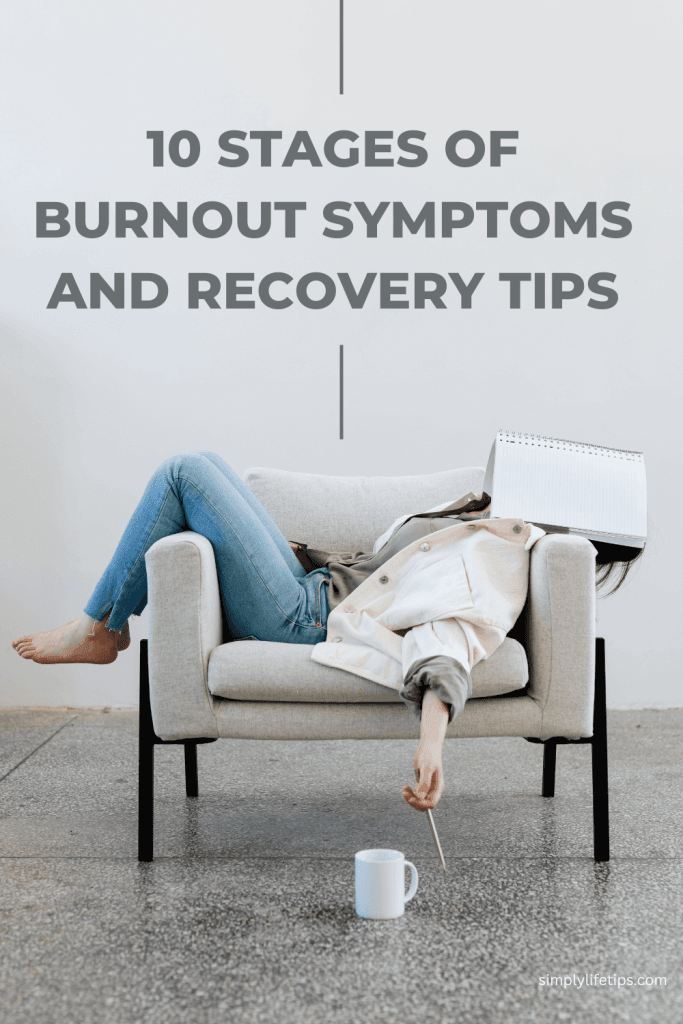
Burnout symptoms and recovery tips are more relevant than ever. Today, a staggering 76% of professionals report having experienced burnout, and 40% say it crept in without warning. That’s because burnout doesn’t arrive suddenly. It builds slowly—layer by layer—often disguised as ambition, drive, or commitment. One moment you’re thriving, the next you’re barely surviving. Find 10 stages of burnout symptoms and recovery tips that will gently guide you back to balance.
Burnout Symptoms and Recovery Tips
Recognising burnout symptoms is crucial in today’s high-pressure world. Knowing how to recover is equally important. Long hours and constant hustle are often wrongly equated with commitment and success. Burnout rarely strikes all at once. It builds over time through signs like emotional exhaustion and constant pressure to prove your worth. These signs also include neglecting basic self-care and withdrawing from loved ones. Recognising these early symptoms is the first step toward healing. Set boundaries to protect your time and energy. Reconnect with your values to understand what truly matters to you. Take mindful breaks to rest and recharge. Reach out for support when needed. Simple recovery tips can make a big difference. Burnout isn’t a personal weakness—it’s your body’s way of saying enough. With compassion and small daily actions, recovery is not only possible—it’s powerful.
Understanding the early signs is your best chance at prevention. And healing doesn’t need huge changes. Often, it starts with one small, intentional act of self-respect. Below, we explore the 10 stages of burnout symptoms. We also offer recovery tips to help you find your way back to balance.
10 Stages of Burnout Symptoms And Recovery Tips

Stage 1: You Feel Constant Pressure to Prove Your Worth
The first sign of burnout often shows up as an internal voice. It keeps asking you to “do more” or “be better.” You overcommit, chase external approval, or feel guilty for resting. This constant striving can drain your energy and self-worth. It’s a dangerous mindset because it makes you believe you are only valuable when you are productive.
💡 Recovery Tip: Pause and write down three reasons you are already enough—just as you are. For example, “I care deeply,” “I try my best,” or “I bring calm to those around me.” These reminders ground you in self-worth beyond performance.
Stage 2: You Work Harder, Hoping It Will Finally Feel Okay
At this stage, you start to believe that working even harder will finally make you feel in control or satisfied. You double down on effort, hoping it will lead to peace or success. But no matter how much you do, it never feels like enough. You end up in a cycle of exhaustion masked as dedication.
💡 Recovery Tip: Set a timer and take a 10-minute break. Step away from the screen, move your body, sip some water, or breathe. These small breaks remind your nervous system that it’s safe to slow down.
Stage 3: You Ignore Your Basic Needs Every Day
Burnout deepens when you start sacrificing your basic needs. You skip meals, cut back on sleep, or push through illness. You tell yourself you’ll rest “after this deadline” or “once things settle down.” But neglecting your health is not a badge of honour—it’s a warning sign.
💡 Recovery Tip: Block 30 minutes today just for yourself. You can take a walk, enjoy a quiet meal, journal, or rest. Prioritising self-care isn’t selfish—it’s essential.
Stage 4: You Start Blaming Others for Your Overwhelm
When you’re overwhelmed and exhausted, it’s easy to project that frustration outward. You find yourself blaming coworkers, managers, or even loved ones for the stress you’re under. This stage is marked by irritability, resentment, and a growing sense of disconnection from others.
💡 Recovery Tip: Ask yourself gently, “What am I avoiding right now?” Sometimes the real issue isn’t other people. Instead, it is the need to set boundaries. It also a need to ask for help or admit we’re at our limit.
Stage 5: You Lose Yourself Chasing Career Validation
Here, your identity becomes tightly wrapped around your job. You rely on promotions, praise, or productivity to feel worthy. But when work becomes your entire sense of self, it leaves little room for rest, creativity, or joy.
💡 Recovery Tip: Write down one core value you want to reconnect with. It is freedom, honesty, curiosity, or connection. Let this value guide your next decision—not the pressure to act.
Stage 6: You Pretend Everything Is Fine (Even When It’s Not)
You start to wear a mask. On the outside, you smile and say, “I’m good.” But inside, you feel drained and disconnected. You keep pushing because you don’t want to seem weak or let anyone down. This stage is dangerous because it silences your truth.
💡 Recovery Tip: Text or call someone you trust and say, “Can we talk soon?” Vulnerability is not weakness—it’s a lifeline to real support.
Stage 7: You Withdraw from People Who Care About You
As burnout intensifies, you start pulling away from social connections. It feels easier to isolate than to explain how you’re feeling. Even interactions that once energised you now feel overwhelming.
💡 Recovery Tip: Reach out to just one person who brings you peace. Send a short message. Leave a voice note. A simple “thinking of you” can rekindle a connection. These actions remind you that you are not alone.
Stage 8: You Snap at Loved Ones or Shut Down Emotionally
Your emotional bandwidth starts to shrink. You find yourself reacting strongly to small things or shutting down completely. This emotional rollercoaster can confuse your loved ones and deepen feelings of guilt or isolation.
💡 Recovery Tip: Before responding, pause and take a deep breath. Even one mindful breath can create the space needed to respond with kindness instead of reactivity.
Stage 9: You Feel Disconnected from Who You Are
You look in the mirror and barely recognise the person staring back. You’ve been so busy being “productive.” You’ve lost touch with your inner self—your passions, your joy, and your sense of purpose.
💡 Recovery Tip: Look in the mirror and say your name gently. Remind yourself that you’re still here, you, and still worthy of care and reconnection.
Stage 10: You Feel Empty, Numb, or Incapable of Feeling Anything
This is the final and most painful stage. You don’t feel sadness or anger—you feel nothing at all. Joy seems out of reach. Even rest doesn’t feel restful. This emotional numbness is your body’s final alarm bell.
💡 Recovery Tip: Do just one thing today that used to bring you joy. It is listening to an old song, cooking a favourite meal, or drawing something simple. Rebuilding an emotional connection starts with the smallest spark.
Toxic Workplace Behaviours: Causes, Impact And Solutions
Conclusion
Recognising burnout symptoms and recovery tips early can protect your health, happiness, and long-term success. Remember, burnout is not a personal failure—it’s a signal. A signal that your body and mind need rest, kindness, and healing. The road back doesn’t need a total life overhaul. It starts with one small, honest step.
You are not broken. You are not alone. And you are not beyond repair.
So, take the next right step.
Even a tiny act of self-respect can start your healing.
What stage resonated most with you today?
And what’s one kind thing you can do for yourself right now?
- 6 Essential Workplace Success Tips To Boost Your Career
- Managing Work Pressure: Causes, Effects, And Solutions For A Healthier Workplace
- Psychological Safety In The Workplace: Why It’s The Key To Thriving Teams
FAQs: Burnout Symptoms and Recovery Tips
1. What are the early symptoms of burnout?
Early symptoms of burnout include constant fatigue, lack of motivation, feeling overwhelmed, irritability, and difficulty concentrating. Recognising these signs early can help prevent deeper emotional and physical exhaustion.
2. How do I know if I’m experiencing burnout or stress?
Stress is usually temporary and tied to specific situations. Burnout, on the other hand, is chronic. It affects your mental, emotional, and physical well-being. If you’re feeling numb, emotionally drained, or disconnected from yourself, it is burnout.
3. What are some simple recovery tips for burnout?
To recover from burnout, start by taking regular breaks. It’s important to practice mindfulness, which can help reduce stress. Make sure you get enough sleep and try to reconnect with your personal values. Lastly, don’t hesitate to reach out for emotional support. Small, consistent changes can lead to long-term healing.
4. Can burnout go away on its own?
Burnout rarely goes away on its own. Without intervention, it often worsens. Active recovery steps like rest, boundary-setting, and seeking help are necessary to heal and regain balance.
5. How long does it take to recover from burnout?
Burnout recovery time varies by individual. Some feel better in weeks, while others need months. The key is consistent self-care, reducing stressors, and making lifestyle changes that support mental and emotional health.
PVM
References: Saurabh Ricko Jaiswal

Mathukutty P V is a Blogger, YouTuber, and Content Writer and the founder of Simply Life Tips. After taking voluntary retirement in 2017, he embraced a free lifestyle focused on learning, personal growth, and sharing practical wisdom to help others live with more purpose and positivity.