
Burnout in young adults is becoming one of the most common yet overlooked health concerns today. If you often say, “I’m always tired, and even a full night’s sleep doesn’t help,” you may be experiencing more than ordinary fatigue. Modern life places enormous pressure on young people to study harder, work longer, stay connected online, and constantly achieve more. Over time, these demands can overwhelm both the mind and body, leading to burnout. Understanding its causes, symptoms, and practical solutions can help you regain your energy and improve your overall well-being.
What Is Burnout in Young Adults?
Burnout is a state of physical, emotional, and mental exhaustion caused by prolonged stress. Although it was once associated mainly with demanding careers, burnout is now increasingly affecting students, young professionals, entrepreneurs, and even teenagers.
Unlike ordinary tiredness, burnout doesn’t disappear after a good night’s sleep. Instead, it gradually affects your motivation, concentration, emotions, and physical health. Everyday tasks begin to feel overwhelming, and even activities you once enjoyed may seem exhausting.
Burnout develops slowly. Many people ignore the early warning signs until their daily life, relationships, and health begin to suffer.
Why Young Adults Are Experiencing More Burnout Than Ever
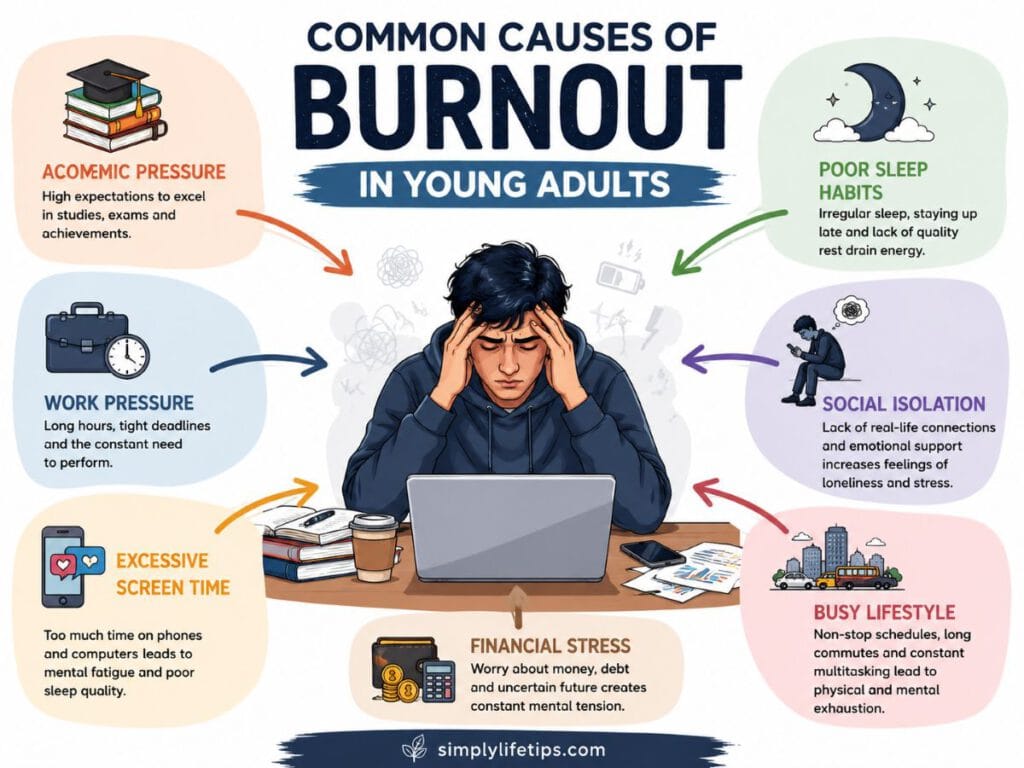
Today’s generation faces challenges that previous generations rarely experienced on such a scale.
Constant Pressure to Perform
Many young adults feel they must constantly succeed in academics, careers, finances, and personal life. Social media often creates unrealistic expectations, making it appear that everyone else is achieving success effortlessly.
This pressure results in:
- Working long hours
- Studying without adequate breaks
- Fear of failure
- Anxiety about future career opportunities
- Financial stress
Over time, continuous pressure drains emotional resilience and increases the risk of burnout.
Constant stress and too many daily decisions can also drain your mental energy. Learn how to reduce this burden in our guide on decision fatigue and simple ways to overcome it.
Poor Sleep Habits
One of the biggest contributors to burnout is insufficient quality of sleep.
Late-night scrolling, binge-watching videos, gaming, or working into the early hours disrupts the body’s internal clock. Even if you sleep for seven or eight hours, poor sleep quality prevents proper recovery.
Healthy sleep depends on consistency. Going to bed and waking up at roughly the same time each day helps regulate hormones responsible for energy and mood.
Excessive Screen Time
Most young people spend several hours every day looking at phones, computers, and tablets.
Extended screen exposure can:
- Reduce sleep quality
- Increase mental fatigue
- Lower attention span
- Cause eye strain
- Reduce physical activity
Digital overload keeps the brain constantly stimulated, making it difficult to relax even during leisure time.
Social Isolation
Despite having hundreds of online contacts, many young adults experience loneliness.
Real-life conversations provide emotional support that cannot be replaced by social media interactions. A lack of meaningful relationships increases stress and makes it harder to recover emotionally.
Simple activities like meeting friends, talking with family, or participating in community events can significantly improve mental well-being.
Fast-Paced Urban Living
City life often involves:
- Heavy traffic
- Long commutes
- Noise pollution
- Tight deadlines
- Constant multitasking
These everyday stressors keep the body’s stress response activated for long periods, eventually leading to exhaustion.
How Does Burnout in Young Adults Affect the Body?
Burnout is not “just in your mind.” It causes real physical changes throughout the body.
Chronic stress increases cortisol, commonly known as the stress hormone. Persistently elevated cortisol levels may contribute to:
- Fatigue
- Poor concentration
- Weakened immunity
- Weight changes
- Digestive issues
- Elevated blood pressure
Long-term burnout may also increase the risk of chronic health conditions when combined with unhealthy lifestyle habits.
Emotional Effects of Burnout
Burnout gradually affects emotional health.
Many people notice they become:
- Easily irritated
- Emotionally numb
- Less motivated
- More anxious
- Less confident
- Overwhelmed by minor problems
Even enjoyable activities may stop feeling rewarding.
If prolonged stress leaves you feeling that nothing you do will improve your situation, you may be experiencing a pattern known as learned helplessness, which can make burnout even harder to overcome.
If ignored for months, burnout can contribute to anxiety disorders or depression, making professional support increasingly important.
Common Signs and Symptoms of Burnout in Young Adults
Recognizing burnout early allows you to take action before symptoms become severe.
Common warning signs include:
- Feeling tired all the time
- Waking up exhausted despite sleeping
- Difficulty concentrating
- Brain fog
- Frequent headaches
- Muscle pain
- Irritability
- Poor sleep quality
- Lack of motivation
- Reduced productivity
- Forgetfulness
- Feeling emotionally drained
- Loss of enthusiasm
- Increased procrastination
If several of these symptoms persist for weeks, it is worth evaluating your lifestyle and discussing them with a healthcare professional.
Burnout vs Normal Tiredness
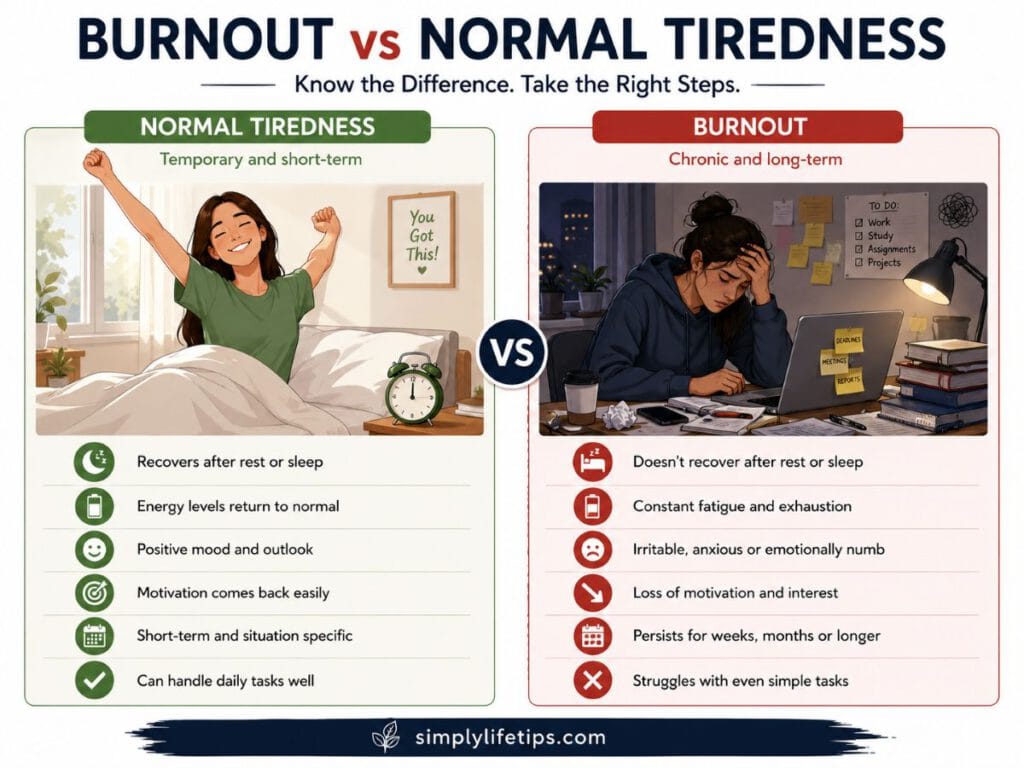
Many people confuse burnout with ordinary fatigue.
| Normal Tiredness | Burnout |
|---|---|
| Improves after rest | Persists despite sleep |
| Temporary | Lasts for weeks or months |
| Motivation returns quickly | Motivation remains low |
| Energy recovers | Constant exhaustion |
| Usually physical | Physical and emotional exhaustion |
The key difference is recovery. Normal tiredness improves after adequate rest, whereas burnout often does not.
Lifestyle Habits That Increase Burnout Risk
Certain everyday habits significantly increase the likelihood of burnout.
Skipping Meals
Irregular eating patterns cause fluctuations in blood sugar, reducing energy and concentration.
Eating balanced meals containing protein, healthy fats, whole grains, fruits, and vegetables helps maintain steady energy throughout the day.
Lack of Exercise
Physical activity reduces stress hormones while increasing endorphins that improve mood.
Even 30 minutes of walking five days a week can make a noticeable difference.
Working Without Breaks
Continuous work lowers productivity.
The brain performs better when short breaks are taken regularly. A five-minute walk or stretching session every hour can reduce mental fatigue.
Comparing Yourself Constantly
Social media encourages comparison with carefully edited versions of other people’s lives.
Remember that online content rarely reflects everyday reality.
Focusing on your own progress rather than someone else’s achievements helps reduce unnecessary stress.
Practical Ways to Recover from Burnout
Recovery requires addressing both physical and emotional well-being.
Prioritize Quality Sleep
Aim for 7–9 hours of consistent sleep.
Helpful habits include:
- Going to bed at the same time
- Avoiding caffeine late in the day
- Keeping the bedroom dark and quiet
- Limiting screens before bedtime
Exercise Regularly
Exercise improves circulation, reduces stress hormones, and supports better sleep.
Choose activities you enjoy, such as:
- Walking
- Cycling
- Swimming
- Yoga
- Strength training
Eat a Balanced Diet
Nutritious food supports both brain function and energy.
Include:
- Whole grains
- Lean proteins
- Fresh fruits
- Vegetables
- Nuts and seeds
- Healthy fats
Avoid relying on excessive caffeine or sugary snacks for temporary energy.
Reduce Screen Time
Create screen-free periods during the day.
For example:
- No phone during meals
- No screens one hour before bedtime
- Take regular digital breaks while working
Reconnect with People
Meaningful relationships are powerful protectors against burnout.
Spend time with:
- Family
- Close friends
- Supportive colleagues
- Community groups
Talking openly about stress often reduces emotional burden.
Another simple but effective way to reduce mental overload is to write down your thoughts and worries. Our guide on writing down worries explains how this habit can help you organize your thoughts, reduce stress, and improve emotional well-being.
Learn to Say No
Many young adults experience burnout because they struggle to decline additional responsibilities.
Protecting your time is not selfish—it helps maintain long-term health and productivity.
Changing how you think about challenges and daily pressures can also reduce stress. Understanding different types of thinking can help you develop healthier perspectives and make better decisions during difficult times.
When Should You Seek Professional Help?
Occasional tiredness is normal, but persistent exhaustion deserves attention.
Consult a healthcare professional if:
- Symptoms last for several weeks
- Fatigue interferes with work or studies
- You lose interest in daily activities
- Anxiety or sadness becomes overwhelming
- Sleep problems continue despite healthy habits
A doctor can rule out medical conditions such as anemia, thyroid disorders, vitamin deficiencies, or other illnesses that may also cause fatigue.
Conclusion
Burnout in young adults is becoming increasingly common because modern lifestyles demand constant productivity while leaving little room for rest and recovery. Persistent fatigue, brain fog, irritability, poor sleep, and lack of motivation should never be dismissed as “normal.”
Small lifestyle changes—such as sleeping consistently, exercising regularly, eating nutritious meals, reducing screen time, and strengthening personal relationships—can significantly improve energy and emotional well-being. Most importantly, listen to your body’s warning signs instead of ignoring them. Early action can prevent burnout from becoming a long-term health problem.
Visual Summary: Warning Signs of Burnout
If you want a quick overview, the infographic below summarizes the most common warning signs of burnout in young adults along with practical recovery tips. Feel free to save or share it as a reminder to prioritize your physical and mental well-being.
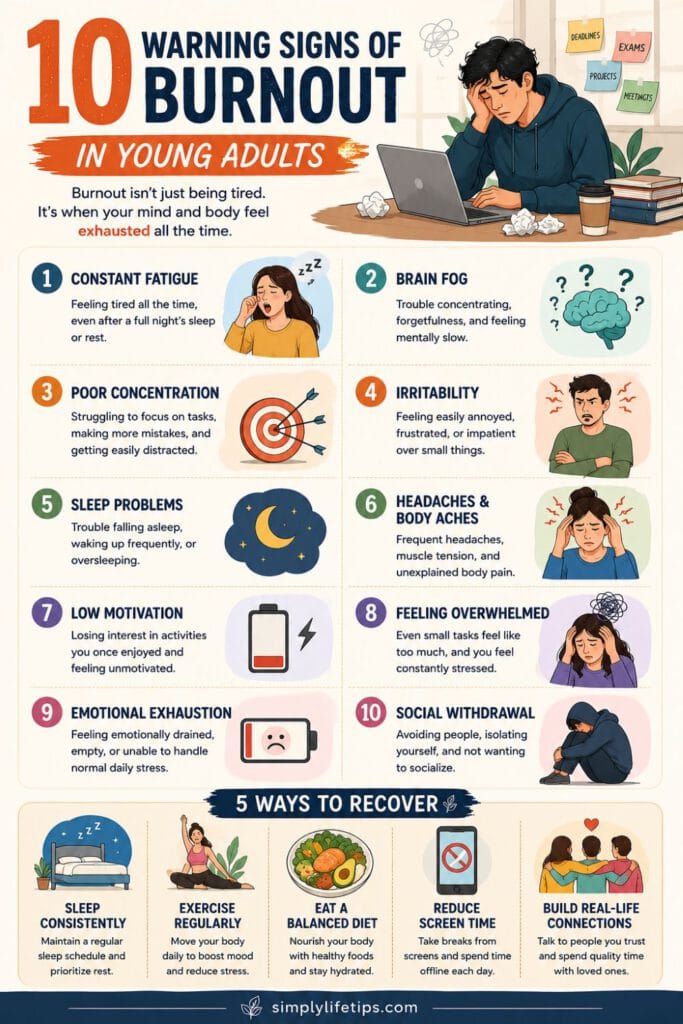
Burnout develops gradually, but recognizing its early warning signs can help you take action before it affects your health, relationships, and productivity. Refer back to this infographic whenever you need a simple reminder of the symptoms to watch for and the healthy habits that support recovery.
FAQs
What is burnout in young adults?
Burnout is long-term physical, emotional, and mental exhaustion caused by prolonged stress and unhealthy lifestyle habits.
Can burnout make you tired even after sleeping?
Yes. One of the hallmark symptoms of burnout is waking up feeling exhausted despite getting enough sleep.
How long does burnout recovery take?
Recovery varies depending on severity. Mild burnout may improve within weeks, while more severe cases can take several months with lifestyle changes and professional support.
Is burnout the same as depression?
No. Although some symptoms overlap, burnout is primarily related to chronic stress. However, untreated burnout may contribute to depression, so professional evaluation is important if symptoms are severe.
Can exercise help reduce burnout?
Yes. Regular physical activity improves mood, lowers stress hormones, enhances sleep quality, and increases energy levels.

Mathukutty P V is a Blogger, YouTuber, and Content Writer and the founder of Simply Life Tips. After taking voluntary retirement in 2017, he embraced a free lifestyle focused on learning, personal growth, and sharing practical wisdom to help others live with more purpose and positivity.



