
Acrophobia, commonly known as the fear of heights, is an intense anxiety disorder that causes overwhelming fear when a person is exposed to high places or even thinks about being at a significant height.
While many people experience mild discomfort in high places, acrophobia, commonly known as the fear of heights, is far more intense. It can cause overwhelming anxiety, making even routine activities such as crossing a bridge, using an escalator, or climbing stairs extremely distressing.
Acrophobia is one of the most common specific phobias and can affect people of all ages. Fortunately, it is a treatable condition. With the right understanding, professional guidance, and gradual exposure, many individuals successfully overcome their fear and regain confidence.
In this guide, you’ll learn what acrophobia is, its symptoms, causes, risk factors, treatment options, and practical strategies to help you manage the fear of heights and improve your quality of life.
What Is Acrophobia?
Acrophobia is an intense and persistent fear of heights that goes beyond ordinary caution. The term comes from the Greek words akron, meaning “highest point,” and phobos, meaning “fear.” People with acrophobia may experience severe anxiety when they are on balconies, rooftops, mountains, staircases, glass elevators, bridges, or even while viewing images or videos taken from high places.
Acrophobia is one of many specific phobias that can significantly affect daily life. If you’d like to learn about other common phobias, their symptoms, causes, and treatment options, read our comprehensive guide to Phobias.
The illustration below explains how acrophobia affects both the mind and body, helping you understand why everyday situations involving heights can trigger intense anxiety.
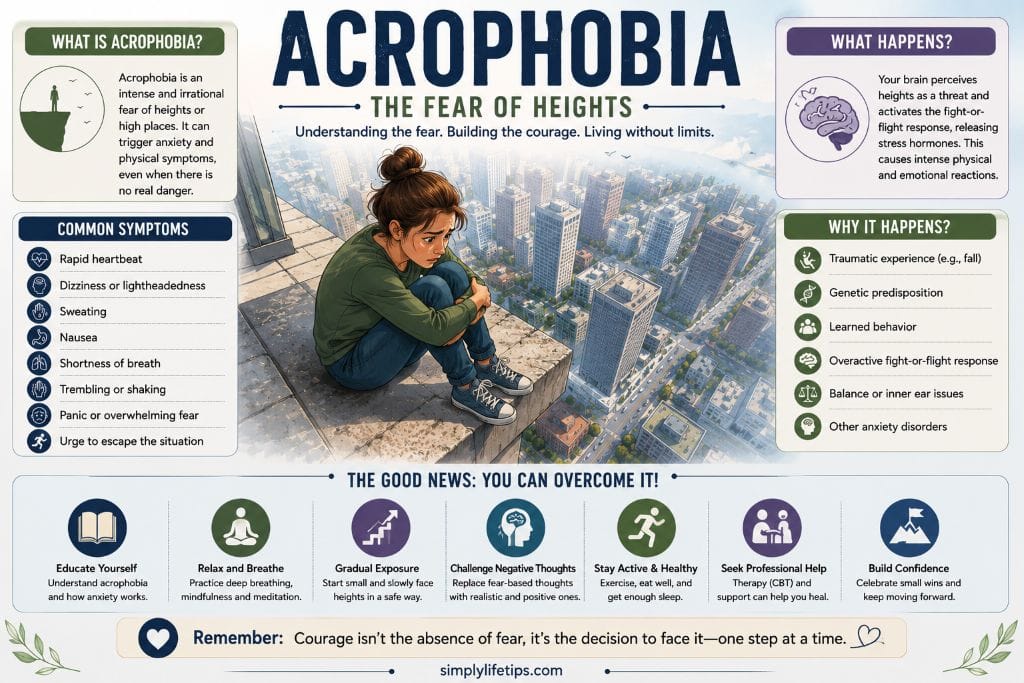
Although the symptoms can feel overwhelming, acrophobia is highly treatable. Understanding how the condition develops is the first step toward managing the fear and gradually building confidence around heights.
Unlike a normal fear that helps protect us from danger, acrophobia triggers excessive fear even when there is little or no actual risk. The anxiety can become so overwhelming that some people avoid travelling, sightseeing, certain occupations, or recreational activities altogether.
Acrophobia is one of many anxiety-related conditions discussed in our comprehensive guide to Phobias, where you can learn about other common fears, their symptoms, causes, and treatment options.
How Common Is Acrophobia?
Research suggests that acrophobia is among the most common specific phobias. Millions of people worldwide experience some level of fear when exposed to heights, but only a smaller percentage develop symptoms severe enough to interfere with daily life.
Acrophobia can affect children, teenagers, adults, and older adults. It may develop gradually over time or appear suddenly after a frightening experience involving heights, such as falling or witnessing an accident. In many cases, people begin avoiding situations involving heights, which reinforces the fear and makes it more difficult to overcome.
With early intervention and appropriate treatment, most people can significantly reduce their anxiety and participate more comfortably in activities involving heights.
Symptoms of Acrophobia
The symptoms of acrophobia can vary from mild discomfort to intense panic. They typically appear when a person is at a height, anticipates being in a high place, or sometimes even when viewing photos or videos taken from elevated locations. The symptoms may be physical, emotional, and behavioural.
Physical Symptoms
The body’s natural fight-or-flight response can trigger several physical reactions, including:
- Rapid heartbeat or palpitations
- Shortness of breath
- Sweating
- Trembling or shaking
- Dizziness or lightheadedness
- Feeling unsteady or losing balance
- Tightness in the chest
- Dry mouth
- Nausea or stomach discomfort
- Tingling sensations in the hands or feet
These symptoms often disappear once the person leaves the situation, but they can be frightening enough to reinforce the fear of heights.
Emotional and Mental Symptoms
Acrophobia also affects thoughts and emotions. Common psychological symptoms include:
- Intense fear or panic when exposed to heights
- Feeling overwhelmed or out of control
- Excessive worry before visiting high places
- Fear of falling, even when protected by barriers or safety measures
- Difficulty concentrating due to anxiety
- Feeling helpless or trapped
- Persistent anticipation of something terrible happening
These anxious thoughts can make everyday situations feel far more dangerous than they actually are.
Behavioural Symptoms
People with acrophobia often change their behaviour to avoid situations that trigger anxiety. They may:
- Avoid balconies, rooftops, bridges, or observation decks
- Refuse to climb ladders or use glass elevators
- Choose stairs over escalators or avoid the upper floors of buildings
- Decline hiking, sightseeing, or adventure activities
- Change travel plans to avoid mountains, cable cars, or high viewpoints
- Depend on others for tasks involving heights
Avoidance may provide short-term relief, but it often strengthens the fear over time. Learning healthy coping strategies, such as those discussed in our article on Writing Down Worries, can help manage anxious thoughts while working toward overcoming the fear.
What Causes Acrophobia?
There isn’t always a single cause of acrophobia. Instead, it usually develops due to a combination of psychological, biological, and environmental factors. Understanding these causes can help people recognize that their fear is a treatable condition rather than a personal weakness.
1. Traumatic Experiences
A frightening experience involving heights is one of the most common triggers. For example, falling from a tree, slipping on a staircase, or witnessing someone else have an accident at a height can leave a lasting emotional impact. Even if the event happened years ago, the brain may continue to associate heights with danger.
2. Genetics and Family History
People with a family history of anxiety disorders or specific phobias may have a higher risk of developing acrophobia. Genetics alone does not cause the condition, but it can increase a person’s susceptibility to anxiety when combined with environmental factors.
3. Learned Behaviour
Children often observe and imitate the reactions of parents or caregivers. If a child repeatedly sees someone expressing intense fear around heights, they may begin to develop similar fears themselves. This learned response can continue into adulthood if not addressed.
4. The Brain’s Fight-or-Flight Response
The brain is designed to protect us from danger. In people with acrophobia, this protective system becomes overactive when faced with heights. Even when there is little or no real risk, the brain signals the body to release stress hormones, causing symptoms such as a racing heart, sweating, dizziness, and trembling.
5. Balance and Visual Processing Issues
Some researchers believe that certain people rely more heavily on visual cues to maintain balance. Looking down from a significant height may disrupt this sense of stability, making them feel dizzy or unsteady. These sensations can increase anxiety and reinforce the fear of heights.
6. Other Anxiety Disorders
Acrophobia sometimes occurs alongside other anxiety-related conditions, including panic disorder or social anxiety disorder. People who frequently experience anxiety may be more likely to develop a specific phobia over time. Learning effective ways to manage anxious thoughts, such as the techniques discussed in our article on Decision Fatigue: Signs, Causes, and Simple Ways to Overcome It, may also help reduce overall stress and improve emotional resilience.
Risk Factors
While anyone can develop acrophobia, certain factors may increase the likelihood of experiencing an intense fear of heights.
Common risk factors include:
- A family history of anxiety disorders or specific phobias
- Experiencing a traumatic fall or accident involving heights
- Witnessing someone else suffer an accident at a height
- Having another anxiety disorder or frequent panic attacks
- Being naturally more sensitive to stress or fear
- Avoiding situations involving heights, which reinforces the phobia over time
Having one or more of these risk factors does not necessarily mean a person will develop acrophobia. However, recognizing them can help individuals seek support before the fear becomes severe.
Common Triggers of Acrophobia
People with acrophobia may react differently depending on the situation. Some are only affected by extreme heights, while others experience anxiety in relatively ordinary places.
Common triggers include:
- Standing on balconies or rooftops
- Looking over the edge of a tall building
- Crossing high bridges
- Climbing ladders or scaffolding
- Hiking on mountain trails or cliffs
- Riding cable cars or Ferris wheels
- Using glass elevators
- Looking out from the upper floors of buildings
- Walking across elevated walkways
- Watching videos or virtual reality experiences filmed from great heights
Identifying personal triggers is an important step in treatment because it allows gradual, controlled exposure under safe conditions, helping reduce fear over time.
How Is Acrophobia Diagnosed?
Acrophobia is diagnosed by a qualified healthcare professional, such as a psychologist or psychiatrist, through a detailed evaluation of your symptoms, medical history, and how the fear affects your daily life. No laboratory test or brain scan can confirm acrophobia.
During the assessment, your healthcare provider may ask questions such as:
- When did your fear of heights begin?
- What situations trigger your anxiety?
- How intense are your symptoms?
- Do you avoid places or activities involving heights?
- Has your fear affected your work, education, travel, or relationships?
- Have you experienced panic attacks or other anxiety disorders?
A diagnosis is typically considered when the fear:
- Is persistent and usually lasts for six months or longer.
- Is excessive compared to the actual level of danger.
- Causes significant distress or interferes with daily life.
- Leads to avoidance of situations involving heights.
- Cannot be better explained by another mental health condition.
Early diagnosis is important because treatment is often more effective before avoidance behaviours become deeply ingrained.
Treatment Options for Acrophobia
Acrophobia is highly treatable, and many people experience significant improvement with the right combination of therapy, self-help strategies, and professional support. Treatment focuses on reducing anxiety, changing fearful thought patterns, and gradually rebuilding confidence around heights.
1. Cognitive Behavioural Therapy (CBT)
Cognitive Behavioural Therapy (CBT) is considered one of the most effective treatments for acrophobia. It helps people identify negative thought patterns, challenge unrealistic fears, and replace them with healthier, more balanced ways of thinking.
Over time, CBT can reduce anxiety and improve confidence when facing situations involving heights.
2. Exposure Therapy
Exposure therapy is a specialised form of CBT that gradually introduces a person to height-related situations in a safe and controlled manner. Treatment begins with less challenging scenarios, such as looking at pictures of tall buildings, before progressing to standing on a balcony or crossing a bridge.
This gradual approach helps the brain learn that heights are not always dangerous, reducing fear over time.
3. Virtual Reality Therapy
Some therapists use virtual reality (VR) technology to simulate height-related situations in a controlled environment. Virtual reality exposure therapy allows people to practise managing their anxiety while remaining in a safe clinical setting.
Research suggests that VR therapy can be an effective option for people who are unable or unwilling to begin with real-world exposure.
4. Relaxation and Mindfulness Techniques
Relaxation exercises can help reduce the physical symptoms of anxiety before and during exposure to heights. Common techniques include:
- Deep breathing exercises
- Progressive muscle relaxation
- Mindfulness meditation
- Guided imagery
- Grounding techniques
Practising these techniques regularly can improve emotional control and reduce panic symptoms.
5. Medication
Medication is not usually the first treatment for acrophobia, but it may be recommended in certain situations, particularly if anxiety is severe or occurs alongside another anxiety disorder.
A healthcare professional may prescribe medication for short-term symptom relief or as part of a broader treatment plan. Medication should always be taken under medical supervision.
6. Support Groups and Counselling
Talking with a mental health professional or joining a support group can help individuals share experiences, learn coping strategies, and stay motivated throughout recovery. Knowing that others have successfully overcome similar fears can make the treatment process less intimidating.
Remember that recovery takes time. Every small step towards facing your fear is progress, and celebrating those achievements can help build lasting confidence. If negative thoughts continue to undermine your progress, our guide on How to Overcome Self-Doubt offers practical strategies for developing a more positive and resilient mindset.
10 Practical Ways to Overcome Acrophobia
Overcoming acrophobia takes patience and consistent effort. While there is no instant cure, many people successfully reduce their fear of heights by practising healthy coping strategies and gradually facing situations that make them anxious. The following tips can help you build confidence over time.
Overcoming acrophobia is a gradual process that combines knowledge, practice, and patience. The infographic below highlights practical strategies you can use to manage your fear of heights and build confidence one step at a time.
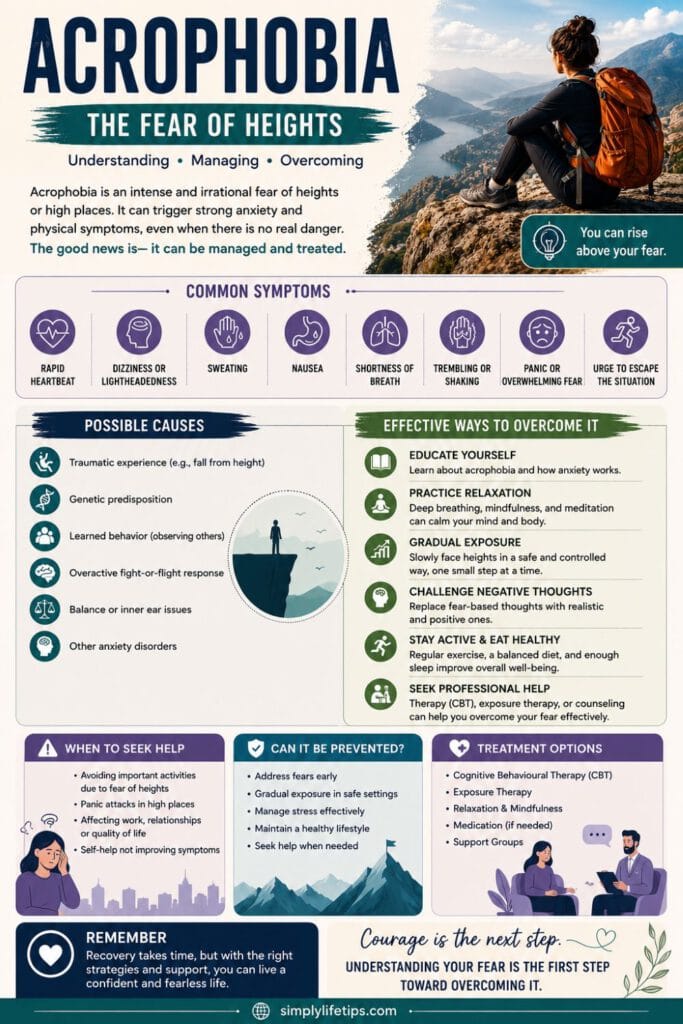
Every small step you take brings you closer to overcoming your fear. Whether you practise relaxation techniques, gradually face height-related situations, or seek professional guidance, consistency is the key to long-term progress. Keep this infographic as a quick reference whenever you need encouragement on your journey.
1. Learn About Your Fear
Understanding how acrophobia works can make it feel less overwhelming. Learning that your body’s fear response is designed to protect you—even when there is no real danger—can help you view your symptoms more objectively and reduce unnecessary worry.
2. Face Your Fear Gradually
Avoiding heights may provide temporary relief, but it often reinforces the phobia. Instead, expose yourself to height-related situations gradually. You might begin by looking at photographs of high places, then standing on a low balcony, and eventually visiting higher locations as your confidence grows.
Take small, manageable steps and progress at your own pace.
3. Practise Deep Breathing
When anxiety starts to build, slow, controlled breathing can help calm your nervous system. Try inhaling deeply through your nose, holding your breath for a few seconds, and exhaling slowly through your mouth. Regular breathing exercises can reduce physical symptoms such as a racing heart and shortness of breath.
4. Challenge Negative Thoughts
People with acrophobia often imagine the worst possible outcome, even when they are in a safe environment. Ask yourself:
- Is there real danger here?
- What evidence supports my fear?
- Have I safely been in similar situations before?
Replacing catastrophic thinking with realistic thoughts can gradually reduce anxiety.
5. Focus on Your Surroundings
Instead of concentrating on the height, focus on your surroundings or a fixed object nearby. Paying attention to your breathing, the ground beneath your feet, or nearby landmarks can help interrupt anxious thoughts and keep you grounded in the present moment.
6. Build Confidence Through Small Successes
Every successful experience, no matter how small, helps retrain your brain. Celebrate each achievement, whether it’s climbing one extra flight of stairs or spending a few more minutes on a balcony. Confidence grows through repeated positive experiences rather than one dramatic breakthrough.
7. Avoid Letting Fear Control Your Decisions
Constantly avoiding situations involving heights can limit your personal and professional opportunities. While it’s important to respect genuine safety risks, try not to let fear make decisions for you. Developing greater confidence in everyday life can also help you face challenges more effectively. You may find our article on Boosting Self-Confidence helpful for building resilience and believing in your abilities.
8. Consider Professional Therapy
If your fear is severe or prevents you from carrying out daily activities, seek help from a qualified mental health professional. Therapies such as Cognitive Behavioural Therapy (CBT) and exposure therapy have helped many people successfully overcome acrophobia.
Seeking professional support is a sign of strength, not weakness.
9. Stay Physically Active
Regular physical activity helps reduce stress and improves overall mental well-being. Activities such as walking, yoga, stretching, or swimming can lower anxiety levels and make it easier to cope with stressful situations.
10. Be Patient With Yourself
Recovery is rarely immediate. Some days will feel easier than others, and setbacks are a normal part of the process. Focus on consistent progress rather than perfection. Over time, each small step forward can help reduce fear and increase confidence.
Acrophobia vs Normal Fear of Heights
Although the terms are often used interchangeably, acrophobia and a normal fear of heights are not the same. Understanding the difference can help you determine whether professional support may be beneficial.
| Acrophobia | Normal Fear of Heights |
|---|---|
| Intense, persistent fear that interferes with daily life | A natural response to genuinely risky situations |
| Anxiety may occur even in safe environments | Fear usually occurs only when there is actual danger |
| Often leads to avoiding balconies, bridges, stairs, or high buildings | Does not usually interfere with normal activities |
| May trigger panic attacks or severe physical symptoms | Anxiety is generally mild and temporary |
| Often requires treatment if symptoms are severe | Usually managed without professional help |
Feeling cautious at great heights is normal and can help protect you from harm. However, if your fear consistently disrupts your daily life or causes significant distress, it may be a sign of acrophobia rather than ordinary caution.
When Should You Seek Professional Help?
Feeling nervous in high places is common, but if your fear becomes overwhelming or begins to interfere with your daily life, it may be time to seek professional help. Early treatment can prevent the fear from becoming more severe and help you regain confidence more quickly.
Consider consulting a mental health professional if you:
- Avoid work, travel, or social activities because of your fear of heights.
- Experience panic attacks or severe anxiety when exposed to heights.
- Find that your fear affects your relationships, career, or quality of life.
- Continue avoiding situations involving heights despite wanting to overcome the fear.
- Have tried self-help strategies without significant improvement.
- Experience anxiety alongside other mental health conditions, such as panic disorder or generalized anxiety disorder.
A psychologist or psychiatrist can assess your symptoms and recommend the most appropriate treatment plan. Many people notice significant improvement with therapies such as Cognitive Behavioural Therapy (CBT), exposure therapy, or a combination of therapeutic approaches.
Seeking help is not a sign of weakness. It is a positive step toward overcoming your fear and improving your overall well-being.
Can Acrophobia Be Prevented?
Although acrophobia cannot always be prevented, adopting healthy coping strategies may reduce the likelihood of developing a severe fear of heights or help stop mild anxiety from becoming more intense.
You can lower your risk by:
- Addressing fears early instead of avoiding them.
- Gradually exposing yourself to safe height-related situations.
- Learning effective stress management and relaxation techniques.
- Maintaining a healthy lifestyle with regular exercise and adequate sleep.
- Seek professional support if anxiety begins affecting your daily life.
- Encouraging children to develop confidence around heights in safe, supervised environments rather than reinforcing fear.
While not every case of acrophobia can be prevented, early intervention and consistent practice can make a significant difference in managing symptoms and building long-term confidence.
Conclusion
Acrophobia is more than a simple fear of heights—it is a specific phobia that can affect everyday activities, career choices, travel, and overall quality of life. Fortunately, it is also one of the most treatable anxiety disorders. With the right combination of education, gradual exposure, healthy coping strategies, and professional support when needed, many people successfully reduce their fear and regain confidence.
Recovery doesn’t happen overnight, but every small step forward is meaningful. Whether your goal is to climb a staircase without anxiety, enjoy scenic viewpoints, or simply feel more comfortable in elevated places, consistent practice can help you make lasting progress.
If fear has been holding you back, remember that overcoming acrophobia is possible. With patience, persistence, and the right support, you can face heights with greater confidence and enjoy experiences that once seemed impossible.
Frequently Asked Questions (FAQs)
1. What is acrophobia?
Acrophobia is an intense and persistent fear of heights. Unlike normal caution, it causes excessive anxiety that can interfere with daily activities, even when there is little or no real danger.
2. What causes acrophobia?
Acrophobia may develop due to traumatic experiences, genetics, learned behaviour, an overactive fight-or-flight response, balance-related issues, or other anxiety disorders. In many cases, it results from a combination of factors.
3. Can acrophobia be cured?
Many people successfully overcome or significantly reduce acrophobia through treatments such as Cognitive Behavioural Therapy (CBT), exposure therapy, relaxation techniques, and gradual self-exposure. Early treatment often leads to better outcomes.
4. Is acrophobia common?
Yes. Acrophobia is one of the most common specific phobias. While many people feel uncomfortable at great heights, only some experience fear severe enough to affect their daily lives.
5. When should I seek professional help for acrophobia?
You should consider professional help if your fear of heights interferes with work, travel, relationships, or everyday activities, or if self-help strategies have not improved your symptoms.
Disclaimer
This article is for informational and educational purposes only and should not be considered a substitute for professional medical advice, diagnosis, or treatment. If you experience persistent anxiety or believe you may have acrophobia or another mental health condition, consult a qualified healthcare professional or mental health specialist. Never ignore or delay seeking professional medical advice because of information you have read online.
References
- American Psychiatric Association. Anxiety Disorders.
- National Institute of Mental Health. Anxiety Disorders.
- Mayo Clinic. Specific Phobias – Symptoms and Causes.
- Cleveland Clinic. Acrophobia (Fear of Heights): Symptoms, Causes & Treatment.
- NHS. Phobias.

Mathukutty P V is a Blogger, YouTuber, and Content Writer and the founder of Simply Life Tips. After taking voluntary retirement in 2017, he embraced a free lifestyle focused on learning, personal growth, and sharing practical wisdom to help others live with more purpose and positivity.



