
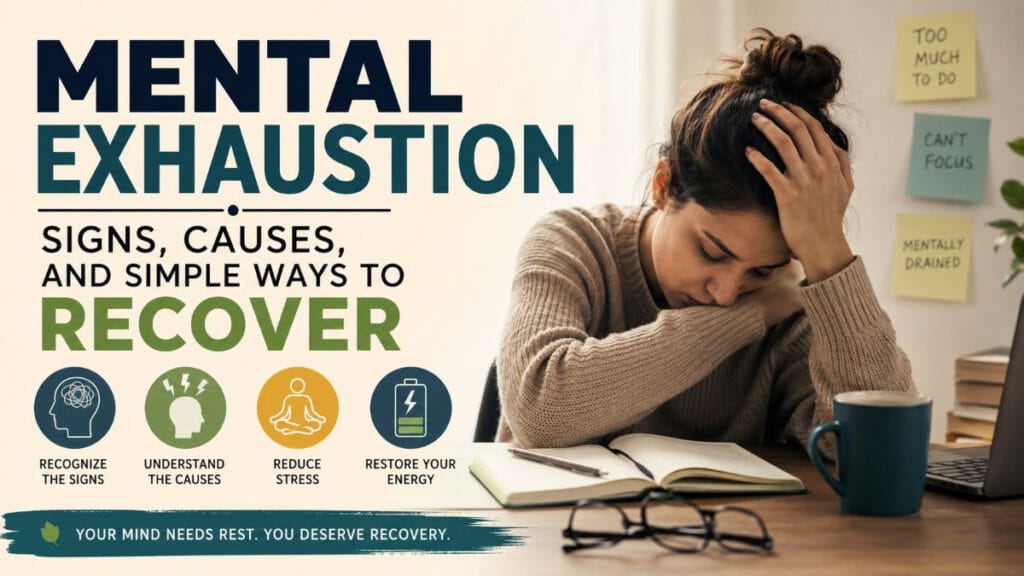
Mental exhaustion is more than feeling tired after a busy day. It is a state of deep emotional, cognitive, and physical fatigue caused by prolonged stress, constant pressure, or a lack of proper rest. While the body may continue to function, the mind often feels overwhelmed, making even the simplest tasks seem difficult.
Many people believe that taking breaks or resting during a busy schedule is a waste of time. They push themselves to keep working despite feeling drained. Over time, this constant pressure can overwhelm the nervous system and lead to a hidden condition known as functional freeze. From the outside, life may appear normal, but internally the mind feels stuck, disconnected, and unable to function at its best.
Understanding the signs of mental exhaustion and learning how to recover can help you restore your energy, improve your focus, and protect your long-term mental well-being.
What Is Mental Exhaustion?
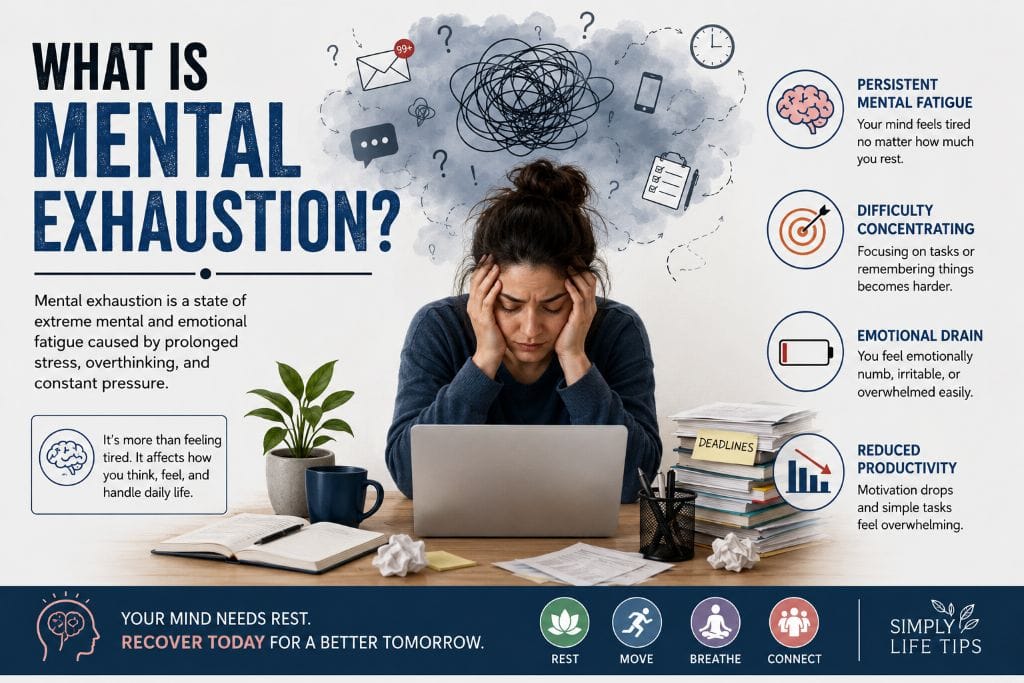
Mental exhaustion is a condition in which the brain becomes overwhelmed after prolonged periods of stress, emotional strain, or excessive mental effort. Unlike ordinary tiredness that improves after a good night’s sleep, mental exhaustion can persist for days or even weeks if the underlying causes are not addressed.
When the brain is constantly processing deadlines, worries, responsibilities, and emotional challenges, it gradually loses its ability to recover. Concentration declines, motivation decreases, and decision-making becomes more difficult. Even activities that once felt easy may begin to require enormous effort.
Mental exhaustion affects people from all walks of life. Students preparing for examinations, employees facing heavy workloads, parents balancing family responsibilities, caregivers, business owners, and individuals dealing with financial or relationship stress are all at risk.
For example, imagine an office employee who spends long hours meeting deadlines, responds to emails late into the night, skips lunch breaks, and rarely takes a vacation. Initially, they may simply feel tired. After several months, however, they begin forgetting important details, struggle to concentrate during meetings, and lose interest in activities they once enjoyed. This gradual decline is a classic example of mental exhaustion.
Unlike physical fatigue, which mainly affects the body, mental exhaustion primarily impacts the brain and nervous system. It can influence your thoughts, emotions, memory, relationships, productivity, and overall quality of life.
Ignoring the early warning signs often allows the condition to worsen. In some cases, prolonged mental exhaustion may contribute to burnout, anxiety, depression, or a state known as functional freeze, where the body continues functioning but the mind feels mentally immobilized.
Recognizing mental exhaustion early is the first step toward recovery. Instead of viewing it as a personal weakness, it should be understood as an important signal that your mind and body need rest, recovery, and healthier coping strategies.
What Is Functional Freeze?
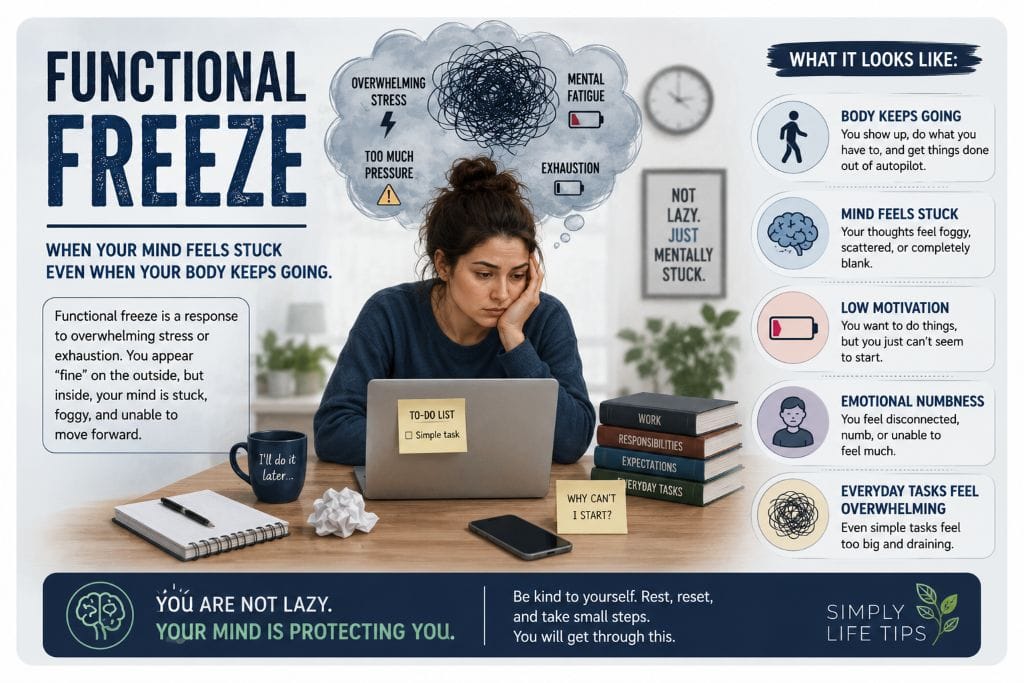
One of the lesser-known effects of prolonged mental exhaustion is a state called functional freeze. It occurs when the nervous system becomes so overwhelmed by ongoing stress that it shifts into a protective mode. Although a person continues to carry out essential daily activities, they feel mentally stuck, emotionally disconnected, and unable to function at their normal capacity.
From the outside, everything may appear fine. They go to work, attend classes, care for their family, or complete routine responsibilities. However, internally they feel as though they are carrying an invisible weight that makes every task far more difficult than it should be.
Functional freeze is not an official medical diagnosis but a term increasingly used to describe this experience. It is different from simply feeling tired after a long day or lacking motivation. Instead, it reflects a nervous system that has been under continuous pressure for too long.
Think of it like a computer with too many programs running at once. The computer doesn’t completely shut down—it still works—but every action becomes slower and less responsive. Similarly, the brain continues functioning, but its ability to process information, regulate emotions, and initiate actions becomes impaired.
Someone experiencing functional freeze may know exactly what needs to be done but still struggle to begin. They are not avoiding responsibilities because they don’t care. Rather, their overwhelmed nervous system makes even simple decisions and actions feel mentally exhausting.
Functional Freeze vs. Laziness
One of the biggest misconceptions about functional freeze is that it is simply laziness. The two may look similar from the outside, but they are fundamentally different.
Constant stress can also lead to decision fatigue, making even simple choices feel overwhelming. Learn how to recognize and overcome it in our guide on Decision Fatigue: Signs, Causes, and Simple Ways to Overcome It.
A lazy person usually chooses not to do a task because they are not interested or do not want to put in the effort. In contrast, someone experiencing functional freeze genuinely wants to complete the task but feels mentally unable to get started.
For example:
- A student knows they should begin studying but spends hours staring at their books without making progress.
- An employee intends to reply to an important email but repeatedly postpones it because it feels overwhelming.
- A parent wants to clean the house but cannot find the mental energy to begin.
In each of these situations, the desire to complete the task exists. The difficulty lies in the brain’s reduced ability to initiate action.
Because others often cannot see this internal struggle, people experiencing functional freeze may hear comments such as:
- “You’re just being lazy.”
- “Try harder.”
- “Stop procrastinating.”
- “You just need more discipline.”
Hearing these remarks can increase feelings of guilt, frustration, and self-doubt, making recovery even more difficult.
Understanding the difference is important because the solutions are also different. Laziness may require motivation or discipline, whereas functional freeze requires stress reduction, nervous system recovery, adequate rest, and self-compassion.
Signs of Mental Exhaustion and Functional Freeze
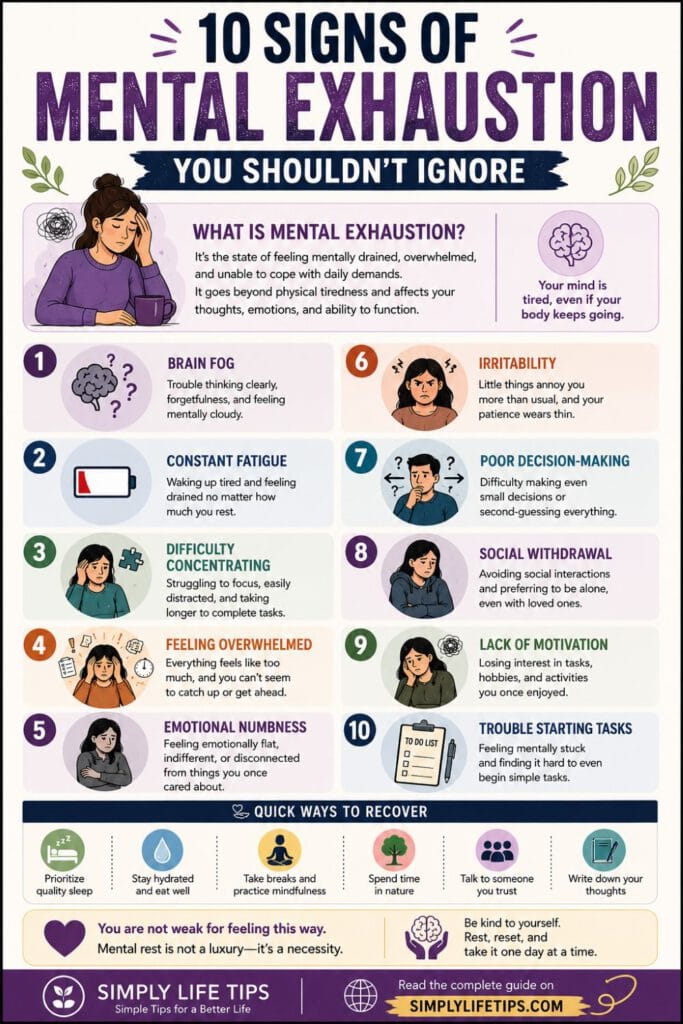
Mental exhaustion develops gradually. At first, you may simply feel more tired than usual or find it difficult to concentrate. As stress continues without adequate recovery, these symptoms can become more noticeable and may eventually lead to functional freeze.
Recognizing the warning signs early allows you to take action before they begin affecting your work, relationships, and overall well-being.
Everyday Tasks Feel Overwhelming
One of the earliest signs is that ordinary tasks suddenly seem much harder than they used to be.
Activities such as:
- Replying to emails
- Taking a shower
- Washing dishes
- Cleaning a room
- Making a phone call
- Grocery shopping
can begin to feel like major challenges.
For example, instead of answering an email immediately, you may keep postponing it throughout the day because your mind feels too drained to deal with it.
You Know What to Do but Can’t Start
This is one of the defining characteristics of functional freeze.
You understand exactly what needs to be done, yet you struggle to take the first step. Even though the task may only require a few minutes, it feels mentally overwhelming.
Many people repeatedly tell themselves:
- “I’ll do it in a few minutes.”
- “I really need to start.”
- “Why can’t I just get moving?”
Hours may pass without making progress, leaving them feeling guilty and frustrated.
Brain Fog and Poor Concentration
Mental exhaustion often causes brain fog, making thinking feel slower and less clear.
You may experience:
- Difficulty concentrating
- Forgetfulness
- Trouble finding the right words
- Reduced creativity
- Poor problem-solving
- Frequent mistakes
Some people describe it by saying, “My brain just isn’t working today.”
For example, you may read the same paragraph several times without understanding it or forget why you entered a room.
Decision-Making Becomes Difficult
When the brain is exhausted, even simple decisions require significant mental effort.
Questions like:
- What should I cook today?
- Which email should I answer first?
- Should I exercise now or later?
Can suddenly feel overwhelming.
Instead of making a decision, you may postpone it altogether.
If making everyday decisions feels mentally draining, you may also be experiencing decision fatigue. Read Decision Fatigue: Signs, Causes, and Simple Ways to Overcome It to learn practical ways to reduce mental overload.
Emotional Numbness
Another common symptom is feeling emotionally disconnected.
Instead of experiencing emotions clearly, everything begins to feel flat.
You may notice:
- Less excitement about things you once enjoyed
- Reduced happiness
- Difficulty expressing sadness
- Feeling emotionally “empty”
- Lack of motivation
Life may start to feel like you’re simply going through the motions.
Social Withdrawal
Mental exhaustion often reduces your desire to interact with others.
You may begin avoiding:
- Phone calls
- Text messages
- Social gatherings
- Family conversations
- Workplace discussions
This isn’t necessarily because you dislike people. Social interaction simply requires more mental energy than you currently have.
Constant Fatigue Despite Rest
A good night’s sleep usually helps ordinary tiredness.
Mental exhaustion is different.
Even after sleeping eight or nine hours, you may still wake up feeling mentally drained. This happens because the brain is recovering from prolonged stress rather than just physical activity.
Feeling Overwhelmed by Small Problems
Minor inconveniences can suddenly feel much larger than they really are.
For example:
- A slow internet connection feels unbearable.
- A small household chore seems impossible.
- A minor disagreement ruins your entire day.
This happens because your mental capacity to cope with stress has been significantly reduced.
Increased Irritability
When the mind is exhausted, patience often decreases.
You may become irritated more easily by:
- Loud noises
- Interruptions
- Crowded places
- Minor mistakes
- Unexpected changes
Situations that once seemed manageable may now trigger frustration or anger.
Loss of Interest in Hobbies
Activities you once enjoyed may no longer feel rewarding.
You might lose interest in:
- Reading
- Watching movies
- Exercising
- Cooking
- Gardening
- Spending time with friends
This doesn’t mean you’ve stopped caring. It often reflects the brain conserving its limited energy while trying to recover from prolonged stress.
Recognizing these warning signs early is essential. The sooner mental exhaustion is addressed, the easier it is to prevent it from progressing into deeper burnout or a prolonged state of functional freeze.
What Causes Mental Exhaustion?
Mental exhaustion rarely develops overnight. It usually results from prolonged exposure to stress without enough time for recovery. When the brain is constantly required to stay alert, solve problems, or manage emotions, it gradually becomes overwhelmed.
Several factors can contribute to mental exhaustion, and in many cases, more than one is involved.
Chronic Stress
Ongoing stress is the most common cause of mental exhaustion.
Stress itself is not always harmful. In short periods, it helps us stay focused and respond to challenges. However, when stress continues for weeks or months without relief, the brain remains in a constant state of alertness.
Common sources of chronic stress include:
- Heavy workloads
- Financial difficulties
- Family responsibilities
- Relationship conflicts
- Academic pressure
- Caregiving duties
For example, someone juggling a demanding job while caring for elderly parents may rarely find time to relax. Over time, the continuous pressure drains their mental energy and reduces their ability to cope.
Burnout
Burnout is a state of emotional, mental, and physical exhaustion caused by prolonged stress, especially in work or caregiving roles.
Unlike ordinary tiredness, burnout affects motivation, productivity, and emotional well-being. People often feel detached from their work, lose confidence in their abilities, and struggle to complete even routine responsibilities.
Mental exhaustion is one of the earliest and most noticeable signs of burnout.
Burnout often develops gradually before leading to mental exhaustion. Learn how to recognize the early warning signs in our article on Burnout in Young Adults.
Lack of Quality Rest
Many people believe that resting is unproductive.
They skip breaks, work during weekends, sacrifice sleep, or feel guilty whenever they take time off. Unfortunately, the brain cannot maintain peak performance without regular recovery.
Rest allows the nervous system to slow down, process experiences, and restore mental energy.
Without adequate rest, stress hormones remain elevated, making it increasingly difficult to concentrate, regulate emotions, and make decisions.
Remember, rest is not laziness—it is an essential part of maintaining good mental health.
Information Overload
Modern life constantly demands our attention.
Emails, social media, instant messaging, news updates, online meetings, and endless notifications leave the brain with very little quiet time.
When your mind is forced to process information throughout the day, it eventually becomes fatigued.
For instance, checking your phone every few minutes may seem harmless, but the repeated interruptions make it harder for the brain to focus and recover.
Emotional Stress
Strong emotions consume a significant amount of mental energy.
Experiences such as:
- Grief
- Relationship problems
- Divorce
- Family conflict
- Caring for a sick loved one
- Workplace harassment
Can leave the brain emotionally exhausted, even if they don’t involve physical work.
Over time, unresolved emotional stress may contribute to mental exhaustion and functional freeze.
Perfectionism
People who expect perfection from themselves often experience higher levels of mental exhaustion.
They may:
- Spend excessive time on small details.
- Fear of making mistakes.
- Constantly compare themselves with others.
- Feel that nothing they do is ever good enough.
While striving for excellence can be positive, perfectionism often creates unnecessary pressure that becomes mentally draining.
Constant Decision-Making
Every decision uses mental energy.
Choosing what to wear, planning meals, prioritizing work, managing finances, or making important life choices all require cognitive effort.
After making hundreds of decisions throughout the day, the brain becomes fatigued.
Poor Work-Life Balance
When work consistently takes priority over personal life, recovery becomes difficult.
Working long hours, answering emails after office hours, and remaining mentally connected to work throughout the day prevent the brain from switching into recovery mode.
Maintaining healthy boundaries between work and personal time is essential for preventing mental exhaustion.
Unhealthy Lifestyle Habits
Physical health and mental health are closely connected.
Several lifestyle habits can worsen mental exhaustion, including:
- Poor sleep
- Lack of physical activity
- An unhealthy diet
- Excessive caffeine consumption
- Excessive alcohol use
- Insufficient hydration
While these habits may not directly cause mental exhaustion, they reduce the brain’s ability to recover from daily stress.
How Mental Exhaustion Leads to Functional Freeze?
The human nervous system is designed to protect us from danger. When faced with stress or threats, it automatically activates one of three survival responses:
- Fight – confronting the threat.
- Flight – escaping from the situation.
- Freeze – becoming temporarily immobilized.
In genuinely dangerous situations, these responses help us survive.
However, modern stress is often different. Deadlines, financial worries, family responsibilities, and constant pressure may not threaten our physical safety, but the nervous system can respond as though they do.
When stress becomes overwhelming and continues for a long time, some people’s nervous systems shift into the freeze response. Instead of feeling energized to solve problems, they begin conserving energy.
This protective mechanism explains why someone experiencing functional freeze may continue performing basic responsibilities while feeling mentally stuck, emotionally disconnected, and unable to initiate even simple tasks.
The goal of recovery is not to force yourself to work harder. Instead, it is to help your nervous system recognize that it is safe again through rest, gentle movement, supportive relationships, and gradual daily progress.
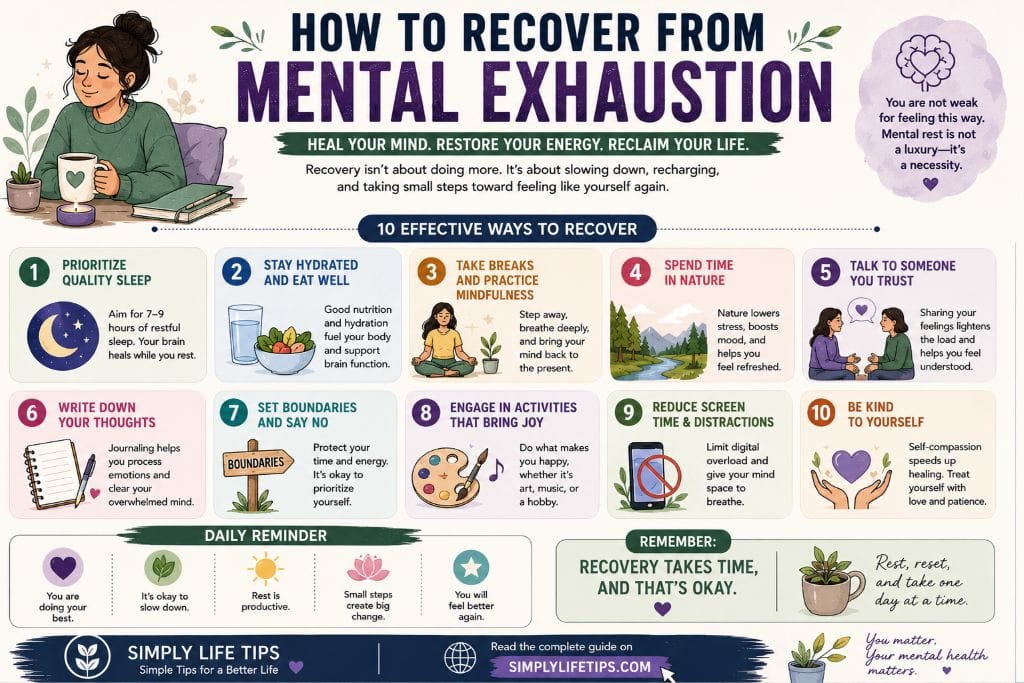
How to Recover from Mental Exhaustion?
Recovering from mental exhaustion does not happen overnight. If your brain has been under constant pressure for weeks or months, it needs time to regain its energy and resilience. The goal is not to change your entire life in one day but to make small, consistent changes that allow your mind and nervous system to recover.
Accept That You Need Rest
One of the biggest obstacles to recovery is believing that rest is a sign of weakness or laziness.
Many people continue working even when they are mentally exhausted because they feel guilty about slowing down. However, ignoring the need for rest often makes recovery take longer.
Think of your brain like a smartphone battery. If you keep using it without recharging, it will eventually shut down. In the same way, your mind needs regular periods of recovery to continue functioning effectively.
Permit yourself to take breaks without feeling guilty. Rest is an investment in your long-term health and productivity.
Start with Small Actions
When you’re mentally exhausted, large goals can feel intimidating.
Instead of creating an ambitious to-do list, focus on completing one small task at a time.
Examples include:
- Make your bed.
- Drink a glass of water.
- Open the curtains.
- Water a plant.
- Walk for five minutes.
- Wash a few dishes.
Completing small tasks creates a sense of accomplishment and gradually helps rebuild motivation.
Move Your Body Every Day
Physical activity is one of the most effective ways to reduce stress and improve mental well-being.
Exercise encourages the release of endorphins, improves circulation, and helps regulate stress hormones.
You don’t have to spend hours at the gym. Gentle movement can make a significant difference.
Good options include:
- Walking
- Stretching
- Yoga
- Cycling
- Dancing
- Light strength training
Even 20 to 30 minutes of movement most days of the week can help improve your mood and mental energy.
Prioritize Quality Sleep
Sleep is when the brain processes information, consolidates memories, and restores mental energy.
To improve sleep quality:
- Go to bed and wake up at consistent times.
- Avoid screens for at least an hour before bedtime.
- Limit caffeine later in the day.
- Keep your bedroom cool, dark, and quiet.
- Develop a relaxing bedtime routine.
Quality sleep is one of the most important foundations for recovering from mental exhaustion.
Practice Deep Breathing
When we are stressed, breathing often becomes shallow and rapid. Slow, controlled breathing helps activate the body’s relaxation response.
Try this simple exercise:
- Inhale slowly through your nose for four seconds.
- Hold your breath for four seconds.
- Exhale gently through your mouth for six seconds.
- Repeat for five to ten minutes.
This technique can calm the nervous system and reduce feelings of overwhelm.
Limit Information Overload
Constant exposure to notifications, emails, news, and social media can keep your brain in a state of continuous stimulation.
Give your mind opportunities to rest by:
- Turning off unnecessary notifications.
- Setting specific times to check emails.
- Taking short breaks from social media.
- Avoid negative news before bedtime.
Creating periods of digital silence allows your brain to recover from constant information processing.
Break Large Tasks into Smaller Steps
A long to-do list can make mental exhaustion feel even worse.
Instead of writing:
- Clean the house
Break it into smaller tasks:
- Make the bed.
- Vacuum one room.
- Wash the dishes.
- Fold the laundry.
Completing smaller steps feels more manageable and builds momentum.
Spend Time in Nature
Nature has a calming effect on the nervous system.
Research suggests that spending time outdoors may help reduce stress, improve mood, and restore attention.
You don’t need to visit a forest. A local park, garden, or quiet outdoor space can also provide benefits.
Even a 20-minute walk outside can help refresh your mind.
Reconnect with Supportive People
Mental exhaustion often makes people withdraw from friends and family.
While alone time can be helpful, prolonged isolation may increase feelings of stress and emotional fatigue.
Reach out to someone you trust.
This could be:
- A family member
- A close friend
- A colleague
- A mentor
You don’t need to discuss every problem. Sometimes simply spending time with supportive people can improve your emotional well-being.
Practice Self-Compassion
Many people respond to mental exhaustion by criticizing themselves.
They think:
- “I should be stronger.”
- “Why can’t I handle this?”
- “Everyone else seems to cope.”
Treat yourself with the same kindness you would offer a close friend facing similar challenges.
Recovery becomes easier when you replace self-criticism with patience and understanding.
Know When to Seek Professional Help
Mental exhaustion usually improves with rest and lifestyle changes. However, if symptoms continue for several weeks or begin interfering with work, relationships, or daily life, it is important to seek professional support.
Consider speaking with a qualified mental health professional if you experience:
- Persistent sadness
- Severe anxiety
- Loss of interest in daily activities
- Difficulty functioning at work or home
- Thoughts of self-harm or hopelessness
Professional guidance can help identify underlying causes and provide evidence-based treatment strategies.
Conclusion
Mental exhaustion is more than simply feeling tired. It is your mind’s way of telling you that it has been carrying too much stress for too long. If ignored, it can affect concentration, emotional well-being, relationships, and even lead to functional freeze, where everyday tasks become increasingly difficult despite your best intentions.
The good news is that recovery is possible. By recognizing the early warning signs, prioritizing rest, reducing unnecessary stress, moving your body, and taking one small step at a time, you can gradually restore your mental energy and resilience. Remember, rest is not a reward for hard work—it is an essential part of maintaining a healthy, productive, and balanced life.
Frequently Asked Questions
What is mental exhaustion?
Mental exhaustion is a state of extreme cognitive and emotional fatigue caused by prolonged stress, overwork, or ongoing emotional pressure. It can make thinking, concentrating, and completing daily tasks more difficult.
What causes mental exhaustion?
Common causes include chronic stress, burnout, lack of quality sleep, emotional strain, information overload, perfectionism, and poor work-life balance.
Is mental exhaustion the same as burnout?
Not exactly. Mental exhaustion is often one of the earliest symptoms of burnout. Burnout is a broader condition involving emotional, mental, and physical exhaustion, usually related to prolonged stress.
What is functional freeze?
Functional freeze is a stress response in which a person continues performing daily responsibilities while feeling mentally stuck, emotionally numb, and unable to function at their usual capacity.
How can I recover from mental exhaustion?
Recovery involves getting enough rest, improving sleep, exercising regularly, reducing stress, breaking tasks into smaller steps, limiting information overload, practicing relaxation techniques, and seeking professional help if symptoms persist.

Mathukutty P V is a Blogger, YouTuber, and Content Writer and the founder of Simply Life Tips. After taking voluntary retirement in 2017, he embraced a free lifestyle focused on learning, personal growth, and sharing practical wisdom to help others live with more purpose and positivity.



