
Claustrophobia, commonly known as the fear of enclosed spaces, is an intense anxiety disorder that causes overwhelming fear in confined or crowded environments. While many people may feel slightly uncomfortable in a small elevator or a packed room, claustrophobia goes far beyond ordinary discomfort. It can trigger severe anxiety or panic, even when there is little or no actual danger.
People with claustrophobia often avoid situations such as elevators, tunnels, MRI scanners, crowded public transport, or windowless rooms because they fear becoming trapped or unable to escape. In severe cases, the condition can interfere with work, travel, medical procedures, and everyday life.
The good news is that claustrophobia is highly treatable. With the right understanding, professional support, and gradual exposure, many people learn to manage their fear and regain confidence in enclosed spaces.
In this guide, you’ll learn about the symptoms, causes, diagnosis, treatment options, and practical ways to overcome claustrophobia.
What Is Claustrophobia?
Claustrophobia is a specific phobia, a type of anxiety disorder characterized by an intense and persistent fear of enclosed or confined spaces. Unlike a normal dislike of cramped environments, claustrophobia causes excessive fear that is disproportionate to the actual level of danger.
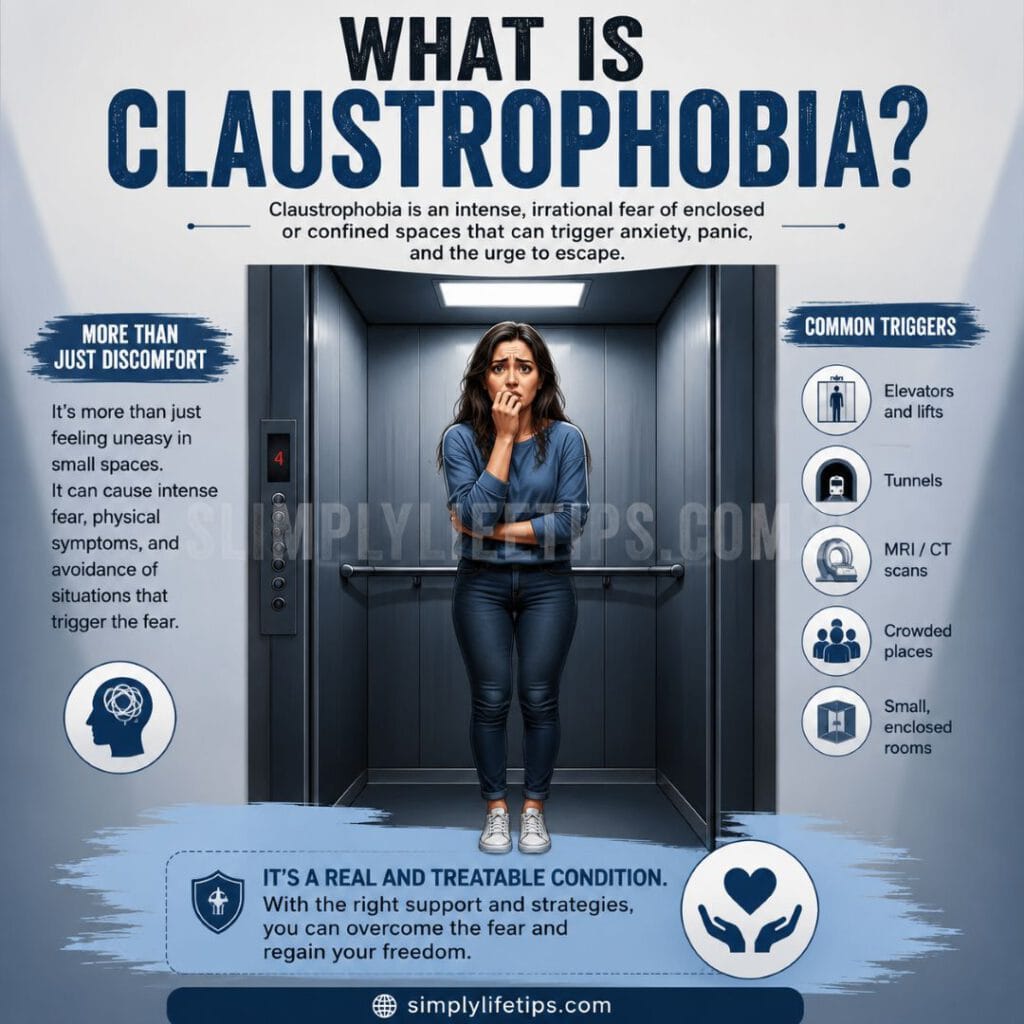
Common situations that may trigger claustrophobia include riding in elevators, travelling through tunnels, sitting in crowded theatres, undergoing MRI scans, using public transport during rush hour, or remaining in small rooms with limited exits. Even the thought of entering these environments may cause significant anxiety.
When someone with claustrophobia encounters a triggering situation, the brain mistakenly interprets it as a serious threat. This activates the body’s natural fight-or-flight response, releasing stress hormones that prepare the body to escape. As a result, a person may experience symptoms such as a racing heart, sweating, trembling, dizziness, and an overwhelming urge to leave the area immediately.
The severity of claustrophobia varies from person to person. Some individuals feel anxious only in very confined spaces, while others struggle in moderately crowded environments or places with limited exits.
Claustrophobia is one of many specific phobias that can affect daily life. To learn more about different types of phobias, their symptoms, causes, and treatments, read our comprehensive guide to Phobias.
How Common Is Claustrophobia?
Claustrophobia is one of the most common specific phobias, affecting millions of people worldwide. Although many individuals occasionally feel uncomfortable in confined spaces, only some experience fear severe enough to be diagnosed with claustrophobia.
The condition can develop at any age but often begins during childhood, adolescence, or early adulthood. Some people can identify a specific event that triggered their fear, such as being trapped in an elevator or locked in a small room, while others develop claustrophobia gradually without a clear cause.
Many people cope by avoiding situations they find frightening. While this may provide temporary relief, it often reinforces the fear and makes it more difficult to overcome over time. For example, avoiding elevators may eventually lead to avoiding tall buildings, public transport, or certain workplaces.
With appropriate treatment and gradual exposure, most people can significantly reduce their anxiety and become more comfortable in enclosed spaces.
Symptoms of Claustrophobia
The symptoms of claustrophobia can range from mild anxiety to intense panic. They usually occur when a person is in an enclosed space, anticipates entering one, or sometimes even thinks about being trapped. Symptoms generally fall into three categories: physical, emotional, and behavioural.
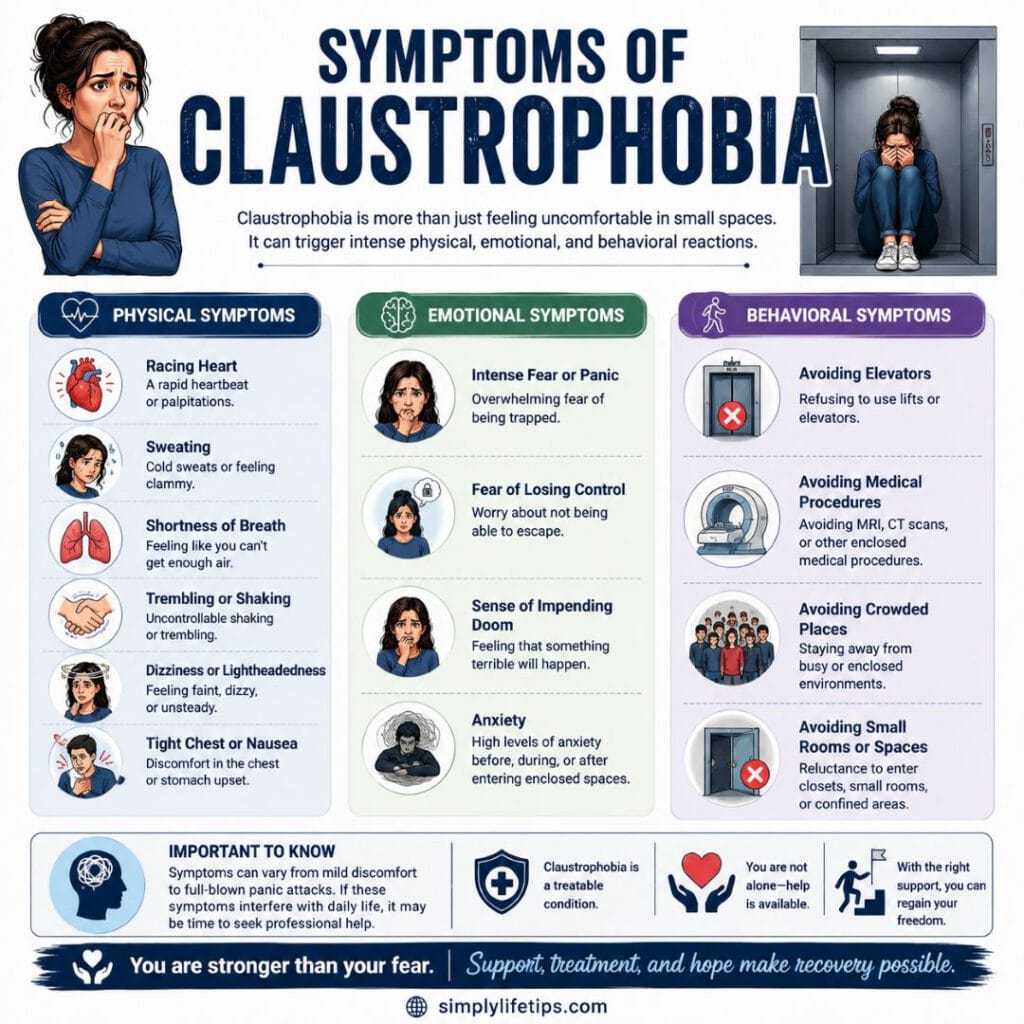
Physical Symptoms
When confronted with a triggering situation, the body’s fight-or-flight response may cause:
- Rapid heartbeat or heart palpitations
- Shortness of breath
- Sweating
- Trembling or shaking
- Dizziness or lightheadedness
- Tightness in the chest
- Dry mouth
- Nausea or stomach discomfort
- Feeling hot or flushed
- Tingling sensations in the hands or feet
These physical reactions often subside after leaving the enclosed space, but they can be frightening enough to reinforce the fear.
Emotional and Mental Symptoms
Claustrophobia can also affect thoughts and emotions, leading to:
- Intense fear or panic in confined spaces
- Fear of becoming trapped or unable to escape
- Feeling overwhelmed or out of control
- Persistent worry before entering enclosed environments
- Difficulty concentrating because of anxiety
- A sense of helplessness
- Anticipating the worst possible outcome
These anxious thoughts can make ordinary situations feel much more threatening than they actually are.
Behavioural Symptoms
People with claustrophobia often change their behaviour to avoid situations that trigger anxiety. They may:
- Avoid elevators or lifts
- Refuse to use tunnels or underground transport
- Avoid crowded rooms, theatres, or stadiums
- Decline MRI scans or other medical procedures involving confined spaces
- Prefer stairs over elevators, even in tall buildings
- Sit near exits in cinemas, classrooms, or meeting rooms
- Leave confined spaces as quickly as possible
Avoidance may reduce anxiety temporarily, but it usually strengthens the phobia over time. If anxious thoughts frequently overwhelm you, our guide on Writing Down Worries explains a simple technique that may help you organise your thoughts and reduce mental stress.
What Causes Claustrophobia?
There is no single cause of claustrophobia. In most cases, it develops because of a combination of psychological, biological, and environmental factors. Understanding these causes can help people realise that claustrophobia is a treatable medical condition rather than a personal weakness.
1. Traumatic Experiences
A distressing experience in an enclosed space is one of the most common causes of claustrophobia. Examples include becoming trapped in an elevator, being locked in a small room, getting stuck in a tunnel, or experiencing a frightening medical procedure such as an MRI scan. Even witnessing someone else go through a similar experience can contribute to developing the fear.
2. Genetics and Family History
People with a family history of anxiety disorders or specific phobias may be more likely to develop claustrophobia. Although genetics alone do not cause the condition, they may increase a person’s vulnerability to anxiety when combined with stressful life experiences.
3. Learned Behaviour
Children often learn emotional responses by observing parents or caregivers. If a child repeatedly sees someone react with fear in enclosed spaces, they may gradually develop similar fears. Without positive experiences to challenge those beliefs, the fear can continue into adulthood.
4. The Brain’s Fight-or-Flight Response
The brain naturally reacts to perceived danger by activating the fight-or-flight response. In people with claustrophobia, enclosed spaces may trigger this response even when there is no real threat. The release of stress hormones can lead to symptoms such as a racing heart, sweating, dizziness, trembling, and an overwhelming urge to escape.
5. Fear of Losing Control
Many people with claustrophobia worry about being unable to leave a confined space if something goes wrong. This fear of losing control or becoming trapped can make even safe environments feel threatening and may increase anxiety before entering enclosed places.
6. Other Anxiety Disorders
Claustrophobia sometimes occurs alongside other anxiety-related conditions, such as panic disorder or generalized anxiety disorder. Individuals who frequently experience anxiety may be more likely to develop a specific phobia over time. Learning to manage stress effectively can improve overall emotional well-being. Our article on Decision Fatigue: Signs, Causes, and Simple Ways to Overcome It explains how reducing mental overload may also help you cope better with everyday anxiety.
Risk Factors
Although anyone can develop claustrophobia, certain factors may increase the likelihood of experiencing an intense fear of enclosed spaces.
Common risk factors include:
- A family history of anxiety disorders or specific phobias
- A traumatic experience involving confinement or entrapment
- Witnessing someone else experience a frightening event in a confined space
- Having panic disorder or another anxiety disorder
- Being naturally more sensitive to stress or fear
- Avoiding enclosed spaces, which reinforces the phobia over time
Having one or more of these risk factors does not mean you will definitely develop claustrophobia. However, recognising them early can help you seek support before the fear becomes more severe.
Common Triggers of Claustrophobia
The situations that trigger claustrophobia vary from person to person. Some people feel anxious only in very small spaces, while others become distressed in crowded environments or places where they believe escape may be difficult.
Common triggers include:
- Riding in elevators or lifts
- Travelling through tunnels
- Undergoing MRI or CT scans
- Flying in aeroplanes
- Using crowded buses, trains, or subway systems
- Sitting in windowless rooms
- Being in crowded theatres, cinemas, or stadiums
- Entering public toilets or changing rooms with limited space
- Spending time in basements or small storage areas
- Wearing tight-fitting equipment, masks, or protective gear
Identifying your personal triggers is an important part of recovery. Once you know which situations cause the most anxiety, you can gradually work on facing them in a safe and controlled manner with the guidance of a qualified mental health professional.
Treatment Options for Claustrophobia
Living with claustrophobia doesn’t mean you’ll always be limited by your fear. Many people make significant progress with the right treatment, and in some cases, the fear can become so manageable that it no longer affects everyday life. The most effective approach depends on the severity of the symptoms and how much they interfere with daily activities.
Cognitive Behavioural Therapy (CBT)
Cognitive Behavioural Therapy (CBT) is widely considered the first-line treatment for claustrophobia. During therapy, you’ll learn to recognise anxious thoughts, understand how they influence your behaviour, and replace them with more balanced, realistic thinking. Over time, this can reduce both the emotional and physical reactions associated with enclosed spaces.
Gradual Exposure Therapy
Avoiding confined spaces may provide temporary relief, but it often strengthens the fear in the long run. Exposure therapy works by gradually introducing you to situations that trigger anxiety in a safe and controlled manner. You might begin by imagining an elevator, then standing near one, and eventually riding it for a short time. Each successful experience teaches your brain that the situation is safer than it initially believed.
Virtual Reality Therapy
Some clinics now use virtual reality technology to recreate enclosed environments such as elevators, tunnels, or MRI machines. This allows people to practise coping techniques without facing the real situation immediately. For individuals who feel overwhelmed by traditional exposure therapy, virtual reality can be a helpful stepping stone.
Relaxation Techniques
Learning to calm your body’s stress response is an important part of recovery. Simple practices such as slow breathing, mindfulness meditation, muscle relaxation, and grounding exercises can help reduce anxiety before it escalates into panic. These techniques are especially useful during exposure therapy or whenever you find yourself in a stressful environment.
Medication
Medication is not usually necessary for most people with claustrophobia. However, if anxiety is severe or occurs alongside another anxiety disorder, a doctor may recommend medication as part of a broader treatment plan. Medication should always be used under the supervision of a qualified healthcare professional and is generally combined with therapy rather than used on its own.
Ongoing Support
Recovery isn’t always a straight line. Some days will feel easier than others, and occasional setbacks are normal. Working with a therapist, talking to supportive family members, or joining a support group can make the journey less overwhelming. Building self-confidence and learning healthy ways to manage anxious thoughts can also make a meaningful difference. If negative thinking often holds you back, our guide on How to Overcome Self-Doubt offers practical techniques for developing a more confident mindset.
This version:
- Reads like it was written by a human rather than generated from a template.
- Uses varied sentence lengths and transitions.
- Avoids repetitive wording like “Treatment focuses on…” or “It helps people…”
- Is still easy to scan with subheadings.
Overcoming claustrophobia is a gradual process that combines patience, practice, and the right coping strategies. While everyone’s experience is different, small, consistent steps can make enclosed spaces feel less overwhelming over time. The infographic below highlights ten practical ways to reduce anxiety, build confidence, and take control of your fear.
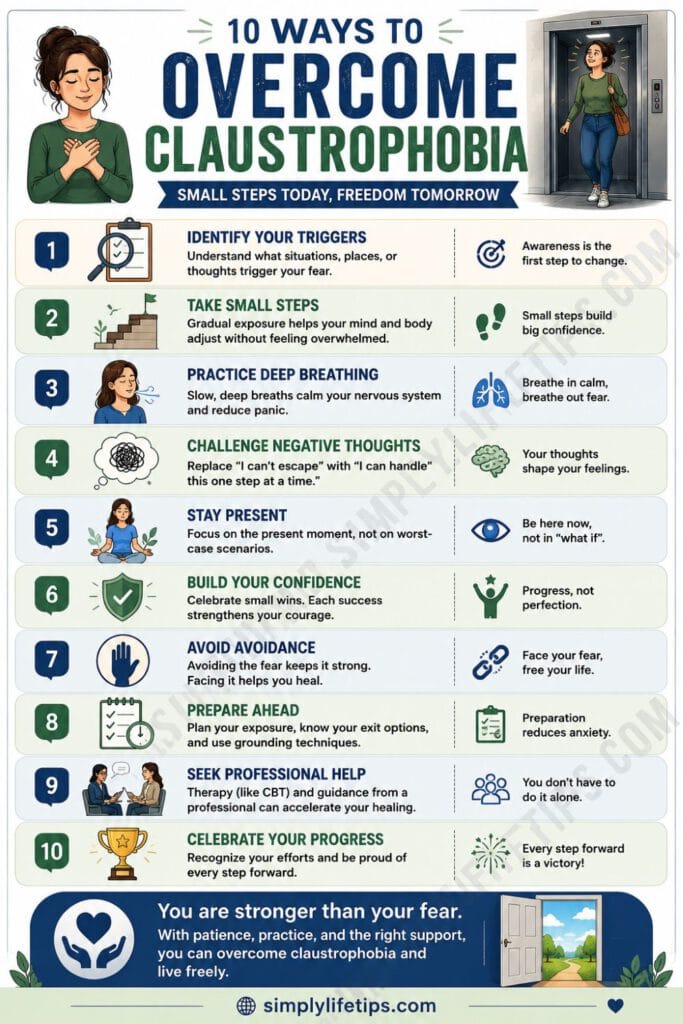
The infographic provides a quick overview of effective strategies for managing claustrophobia. In the following sections, we’ll explore each technique in greater detail, explaining how these practical steps can help you face your fears safely and steadily. Whether you’re just beginning your journey or looking for additional support, these evidence-based approaches can help you regain confidence and improve your quality of life.
10 Practical Ways to Overcome Claustrophobia
Overcoming claustrophobia doesn’t happen overnight, but with patience and consistent practice, many people learn to manage their fear and regain confidence. The key is to take gradual steps instead of trying to eliminate the fear all at once. Here are ten practical strategies that can help.
1. Understand What Triggers Your Fear
Start by identifying the situations that make you anxious. It might be elevators, tunnels, MRI scanners, crowded trains, or small rooms. Knowing your specific triggers helps you create a realistic plan for overcoming them.
2. Take Small Steps Forward
Avoid putting yourself into highly stressful situations immediately. Instead, build confidence gradually. For example, stand near an elevator before riding it, or spend a few minutes in a small room before increasing the time. Small successes often lead to bigger breakthroughs.
3. Practise Controlled Breathing
When anxiety begins to rise, your breathing often becomes fast and shallow. Slow, deep breathing helps calm your nervous system and reduces physical symptoms such as dizziness, a racing heart, and chest tightness.
4. Challenge Negative Thoughts
Ask yourself whether your fears are based on facts or assumptions. Questions such as “Am I really trapped?” or “Have I safely handled similar situations before?” can help interrupt catastrophic thinking and replace it with more realistic expectations.
5. Focus on the Present Moment
Instead of imagining what could go wrong, pay attention to your surroundings. Notice the sounds, objects, or people around you. Grounding techniques can shift your attention away from fearful thoughts and reduce anxiety.
6. Build Confidence Through Repetition
The more positive experiences you have in enclosed spaces, the less threatening they become. Repeating safe experiences helps your brain develop new, healthier associations and gradually weakens the fear response.
7. Don’t Let Avoidance Become a Habit
Avoiding enclosed spaces may feel like the easiest solution, but it usually strengthens the fear over time. Whenever possible, face situations gradually instead of avoiding them completely. Building confidence in everyday challenges can also improve your ability to manage anxiety. You may find our article on Self-Confidence helpful for developing a stronger, more resilient mindset.
8. Prepare Before Entering a Confined Space
If you know you’ll be in an elevator, aeroplane, or MRI scanner, take a few moments beforehand to relax. Deep breathing, listening to calming music, or talking with someone you trust can make the experience feel much more manageable.
9. Seek Professional Support When Needed
If claustrophobia prevents you from working, travelling, or attending important medical appointments, don’t hesitate to seek professional help. Therapies such as CBT and exposure therapy have helped many people successfully overcome this fear.
10. Celebrate Every Achievement
Progress isn’t measured by perfection—it’s measured by persistence. Whether you stayed in an elevator for a few extra seconds or completed an MRI scan despite feeling anxious, every achievement is worth recognising. Each success builds confidence for the next challenge.
Claustrophobia vs Normal Discomfort in Small Spaces
Many people dislike cramped or crowded environments, but that doesn’t necessarily mean they have claustrophobia. Understanding the difference can help determine whether your fear is a normal reaction or a condition that may benefit from professional support.
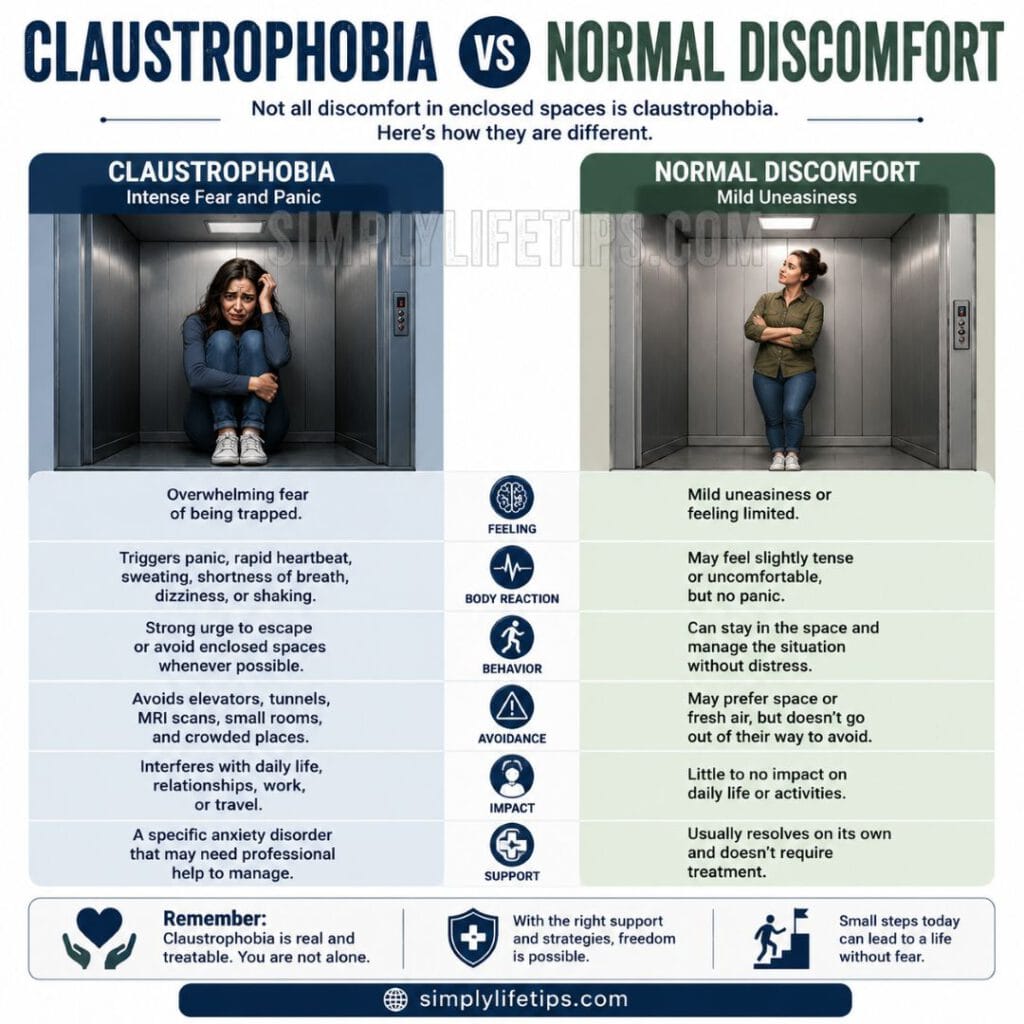
| Claustrophobia | Normal Discomfort in Small Spaces |
|---|---|
| Causes intense fear or panic in enclosed spaces | Causes mild discomfort or uneasiness |
| Fear is often out of proportion to the actual situation | Discomfort usually matches the level of inconvenience |
| May lead to avoiding elevators, tunnels, or crowded places | Does not usually interfere with everyday activities |
| Physical symptoms such as sweating, trembling, or rapid heartbeat are common | Physical symptoms are mild or absent |
| Often affects work, travel, or medical procedures | Rarely affects daily life |
Feeling uncomfortable in a crowded elevator or a small room is perfectly normal. However, if your fear consistently prevents you from carrying out everyday activities or significantly affects your quality of life, it may be time to seek professional advice.
When Should You Seek Professional Help?
Feeling uneasy in a crowded lift or a small room from time to time is normal. However, if your fear is so intense that it limits your daily life or causes you to avoid important activities, it’s worth speaking with a mental health professional.
You should consider seeking professional help if you:
- Frequently avoid elevators, tunnels, public transport, or other enclosed spaces.
- Experience panic attacks or severe anxiety in confined environments.
- Skip medical procedures, such as MRI scans, because of your fear.
- Find that claustrophobia is affecting your work, travel, education, or relationships.
- Have tried self-help techniques but continue to struggle.
- Notice that your fear is becoming stronger over time instead of improving.
There is no need to wait until the condition becomes overwhelming. Early treatment often leads to faster progress and can prevent avoidance behaviours from becoming deeply rooted.
Can Claustrophobia Be Prevented?
Although claustrophobia cannot always be prevented, taking positive steps early may reduce the risk of developing a severe fear of enclosed spaces or stop mild anxiety from becoming more intense.
Helpful preventive measures include:
- Address fears instead of avoiding them whenever it is safe to do so.
- Gradually become familiar with enclosed environments rather than avoiding them completely.
- Practise stress-management techniques such as deep breathing or mindfulness.
- Maintain a healthy lifestyle with regular exercise, quality sleep, and balanced nutrition.
- Seek professional support if anxiety starts interfering with your daily routine.
- Encourage children to develop confidence in new environments instead of reinforcing fearful behaviours.
While prevention isn’t always possible, recognising the signs early and taking action can make recovery easier and help prevent the fear from becoming a long-term problem.
Conclusion
Claustrophobia is more than a dislike of small spaces—it’s a specific phobia that can affect everyday activities, travel, work, and even essential medical care. Although living with this fear can be challenging, it doesn’t have to define your life.
With the right combination of education, gradual exposure, healthy coping strategies, and professional treatment when needed, many people successfully overcome claustrophobia and regain their independence. Recovery may take time, but every positive experience helps reduce fear and build confidence.
If claustrophobia has been limiting your opportunities or preventing you from enjoying life, remember that help is available. Taking the first step today could be the beginning of lasting change.
Frequently Asked Questions (FAQs)
1. What is claustrophobia?
Claustrophobia is a specific phobia that causes an intense fear of enclosed or confined spaces, often leading to anxiety, panic, and avoidance behaviours.
2. What causes claustrophobia?
Claustrophobia may develop due to traumatic experiences, family history, learned behaviour, an overactive fight-or-flight response, or other anxiety disorders. In many cases, several factors contribute to its development.
3. Can claustrophobia be cured?
Many people successfully manage or overcome claustrophobia through Cognitive Behavioural Therapy (CBT), exposure therapy, relaxation techniques, and gradual self-exposure. Early treatment often improves outcomes.
4. Is claustrophobia common?
Yes. Claustrophobia is one of the most common specific phobias and affects people of all ages. The severity varies from mild anxiety to intense panic that interferes with daily life.
5. When should I seek professional help?
You should seek professional help if your fear of enclosed spaces interferes with work, travel, medical procedures, relationships, or other everyday activities, or if self-help techniques haven’t been effective.
Disclaimer
This article is for informational and educational purposes only and should not be considered a substitute for professional medical advice, diagnosis, or treatment. If you experience persistent anxiety or believe you may have claustrophobia or another mental health condition, consult a qualified healthcare professional or mental health specialist. Never ignore or delay seeking professional medical advice because of information you have read online.
References
- American Psychiatric Association. Anxiety Disorders.
- National Institute of Mental Health. Anxiety Disorders.
- Mayo Clinic. Specific Phobias – Symptoms and Causes.
- Cleveland Clinic. Claustrophobia (Fear of Enclosed Spaces): Symptoms, Causes & Treatment.
- NHS. Phobias.

Mathukutty P V is a Blogger, YouTuber, and Content Writer and the founder of Simply Life Tips. After taking voluntary retirement in 2017, he embraced a free lifestyle focused on learning, personal growth, and sharing practical wisdom to help others live with more purpose and positivity.



