

Hemophobia is more than just feeling uncomfortable at the sight of blood. For some people, even a small cut, a routine blood test, or a scene in a movie can trigger overwhelming fear, dizziness, or even fainting. Unlike ordinary squeamishness, hemophobia is a recognized specific phobia that can interfere with daily life and prevent people from seeking essential medical care.
Many individuals with this condition avoid hospitals, vaccinations, or health checkups because they fear seeing blood. Unfortunately, this avoidance often strengthens the fear over time and may lead to delayed diagnosis or treatment of medical conditions.
The encouraging news is that hemophobia is highly treatable. With the right combination of therapy, coping techniques, and gradual exposure, most people can significantly reduce their fear and regain confidence in situations involving blood.
If you’ve already read our guide on Phobias, you’ll know that specific phobias are among the most common anxiety disorders and that effective treatment is available for most people. Understanding hemophobia is the first step toward overcoming it.
What Is Hemophobia?
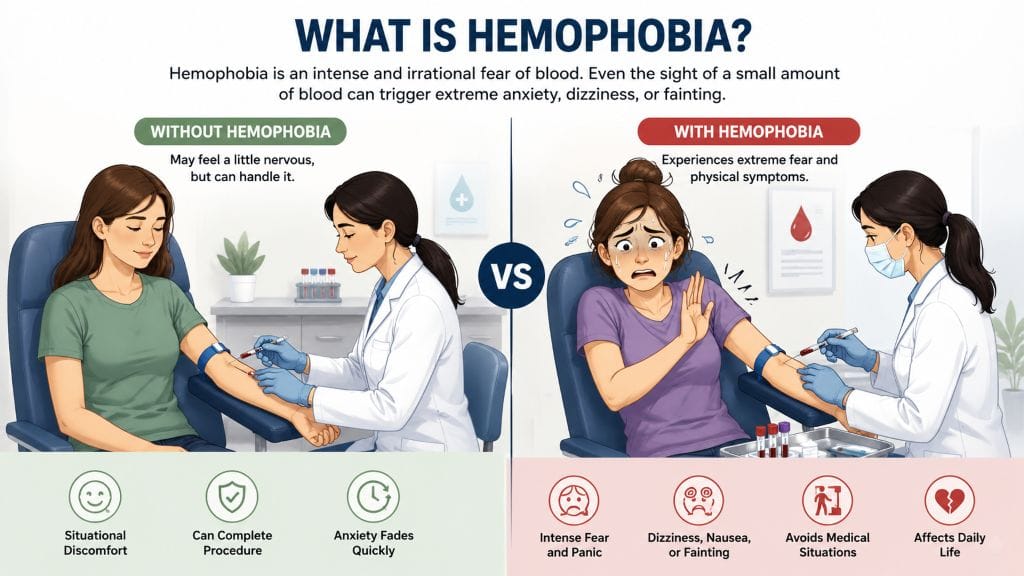
Hemophobia, also known as blood phobia, is an intense and persistent fear of blood. The fear is so strong that it causes severe anxiety or panic whenever a person encounters blood or even thinks about situations involving bleeding.
Unlike normal caution or discomfort, hemophobia causes emotional and physical reactions that are far greater than the actual threat. Even a tiny paper cut or a television scene showing blood may trigger intense distress.
People with hemophobia may react to:
- Their own blood
- Someone else’s blood
- Medical procedures
- Blood tests
- Injections
- Surgical procedures
- Accident scenes
- Pictures or videos showing blood
One of the most distinctive features of hemophobia is that many people experience a sudden drop in blood pressure after an initial rise in heart rate. This unusual response can lead to dizziness, blurred vision, or fainting, making hemophobia different from many other specific phobias.
Hemophobia vs Normal Discomfort Around Blood
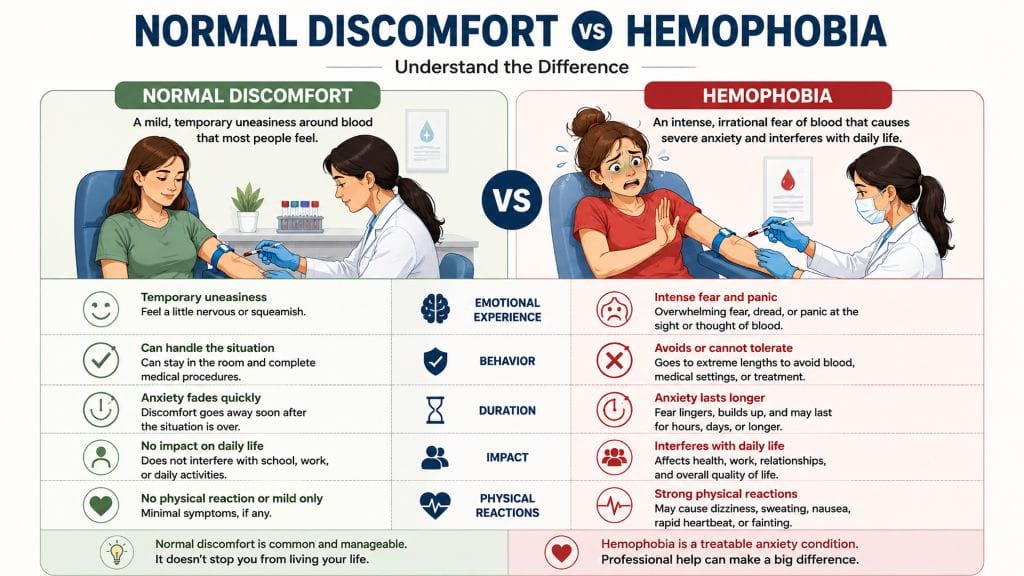
It’s perfectly normal to feel uneasy when seeing blood, especially after an injury. Most people may briefly feel uncomfortable before quickly recovering.
Hemophobia is different because the fear is excessive, persistent, and difficult to control. The reaction often begins before any real danger exists and can continue long after the situation has ended.
For example:
A person without hemophobia may feel nervous before a blood test but still complete the procedure without much difficulty.
A person with hemophobia may cancel the appointment repeatedly, experience panic attacks in the waiting room, or faint during the procedure.
The difference lies not in the presence of fear but in how much it affects everyday life.
How Common Is Hemophobia?
Hemophobia is one of the more common forms of specific phobia. It can affect both children and adults, although symptoms often begin during childhood or adolescence.
Many people live with the condition for years without realizing that effective treatment is available. Instead of seeking help, they simply avoid situations involving blood whenever possible.
Because healthcare is an unavoidable part of life, untreated hemophobia can gradually become more disruptive over time.
Signs and Symptoms of Hemophobia
Symptoms vary from one person to another. Some experience mild anxiety, while others develop intense panic or fainting.
Physical Symptoms
The body’s fight-or-flight response causes many of the physical symptoms associated with hemophobia.
These may include:
- Rapid heartbeat
- Sweating
- Trembling
- Dry mouth
- Chest tightness
- Nausea
- Dizziness
- Blurred vision
- Pale skin
- Weakness
- Ringing in the ears
- Shortness of breath
- Fainting
Unlike many anxiety disorders, fainting is relatively common in hemophobia because blood pressure may suddenly drop after the initial stress response.
Emotional Symptoms
People often experience intense emotional distress even before seeing blood.
Common emotional symptoms include:
- Extreme fear
- Panic
- Feeling helpless
- Loss of control
- Anticipatory anxiety before medical appointments
- Fear of becoming ill or injured
- Embarrassment about their reaction
Some individuals feel anxious days before a scheduled blood test or vaccination.
Behavioral Symptoms
The fear often leads to avoidance behaviors that affect daily life.
Examples include:
- Avoiding hospitals
- Skipping annual health checkups
- Refusing blood tests
- Delaying vaccinations
- Avoiding medical documentaries
- Looking away during medical procedures
- Leaving situations where injuries occur
- Declining careers involving healthcare
While avoidance provides temporary relief, it usually reinforces the fear and makes future situations even more difficult.
What Causes Hemophobia?
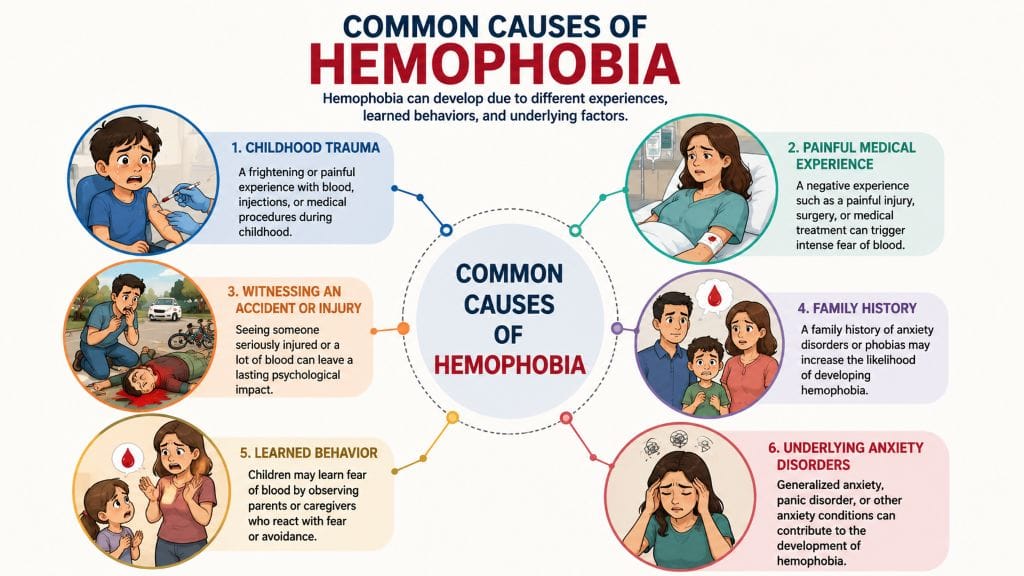
There isn’t a single cause of hemophobia. Instead, researchers believe it develops through a combination of biological, psychological, and environmental factors.
Each person’s experience is unique, but several common triggers have been identified.
Traumatic Experiences
A frightening event involving blood is one of the most common causes.
Examples include:
- A serious childhood injury
- Witnessing a severe accident
- A painful medical procedure
- Complications during surgery
- Seeing someone badly injured
The brain may begin associating blood with danger, creating a long-lasting fear response.
For instance, a child who required emergency stitches after a bicycle accident may later become anxious whenever blood is mentioned, even years after the injury has healed.
Childhood Learning
Children often learn emotional responses by observing the adults around them.
If a parent becomes extremely anxious during injections or reacts dramatically to injuries, a child may begin viewing blood as something terrifying.
This learned behavior can gradually develop into a specific phobia.
Family History
Research suggests that anxiety disorders and specific phobias can run in families.
Having a close relative with an anxiety disorder does not guarantee that someone will develop hemophobia, but it may increase the likelihood.
Both genetics and shared family experiences may contribute to this increased risk.
Negative Medical Experiences
Some people develop hemophobia after difficult experiences in healthcare settings.
These might include:
- Painful injections
- Multiple blood tests
- Emergency treatment
- Hospitalization
- Complicated surgeries
If the experience was especially frightening, the brain may continue associating medical care with fear long afterward.
Evolutionary Factors
Some researchers believe that fainting at the sight of blood may have been an evolutionary survival response.
Lower blood pressure could theoretically reduce blood loss following an injury. Although this theory is still being studied, it may explain why hemophobia differs from many other anxiety disorders.
Common Triggers
Every person has different triggers. Some react only to real blood, while others become anxious simply by thinking about it.
Common triggers include:
- Blood tests
- Vaccinations
- Medical examinations
- Nosebleeds
- Cuts and scrapes
- Surgical procedures
- First-aid demonstrations
- Graphic television scenes
- Emergency situations
- Donating blood
Some individuals even experience anxiety after hearing conversations about injuries or medical procedures.
How Hemophobia Can Affect Everyday Life?
Many people assume blood phobia only becomes a problem during medical appointments, but its impact often extends much further.
Someone with severe hemophobia may postpone routine health screenings, avoid helping an injured friend, or refuse life-saving medical procedures because the fear feels overwhelming.
Imagine a parent who cannot stay with their child during a vaccination because they fear fainting. Or an employee who avoids workplace first-aid training despite knowing it’s important. Over time, these situations can create frustration, guilt, and increased anxiety.
The fear may also affect career choices. Some people rule out professions such as nursing, medicine, dentistry, veterinary care, or emergency services—not because they lack the ability, but because the thought of seeing blood causes intense distress.
Avoidance can become a cycle. The more situations a person avoids, the stronger the fear often becomes. Breaking this cycle is one of the key goals of effective treatment.
Who Is Most at Risk of Developing Hemophobia?
Hemophobia can affect anyone regardless of age or background, but certain factors may increase the likelihood of developing this specific phobia. Having one or more risk factors doesn’t necessarily mean you’ll develop hemophobia, but understanding them can help identify the condition earlier and encourage timely treatment.
A Family History of Anxiety Disorders
People with close family members who have anxiety disorders or specific phobias may be more likely to develop hemophobia. This increased risk may be linked to both genetics and learned behavior. For example, a child who frequently observes a parent reacting fearfully to blood or medical procedures may begin to develop similar fears.
A Traumatic Event Involving Blood
Experiencing or witnessing a distressing event involving blood can leave a lasting emotional impact. Examples include:
- A serious accident
- A painful surgery
- A severe injury during childhood
- Witnessing a loved one bleed heavily
- A frightening emergency room experience
For some people, the brain forms a strong association between blood and danger, causing fear to return whenever similar situations arise.
Childhood Medical Experiences
Children are especially impressionable. A painful vaccination, repeated blood tests, or a stressful hospital stay may create anxiety that persists into adulthood if not addressed.
Parents and caregivers can reduce this risk by remaining calm, offering reassurance, and explaining medical procedures in an age-appropriate way.
Existing Anxiety Disorders
People who already experience generalized anxiety disorder, panic disorder, or other specific phobias may have a higher chance of developing hemophobia. Anxiety disorders often overlap, making professional evaluation important when fears begin affecting daily life.
High Sensitivity to Stress
Some individuals naturally respond more intensely to stressful situations. They may become overwhelmed more easily by medical procedures or injury-related situations, increasing the likelihood of developing avoidance behaviors.
How Is Hemophobia Diagnosed?
There is no blood test or medical scan that diagnoses hemophobia. Instead, a mental health professional evaluates your symptoms, medical history, and how the fear affects your daily life.
The assessment usually includes a discussion about:
- When the fear began
- Situations that trigger anxiety
- Physical reactions such as dizziness or fainting
- Avoidance behaviors
- How long symptoms have been present
- The impact on work, school, relationships, or healthcare
A diagnosis is generally made when the fear is persistent, excessive, and causes significant distress or interferes with everyday activities.
Your healthcare provider may also rule out medical conditions that could explain dizziness or fainting before confirming a diagnosis of hemophobia.
Can Hemophobia Be Treated?
Yes. Hemophobia is one of the most treatable specific phobias. Many people experience significant improvement through evidence-based therapies and consistent practice.
The key is addressing the fear rather than avoiding it.
Cognitive Behavioral Therapy (CBT)
Cognitive Behavioral Therapy (CBT) is considered one of the most effective treatments for hemophobia.
This therapy helps people recognize the thoughts that fuel their fear and replace them with healthier, more realistic ways of thinking.
For example, someone who believes, “I’ll faint every time I see blood,” can learn to challenge that belief through gradual exposure and practical coping strategies.
Over time, these new thought patterns reduce anxiety and improve confidence.
CBT helps people identify unhelpful beliefs, challenge irrational fears, and develop healthier mental patterns. Understanding different types of thinking can also help you recognize cognitive distortions that often fuel anxiety and specific phobias.
Exposure Therapy
Exposure therapy is widely regarded as the gold standard for treating specific phobias.
Rather than forcing someone into frightening situations, exposure happens gradually and in a carefully planned sequence.
A therapist may begin with simple activities such as:
- Talking about blood
- Looking at illustrations
- Viewing photographs
- Watching short videos
- Observing medical procedures
- Undergoing a routine blood test
Each step is repeated until anxiety decreases before moving on to the next level.
This gradual process teaches the brain that blood itself is not dangerous and that anxiety naturally fades with repeated exposure.
Applied Tension Technique
Hemophobia is unusual because many people experience a sudden drop in blood pressure that may lead to fainting.
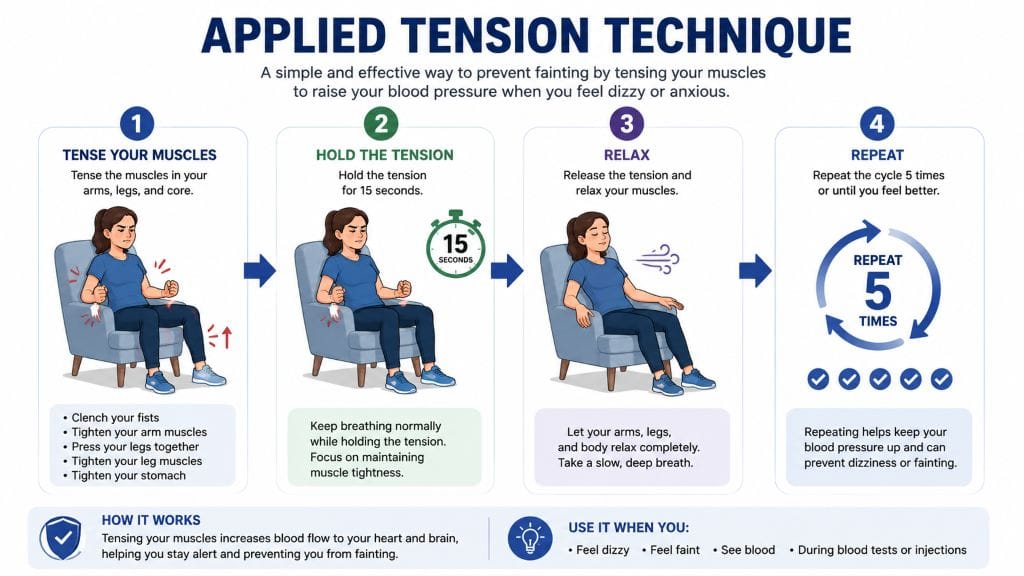
To reduce this risk, therapists often teach the Applied Tension Technique.
The technique involves tightening large muscle groups for around 10 to 15 seconds before relaxing briefly and repeating several times.
For example:
- Tighten the muscles in your arms, legs, and abdomen.
- Hold the tension for about 15 seconds.
- Relax for 20 to 30 seconds.
- Repeat the process five or six times.
Increasing muscle tension helps maintain blood pressure, reducing the likelihood of fainting during injections or blood tests.
Many people find this technique especially useful before vaccinations or routine laboratory tests.
Relaxation Techniques
Relaxation strategies won’t eliminate hemophobia on their own, but they can help reduce anxiety before and during stressful situations.
Helpful techniques include:
- Deep breathing exercises
- Progressive muscle relaxation
- Mindfulness meditation
- Guided imagery
- Grounding techniques
Practising these methods regularly makes it easier to remain calm during medical appointments.
Medication
Medication is not usually the first choice for treating hemophobia.
However, doctors may prescribe short-term anti-anxiety medication in certain situations, such as before an important medical procedure that cannot be postponed.
Medication works best when combined with psychological therapies rather than being used as the only treatment.
Practical Ways to Manage Hemophobia
Professional treatment is often the most effective approach, but there are also several self-help strategies that can support recovery.
Learn About Your Fear
Fear often becomes stronger when we don’t fully understand it.
Learning how hemophobia affects the brain and body can make the condition feel less mysterious and easier to manage.
Reading reliable information and discussing concerns with healthcare professionals can reduce uncertainty.
Tell Healthcare Professionals About Your Fear
Doctors, nurses, and laboratory staff regularly care for patients with blood phobias.
Letting them know about your fear allows them to:
- Explain procedures in advance.
- Help you lie down if you’re prone to fainting.
- Work at a pace you’re comfortable with.
- Offer reassurance throughout the procedure.
Simple adjustments can make medical visits much less stressful.
Avoid Avoiding Everything
Avoidance provides temporary relief but often strengthens hemophobia over time.
Instead of avoiding every trigger, try taking small, manageable steps.
For example, you might begin by reading about blood, then looking at simple medical illustrations before progressing to more challenging situations.
Small successes build confidence.
Practise Coping Skills Before Medical Appointments
If you know you’ll need a blood test or vaccination, prepare in advance by:
- Practising deep breathing.
- Using the Applied Tension Technique.
- Staying well hydrated.
- Getting enough sleep the night before.
- Arriving early to avoid feeling rushed.
Planning ahead often reduces anxiety significantly.
Celebrate Small Victories
Recovery doesn’t happen overnight.
Perhaps you managed to stay in the waiting room without leaving, completed a vaccination without panicking, or simply looked at a medical image that previously caused fear.
Each achievement is evidence that progress is possible.
If you’re working on reducing anxiety in other areas of life as well, our guide on Decision Fatigue: Signs, Causes and Simple Ways to Overcome It explains how constant mental stress can make fears feel even harder to manage. Improving overall mental resilience can support recovery from specific phobias too.
Living with Hemophobia
Living with hemophobia can be challenging, but it doesn’t have to define your life. Many people spend years avoiding situations involving blood because they believe their fear will never improve. The reality is far more encouraging. With patience, practice, and the right support, it is possible to reduce anxiety and regain confidence.
Recovery doesn’t mean you’ll suddenly enjoy medical procedures. Instead, it means you can face situations involving blood without overwhelming fear controlling your decisions.
For example, someone who once postponed blood tests for years may eventually attend routine health screenings with only mild nervousness. Another person who used to faint during vaccinations may learn the Applied Tension Technique and complete injections without losing consciousness.
Progress often comes one step at a time, and every successful experience teaches the brain that the situation is safer than it previously believed.
When Should You Seek Professional Help?
Feeling uncomfortable around blood is common, but professional support is recommended when the fear begins interfering with everyday life.
Consider speaking with a mental health professional if you:
- Avoid medical appointments because of your fear.
- Frequently postpone blood tests or vaccinations.
- Experience panic attacks when seeing blood.
- Feel dizzy or faint during medical procedures.
- Constantly worry about situations involving injuries.
- Find that your fear affects work, education, or relationships.
Early treatment can prevent the phobia from becoming more severe. The longer avoidance continues, the more deeply the fear becomes reinforced.
Seeking help is not a sign of weakness. It’s a practical step toward improving your physical and mental well-being.
Can Hemophobia Be Prevented?
There is no guaranteed way to prevent hemophobia, but certain habits may reduce the likelihood of developing an intense fear of blood.
Parents and caregivers can play an important role by helping children develop healthy attitudes toward healthcare.
Helpful approaches include:
Stay Calm During Medical Visits
Children often learn by observing adults. Remaining calm during vaccinations or routine checkups can help them view these experiences as normal rather than frightening.
Explain Medical Procedures Honestly
Simple, age-appropriate explanations can reduce uncertainty and fear. Avoid using frightening language or making unrealistic promises such as saying an injection won’t hurt at all.
Encourage Questions
Allow children to ask questions about doctors, hospitals, and medical treatments. Honest conversations often reduce anxiety caused by the unknown.
Build Healthy Coping Skills
Teaching children relaxation techniques, problem-solving skills, and emotional resilience may help them respond better to stressful situations later in life.
Seek Help Early
If fear becomes excessive or starts affecting daily activities, early intervention often leads to better outcomes.
Myths About Hemophobia
There are several misconceptions about the fear of blood. Understanding the facts can help reduce stigma and encourage people to seek treatment.
Myth: Hemophobia Is Just Being Squeamish
Fact: While many people dislike the sight of blood, hemophobia is a recognized anxiety disorder that can significantly interfere with daily life.
Myth: People Should Simply “Get Over It”
Fact: Specific phobias involve genuine psychological and physical responses. Recovery usually requires gradual exposure, coping strategies, and sometimes professional therapy.
Myth: Fainting Means Someone Is Weak
Fact: Fainting is a common physiological response in hemophobia. It occurs because of changes in blood pressure and is not a sign of poor mental or physical strength.
Myth: Avoiding Blood Is the Best Solution
Fact: Avoidance provides temporary relief but often strengthens the phobia. Gradual exposure under appropriate guidance is generally much more effective.
Small Steps That Can Build Confidence
If your fear is mild to moderate, these practical habits may help you become more comfortable over time.
- Learn basic first aid to increase confidence during emergencies.
- Read about how the human body heals after minor injuries.
- Watch educational medical content only when you feel ready.
- Practise relaxation exercises every day, not only before medical appointments.
- Reward yourself after successfully facing a feared situation.
- Remember that progress is measured by consistency, not perfection.
Every small success makes the next challenge a little easier.
If ongoing stress or emotional exhaustion is making it harder to manage anxiety, our article on Burnout in Young Adults explains how chronic stress affects both mental and physical well-being. Reducing overall stress can make coping with specific phobias much easier.
Sometimes, a quick visual summary makes it easier to remember the key points. The infographic below highlights the symptoms, common causes, treatment options, and practical coping strategies for hemophobia in an easy-to-understand format.
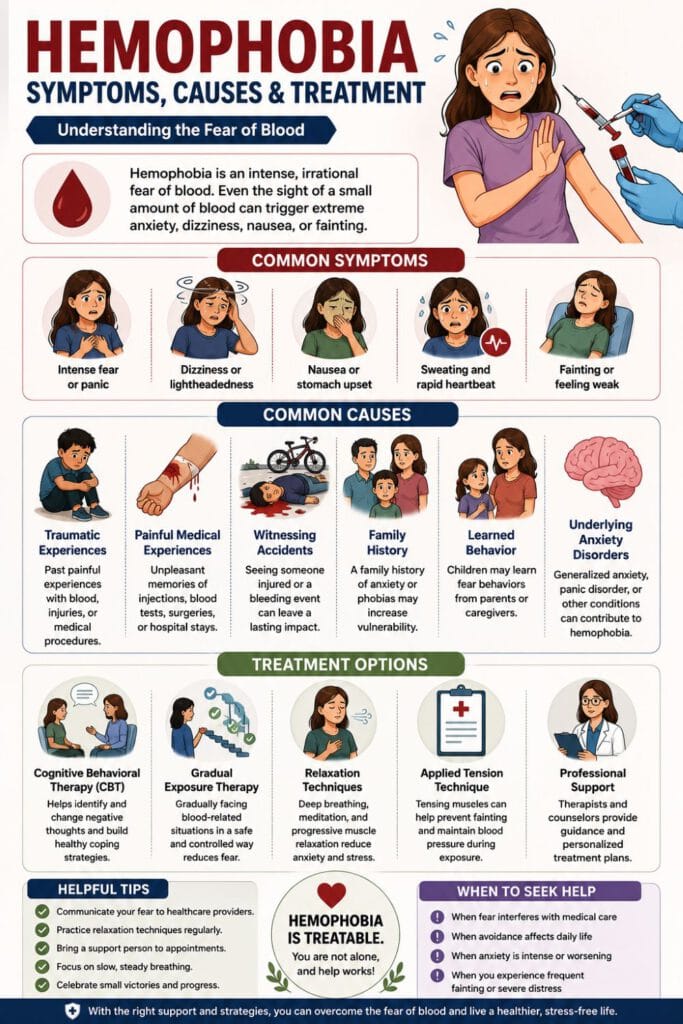
Understanding hemophobia is the first step toward overcoming it. Whether your fear is mild or severe, recognizing the symptoms and seeking appropriate support can make a significant difference. Remember, recovery is a gradual process, and every small step you take helps build confidence and reduce fear over time.
Conclusion
Hemophobia is far more than a dislike of blood. It is a specific phobia that can trigger intense anxiety, dizziness, and even fainting, making routine medical care feel overwhelming. Left untreated, it may lead to avoidance of hospitals, blood tests, vaccinations, and other important healthcare needs.
The good news is that hemophobia is highly treatable. Evidence-based approaches such as Cognitive Behavioral Therapy (CBT), exposure therapy, and the Applied Tension Technique have helped countless people overcome their fear. Along with professional support, small but consistent steps can gradually reduce anxiety and build lasting confidence.
If your fear of blood is preventing you from receiving medical care or affecting your quality of life, don’t ignore it. Reaching out to a qualified mental health professional can be the first step toward recovery. With patience and the right guidance, it is entirely possible to regain control and live without fear dictating your choices.

Quote on Hemophobia
“Every small step you take toward your fear is a giant step toward freedom.”
Frequently Asked Questions
Is hemophobia considered a mental illness?
Hemophobia is classified as a specific phobia, which is a type of anxiety disorder. It is a recognized mental health condition that can be effectively treated.
Why do some people faint when they see blood?
Many people with hemophobia experience a sudden drop in blood pressure and heart rate after an initial stress response. This temporary change in circulation can cause dizziness or fainting.
Can hemophobia develop later in life?
Yes. Although it often begins during childhood or adolescence, hemophobia can also develop in adulthood after a traumatic injury, surgery, or distressing medical experience.
Is hemophobia curable?
Many people experience significant improvement or complete recovery through treatments such as Cognitive Behavioral Therapy, exposure therapy, and Applied Tension. The outcome depends on factors such as the severity of the phobia and the individual’s commitment to treatment.
What should I do if I faint during a blood test?
Inform the healthcare provider before the procedure. They may ask you to lie down, use the Applied Tension Technique, stay hydrated, and take breaks if needed. If fainting happens repeatedly, discuss it with your doctor or a mental health professional.
Medical Disclaimer
Disclaimer: This article is for informational and educational purposes only and should not be considered medical or mental health advice. If you or someone you know is experiencing severe anxiety, frequent fainting, panic attacks, or symptoms that interfere with daily life, consult a qualified healthcare provider or mental health professional for proper evaluation and treatment. Never delay or avoid seeking medical care because of information you have read online.
External References

Mathukutty P V is a Blogger, YouTuber, and Content Writer and the founder of Simply Life Tips. After taking voluntary retirement in 2017, he embraced a free lifestyle focused on learning, personal growth, and sharing practical wisdom to help others live with more purpose and positivity.



