
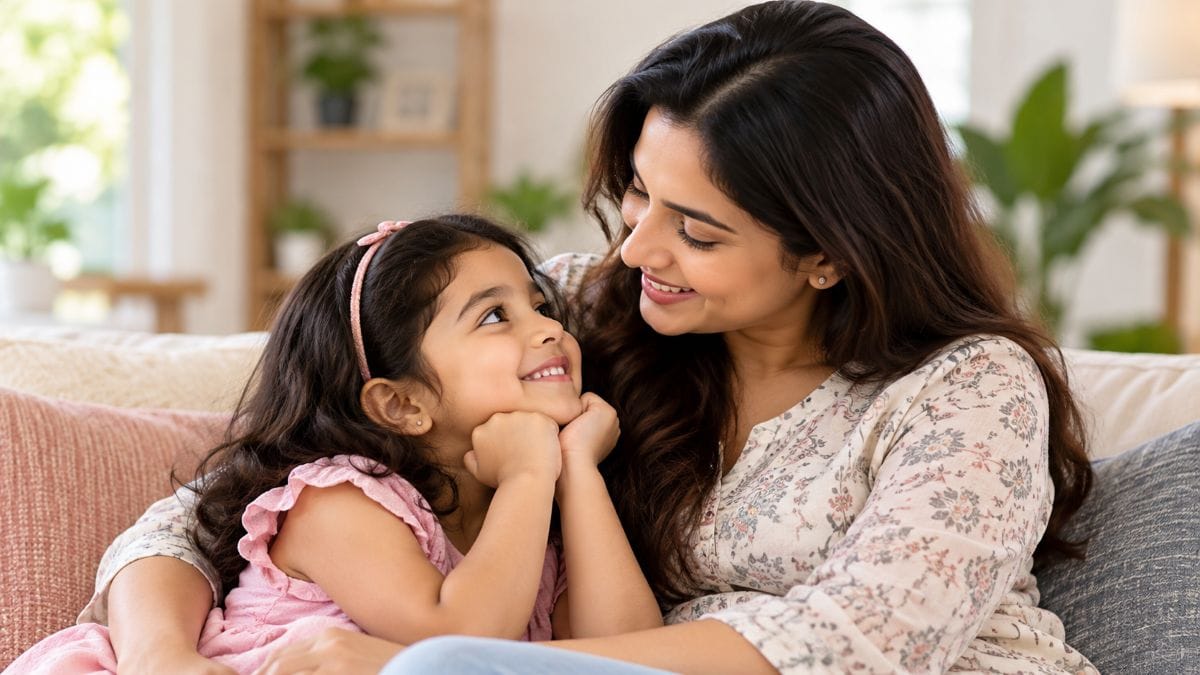
The qualities of a good mother go far beyond providing food, clothing, education, and shelter. A good mother helps her children feel loved, understood, safe, and confident enough to explore the world. Through everyday conversations, thoughtful decisions, and small acts of kindness, she can make a lasting difference in their lives.
Motherhood is one of life’s most meaningful experiences, but it can also be challenging. Every child has a unique personality, emotional needs, and way of understanding the world. Mothers must constantly learn, adapt, and find ways to support their children’s growth while managing their own responsibilities.
However, being a good mother does not mean being perfect. No mother always knows the right thing to say or do. What matters is the willingness to listen, learn from mistakes, show affection, and provide consistent guidance.
Understanding the qualities of a good mother can help you recognise the habits that strengthen family relationships and support healthy child development. Let’s explore 12 important qualities that make a positive difference in a child’s life.
12 Qualities of a Good Mother
1. Unconditional Love and Affection
One of the most important qualities of a good mother is the ability to make her children feel loved and valued. Children need to know that their worth does not depend entirely on their academic performance, behaviour, appearance, or achievements.
A loving mother expresses affection through words, gestures, encouragement, and everyday attention. A hug, a kind conversation, or simply sitting beside a child who is having a difficult day can provide reassurance.
Learn more about how a mother’s unconditional love helps children develop emotional security, confidence, and resilience.
Unconditional love does not mean accepting every behaviour or allowing children to do whatever they want. It means separating the child’s worth from their actions. A mother can correct inappropriate behaviour while continuing to treat her child with dignity and affection.
A mother’s love is often expressed through countless small acts of care, sacrifice and encouragement. These everyday moments reflect the extraordinary influence a mother can have on her child’s life. Read more about the miracles of a mother and the special bond between a mother and her children.
For example, if a child receives poor marks in an examination, a supportive mother avoids labelling the child as lazy or unsuccessful. Instead, she discusses what went wrong, identifies areas for improvement, and helps the child prepare for the next examination.
When children feel loved even during difficult moments, they can develop a stronger sense of security and self-worth.
2. Patience and Understanding
Patience is another essential quality of a good mother. Children are still learning how to manage their emotions, solve problems, communicate their needs, and understand consequences. They will inevitably make mistakes.
A patient mother recognises that learning takes time. Rather than reacting immediately with anger, she tries to understand the situation and respond calmly.
For instance, a young child may repeatedly ask the same question or struggle to complete a simple task. Instead of becoming frustrated, a mother can explain the answer again or demonstrate the task in smaller steps.
Patience is equally important when children become teenagers. Adolescents may question rules, seek greater independence, or experience emotional changes. Listening before reacting can help mothers understand what their children are experiencing.
Of course, no parent can remain patient every moment. When frustration becomes overwhelming, taking a short break, when it is safe to do so, can prevent an argument from escalating.
Patience does not eliminate discipline. It allows mothers to correct mistakes without unnecessary humiliation, fear or anger.
3. Emotional Availability
Children need more than physical care. They also need someone who takes their feelings seriously and makes time to understand their experiences.
An emotionally available mother pays attention when her child wants to talk, notices changes in behaviour and offers support during difficult situations. She does not dismiss every disappointment as unimportant simply because it seems small to an adult.
Imagine a child returning home from school feeling upset because a friend excluded them from a game. A dismissive response might be, “That is nothing to worry about.”
An emotionally supportive response would be, “That must have hurt. Would you like to tell me what happened?”
This simple difference communicates that the child’s feelings matter.
Emotional availability also means recognising that children sometimes need space. A mother can let a child know she is ready to listen without forcing them to talk before they feel comfortable.
When children experience this kind of support consistently, they have more opportunities to learn emotional awareness, express their feelings, and seek help when they need it.
4. Good Communication Skills
Healthy communication is one of the qualities that helps mothers build lasting relationships with their children.
Good communication involves more than giving instructions. It requires listening carefully, asking thoughtful questions, explaining expectations, and allowing children to express their opinions respectfully.
A mother who listens without immediately interrupting or criticising creates opportunities for honest conversations. This becomes especially important as children grow older and face challenges involving friendships, school, relationships and personal decisions.
For example, if a teenager admits to making a mistake, an immediate angry reaction may discourage them from sharing similar problems in the future. A calm conversation can help the mother understand the circumstances, explain the consequences, and discuss better choices.
Good communication also means being clear about family rules. Children are more likely to understand boundaries when parents explain the reasons behind them rather than relying only on commands.
Open communication does not mean agreeing with everything a child says. It means treating their thoughts seriously while providing appropriate guidance.
5. Empathy and Compassion
Empathy is the ability to understand another person’s feelings and perspective. It is an important quality of a good mother because children often need understanding before they are ready to accept advice.
A mother who practises empathy tries to see a situation from her child’s point of view. She recognises that a disappointing result, a disagreement with a friend or a change in routine may feel significant to the child.
For example, a child who becomes nervous before a school performance may need reassurance rather than criticism. A compassionate mother can acknowledge the fear, encourage preparation and remind the child that making mistakes is part of learning.
Empathy also helps mothers teach kindness. When children see adults treating family members, neighbours and strangers with consideration, they learn that other people’s feelings deserve respect.
Compassion does not require a mother to solve every problem for her child. Sometimes, listening patiently and helping the child think through possible solutions is more valuable than immediately taking control.
6. Consistency and Healthy Boundaries
Love and understanding are essential, but children also need structure. Consistency helps them understand expectations and feel more secure about what will happen in different situations.
A good mother establishes age-appropriate rules and applies them fairly. These may involve bedtime, screen time, household responsibilities, respectful behaviour, and schoolwork.
For example, if a family agrees that homework should be completed before recreational screen time, following that routine consistently helps the child develop responsibility.
Healthy boundaries also protect children’s physical and emotional well-being. Mothers can teach children to respect personal space, follow safety rules, and understand that actions have consequences.
However, consistency does not mean being rigid. Family circumstances change, and some situations require flexibility. An unwell child may need a different routine from one who is feeling well.
The goal is to provide reasonable structure while considering each child’s age, circumstances, and individual needs.
7. Encouraging Independence
One of the long-term responsibilities of motherhood is preparing children to manage their own lives.
A supportive mother does not try to control every decision or complete every task for her child. Instead, she gradually provides opportunities to practise problem-solving, responsibility and independent thinking.
Young children might begin by choosing between two suitable outfits, putting away their toys or helping with simple household tasks. Older children can learn to organise their schoolwork, manage pocket money and make age-appropriate decisions.
Suppose a child forgets to pack a school notebook. A mother may be tempted to rush to school with it immediately. Depending on the circumstances, it may be more helpful to discuss how the child can prepare a checklist and organise the schoolbag the previous evening.
The aim is not to abandon children when they need help. It is to offer guidance without unnecessarily taking away opportunities to learn.
Encouraging independence helps children practise decision-making and understand that mistakes can become valuable learning experiences.
8. Leading by Example
Children often learn by observing the adults around them. A mother’s daily behaviour can therefore influence how her children understand honesty, responsibility, respect and kindness.
If a mother expects her children to speak politely but regularly insults other people, her actions send conflicting messages. Similarly, if she encourages honesty but lies to avoid responsibility, children may struggle to understand why truthfulness matters.
Leading by example means trying to practise the values taught at home.
For instance, a mother who apologises after speaking harshly demonstrates that responsible people acknowledge their mistakes. A mother who keeps promises teaches children that trust depends on following through on commitments.
Every parent makes mistakes, and setting a good example does not require flawless behaviour. What matters is being willing to recognise harmful actions, make amends, and improve.
These everyday lessons can help children understand that good character is demonstrated through actions, not merely through words.
9. Supporting Education and Curiosity
A good mother encourages her children’s desire to learn, explore, and understand the world.
Education is not limited to school examinations or academic achievements. Children also learn through reading, conversations, creative activities, practical experiences, and asking questions about everyday life.
A supportive mother takes an interest in what her child is learning without making academic success the only measure of achievement.
For example, if a child struggles with mathematics, she can help identify the difficult concepts, arrange additional support if necessary, and acknowledge gradual improvement.
If a child shows an interest in drawing, gardening, music or science, encouraging that interest can help develop confidence and creativity.
It is also important to recognise that children have different strengths. Comparing siblings or classmates unnecessarily can create pressure and discourage learning.
Instead, mothers can help children set realistic goals, develop good study habits and understand that effort, curiosity and persistence are valuable parts of education.
10. Adapting to a Child’s Changing Needs
The qualities of a good mother evolve as her children grow. The support a toddler needs differs considerably from the guidance required by a teenager or an adult child.
Young children need close supervision, affection and help with basic routines. School-age children benefit from encouragement, structure and opportunities to develop responsibility. Teenagers often need greater privacy, independence and respectful discussions about their choices.
A mother who recognises these changing needs adjusts her approach rather than expecting the same level of control at every age.
Motherhood involves understanding a child’s changing needs and responding with care, attention and flexibility. The science behind maternal instinct and motherhood offers another perspective on the connection between mothers and their children.
For example, choosing a young child’s daily activities may be appropriate, while an older teenager should gradually participate in decisions about education, interests and future plans.
Adapting does not mean abandoning family values or withdrawing support. It means finding an appropriate balance between guidance and independence.
As children mature, a mother’s role gradually changes from making many decisions for them to helping them develop the confidence and judgement to make decisions themselves.
11. Admitting Mistakes and Apologising
A mother does not need to be right all the time to be a positive influence. In fact, acknowledging mistakes can teach children valuable lessons about responsibility and healthy relationships.
Sometimes, a parent may misunderstand a situation, react too quickly or say something hurtful during a stressful moment. Pretending the incident never happened can leave a child confused or upset.
A sincere apology helps repair the relationship.
For example, a mother who unfairly blames her child for a broken household item might later discover that the child was not responsible. Acknowledging the mistake and apologising demonstrates honesty and fairness.
A meaningful apology identifies the behaviour, recognises its impact and expresses a willingness to do better.
This does not undermine parental authority. Instead, it shows that accountability applies to everyone, including adults.
Children who see adults take responsibility for their actions have opportunities to learn how to resolve disagreements, repair trust and treat others with respect.
12. Practising Self-Care and Maintaining Personal Well-Being
Among the qualities of a good mother, self-care is sometimes overlooked. Mothers often manage household responsibilities, employment, childcare and family expectations, leaving little time for their own needs.
However, mothers are people with physical, emotional and personal needs too. Rest, supportive relationships, enjoyable activities, and reasonable personal boundaries are important parts of overall well-being.
Self-care does not have to involve expensive holidays or elaborate routines. It may mean getting sufficient rest when possible, taking a quiet walk, speaking with a trusted friend, pursuing a hobby, or asking family members to share responsibilities.
Motherhood can involve many responsibilities that often go unnoticed, from managing family needs to providing emotional support. Understanding the invisible burden of mothers helps us recognise why mothers also need understanding, appreciation, and support from their families.
For example, a mother who feels overwhelmed may discuss a more balanced division of household tasks with her partner or other family members. Seeking help when needed can reduce pressure and make family life more manageable.
Children can also benefit from seeing adults recognise their limits and treat themselves with respect.
A good mother does not have to sacrifice her entire identity to care for her family. Looking after her own well-being can be one part of building a healthier and more supportive home.
Every mother has her own parenting style, but certain qualities can help children feel loved, secure, and confident. The following infographic highlights 12 important qualities of a good mother that can strengthen the parent-child relationship and support a child’s healthy development.
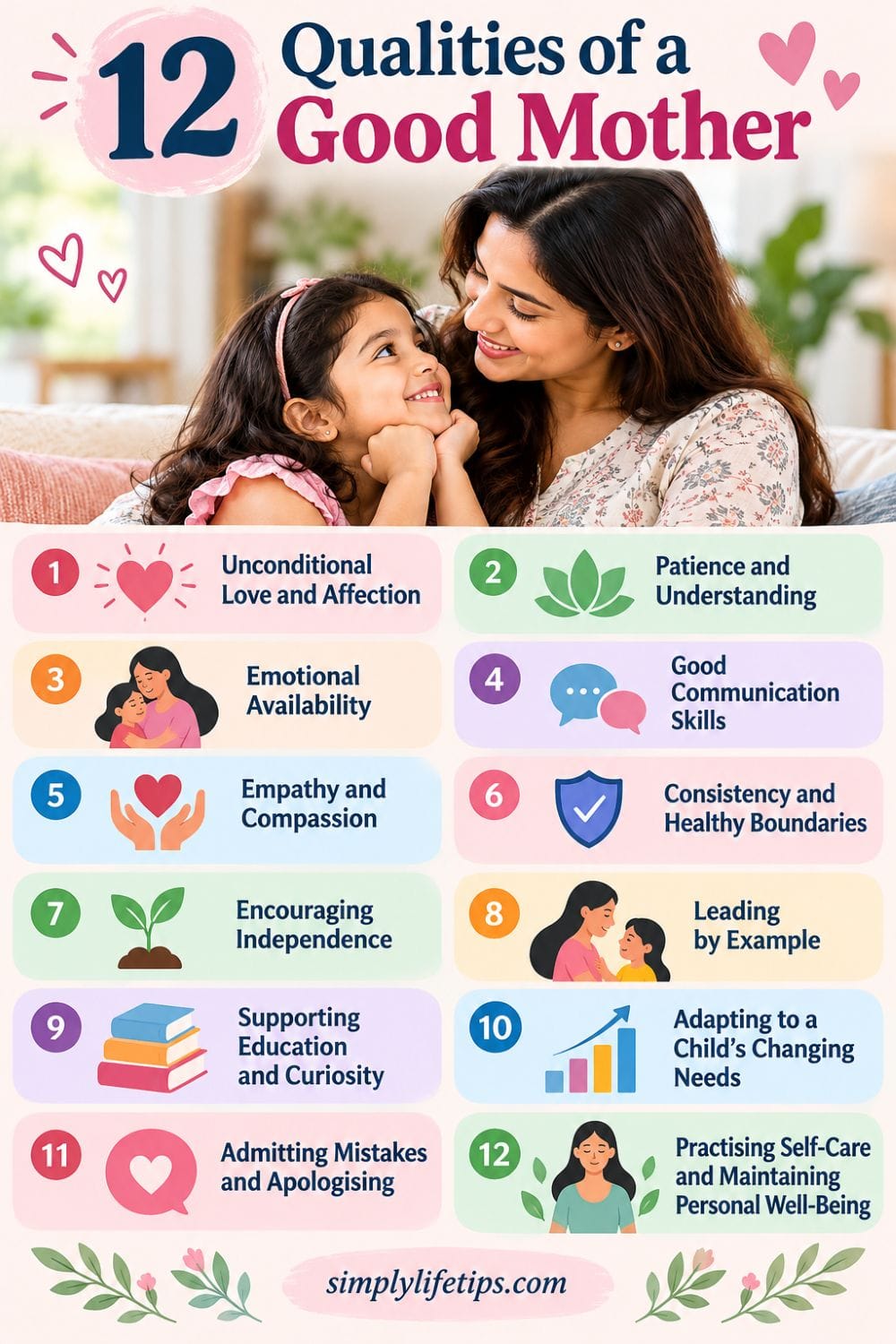
These 12 qualities are not about being a perfect parent. They are everyday habits and values that mothers can develop over time. From showing unconditional love to encouraging independence, each quality can help create a supportive home where children feel understood, respected, and encouraged to grow.
Does a Good Mother Have to Be Perfect?
No. A good mother does not have to be perfect, and expecting perfection can create unnecessary guilt and pressure.
Motherhood involves learning, making decisions with incomplete information, and responding to situations that do not always have easy solutions. Even a loving and attentive mother may occasionally lose patience, misunderstand her child’s feelings or make the wrong decision.
What matters is how she responds afterwards.
A mother can acknowledge a mistake, apologise when appropriate, seek advice and try a different approach next time. These actions show children that growth is possible and that healthy relationships can recover from disagreements.
It is also important to remember that every family has different circumstances. A working mother, a single mother, a mother caring for several children, and a mother raising a child with additional support needs may face different challenges.
Comparing one mother’s life with another’s rarely provides a fair picture of their efforts or responsibilities.
Instead of measuring motherhood against an impossible ideal, focus on providing consistent care, building trust, setting reasonable boundaries and learning as your child grows.
Being a good mother is not about doing everything perfectly. It is about making a genuine effort to meet your child’s needs while recognising that you, too, are human.
How to Develop the Qualities of a Good Mother in Everyday Life
You do not need to change everything at once to become a more supportive parent. Small, consistent actions can help strengthen your relationship with your child.
Here are five practical habits to begin with.
1. Make time to listen. Set aside a few minutes each day to talk without unnecessary distractions. Ask about your child’s experiences and listen before offering solutions.
2. Recognise effort, not just results. Praise persistence, honesty, kindness and improvement instead of focusing exclusively on marks, awards or achievements.
3. Establish clear expectations. Explain household rules, discuss reasonable consequences and apply boundaries fairly. Adjust them as your child becomes more independent.
4. Repair disagreements. When a conversation becomes heated, take time to calm down if it is safe to do so. Return to the discussion when both of you can communicate more constructively.
5. Keep learning. Parenting changes as children grow. Read reliable parenting resources, learn from experience, and seek professional guidance when a persistent challenge requires additional support.
Remember that progress may be gradual. You can begin by choosing one habit that would make a positive difference in your family and practising it consistently.
Conclusion
The qualities of a good mother include unconditional love, patience, empathy, emotional availability, good communication and the ability to establish healthy boundaries. Encouraging independence, supporting education, leading by example and admitting mistakes are equally important parts of nurturing a child’s development.
Above all, a good mother understands that motherhood is a continuous learning process. Children change as they grow, and mothers must adapt their approach to meet their changing needs.
There is no single formula for raising happy, confident children. What works for one family may need adjustment in another. The most important goal is to create an environment where children feel loved, respected, supported, and encouraged to become responsible individuals.
You do not have to be a perfect mother to make a meaningful difference in your child’s life. Consistent care, thoughtful guidance, and a willingness to learn can help build a relationship that grows stronger over time.
Which quality of a good mother do you think makes the biggest difference in a child’s life?
FAQs About Qualities of a Good Mother
1. What are the most important qualities of a good mother?
Some of the most important qualities include unconditional love, patience, empathy, good communication, emotional availability, consistency, and healthy boundaries. Encouraging independence and leading by example also help children develop confidence, responsibility, and respect for others.
2. What makes a mother a good mother?
A good mother provides care, affection, guidance, and appropriate boundaries while respecting her child’s individual needs. She listens, encourages learning, takes responsibility for mistakes, and adapts her parenting as her child grows. Being a good mother does not require perfection.
3. How can I become a better mother?
You can work towards becoming a better mother by listening more carefully, responding calmly during disagreements, spending meaningful time with your children and setting clear expectations. Recognising your mistakes and learning from difficult experiences can also strengthen your parenting.
4. Does a good mother always put her children first?
A good mother takes her children’s needs seriously, but this does not mean ignoring her own health, well-being, or personal identity. Maintaining reasonable boundaries, seeking support, and practising self-care can help mothers manage family responsibilities more sustainably.
5. What is the difference between a good mother and a perfect mother?
A perfect mother is an unrealistic ideal because every parent makes mistakes and faces limitations. A good mother makes a genuine effort to provide love, guidance, and support, learns from experience, and takes responsibility when things go wrong. Consistent care matters more than perfection.

Mathukutty P V is a Blogger, YouTuber, and Content Writer and the founder of Simply Life Tips. After taking voluntary retirement in 2017, he embraced a free lifestyle focused on learning, personal growth, and sharing practical wisdom to help others live with more purpose and positivity.



