

Power struggle with child often begins silently, growing from small daily conflicts into exhausting emotional battles that drain both parent and child. What looks like stubbornness is often a struggle for control, emotional regulation, or independence, and when parents react with urgency or frustration, the conflict intensifies rather than resolves. Many parents feel trapped between being too strict and too lenient, unsure how to maintain authority without constant arguments. The good news is that power struggles can end without giving in, by replacing emotional reaction with calm, consistent leadership that builds trust and cooperation over time. This guide explains the psychology behind resistance, why arguing weakens authority, and how steady boundaries create lasting discipline. Everything you need to understand and apply is explored in this blog.
Power Struggle With Child – Why Children Test Limits
Children test boundaries to understand predictability, safety, and autonomy. Limit-testing is part of development, not intentional defiance, and it helps children learn how the world works. A child who refuses to clean up toys is exploring independence, while an older child delaying homework may be testing consistency. Calm and predictable responses teach that boundaries are stable and meaningful. Over time, children rely on consistency rather than emotional reactions to guide their behavior.
Power Struggle Explained |Concept, Causes, Examples, and How to Stop Power Struggles
Surface Issue vs Real Issue
Most conflicts appear to be about behavior, but the real issue is control of the interaction. When a parent reacts emotionally, the focus shifts from the task to the emotional exchange. The child becomes engaged in resistance rather than responsibility. Identifying this difference prevents escalation and keeps parenting grounded in leadership rather than reaction. Awareness of the real issue helps parents respond strategically instead of emotionally.
Why Arguing With Your Child Makes You Lose Authority?
Authority Requires Emotional Stability
Authority is built on steadiness rather than force or volume. When parents argue, they introduce emotional reactivity, which signals instability and weakens leadership. Children quickly sense emotional imbalance and often increase resistance in response. Calm firmness communicates confidence and control without confrontation. Consistent emotional stability reinforces respect naturally over time.
From Leader to Participant
Arguing shifts the parent from guiding to competing, turning the interaction into a contest. Emotional equality replaces leadership, and the focus moves from learning to winning. When parents react urgently, they unintentionally validate the struggle. Calm leadership keeps the interaction structured and purposeful. Maintaining composure preserves authority and reduces escalation.
Why Calm Presence Strengthens Authority?
Children respond strongly to emotional security and predictability. A calm tone, steady posture, and consistent response signal reliability and safety. Emotional steadiness communicates that the parent is in control of themselves, which reinforces trust. Over time, children mirror this calmness and reduce resistance. Calm authority is more influential than emotional intensity.
Why Power Struggles Start and Why Fighting Back Never Works?
Urgency Creates Pressure
Urgency often pushes parents to force immediate compliance, increasing resistance rather than cooperation. Children perceive urgency as emotional pressure, which triggers defensive behavior. A rushed response can escalate even a minor situation. Slowing down reduces tension and improves communication. Calm timing allows boundaries to remain clear and effective.
Reactivity Fuels Escalation
Emotional reactions strengthen the struggle by feeding the conflict. When parents react, children feel emotionally engaged and continue resisting. Calm responses remove emotional fuel and reduce escalation. Emotional neutrality keeps the interaction focused on behavior rather than emotion. Controlled responses maintain authority and clarity.
Repetition Signals Negotiability
Repeating instructions suggests that boundaries are flexible. Children learn persistence prolongs interaction and may resist longer. Saying the same message louder does not increase effectiveness. Clear, single communication reinforces firmness and predictability. Consistency reduces confusion and strengthens discipline.
Why Fighting Back Strengthens Resistance?
Fighting back turns the interaction into a power contest. Children instinctively defend autonomy when pressured. Increased pressure produces increased resistance rather than cooperation. Calm leadership prevents the conflict from escalating. Cooperation grows when emotional intensity is removed.
The Repeating Argument Cycle Parents Get Stuck In
The Typical Conflict Loop
Many families experience a repeating cycle of request, ignore, repeat, escalate, argue, exhaust, and temporary compliance. This loop continues because emotional intensity replaces meaningful communication. The child learns resistance keeps the interaction alive. Over time, escalation becomes faster and stronger. Recognizing the loop is essential for breaking it.
Why the Cycle Persists?
Nothing new is communicated during repetition, only stronger emotion. The child learns emotional reactions are predictable and may provoke them intentionally. Emotional engagement reinforces the cycle. Breaking the pattern requires calm disengagement. Consistency weakens the loop gradually.
Breaking the Cycle
Stopping repetition and lowering urgency disrupts the loop. Calm enforcement removes emotional reinforcement. Clear boundaries restore structure and predictability. Disengagement ends the struggle without surrendering authority. Over time, conflicts become shorter and less intense.
Why Control-Based Parenting Creates Resistance?
Control vs Guidance
Control relies on pressure, while guidance relies on clarity and consistency. Control forces obedience but does not build responsibility. Guidance fosters cooperation and understanding. Children respond better to structured leadership than emotional force. Balanced parenting promotes lasting discipline.
Hidden Resentment Builds Over Time
Children may comply outwardly but resist internally when controlled excessively. Hidden resentment can lead to stronger future defiance. Emotional pressure weakens trust. Calm boundaries preserve respect and emotional connection. Trust reduces resistance over time.
Why Autonomy Matters?
Autonomy is a psychological need essential for development. Excessive control triggers opposition and frustration. Respectful boundaries allow independence within structure. Children cooperate more when they feel respected. Balanced autonomy builds responsibility and confidence.
Power Struggle With Child – The Myth of Authority
Compliance Is External
Compliance depends on supervision and fear, creating temporary obedience. Children may obey without understanding or acceptance. External control fades when supervision ends. Compliance alone does not build discipline. Internal growth requires cooperation.
Cooperation Is Internal
Cooperation grows from trust, understanding, and emotional security. Children internalize rules when they feel respected. Internal discipline lasts longer than forced obedience. Cooperation reduces conflict naturally. Trust strengthens authority over time.
The Cost of Hidden Resentment
When children feel controlled, resentment accumulates silently. Resentment often appears later as stronger resistance. Emotional disconnection weakens guidance. Respectful leadership prevents hidden resentment. Calm authority promotes emotional balance.
Power Struggle With Child: Letting Go Builds Authority
Releasing the Need to Win
Authority strengthens when parents release the need to dominate the moment. Calm presence replaces emotional competition. Letting go of control does not mean abandoning boundaries. Stability builds trust and cooperation. Leadership grows through steadiness rather than force.
The Parenting Paradox
Disengaging from emotional conflict strengthens authority rather than weakening it. Emotional neutrality reduces escalation. Stability communicates confidence and reliability. Children respond to consistency more than pressure. Paradoxically, calm disengagement increases cooperation.
Modeling Emotional Strength
Children learn emotional regulation by observing calm responses. Stable reactions demonstrate control and resilience. Modeling teaches more effectively than lecturing. Emotional strength builds respect naturally. Consistent calm behavior reduces conflict over time.
Why Disengaging From Conflict Strengthens Leadership?
Conflict Needs Two Participants
Without emotional engagement, the struggle loses fuel. Calm disengagement weakens escalation. Emotional neutrality preserves authority. Stability replaces reaction. Conflict fades naturally without reinforcement.
Regulated Presence vs Withdrawal
Disengagement is calm leadership, not emotional distance. Parents remain present without reacting emotionally. Presence maintains connection and safety. Calm guidance replaces emotional struggle. Balanced disengagement supports learning.
Long-Term Impact
Consistent calm responses reduce frequency and intensity of conflicts. Children mirror emotional regulation over time. Trust grows through predictability. Emotional security strengthens cooperation. Long-term consistency builds stable relationships.
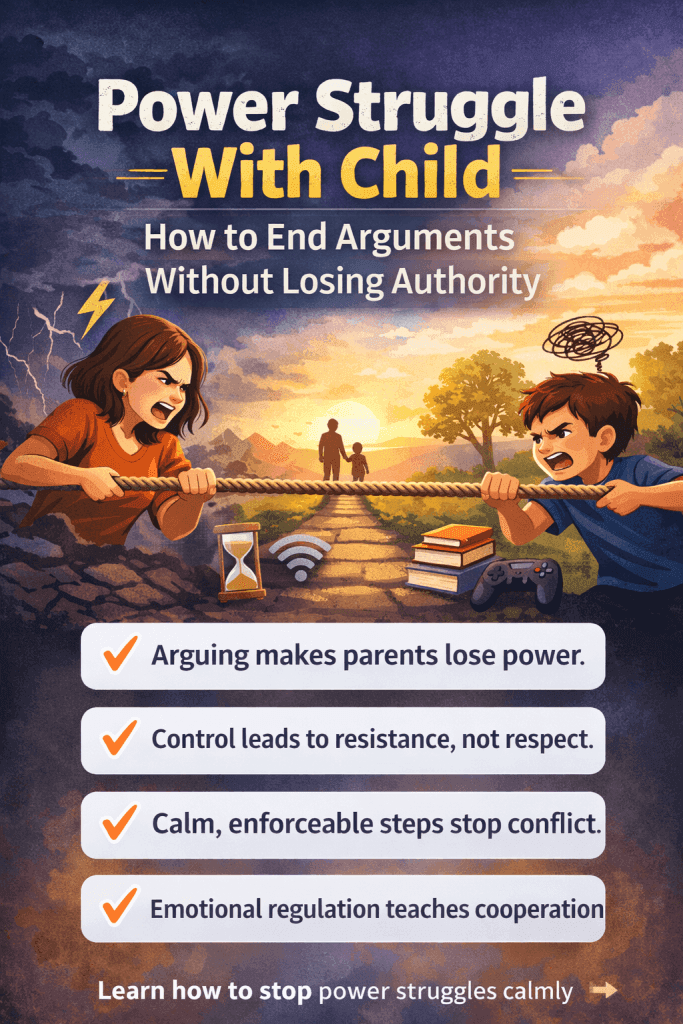
The Power Struggle with Child Exit Strategy
Step 1: Notice the Emotional Hook
Recognize urgency, repetition, and tension early. Awareness prevents escalation. Emotional recognition supports self-regulation. Calm observation replaces reaction. Leadership begins with awareness.
Step 2: Regulate Yourself First
Lower tone, relax body, and remove urgency. Emotional control stabilizes the interaction. Calm presence communicates leadership. Self-regulation precedes child regulation. Stability reduces escalation.
Step 3: Pause Before Responding
A brief pause signals intentional choice. Pausing prevents reactive responses. Calm timing reduces emotional intensity. Deliberate responses maintain authority. Silence can de-escalate conflict.
Step 4: Validate Without Surrendering
Acknowledge feelings without debating or agreeing. Emotional validation reduces resistance. Recognition builds connection and trust. Calm empathy prevents escalation. Validation does not weaken boundaries.
Step 5: Set a Clear, Enforceable Boundary
State once calmly and clearly. Predictability reinforces structure. Calm follow-through teaches responsibility. Boundaries guide behavior without conflict. Consistency strengthens authority.
Step 6: Step Out if Escalation Continues
Withdraw attention calmly without anger. Disengagement ends emotional reinforcement. Presence remains without reaction. Calm withdrawal models self-regulation. Conflict fades without participation.
How to Stop Power Struggle Without Giving In?
Consistency Over Intensity
Predictable responses build trust more than emotional force. Consistency reduces resistance gradually. Stability promotes cooperation. Emotional neutrality strengthens authority. Calm repetition of structure builds discipline.
Calm Consequences Teach Responsibility
Consequences delivered calmly reinforce accountability. Emotional neutrality prevents conflict. Predictable outcomes guide behavior. Consistency builds internal discipline. Calm enforcement preserves connection.
Firmness Without Conflict
Balanced firmness prevents escalation. Calm authority communicates control. Emotional steadiness supports trust. Firm guidance reduces resistance. Stability fosters cooperation.
How Urgency, Reactivity, and Repetition Fuel Defiance?
Urgency Signals Instability
Rushed responses increase tension. Emotional pressure triggers resistance. Calm pacing improves cooperation. Stability reduces escalation. Controlled timing strengthens authority.
Reactivity Reinforces Conflict
Emotional reactions feed the struggle. Calm responses reduce escalation. Emotional neutrality stabilizes interaction. Controlled reactions preserve leadership. Stability weakens defiance.
Repetition Weakens Authority
Repeated instructions imply negotiable boundaries. Children learn persistence prolongs interaction. Clear communication strengthens discipline. Consistency builds predictability. Single calm instruction is more effective.
What Children Learn When Parents Stay Calm and Firm?
Emotional Regulation
Children learn to manage emotions through observation. Calm modeling teaches self-control. Stability reduces emotional intensity. Consistent calm responses guide behavior. Emotional learning becomes internalized.
Internal Discipline
Stable boundaries build responsibility. Predictable consequences teach accountability. Internal discipline replaces fear-based obedience. Consistency promotes self-regulation. Long-term cooperation grows naturally.
Trust in Leadership
Consistent calm authority builds trust. Predictability reduces anxiety. Emotional safety strengthens cooperation. Stability fosters respect. Trust supports long-term guidance.
How Emotional Regulation and Self-Discipline Are Taught?
Learning Through Modeling
Children imitate observed behavior. Calm responses teach emotional control. Modeling is more effective than lecturing. Stability shapes emotional intelligence. Consistency builds self-regulation.
Building Emotional Intelligence
Steady responses teach patience and resilience. Emotional awareness develops gradually. Calm communication supports understanding. Stability strengthens problem-solving skills. Emotional growth becomes internal.
Teaching Emotional Intelligence to Children
Internalizing Discipline
Consistent calm boundaries transform rules into values. Internal discipline lasts longer than forced obedience. Emotional security supports responsibility. Stability promotes independence. Consistency strengthens character.
How to Stay Grounded When Parenting Gets Hard?
Consistency Matters More Than Perfection
Perfect parenting is unrealistic. Consistency builds stability and trust. Returning to calm leadership repairs mistakes. Emotional steadiness strengthens authority. Progress matters more than perfection.
Progress Over Perfection
Each calm response strengthens trust. Small improvements reduce resistance gradually. Learning comes through repetition. Stability builds confidence. Consistency supports growth.
Building Long-Term Trust
Trust grows through predictable calm responses. Emotional safety reduces conflict. Stability strengthens connection. Consistency builds cooperation. Long-term trust supports lasting discipline.
How to End Parenting Power Struggles With Your Child?
How to stop constant arguments with your child and build calm, confident authority. In this parenting deep dive, you’ll understand the psychology behind defiance, resistance, and the need for control, while learning practical methods to set clear boundaries without losing your composure, connection, or respect. This guide reveals why children often seem not to listen, how traditional discipline can sometimes worsen conflict, and how to restore leadership without shouting, harsh punishment, or giving in. If you feel drained by daily battles over screen time, homework, or routines, this approach teaches you how to step out of the struggle, stay grounded, and guide your child toward long-term cooperation and emotional balance.
TIMESTAMPS:
- 00:00 – Why Arguing With Your Child Makes You Lose Authority. Why power struggles start and why fighting back never works.
- 00:00:30 – The Repeating Argument Cycle Parents Get Stuck In. How urgency, reactivity, and repetition fuel defiance?
- 00:01:13 – Why Control-Based Parenting Creates Resistance? The myth of authority, compliance vs cooperation, and hidden resentment.
- 00:02:13 – How Letting Go of Control Builds Real Authority? The parenting paradox: why disengaging from conflict strengthens leadership.
- 00:03:33 – The Power Struggle Exit Strategy (Step-by-Step). A calm, enforceable model to stop power struggles without giving in.
- 00:08:32 – What Children Learn When Parents Stay Calm and Firm? How are emotional regulation and self-discipline actually taught?
- 00:10:04 – How to Stay Grounded When Parenting Gets Hard? Why perfection isn’t required and how consistency builds trust over time.?
Parenting With Empathy And Emotional Intelligence
Conclusion
Power struggle with child ends when parents stop fighting for control and lead with calm, consistent authority. Authority grows from emotional steadiness, predictable boundaries, and disengagement from reactive conflict. When parents hold limits without escalation, cooperation replaces resistance and trust strengthens over time—will you choose to pull harder in the next struggle or calmly let go and lead?
FAQs about Power Struggle With Child
1. What is a power struggle with child?
A power struggle with child happens when a simple request turns into a battle for control instead of guidance. The conflict is usually not about the visible issue like homework or screen time, but about who controls the interaction emotionally. When both parent and child try to win, communication breaks down and escalation begins. These struggles often repeat because emotional reactions keep the conflict alive. Understanding this helps parents step out of the struggle and return to calm leadership.
2. Why does arguing with a child reduce parenting authority?
Arguing shifts the parent from a calm leader to an emotional participant, which weakens authority. When parents react with urgency, repetition, or frustration, children sense instability and may resist more. Emotional escalation teaches children that persistence can outlast authority. Calm, steady responses communicate confidence and predictability, which naturally build respect. Authority grows through emotional stability, not intensity.
3. Can power struggles end without becoming permissive?
Yes, ending power struggles does not mean giving in or removing boundaries. It means surrendering the argument while still holding the rule firmly and calmly. Permissiveness abandons limits, but calm leadership maintains them without emotional conflict. When parents enforce boundaries consistently without anger or repetition, children learn responsibility and predictability. This approach strengthens authority while reducing resistance.
4. Why do power struggles keep repeating in families?
Power struggles repeat because emotional reactions reinforce the conflict cycle. When parents respond with urgency, repetition, or frustration, children learn that resistance keeps the interaction going. Nothing new is communicated, only stronger emotion, which sustains the loop. Over time, both parent and child expect escalation, making conflicts faster and more intense. Breaking the cycle requires calm responses, clear boundaries, and disengagement from emotional struggle.
5. How long does it take to stop power struggles with a child?
Small improvements may appear within days or weeks when parents respond calmly and consistently. However, deeper behavioral changes take time because children gradually internalize emotional regulation and trust. Consistency matters more than speed, and repeated calm responses reduce the intensity and frequency of conflicts. Progress may feel slow, but each calm interaction builds long-term cooperation. Long-lasting change comes from steady leadership rather than quick fixes.

Mathukutty P V is a Blogger, YouTuber, and Content Writer and the founder of Simply Life Tips. After taking voluntary retirement in 2017, he embraced a free lifestyle focused on learning, personal growth, and sharing practical wisdom to help others live with more purpose and positivity.



