Misconceptions About Personal Growth often prevent people from reaching their full potential. Have you ever wondered why some individuals feel disappointed even after investing time and effort into self-improvement? The answer is often rooted in unrealistic beliefs about how growth actually works. Personal growth is not a straight path filled with constant victories. It is a lifelong process of learning, adapting, failing, and improving. Understanding the truth behind common myths can help you approach your development journey with greater confidence and patience.
Also, read about common misconceptions that affect personal and professional growth.
10 Misconceptions About Personal Growth
Personal growth has become a popular topic in books, podcasts, social media, and professional development programs. While this increased awareness is positive, it has also created several misunderstandings. Many people assume that growth should be fast, easy, and visible. In reality, meaningful growth often happens gradually and quietly. Recognizing these misconceptions can help you set realistic expectations and stay committed to long-term improvement.
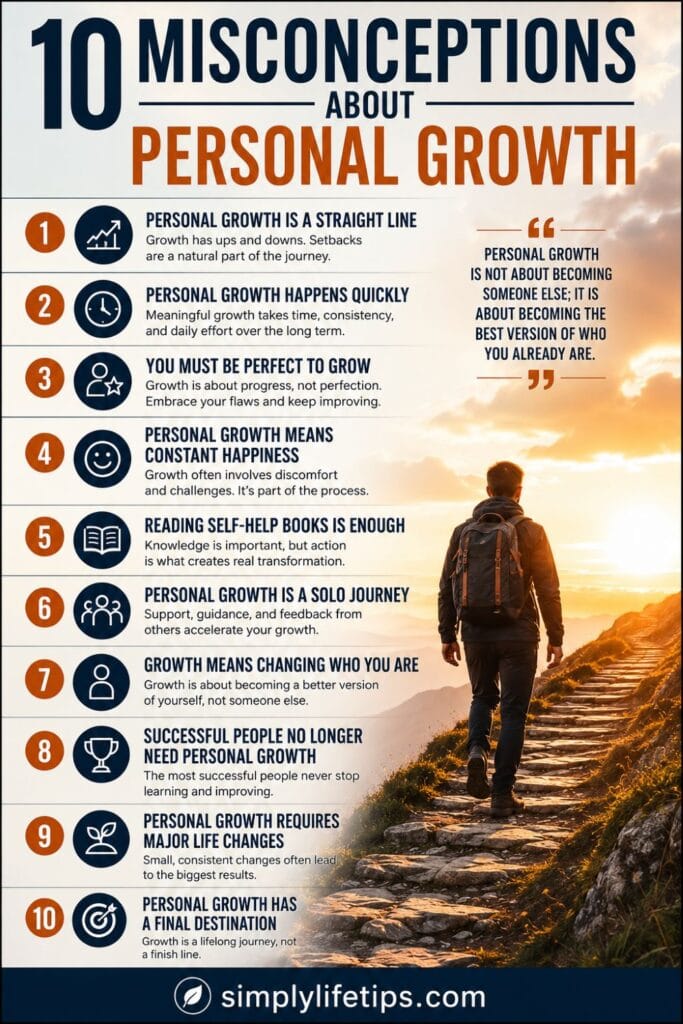
Myth 1: Personal Growth Is a Straight Line
One of the biggest misconceptions is believing that progress always moves forward.
In reality, personal growth includes setbacks, failures, and periods of stagnation. Someone learning public speaking may deliver an excellent presentation one week and struggle the next. This does not mean they are moving backward. Growth often follows a pattern of advancement, challenge, learning, and improvement.
The key is to focus on overall progress rather than temporary setbacks.
Powerful Affirmations For Personal Growth: Unlock Your Potential
Myth 2: Personal Growth Happens Quickly
Many people expect dramatic changes within days or weeks.
Social media often showcases success stories without revealing the years of effort behind them. Building confidence, improving communication skills, or developing healthy habits requires consistent practice over time.
For example, a person who starts reading daily may not notice immediate changes, but after a year, their knowledge and perspective can be significantly transformed.
Sustainable growth is gradual growth.
Myth 3: You Must Be Perfect to Grow
Perfectionism is often disguised as self-improvement.
Some people believe they must eliminate all flaws before becoming successful or happy. However, personal growth is about progress, not perfection. Every successful individual has weaknesses, makes mistakes, and continues learning.
Accepting imperfections allows you to move forward instead of becoming trapped by unrealistic standards.
Myth 4: Personal Growth Means Constant Happiness
Many assume that growth will eliminate stress, disappointment, and negative emotions.
The truth is that growth often involves discomfort. Learning new skills, facing fears, and stepping outside your comfort zone can be challenging. Emotional struggles are not signs of failure; they are often signs of development.
For instance, starting a new career may create anxiety, but that discomfort can be part of meaningful progress.
Wrong Environment on Personal Growth: Don’t Let Your Potential Be Buried
Myth 5: Reading Self-Help Books Is Enough
Books, podcasts, and courses provide valuable knowledge, but knowledge alone does not create transformation.
Real growth occurs when information is applied consistently. Someone may read ten books about leadership but remain ineffective if they never practice communication, decision-making, or team management.
Action transforms information into growth.
Myth 6: Personal Growth Is a Solo Journey
While self-reflection is important, growth rarely happens entirely alone.
Mentors, coaches, friends, family members, and supportive communities can provide guidance, accountability, and valuable feedback. Many successful individuals credit their development to the people who challenged and encouraged them.
Seeking help is not a weakness; it is often a sign of wisdom.
Myth 7: Growth Means Changing Who You Are
Some people fear personal development because they believe it requires abandoning their identity.
In reality, personal growth helps you become a better version of yourself rather than someone completely different. It strengthens your strengths, improves your weaknesses, and helps you align your actions with your values.
Growth is about refinement, not replacement.
Myth 8: Successful People No Longer Need Personal Growth
A common misconception is that successful individuals have “arrived” and no longer need to improve.
The most accomplished people often continue learning throughout their lives. Business leaders, athletes, artists, and innovators regularly seek new knowledge and experiences.
Continuous learning is one reason they remain successful over time.
Myth 9: Personal Growth Requires Major Life Changes
Many believe they must completely transform their lives overnight.
In reality, small daily improvements often create the biggest results. Reading for ten minutes, exercising regularly, practicing gratitude, or learning one new skill each month can produce remarkable long-term benefits.
Small habits consistently practiced can lead to extraordinary outcomes.
Myth 10: Personal Growth Has a Final Destination
Many people view growth as a finish line they will eventually reach.
However, personal growth is an ongoing journey. Every stage of life presents new challenges, responsibilities, and opportunities for learning. What helps you grow in your twenties may differ from what helps you grow in your forties or sixties.
The goal is not to arrive but to continue evolving.
Signs You Are Experiencing Personal Growth
Even when progress feels slow, certain indicators suggest you are moving forward:
- You take greater responsibility for your actions.
- You respond more thoughtfully to challenges.
- You become more self-aware.
- You are willing to learn from mistakes.
- You set healthier boundaries.
- You become more adaptable to change.
- You focus on improvement rather than comparison.
- You make decisions based on values instead of fear.
These changes often appear gradually but can significantly improve your quality of life.
How to Approach Personal Growth Realistically?
A healthy approach to growth includes:
- Setting achievable goals.
- Accepting setbacks as part of learning.
- Celebrating small wins.
- Seeking feedback from trusted people.
- Practicing patience.
- Prioritizing consistency over intensity.
- Focusing on habits rather than quick results.
- Maintaining curiosity and a willingness to learn.
When expectations align with reality, growth becomes more sustainable and rewarding.
A Powerful Reminder About Growth
“Personal growth is not about becoming someone else; it is about becoming the best version of who you already are.”
This perspective reduces pressure and encourages authentic development. Instead of chasing perfection, focus on steady improvement and meaningful progress.
FAQs – Misconceptions About Personal Growth
What are misconceptions about personal growth?
Misconceptions about personal growth are false beliefs that create unrealistic expectations about self-improvement, success, and personal development.
Why is personal growth often difficult?
Growth requires change, and change often involves discomfort, uncertainty, and learning from mistakes.
Can personal growth happen without failure?
No. Failure is often one of the most effective teachers and provides valuable lessons that contribute to long-term improvement.
How long does personal growth take?
Personal growth is a lifelong process. Meaningful changes often develop gradually through consistent effort and practice.
What is the most important factor in personal growth?
Consistency is often more important than motivation. Small actions repeated over time create lasting transformation.
Conclusion
Understanding the misconceptions about personal growth can help you avoid frustration and unrealistic expectations. Growth is not about perfection, instant success, or constant happiness. It is about learning, adapting, and improving one step at a time. When you embrace the reality of personal development, you become better equipped to handle challenges, celebrate progress, and continue evolving throughout your life. Which of these personal growth myths have you believed in the past?
- Misconceptions About Mental Strength | 10 Myths That Hold People Back
- Misconceptions About Self-Love | 10 Common Myths That Hold People Back
- Misconceptions About Healing | What True Emotional Recovery Really Looks Like
- 15 Misconceptions About Wives That Can Ruin Your Marriage
References
For additional insights on personal development:
If this resonated with you, share it with someone who needs it.
PVM

Mathukutty P V is a Blogger, YouTuber, and Content Writer and the founder of Simply Life Tips. After taking voluntary retirement in 2017, he embraced a free lifestyle focused on learning, personal growth, and sharing practical wisdom to help others live with more purpose and positivity.