
The ideal age to have a baby is one of the most common questions asked by couples planning their future. While modern lifestyles often lead people to postpone parenthood, understanding how age affects fertility can help couples make informed decisions. Although biology plays an important role, emotional readiness, financial stability, career goals, and overall health are equally important when deciding the right time to start a family.
Is There an Ideal Age to Have a Baby?
There isn’t a single age that is perfect for everyone. However, from a biological perspective, women generally have the highest fertility between 20 and 30 years of age.
During these years:
- Egg quality is usually at its best.
- Fertility is highest.
- The chances of natural conception are greater.
- The risk of miscarriage is lower.
- Pregnancy complications are generally less common.
- Recovery after childbirth is often easier.
This does not mean that pregnancies outside this age range are unsafe. Many women today have healthy pregnancies in their 30s and even 40s with proper medical care.
Why Does Fertility Change with Age?
Women are born with all the eggs they will ever have. Unlike sperm production in men, new eggs are not produced throughout life.
As a woman ages:
- The number of available eggs decreases.
- Egg quality gradually declines.
- The chances of chromosomal abnormalities increase.
- It may take longer to conceive naturally.
- The risk of miscarriage rises gradually.
These biological changes become more noticeable after the age of 35.
For example, a woman in her late twenties may conceive within a few months, whereas someone in her late thirties may require a longer time or fertility assistance.
Pregnancy After Age 30
Many women choose to delay pregnancy because of higher education, career growth, financial planning, or finding the right partner.
While fertility begins to decline after 30, most women can still conceive naturally.
Pregnancy after 30 often offers several personal advantages:
- Greater emotional maturity
- Better financial security
- Stable relationships
- Improved parenting confidence
- Better access to healthcare
With regular prenatal care and a healthy lifestyle, many pregnancies after 30 progress normally.
Pregnancy After Age 35
Pregnancy after 35 is often called advanced maternal age in medical practice. Although this term may sound concerning, it simply reflects the need for closer monitoring.
Possible risks include:
- Gestational diabetes
- High blood pressure
- Preeclampsia
- Preterm birth
- Chromosomal abnormalities
- Higher likelihood of Caesarean delivery
Despite these risks, millions of women around the world safely deliver healthy babies after 35 thanks to regular prenatal care, improved screening methods, and advances in reproductive medicine.
Can Women Have Babies After 40?
Yes.
Pregnancy after 40 is increasingly common today.
Although fertility is lower, successful pregnancies are still possible naturally or with fertility treatments.
Women planning pregnancy after 40 should:
- Schedule a preconception health check-up.
- Discuss possible risks with their doctor.
- Begin prenatal vitamins before conception.
- Monitor blood pressure and blood sugar.
- Maintain a healthy body weight.
Medical guidance becomes especially important at this stage.
Does the Father’s Age Matter?
While much attention is given to a woman’s age, the father’s age also influences fertility and pregnancy outcomes.
As men grow older:
- Sperm count may gradually decline.
- Sperm movement can decrease.
- DNA damage in sperm becomes more common.
- Fertility may decrease slowly.
Research also suggests that advanced paternal age may slightly increase the risk of certain genetic conditions, although healthy pregnancies remain common even among older fathers.
Therefore, family planning should consider the health of both partners.
Healthy Habits That Improve Fertility
While age affects fertility, daily lifestyle choices are equally important. Eating nutritious foods, staying physically active, maintaining a healthy weight, and avoiding harmful habits can improve reproductive health in both women and men. The infographic below summarizes the key habits that support fertility and help prepare the body for a healthy pregnancy.
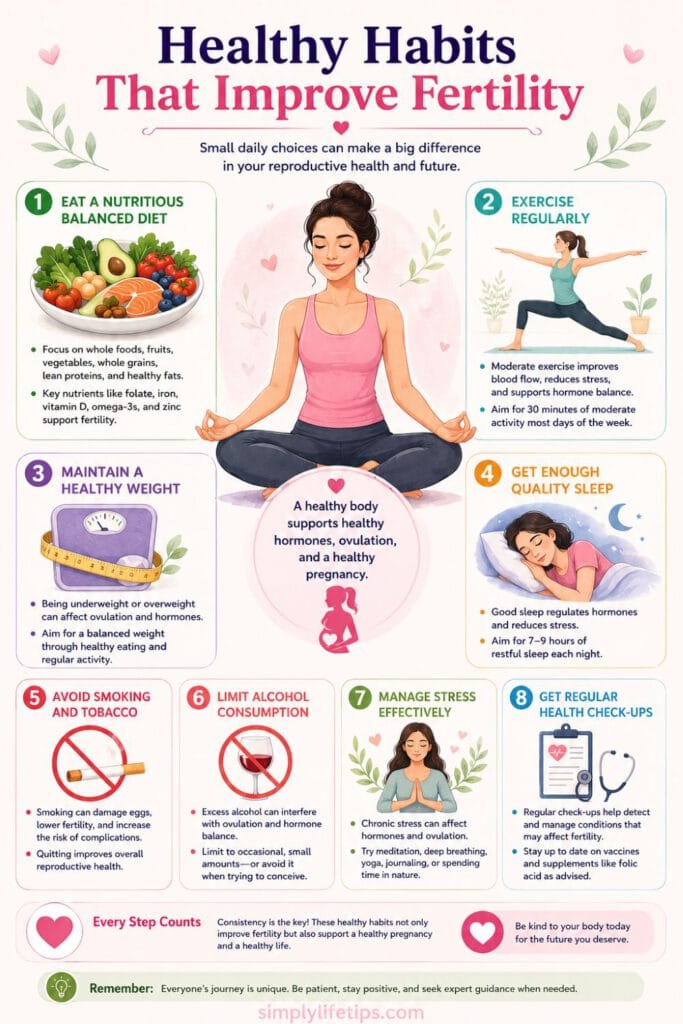
Adopting these healthy habits before trying to conceive can improve overall well-being and create a healthier environment for pregnancy. Although they cannot completely overcome age-related fertility changes, they can significantly support reproductive health and increase the chances of a healthy pregnancy.
Following healthy lifestyle habits before pregnancy can improve overall well-being and support reproductive health. Learn more in our guide on healthy lifestyle habits:
Lifestyle Factors That Affect Fertility
Age is only one part of reproductive health.
Daily habits have a significant influence on fertility in both men and women.
Important lifestyle factors include:
Healthy Diet
Eating fruits, vegetables, whole grains, lean proteins, healthy fats, and foods rich in vitamins supports reproductive health.
For example, foods containing folate, iron, zinc, and omega-3 fatty acids are beneficial before pregnancy.
Regular Exercise
Moderate physical activity improves circulation, hormone balance, and overall health.
Walking, swimming, cycling, and yoga are excellent options.
Healthy Weight
Both obesity and being underweight can affect hormone levels and reduce fertility.
Maintaining a healthy Body Mass Index (BMI) improves the chances of conception.
Avoid Smoking
Smoking damages eggs and sperm, reduces fertility, and increases pregnancy complications.
Quitting smoking benefits both partners.
Limit Alcohol
Heavy alcohol consumption can negatively affect fertility and fetal development.
Avoiding alcohol while trying to conceive is generally recommended.
Get Enough Sleep
Poor sleep affects hormone regulation and overall reproductive health.
Aim for seven to nine hours of quality sleep each night.
Manage Stress
Long-term stress may influence reproductive hormones and overall well-being.
Relaxation techniques, hobbies, exercise, and counseling can help reduce stress.
Medical Check-Ups Before Pregnancy
Preconception care helps identify health issues before pregnancy begins.
Doctors may recommend:
- Blood tests
- Vaccination review
- Screening for chronic illnesses
- Medication review
- Nutritional assessment
- Folic acid supplementation
Planning improves the chances of a healthy pregnancy.
Factors Beyond Biology
Choosing when to become parents is about much more than fertility.
Many couples also consider:
- Emotional readiness
- Relationship stability
- Financial security
- Career goals
- Housing arrangements
- Family support
- Personal aspirations
For some, becoming parents earlier feels right. Others may prefer to wait until they feel more prepared emotionally and financially.
Every family’s journey is unique.
Should You Delay Parenthood?
There is no universal answer.
If delaying pregnancy is necessary because of education, career, or personal reasons, discussing fertility preservation options with a healthcare professional may be helpful.
Some individuals choose to freeze eggs or embryos to preserve future reproductive options.
However, these treatments cannot guarantee pregnancy, so understanding their benefits and limitations is important.
Tips for Couples Planning a Baby
If you’re thinking about starting a family:
- Maintain a healthy weight.
- Eat a balanced diet.
- Stop smoking.
- Avoid recreational drugs.
- Limit alcohol.
- Exercise regularly.
- Get enough sleep.
- Take folic acid if recommended.
- Schedule a preconception medical examination.
- Discuss family planning openly with your partner.
Healthy habits benefit both fertility and pregnancy.
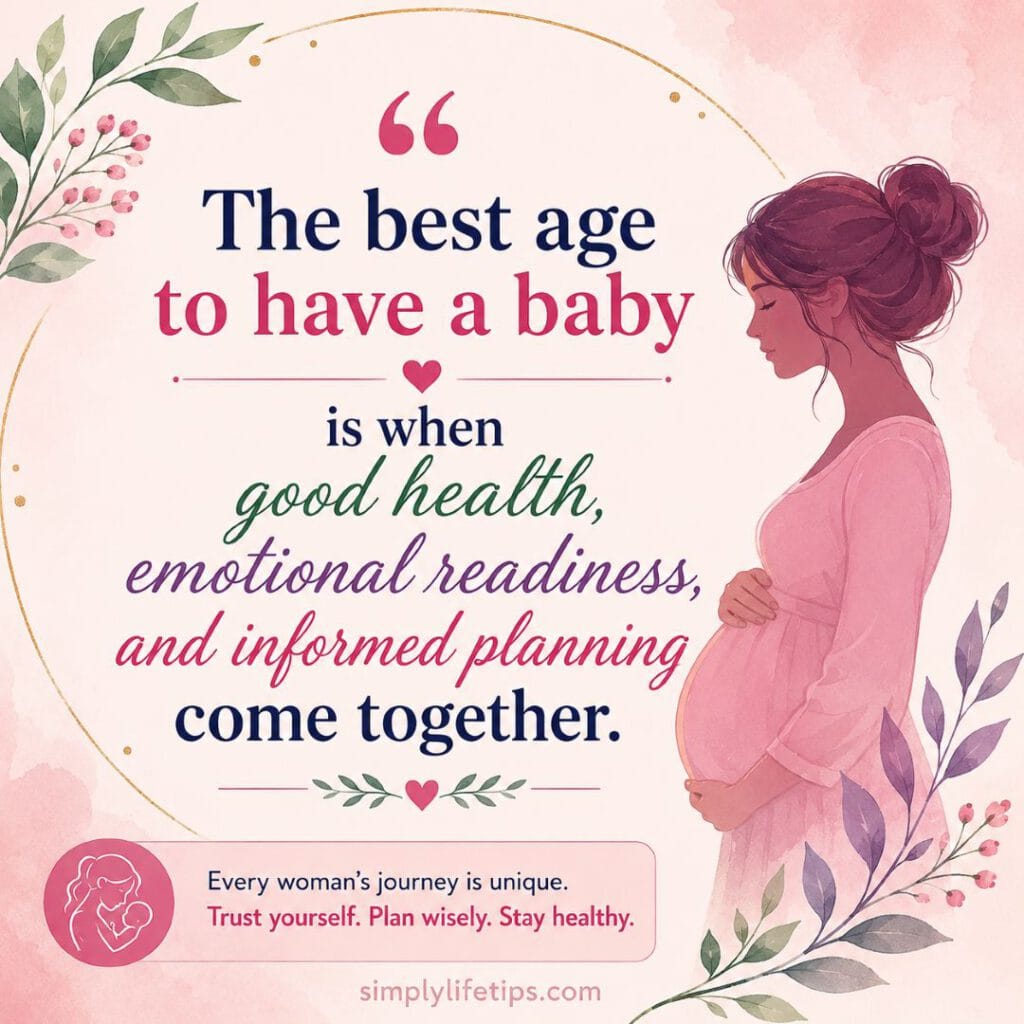
The Best Age to Have a Baby Quote
For evidence-based recommendations on pregnancy planning and preconception care, visit the American College of Obstetricians and Gynecologists (ACOG):
Conclusion
The ideal age to have a baby is generally considered to be between 20 and 30 years from a biological standpoint because fertility is highest and pregnancy risks are usually lower. However, there is no single “perfect” age that suits everyone.
The best time to become parents depends on a combination of physical health, emotional maturity, financial stability, relationship readiness, and personal circumstances. With today’s medical advances and proper prenatal care, many women successfully have healthy pregnancies well into their thirties and beyond.
Rather than focusing only on age, couples should prioritize overall health, informed planning, and regular medical guidance when preparing for parenthood.
Ideal Age to Have a Baby at a Glance
If you prefer a quick visual summary, the infographic below highlights how fertility changes with age, lifestyle habits that support reproductive health, and important factors to consider when planning for pregnancy.
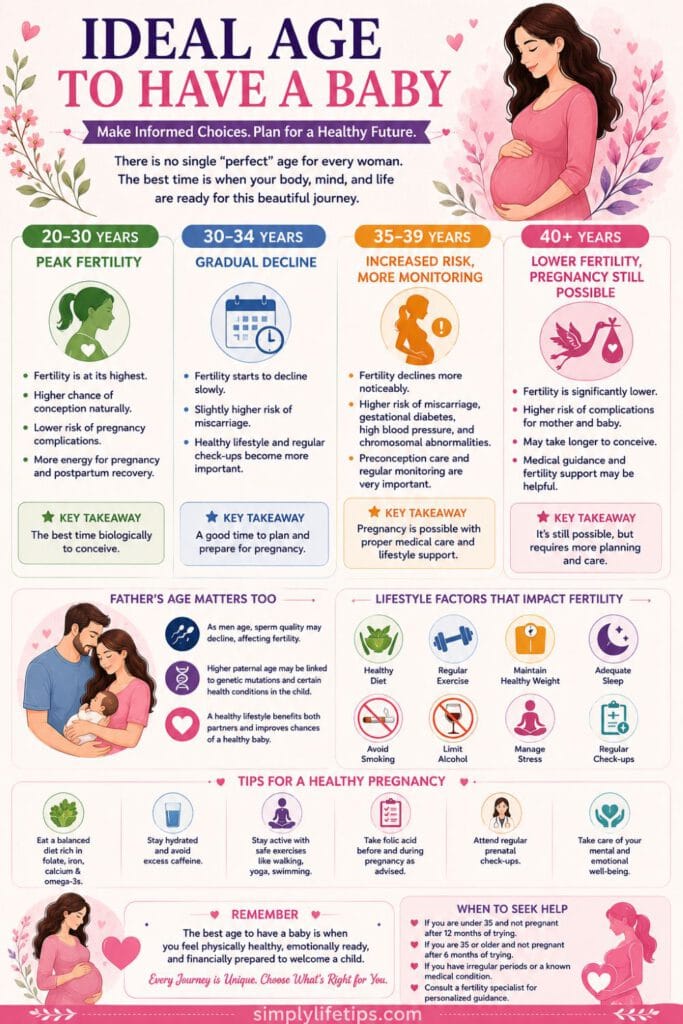
While age influences fertility, it is only one part of the picture. Good health, emotional readiness, regular medical care, and healthy lifestyle choices are equally important for increasing the chances of a healthy pregnancy and parenthood.
FAQs – Ideal Age to Have a Baby
What is the biologically ideal age to have a baby?
Most experts consider the twenties, particularly between ages 20 and 30, to be the biologically optimal years because fertility is highest and pregnancy risks are generally lower.
Is pregnancy after 35 safe?
Yes. Many women have healthy pregnancies after 35 with proper prenatal care and regular medical monitoring, although certain pregnancy-related risks increase with age.
Does a man’s age affect fertility?
Yes. As men age, sperm quality and motility may gradually decline, which can affect fertility, although many older men successfully father healthy children.
Can lifestyle improve fertility?
Absolutely. A healthy diet, regular exercise, maintaining a healthy weight, avoiding smoking, limiting alcohol, managing stress, and getting enough sleep all support reproductive health.
Should couples see a doctor before trying for a baby?
Yes. A preconception health check-up can identify medical conditions, review medications, recommend vaccinations, and ensure both partners are in the best possible health before pregnancy.
World Health Organization – Maternal Health

Mathukutty P V is a Blogger, YouTuber, and Content Writer and the founder of Simply Life Tips. After taking voluntary retirement in 2017, he embraced a free lifestyle focused on learning, personal growth, and sharing practical wisdom to help others live with more purpose and positivity.



