
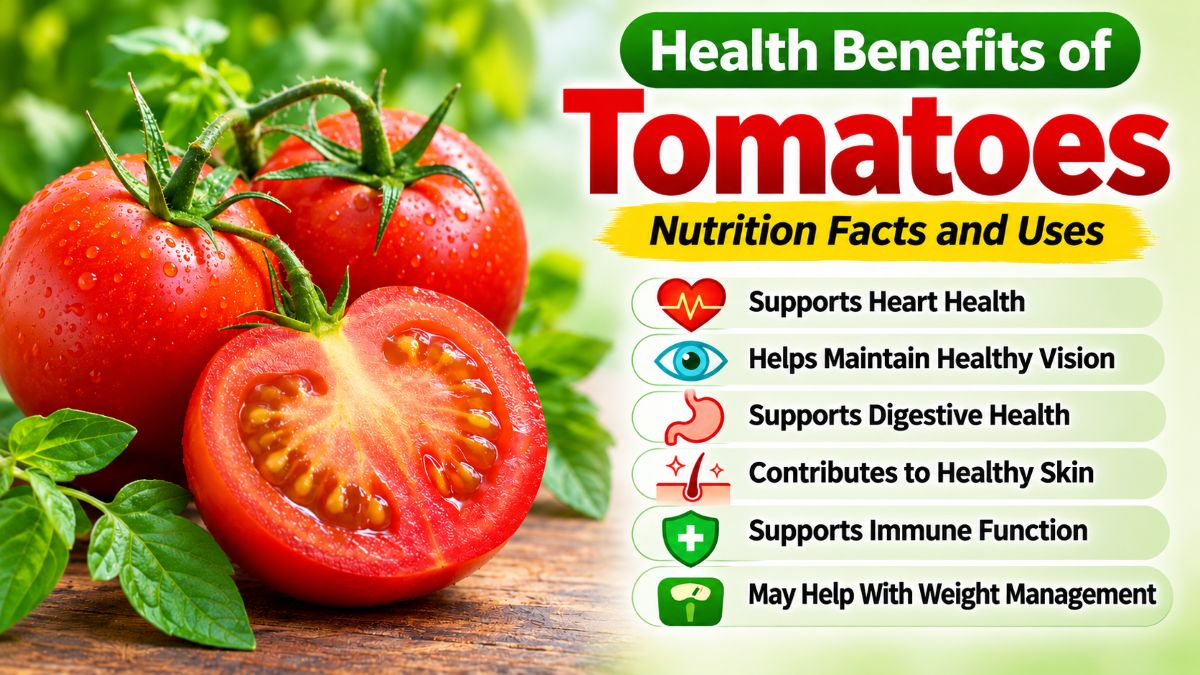
Do you eat tomatoes regularly? The health benefits of tomatoes make them a valuable addition to a balanced diet. Rich in vitamins, minerals, and antioxidants, these nutrient-packed fruits support overall health and well-being. From supporting heart health to promoting good digestion and healthy skin, tomatoes offer several reasons to include them in your daily diet.
Tomatoes are particularly rich in vitamin C, potassium, folate, and lycopene, a powerful antioxidant that gives them their characteristic red colour. These nutrients play important roles in supporting heart health, maintaining healthy vision, protecting cells from oxidative stress, and supporting normal immune function.
Whether you enjoy tomatoes fresh in salads, blended into soups, or cooked into delicious sauces, they are an easy addition to a balanced diet. In this article, discover the nutritional value of tomatoes, their potential health benefits, daily consumption tips, and possible precautions.
Are Tomatoes Fruits Or Vegetables?
Tomatoes are botanically classified as fruits because they develop from the flower of a plant and contain seeds. However, they are commonly treated as vegetables in cooking because of their savoury flavour and frequent use in meals.
Tomatoes belong to the nightshade family (Solanaceae), which also includes potatoes, peppers, and eggplants. Their versatility makes them a popular ingredient in salads, sandwiches, soups, curries, pizzas, and sauces.
Regardless of whether you call them fruits or vegetables, tomatoes provide several essential nutrients and antioxidants that make them a valuable addition to a balanced diet.
Nutritional Value of Tomatoes
Tomatoes are low in calories but provide several essential vitamins, minerals, and beneficial plant compounds. Their high water content also makes them a refreshing addition to a healthy eating plan.
According to nutritional data for raw tomatoes, one medium-sized tomato provides approximately:
| Nutrient | Approximate amount |
|---|---|
| Calories | 22 kcal |
| Water | 95% |
| Carbohydrates | 4.8 g |
| Dietary fibre | 1.5 g |
| Protein | 1.1 g |
| Vitamin C | 17 mg |
| Potassium | 292 mg |
| Vitamin K | 9.7 mcg |
| Folate | 18 mcg |
Values are approximate and vary according to tomato size and variety.
Tomatoes also contain beneficial plant compounds, including lycopene, beta-carotene, and other carotenoids. Lycopene is particularly abundant in red tomatoes and has attracted scientific interest because of its antioxidant properties.
Research published in scientific literature has examined the antioxidant properties and potential health effects of lycopene.
Are Tomatoes Rich in Vitamin C?
Yes. Tomatoes provide vitamin C, an essential nutrient that supports normal immune function, collagen production, wound healing, and protection against oxidative damage.
A medium-sized raw tomato supplies approximately 17 mg of vitamin C, although the exact amount varies with size and variety.
Tomatoes also provide potassium, which contributes to normal muscle function and helps maintain healthy blood pressure.
Including tomatoes alongside other fruits and vegetables is a simple way to increase your intake of essential nutrients.
Tomatoes contain several essential nutrients and beneficial plant compounds that contribute to overall health. From vitamin C and potassium to lycopene and other antioxidants, their nutritional profile offers several potential health advantages. The infographic below highlights the key nutrients and health benefits of tomatoes at a glance.
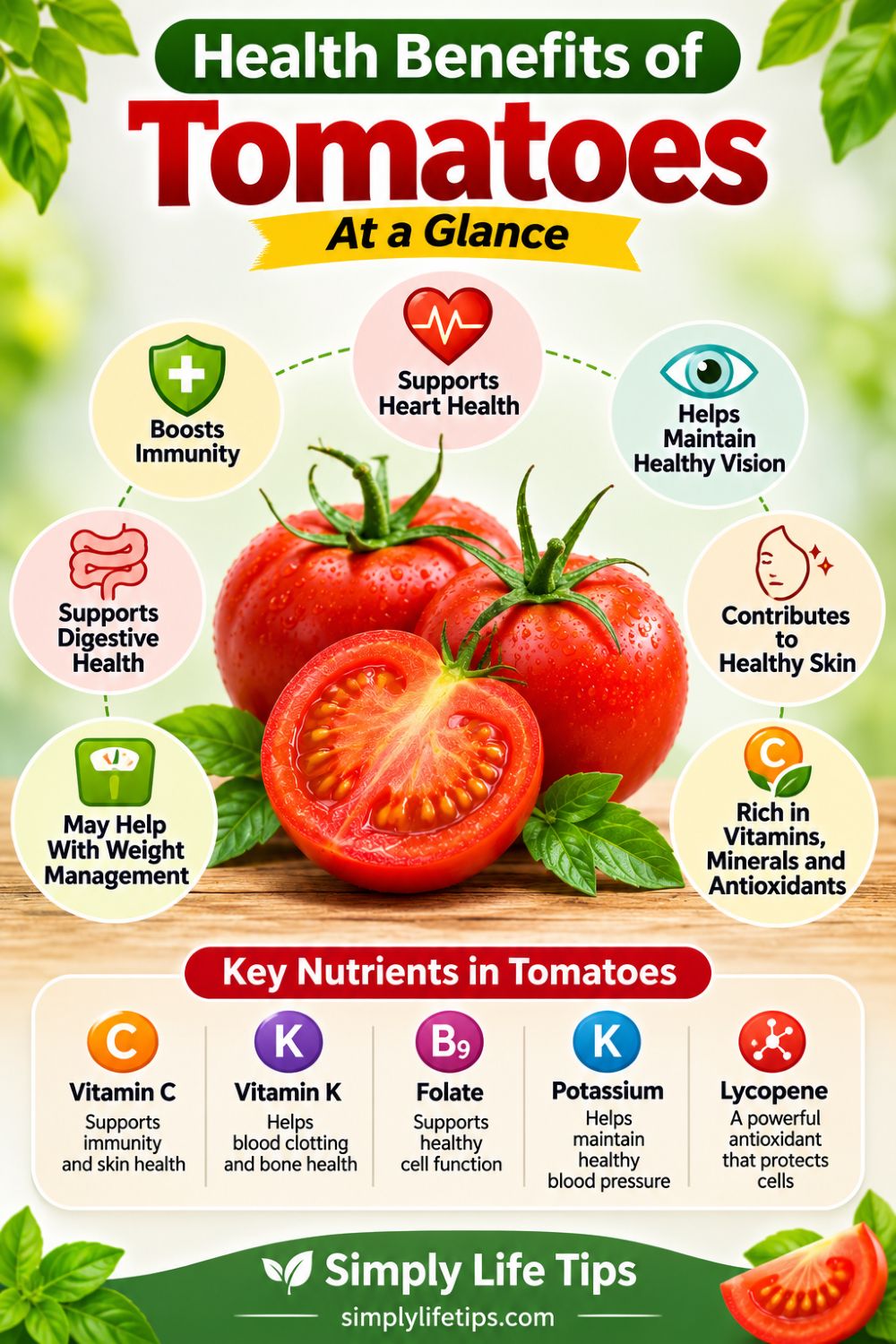
As the infographic shows, tomatoes provide a combination of essential vitamins, minerals, and antioxidants. These nutrients play different roles in supporting normal body functions, including heart health, vision, digestion, skin health, and immune function. Let’s explore these potential health benefits in more detail.
What Are the Health Benefits of Tomatoes?
Tomatoes offer several potential health benefits because they contain essential vitamins, minerals, dietary fibre, and antioxidants. These nutrients support various functions in the body, from maintaining healthy vision to promoting cardiovascular health.
Here are seven important health benefits of including tomatoes in a balanced diet. Each benefit highlights how the nutrients in tomatoes contribute to overall well-being.
1. Rich in Vitamins and Minerals
Tomatoes provide several essential vitamins and minerals that help the body function properly. They are particularly good sources of vitamin C, potassium, vitamin K, and folate.
- Vitamin C: Supports normal immune function, collagen production, and wound healing.
- Potassium: Helps regulate blood pressure and supports normal muscle and nerve function.
- Vitamin K: Plays an important role in normal blood clotting and bone health.
- Folate: Supports cell division and the formation of healthy red blood cells.
Tomatoes also contain small amounts of other nutrients, including vitamin A and vitamin E.
Adding fresh tomatoes to salads, sandwiches, curries, and other meals is an easy way to increase your intake of these nutrients.
Papaya is another nutritious fruit worth including in your diet. Explore the health benefits of papaya to learn more.
2. High in Powerful Antioxidants
One of the most important health benefits of tomatoes comes from their antioxidant content.
Tomatoes contain several beneficial plant compounds, including:
- Lycopene
- Beta-carotene
- Naringenin
- Chlorogenic acid
Lycopene is a carotenoid responsible for the red colour of many tomato varieties. It helps protect cells against oxidative damage caused by unstable molecules called free radicals.
Oxidative stress is associated with ageing and the development of several chronic diseases. Researchers continue to study the potential role of lycopene in supporting long-term health.
Interestingly, cooking tomatoes can increase the availability of lycopene because heat helps release it from the plant structure. Eating tomatoes with a small amount of healthy fat, such as olive oil, may also improve lycopene absorption.
Garlic is another antioxidant-rich food with several potential health benefits. Read about the health benefits of garlic.
3. May Support Heart Health
Tomatoes contain nutrients and plant compounds that may contribute to cardiovascular health.
Potassium helps regulate blood pressure by balancing the effects of sodium in the body. Maintaining healthy blood pressure is important for reducing the risk of cardiovascular problems.
Tomatoes also contain lycopene and other antioxidants that have been studied for their potential effects on oxidative stress, inflammation, and cholesterol metabolism.
Research has also investigated the relationship between LDL cholesterol oxidation and cardiovascular health. Read the research on PubMed
Some research suggests that higher lycopene intake may be associated with better cardiovascular health. However, tomatoes should not be considered a treatment for high blood pressure or heart disease.
Including tomatoes in a balanced diet rich in vegetables, fruits, whole grains, and other nutritious foods can support overall heart health.
Broccoli is another nutritious vegetable that can contribute to a balanced, heart-healthy diet. Discover the health benefits of broccoli.
4. May Support Healthy Vision
Tomatoes contain nutrients that contribute to normal eye function and healthy vision.
Some of the important nutrients include:
- Vitamin A: Helps maintain normal vision, particularly in low-light conditions.
- Beta-carotene: The body can convert this plant compound into vitamin A.
- Lutein: A carotenoid found in several plant foods that contributes to eye health.
These nutrients help maintain the normal functioning of the eyes.
Although tomatoes can contribute to a nutrient-rich diet, they should not be considered a treatment or guaranteed prevention for age-related macular degeneration, cataracts, or other eye conditions.
For better eye health, include a variety of colourful fruits and vegetables in your daily meals.
5. May Support Digestive Health
Tomatoes contain dietary fibre and a high proportion of water, both of which contribute to digestive health.
Dietary fibre helps add bulk to stools and supports regular bowel movements. Adequate fibre intake may also help prevent constipation.
The water content in tomatoes contributes to daily hydration, which is important for maintaining normal digestive function.
For better digestive health, combine tomatoes with other fibre-rich foods such as vegetables, fruits, legumes, and whole grains.
If tomatoes trigger acidity, heartburn, or digestive discomfort, consider adjusting the quantity or preparation method.
Along with eating fibre-rich foods, maintaining good hydration and healthy eating habits can help support regular bowel movements. Explore these natural ways to relieve constipation.
6. May Support Healthy Skin
Tomatoes contain vitamin C and antioxidants that contribute to healthy skin.
Vitamin C plays an important role in collagen production. Collagen is a structural protein that helps maintain skin strength and elasticity.
Lycopene and beta-carotene also have antioxidant properties that help protect cells against oxidative stress.
Some studies have investigated whether consuming tomato products may offer protection against certain effects of ultraviolet radiation. However, eating tomatoes cannot replace sunscreen or other sun-protection measures.
A balanced diet containing tomatoes and other colourful vegetables can contribute to overall skin health.
Good nutrition is also important for maintaining healthy hair. Discover these hair care tips for healthy hair growth.
7. May Help With Weight Management
Tomatoes can be a useful addition to a weight-management diet because they are naturally low in calories and contain a high proportion of water.
One medium-sized tomato contains approximately 22 calories, making it a convenient ingredient for nutritious meals and snacks.
The dietary fibre in tomatoes also contributes to fullness and supports healthy digestion.
You can include tomatoes in:
- Fresh vegetable salads
- Whole-grain sandwiches
- Vegetable soups
- Homemade salsa
- Healthy vegetable curries
However, tomatoes alone do not cause weight loss. Maintaining a healthy weight requires balanced nutrition, regular physical activity, adequate sleep, and sustainable lifestyle habits.
Is It Good to Eat Tomatoes Every Day?
Yes, most healthy people can enjoy tomatoes regularly as part of a balanced diet.
Eating tomatoes provides essential nutrients, including vitamin C, potassium, folate, and beneficial antioxidants such as lycopene.
You can enjoy tomatoes in different ways depending on your preferences.
- Raw tomatoes: Add fresh tomatoes to salads, sandwiches, and vegetable bowls.
- Cooked tomatoes: Use them in soups, curries, pasta sauces, and vegetable dishes.
- Tomato juice: Choose unsweetened varieties and check the sodium content of packaged products.
- Homemade tomato sauce: Prepare sauces using fresh tomatoes and moderate amounts of salt and oil.
Both raw and cooked tomatoes provide nutritional benefits. Cooking can make lycopene more available, while fresh tomatoes retain heat-sensitive nutrients such as vitamin C.
How Many Tomatoes Should You Eat Daily?
There is no universally recommended number of tomatoes that everyone should eat each day.
Your appropriate intake depends on your overall diet, nutritional requirements, preferences, and individual health circumstances.
Rather than following a fixed number, include tomatoes as part of a varied diet containing different vegetables and fruits.
Tomatoes are available in many varieties, each with distinctive flavours and culinary uses. Learn about the different types of tomatoes.
Raw Tomatoes vs Cooked Tomatoes: Which Is Better?
Both raw and cooked tomatoes offer nutritional benefits.
| Feature | Raw tomatoes | Cooked tomatoes |
|---|---|---|
| Vitamin C | Generally higher | Some vitamin C is lost through heating |
| Lycopene | Present | Often more bioavailable |
| Water content | High | Varies with cooking |
| Best uses | Salads and sandwiches | Soups, sauces and curries |
You do not need to choose only one. Eating both raw and cooked tomatoes can help you enjoy their different nutritional advantages.
Potential Side Effects and Precautions of Eating Tomatoes
Although tomatoes are nutritious and generally safe for most people, some individuals may experience discomfort or need to monitor their intake.
Here are a few precautions to consider.
1. Acid Reflux and Heartburn
Tomatoes are naturally acidic. Tomato-based foods may trigger heartburn or worsen acid reflux symptoms in some people.
If you experience discomfort after eating tomatoes, try reducing the portion size or avoiding tomato-based foods that trigger your symptoms.
2. Tomato Allergy
Although uncommon, some people may experience an allergic reaction to tomatoes.
Possible symptoms include:
- Itching or tingling around the mouth
- Skin rashes or hives
- Swelling of the lips, tongue, or throat
- Digestive discomfort
Severe allergic reactions can cause breathing difficulties and require immediate emergency medical attention.
3. Potassium Intake and Kidney Disease
Tomatoes contain potassium, an essential mineral that supports normal muscle function and helps regulate blood pressure.
However, people with certain stages of chronic kidney disease or those receiving particular types of dialysis may need to monitor their potassium intake.
The National Kidney Foundation’s guidance on tomatoes explains their suitability for people concerned about kidney stones and kidney health.
4. Digestive Sensitivity
Some people experience bloating, stomach discomfort, or digestive symptoms after eating tomatoes.
If you notice a consistent reaction, consider reducing your intake and discussing persistent symptoms with a healthcare professional.
Important: Tomatoes do not need to be avoided by everyone with kidney stones. The National Kidney Foundation states that eating tomatoes does not increase kidney stone formation. National Kidney Foundation
Simple Ways to Include Tomatoes in Your Daily Diet
Tomatoes are versatile ingredients that can be enjoyed in many delicious ways. Here are some simple ideas:
- Fresh salads: Combine sliced tomatoes with cucumber, onions, carrots, and leafy vegetables.
- Tomato soup: Prepare homemade tomato soup with fresh tomatoes, garlic, and herbs.
- Vegetable curries: Add chopped tomatoes to vegetable curries and lentil dishes.
- Sandwiches: Use fresh tomato slices in whole-grain sandwiches.
- Homemade sauces: Prepare tomato-based sauces for pasta, rice, and other dishes.
- Tomato juice: Blend fresh tomatoes into an unsweetened drink.
For better nutritional balance, combine tomatoes with other vegetables, whole grains, legumes, and healthy sources of protein.
Conclusion
The health benefits of tomatoes make them a valuable addition to a balanced diet. These nutritious fruits provide essential vitamins, minerals, fibre, and antioxidants, including lycopene, which has attracted considerable scientific interest.
From supporting normal immune function and healthy vision to contributing to cardiovascular health and digestion, tomatoes offer several nutritional advantages.
You can enjoy them fresh in salads, cooked in curries, blended into soups, or prepared as homemade sauces. Both raw and cooked tomatoes provide useful nutrients, so there is no need to limit yourself to one preparation method.
Although tomatoes are generally safe for most people, those with acid reflux, allergies, or certain kidney conditions should consider their individual dietary needs.
Including tomatoes in a balanced diet is a simple way to enjoy their nutritional value and potential health benefits.
FAQs About the Health Benefits of Tomatoes
1. What are the main health benefits of tomatoes?
Tomatoes provide vitamin C, potassium, folate, fibre, and antioxidants such as lycopene. These nutrients support normal immune function, cardiovascular health, digestion, and healthy vision as part of a balanced diet.
2. Is it good to eat tomatoes every day?
Yes. Most healthy people can enjoy tomatoes daily as part of a varied and balanced diet. However, the appropriate quantity depends on individual nutritional needs and health conditions.
3. Are raw tomatoes healthier than cooked tomatoes?
Both raw and cooked tomatoes offer nutritional benefits. Raw tomatoes generally retain more vitamin C, while cooking can increase the availability of lycopene. Including both forms in your diet is a good approach.
4. Do tomatoes help improve skin health?
Tomatoes contain vitamin C and antioxidants that contribute to normal skin health. Vitamin C supports collagen production, while antioxidants help protect cells against oxidative stress. However, tomatoes cannot replace sunscreen or medical skin treatments.
5. Can eating tomatoes cause kidney stones?
According to the National Kidney Foundation, eating tomatoes does not increase the risk of kidney stone formation. However, people with certain kidney conditions may need to monitor their potassium intake according to medical advice.
Recommended Reference Links
- Cleveland Clinic – Health Benefits of Tomatoes
- National Kidney Foundation – Tomatoes
- NIH – Vitamin C: Fact Sheet for Health Professionals
- PubMed – Nutrient Content of Tomatoes and Tomato Products

Mathukutty P. V. is the founder of Simply Life Tips. He shares practical advice and useful insights on personal growth, health, well-being, technology, and everyday living. His goal is to help readers build positive habits and make informed decisions. He believes in continuous learning and sharing knowledge to help people live healthier, happier, and more meaningful lives.