
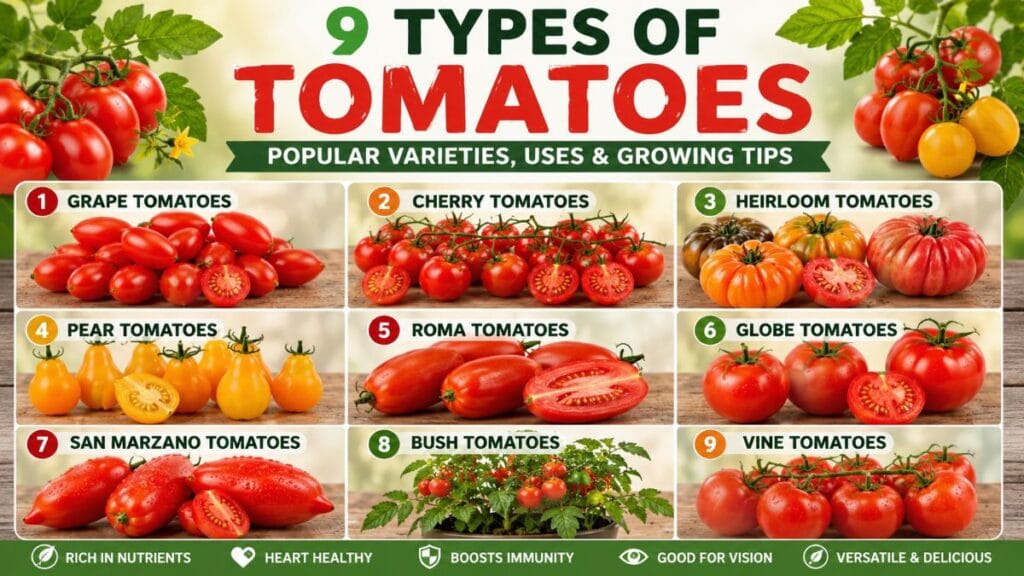
Types of tomatoes vary in shape, size, colour, flavour, and texture, making them suitable for a wide range of culinary uses and gardening needs. From small, sweet cherry tomatoes to meaty Roma tomatoes, each variety has distinctive characteristics that make it useful for particular dishes.
Some tomatoes are best enjoyed fresh in salads and sandwiches, while others are preferred for sauces, soups, and food preservation. Understanding the different tomato varieties can help you choose the right ones for your cooking preferences, available growing space, and local climate.
What Are the Different Types of Tomatoes?
There are hundreds of tomato varieties grown worldwide, but some types of tomatoes are especially popular because of their flavour, productivity, and versatility. The most commonly grown types include grape tomatoes, cherry tomatoes, heirloom tomatoes, pear tomatoes, Roma tomatoes, globe tomatoes, San Marzano tomatoes, bush tomatoes, and vine tomatoes.
Each variety offers unique characteristics that make it suitable for specific gardening and cooking purposes.
For more information about choosing tomato varieties for different growing conditions, explore this Tomato Growing Guide from Cornell University
9 Types of Tomatoes Infographic
Tomatoes come in a wide variety of shapes, sizes, colours, and flavours. Some varieties are ideal for fresh salads and snacks, while others are better suited for sauces, cooking, and food preservation. Choosing the right variety can also make a difference to your gardening experience, especially when considering available space and growing conditions. The infographic below highlights nine popular types of tomatoes, their distinctive characteristics, culinary uses, and growing habits.
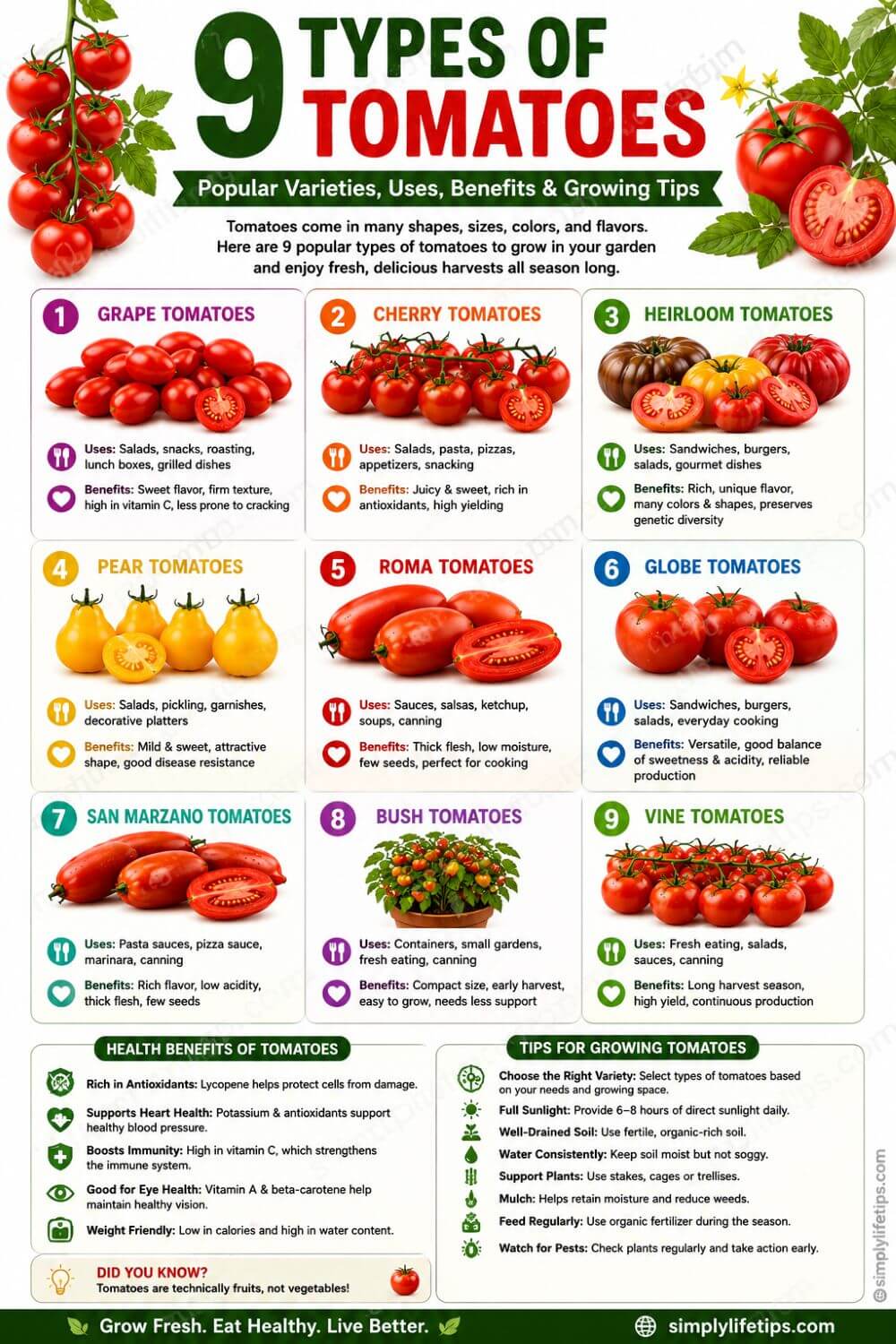
As shown in the infographic, each type of tomato offers unique advantages for gardeners and home cooks. Cherry and grape tomatoes are excellent for snacking and salads, while Roma and San Marzano tomatoes are preferred for making rich sauces and canned products. Heirloom tomatoes stand out for their exceptional flavour, and bush tomatoes are ideal for small spaces and container gardens. By understanding the characteristics of different tomato varieties, you can create a more productive garden and enjoy fresh, flavorful harvests throughout the growing season. Whether you are a beginner or an experienced gardener, choosing the right types of tomatoes can make your gardening experience more rewarding and successful.
Grape Tomatoes
Grape tomatoes are small, oval-shaped tomatoes known for their firm texture, thick skin, and mildly sweet flavour. Their elongated shape resembles grapes, which gives them their name. They are popular among home gardeners and are convenient for fresh eating.
Characteristics of Grape Tomatoes
Grape tomatoes generally have fewer seeds and less juice than many cherry tomato varieties. Their firm texture helps them hold their shape during cooking, roasting, and storage. They are commonly available in red, although other colours can also be found.
Best Uses of Grape Tomatoes
Grape tomatoes are suitable for:
- Fresh salads and vegetable bowls.
- Healthy snacks and lunch boxes.
- Roasted vegetable dishes.
- Pasta and rice recipes.
- Grilling and baking.
- Party platters and appetisers.
Growing Grape Tomatoes
Many grape tomato varieties grow on productive plants that produce clusters of small fruits. They need adequate sunlight, regular watering, well-drained soil, and suitable support for their growth habit.
Cherry Tomatoes
Cherry tomatoes are small, round tomatoes known for their juicy texture and naturally sweet flavour. They are popular among home gardeners because many varieties produce abundant fruit throughout the growing season. Cherry tomatoes are available in several colours, including red, yellow, orange, and purple.
Characteristics of Cherry Tomatoes
Cherry tomatoes are generally round, juicy, and bite-sized. Their sweetness and vibrant colours make them attractive additions to salads and other dishes. Depending on the variety, plants may grow compactly or develop long vines that require support.
Best Uses of Cherry Tomatoes
Cherry tomatoes are ideal for:
- Fresh salads and vegetable bowls.
- Pasta and pizza toppings.
- Sandwiches and wraps.
- Roasted vegetable dishes.
- Appetisers and lunch boxes.
- Fresh snacks straight from the garden.
Growing Cherry Tomatoes
Cherry tomatoes are suitable for both garden beds and containers, provided the selected variety has enough space. They grow best with adequate sunlight, well-drained soil, consistent watering, and appropriate support for climbing varieties.
Heirloom Tomatoes
Heirloom tomatoes are traditional tomato varieties that have been preserved and passed down through generations. They are generally open-pollinated, meaning their seeds can produce plants with characteristics similar to the parent plant when properly maintained.
Characteristics of Heirloom Tomatoes
Heirloom tomatoes come in a wide range of shapes, sizes, and colours, including red, yellow, orange, purple, green, and striped patterns. They are valued for their distinctive flavours, which can range from sweet and mild to rich and tangy.
Best Uses of Heirloom Tomatoes
Heirloom tomatoes are ideal for:
- Fresh salads and vegetable bowls.
- Sandwiches and burgers.
- Tomato sandwiches and wraps.
- Fresh salsas.
- Garnishes and gourmet dishes.
Growing Heirloom Tomatoes
Heirloom varieties are available in both determinate and indeterminate growth habits. Choose varieties suited to your local climate and growing space. Provide adequate sunlight, well-drained soil, consistent watering, and support for plants that develop long vines.
The University of Arizona Cooperative Extension explains the differences between heirloom, open-pollinated, and hybrid tomato varieties in its guide to selecting tomato varieties
Pear Tomatoes
Pear tomatoes are distinctive tomato varieties known for their small, pear-shaped fruits. They are commonly available in yellow and red varieties and are valued for their attractive appearance and mild, slightly sweet flavour.
Characteristics of Pear Tomatoes
Pear tomatoes have a narrow top and a rounded bottom, giving them a shape similar to a pear. They usually grow in clusters and are popular among home gardeners. Their colourful fruits can add visual appeal to vegetable gardens and meals.
Best Uses of Pear Tomatoes
Pear tomatoes are suitable for:
- Fresh salads and vegetable bowls.
- Pickling and preserving.
- Garnishes and food decoration.
- Vegetable platters.
- Roasted tomato dishes.
- Homemade sauces.
Growing Pear Tomatoes
Pear tomato plants generally produce clusters of small fruits during the growing season. Choose a suitable variety for your climate and growing space. Provide adequate sunlight, well-drained soil, regular watering, and appropriate support if the plants develop long or spreading growth.
Roma Tomatoes
Roma tomatoes are popular varieties commonly used for cooking and food preservation. They are often called paste tomatoes because they have thick, fleshy walls, relatively few seeds, and less juice than many slicing tomatoes. Their firm texture makes them particularly suitable for preparing thick tomato sauces.
Characteristics of Roma Tomatoes
Roma tomatoes are usually oval or plum-shaped, with firm flesh and a deep red colour when ripe. They contain less moisture than many other tomato varieties, which helps produce thicker sauces with less cooking time.
Best Uses of Roma Tomatoes
Roma tomatoes are ideal for:
- Homemade tomato sauces.
- Tomato paste and purées.
- Pasta and pizza sauces.
- Salsa and chutneys.
- Soups and curries.
- Canning and food preservation.
Growing Roma Tomatoes
Many Roma tomato varieties are determinate, meaning their plants grow to a relatively fixed size and produce much of their fruit within a concentrated period. They generally need full sunlight, fertile and well-drained soil, consistent watering, and suitable support to keep the plants healthy.
Globe Tomatoes
Globe tomatoes are classic round tomatoes commonly found in supermarkets, grocery stores, and home gardens. They are versatile all-purpose tomatoes with a balanced combination of sweetness and acidity, making them suitable for fresh eating and cooking.
Characteristics of Globe Tomatoes
Globe tomatoes are generally medium to large, round, and juicy, with smooth skin and firm flesh. They are commonly red when ripe, although some varieties are available in other colours. Their balanced flavour makes them a popular choice for everyday meals.
Best Uses of Globe Tomatoes
Globe tomatoes are suitable for:
- Fresh salads and vegetable bowls.
- Sandwiches and burgers.
- Slicing for wraps and toast.
- Soups and curries.
- Homemade sauces.
- General everyday cooking.
Growing Globe Tomatoes
Globe tomato varieties are available in both determinate and indeterminate growth habits. Choose a variety suited to your available space and local climate. Provide adequate sunlight, fertile and well-drained soil, consistent watering, and suitable support when needed.
San Marzano Tomatoes
San Marzano tomatoes are famous Italian tomato varieties traditionally associated with the Campania region of southern Italy. They are prized for their elongated shape, meaty flesh, and rich flavour, making them particularly popular for preparing tomato sauces.
Characteristics of San Marzano Tomatoes
San Marzano tomatoes are typically elongated and have thick flesh with relatively few seeds. When ripe, they develop a deep red colour and a distinctive sweet-tangy flavour. Their firm texture makes them suitable for cooking and food preservation.
Best Uses of San Marzano Tomatoes
San Marzano tomatoes are ideal for:
- Traditional Italian pasta sauces.
- Pizza sauces.
- Marinara sauce.
- Tomato purée and paste.
- Soups and stews.
- Canned tomato products.
Growing San Marzano Tomatoes
San Marzano tomato plants are generally indeterminate and can grow quite tall. They need full sunlight, fertile and well-drained soil, regular watering, and sturdy stakes or trellises for support. Allow sufficient space between plants to encourage good airflow and healthy growth.
Bush Tomatoes
Bush tomatoes are compact tomato plants that grow to a relatively fixed height and produce most of their fruit within a shorter period. They are generally known as determinate tomatoes and are suitable for gardeners with limited growing space.
Characteristics of Bush Tomatoes
Bush tomato plants have a compact growth habit and usually require less space than tall, indeterminate varieties. Their fruits vary in size, shape, and colour depending on the variety. Because their growth is more controlled, they are popular for small gardens and container growing.
Best Uses of Bush Tomatoes
Bush tomatoes are suitable for:
- Fresh salads and vegetable dishes.
- Sandwiches and wraps.
- Homemade sauces and soups.
- Container gardening.
- Raised beds and small vegetable gardens.
- Home food production.
Growing Bush Tomatoes
Bush tomatoes generally need less staking than taller vine varieties, although some plants may still benefit from support when carrying heavy fruit. Grow them in containers or garden beds with adequate sunlight, fertile and well-drained soil, and consistent watering. Choose a pot large enough to support the plant’s root system.
Vine Tomatoes
Vine tomatoes are varieties that grow continuously throughout the growing season rather than stopping at a predetermined height. They are generally known as indeterminate tomatoes and can produce fresh fruit over an extended period when growing conditions are favourable.
Characteristics of Vine Tomatoes
Vine tomato plants develop long, spreading stems and can grow quite tall. They produce flowers and fruits along their growing stems throughout the season. Depending on the variety, their tomatoes may be small, medium-sized, or large, with different colours and flavours.
Best Uses of Vine Tomatoes
Vine tomatoes are suitable for:
- Fresh salads and vegetable bowls.
- Sandwiches and burgers.
- Pasta and pizza toppings.
- Homemade sauces and soups.
- Roasted tomato dishes.
- General everyday cooking.
Growing Vine Tomatoes
Vine tomatoes need adequate space and sturdy support because their stems continue growing throughout the season. Use stakes, cages, or trellises to keep the plants upright. Provide full sunlight, fertile and well-drained soil, consistent watering, and regular pruning when appropriate.
Unlike bush tomatoes, which generally produce a concentrated harvest, vine tomatoes can provide a longer harvesting period.
Tomato plants are commonly classified by their growth habits as determinate or indeterminate. Learn more from the University of Maryland Extension guide to growing tomatoes
Are Different Types of Tomatoes Equally Nutritious?
Different types of tomatoes provide valuable nutrients, including vitamins, minerals, fibre, and antioxidants. However, their nutritional composition can vary depending on the variety, ripeness, and growing conditions.
Whether you choose cherry, grape, Roma, heirloom, or globe tomatoes, each variety can be part of a balanced diet. Their main differences are generally related to flavour, texture, size, and culinary uses.
For a detailed explanation of tomato nutrition, antioxidants, potential health advantages, and precautions, read our article on the health benefits of tomatoes
Tips for Growing Different Types of Tomatoes
Growing different types of tomatoes can be a rewarding experience for home gardeners. Whether you prefer sweet cherry tomatoes, productive grape tomatoes, or meaty Roma tomatoes, choosing suitable varieties and providing proper care can help you enjoy a healthy harvest.
Although tomato varieties differ in size, shape, and growth habits, most need adequate sunlight, fertile soil, consistent watering, and protection from pests and diseases.
Here are eight useful tips for growing healthy tomato plants.
1. Select the Right Types of Tomatoes
Choose tomato varieties based on your available growing space, local climate, and intended use.
- Cherry tomatoes: Excellent for fresh snacks, salads, and container gardening.
- Grape tomatoes: Suitable for salads, roasting, and fresh eating.
- Roma tomatoes: Ideal for sauces, soups, and tomato paste.
- Globe tomatoes: Versatile for sandwiches, salads, and everyday cooking.
- Bush tomatoes: Suitable for small gardens, raised beds, and containers.
- Vine tomatoes: A good choice if you have enough space and support structures.
Selecting suitable varieties makes tomato growing easier and helps you get the harvest you want.
2. Provide Adequate Sunlight
Tomato plants need plenty of sunlight to grow properly and produce healthy fruits. Most varieties perform best with at least six to eight hours of direct sunlight daily.
Choose a sunny location in your garden or place containers where plants receive sufficient sunlight. In particularly hot climates, some afternoon shade may help reduce heat stress.
Insufficient sunlight can lead to weak growth, fewer flowers, and reduced fruit production.
3. Use Nutrient-Rich, Well-Drained Soil
Tomatoes grow best in fertile, well-drained soil containing organic matter. Before planting, prepare the soil by mixing in well-rotted compost or other suitable organic material.
Good soil preparation helps provide essential nutrients and supports healthy root development.
If you are growing tomatoes in containers, use a quality potting mix rather than ordinary garden soil. Make sure the containers have adequate drainage holes to prevent waterlogging.
4. Water Tomato Plants Consistently
Regular watering is essential for healthy tomato growth and fruit development. Tomato plants need sufficient moisture, particularly during flowering and fruit formation.
Follow these watering practices:
- Water deeply to encourage strong root development.
- Keep the soil consistently moist without making it waterlogged.
- Water near the base of the plant rather than wetting the leaves.
- Water in the morning when possible.
- Adjust watering according to rainfall, temperature, and soil conditions.
Irregular watering can contribute to fruit cracking and blossom-end rot. Consistent soil moisture helps reduce these problems.
5. Support Tomato Plants Properly
Some tomato varieties develop long stems and need support to grow upright. Stakes, cages, and trellises can help keep plants off the ground and improve airflow around their foliage.
Indeterminate vine tomatoes generally need stronger and taller support because they continue growing throughout the season. Determinate bush tomatoes are more compact but may also benefit from support when carrying heavy fruit.
Proper support makes harvesting easier and helps keep fruit cleaner.
6. Apply Mulch Around Tomato Plants
Mulching is a useful gardening practice that helps maintain healthy growing conditions.
Spread a layer of suitable organic mulch, such as dry leaves, straw, or compost, around the base of tomato plants. Keep the mulch slightly away from the main stem.
Mulch helps:
- Retain soil moisture.
- Reduce weed growth.
- Maintain more stable soil temperatures.
- Reduce soil splashing onto lower leaves.
- Improve soil quality as organic materials decompose.
7. Monitor for Pests and Diseases
Tomato plants can be affected by various pests and diseases that damage leaves, stems, and fruits.
Common problems include aphids, tomato fruit borers, whiteflies, early blight, and late blight.
Inspect your plants regularly for unusual spots, damaged leaves, insects, or signs of disease. Remove affected plant parts when appropriate and maintain good airflow by providing sufficient spacing between plants.
Avoid overhead watering where possible, as wet foliage can encourage certain fungal diseases. Use suitable pest-control methods when necessary.
8. Grow Tomatoes Successfully in Containers
Container gardening is a practical option for people with limited outdoor space. Several tomato varieties, particularly compact bush types and suitable cherry tomato varieties, can grow well in pots.
Follow these simple tips:
- Choose a sufficiently large container for the selected variety.
- Use a nutrient-rich, well-draining potting mix.
- Ensure the pot has drainage holes.
- Place the container in a location with adequate sunlight.
- Water regularly because container soil can dry out quickly.
- Provide stakes or cages if the plant needs support.
- Add suitable nutrients as the plant grows.
With proper care, container-grown tomato plants can produce a satisfying harvest even in small gardens, balconies, and terraces.
Enjoy a Healthy Tomato Harvest
Growing different types of tomatoes becomes easier when you understand their individual growth habits and requirements. By selecting suitable varieties, providing enough sunlight, maintaining consistent soil moisture, and monitoring plant health, you can enjoy fresh tomatoes throughout the growing season.
Whether you grow them in garden beds, raised beds, or containers, proper care can make your tomato gardening experience more productive and rewarding.
For additional advice on sunlight, soil preparation, watering, mulching, and supporting tomato plants, consult the University of California Cooperative Extension tomato-growing guide
Conclusion
Understanding the different types of tomatoes can help you choose the right varieties for cooking, gardening, and everyday use. From sweet cherry and grape tomatoes to meaty Roma and flavourful San Marzano tomatoes, each variety has distinctive characteristics and culinary applications.
Some tomatoes are excellent for fresh salads and snacks, while others are better suited for sauces, soups, and food preservation. Your choice also depends on your available growing space, local climate, and gardening preferences.
Whether you grow tomatoes in garden beds, raised beds, or containers, selecting suitable varieties and providing proper care can help you enjoy a healthy and productive harvest. Explore different varieties to discover which types of tomatoes best suit your needs.
FAQs About Types of Tomatoes
1. What are the most common types of tomatoes?
Some popular types of tomatoes include cherry, grape, heirloom, pear, Roma, globe, and San Marzano tomatoes. Bush and vine tomatoes describe different plant growth habits rather than specific fruit varieties.
2. Which types of tomatoes are best for making sauce?
Roma and San Marzano tomatoes are popular choices for making sauces because they have relatively firm, fleshy fruit with less moisture than many slicing varieties. They are also suitable for tomato paste, purées, and soups.
3. Which types of tomatoes are the sweetest?
Cherry and grape tomatoes are often known for their naturally sweet flavour. However, sweetness varies depending on the variety, ripeness, and growing conditions.
4. Can different types of tomatoes be grown in containers?
Yes. Compact bush tomatoes and suitable cherry tomato varieties can grow successfully in containers. Choose sufficiently large pots with drainage holes, use quality potting mix, and provide adequate sunlight and water.
5. Which types of tomatoes produce fruit for the longest time?
Indeterminate vine tomatoes can continue growing and producing fruit throughout a suitable growing season. Unlike determinate bush tomatoes, they do not stop growing after reaching a particular height and generally require sturdy support.
References and Further Reading
- Cornell University – Tomato Growing Guide
- University of Arizona Cooperative Extension – Selecting Tomato Varieties
- University of Maryland Extension – Growing Tomatoes in a Home Garden
- University of Arizona Cooperative Extension – Growing Tomatoes

Mathukutty P. V. is the founder of Simply Life Tips. He shares practical advice and useful insights on personal growth, health, well-being, technology, and everyday living. His goal is to help readers build positive habits and make informed decisions. He believes in continuous learning and sharing knowledge to help people live healthier, happier, and more meaningful lives.