
Fun indoor activities for kids can transform gloomy afternoons into exciting opportunities for learning, creativity, and family bonding. Instead of spending hours in front of screens, children can explore imaginative games, hands-on projects, and active play that keep both their minds and bodies engaged. Whether you have toddlers, preschoolers, or school-age children, these ideas will help create memorable moments right at home.
Importance of Fun Indoor Activities for Kids
When children spend long periods indoors, they can quickly become restless. Engaging activities help them stay active while developing valuable life skills. The best indoor games are enjoyable and educational, encouraging creativity, communication, confidence, and problem-solving.
Benefits include:
- Encourages imagination and creativity
- Improves fine and gross motor skills
- Builds stronger family relationships
- Reduces excessive screen time
- Supports emotional and social development
- Develops patience and concentration
- Makes learning enjoyable
20 Fun Indoor Activities for Kids to Entertain
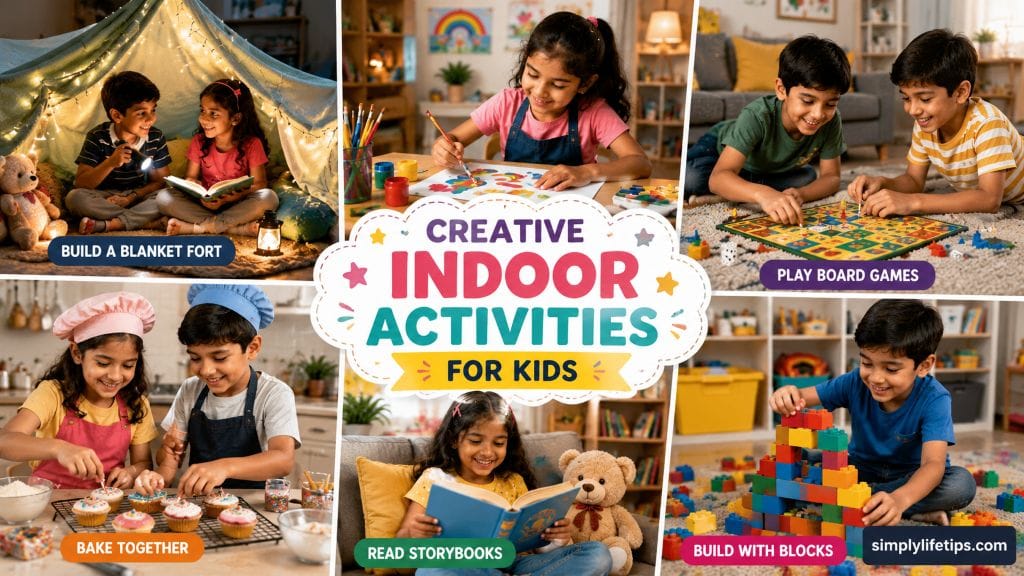
1. Build a Blanket Fort
Turn your living room into an adventure zone using blankets, pillows, cushions, and chairs. Once the fort is complete, bring in flashlights, books, or stuffed animals for extra fun.
Skills developed:
- Creativity
- Teamwork
- Problem-solving
2. Organize a Treasure Hunt
Hide small toys, chocolates, or clues around the house. Create simple riddles or maps that guide children from one location to the next.
For younger children, use picture clues instead of written hints.
3. Host a Dance Party
Create a playlist filled with your children’s favorite songs. Dancing provides excellent physical exercise while helping kids express themselves freely.
You can even organize dance competitions or freeze dance games.
4. Try Simple Science Experiments
Easy science projects make learning exciting.
Examples include:
- Baking soda volcano
- Floating egg experiment
- Rainbow in a glass
- Walking water experiment
These activities introduce basic scientific concepts through hands-on learning.
5. Create DIY Crafts
Collect colored paper, glue, crayons, stickers, and recycled materials to make creative crafts.
Ideas include:
- Greeting cards
- Paper flowers
- Animal masks
- Photo frames
- Paper airplanes
Crafting also strengthens hand-eye coordination.
6. Bake Together
Children enjoy helping in the kitchen. Let them measure ingredients, mix batter, decorate cookies, or sprinkle toppings.
Simple recipes include:
- Cookies
- Cupcakes
- Pizza
- Fruit parfaits
- Muffins
Besides being fun, baking teaches math, patience, and following instructions.
7. Read Storybooks Together
Reading aloud improves vocabulary, listening skills, and imagination.
Make it interactive by:
- Using funny voices
- Asking prediction questions
- Acting out scenes
- Letting children choose the next story
Reading together also builds a lifelong love of books.
8. Play Board Games
Classic board games teach strategy, cooperation, and healthy competition.
Popular choices include:
- Monopoly Junior
- Snakes and Ladders
- Ludo
- Uno
- Connect Four
These games are perfect for family bonding.
9. Solve Jigsaw Puzzles
Puzzles encourage concentration and logical thinking.
Start with easier puzzles for younger children and gradually increase the difficulty as their confidence grows.
10. Have an Indoor Picnic
Spread a blanket on the floor and prepare simple snacks.
Ideas include:
- Sandwiches
- Fruits
- Juice
- Homemade cookies
Play soft music or pretend you’re having a picnic in the park.
11. Create an Art Corner
Provide paper, paints, markers, crayons, and colored pencils.
Encourage children to draw:
- Their dream house
- Favorite animals
- Superheroes
- Nature scenes
- Family portraits
Display their artwork to boost confidence.
12. Put on a Puppet Show
Make puppets using socks, paper bags, or wooden spoons.
Children can create their own stories, voices, and characters while improving communication skills.
13. Build with Blocks
Construction toys such as LEGO or wooden blocks encourage engineering thinking.
Challenge kids to build:
- Castles
- Bridges
- Towers
- Cities
- Space stations
These projects strengthen problem-solving abilities.
14. Practice Kids Yoga
Yoga helps children stay active while improving flexibility and focus.
Easy poses include:
- Tree Pose
- Cat-Cow Stretch
- Butterfly Pose
- Cobra Pose
- Child’s Pose
Add relaxing music to create a calming environment.
15. Start a Sing-Along Session
Music brings families together.
Sing:
- Nursery rhymes
- Disney songs
- Children’s classics
- Karaoke favorites
You can even use toy instruments for extra fun.
16. Learn Simple Magic Tricks
Children love performing magic.
Easy tricks using coins, cups, playing cards, or rubber bands build confidence while encouraging practice and presentation skills.
17. Play Charades
Write simple words or themes on paper.
Ideas include:
- Animals
- Movies
- Occupations
- Sports
- Household objects
This classic game develops creativity and communication.
18. Write Short Stories
Encourage children to invent their own adventures.
Story prompts include:
- A talking dinosaur
- A magical forest
- A superhero pet
- A pirate treasure map
Older children can illustrate their stories and create mini-books.
19. Organize a Mini Talent Show
Give every family member a chance to perform.
They can:
- Dance
- Sing
- Tell jokes
- Perform magic
- Read poetry
Celebrate every performance with applause and encouragement.
20. Make Homemade Play Dough
Create colorful play dough using simple kitchen ingredients.
Children can shape:
- Animals
- Flowers
- Food
- Letters
- Numbers
This activity develops fine motor skills while encouraging imaginative play.
Tips to Make Fun Indoor Activities for Kids
A little planning can make indoor play even more exciting.
- Rotate activities to keep them fresh.
- Involve children in choosing the day’s activity.
- Praise creativity instead of focusing on perfection.
- Keep art and craft supplies organized.
- Limit screen time during activity sessions.
- Join in the fun to strengthen family bonds.
- Take photos of your children’s creations to preserve memories.
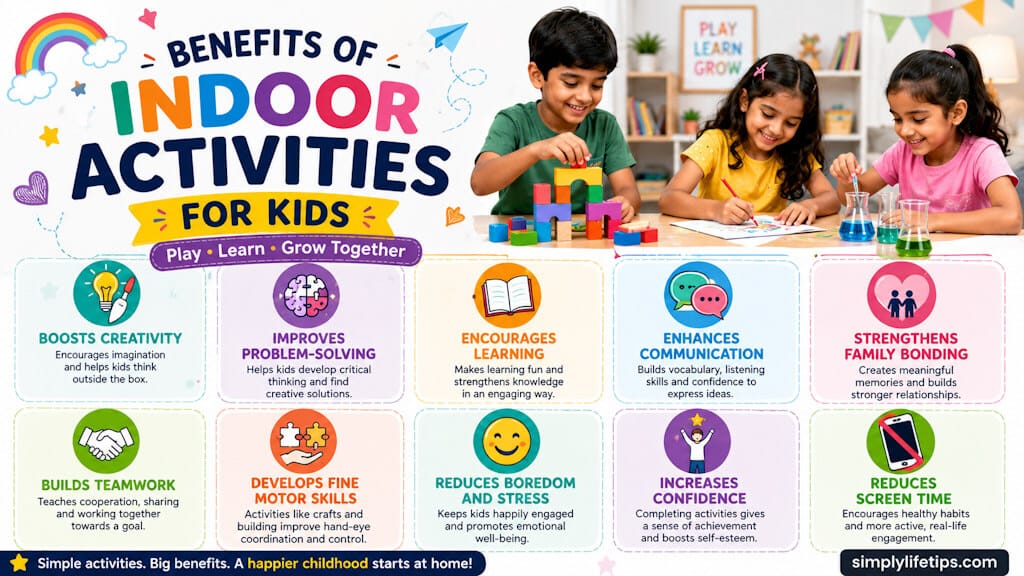
Educational Benefits of Indoor Play
Many parents underestimate how much learning happens through play. Activities like puzzles, storytelling, crafts, and science experiments naturally teach children essential life skills.
Indoor play helps improve:
- Critical thinking
- Creativity
- Communication
- Memory
- Fine motor skills
- Emotional intelligence
- Teamwork
- Self-confidence
- Independence
When children enjoy the learning process, they are more likely to stay curious and motivated.
Choose Fun Indoor Activities for Kids by Age
Toddlers (2–4 Years)
Focus on sensory play, coloring, singing, stacking blocks, and simple puzzles.
Activities for toddlers at home play a vital role in early learning and development. With simple materials and a little creativity, parents can transform everyday moments into meaningful learning experiences.
Preschoolers (4–6 Years)
Introduce crafts, puppet shows, treasure hunts, and beginner science experiments.
School-Age Kids (7–12 Years)
Offer more challenging puzzles, story writing, baking, LEGO building, yoga, and board games.
Choosing age-appropriate activities keeps children engaged while supporting their developmental needs.
Fun Indoor Activities for Kids infographic
Looking for a quick visual guide? This Fun Indoor Activities for Kids infographic highlights 20 creative, screen-free ideas that keep children entertained while encouraging learning, imagination, and family bonding. Save it for rainy days, weekends, or school holidays whenever you need fresh indoor play ideas.
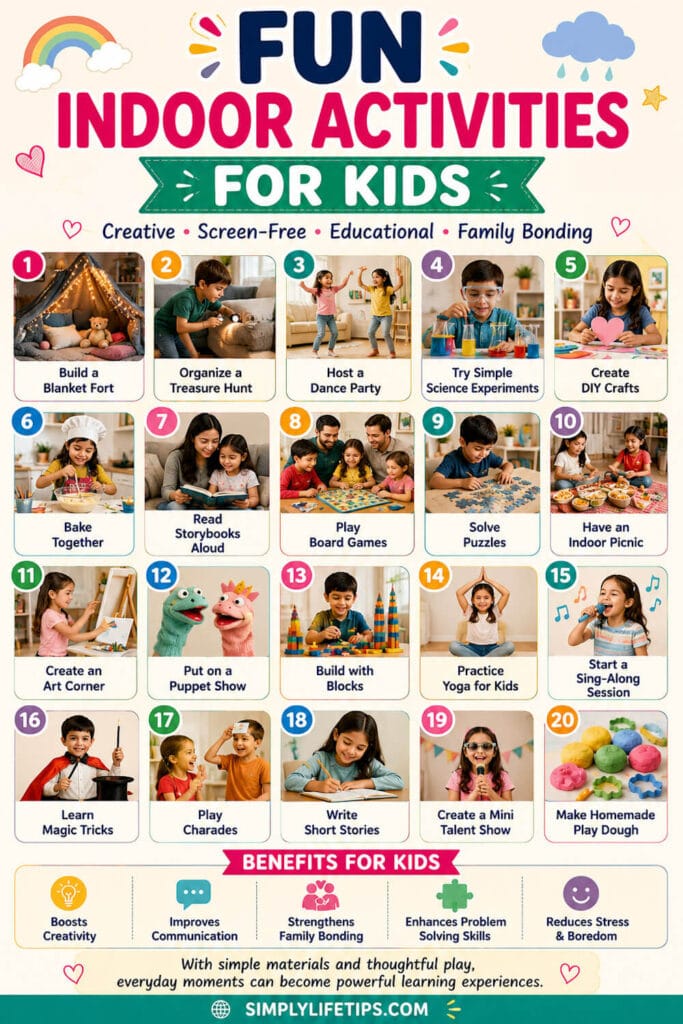
This infographic provides an easy reference to fun indoor activities that help children stay active, creative, and engaged at home. Whether you’re planning a rainy afternoon or looking to reduce screen time, these simple ideas make it easy to create meaningful family moments. Feel free to bookmark or share this guide so you’ll always have inspiring indoor activities ready when you need them.
Conclusion
Rainy days don’t have to feel long or boring. With these fun indoor activities for kids, every afternoon can become an opportunity to learn, laugh, and connect as a family. From building blanket forts and baking treats to storytelling and science experiments, these screen-free ideas inspire creativity while helping children develop valuable skills. Keep this list handy for rainy weekends, school holidays, or any day your family needs a little extra indoor fun.
Frequently Asked Questions
What are the best fun indoor activities for kids on rainy days?
Blanket forts, treasure hunts, crafts, baking, board games, storytelling, science experiments, and dance parties are among the most enjoyable and educational choices.
How can I keep my child entertained indoors without screens?
Choose hands-on activities such as puzzles, arts and crafts, yoga, building blocks, charades, reading, or creating homemade play dough. These encourage creativity while reducing dependence on screens.
Which indoor activities help children learn?
Science experiments, reading books, puzzles, writing stories, baking, and construction toys teach problem-solving, language, math, and critical thinking through play.
How long should indoor activity sessions last?
For toddlers, 20–30 minutes is usually enough. Preschoolers often enjoy 30–45 minutes, while school-age children can stay engaged for 45–90 minutes depending on the activity.
Why are screen-free indoor activities important?
They support healthy brain development, improve social interaction, strengthen family relationships, encourage physical movement, and help children build creativity and confidence without relying on digital entertainment.
Related Articles
- Five Senses Activities for Kids
- Fun and Budget-Friendly Activities for Young Kids at Home
- Summer Activities For Kids: Refresh Mind And Improve Skills

Mathukutty P V is a Blogger, YouTuber, and Content Writer and the founder of Simply Life Tips. After taking voluntary retirement in 2017, he embraced a free lifestyle focused on learning, personal growth, and sharing practical wisdom to help others live with more purpose and positivity.



