
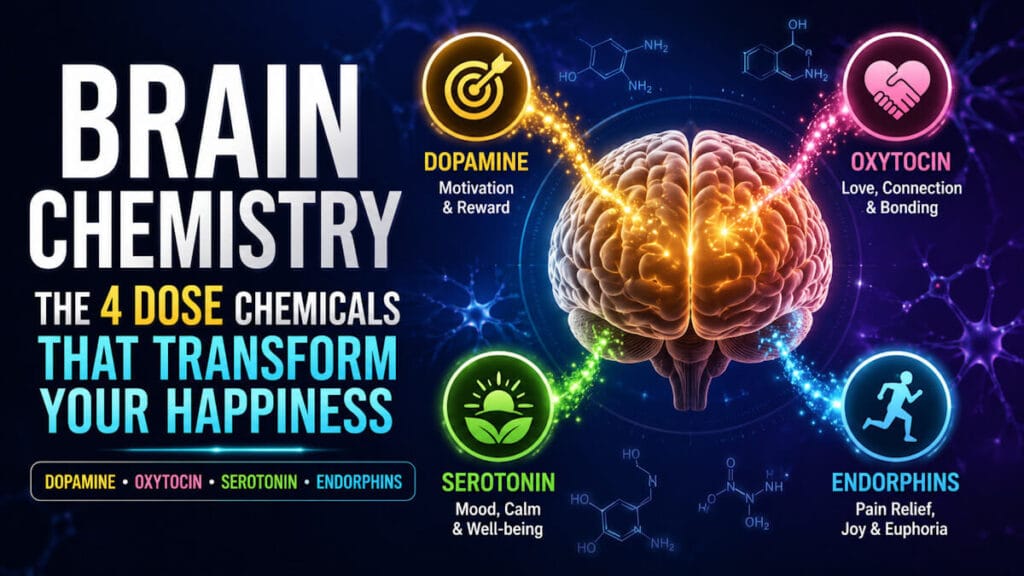
Brain chemistry influences nearly every decision you make, every emotion you experience, and every goal you pursue. Many people believe success comes only from hard work and willpower, but neuroscience tells a different story.
Inside your brain, powerful chemical messengers constantly shape your motivation, confidence, relationships, resilience, and overall happiness. When these chemicals remain balanced, you feel energetic, optimistic, productive, and emotionally stable. When they become imbalanced, even small challenges can feel overwhelming.
The good news is that you don’t need expensive treatments or complicated life changes to improve your brain chemistry. Your daily habits have a remarkable influence on these natural chemicals.
Scientists often refer to four major “feel-good” chemicals collectively as the DOSE system:
- Dopamine
- Oxytocin
- Serotonin
- Endorphins
Understanding these four chemicals can help you work with your biology instead of constantly fighting against it.
This article is inspired by the educational insights of Dr. Arun Oommen, a neurosurgeon, who explains the neuroscience behind happiness and the role of dopamine, oxytocin, serotonin, and endorphins in emotional well-being. The content has been researched, expanded, and adapted for educational purposes by Simply Life Tips.
If you’re new to the science of happiness, our detailed guide on How to Get Happiness Hormones Free explains how dopamine, oxytocin, serotonin, and endorphins work together to improve your mood, motivation, and overall well-being before we explore each one in detail.
Brain Chemistry – Meet Team DOSE
Your brain produces four powerful chemicals that influence motivation, emotional balance, relationships, and happiness. Together, they are often remembered as the DOSE system—Dopamine, Oxytocin, Serotonin, and Endorphins. Understanding how each one works can help you build healthier habits and improve your overall well-being.
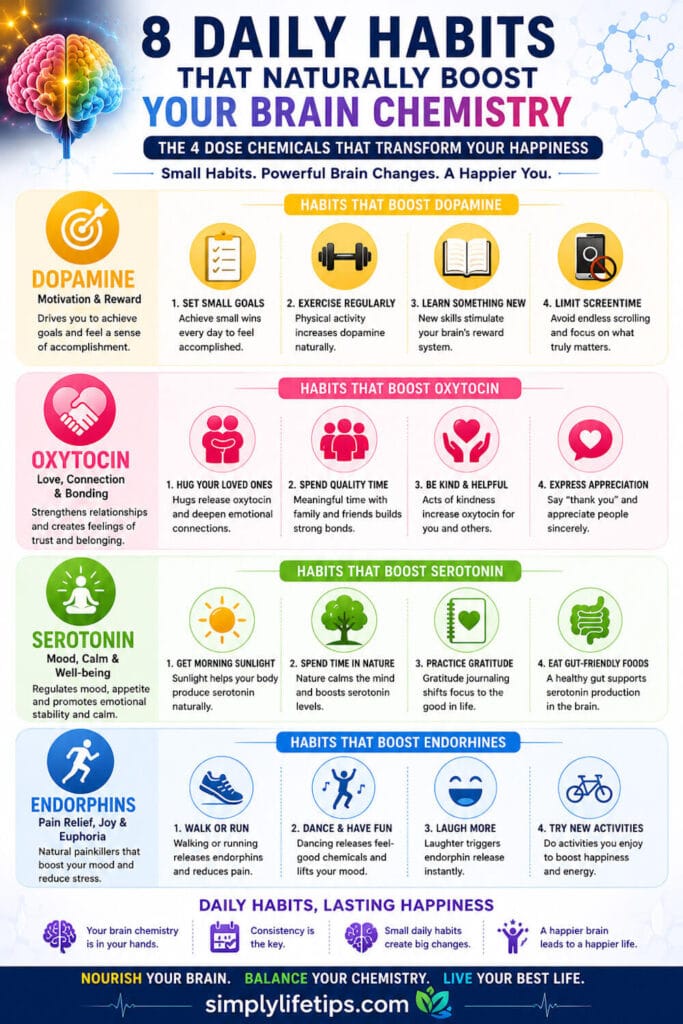
The infographic provides a quick overview of how each DOSE chemical affects your brain and the simple daily habits that naturally support healthy brain chemistry.
What Is Brain Chemistry?
Brain chemistry refers to the complex communication system of neurotransmitters and hormones that regulate thoughts, emotions, memory, learning, motivation, sleep, and behavior.
Think of your brain as a sophisticated biological pharmacy. Every day it manufactures chemicals that determine how you feel physically and emotionally.
These chemicals affect:
- Motivation
- Confidence
- Happiness
- Stress tolerance
- Focus
- Sleep quality
- Immune function
- Relationships
- Longevity
The fascinating part is that your everyday choices directly influence this internal pharmacy.
Meet Team DOSE
The four major happiness chemicals include:
| Chemical | Often Called | Primary Function |
|---|---|---|
| Dopamine | Reward Chemical | Motivation and achievement |
| Oxytocin | Love Chemical | Trust and bonding |
| Serotonin | Mood Stabilizer | Emotional balance and confidence |
| Endorphins | Natural Pain Reliever | Stress relief and happiness |
Let’s understand each one.
Dopamine: The Motivation Chemical
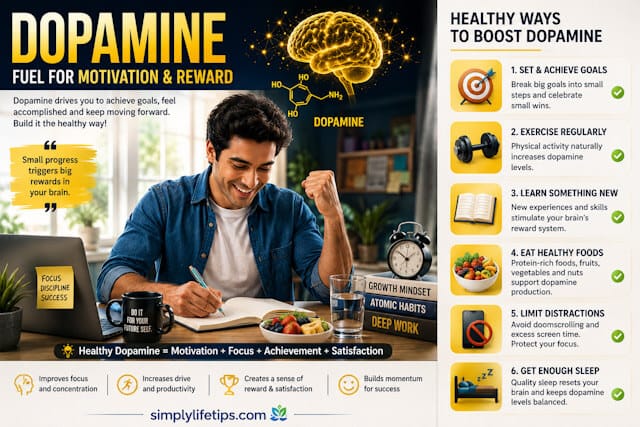
Dopamine is often called the reward chemical because it reinforces behaviors that help you achieve goals.
Imagine finally finishing a difficult project, passing an important exam, or completing months of training. That feeling of accomplishment comes largely from dopamine.
Healthy dopamine levels improve:
- Motivation
- Goal setting
- Learning ability
- Curiosity
- Focus
- Productivity
- Self-confidence
People with balanced dopamine often stay persistent even when facing setbacks.
Signs of Low Dopamine
Low dopamine may lead to:
- Constant procrastination
- Poor concentration
- Low motivation
- Fatigue
- Reduced enjoyment
- Difficulty finishing tasks
Natural Ways to Increase Dopamine
You can naturally support dopamine by:
- Breaking large goals into smaller milestones
- Exercising regularly
- Learning new skills
- Eating protein-rich foods
- Sleeping 7–9 hours
- Celebrating small wins
For example, instead of waiting to celebrate after completing an entire book, reward yourself after each chapter.
Avoid Artificial Dopamine Traps
Social media addiction, gambling, nicotine, excessive alcohol, and addictive substances flood the brain with artificial dopamine.
Over time, the brain becomes less sensitive, making everyday life feel less rewarding. This is one reason addictions gradually reduce genuine happiness.
Oxytocin: The Connection Chemical

Oxytocin is often called the love hormone because it strengthens trust, empathy, and emotional connection.
Imagine:
- A mother holding her newborn baby
- Friends laughing together after years apart
- A father hugging his daughter at graduation
- A grandparent holding a grandchild’s hand
These emotional moments trigger oxytocin release.
Why Oxytocin Matters
Research consistently shows that meaningful relationships contribute more to long-term happiness than wealth or social status.
Oxytocin helps build:
- Trust
- Compassion
- Emotional security
- Teamwork
- Leadership
- Healthy relationships
Simple Ways to Increase Oxytocin
Daily habits include:
- Hug loved ones
- Express gratitude
- Give genuine compliments
- Help someone without expecting anything back
- Spend quality family time
- Listen attentively
- Play with children or pets
A sincere conversation often improves emotional health more than hours spent scrolling through social media.
Your brain values authentic human connection—not follower counts.
Serotonin: The Mood Stabilizer
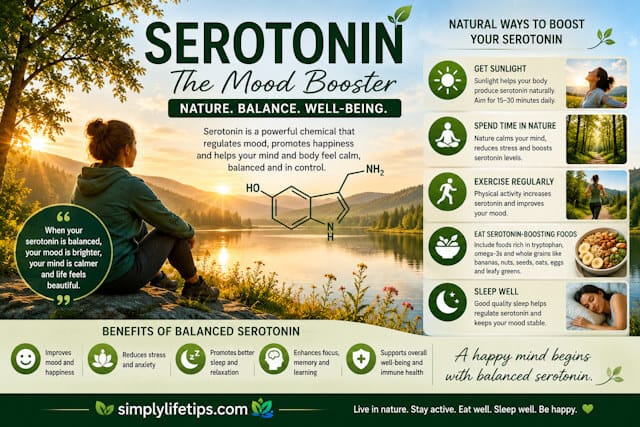
Serotonin creates emotional balance, calmness, and self-confidence.
Have you ever felt peaceful watching a sunrise, walking through nature, or finishing meditation?
That calm satisfaction is strongly linked to serotonin.
Benefits of Healthy Serotonin Levels
Balanced serotonin supports:
- Emotional stability
- Better sleep
- Memory
- Digestion
- Confidence
- Reduced anxiety
- Better decision-making
Symptoms of Low Serotonin
Low serotonin may contribute to:
- Irritability
- Anxiety
- Depression
- Poor sleep
- Mood swings
- Low confidence
Natural Ways to Increase Serotonin
Healthy habits include:
- Morning sunlight
- Walking in nature
- Daily gratitude practice
- Meditation
- Healthy gut-friendly foods
- Consistent sleep schedule
- Spending time with positive people
Interestingly, around 90% of serotonin is produced in the gut, highlighting the close relationship between nutrition and mental health.
Foods rich in tryptophan such as eggs, yogurt, bananas, fish, legumes, and whole grains may support healthy serotonin production.
Sometimes, the best mood booster isn’t found in a medicine cabinet—it begins with a walk outdoors.
Endorphins: Your Body’s Natural Pain Relievers

Have you noticed how people often return from exercise smiling?
Or why does laughter instantly make difficult days feel lighter?
That’s because of endorphins.
These chemicals reduce pain while creating feelings of happiness and relaxation.
Benefits of Endorphins
Endorphins help:
- Reduce stress
- Lower pain perception
- Improve mood
- Increase resilience
- Support mental health
Easy Ways to Boost Endorphins
You can naturally increase endorphins by:
- Brisk walking
- Running
- Cycling
- Swimming
- Dancing
- Strength training
- Laughing
- Singing
- Moderate amounts of dark chocolate
Even a 20–30 minute daily walk can significantly improve mood while reducing the long-term risk of heart disease, diabetes, depression, and cognitive decline.
This is one reason exercise is often described as medicine.
Daily Habits Shape Your Brain Chemistry
Many people search for happiness through:
- Bigger homes
- Higher salaries
- Luxury cars
- Fame
- Social status
While these achievements can be rewarding, neuroscience suggests lasting happiness depends far more on daily habits than external success.
Healthy brain chemistry grows from:
- Purposeful work
- Loving relationships
- Physical activity
- Quality sleep
- Healthy eating
- Gratitude
- Acts of kindness
- Continuous learning
Small daily choices gradually reshape your brain. A neurosurgeon with 25 years of expertise shares 10 daily habits that make the brain smarter.
Lessons from Neurosurgery
Many neurosurgeons observe a remarkable pattern among patients recovering from complex brain surgery.
Patients rarely ask about money or possessions.
Instead, they ask:
- Will I walk again?
- Can I hug my children?
- Can I return to work?
- Will I laugh with friends again?
- Will I see another sunrise?
These questions remind us what truly matters.
Patients who maintain hope, optimism, and meaningful relationships often demonstrate remarkable emotional resilience during recovery. While a positive mindset is not a guarantee of medical outcomes, it can support coping, rehabilitation, and overall well-being alongside appropriate medical care.
Work With Your Biology, Not Against It
High performance doesn’t come from pushing yourself into constant exhaustion.
Instead, sustainable success comes from supporting your brain’s natural chemistry.
Each day, you have opportunities to strengthen your internal pharmacy through simple habits:
- Move your body.
- Build meaningful relationships.
- Sleep well.
- Eat nutritious food.
- Practice gratitude.
- Spend time in nature.
- Pursue meaningful goals.
Your brain already contains one of the world’s most powerful wellness systems. Learning to care for it may be one of the best investments you ever make.
Conclusion
Understanding brain chemistry changes how we think about happiness and success. Dopamine fuels motivation, oxytocin deepens relationships, serotonin creates emotional balance, and endorphins help relieve stress and pain. Rather than chasing happiness through external achievements alone, nurture these four natural chemicals with healthy daily habits. Small, consistent actions can lead to a sharper mind, stronger relationships, greater resilience, and a more fulfilling life.
Frequently Asked Questions
What is brain chemistry?
Brain chemistry refers to the balance of neurotransmitters and other chemicals that allow brain cells to communicate. These chemicals influence your mood, thoughts, memory, motivation, sleep, and overall mental well-being.
Can brain chemistry be improved naturally?
Yes. Regular exercise, a balanced diet, quality sleep, stress management, meditation, and positive social interactions can help support healthy brain chemistry. These habits encourage the natural production and balance of neurotransmitters such as serotonin and dopamine.
Which neurotransmitters are most important for mental health?
Some of the most important neurotransmitters include serotonin (mood), dopamine (motivation and reward), norepinephrine (focus and alertness), GABA (calmness), and acetylcholine (learning and memory). Each plays a unique role in brain function.
What causes an imbalance in brain chemistry?
Brain chemistry can be affected by genetics, chronic stress, poor nutrition, lack of sleep, hormonal changes, certain medical conditions, substance use, and some medications. Often, multiple factors contribute rather than a single cause.
When should I seek medical help for brain chemistry-related symptoms?
If you experience persistent symptoms such as prolonged sadness, severe anxiety, memory problems, mood swings, or difficulty functioning in daily life, consult a qualified healthcare professional. Early evaluation can help identify the underlying cause and determine appropriate treatment or lifestyle changes.
Original inspiration: Dr. Arun Oommen, Neurosurgeon. Read the original post here:
Related Articles
Recommended External Resources
- Learn how physical activity improves brain health
- Explore neuroscience research from the National Institute of Mental Health
- Healthy sleep habits for better brain function

Mathukutty P V is a Blogger, YouTuber, and Content Writer and the founder of Simply Life Tips. After taking voluntary retirement in 2017, he embraced a free lifestyle focused on learning, personal growth, and sharing practical wisdom to help others live with more purpose and positivity.


