
Basic rules of life shape the way we think, act, and build relationships. While every person’s journey is unique, certain timeless principles help create a meaningful, balanced, and fulfilling life. The challenge is not knowing these principles but practicing them consistently in everyday situations. When we learn to be genuine, accept ourselves, embrace solitude, admit mistakes, and listen to others, life becomes simpler and more rewarding.
5 Basic Rules of Life
Every person experiences life differently. Different backgrounds, cultures, opportunities, and challenges shape individual perspectives. Yet, despite these differences, certain basic rules of life remain universally valuable.
Many people complicate life by pretending to be someone they are not. Others seek approval from everyone around them. Some avoid responsibility for mistakes, while others fear being alone. These habits often create unnecessary stress and dissatisfaction.
The good news is that living well does not require complicated formulas. A few simple principles can make life more authentic, peaceful, and fulfilling.
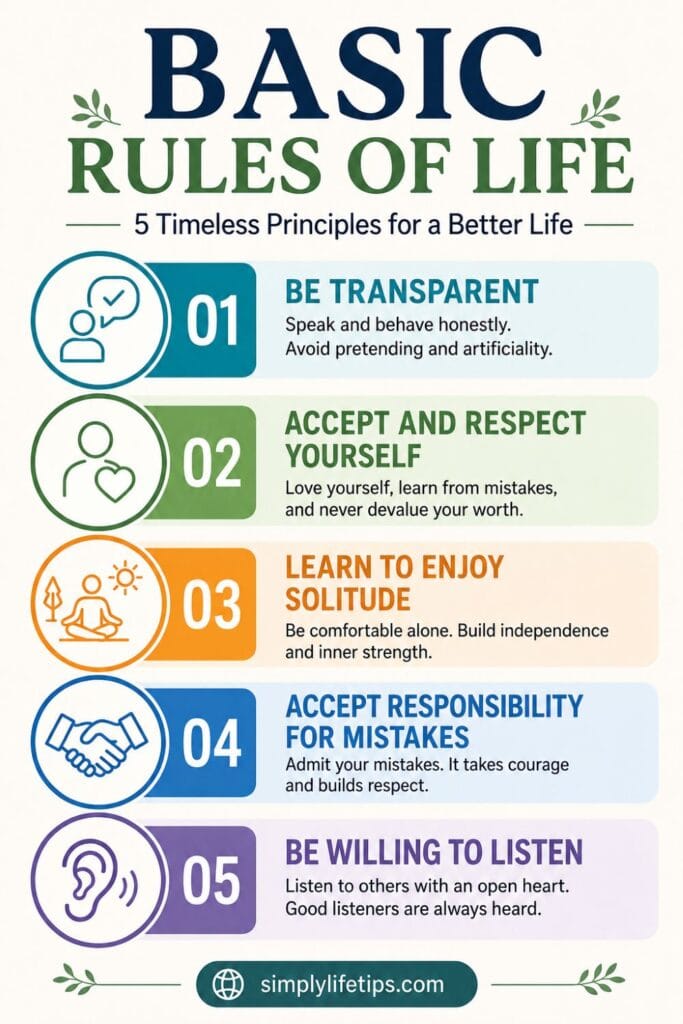
1. Be Transparent and Genuine
One of the most important basic rules of life is honesty in words and actions.
People naturally trust those who are open and genuine. When someone constantly hides intentions, speaks ambiguously, or behaves differently depending on the situation, others often feel uncomfortable around them.
Transparency does not mean sharing every personal detail. Instead, it means being authentic and avoiding unnecessary pretenses.
For example, if you disagree with an idea, respectfully express your opinion rather than pretending to agree just to gain approval. Genuine behavior builds stronger relationships because people know where they stand with you.
Being transparent also reduces emotional stress. Maintaining a false image requires constant effort, while authenticity allows you to live with confidence and peace of mind.

2. Accept and Respect Yourself
Self-respect is another fundamental principle of life.
Many people are their own harshest critics. While self-evaluation helps personal growth, constantly focusing on weaknesses can damage confidence and happiness.
Understanding your mistakes is healthy. Believing you are worthless because of those mistakes is not.
For instance, a student who fails an exam can view the failure as a learning opportunity rather than evidence of personal inadequacy. Similarly, an employee who makes an error at work can learn from the experience without questioning their entire worth.
True humility is recognizing both strengths and weaknesses realistically. It is not self-rejection or self-condemnation.
When you respect yourself, you develop resilience, confidence, and emotional stability.

3. Learn to Enjoy Solitude
Many people fear being alone. They constantly seek company, approval, or validation from others.
However, one of the most overlooked basic rules of life is learning to be comfortable with solitude.
Being alone is different from being lonely.
Solitude provides opportunities for reflection, creativity, personal growth, and self-discovery. Some of life’s most important decisions are often made during quiet moments of introspection.
Consider a person who spends time alone reading, learning a new skill, or planning future goals. Such moments strengthen independence and self-confidence.
When you become comfortable with your own company, you no longer depend excessively on others for emotional stability. Relationships become healthier because they are based on choice rather than need.
Learning to enjoy solitude is a sign of emotional maturity and inner strength.

4. Accept Responsibility for Mistakes
Nobody is perfect.
Every person makes mistakes, regardless of age, education, or experience. The real test of character lies in how those mistakes are handled.
Unfortunately, ego often prevents people from admitting faults. Instead of accepting responsibility, they blame circumstances, colleagues, family members, or other external factors.
A person with a strong character understands that admitting mistakes is not a weakness. It is a sign of maturity.
For example, a manager who acknowledges a poor decision earns more respect than one who constantly shifts blame to employees. Similarly, a parent who apologizes after making an unfair judgment teaches children valuable lessons about accountability.
Accepting mistakes creates growth opportunities. Denying them prevents learning and damages relationships.
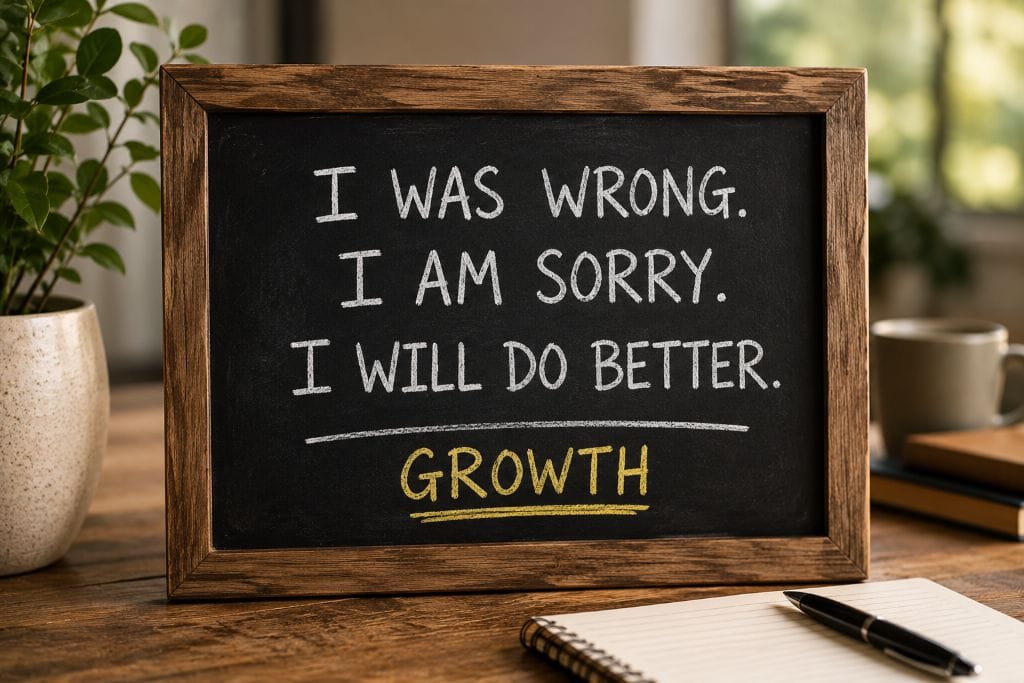
The ability to say, “I was wrong,” is one of the most powerful qualities a person can develop.
5. Be Willing to Listen
Modern society encourages people to speak more and listen less.
Many conversations have become opportunities for self-promotion rather than genuine understanding. People often focus on what they want to say next instead of truly hearing others.
Listening is one of the most valuable life skills.
When you listen attentively, you learn new perspectives, strengthen relationships, and make others feel respected and valued.
Imagine a friend sharing a difficult experience. Offering your full attention without interrupting may provide more comfort than any advice you could give.
Good listeners often become trusted friends, respected leaders, and effective communicators.
A simple principle applies here:
People who listen well are more likely to be heard when they speak.

Why These 5 Basic Rules of Life Matter?
These principles may seem simple, but their impact is profound.
When practiced consistently, they help:
- Build stronger relationships
- Boost self-confidence
- Reduce unnecessary conflicts
- Improve emotional well-being
- Encourage personal growth
- Strengthen character
- Create inner peace
The beauty of these rules lies in their simplicity. They do not require wealth, status, or special abilities. Anyone can apply them regardless of age or circumstances.
Practical Ways to Apply These Principles Daily
Implementing these rules becomes easier when broken into small daily actions:
- Speak honestly without exaggeration.
- Avoid pretending to be someone you are not.
- Practice positive self-talk.
- Spend a few minutes alone each day reflecting on life.
- Admit mistakes quickly and sincerely.
- Listen without interrupting during conversations.
- Focus on learning rather than defending your ego.
- Treat yourself with the same kindness you offer others.
Small habits practiced consistently often create significant changes over time.
Life Lessons Hidden Within These Principles
Each principle teaches an important life lesson:
Transparency teaches authenticity.
Self-respect teaches confidence.
Solitude teaches independence.
Accountability teaches maturity.
Listening teaches wisdom.
Together, they form a strong foundation for a meaningful life.
People who embrace these values often experience greater emotional balance, healthier relationships, and deeper personal satisfaction.
FAQs – Basic Rules of Life
What are the basic rules of life?
The basic rules of life include being transparent, respecting yourself, embracing solitude, accepting mistakes, and listening to others. These principles promote personal growth and healthy relationships.
Why is self-respect important in life?
Self-respect helps build confidence, emotional stability, and resilience. It allows individuals to learn from mistakes without losing their sense of worth.
How can solitude improve personal growth?
Solitude provides time for reflection, self-discovery, creativity, and decision-making. It helps individuals become emotionally independent and self-aware.
Why do people struggle to admit mistakes?
The ego often prevents people from accepting responsibility. Fear of criticism or appearing weak can lead individuals to blame others instead of acknowledging faults.
How does listening improve relationships?
Listening demonstrates respect, builds trust, and improves communication. People feel valued when they are genuinely heard and understood.

Conclusion
The basic rules of life are neither complicated nor difficult to understand. They are simple principles that guide us toward authenticity, self-respect, independence, accountability, and meaningful connections with others. While every person’s journey is unique, these timeless values remain relevant across cultures, generations, and circumstances. By practicing them consistently, we can build stronger relationships, develop emotional maturity, and create a life filled with purpose and inner peace.
“A good life is not built on perfection but on honesty, self-respect, responsibility, and the willingness to learn from others.”
Which of these basic rules of life do you find most challenging to practice consistently?

Mathukutty P V is a Blogger, YouTuber, and Content Writer and the founder of Simply Life Tips. After taking voluntary retirement in 2017, he embraced a free lifestyle focused on learning, personal growth, and sharing practical wisdom to help others live with more purpose and positivity.