In our fast-paced and often chaotic world, where everyone seems to have something to say, the art of listening often takes a back seat. We’re so focused on getting our own points across, sharing our opinions, and expressing our thoughts that we forget the profound power of listening. Yet, when it comes to building meaningful relationships and demonstrating respect, there’s no better way than truly listening. Listening carefully is a powerful communication habit that strengthens relationships. This is why the power of communication in relationships is so important.
The Lost Art Of Listening
In the age of information overload, genuine listening has become a rarity. We’re constantly bombarded with messages, notifications, and distractions, making it increasingly difficult to give someone our full attention when they’re speaking. But let’s pause for a moment and reflect on the significance of listening.
Listening vs. Hearing
First, it’s essential to distinguish between hearing and listening. Hearing is the physical act of perceiving sound waves, while listening goes beyond that. Listening involves not only hearing the words but also understanding their meaning, empathizing with the speaker’s emotions, and giving them your undivided attention.
A Tale
Once upon a time in a small, peaceful village nestled between rolling hills and a babbling brook, there lived a wise elder named Eliza. Eliza was known far and wide for her wisdom and her ability to solve even the most perplexing problems.
One sunny morning, a young boy named Timmy approached Eliza. He was known for being impatient and quick to speak without listening. He often found himself in trouble due to his hasty actions.
“Eliza,” Timmy began excitedly, “I have a problem. My friends and I want to build a bridge across the brook, but we can’t agree on how to do it. Some say we should use logs, others suggest stones, and a few think a rope bridge would be best. What should we do?”
Eliza smiled kindly at Timmy and motioned for him to sit beside her. She knew that listening was important, and that young Timmy needed to learn it.
“Timmy,” she began, “the first step in solving any problem is to listen carefully. Each of your friends has an idea, and all of them may have valid points. Let’s go talk to them, one by one, and hear what they have to say.”
Timmy agreed, and together they went to visit his friends. They spoke to each friend, allowing them to explain their ideas in detail. Some wanted a sturdy stone bridge for safety, while others wanted a rope bridge for adventure. Each friend shared their thoughts, and Timmy listened intently.
After hearing everyone out, Timmy and Eliza sat down to discuss the options. They considered the safety, adventure, and cost of each idea. Through their thoughtful conversation, they realized that combining the ideas could create a perfect bridge. They decided to build a sturdy stone bridge with a rope railing, ensuring both safety and adventure.
As they worked together to build the bridge, Timmy marvelled at how smoothly everything had gone once they had listened to each other. He realized that listening was indeed a crucial skill.
The bridge was completed, and the village children cheered with joy as they crossed it. Timmy, with newfound wisdom, thanked Eliza for her guidance.
“Eliza,” he said, “I’ve learned that listening is the key to solving problems and making the best choices. It’s not just about hearing words; it’s about understanding and respecting each other’s ideas.”
Eliza smiled warmly and patted Timmy on the back. “You’ve learned an important lesson, Timmy. Remember, the world is filled with diverse voices and ideas. By listening, we can bridge gaps, find common ground, and create harmony.”
From that day on, Timmy became known not just for his quick words but for his patient and attentive ear. He realized that the importance of listening extended far beyond building bridges; it was the foundation of understanding, empathy, and cooperation in a world filled with different perspectives.
Respect
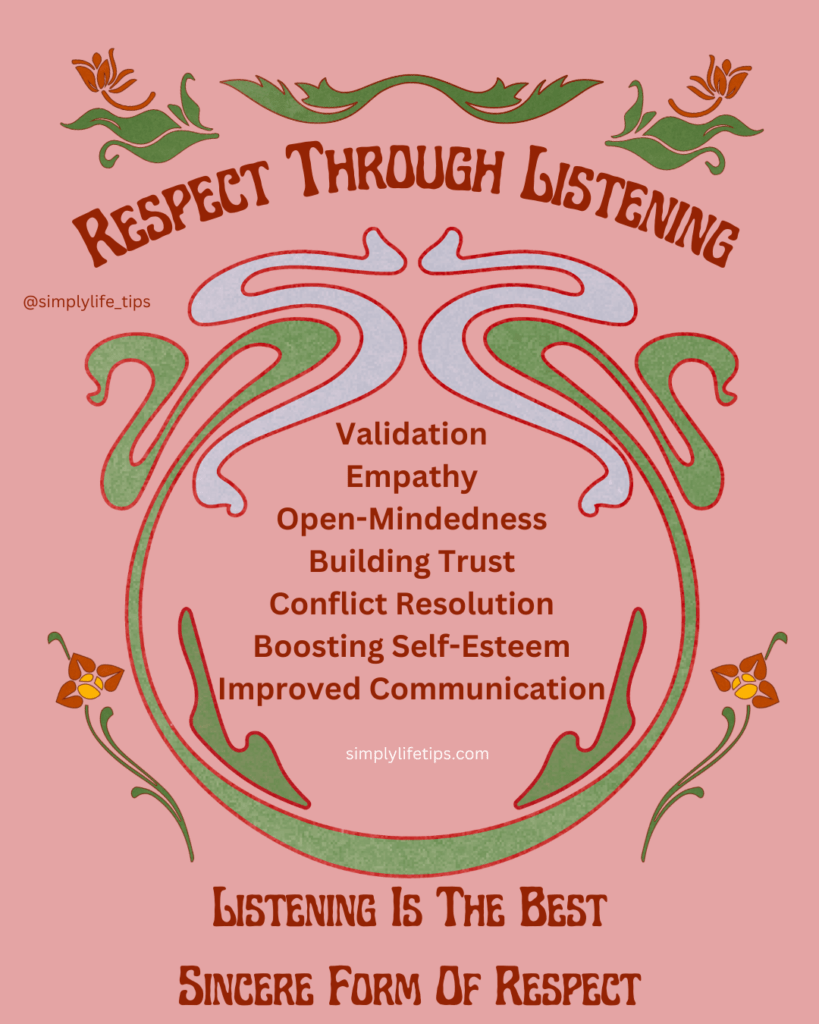
This is one of the most sincere forms of respect you can offer to another person. Here’s why:
- Validation: When you listen attentively, you validate the speaker’s feelings and experiences. You acknowledge their perspective as important and worthy of consideration.
- Empathy: True listening involves putting yourself in the speaker’s shoes, trying to understand their point of view, and feeling what they feel. This empathetic connection fosters a deeper sense of respect. The Importance Of Empathy
- Open-Mindedness: Listening with an open mind shows that you’re willing to consider different viewpoints, even if they differ from your own. It demonstrates a respect for diverse opinions and a willingness to learn.
- Building Trust: Trust is the foundation of any healthy relationship, whether personal or professional. Listening builds trust because it shows that you value the other person’s input and are willing to work together.
- Conflict Resolution: In times of disagreement or conflict, listening can be a powerful tool for resolution. When both parties feel heard and understood, it paves the way for finding common ground and resolving differences respectfully.
- Boosting Self-Esteem: When you listen to someone, you make them feel valued and significant. This boost in self-esteem can have a lasting positive impact on their confidence and well-being.
- Improved Communication: Effective communication is a two-way street. By actively listening, you enhance the overall quality of communication, making it more efficient and productive.
Practicing
Let’s explore some practical ways to cultivate this invaluable skill:
- Give Your Full Attention: When someone is speaking, put away distractions like your phone or other devices. Maintain eye contact to show that you’re fully engaged.
- Avoid Interrupting: Resist the urge to interrupt or offer your perspective prematurely. Let the speaker finish before responding.
- Ask Clarifying Questions: If you’re unsure about something the speaker said, ask clarifying questions to ensure you understand correctly.
- Practice Empathy: Try to see the situation from the speaker’s point of view. Ask yourself how they might be feeling and why.
- Be Patient: Sometimes, people need time to gather their thoughts and express themselves fully. Be patient and allow them the space to do so.
- Reflect and Respond: After the speaker has finished, take a moment to reflect on what they’ve said before responding. This demonstrates that you’ve truly considered their words.

The best sincere form of Respect
How To Be a Better Listener?
Think of listening as a form of meditation. You have to clear your mind of everything else, so you can focus entirely on what the other person is saying.
If meditation isn’t your thing, use this trick: Pretend you’re doing improv, and that you can only react in the moment to what the other person is saying, rather than planning out the next three steps in the conversation.
The best kind of listening is about being comfortable not knowing what you’re going to say next, or what question you might ask. Trust that you’ll think of something in the moment based on what the other person just said. That will send a powerful signal to the other person that you’re truly listening to them. Source: The New York Times
Conclusion
In conclusion, listening is not just about hearing words; it’s about connecting with others on a deeper level and showing them the respect they deserve. It’s a skill that can transform relationships, foster understanding, and create a more compassionate and harmonious world. So, the next time you engage in a conversation, remember that listening is the best sincere form of respect you can offer, and it’s a gift that keeps on giving.

Mathukutty P V is a Blogger, YouTuber, and Content Writer and the founder of Simply Life Tips. After taking voluntary retirement in 2017, he embraced a free lifestyle focused on learning, personal growth, and sharing practical wisdom to help others live with more purpose and positivity.