Anti-Aging Foods can do much more than help your skin look younger—they nourish your body from the inside out. While aging is a natural process that cannot be stopped, a healthy diet rich in antioxidants, vitamins, minerals, and healthy fats can help reduce the visible signs of aging, support healthy skin, and improve your overall well-being.
Many people spend money on expensive anti-aging creams and cosmetic treatments, but true skin health begins with proper nutrition. The foods you eat every day play an important role in collagen production, hydration, protection against free radicals, and reducing inflammation, all of which contribute to healthier, younger-looking skin.
In this article, you’ll discover 9 of the best Anti-Aging Foods that may help keep your skin glowing, support healthy aging, and improve your physical and mental health as you grow older.
What Are Anti-Aging Foods?
Anti-Aging Foods are nutrient-rich foods that help support healthy aging by protecting your body from oxidative stress, reducing inflammation, and providing essential vitamins and minerals. While no food can stop the natural aging process, a balanced diet can help maintain healthy skin, strengthen your immune system, and support your heart, brain, bones, and muscles as you age.
Many anti-aging foods are rich in antioxidants, which help protect your cells from damage caused by free radicals. Others provide nutrients such as vitamins A, C, E, and K, healthy fats, fiber, and plant compounds that promote collagen production, improve skin elasticity, and keep your body functioning at its best.
Including a variety of fruits, vegetables, nuts, legumes, and other whole foods in your daily meals is one of the simplest ways to support healthy aging naturally. Combined with regular exercise, adequate sleep, stress management, and proper hydration, these foods can help you feel healthier, stay active, and maintain a youthful appearance for years to come.
Learn more about healthy eating recommendations from the Harvard T.H. Chan School of Public Health.
How Do Anti-Aging Foods Help Your Skin and Body?
Healthy aging is influenced by many factors, including genetics, lifestyle, and nutrition. While no single food can prevent aging, Anti-Aging Foods provide essential nutrients that help your body repair cells, protect against damage, and maintain healthy skin from within.
Here are some of the key ways these foods support healthy aging:
- Fight free radicals: Foods rich in antioxidants help protect cells from oxidative stress, one of the major contributors to premature aging.
- Support collagen production: Nutrients such as vitamin C play an important role in producing collagen, the protein responsible for keeping your skin firm and elastic.
- Reduce inflammation: Many fruits, vegetables, nuts, and healthy fats contain natural anti-inflammatory compounds that help protect the skin and support overall health.
- Keep skin hydrated: Foods with high water content and healthy fats help maintain skin moisture, making it look smoother and healthier.
- Strengthen the immune system: Vitamins, minerals, and plant compounds support your body’s natural defenses, helping you stay healthy as you age.
- Promote heart and brain health: Many anti-aging foods also support healthy blood circulation, brain function, and overall well-being, allowing you to remain active and energetic.
The following Anti-Aging Foods are packed with nutrients that can help you maintain healthier skin and support graceful aging when combined with a balanced diet and a healthy lifestyle.
9 Best Anti-Aging Foods at a Glance
| Anti-Aging Food | Key Nutrients | Main Benefits |
|---|---|---|
| Water | Hydration | Keeps skin hydrated, flushes toxins, supports healthy body functions |
| Broccoli | Vitamins C & K, fiber, antioxidants | Boosts collagen production, fights free radicals, supports healthy skin |
| Blueberries | Anthocyanins, vitamin C, antioxidants | Protects cells from oxidative stress and supports brain health |
| Nuts | Vitamin E, healthy fats, omega-3 fatty acids | Nourishes the skin, reduces inflammation, and supports heart health |
| Watercress | Vitamins A, C, K, antioxidants | Promotes healthy skin and helps protect against oxidative damage |
| Bell Peppers | Vitamin C, carotenoids | Supports collagen production and helps protect the skin from environmental damage |
| Spinach | Vitamins A, C, K, iron, antioxidants | Keeps skin healthy, supports hydration, and reduces inflammation |
| Avocado | Healthy fats, vitamin E, vitamin A | Improves skin elasticity, hydrates the skin, and supports healthy aging |
| Chickpeas | Protein, fiber, iron, copper | Supports tissue repair, muscle health, and overall healthy aging |
9 Best Anti-Aging Foods to Keep You Young and Healthy
Then expand each food one by one. This gives readers a quick overview before diving into the details, improving both user experience and search engine optimization.
1. Water
Water may not be a food, but it is one of the most important nutrients for maintaining healthy, youthful skin and overall well-being. Since the human body is made up largely of water, staying properly hydrated is essential for nearly every bodily function, including circulation, temperature regulation, nutrient transport, and waste removal.
When your body doesn’t get enough water, your skin can become dry, dull, and less elastic. Proper hydration helps maintain your skin’s natural moisture, giving it a healthier, smoother, and more radiant appearance. Drinking enough water also supports digestion, joint health, and overall energy levels.
Benefits of Drinking Water
- Keeps your skin hydrated and may reduce the appearance of dryness.
- Helps maintain skin elasticity and a healthy complexion.
- Supports the body’s natural detoxification processes.
- Regulates body temperature and transports nutrients to cells.
- Aids digestion and supports overall physical and mental well-being.
Best Tip
Aim to drink enough water throughout the day, especially during hot weather or after exercise. Replacing sugary drinks with plain water is a simple habit that benefits both your skin and your overall health.
The National Institute on Aging also recommends staying well hydrated as part of healthy aging.
2. Broccoli

Broccoli is one of the most nutritious vegetables you can include in your diet. Often called a superfood, it is packed with vitamins, minerals, fiber, and powerful antioxidants that help protect your body from oxidative stress and support healthy aging. Adding broccoli to your meals regularly can benefit not only your skin but also your heart, brain, and immune system.
Benefits of Broccoli
- Rich in vitamin C, which supports collagen production and helps maintain firm, healthy-looking skin.
- Contains powerful antioxidants that help protect cells from free radical damage, a major cause of premature aging.
- High in dietary fiber, promoting healthy digestion and helping you feel full for longer.
- Provides vitamins K and folate, which support bone health and normal brain function.
- Contains natural anti-inflammatory compounds that contribute to overall health and healthy aging.
Best Tip
Lightly steam broccoli or enjoy it raw in salads to preserve more of its nutrients. Pair it with healthy fats such as olive oil or nuts to help your body absorb fat-soluble vitamins more effectively.
If you’d like to learn more about this nutritious vegetable, explore our detailed guide on the health benefits of broccoli to discover how it supports heart health, digestion, immunity, and overall well-being.
3. Blueberries

Blueberries are often called a superfruit because they are packed with antioxidants, vitamins, and plant compounds that support healthy aging. Their deep blue color comes from anthocyanins, powerful antioxidants that help protect your cells from damage caused by free radicals. Including blueberries in your diet regularly may benefit your skin, brain, heart, and overall health.
Benefits of Blueberries
- Rich in anthocyanins, antioxidants that help protect skin cells from premature aging.
- High in vitamin C, which supports collagen production for firmer, healthier-looking skin.
- May help reduce oxidative stress and inflammation throughout the body.
- Supports brain health and may help maintain memory and cognitive function as you age.
- Contains fiber, which promotes healthy digestion and supports overall well-being.
Best Tip
Enjoy fresh or frozen blueberries as a snack, add them to yogurt, oatmeal, smoothies, or salads, or use them as a natural topping for breakfast cereals. Eating a variety of colorful berries regularly can help maximize their health benefits.
4. Nuts

Nuts are among the best Anti-Aging Foods because they are packed with healthy fats, protein, vitamins, minerals, and antioxidants. Almonds, walnuts, pistachios, and other nuts help nourish your skin from within while supporting your heart, brain, and immune system. Eating a small handful of unsalted nuts each day can be a simple way to promote healthy aging.
Benefits of Nuts
- Rich in vitamin E, which helps protect skin cells from damage and keeps the skin moisturized.
- Contain healthy fats that support skin elasticity and maintain a youthful appearance.
- Walnuts provide omega-3 fatty acids, which help reduce inflammation and support heart and brain health.
- Loaded with antioxidants that help fight oxidative stress associated with premature aging.
- Provide plant-based protein, fiber, and essential minerals that contribute to overall health and healthy aging.
Best Tip
Enjoy a handful of unsalted almonds, walnuts, or mixed nuts as a healthy snack, or sprinkle them over salads, yogurt, oatmeal, or smoothies. Since nuts are calorie-dense, moderation is the key to enjoying their health benefits.
Want to learn more? Read our detailed guide on the health benefits of almonds to discover how this nutrient-rich nut supports heart health, brain function, healthy skin, and overall well-being.
5. Watercress

Watercress is a leafy green vegetable often overlooked, yet it is one of the most nutrient-dense Anti-Aging Foods you can eat. Rich in vitamins, minerals, and antioxidants, watercress helps protect your body from oxidative stress while supporting healthy skin, bones, and the immune system. Adding this peppery green to salads, sandwiches, or soups is an easy way to boost your daily nutrition.
Benefits of Watercress
- Rich in vitamins A, C, and K, which support healthy skin, vision, and bone health.
- Packed with antioxidants that help protect cells from free radical damage associated with premature aging.
- Contains natural compounds that may help reduce inflammation and support overall well-being.
- Helps keep the body hydrated due to its high water content.
- Provides essential nutrients that contribute to healthy immune function and normal cell growth.
Best Tip
Add fresh watercress to salads, sandwiches, wraps, or smoothies for maximum nutritional value. Since heat can reduce some vitamins, enjoy it raw whenever possible or lightly cook it to retain most of its nutrients.
6. Bell Peppers

Bell peppers are colorful vegetables packed with vitamins, antioxidants, and plant compounds that support healthy aging. Among all varieties, red bell peppers are especially rich in vitamin C and carotenoids, making them one of the best Anti-Aging Foods for maintaining healthy, youthful-looking skin. They are also low in calories and easy to include in a wide variety of meals.
Benefits of Bell Peppers
- Exceptionally high in vitamin C, which helps your body produce collagen for firmer, healthier skin.
- Rich in antioxidants and carotenoids that help protect skin cells from oxidative stress.
- Contains anti-inflammatory compounds that may help reduce damage caused by environmental pollutants and UV exposure.
- Supports a healthy immune system and promotes overall well-being.
- Low in calories while providing essential vitamins and minerals for healthy aging.
Best Tip
Enjoy bell peppers raw as a crunchy snack, add them to salads, sandwiches, stir-fries, soups, or grilled dishes. Eating a variety of colorful bell peppers helps you benefit from a wider range of nutrients and antioxidants.
- Bell peppers are high in antioxidants and are ultimately helpful in anti-aging.
- Red bell peppers are loaded with vitamin C as well and can help build collagen and keep your skin looking young and wrinkle-free.
- Bell peppers have anti-inflammatory properties that can help protect your skin from sun damage, pollution, and other toxic elements you may come into contact with on a daily basis.
- You can eat raw or add them into any cooked dish for a splash of colour and a ton of healthy additions.
Want to learn more? Explore our complete guide on the health benefits of capsicum to discover how this colorful vegetable supports healthy skin, boosts immunity, improves eye health, and promotes overall wellness.
7. Spinach

Spinach is one of the most nutritious leafy green vegetables and an excellent addition to an anti-aging diet. It is rich in vitamins, minerals, antioxidants, and plant compounds that help protect your skin, strengthen your immune system, and support overall health. Whether eaten raw in salads or cooked in your favorite dishes, spinach provides a wide range of nutrients that promote healthy aging.
Benefits of Spinach
- Rich in vitamins A, C, and K, which support healthy skin, strong bones, and normal blood clotting.
- Packed with antioxidants that help protect cells from oxidative stress and premature aging.
- High in vitamin C, which promotes collagen production for firmer and more youthful-looking skin.
- Contains iron and folate that support healthy blood circulation and energy production.
- Provides anti-inflammatory compounds that help maintain overall health and well-being.
Best Tip
Enjoy spinach fresh in salads, blend it into smoothies, or lightly sauté it with olive oil and garlic to preserve most of its nutrients. Pairing spinach with foods rich in vitamin C, such as bell peppers or citrus fruits, can also improve iron absorption.
Want to know more? Read our detailed guide on the health benefits of spinach to discover how this nutrient-rich leafy green supports healthy skin, strengthens immunity, improves digestion, and promotes overall well-being.
8. Avocado

Avocados are one of the most nutrient-rich Anti-Aging Foods, thanks to their abundance of healthy fats, vitamins, antioxidants, and fiber. Their creamy texture and rich nutritional profile help nourish your skin from within while supporting heart health, brain function, and overall well-being. Including avocados in your diet can help you age gracefully and maintain a healthy, youthful appearance.
Benefits of Avocado
- Rich in healthy monounsaturated fats that help keep your skin soft, hydrated, and supple.
- Contains vitamins E and C, which work together to protect skin cells from oxidative damage and support collagen production.
- Provides vitamin A and carotenoids that promote healthy skin renewal and help protect against environmental damage.
- High in fiber, supporting healthy digestion and gut health.
- Contains potassium and other essential nutrients that contribute to heart health and overall wellness.
Best Tip
Enjoy avocado sliced on whole-grain toast, added to salads, blended into smoothies, or mashed into homemade guacamole. Pairing avocado with colorful vegetables can also help your body absorb fat-soluble vitamins more efficiently.
9. Chickpeas

Chickpeas, also known as garbanzo beans, are a nutritious legume packed with plant-based protein, fiber, vitamins, and minerals. As we age, our bodies need adequate protein to repair tissues, maintain muscle mass, and support overall health. Including chickpeas in your diet is a simple and affordable way to nourish your body while promoting healthy aging.
Benefits of Chickpeas
- Rich in plant-based protein, which helps build and repair muscles and body tissues.
- High in dietary fiber, supporting healthy digestion and helping you feel full for longer.
- Provide iron and copper, essential minerals that support healthy red blood cells and energy production.
- Contain antioxidants and plant compounds that help protect cells from oxidative stress.
- Help maintain stable blood sugar levels and support heart health as part of a balanced diet.
Best Tip
Add cooked chickpeas to salads, soups, curries, and grain bowls, or roast them with your favorite herbs and spices for a healthy, crunchy snack. Including chickpeas in your weekly meal plan is an easy way to boost your protein and fiber intake while supporting healthy aging.
Conclusion
Growing older is a natural part of life, but the foods you eat can play an important role in how well you age. Including Anti-Aging Foods such as water, broccoli, blueberries, nuts, watercress, bell peppers, spinach, avocado, and chickpeas in your daily diet provides essential vitamins, minerals, antioxidants, healthy fats, and protein that support healthy skin, boost immunity, and promote overall well-being.
While no food can stop the aging process, making nutritious choices every day can help reduce the visible signs of aging, improve your energy levels, and support a healthier body and mind. Combine these nutrient-rich foods with regular physical activity, adequate sleep, proper hydration, and effective stress management to enjoy a healthier and more active life as you age.
Start by adding one or two of these Anti-Aging Foods to your meals today. Small, consistent lifestyle changes can make a meaningful difference in helping you look younger, feel healthier, and age gracefully for years to come.
The infographic below provides a quick overview of the 9 best anti-aging foods discussed in this article. Save it for future reference or share it with your friends and family who want to maintain healthy skin and age naturally.
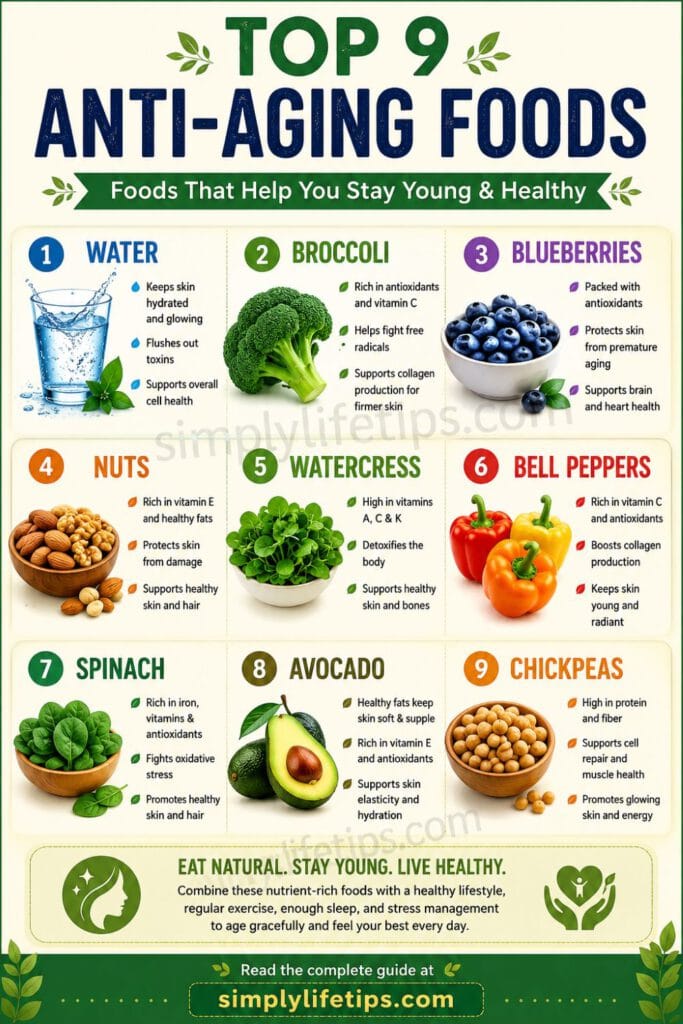
Healthy aging starts with simple daily habits. Include these nutrient-rich foods in your meals, stay physically active, drink plenty of water, get enough sleep, and manage stress to support your skin and overall health for years to come.
FAQs – Anti-aging foods
What are the best anti-aging foods?
Some of the best anti-aging foods include water, broccoli, blueberries, nuts, watercress, bell peppers, spinach, avocado, and chickpeas. These foods are rich in antioxidants, vitamins, healthy fats, fiber, and protein that help support healthy skin and overall well-being.
Can anti-aging foods make you look younger?
Anti-aging foods cannot stop the natural aging process, but they can help improve skin hydration, support collagen production, reduce oxidative stress, and promote healthier-looking skin when combined with a balanced diet and healthy lifestyle.
Which vitamin is most important for healthy skin?
Several vitamins are essential for healthy skin, including vitamins A, C, E, and K. Vitamin C helps produce collagen, vitamin E protects skin from oxidative damage, while vitamins A and K support skin repair and overall skin health.
How often should I eat anti-aging foods?
For the best results, include a variety of anti-aging foods in your daily diet. Eating a balanced mix of fruits, vegetables, nuts, legumes, and healthy fats regularly provides your body with the nutrients needed to support healthy aging.
Besides diet, what else helps slow the signs of aging?
A healthy lifestyle plays an important role in aging gracefully. Regular exercise, adequate sleep, staying hydrated, managing stress, avoiding smoking, limiting excessive sun exposure, and eating a nutrient-rich diet all contribute to healthier skin and better overall health.
Related Posts
References
- National Institute on Aging (NIA). Healthy Eating for Older Adults.
- Harvard T.H. Chan School of Public Health. The Nutrition Source.
- Mayo Clinic. Healthy Lifestyle: Nutrition and Healthy Eating.
- NIH Office of Dietary Supplements. Dietary Supplement Fact Sheets.
- American Heart Association. Healthy Eating.

Mathukutty P V is a Blogger, YouTuber, and Content Writer and the founder of Simply Life Tips. After taking voluntary retirement in 2017, he embraced a free lifestyle focused on learning, personal growth, and sharing practical wisdom to help others live with more purpose and positivity.