

A strong father is not defined by how loud he speaks or how strict he is, but by the love, patience, and emotional strength he brings into his home. Being a father is one of the most rewarding roles in life — yet it requires immense dedication, self-control, and wisdom. A strong father knows that children learn more from what they see than what they hear. Through his daily actions, words, and emotions, he shapes his child’s confidence, kindness, and sense of responsibility.
In a world where life moves fast and stress is constant, the calm presence of a strong father becomes a guiding light. He understands that true leadership at home comes not from control or punishment, but from empathy, consistency, and setting the right example.
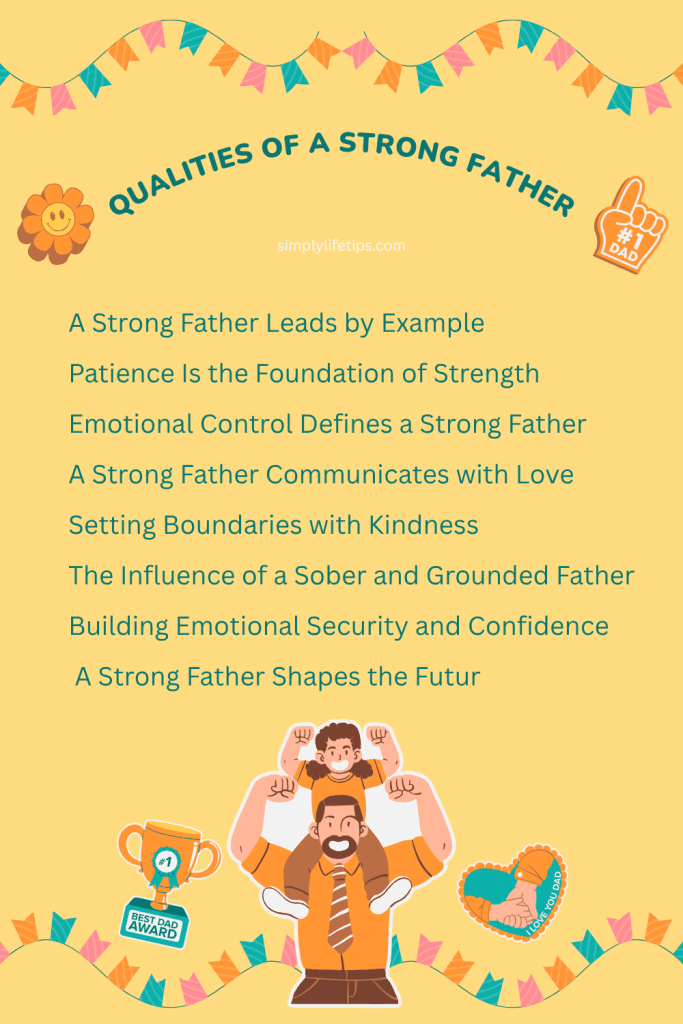
Qualities of a Strong Father
1. A Strong Father Leads by Example
Children are always watching. They learn how to behave, speak, and handle emotions by observing their parents. A strong father realises this powerful truth and leads by example. He models the values he wishes to see in his children — honesty, respect, patience, and compassion.
For instance, when a father admits his mistakes and apologises, his child learns humility and accountability. When he speaks politely to others, even in disagreement, his child learns respect. These small yet powerful examples teach lessons no lecture can.
Instead of enforcing discipline through fear, a strong father uses his actions to earn respect. His consistency and calmness show that strength doesn’t lie in domination but in self-control.
2. Patience Is the Foundation of Strength
Parenting tests patience every day — especially when children misbehave or fail to listen. But a strong father understands that yelling or punishing harshly can damage trust and confidence. Instead, he approaches discipline with calmness and understanding.
For example, when a child throws a tantrum or refuses to study, a strong father doesn’t respond with anger. He listens, identifies the cause, and guides the child to correct behaviour. This approach not only solves the problem but also builds emotional safety.
Children feel secure around fathers who are patient and fair. They know they can talk openly without fear. Over time, this emotional bond strengthens, allowing children to grow into balanced and responsible adults.
3. Emotional Control Defines a Strong Father
The greatest strength a strong father shows is in how he manages his emotions. Instead of reacting impulsively, he responds thoughtfully. This emotional discipline helps him handle family challenges with wisdom.
For example, if a father loses his temper when a child makes a mistake, the child may feel scared or ashamed. But if the father calmly explains what went wrong and how to fix it, the child learns responsibility and problem-solving.
By showing emotional maturity, a strong father teaches his children that strength is not about physical power or shouting — it’s about staying composed under pressure. His ability to remain calm builds an atmosphere of peace and trust at home.
4. A Strong Father Communicates with Love
Communication is one of the most powerful tools a father has. A strong father listens more than he speaks. He gives his children the space to express their feelings, dreams, and fears without judgment.
When a child feels heard, they feel valued. For instance, if a teenager comes home upset after a bad day at school, a strong father won’t dismiss their feelings. Instead, he’ll sit beside them and ask, “Do you want to talk about it?” This simple act of listening shows empathy and builds emotional confidence.
Through open communication, strong fathers teach children how to express themselves clearly and respectfully. They also learn to manage conflicts peacefully — a skill that will serve them for life.
5. Setting Boundaries with Kindness
A strong father knows that love and discipline go hand in hand. Too much leniency can lead to irresponsibility, while too much strictness can lead to fear. The key lies in balance.
For example, if a child spends too much time on gadgets, a strong father doesn’t simply take them away in anger. Instead, he explains the importance of time management and sets clear, consistent limits. This way, the child understands the reason behind the rule and learns self-discipline.
Boundaries set with kindness create respect rather than resistance. Children then follow rules not out of fear but out of understanding and mutual trust.
6. The Influence of a Sober and Grounded Father
Children learn values not from lectures but from observation. A strong father who leads a balanced, responsible life inspires his children to do the same.
For example, a father who avoids harmful habits like excessive drinking or reckless spending shows his children the importance of self-control and maturity. His stability gives them a sense of safety and predictability — two essentials for healthy emotional growth.
By staying grounded, a strong father becomes a lifelong role model. His lifestyle teaches his children to choose wisely, work hard, and build meaningful relationships.
Healthy Father-Son Relationship: Easy Tips To Fix Issues
7. Building Emotional Security and Confidence
Children who grow up with a strong father feel safe — emotionally and mentally. They know they have someone who will support them, guide them, and believe in them. This emotional foundation builds confidence and resilience.
When a father encourages his child to try new things — even if they fail — it teaches courage. For example, if a child hesitates to participate in a school competition, a strong father might say, “It’s okay if you don’t win. What matters is that you try.” Such reassurance builds inner strength and self-belief.
Over time, these small moments shape a child’s identity. They learn that mistakes are opportunities to grow, not reasons to fear failure.
8. A Strong Father Shapes the Future
The lessons a strong father teaches extend far beyond childhood. The kindness, respect, and resilience he instils become the foundation of his children’s adult lives.
When children grow up seeing their father treat their mother and others with respect, they naturally learn how to build healthy relationships. When they see him face challenges without giving up, they develop persistence and grit.
In this way, the strength of a father silently influences generations. The character he builds in his children becomes his legacy.
Father-Son Bond: A Heartfelt Story of Generational Wisdom
Conclusion
A strong father is not someone who demands obedience or perfection — he is someone who teaches through compassion, patience, and example. His strength lies not in control but in emotional intelligence. He listens, guides, and nurtures, knowing that every word and action shapes the future of his children.
Fathers who embrace their role with love and understanding raise children who grow into confident, responsible, and kind adults. The power of a strong father doesn’t fade with time — it echoes in the hearts and actions of the children he raised.
Let us celebrate every strong father who leads with quiet strength, who stands as a pillar of love and guidance, and who proves that true power lies in patience, respect, and kindness.
What Are The Key Responsibilities Of A Father In A Family?
FAQs About Being a Strong Father
1. What does it mean to be a strong father?
He is someone who leads his family with love, patience, and understanding. He doesn’t rely on fear or punishment to guide his children but teaches through example. His emotional strength, calm attitude, and consistency make him a true role model for his kids.
2. How can a father discipline his children without yelling?
He uses calm, clear communication instead of shouting. He explains the reason behind the rules and encourages his children to think about their actions. For example, instead of saying “Because I said so,” he might say, “Let’s talk about why this behaviour isn’t okay.” This helps children understand responsibility and respect.
3. Why is emotional control important?
Emotional control shows children how to handle challenges calmly and respectfully. When a father reacts with patience instead of anger, it teaches his children self-control. This emotional maturity creates a peaceful home environment and builds trust between parent and child.
4. How can a father become more patient with his children?
To be more patient, a father can take a deep breath before reacting, listen to his child’s perspective, and remind himself that children are still learning. Patience grows with understanding — recognising that mistakes are part of growth helps fathers guide their kids more effectively.
5. What impact does a strong father have on his child’s future?
He shapes his child’s emotional, social, and mental development. Children raised by calm, loving, and disciplined fathers often grow up to be confident, kind, and responsible adults. The lessons learned from a strong father last a lifetime and influence how they handle relationships and challenges.
PVM

Mathukutty P V is a Blogger, YouTuber, and Content Writer and the founder of Simply Life Tips. After taking voluntary retirement in 2017, he embraced a free lifestyle focused on learning, personal growth, and sharing practical wisdom to help others live with more purpose and positivity.