Stretching exercises for seniors are one of the simplest and most effective ways to maintain flexibility, reduce stiffness, and support healthy aging. As people age, muscles naturally tighten and joints may lose some range of motion. This can make everyday activities such as bending, reaching, walking, or climbing stairs more difficult. Regular stretching helps keep muscles flexible and joints mobile, making daily movements easier and more comfortable.
Many seniors experience stiffness after sitting for long periods or waking up in the morning. Gentle stretching can help improve circulation, relax muscles, and prepare the body for daily activities. When practiced consistently, stretching exercises can also reduce the risk of injuries and improve posture.
Unlike intense workouts, stretching does not require expensive equipment or gym memberships. Most stretches can be performed safely at home using only a chair or wall for support. When combined with simple exercises for seniors, stretching helps improve balance, strength, and overall mobility.
In this guide, you will learn eight gentle stretching exercises that seniors can include in their daily routine to maintain flexibility and stay active.
Why Stretching Is Important for Seniors?
Improves Flexibility
Flexibility tends to decrease with age as muscles shorten and joints become less mobile. Regular stretching helps maintain muscle length and joint range of motion. This allows seniors to move more freely and comfortably throughout the day.
Reduces Muscle Stiffness
Stiff muscles can make simple movements difficult and uncomfortable. Stretching relaxes muscles and improves blood circulation, helping reduce stiffness and discomfort.
Supports Better Balance and Posture
Flexible muscles contribute to better balance and posture. When muscles are loose and relaxed, it becomes easier to maintain proper body alignment while standing, walking, or sitting.
Helps Prevent Injuries
Stretching prepares muscles for movement and reduces the risk of strains or injuries. Gentle stretching before and after physical activity helps protect joints and muscles.
According to the National Institute on Aging, regular physical activity, including stretching and flexibility exercises, helps older adults maintain mobility and independence.
When Should Seniors Stretch?
Stretching can be done at different times of day, depending on personal comfort and daily routines. Practicing stretching exercises for seniors regularly helps keep muscles flexible, improves circulation, and reduces stiffness throughout the day.
Morning Stretching
Morning stretching helps loosen stiff muscles after sleep and prepares the body for daily activities. Gentle movements improve blood circulation, reduce morning stiffness, and help seniors start the day feeling more relaxed and energized.
After Exercise
Stretching after physical activity helps relax muscles and improve recovery. It can reduce muscle tension and soreness while helping the body gradually return to a resting state after exercise.
Before Bedtime
Some seniors find that gentle stretching before bedtime helps relax the body and release tension built up during the day. Light stretching may also support better sleep by calming the muscles and reducing discomfort.
For best results, stretches should always be performed slowly and consistently. Gentle, controlled movements help improve flexibility safely without placing unnecessary strain on the body.
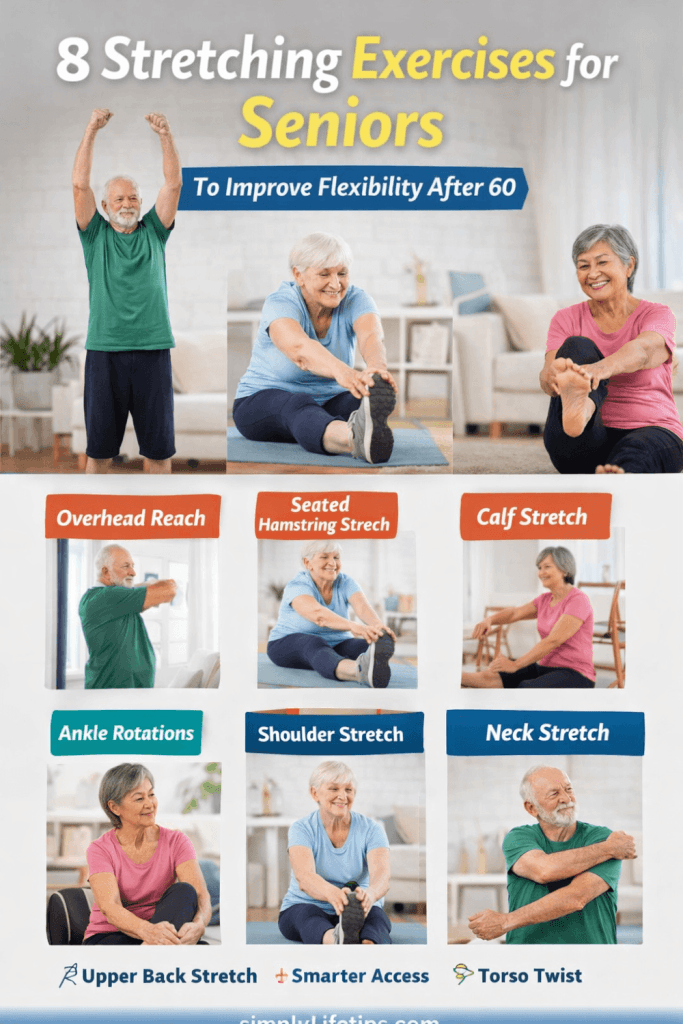
8 Stretching Exercises for Seniors
These stretches are simple, safe, and effective for improving flexibility. These stretching exercises for seniors are gentle and safe, designed to improve flexibility and mobility.
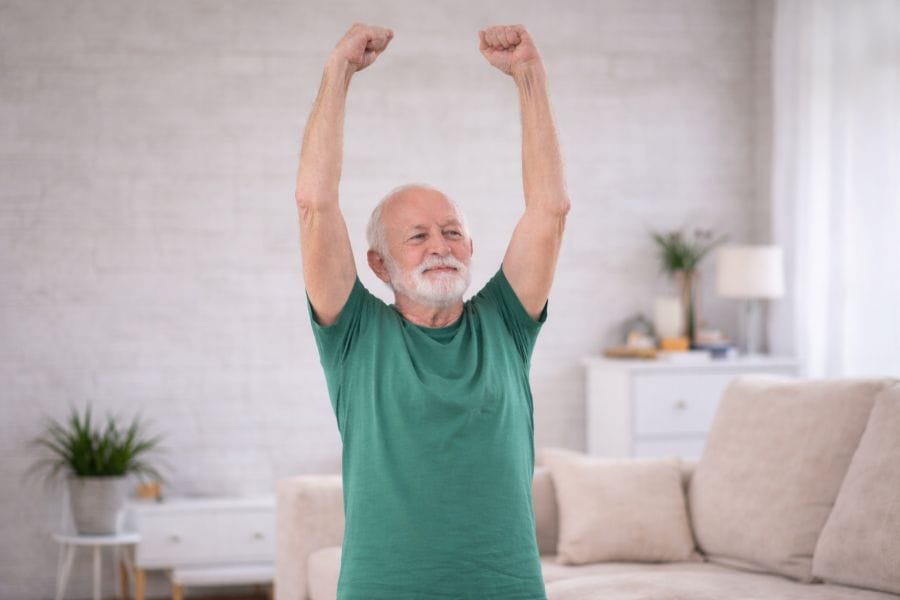
1. Neck Stretch
The neck can become stiff due to poor posture or prolonged sitting.
How to perform:
Sit or stand comfortably.
Slowly tilt your head toward one shoulder.
Hold the stretch for 10–15 seconds.
Return to the center and repeat on the other side.
2. Shoulder Stretch
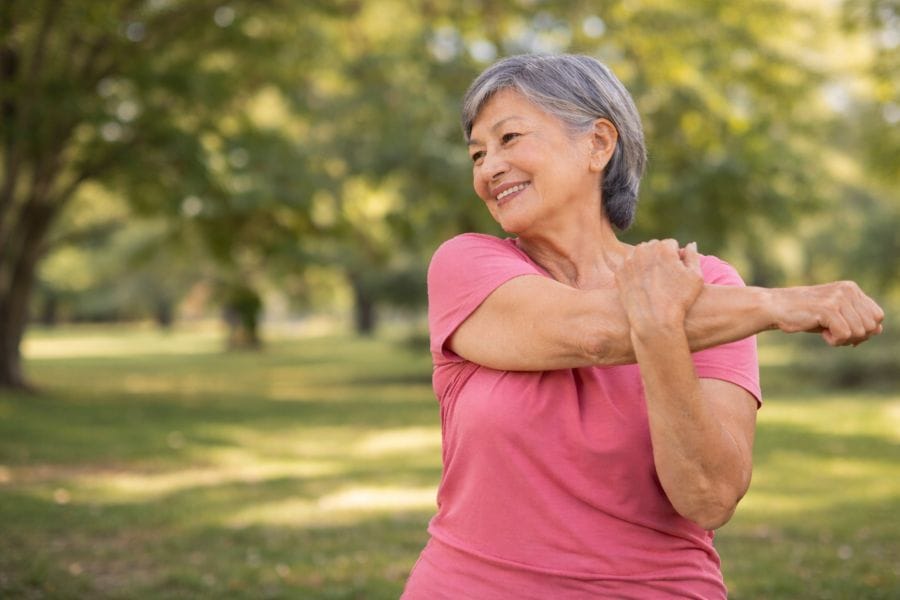
This stretch helps relieve tension in the neck and shoulders.
Shoulder flexibility is important for reaching, lifting, and performing daily tasks.
How to perform:
Stand or sit upright.
Bring one arm across your chest.
Gently use the opposite hand to pull the arm closer to your body.
Hold for 10–15 seconds.
Repeat with the other arm.
3. Chest Stretch
Tight chest muscles can affect posture and breathing.
How to perform:
Stand with your feet shoulder-width apart.
Clasp your hands behind your back.
Gently lift your arms slightly while opening your chest.
Hold for 10–15 seconds.
This stretch improves posture and upper-body flexibility.
4. Seated Hamstring Stretch
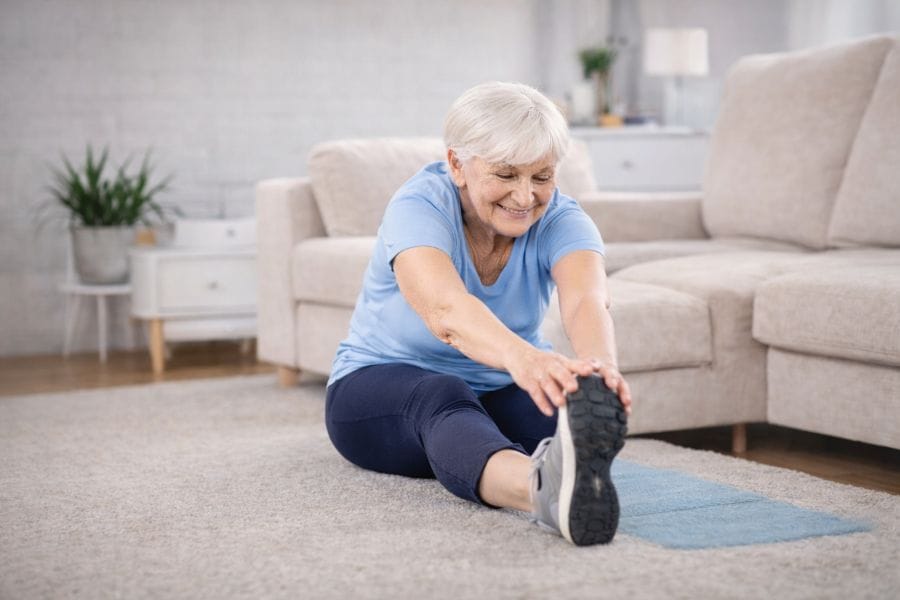
The hamstrings at the back of the legs often become tight with age.
How to perform:
Sit on a sturdy chair.
Extend one leg straight in front of you.
Keep your back straight and lean forward slightly.
Hold for 10–15 seconds.
Repeat with the other leg.
5. Calf Stretch
Strong and flexible calf muscles support walking and balance.
How to perform:
Stand facing a wall.
Place your hands on the wall for support.
Step one foot back while keeping the heel on the ground.
Bend the front knee slightly and hold for 15 seconds.
Switch legs and repeat.
6. Seated Back Stretch
This stretch helps relieve tension in the lower back.
How to perform:
Sit comfortably in a chair.
Place both hands on your knees.
Slowly lean forward and round your back slightly.
Hold the position for 10–15 seconds.
Return to the starting position slowly.
7. Hip Stretch
Flexible hips improve walking and reduce pressure on the knees.
How to perform:
Sit on a chair with both feet flat on the floor.
Place one ankle on top of the opposite knee.
Gently lean forward while keeping your back straight.
Hold for 10–15 seconds.
Repeat on the other side.
8. Ankle Stretch
Flexible ankles support balance and stability.
How to perform:
Sit comfortably in a chair.
Lift one foot slightly off the ground.
Rotate your ankle slowly in a circular motion.
Perform 10 circles in one direction, then reverse.
Repeat with the other foot.
Sample Daily Stretching Routine for Seniors
A simple daily stretching routine for seniors can help reduce stiffness and improve overall mobility.
Morning routine:
• Neck stretch – 10 seconds each side
• Shoulder stretch – 10 seconds each side
• Chest stretch – 15 seconds
Afternoon routine:
• Seated hamstring stretch – 15 seconds each leg
• Calf stretch – 15 seconds each leg
Evening routine:
• Hip stretch – 15 seconds each side
• Seated back stretch – 10 seconds
• Ankle stretch – 10 rotations each direction
This routine takes about 10–15 minutes per day.
Safety Tips for Senior Stretching
When performing stretching exercises for seniors, safety should always come first. Gentle stretching can improve flexibility and reduce stiffness, but movements should be done slowly and carefully to avoid strain or injury.
Warm Up First
Before starting stretching exercises, seniors should warm up their muscles with light movement. Walking slowly for a few minutes or performing gentle arm and leg movements helps increase blood flow and prepares the body for stretching.
Stretch Slowly
Stretches should always be performed slowly and gently. Sudden or fast movements can strain muscles and increase the risk of injury. Instead, move gradually into each stretch and hold the position comfortably.
Breathe Normally
Proper breathing helps relax the body and makes stretching more effective. Seniors should avoid holding their breath and instead breathe slowly and naturally while stretching.
Avoid Pain
Stretching should create a gentle pulling sensation but should never cause pain. If a stretch feels uncomfortable or painful, it is important to stop immediately and adjust the movement.
Long-Term Benefits of Regular Stretching
Consistently practicing stretching exercises for seniors offers many long-term health benefits. Gentle stretching keeps muscles flexible, improves circulation, and supports overall mobility as people age.
Improved Mobility
Flexible muscles allow seniors to move more freely and comfortably. Regular stretching helps maintain joint range of motion, making everyday activities such as walking, bending, and reaching easier.
Better Balance
Improved flexibility helps maintain stability and coordination. When muscles and joints move more freely, seniors are better able to maintain balance and reduce the risk of falls.
Reduced Joint Stiffness
Stretching keeps joints mobile and reduces discomfort during movement. Seniors who stretch regularly often experience less stiffness after sitting or sleeping for long periods.
Better Overall Well-Being
Regular stretching improves blood circulation, reduces stress, and promotes relaxation. Many seniors find that stretching also helps them feel more energetic and comfortable throughout the day.
Combining stretching with daily physical activity and a healthy morning routine can help seniors maintain strength, balance, and independence.
FAQ
How often should seniors stretch?
Seniors can safely perform gentle stretching exercises daily or at least 3–5 times per week to maintain flexibility.
How long should each stretch be held?
Most stretches should be held for 10–20 seconds and repeated several times.
Can stretching help reduce stiffness in the morning?
Yes. Gentle morning stretching helps improve circulation and reduce muscle stiffness after sleep.
Are these stretches safe for seniors over 70?
Yes. These stretches are gentle and suitable for most older adults. However, seniors with medical conditions should consult a healthcare professional before starting a new exercise routine.
Do seniors need equipment for stretching?
No. Most stretching exercises for seniors can be performed at home using only a chair or wall for support.
Conclusion
Stretching exercises for seniors are a simple yet powerful way to maintain flexibility, improve mobility, and support healthy aging. Gentle stretches help loosen tight muscles, reduce stiffness, and make everyday movements easier. When practiced consistently, stretching can also improve posture, balance, and overall comfort.
The eight stretches described in this article require minimal space and no special equipment, making them easy to practice at home. By incorporating stretching into their daily routine, seniors can stay active, reduce the risk of injury, and maintain independence for many years.
Even a few minutes of stretching each day can make a meaningful difference in maintaining mobility and quality of life. Consistently practicing stretching exercises for seniors can greatly improve flexibility and comfort in daily life.
If this resonated with you, share it with someone who needs it.
PVM

Mathukutty P V is a Blogger, YouTuber, and Content Writer and the founder of Simply Life Tips. After taking voluntary retirement in 2017, he embraced a free lifestyle focused on learning, personal growth, and sharing practical wisdom to help others live with more purpose and positivity.