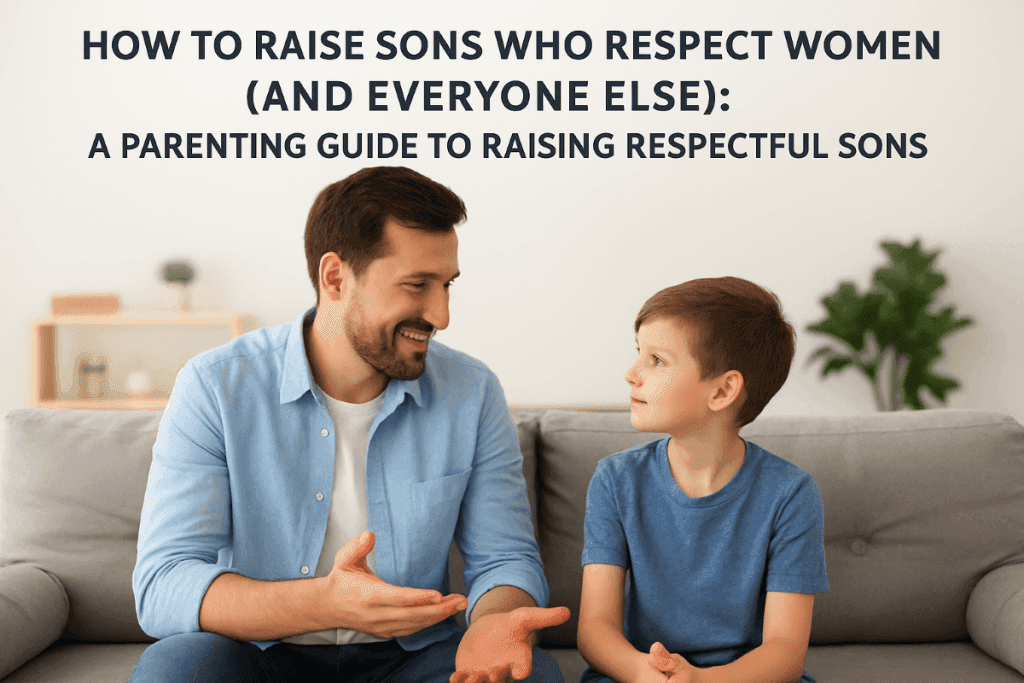
Raising respectful sons is one of the greatest gifts a parent can give the world. In a society where gender equality, empathy, and kindness are increasingly valued, teaching boys to respect women—and everyone else—lays the foundation for healthier relationships and stronger communities. This blog explores the importance of respect in parenting and offers practical, real-life strategies for raising respectful sons who grow into compassionate, responsible men.
Why Raising Respectful Sons Matters?
Respect is the cornerstone of all meaningful human interaction. When parents focus on raising respectful sons, they are not just teaching manners—they are nurturing empathy, self-awareness, and accountability. Sons who learn respect at home grow up to become men who treat women as equals, value boundaries, and act with integrity in their personal and professional lives.
Unfortunately, society often sends mixed messages to boys—encouraging toughness over tenderness, dominance over cooperation, and silence over emotional expression. Intentional parenting can counter these messages by modelling equality, communication, and emotional intelligence. The goal isn’t to make boys less masculine but to make them more humane.
Practical Parenting Strategies for Raising Respectful Sons
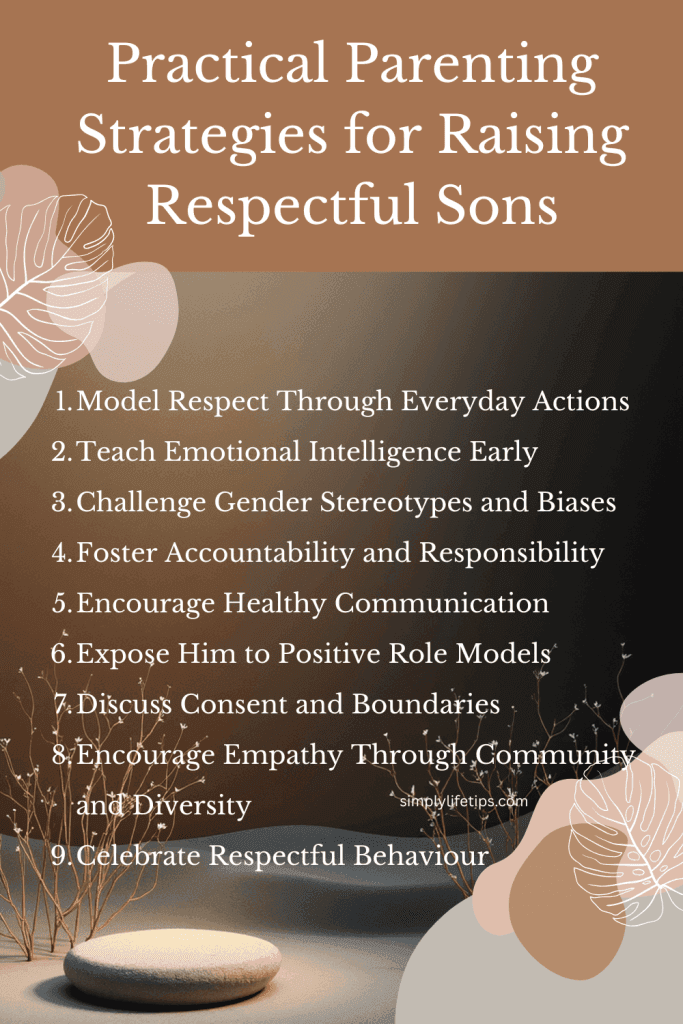
1. Model Respect Through Everyday Actions
Children learn more from what they observe than what they are told. Parents who consistently demonstrate respect in their daily lives—toward partners, elders, and strangers—create powerful role models for their sons.
Example: If a father listens to his wife’s opinions and treats her as an equal, or if a mother handles disagreements calmly and respectfully, sons absorb that behaviour subconsciously.
Tip: Be mindful of your tone, language, and behaviour at home. Avoid sexist jokes or belittling remarks. When your son sees you resolving conflicts respectfully, he learns that strength lies in understanding, not aggression.
2. Teach Emotional Intelligence Early
Respect begins with empathy. When boys understand their emotions and those of others, they naturally become more considerate and compassionate. Teaching emotional intelligence helps them navigate relationships without resorting to anger or disrespect.
Parenting With Empathy And Emotional Intelligence
Example: If your son feels upset after losing a game, help him name his emotions—“You’re feeling disappointed, right?”—instead of dismissing them. This builds self-awareness and teaches him that emotions are valid, not signs of weakness.
Tip: Use books, movies, or real-life situations to discuss feelings. Ask, “How do you think she felt?” This simple question nurtures empathy, a crucial quality in raising respectful sons.
3. Challenge Gender Stereotypes and Biases
Boys often receive messages that equate masculinity with dominance or emotional suppression. Parents can play a transformative role by challenging these outdated beliefs.
Example: Encourage your son to help with household chores, cook meals, or care for younger siblings—tasks often stereotypically assigned to girls. Praise his participation and emphasise that responsibility and respect are gender-neutral.
Tip: When watching TV or online content together, discuss how women and men are portrayed. Ask him if he thinks it’s fair or realistic. This builds media literacy and helps him think critically about gender roles.
4. Foster Accountability and Responsibility
A key aspect of raising respectful sons is teaching them that actions have consequences. Accountability instils integrity and a sense of fairness, which are at the heart of respect.
Example: If your son speaks rudely to someone, help him reflect on the impact of his words. Encourage him to apologise sincerely, not just say “sorry” to end the conversation.
Tip: Create family rules that emphasise kindness and fairness. Recognise and reinforce positive behaviours, such as helping others or resolving disagreements peacefully.
5. Encourage Healthy Communication
Teaching boys how to express themselves respectfully—even during disagreements—is vital. Good communication reduces misunderstandings and promotes empathy.
Example: If your son argues with a sibling or friend, guide him to express feelings without shouting or name-calling. Encourage “I” statements like, “I felt hurt when you didn’t include me,” instead of “You’re mean.”
Tip: Practice active listening at home. When your son speaks, give him your full attention. This not only makes him feel valued but also teaches him to extend the same courtesy to others.
6. Expose Him to Positive Role Models
Children learn best through examples. Introduce your son to men who demonstrate respect, compassion, and equality in their lives.
Example: Point out teachers, family members, or community leaders who treat women and others with kindness. Share stories of men who advocate for fairness and social responsibility.
Tip: Encourage reading biographies or watching films about people who champion respect and integrity. Discuss what makes them admirable and how those qualities can be practised in daily life.
7. Discuss Consent and Boundaries
Respecting women includes understanding personal boundaries. Conversations about consent should start early and evolve as your son matures.
Example: Teach young boys that they should always ask before taking someone’s toy or hugging a friend. As they grow older, explain that consent applies to all relationships—physical, emotional, and social.
Tip: Make the message simple and clear: “No means no,” and “Respecting others means giving them choices.” Normalise these principles in everyday interactions.
8. Encourage Empathy Through Community and Diversity
Exposure to diverse environments helps boys appreciate different perspectives and backgrounds. When children interact with people of various genders, cultures, and abilities, they develop respect naturally.
Example: Encourage participation in community service, sports, or mixed-gender activities where cooperation is essential. Seeing women in leadership roles helps dismantle unconscious bias.
Tip: After each experience, ask reflective questions like, “What did you learn about working together?” or “How did you feel when you helped someone?” Reflection reinforces respect as a daily value.
Teaching Kids Kindness Is Important To Make A Better World
9. Celebrate Respectful Behaviour
Positive reinforcement is a powerful parenting tool. When your son demonstrates kindness, fairness, or respect, acknowledge it specifically.
Example: Instead of just saying, “Good job,” say, “I noticed you waited patiently while she was talking—that was very respectful.” This reinforces good behaviour and builds self-esteem.
Tip: Use family discussions to share examples of respect you’ve noticed during the week. Make it a family value worth celebrating.
The Role of Parents in Building a Respectful Generation
Parenting is not just about providing for a child’s physical needs; it’s about shaping character. When parents commit to raising respectful sons, they contribute to a future where equality and empathy prevail. Boys who grow up with respect for women are more likely to become supportive partners, ethical leaders, and responsible citizens.
The journey begins at home—with consistent communication, clear boundaries, and positive modelling. Respect is not taught in a day; it’s nurtured through daily interactions, honest conversations, and unwavering love.
Raising Respectful Kids: The Importance of Manners in Parenting
Danny and Rebecca welcome special guest Jill Garner for a thoughtful discussion on the importance of teaching children good manners and genuine respect. Together, they share practical, real-world strategies parents can use to help their kids develop strong social skills, empathy, and character that will guide them throughout life.
In the latter part of the episode, Danny and Rebecca tackle a listener’s heartfelt question about a father who may be too strict with his son—offering compassionate insights on how to strike the right balance between discipline and love.
Conclusion
Raising respectful sons isn’t about perfection—it’s about intention. Every small act of empathy, every fair conversation, and every modelled behaviour adds up to form the foundation of a kind and respectful man. By focusing on emotional intelligence, accountability, and equality, parents can raise sons who not only respect women but also treat everyone with dignity and compassion.
The world doesn’t just need more successful men—it needs more respectful sons who understand that true strength lies in kindness.
Are you raising your son to be kind, empathetic, and respectful toward everyone he meets?
5 FAQs – Raising Respectful Sons
1. Why is it important to focus on raising respectful sons?
Because respect is the foundation for healthy relationships, equality, and empathy. Sons who learn respect at home grow into men who treat women and others with dignity and kindness.
2. How can parents model respect at home?
Parents can model respect by treating each other as equals, using polite language, listening actively, and showing kindness to everyone—from family to strangers.
3. What role does emotional intelligence play in raising respectful sons?
Emotional intelligence helps boys understand and manage their emotions, fostering empathy and compassion. It teaches them to respond thoughtfully rather than react aggressively.
4. How can I teach my son to challenge gender stereotypes?
Encourage him to share household chores, appreciate women in leadership, and question unfair media portrayals. Celebrate qualities like kindness and fairness regardless of gender.
5. When should I start teaching my son about respect?
It’s never too early. Respect begins with simple lessons like sharing, listening, and saying “please” and “thank you.” As he grows, expand discussions to empathy, consent, and equality.
Five Thoughtful Ways To Raise Respectful Children
PVM

Mathukutty P V is a Blogger, YouTuber, and Content Writer and the founder of Simply Life Tips. After taking voluntary retirement in 2017, he embraced a free lifestyle focused on learning, personal growth, and sharing practical wisdom to help others live with more purpose and positivity.