

Parenting mistakes that push children away rarely begin with neglect or a lack of love; they often start with small, repeated moments where an emotional connection is missed. Parenting is far more than providing food, education, and comfort. It is about being emotionally available, approachable, and safe. A child does not disconnect overnight. The distance grows quietly, step by step, through unspoken disappointments, harsh reactions, and misunderstood intentions. One day, a child runs into your arms without hesitation, and years later, they hesitate before sharing even a small part of their world. This blog highlights parenting mistakes that push children away, so parents can notice subtle behaviours before the emotional bond weakens.
12 Parenting Mistakes That Push Children Away Without Knowing
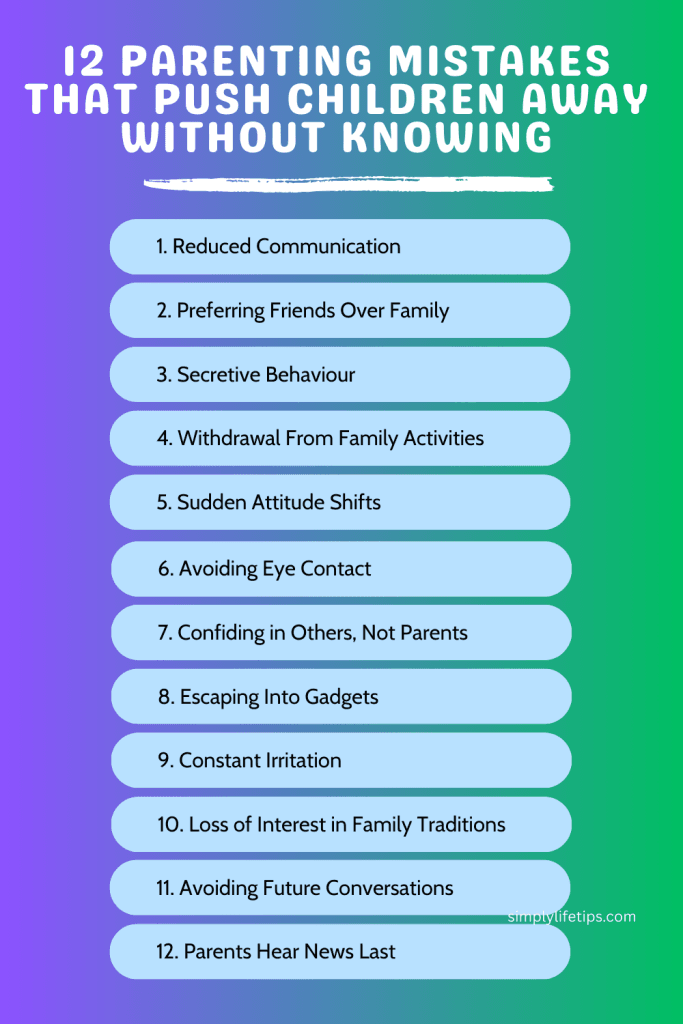
1. Reduced Communication
Reduced communication is often the first visible sign of emotional withdrawal. When children stop sharing stories and shift to short, guarded responses, it is rarely because they have nothing to say. It is often because they feel unheard, misunderstood, or judged. Over time, children learn that silence feels safer than expression.
Example: A child excitedly talks about school but is interrupted with corrections or comparisons. Gradually, the child learns that sharing leads to criticism, so responses become limited to “okay” or “nothing.”
Tip: Listen more than you speak. Allow children to finish their thoughts, respond with curiosity instead of correction, and show interest even when the topic feels trivial.
2. Preferring Friends Over Family
While independence is natural, consistently avoiding family time often signals emotional discomfort at home. Children gravitate toward environments where they feel accepted and relaxed. If home feels tense or demanding, friends become emotional refuges.
Example: A child prefers staying out late because family time involves constant reminders, moral lectures, or emotional pressure.
Tip: Create family moments that are light, voluntary, and emotionally safe. Connection grows in relaxed spaces, not enforced ones.
3. Secretive Behaviour
Secrecy grows where fear exists. Children hide screens, messages, or thoughts when honesty has previously resulted in anger, punishment, or humiliation. Surveillance-driven parenting increases secrecy rather than safety.
Example: A parent checks a child’s phone without consent, leading the child to delete messages and create private accounts.
Tip: Replace control with communication. Set boundaries openly and explain concerns calmly, reinforcing that honesty will be met with understanding.
4. Withdrawal From Family Activities
Emotional withdrawal often shows as physical presence without engagement. Children who feel unseen stop investing emotionally in shared moments.
Example: A child sits quietly during meals while adults talk over them or dismiss their opinions.
Tip: Invite children into conversations, acknowledge their contributions, and make them feel emotionally included.
5. Sudden Attitude Shifts
Rudeness or defiance often masks emotional overload. When feelings are ignored repeatedly, frustration surfaces as behaviour.
Example: A child snaps angrily because sadness or stress has gone unnoticed for weeks.
Tip: Address emotional needs first. Ask what they are feeling before reacting to how they behave.
6. Avoiding Eye Contact
Avoiding eye contact often signals shame, fear, or emotional withdrawal. Demanding compliance intensifies emotional shutdown.
Example: A child looks away during conversations after repeated scolding or public embarrassment.
Tip: Use a gentle tone, sit at eye level, and create calm emotional environments before engaging in conversation.
7. Confiding in Others, Not Parents
When parents become the last to know, it reflects emotional distance, not disrespect. Children share where they feel safe.
Example: A child confides in a teacher about anxiety because parental reactions often involve dismissal or pressure.
Tip: Respond calmly to disclosures. Thank children for trusting you, even when the information is difficult to hear.
8. Escaping Into Gadgets
Excessive screen use often replaces unmet emotional needs. Children turn to digital comfort when a human connection feels unavailable.
Example: A child spends hours gaming to avoid tense interactions at home.
Tip: Build a connection before limiting screens. Emotional fulfilment reduces digital dependency naturally.
9. Constant Irritation
Irritation becomes a protective shield when vulnerability feels unsafe. Anger often hides sadness or fear.
Example: A child reacts aggressively because previous emotional expressions were ignored or minimised.
Tip: Validate emotions consistently. Feeling understood reduces defensive behaviour.
10. Loss of Interest in Family Traditions
Avoiding traditions can reflect emotional exhaustion rather than disrespect. Rituals lose meaning when associated with pressure.
Example: A child avoids celebrations due to constant expectations of perfection.
Tip: Redefine traditions with flexibility and warmth. Allow children to participate without pressure.
11. Avoiding Future Conversations
Excluding parents from plans often reflects fear of control rather than lack of respect.
Example: A teenager avoids discussing career plans because previous conversations felt dismissive.
Tip: Offer guidance without dominance. Ask questions instead of issuing directives.
12. Parents Hear News Last
When parents hear important news from others, trust has thinned. Children protect themselves from anticipated reactions.
Example: A child hides achievements or struggles, fearing disappointment.
Tip: Respond consistently with calm, balanced reactions to rebuild trust over time.
What Parents Can Do to Rebuild Connection?
Be Approachable, Not Intimidating
Children open up when parents feel emotionally safe rather than emotionally powerful. A calm tone, patient body language, and predictable reactions tell a child that honesty will not be punished. When parents consistently respond without sarcasm, shouting, or dismissal, children slowly relearn that sharing is safe. Approachability is not a weakness; it is an emotional strength that invites trust to return.
Connect Before You Correct
Correction without connection feels like rejection, especially to a sensitive or already-withdrawing child. Emotional connection prepares the child’s nervous system to receive guidance instead of resisting it. When parents prioritise understanding feelings before addressing behaviour, children feel respected rather than controlled. Discipline becomes more effective when it is built on empathy rather than authority alone.
Listen More Than You Speak
Many children stop talking not because they have nothing to say, but because they feel unheard. Listening without interrupting, fixing, or lecturing communicates respect and validation. Silence from parents during a child’s sharing is often more powerful than advice. When children feel deeply listened to, emotional closeness begins to rebuild naturally.
Guide Without Controlling
Children need guidance, but excessive control communicates distrust. When parents dictate every decision, children learn to hide choices rather than discuss them. Guiding means offering perspective while allowing room for autonomy and learning. Trust grows when children feel supported instead of managed.
Create Emotional Safety at Home
Emotional safety means a child can express fear, sadness, confusion, or mistakes without ridicule or anger. A home that welcomes emotions teaches children that they do not need to protect themselves from their parents. Safety is built through consistency, not perfection. When home feels emotionally safe, children stop seeking refuge elsewhere.
Spend Time With Presence, Not Performance
Children value attention that is focused, not multitasked. Being physically present while mentally distracted weakens emotional bonds. Small moments of genuine presence accumulate into deep trust over time. What matters most is not the quantity of time, but the quality of emotional availability within it.
Repair Instead of Defending
Parents make mistakes, and pretending otherwise damages trust. Repairing moments through acknowledgement and apology teaches emotional maturity. When parents admit errors, children learn that relationships can heal after conflict. Repair restores the connection faster than justification ever can.
Be Patient With the Pace of Healing
Emotional distance does not disappear instantly once awareness begins. Children test safety repeatedly before trusting again. Patience communicates commitment, while pressure creates resistance. Healing happens gradually through consistent emotional reliability.
Conclusion
Parenting mistakes that push children away do not define a parent’s worth; they reveal where growth is possible. Emotional distance is not a verdict, but a signal asking for change, presence, and humility. When parents choose listening over control, patience over fear, and connection over correction, bridges begin to rebuild quietly. A child’s heart responds not to perfection, but to consistent love that feels safe, steady, and sincere.
- Parenting Mistakes That Break a Child’s Heart: 12 Emotional Habits Parents Must Avoid
- 10 Wrong Parenting Styles That Create Broken Adults | Avoid These Parenting Mistakes
- Raise Confident Children: Avoid These Common Parenting Mistakes
FAQs – Parenting Mistakes That Push Children Away
1. Can parents really rebuild a connection after emotional distance has formed?
Yes, emotional connection can be rebuilt at any stage when parents change patterns consistently. Children respond to repeated emotional safety more than single conversations. Trust returns slowly through predictable, calm responses. Even older children remain emotionally reachable when patience replaces pressure.
2. Why do children pull away even when parents love them deeply?
Love alone does not guarantee emotional safety if reactions feel harsh or dismissive. Children withdraw when they feel misunderstood, judged, or emotionally overwhelmed. Often, parents are unaware of how their tone or words are received. Awareness and adjustment can restore closeness.
3. How long does it take for a child to open up again?
There is no fixed timeline because emotional trust rebuilds at the child’s pace, not the parent’s urgency. Some children respond quickly, while others test safety over time. Consistency matters more than intensity. Rushing the process can slow healing instead of speeding it up.
4. What is the most important change parents can make immediately?
The most powerful change is learning to listen without reacting emotionally. Calm listening lowers a child’s defences and invites honesty. When children feel heard, behaviour often improves naturally. Emotional safety always comes before emotional closeness.
5. Can small daily changes really prevent children from drifting away?
Yes, small daily moments of emotional presence shape long-term connection. Children remember tone, availability, and how they felt more than words or rules. Simple consistency builds emotional security over time. Quiet, repeated care prevents distance more effectively than dramatic efforts.
Thank you for taking the time to explore this post. I sincerely hope you found the insights valuable and actionable. If this content resonated with you, please consider sharing it. Your support enables me to share knowledge and inspiration with others in our community.
PVM

Mathukutty P V is a Blogger, YouTuber, and Content Writer and the founder of Simply Life Tips. After taking voluntary retirement in 2017, he embraced a free lifestyle focused on learning, personal growth, and sharing practical wisdom to help others live with more purpose and positivity.



