

Parenting Mistakes That Break a Child’s Heart often start silently, long before a parent notices the emotional impact. Every child enters life with a tender heart longing to feel seen, valued, and heard. When parents nurture this emotional space, children grow confident and expressive. But when their emotional world is ignored or invalidated, heartbreak forms quietly—and follows them into adulthood. This guide highlights the everyday parenting mistakes that unintentionally break a child’s heart. It shows how small changes can protect their emotional world.
Why a Child’s Heart Breaks Silently
A child’s heart rarely breaks in a single moment. It breaks slowly through repeated experiences of not being listened to, understood, or emotionally supported. Children forgive easily, but they never forget how they felt. Years later, adults often carry these wounds into relationships and parenting. They struggle with expression because their childhood taught them to stay silent. Most parents hurt their children unintentionally through habits like shouting, over-correcting, comparing, or ignoring small emotional cues. Awareness is the first step. When parents offer empathy, patience, and attentive listening, children feel safe enough to open up. When they feel safe, they speak. When they feel valued, they flourish.
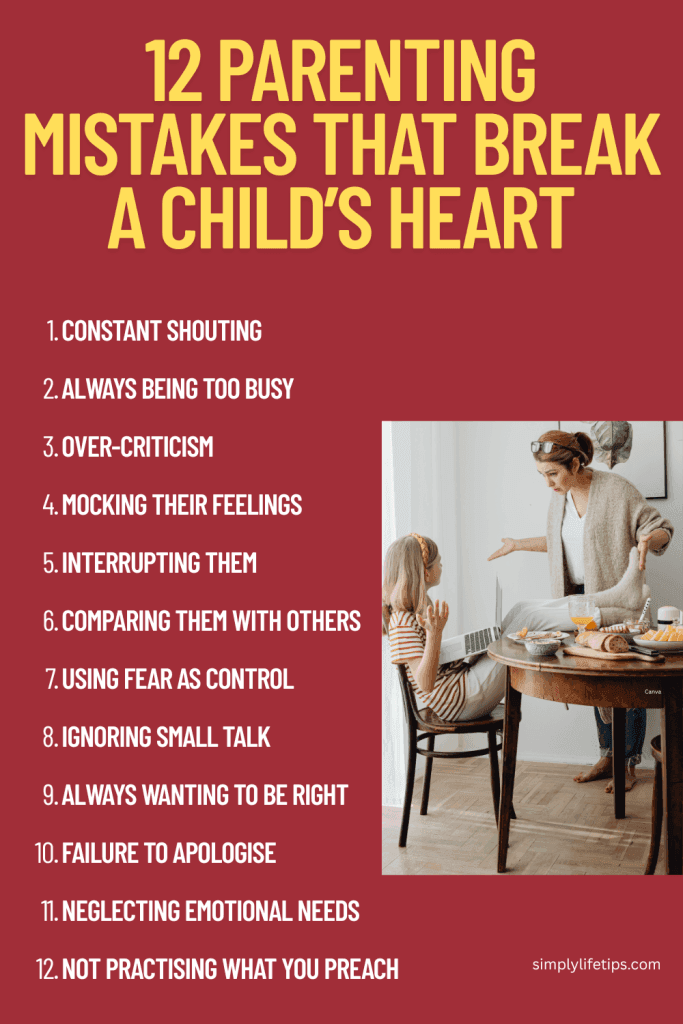
12 Parenting Mistakes That Break a Child’s Heart
1. Constant Shouting

Shouting unsettles a child’s sense of safety. It can make them feel threatened. Over time, they learn to hide their feelings to avoid conflict or harsh reactions. A home filled with loud voices teaches children that expressing themselves is dangerous, and silence becomes their protective shield.
Example: A child spills milk and tries to explain, but the parent shouts in anger. The child quickly learns that honesty leads to fear rather than understanding.
Tip: Pause before reacting. Take a deep breath and speak calmly. Handle the issue without yelling to keep emotional safety.
Why Angry Parenting Harms More Than Helps: The Silent Impact
2. Always Being Too Busy
When parents consistently prioritise work, chores, or digital distractions over their child’s attempts to connect, the child’s heart quietly cracks. Children need moments where they feel valued, and repeated dismissal teaches them that their thoughts and feelings are not important.
Example: A child excited to show a drawing receives only a distracted glance because the parent is on the phone.
Tip: Even during busy days, pause for a few minutes. Look into your child’s eyes and say, “I want to see this. Tell me about it.”
3. Over-Criticism
Constant criticism erodes confidence and can make children believe they are never good enough. When a child hears repeated negative messages, they stop sharing their efforts or ideas. They avoid judgment and start to mistrust their own voice.
Example: A child scores 18/20 on a test and is met with, “Why didn’t you get full marks?” The achievement is overshadowed by disappointment.
Tip: Focus on effort first and gently guide improvements. Celebrate wins, no matter how small, to build confidence.
4. Mocking Their Feelings
Dismissing or laughing at a child’s emotions teaches them that their feelings are insignificant. When children feel invalidated, they stop expressing themselves altogether, burying emotions that can resurface as anxiety or resentment later.
Example: A child says, “I’m scared of the dark,” and the parent laughs. The child feels foolish for being afraid.
Tip: Confirm emotions: “I understand you feel scared. I’m here with you.” Showing empathy reinforces trust and emotional safety.
5. Interrupting Them
Interrupting a child sends a clear message: their voice isn’t important. Children often need time to articulate thoughts, and cutting them off discourages sharing and fosters emotional withdrawal.
Example: A child stumbles over words trying to explain something, but the parent finishes their sentence impatiently.
Tip: Practice patience. Let children finish speaking at their own pace; your attention signals that their thoughts matter.
6. Comparing Them With Others
Comparison can silently crush a child’s spirit. Being measured against siblings, classmates, or peers teaches them they are never enough and undermines self-esteem.
Example: “Why can’t you be more like your cousin?” creates insecurity and resentment rather than motivation.
Tip: Encourage individuality. Highlight their unique strengths and progress instead of comparisons.
7. Using Fear as Control

Fear-based discipline can get immediate compliance, but damages emotional trust. Children who live with threats or harsh punishment withdraw, feeling unsafe to express themselves honestly.
Example: Telling a child, “If you don’t obey, you’ll regret it,” makes them fearful instead of guiding behaviour.
Tip: Balance discipline with understanding. Use calm explanations and set boundaries without intimidation.
8. Ignoring Small Talk
Small conversations seem trivial, but they are windows into a child’s inner world. Ignoring them erodes trust and teaches the child that sharing is futile.
Example: A child shares a story about a school event, and the parent responds with “Not now, I’m busy.” The child learns to keep future thoughts private.
Tip: Show interest in everyday stories. Listening to little things creates a foundation for bigger, deeper conversations.
9. Always Wanting to Be Right
Constantly asserting authority and “winning” arguments discourages children from speaking. Feeling unheard or dismissed breaks their trust and diminishes their willingness to engage.
Example: A child shares an opinion and is instantly corrected or lectured. They start to avoid expressing themselves.
Tip: Encourage dialogue. Ask, “What do you think?” and listen attentively, allowing the child’s perspective to matter.
10. Failure to Apologise
When parents refuse to admit mistakes, children feel emotionally invalidated. Apologies model humility, honesty, and respect, teaching children that mistakes don’t destroy relationships.
Example: A parent snaps in anger but never says sorry. The child feels unseen and hesitant to open up again.
Tip: Apologise sincerely: “I shouldn’t have said that. I’m sorry.” It rebuilds trust and shows that feelings matter.
11. Neglecting Emotional Needs
Beyond food, clothing, and shelter, children need emotional nourishment: affection, warmth, reassurance, and validation. Without this, their heart slowly close, leaving them cautious and withdrawn.
Example: A child seeks a hug after a difficult day, but is brushed aside because the parent is tired.
Tip: Offer hugs, words of encouragement, and quality attention daily. These gestures build emotional resilience.
12. Not Practising What You Preach
Children watch actions more than they listen to words. When parental behaviour contradicts instructions, children feel confused and lose faith, causing emotional withdrawal.
Example: A parent tells a child to be honest, but is caught lying. The child learns that hiding the truth is safer than openness.
Tip: Model honesty, respect, and empathy consistently. Your behaviour is the loudest lesson your child learns.
Conclusion
A child’s heart is delicate and shaped by the everyday behaviours of their parents. These mistakes can break a child’s heart. The good news is that healing begins the moment parents choose empathy, patience, and understanding. Replace harshness with kindness, comparison with appreciation, fear with guidance, and distance with connection. Your presence, tone, and responses shape your child’s emotional future.
What change will you start today to protect your child’s heart and strengthen your bond?
- Avoid These Common Parenting Mistakes For Better Parenting
- Parenting Mistakes to Avoid: Essential Tips for Raising Responsible Children
FAQs about Parenting Mistakes That Break a Child’s Heart
How do I know if my child is emotionally hurt?
A child who is emotionally hurt often communicates through behaviour rather than words. You notice withdrawal, quietness, or a sudden loss of interest in activities they once loved. Some children become unusually fearful of sharing their thoughts, while others develop hesitations in expressing even simple feelings. They are anxious, overly sensitive, or unusually compliant just to avoid upsetting you. These subtle shifts are their way of saying, “Something inside me doesn’t feel safe.” Paying attention to these changes can help you gently support them before the wound deepens.
Can emotional wounds from childhood heal?
Absolutely. Children are incredibly resilient, and emotional wounds can heal beautifully when they experience steady love, consistent reassurance, and genuine connection. When parents apologise sincerely, affirm feelings, and keep open communication, the child’s heart slowly begins to trust again. Healing happens over time through repeated experiences of safety, understanding, and affection. What matters most is not perfection, but your willingness to grow with your child.
How can I reduce shouting?
Reducing shouting begins with becoming aware of your emotional triggers. When you feel anger rising, pause intentionally, breathe deeply, and lower your voice on purpose. This simple shift instantly changes the emotional climate for both you and your child. Create a household rule for yourself: “I will respond, not react.” Practise calm communication even on stressful days, and consider stepping away for a moment when needed. Over time, your child will feel safer, and you’ll model emotional control—one of the most powerful lessons in parenting.
What if I have already made many of these mistakes?
Many loving parents have made these mistakes unknowingly, so you’re not alone. What matters is your decision to start again. Children are forgiving when they sense genuine change. Start by acknowledging the past without shame. Apologise sincerely for the hurt caused. Rebuild trust through small, consistent actions, like listening, validating, and being emotionally there. Every new day is an opportunity to create a safer, more loving connection.
How do I encourage my child to open up again?
Encouraging openness begins with creating a warm, pressure-free atmosphere. Spend one-on-one time doing simple activities your child enjoys—drawing, walking, playing, or cooking. Ask gentle, non-judgmental questions and let the child lead the conversation. Avoid interrupting or correcting while they speak; instead, listen with full presence. Over time, these quiet, meaningful moments show your child that their thoughts and feelings matter. They will encourage them to trust you with their inner world once again.
Remember, your sharing can make a positive impact! Please share this post across your social media and other networks, allowing others to gain from its content.
PVM

Mathukutty P V is a Blogger, YouTuber, and Content Writer and the founder of Simply Life Tips. After taking voluntary retirement in 2017, he embraced a free lifestyle focused on learning, personal growth, and sharing practical wisdom to help others live with more purpose and positivity.