

Managing time effectively in family life is essential for maintaining a healthy balance between work, household responsibilities, and personal relationships. In today’s busy world, many families struggle to find enough time for everything. Parents often juggle professional commitments, children’s education, household chores, and other responsibilities, leaving little time to relax and enjoy each other’s company.
However, good time management is not about filling every minute of the day with activities. It is about setting priorities, developing practical routines, sharing responsibilities, and making time for the people who matter most. Even small changes in daily habits can reduce stress and create a happier family environment.
In this article, let’s explore practical tips for managing time effectively in family life, strengthening family relationships, and enjoying more meaningful moments together.
How To Manage Time Effectively?
Managing time effectively in family life requires planning, discipline, and consistency. Whether you are handling professional responsibilities, household activities, or personal goals, a few simple habits can help you use your time wisely. Good time management reduces stress, improves productivity, and creates a healthier balance between work and personal life.
1. Set Clear Goals
The first step in managing time effectively is to establish clear goals. Identify what you want to accomplish and divide larger goals into smaller, manageable tasks.
Your goals should be specific, measurable, achievable, relevant, and time-bound (SMART). This approach helps you stay focused, monitor your progress, and avoid wasting time on activities that do not support your priorities.
For example, if your goal is to improve your health, schedule a 30-minute walk every morning rather than simply deciding to exercise more often.
You can also explore these goal-setting habits to develop a more organised routine.
2. Prioritise Your Tasks
Not every task deserves the same amount of attention. Identify the most important activities and complete them before moving on to less urgent responsibilities.
Divide your tasks into three categories:
- High priority: Important tasks that need immediate attention.
- Medium priority: Necessary tasks that can be scheduled for later.
- Low priority: Activities that can be postponed or avoided.
For example, completing an important work assignment or attending to a child’s school requirements should generally take priority over unnecessary activities.
Prioritising tasks helps you make steady progress without feeling overwhelmed.
Learning to recognise and manage everyday pressures is equally important. The NHS provides useful advice on managing stress and developing healthier ways to cope with daily challenges.
3. Use a To-Do List
A to-do list is a simple but effective way to organise daily activities. Write down the tasks you need to complete and arrange them according to priority.
You can use a notebook, wall calendar, or digital planning application. Choose whichever method is convenient for you.
For example, your daily list might include preparing meals, completing office work, helping children with homework, buying groceries, and spending time with family.
Tick off each task as you complete it. This gives you a clear picture of your progress and prevents important responsibilities from being forgotten.
For additional practical advice on organising daily responsibilities, see the NHS guide on tackling your to-do list
4. Avoid Multitasking
Trying to perform several activities simultaneously may seem productive, but it can divide your attention and make some tasks take longer.
Instead, concentrate on one important activity at a time. Complete it before moving on to the next whenever possible.
For example, avoid checking work emails while helping your child with homework. Giving your full attention to one activity can improve concentration and reduce mistakes.
Switching between tasks can interrupt concentration and reduce productivity, particularly when you are handling activities that require attention.
5. Take Regular Breaks
Working continuously without breaks can lead to tiredness, reduced concentration, and unnecessary stress.
Take short breaks between demanding activities. You can stretch, walk around, drink water, or simply relax for a few minutes.
For example, after completing an hour of focused work, take a short break before starting another task. Regular breaks help you maintain energy and concentration throughout the day.
6. Learn to Say No
Accepting every request or commitment can leave you overwhelmed. Learning to say no politely is an important part of managing your time.
Before agreeing to an additional responsibility, consider whether it is necessary and whether you have enough time to handle it.
For example, if you already have important family commitments, you may need to decline an invitation or postpone a less urgent activity.
Protecting your time allows you to concentrate on the responsibilities and relationships that matter most.
7. Use Technology Wisely
Technology can make daily life easier when used appropriately. Digital calendars, reminder applications, and task-management tools can help you organise responsibilities and remember important activities.
However, excessive use of smartphones and social media can consume valuable time.
Set limits on unnecessary screen time and avoid allowing notifications to interrupt your work or family activities. Remember that technology should help you manage your life, not control it.
Managing Time Effectively In Family Life

Family life involves many responsibilities, including work, household chores, children’s education, and personal commitments. When family members have different schedules, finding time to be together can become difficult. Learning how to manage family responsibilities is an important part of managing time effectively in family life.
Poor time management may create stress, misunderstandings, and emotional distance between family members. However, planning daily activities, sharing responsibilities, and making time for meaningful conversations can strengthen family relationships.
1. Spend Quality Time Together
Spending time together is essential for maintaining healthy family relationships. However, simply being in the same room does not necessarily mean that family members are connecting.
Make an effort to have meaningful conversations, share experiences, and participate in activities that everyone enjoys.
For example, families can have dinner together, play indoor games, take evening walks, or discuss the day’s activities. These simple moments create opportunities for communication and strengthen emotional bonds.
2. Set Aside Time For Each Other
Busy schedules should not prevent couples from spending time together. Even a few minutes of meaningful interaction every day can make a difference.
Make time to have a cup of tea together, discuss daily experiences, or take a short walk. Couples can also plan occasional outings or activities that both partners enjoy.
These small efforts help maintain emotional closeness and prevent everyday responsibilities from taking over the relationship.
3. Share Household Responsibilities

Managing a family should not become the responsibility of only one person. Couples should discuss household duties and divide responsibilities according to their availability and abilities.
For example, one partner may prepare meals while the other helps children with homework or manages grocery shopping. Children can also participate in age-appropriate household activities.
Sharing household duties is one of the most practical ways of managing time effectively in family life because it reduces individual workloads and encourages teamwork.
4. Start The Day On A Positive Note
A positive morning routine can help family members begin their day with a better attitude.
Instead of starting the day with complaints or arguments, greet each other warmly and offer encouraging words. A simple good morning, a smile, or a hug can create a pleasant atmosphere.
Couples can also exchange supportive messages during the day, particularly when one partner has an important meeting, interview, or challenging responsibility.
Developing simple morning routines can help create a more organised and positive family environment.
5. Leave Work-Related Stress Outside Family Time
Work pressure and personal problems can affect relationships at home. After returning from work, take a few minutes to relax and mentally shift your attention towards family life.
Instead of immediately reacting to minor issues, listen patiently and communicate calmly.
For example, if you have had a stressful day at the office, explain how you feel rather than allowing frustration to turn into an argument with your partner.
Understanding each other’s emotional needs helps create a supportive home environment.
6. Control Excessive Smartphone And Social Media Use
Smartphones and social media can easily interfere with family communication. Some people spend considerable time browsing social media even when family members are sitting nearby.
Establish simple family rules, such as keeping phones away during meals and limiting unnecessary screen time in the evening.
Instead of looking at a screen, use that time to talk, play games, help children with their studies, or enjoy a shared activity.
Technology should support family life rather than replace personal relationships.
7. Make Time For Children

Children need more than material comforts. They also need attention, encouragement, guidance, and emotional support from their parents.
Busy parents should make an effort to understand their children’s experiences, listen to their concerns, and participate in important activities.
For example, parents can spend time discussing school activities, reading stories, helping with homework, or playing outdoor games.
Regular family conversations also help children develop confidence and improve communication skills. A supportive home environment contributes to healthy parent-child relationships.
Establishing consistent family routines can also help children feel secure and supported. The American Academy of Paediatrics explains the importance of family routines
A supportive home environment also helps children develop confidence and maintain a healthy parent-child relationship.
8. Focus On Quality Rather Than Quantity
Spending more time together does not automatically guarantee a happy family life. The quality of time matters just as much as the quantity.
For example, a family may spend an entire evening together while everyone remains occupied with their smartphones. Although they are physically present, meaningful interaction may be missing.
Instead, create opportunities for undivided attention. Enjoy meals together, discuss personal experiences, celebrate achievements, and participate in activities that bring everyone closer.
The American Academy of Paediatrics recommends establishing regular family rituals and meaningful conversations to strengthen family connections.
Managing time effectively in family life becomes easier when all family members work together and share their responsibilities. These 10 practical tips for managing time effectively in family life will help you organise daily activities, reduce stress, and make more time for the people you love.
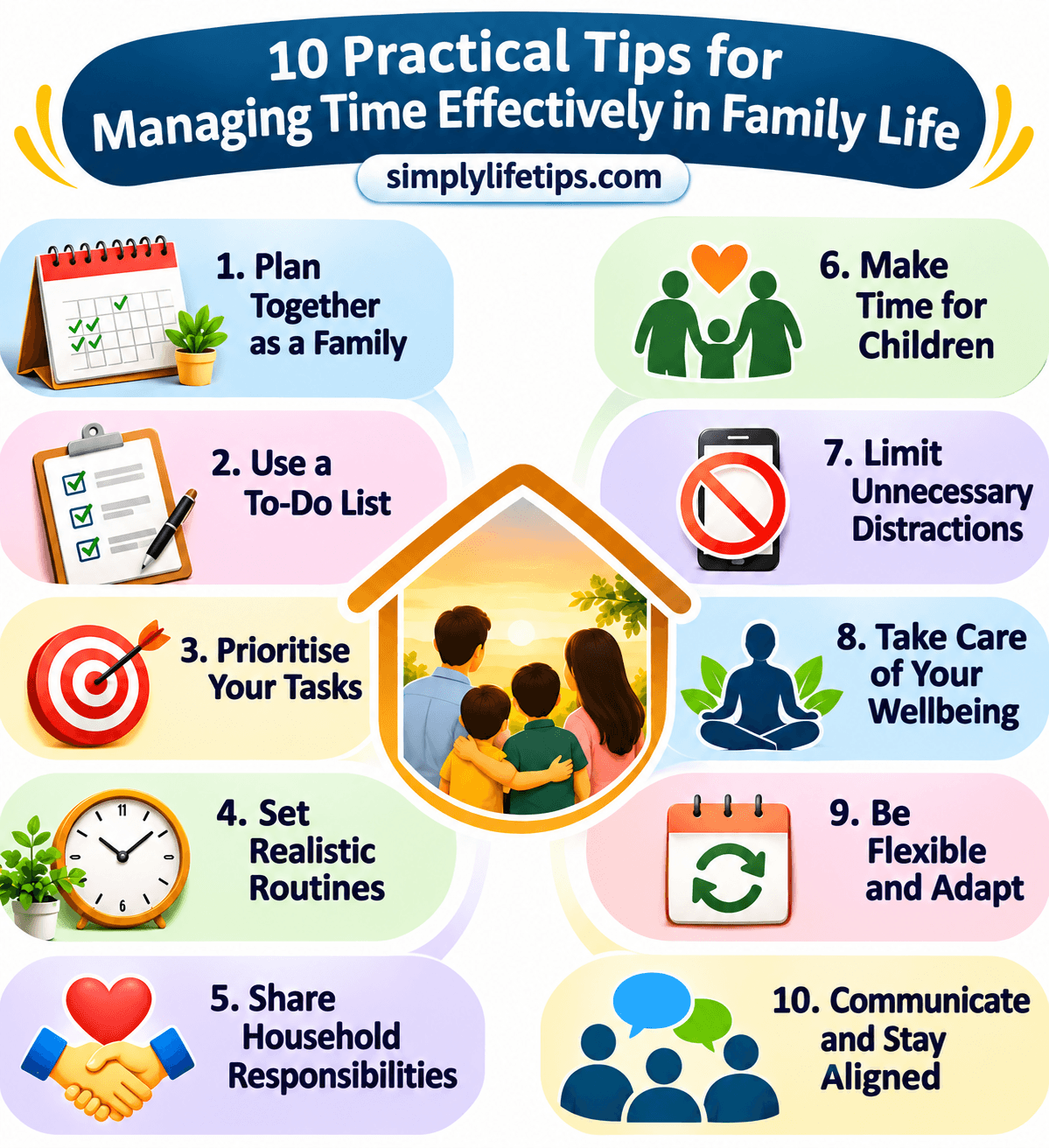
Start managing time effectively in family life by introducing a few simple changes to your daily routine. Prioritise important tasks, share household responsibilities, limit unnecessary screen time, and make quality family time a priority. Consistent efforts can help create a happier, healthier, and more organised family life.
Conclusion
Managing time effectively in family life is essential for maintaining healthy relationships, reducing stress, and creating a harmonious home environment.
By setting clear priorities, organising daily activities, sharing household responsibilities, and limiting unnecessary distractions, families can make better use of their available time.
Remember that effective time management is not about completing every task or following a rigid schedule. It is about finding a balance between professional responsibilities, personal needs, and family relationships.
Even small changes in daily routines can make family life more peaceful and enjoyable. Make time for the people you love, appreciate one another, and create meaningful memories together.
Ultimately, managing time effectively in family life means making thoughtful choices that give equal importance to responsibilities, relationships, and personal well-being.
Do you find it difficult to balance your work, personal responsibilities, and family time? What strategies help you manage your time effectively?
Frequently Asked Questions
1. Why is managing time effectively important in family life?
Managing time effectively helps families balance work, household responsibilities, children’s needs, and personal activities. It reduces stress, improves communication, and creates more opportunities for quality family time.
2. What are the best ways to manage time effectively?
Setting clear goals, prioritising tasks, maintaining a daily schedule, using a to-do list, avoiding unnecessary distractions, and taking regular breaks are useful time-management strategies.
3. How can couples manage their time better?
Couples can manage their time better by sharing household responsibilities, planning daily activities, communicating openly, and setting aside regular time for each other.
4. How does poor time management affect family relationships?
Poor time management can increase stress, create misunderstandings, reduce communication, and leave family members with little time for meaningful interaction.
5. How can parents spend more quality time with their children?
Parents can spend quality time with children by sharing meals, helping with homework, reading together, playing games, discussing daily experiences, and participating in family activities.
References
- NHS Inform – 6 Easy Time-Management Tips
- American Psychological Association – Multitasking: Switching Costs
- HealthyChildren.org – Your Family Rituals

Mathukutty P. V. is the founder of Simply Life Tips. He shares practical advice and useful insights on personal growth, health, well-being, technology, and everyday living. His goal is to help readers build positive habits and make informed decisions. He believes in continuous learning and sharing knowledge to help people live healthier, happier, and more meaningful lives.