

How to handle toddler tantrums is one of the most searched and most misunderstood parenting challenges. Tantrums can feel overwhelming, frustrating, and sometimes even embarrassing, especially in public situations. However, what many parents don’t realize is that tantrums are not signs of bad behavior—they are signs of emotional overload.
Toddlers are still developing the part of the brain responsible for self-control and emotional regulation. When they experience strong feelings like frustration, anger, or disappointment, they simply don’t have the tools to manage them. Instead, those emotions come out as crying, screaming, or throwing things.
The goal of parenting in these moments is not to control the child, but to guide them through their emotions. When handled correctly, tantrums become powerful opportunities for teaching emotional intelligence, resilience, and trust.
Managing toddler tantrums in a small apartment can be challenging. Discover practical strategies, emotional understanding, and space-smart tips to help your child stay calm and happy.
How to Handle Toddler Tantrums?
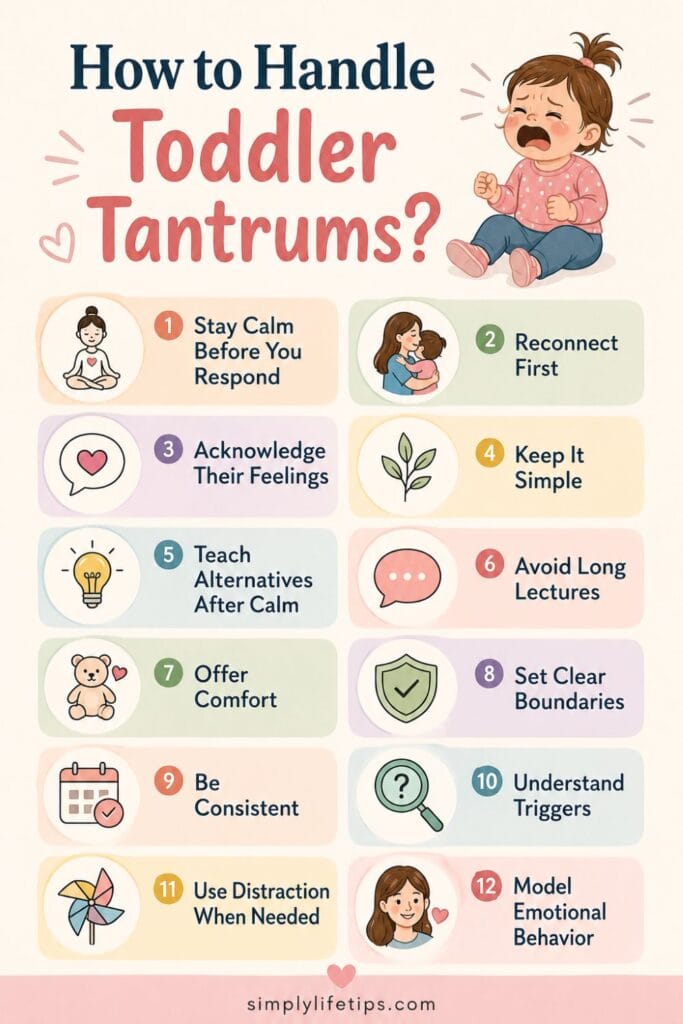
Understanding the root cause of tantrums is the first step toward handling them effectively. Toddlers are not trying to manipulate or challenge authority—they are reacting to feelings they cannot yet process.
For example, a child may throw a tantrum because they wanted a specific toy, and not getting it feels overwhelming. To an adult, this may seem small, but to a toddler, it feels like a major loss. Their brain cannot rationalize or delay gratification.
Other common triggers include hunger, tiredness, overstimulation, or sudden changes in routine. Imagine being exhausted, unable to express yourself clearly, and then being told “no.” That is often what a toddler experiences internally.
When parents understand this, their response shifts from frustration to empathy. Instead of asking, “Why is my child behaving like this?” the question becomes, “What is my child feeling right now?”
Stay Calm Before You Respond
The most important step in handling a tantrum is managing your own reaction first. Children mirror adult emotions. If you respond with anger or frustration, it intensifies the situation.
For instance, if a child starts screaming in a store and the parent reacts by shouting, the child’s distress increases. But if the parent stays calm, lowers their voice, and maintains control, the child gradually begins to settle.
Staying calm does not mean ignoring the behavior. It means choosing a response that de-escalates rather than escalates.
A practical tip is to take a deep breath before reacting. Even a few seconds can help you respond thoughtfully. Remind yourself that your child is not giving you a hard time—they are having a hard time.
Reconnect First
After or during a tantrum, the first step is always to reconnect emotionally. Your child needs to feel safe before they can listen or learn.
This might look like sitting next to them, offering a gentle touch, or simply being present without speaking much. Some children may want a hug, while others may need space. Observing your child’s cues is important.
For example, if your child is crying intensely, instead of saying “Stop crying,” you can sit beside them and say, “I’m here with you.” This simple statement reassures them that they are not alone.
Connection reduces emotional intensity. Once a child feels safe, they become more open to guidance.
Acknowledge Their Feelings
One of the most powerful ways to calm a tantrum is by validating your child’s emotions. This does not mean agreeing with their behavior, but it means recognizing their feelings.
For example, you might say, “You’re upset because you wanted that toy. That feels really hard.” This helps the child feel understood.
When children feel heard, their emotional intensity decreases. Ignoring or dismissing feelings often makes the tantrum worse because the child feels misunderstood.
A helpful tip is to use simple, clear language. Toddlers do not need long explanations—they need acknowledgment.
Keep It Simple
During or immediately after a tantrum, a child’s brain is not ready to process complex explanations. Long lectures or detailed reasoning will not work.
Instead, use short, calm sentences. For example, “We can’t buy the toy today,” or “It’s time to go home now.” Keeping it simple prevents overwhelming the child further.
Clarity is more effective than complexity. When instructions are simple, children are more likely to understand and respond.
Teach Alternatives After Calm
The real teaching happens after the child has calmed down. This is when you can guide them toward better ways of expressing emotions.
For example, if a child threw a toy in frustration, you can later say, “Next time you feel angry, you can say ‘I’m mad’ instead of throwing.”
This helps the child build emotional vocabulary and learn acceptable behaviors. Over time, these small lessons reduce tantrums.
A practical tip is to model the behavior yourself. Show them how to express feelings calmly.
Avoid Long Lectures
After a tantrum, children are still emotionally recovering. Giving long lectures can overwhelm them and reduce their ability to learn.
Instead of saying, “You should not behave like that, it’s wrong, and you embarrassed me,” keep it simple and supportive.
Focus on one clear message. For example, “Throwing toys is not okay. Let’s use words next time.” This is easier for the child to understand and remember.
Offer Comfort
Comfort plays a crucial role in emotional development. After a tantrum, children need reassurance that they are still loved and safe.
This can be a hug, holding hands, or simply sitting together quietly. Physical connection helps regulate emotions and rebuild trust.
For example, a child who cried intensely may calm down quickly when held. This is because touch provides a sense of security.
Comfort does not mean rewarding bad behavior. It means supporting emotional recovery.
Set Clear Boundaries
While empathy is important, boundaries are equally necessary. Children need to understand that certain behaviors are not acceptable.
For example, hitting, biting, or throwing objects should be addressed calmly but firmly. You can say, “I won’t let you hit. That hurts.”
Consistency is key. When boundaries are clear and consistent, children feel more secure and learn what is expected.
Be Consistent
Handling tantrums effectively requires consistency. If responses change frequently, children become confused.
For instance, if one day a tantrum leads to getting what they want and another day it does not, the behavior may increase.
Consistency builds trust and predictability. Children feel safer when they know what to expect.
Understand Triggers
Preventing tantrums is often easier than managing them. Observing patterns helps identify triggers such as hunger, fatigue, or overstimulation.
For example, if your child often has tantrums before meals, it may be due to hunger. Adjusting meal timing can reduce these incidents.
Being proactive helps create a calmer environment and reduces emotional overload.
Use Distraction When Needed
Distraction can be an effective tool, especially with younger toddlers. Redirecting attention to another activity can prevent escalation.
For example, if a child is upset about leaving the park, you can say, “Let’s race to the car” or “Look at that bird!”
This shifts focus and reduces emotional intensity.
Model Emotional Behavior
Children learn more from what they see than what they are told. Demonstrating calm behavior teaches them how to respond to emotions.
For example, if you feel frustrated, you can say, “I’m feeling upset, so I’m taking a deep breath.” This models healthy coping skills.
Over time, children imitate these behaviors.
Learn how to handle toddler temper tantrums and what you can do to prevent them.
The Long-Term Benefits of Handling Tantrums Well
Handling tantrums with patience and understanding has lasting benefits. It helps children develop emotional intelligence, self-control, and resilience.
Children who are guided through emotions rather than punished for them learn to express themselves better. They also develop stronger trust in their parents.
Over time, tantrums reduce in frequency and intensity because the child gains better emotional skills.
How To Tame Toddler Tantrums? Better Parenting Tips
FAQs on How to Handle Toddler Tantrums
What is the best way to handle toddler tantrums?
The best approach is to stay calm, acknowledge feelings, reconnect, and teach better ways to express emotions after the child has calmed down.
Should I ignore tantrums?
Ignoring can sometimes help, but emotional connection and acknowledgment are usually more effective in calming the child.
Why do toddlers have frequent tantrums?
They lack emotional regulation and communication skills, leading to overwhelming reactions.
How long do tantrums last?
Most tantrums last a few minutes, but the duration varies depending on the child and situation.
Can tantrums be prevented?
Yes, by understanding triggers, maintaining routines, and ensuring the child’s basic needs are met.
Conclusion
How to handle toddler tantrums is not about stopping behavior instantly—it is about teaching children how to handle emotions for life. By staying calm, reconnecting, acknowledging feelings, and guiding them with patience, parents can turn difficult moments into valuable learning experiences.
Tantrums are temporary, but the emotional skills children learn from how you respond will stay with them forever. The choice is not whether tantrums will happen, but how you respond to them—so will you choose calm, connection, and guidance the next time your child has a tantrum?
If this resonated with you, share it with someone who needs it.
PVM

Mathukutty P V is a Blogger, YouTuber, and Content Writer and the founder of Simply Life Tips. After taking voluntary retirement in 2017, he embraced a free lifestyle focused on learning, personal growth, and sharing practical wisdom to help others live with more purpose and positivity.



