How to handle disrespect is a crucial life skill that determines your emotional stability, relationships, and personal growth. Whether it happens at work, in family interactions, or in social settings, disrespect can trigger anger, frustration, or self-doubt. However, the real power lies in responding with emotional intelligence, clarity, and confidence, rather than reacting impulsively. When you manage disrespect effectively, you build stronger boundaries and earn lasting respect from others.
Understand What Disrespect Really Means
Types of Disrespect You May Face
Disrespect can take many forms, and not all of them are obvious. It may appear as subtle behaviors like ignoring your input, interrupting frequently, or using sarcastic tones. In many cases, these small actions accumulate over time and create a pattern that affects your confidence and communication.
Real-Life Examples of Disrespect
In a workplace, a colleague constantly cutting you off during meetings shows a lack of regard for your voice. In personal life, a friend making repeated jokes at your expense may seem harmless but can slowly damage your self-esteem. Recognizing these examples helps you understand that disrespect is not always loud, but it is always impactful.
Why Early Recognition Matters
Identifying disrespect early prevents it from becoming a habit in your relationships. When you ignore it repeatedly, people may assume their behavior is acceptable. To build a strong foundation, explore behaviors that earn respect and understand what respectful communication looks like.
Control Your Immediate Reaction
Why Reactions Make Things Worse
Emotional reactions often escalate situations rather than resolve them. When you respond with anger or defensiveness, the other person may become more aggressive or dismissive. This creates a cycle of conflict that is difficult to break.
The Power of Pausing
Taking a moment to pause gives you control over your response. A simple breath can help you shift from emotional reaction to logical thinking. This pause allows you to choose your words carefully and maintain composure.
Example of a Calm Response
Instead of reacting harshly, you can say, “I’d appreciate it if we could speak respectfully.” This type of response sets a tone of mutual respect without escalating tension. It also aligns with proven communication skills techniques that promote clarity and emotional control.
Set Clear and Firm Boundaries
Why Boundaries Are Essential
Boundaries define how others are allowed to treat you. Without clear boundaries, people may unintentionally or intentionally cross limits. Establishing them ensures that your expectations are understood and respected.
How to Communicate Boundaries Clearly
Clear communication is key when setting boundaries. You should use direct but respectful language that leaves no room for confusion. This helps prevent misunderstandings and reinforces your position confidently.
Practical Examples
You can say, “I’m okay with feedback, but not with disrespectful language,” to make your expectations clear. Another example is, “Please let me finish before you respond,” which sets a conversational boundary. These techniques are also useful in areas like how to sell effectively, where clarity influences outcomes.
Respond, Don’t React
Difference Between Reaction and Response
A reaction is immediate and emotional, while a response is thoughtful and controlled. Reacting often leads to regret because it is driven by impulse. Responding, on the other hand, reflects maturity and self-awareness.
How to Respond Effectively
Effective responses focus on behavior rather than attacking the person. This reduces defensiveness and keeps the conversation constructive. It also shows that you are in control of your emotions.
Example Comparison
Instead of saying, “You’re always rude,” you can say, “That comment felt disrespectful.” This shifts the focus from blame to awareness. It also reflects principles of assertiveness, which encourage healthy communication.
Use Assertive Communication
What Is Assertiveness?
Assertiveness is the ability to express your thoughts confidently without being aggressive. It allows you to stand your ground while still respecting others. This balance is essential in handling disrespect effectively.
How to Practice It?
Maintaining eye contact and using a calm tone can significantly improve your communication. Avoid blaming language and focus on expressing your perspective clearly. Consistent practice helps you become naturally assertive over time.
Workplace Example
In a meeting, you might say, “I’d like to complete my point before we move on.” This shows confidence without creating conflict. It also establishes your presence in a professional setting.
Know When to Ignore Disrespect
When Ignoring Is Powerful
Not every situation deserves your attention or response. Ignoring minor disrespect can prevent unnecessary conflict and conserve your energy. It also sends a signal that you are not easily provoked.
Psychology Behind It
Some individuals seek reactions to feel validated or powerful. When they do not receive the reaction they expect, their behavior often stops. This makes ignoring a strategic and effective choice in certain situations.
Example Scenario
If someone makes a sarcastic comment to provoke you, choosing silence can neutralize the situation. Over time, they may stop because they are not getting the desired reaction. This approach helps you maintain emotional control.
Address Repeated Disrespect Directly
Why You Should Not Ignore Patterns?
Repeated disrespect indicates a deeper issue that must be addressed. Ignoring it allows the behavior to continue and possibly worsen. Taking action early prevents long-term frustration.
How to Have the Conversation?
Approach the conversation calmly and privately to avoid embarrassment or defensiveness. Clearly explain how the behavior affects you and what you expect moving forward. This encourages a more constructive dialogue.
Example Conversation
You can say, “I’ve noticed my ideas are often dismissed, and I’d like us to communicate more respectfully.” This opens the door for improvement without sounding accusatory. It also reinforces your expectations clearly.
Strengthen Your Self-Respect
Internal Confidence Matters
Self-respect begins with how you value yourself internally. When you believe in your worth, others are more likely to treat you with respect. This internal confidence acts as a natural boundary.
Ways to Build Self-Respect
Keeping promises to yourself and maintaining personal standards strengthens your self-image. Practicing discipline and avoiding toxic environments also contribute to self-respect. These habits create a strong foundation for confident behavior.
Impact on Others’ Behavior
People often mirror how you treat yourself. When you demonstrate confidence and self-worth, they are less likely to disrespect you. This creates healthier and more balanced relationships.
Stay Calm in High-Pressure Situations
Why Emotions Escalate Quickly?
High-pressure situations often trigger strong emotional responses. When emotions rise, logical thinking decreases, making it harder to communicate effectively. This is why staying calm is essential.
Techniques to Stay Calm
Deep breathing and slowing your speech can help regulate your emotions. Focusing on facts instead of feelings keeps the conversation grounded. These techniques allow you to maintain control even under pressure.
Real-Life Application
Saying, “Let’s take a moment and continue calmly,” can reset the tone of a conversation. It helps both parties regain composure. This simple approach can prevent unnecessary conflict.
Choose Distance When Necessary
When Distance Is the Best Option
Sometimes, the best solution is to step away from the situation. If someone consistently disrespects you, limiting interaction protects your mental well-being. Not every relationship is worth maintaining.
Protecting Your Mental Health
Constant exposure to disrespect can affect your confidence and emotional health. Creating distance allows you to focus on positive and supportive environments. This is an important aspect of self-care.
Healthy Boundaries in Action
Walking away from toxic situations is a sign of strength, not weakness. It shows that you value your well-being and self-respect. This decision often leads to healthier relationships in the future.
Learn From Every Experience
Reflection Leads to Growth
Every experience with disrespect offers an opportunity to learn. Reflecting on your response helps you improve your approach in future situations. Growth comes from awareness and adjustment.
Questions to Ask Yourself
Ask yourself whether you reacted or responded calmly. Consider what you could do differently next time. These reflections help you refine your communication skills.
Long-Term Benefits
Over time, you become more confident and less affected by negativity. Your ability to handle difficult situations improves significantly. This leads to stronger relationships and better emotional control.
FAQS – How to Handle Disrespect
How to handle disrespect calmly?
The best way is to pause, stay composed, and respond assertively without emotional escalation.
Should I ignore disrespect or confront it?
Minor incidents can be ignored, but repeated disrespect should be addressed directly.
How to handle disrespect at work?
Use professional and assertive communication, focusing on behavior rather than personal attacks.
Why do people show disrespect?
It can stem from insecurity, lack of awareness, or poor communication habits.
Can handling disrespect improve relationships?
Yes, setting boundaries and communicating clearly often leads to healthier and more respectful interactions.
Conclusion
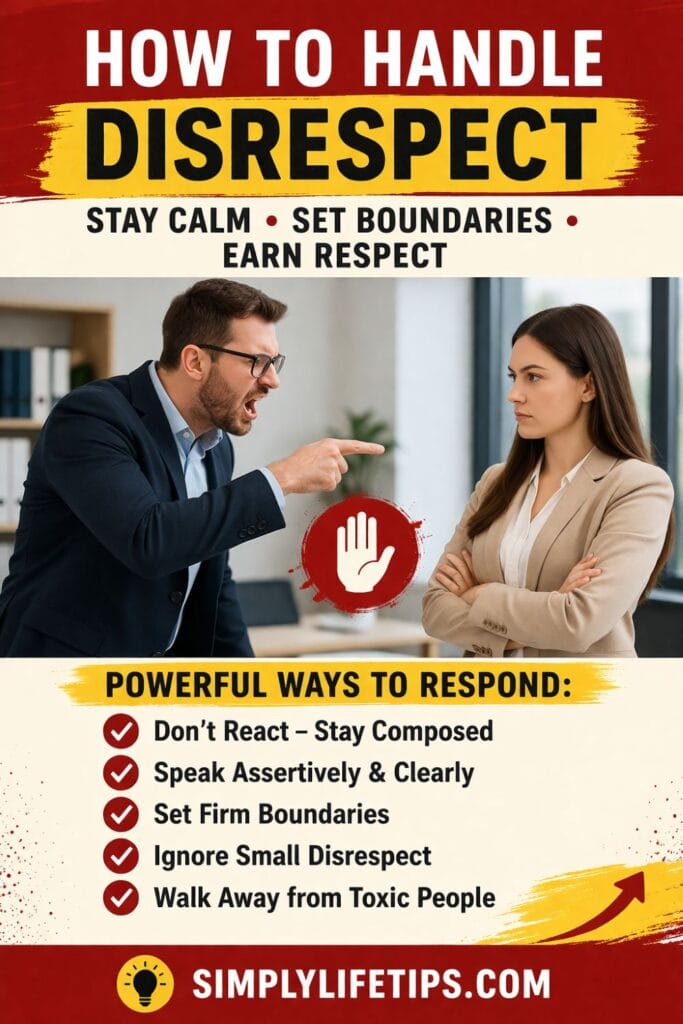
How to handle disrespect is not about winning arguments—it is about maintaining your dignity, setting boundaries, and responding with clarity. When you choose calmness over reaction, assertiveness over aggression, and self-respect over approval, you transform difficult situations into opportunities for growth and strength.
How do you usually respond when someone disrespects you?
If this resonated with you, share it with someone who needs it.
PVM

Mathukutty P V is a Blogger, YouTuber, and Content Writer and the founder of Simply Life Tips. After taking voluntary retirement in 2017, he embraced a free lifestyle focused on learning, personal growth, and sharing practical wisdom to help others live with more purpose and positivity.