
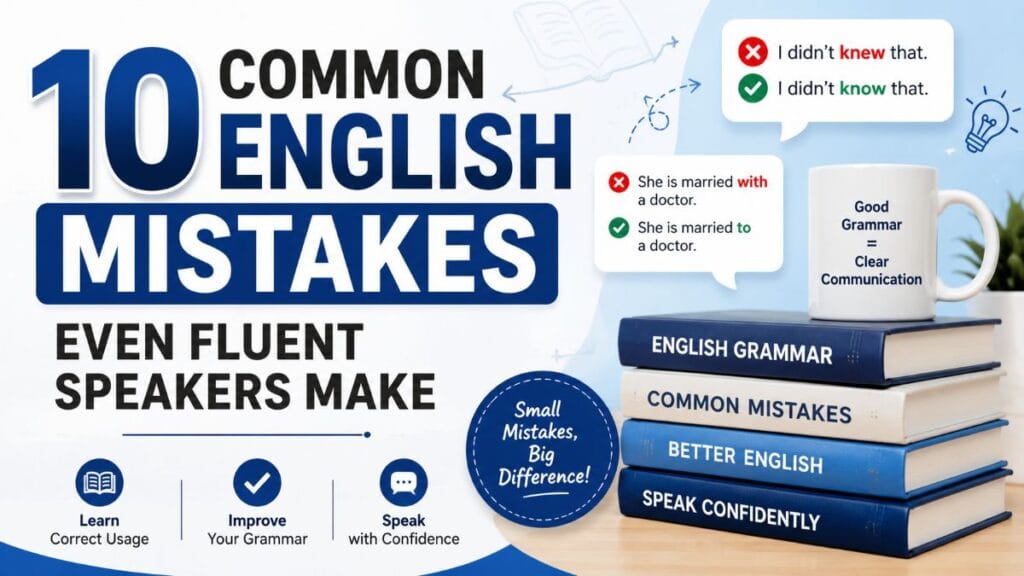
Learning common English mistakes is one of the fastest ways to improve your spoken and written English. Even fluent speakers occasionally use incorrect grammar, wrong prepositions, or unnecessary words. The good news is that these mistakes are easy to fix once you understand the rules behind them. In this guide, you’ll learn ten of the most common English mistakes, why they’re incorrect, and the right way to use them with practical examples.
Common English Mistakes
Nobody speaks perfect English all the time. Language is full of habits, and some incorrect expressions become so common that people assume they are correct. Recognizing these mistakes helps you:
- Speak more naturally and confidently.
- Write emails and messages more professionally.
- Perform better in interviews and presentations.
- Improve IELTS, TOEFL, and other English exam scores.
- Build stronger communication skills in daily life.
Let’s look at the mistakes one by one.
10 Common English Mistakes
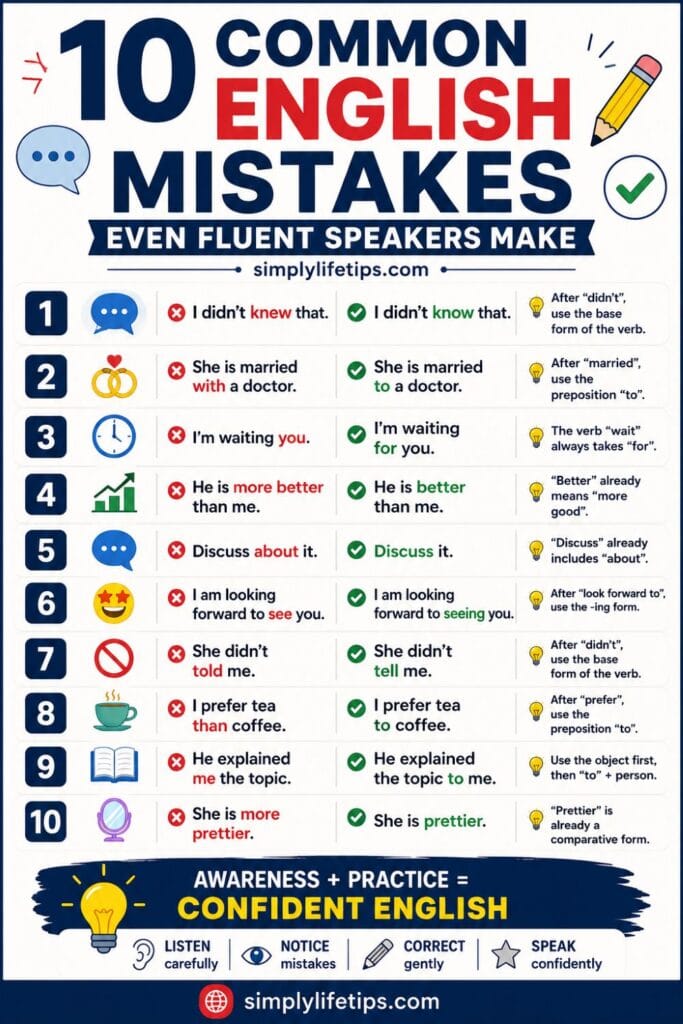
1. I Didn’t Knew That
Incorrect: I didn’t knew that.
Correct: I didn’t know that.
Why is it Wrong?
The auxiliary verb did already indicates the past tense. Therefore, the main verb must stay in its base form.
Formula:
Did + Base Verb
Examples
✅ I didn’t know the answer.
✅ They didn’t arrive on time.
❌ They didn’t arrived on time.
2. She Is Married With a Doctor
Incorrect: She is married with a doctor.
Correct: She is married to a doctor.
Why is it wrong?
The preposition always follows the adjective married to when referring to someone’s spouse.
Examples
✅ She is married to a teacher.
✅ My brother is married to an engineer.
❌ He is married with a lawyer.
3. I’m Waiting You
Incorrect: I’m waiting you.
Correct: I’m waiting for you.
Why is it wrong?
The verb wait requires the preposition for before the person or thing.
Examples
✅ We’re waiting for the bus.
✅ She’s waiting for her friend.
❌ They are waiting us.
4. He Is More Better Than Me
Incorrect: He is more better than me.
Correct: He is better than me.
Why is it wrong?
The word “better” is already the comparative form of “good”. Adding more creates unnecessary repetition.
Examples
✅ This phone is better than mine.
✅ Today’s weather is better than yesterday’s.
❌ This phone is more better.
5. Discuss About It
Incorrect: Discuss about it.
Correct: Discuss it.
Why is it wrong?
The verb discuss already includes the meaning of “talk about.” Adding about is unnecessary.
Examples
✅ Let’s discuss the project.
✅ We discussed our plans yesterday.
❌ Let’s discuss about the project.
6. I Am Looking Forward to See You
Incorrect: I am looking forward to see you.
Correct: I am looking forward to seeing you.
Why is it wrong?
The expression look forward to is followed by a noun or a gerund (verb + ing).
Examples
✅ I’m looking forward to meeting you.
✅ She’s looking forward to traveling next month.
❌ I’m looking forward to meet you.
7. She Didn’t Told Me
Incorrect: She didn’t told me.
Correct: She didn’t tell me.
Why is it wrong?
Just like the first mistake, didn’t requires the base form of the verb.
Examples
✅ He didn’t tell the truth.
✅ They didn’t finish the work.
❌ They didn’t finished the work.
8. I Prefer Tea Than Coffee
Incorrect: I prefer tea than coffee.
Correct: I prefer tea to coffee.
Why is it wrong?
The correct preposition after prefer is to.
Examples
✅ I prefer reading to watching television.
✅ She prefers coffee to tea.
❌ I prefer tea than coffee.
9. He Explained Me the Topic
Incorrect: He explained me the topic.
Correct: He explained the topic to me.
Why is it wrong?
The verb explain takes the thing being explained first, followed by to and the person receiving the explanation.
Examples
✅ The teacher explained the lesson to the students.
✅ She explained the rules to me.
❌ She explained me the rules.
10. She Is More Prettier
Incorrect: She is more prettier.
Correct: She is prettier.
Why is it wrong?
Prettier is already a comparative adjective. Using more with it is grammatically incorrect.
Examples
✅ This dress is prettier.
✅ Your garden is prettier than ours.
❌ This dress is more prettier.
Why Do These Common English Mistakes Happen?
Many of these errors occur because people:
- Translate directly from their native language.
- Learn English by listening instead of studying grammar.
- Copy incorrect phrases from everyday conversations.
- Mix grammar rules unintentionally.
The good news is that regular reading, listening, and speaking help eliminate these habits over time.
10 Common English Mistakes You Should Stop Making
Are you making these common English mistakes without realizing it?
Even fluent English speakers occasionally use incorrect grammar, wrong prepositions, or unnecessary words. In this short 2-minute video, you’ll discover 10 common English mistakes and learn the correct way to say each one with simple, easy-to-follow explanations.
Tips to Avoid Common English Mistakes
- Read English books, newspapers, and blogs every day.
- Listen carefully to native speakers through podcasts and interviews.
- Practice speaking aloud using correct sentence patterns.
- Learn grammar rules instead of memorizing random phrases.
- Keep a notebook of mistakes and review them regularly.
- Ask for feedback whenever possible.
- Practice writing short paragraphs using the correct forms.
Consistency is far more effective than trying to memorize hundreds of grammar rules at once.
Conclusion
Making common English mistakes doesn’t mean your English is poor. In fact, even native speakers occasionally make these errors. The important step is recognizing them, understanding why they happen, and replacing them with the correct forms. As you continue practicing, these corrections become natural, making your English clearer, more professional, and more confident.
Frequently Asked Questions
What are the most common English mistakes?
Some of the most common English mistakes include using incorrect verb forms after “did,” wrong prepositions, double comparatives like “more better,” and incorrect verb patterns such as “looking forward to see.”
Why do fluent speakers still make grammar mistakes?
Fluent speakers often rely on habit and informal speech. Frequent use of incorrect expressions can become automatic unless corrected.
How can I stop making English grammar mistakes?
Read regularly, listen to accurate English, practice speaking daily, and review grammar patterns with real-life examples.
Is grammar important in spoken English?
Yes. Good grammar makes your speech easier to understand and creates a more confident and professional impression.
How long does it take to improve English grammar?
With consistent daily practice, many learners notice significant improvement within a few months. Regular reading, speaking, and writing are the keys to long-term success.
Related Articles
- 10 Strong English Vocabulary Words to Replace “Very”
- 10 Useful English Expressions For Conversations
- 10 Smart Vocabulary Words to Speak English

Mathukutty P V is a Blogger, YouTuber, and Content Writer and the founder of Simply Life Tips. After taking voluntary retirement in 2017, he embraced a free lifestyle focused on learning, personal growth, and sharing practical wisdom to help others live with more purpose and positivity.



