
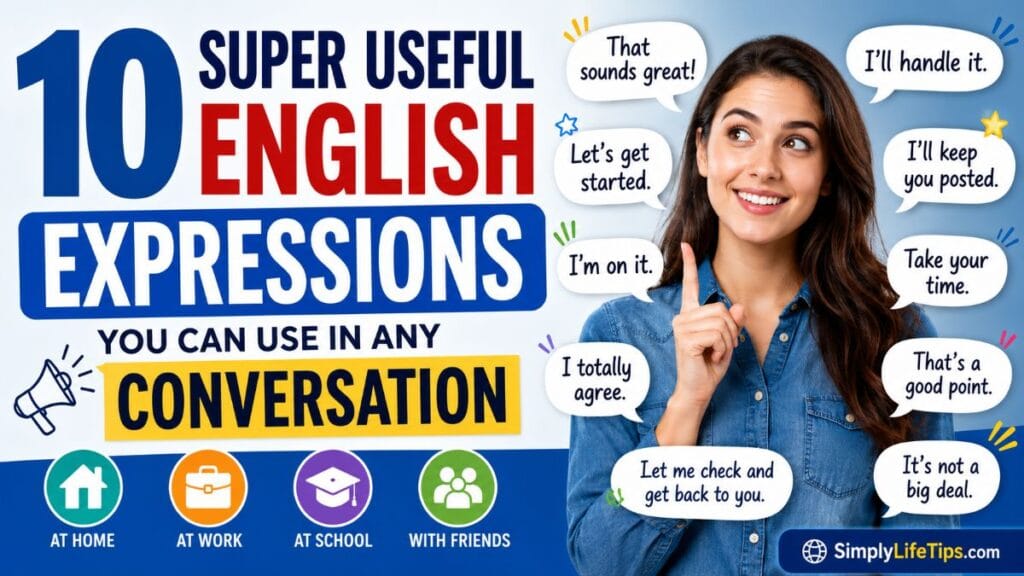
Want to sound more confident when speaking English? These super useful English expressions can instantly make your conversations sound smoother and more natural. Whether you’re talking at home, in the office, at school, or with friends, these common expressions are used by native English speakers every day.
The best part is that they’re easy to remember and fit into almost any conversation. Let’s explore these practical phrases with meanings, examples, and tips so you can start using them right away.
Learn ten of the most common English mistakes, why they’re incorrect, and the right way to use them with practical examples.
10 Super Useful English Expressions
Sometimes, seeing information visually makes it much easier to remember. The infographic below summarizes all 10 super useful English expressions along with their meanings and practical uses. Save it for quick revision, share it with your friends, or keep it as a handy reference whenever you want to improve your spoken English.
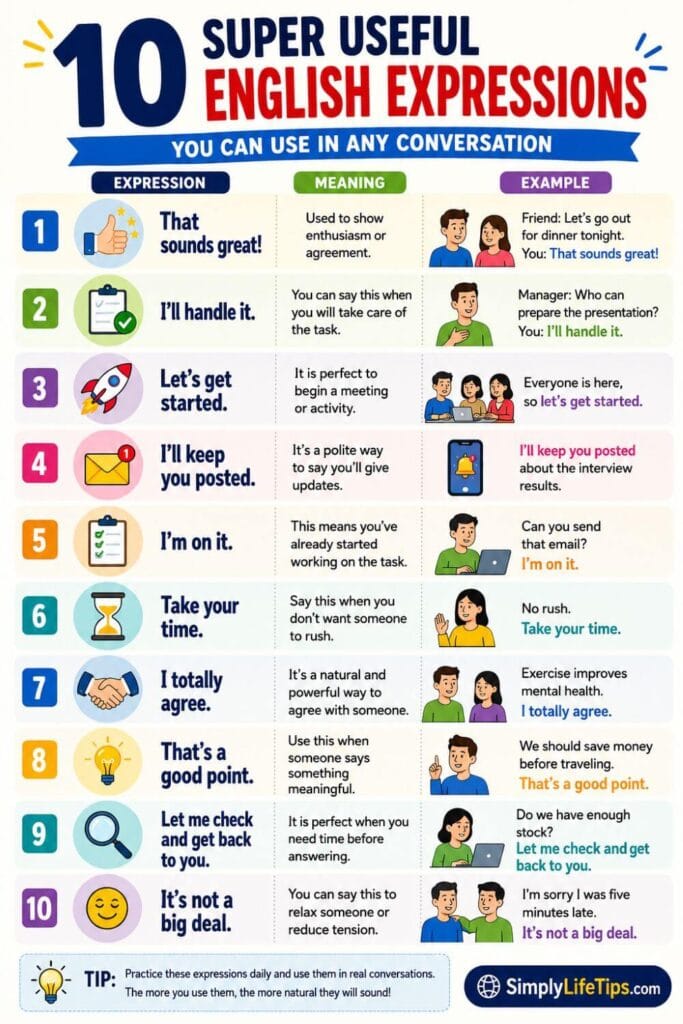
Now that you’ve explored these super useful English expressions, the next step is to use them in your everyday conversations. Start by practicing one or two expressions each day until they become a natural part of your vocabulary. Consistent practice will help you speak more confidently, communicate more effectively, and sound more like a fluent English speaker. Don’t forget to bookmark this guide so you can revisit these expressions whenever you need a quick refresher.
Why Learn Useful English Expressions?
Learning individual vocabulary words is helpful, but mastering complete expressions helps you speak more fluently. Instead of translating from your native language, you’ll begin thinking in natural English.
Benefits include:
- Sounding more confident in conversations.
- Responding faster without hesitation.
- Understanding movies, podcasts, and native speakers more easily.
- Building stronger communication skills in daily life.
10 Super Useful English Expressions
1. That sounds great!
Meaning
Use this expression to show excitement, agreement, or approval about an idea or suggestion.
Example
Friend: Let’s go out for dinner tonight.
You: That sounds great!
When to Use It?
- Accepting invitations
- Agreeing with plans
- Showing enthusiasm
2. I’ll handle it.
Meaning
This expression tells someone that you will take care of a task or solve a problem yourself.
Example
Manager: Who can prepare the presentation?
You: I’ll handle it.
When to Use It?
- At work
- During team projects
- Helping family members
3. Let’s get started.
Meaning
Use this phrase to begin an activity, meeting, lesson, or project.
Example
Everyone is here, so let’s get started.
When to Use It?
- Meetings
- Study sessions
- Workshops
- Family activities
4. I’ll keep you posted.
Meaning
It means you’ll provide updates whenever there is new information.
Example
I’ll keep you posted about the interview results.
When to Use It?
- Office communication
- Project updates
- Personal plans
Tip
This expression sounds much more professional than simply saying “I’ll tell you later.”
5. I’m on it.
Meaning
It means you’ve already started working on the task or will begin immediately.
Example
Can you send that email?
I’m on it.
When to Use It?
- Workplace conversations
- Group assignments
- Household chores
This expression shows responsibility and quick action.
6. Take your time.
Meaning
Use this phrase to tell someone they don’t need to hurry.
Example
No rush. Take your time.
When to Use It?
- Waiting for someone
- Customer service
- Helping friends
- Teaching or mentoring
It creates a relaxed and polite atmosphere.
7. I totally agree.
Meaning
This is a strong and natural way to say you completely agree with someone’s opinion.
Example
Exercise improves mental health.
I totally agree.
When to Use It?
- Discussions
- Meetings
- Classroom conversations
- Friendly debates
Using this expression makes your English sound more conversational.
8. That’s a good point.
Meaning
Use this expression when someone shares a thoughtful or important idea.
Example
We should save money before traveling.
That’s a good point.
When to Use It?
- Group discussions
- Brainstorming sessions
- Everyday conversations
This phrase also shows that you’re actively listening.
9. Let me check and get back to you.
Meaning
Use this expression when you need time to verify information before answering.
Example
Do we have enough stock?
Let me check and get back to you.
When to Use It?
- Professional emails
- Customer support
- Business conversations
- Personal situations
It sounds polite, honest, and professional.
10. It’s not a big deal.
Meaning
Use this phrase to reassure someone that a mistake or problem isn’t serious.
Example
I’m sorry I was five minutes late.
It’s not a big deal.
When to Use It?
- Comforting friends
- Reducing stress
- Handling small mistakes
This expression helps create a positive and relaxed conversation.
Tips to Remember Useful English Expressions
Instead of memorizing the phrases once, practice using them naturally.
Here are a few effective methods:
- Speak each expression aloud several times.
- Use one new phrase every day.
- Practice with a friend or family member.
- Write your own example sentences.
- Listen for these expressions in English movies and TV shows.
The more frequently you use these super useful English expressions, the more naturally they’ll become part of your everyday English.
Common Mistakes to Avoid
Using expressions in the wrong situation
For example, “I’m on it” should only be used when you’re actually starting or handling a task.
Speaking too formally
Natural English often sounds friendlier when you use everyday expressions instead of overly formal language.
Forgetting pronunciation
Practice speaking these expressions aloud until they feel comfortable.
Conclusion
Fluent English isn’t only about knowing difficult vocabulary. It’s about knowing the right expressions for the right situations. These super useful English expressions help you communicate naturally, politely, and confidently.
Keep practicing them every day, and soon they’ll become a natural part of your spoken English.
Frequently Asked Questions
Why are English expressions important?
English expressions help you sound more natural and improve your communication skills in real-life conversations.
How can I remember these expressions?
Practice them daily, create your own examples, and use them whenever possible.
Are these expressions suitable for beginners?
Yes. They’re simple, commonly used, and perfect for English learners of all levels.
Can I use these expressions in professional settings?
Absolutely. Expressions like “I’ll keep you posted,” “I’m on it,” and “Let me check and get back to you” are widely used in workplaces.
How long does it take to become fluent using these expressions?
Consistency matters more than speed. Using a few expressions every day can noticeably improve your spoken English within a few weeks.
Improve your strong English vocabulary words to replace “very” without memorizing hundreds of difficult words

Mathukutty P V is a Blogger, YouTuber, and Content Writer and the founder of Simply Life Tips. After taking voluntary retirement in 2017, he embraced a free lifestyle focused on learning, personal growth, and sharing practical wisdom to help others live with more purpose and positivity.



