
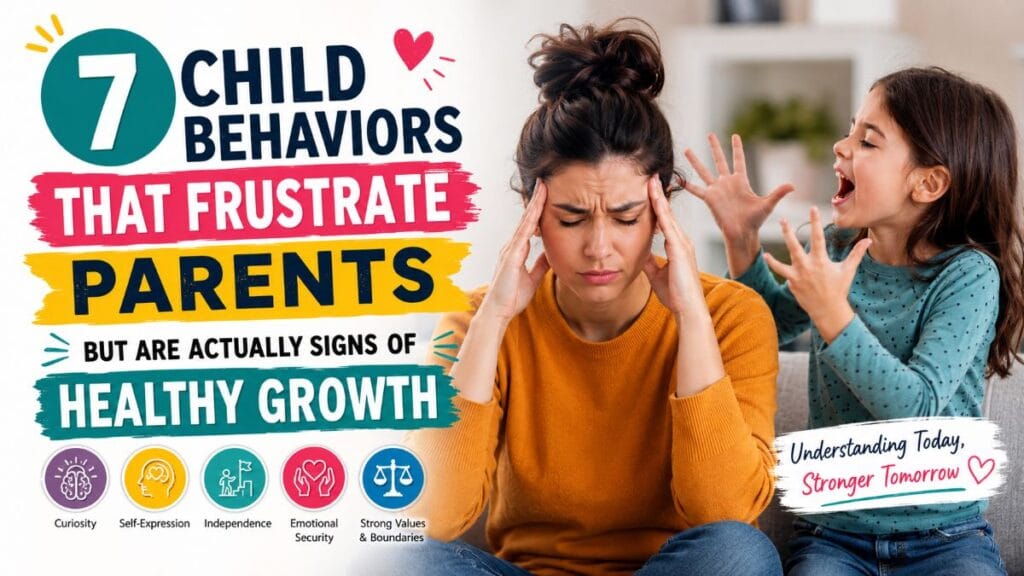
Child Behaviors That Frustrate Parents are often misunderstood. Many of the habits that leave mothers and fathers exhausted—talking back, asking endless questions, interrupting conversations, refusing help, or constantly saying “no”—can actually be signs of healthy emotional and intellectual development. While these behaviors may test your patience, they often reveal confidence, curiosity, independence, and emotional security. Understanding what these actions really mean can help parents respond with greater empathy and build a stronger bond with their children.
7 Child Behaviors That Frustrate Parents
Every parent experiences moments when a child’s behavior feels annoying, exhausting, or even disrespectful. However, children’s actions are often their way of communicating feelings, needs, and developmental changes that they may not yet have the words to express.
Instead of immediately focusing on correcting the behavior, it can be helpful to ask, “What is my child trying to tell me?”
Many child behaviors that frustrate parents today may actually be helping children develop skills that will benefit them for the rest of their lives.
1. They Talk Back and Share Their Opinions
Few child behaviors frustrate parents more than hearing a child argue or disagree.
Many parents have reacted with statements like, “Are you talking back to me?” when their child challenges a rule or expresses a different opinion.
While disrespectful language should be addressed, expressing an opinion is not always a negative behavior.
Children who feel comfortable sharing their thoughts with parents often feel emotionally safe within the family. They believe their voice matters and that they can express themselves honestly.
This behavior helps develop:
- Confidence
- Communication skills
- Independent thinking
- Self-expression
For example, when a child says, “I don’t think that’s fair,” they may not be trying to be difficult. They may simply be learning how to communicate their feelings and perspectives.
Common Behavioural Issues In Children And Solutions
2. They Ask Endless Questions
“Why?”
“How?”
“What happens if…?”
If you are a parent, you have probably answered these questions hundreds of times.
Although constant questioning can feel exhausting, curiosity is one of the strongest indicators of healthy learning and development.
Children ask questions because they are actively trying to understand how the world works.
This behavior strengthens:
- Critical thinking
- Problem-solving skills
- Creativity
- Knowledge retention
For example, when a child asks why the moon changes shape or how birds fly, they are developing the habit of learning through observation and inquiry.
Today’s curious child may become tomorrow’s innovative thinker.
3. They Interrupt Conversations
Many parents become frustrated when children interrupt conversations.
Just as you are speaking to someone, your child suddenly says:
“Mom, look at this!”
“Dad, listen to me!”
While children should gradually learn patience and timing, interruptions often come from a positive place.
Children naturally want to share exciting experiences with the people they trust most.
This behavior often reflects:
- Emotional attachment
- Trust
- Excitement
- Desire for connection
For example, a child who runs to show their latest drawing is seeking approval, encouragement, and emotional connection from a parent.
Understanding Causes and Smart Parenting Tips
4. They Argue About What Is Fair
Children often seem obsessed with fairness.
They compare everything—from snacks and toys to rules and privileges.
This can be frustrating, especially when parents know that life is not always perfectly fair.
However, this behavior often shows that children are developing a sense of:
- Justice
- Empathy
- Moral reasoning
- Social awareness
For example, if a child questions why a sibling receives different treatment, they may be trying to understand fairness rather than simply complaining.
A strong sense of justice can later help children become compassionate and ethical adults.
5. They Want To Do Everything Themselves
Many children insist:
“I’ll do it myself!”
Even when they struggle, they refuse assistance.
This behavior can slow down daily routines and create extra stress for parents.
Yet it is often a sign that children are developing independence and confidence.
By trying things on their own, children learn:
- Responsibility
- Persistence
- Self-reliance
- Problem-solving skills
For example, a child who insists on tying their own shoes may take five minutes longer, but they are also learning perseverance and self-confidence.
6. They Are Extremely Clingy
Some children seem attached to their parents every minute of the day.
They follow their mother from room to room and become upset when separated.
Although this can be tiring, clinginess often reflects a healthy emotional connection.
Children naturally seek comfort and security from the people who make them feel safest.
This behavior may indicate:
- Secure attachment
- Trust
- Emotional safety
- Strong family bonds
When a child wants to stay close, it often means they see their parent as their safest place in the world.
7 Types Of Child Behaviours That Are Dangerous To Ignore
7. They Are Not Afraid To Say “No.”
Many parents view frequent refusal as stubbornness.
However, a child who confidently says “no” may be learning something incredibly important—how to establish personal boundaries.
Children who learn to express disagreement respectfully are often better prepared to:
- Resist peer pressure
- Protect themselves
- Make independent decisions
- Develop self-respect
For example, a child who says no to something that makes them uncomfortable is practicing a skill that can protect them throughout life.
How to Handle Misbehaviour in Children
What Your Child Is Really Trying To Communicate?
Most children are not intentionally trying to frustrate their parents.
Behind these behaviors is usually an important message:
- “Listen to me.”
- “I am curious.”
- “I need reassurance.”
- “I want independence.”
- “I feel safe with you.”
- “My opinion matters.”
When parents focus on the message behind the behavior, they often find it easier to respond with patience and understanding.
How Parents Can Respond Positively?
The next time these behaviors appear, try to:
- Pause before reacting.
- Listen carefully.
- Validate your child’s feelings.
- Teach respectful communication.
- Encourage healthy independence.
- Set clear boundaries.
- Focus on long-term growth rather than short-term convenience.
Remember, children are not miniature adults. They are learning, growing, and developing every day.
Conclusion
Many Child Behaviors That Frustrate Parents are not signs of bad behavior at all. There are often signs that children are developing confidence, curiosity, independence, empathy, and emotional security. The next time your child argues, asks endless questions, interrupts a conversation, insists on doing things alone, or says “no,” try to see the growth hidden behind the frustration. Sometimes the behaviors that challenge us most as parents are the very signs that our children are growing into capable, confident, and emotionally healthy individuals.
Could the behavior that irritates you today actually be preparing your child for a brighter future tomorrow?
FAQs -Child Behaviors That Frustrate Parents
Why do children ask so many questions?
Questions help children learn, explore, and understand the world around them. Curiosity is a key part of healthy development.
Is talking back always disrespectful?
Not necessarily. Sometimes children are simply expressing opinions or learning how to communicate their thoughts.
Why is my child so clingy?
Clinginess often reflects emotional security and a strong attachment to parents.
Should I encourage independence?
Yes. Age-appropriate independence helps children build confidence, responsibility, and resilience.
Why is it important for children to learn boundaries?
Healthy boundaries help children make safer decisions, resist negative influences, and develop self-respect.
Dealing with child behaviour problems

Mathukutty P V is a Blogger, YouTuber, and Content Writer and the founder of Simply Life Tips. After taking voluntary retirement in 2017, he embraced a free lifestyle focused on learning, personal growth, and sharing practical wisdom to help others live with more purpose and positivity.



